
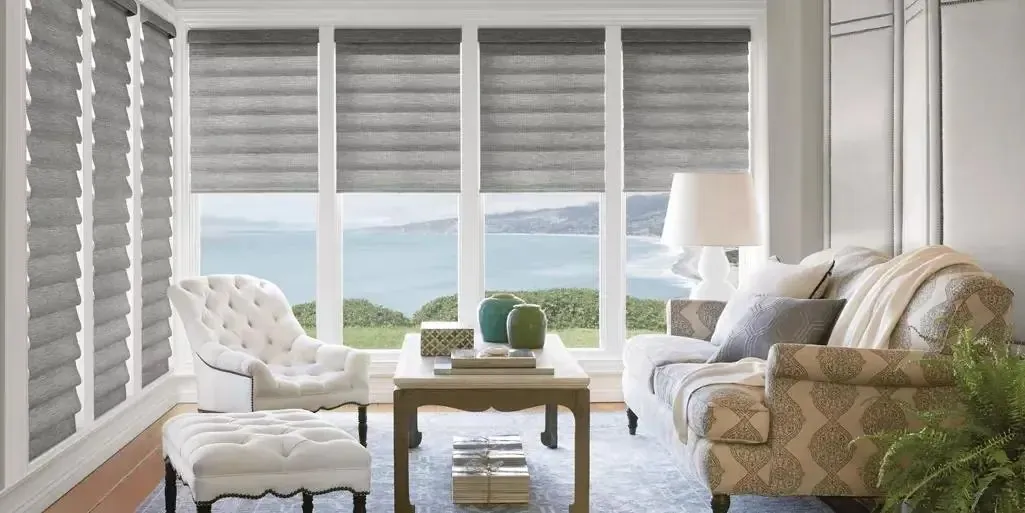
Street-level privacy comes first
Woonsocket’s mill-era neighborhoods are dense. Triple-deckers and Victorians stand shoulder to shoulder along close-set streets, their front windows near the sidewalk and their side windows facing the next building across a gap you could almost reach over. Inside, the rooms have high ceilings and tall, narrow double-hung windows that pull in plenty of light, and put a great deal of the room on view.
So when we plan roman shades in Woonsocket, RI, privacy at street level is always the first problem to solve. A first-floor front room can be seen by everyone walking past. A side bedroom may sit eye to eye with the neighbor’s kitchen. The shade has to deal with that before anything else, and then it has to look right on a window that is far taller than it is wide.
A roman shade is a strong answer to both. It closes the whole sash with one panel of fabric, with no slats to peek between, and it follows the slim, upright line of a city window instead of fighting it.
Our roman shades for Woonsocket windows
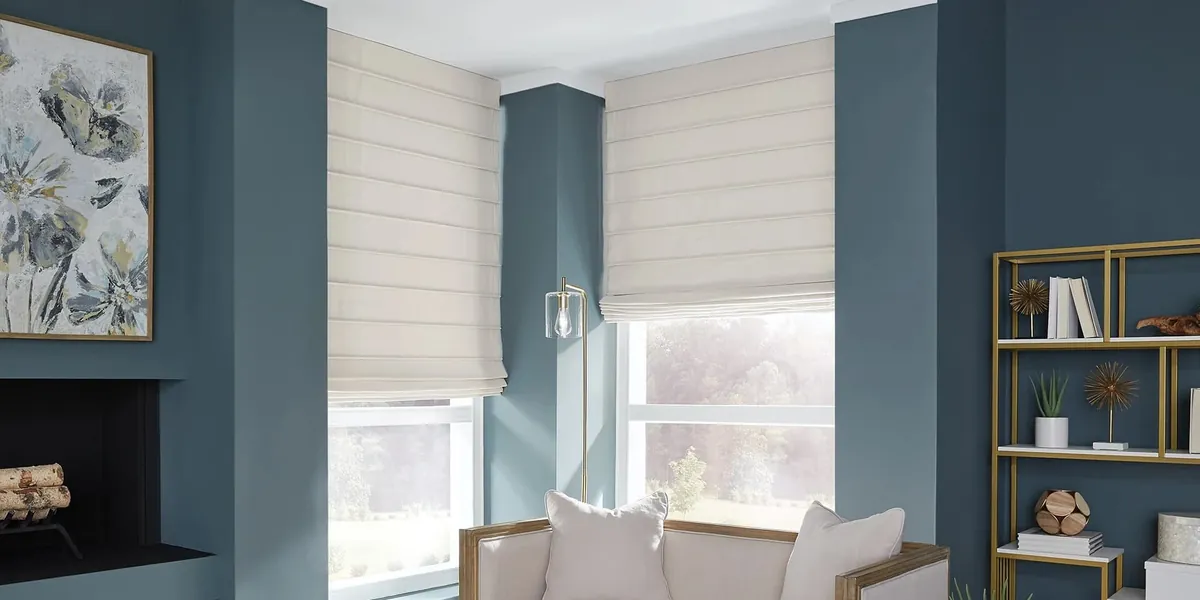
Vignette
The Hunter Douglas roman shade, made flat or folded. Its long, even lines suit a tall double-hung in a Victorian front room.
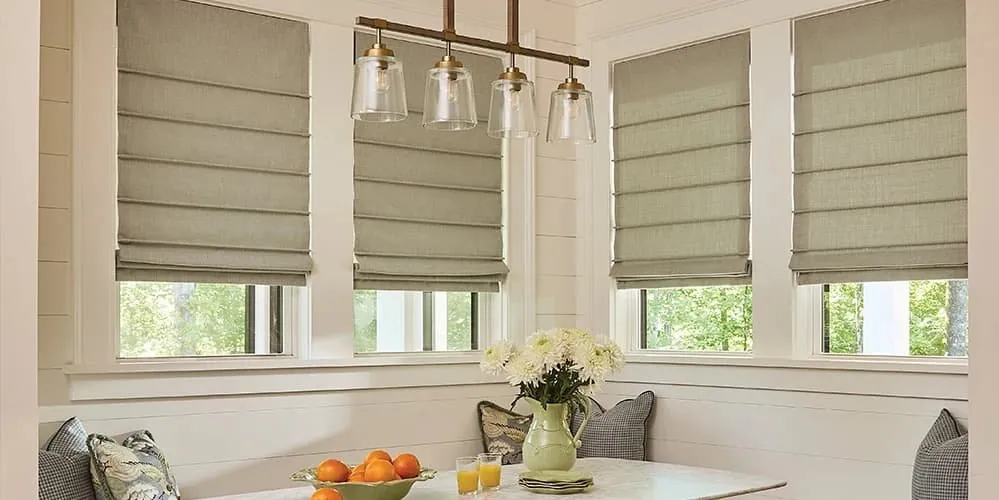
Carole Fabrics
Carole Fabrics roman shades, flat or folded, in colors and prints that bring life to a high-ceilinged parlor or a triple-decker kitchen.
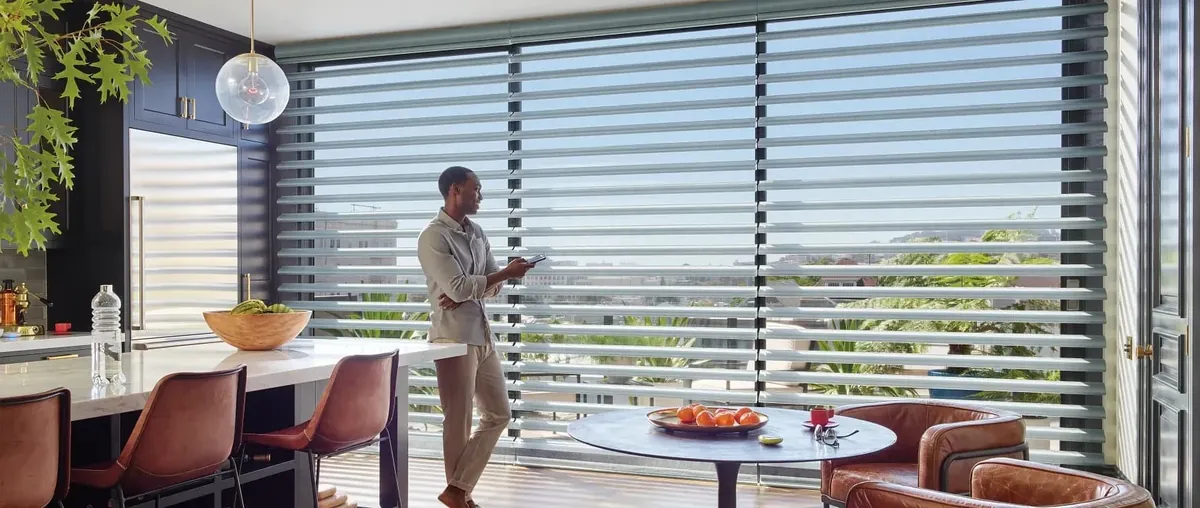
PowerView for tall sash
Raise and lower a shade on a very tall window from a remote or the app, or have it close on a schedule as evening comes.
Triple-deckers, one floor at a time
A triple-decker stacks three homes, one above the other, and each floor sees the street differently. That changes how each floor’s shades should be planned.
On the first floor, the front windows are close to sidewalk level. Anyone passing looks straight in, so cover matters at every hour, and a fuller fabric is the usual choice for front rooms used in the evening. The side windows look across the gap at the first floor of the next building, often at very close range.
On the second and third floors, the sidewalk drops out of view, but the next building does not. Upper side windows face upper side windows, and a back bedroom may look across at the neighbor’s back porch. Here the shade is about the house next door rather than the street, and a lighter fabric often gives enough cover by day while keeping the rooms bright.
If you own the whole building, one plan for all three floors keeps the front looking tidy from the street, with matching outward color and the same stopping height on every front window. If you live on one floor, you can choose freely for your own rooms. Either way, each floor is measured on its own, since sash that look identical from the street can differ by a fraction from one story to the next.
Tall windows under high ceilings
The rooms in Woonsocket’s older housing were built tall, and their double-hungs follow suit: long, slim sash that reach well up the wall. That height is one of the best things about these rooms, and a well-made roman shade makes the most of it.
Made to the sash’s own width, the shade comes down as one long, slender panel that repeats the window’s shape. When two or three sash sit side by side, bringing each shade down to one common line keeps the wall looking composed.
Height brings one thing to plan for. A long shade has more cloth to gather when lifted, so the band it forms at the head is deeper than on a short window. In a high-ceilinged room there is usually wall to spare above the sash, so the headrail can go on the wall above the frame. The raised fabric then sits over the wall, the full height of glass is open, and the window looks taller still. If the old casing is a feature you want left uncovered, fitting the shade inside the opening is fine as well; the gathered cloth then rests at the head of the glass.
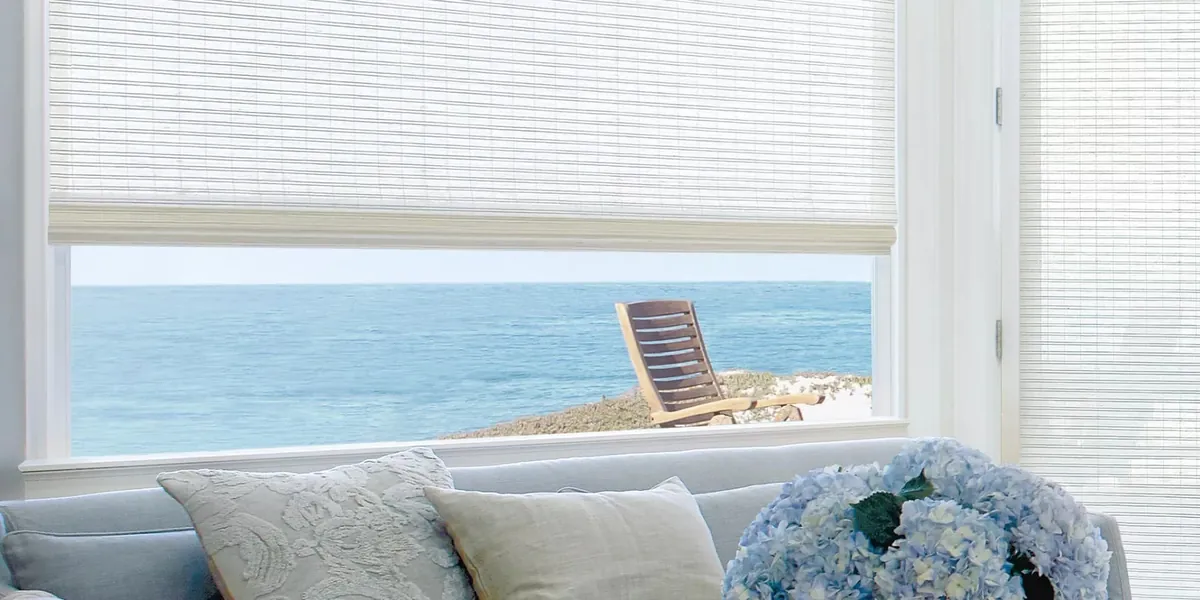
A gap you could almost reach across
On Woonsocket’s close-set streets, one building’s flank can sit almost within arm’s length of the next. In daylight, you can see into the neighbor’s kitchen; at night, with lamps on, they can see into yours.
The fabric you choose sets the balance between light and cover on those windows. A lighter cloth blurs the view across the gap and lets daylight through, which suits a kitchen or a hall where light is scarce because the building next door shades it. A fuller cloth hides the room completely, which is what most people want in a bedroom or a bathroom.
A casing mount pays off here. Set on the trim and lapping the opening slightly, it shuts the slim bands of light that would run down both edges, and with a neighbor that near, those edges are what people notice.
Victorian front parlors
The Victorians scattered through the city often have a front parlor with tall windows and generous trim, sometimes grouped together on one wall. These rooms are made for a shade that is a feature in its own right.
A folded style, with its soft loops of fabric visible even when lowered, looks generous and warm on a tall parlor window. A flat style in a patterned Carole fabric is another strong choice: lowered, the print runs the full height of the window like a tall panel of art. Either way, a fuller cloth on a street-facing parlor keeps the room private once the lamps are on.
If the parlor has a group of windows, matching the shades and their stopping height matters more here than anywhere else in the house, because this is the room the street sees most.
Parlor windows in these houses often carry deep, decorative casings, and many owners want every inch of that woodwork left in view. A shade fitted inside the opening does exactly that, and on a tall parlor sash the gathered cloth sits neatly at the head where it barely reads from across the room. If the casing has been painted over or replaced, a rail on the wall above can add height instead.

When the lamps come on
Daylight hides a lot. When it is brighter outside than in, even a light fabric makes a room hard to see into. After dark that flips: the room is lit, the street is not, and a light fabric glows with the room behind it.
That is why the evening is the real test for roman shades in Woonsocket’s street-facing rooms. A living room on the first floor of a triple-decker, a Victorian parlor, a front bedroom: if you use the room after dark, a fuller fabric is the dependable choice. Rooms at the back, facing a yard, can often stay with something lighter.
There is a middle path on a very tall front sash. Bring the shade down only as far as the eye line of someone on the pavement, and the part of the glass they could see through is covered while the upper half still frames the sky. With the height these windows have, the room keeps a good deal of its daylight that way.
Sleeping on a busy block
A bedroom at the front of a city house has the street right outside, lit all night by lamps on the poles and by cars turning in and out. On a tall sash, that glow travels a long way up the wall. Dense cloth, dropped all the way to the sill, keeps the room dark, and a casing mount that laps the frame cuts the bright lines that would otherwise outline the shade.
At the back of a triple-decker, the issue is the building behind or the porch next door. Dense cloth works there as well, for rest as much as for cover.
Kitchens in a triple-decker
On each floor of a triple-decker, the kitchen usually sits at the back or the side, with a window that looks across at the next building or down into a narrow yard. With a neighbor so close, the room often gets less sun than the front of the flat, so any shade there has to give cover without dimming it further.
An airy cloth in a pale color, left down for most of the day, does that. It glows with whatever light reaches the window and softens the view of the wall opposite. Because these kitchens are often compact, our consultant checks the reach over the counter or the sink before settling the mount. For roman shades in Woonsocket kitchens, a flat style is the usual pick, since it keeps a tidy fold at the top of a tall sash.
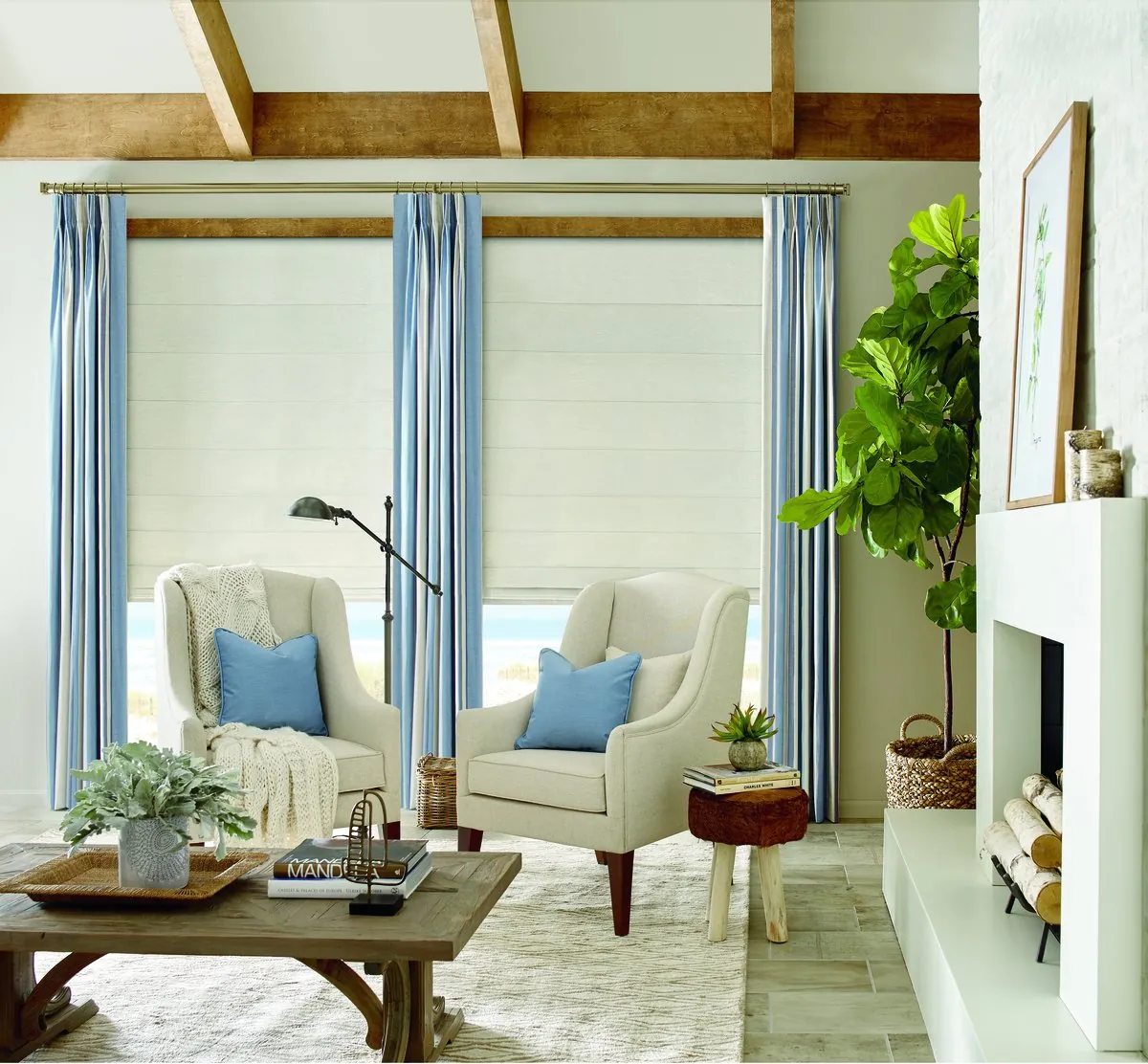
Where to stop a shade on a tall window
On a window with a great deal of height, you have more choice than usual about where a lowered shade stops. Bringing it all the way to the sill gives full cover. Stopping it partway lets light in below while hiding the part of the room most on view. On a group of front windows, picking one height and using it on all of them makes the whole frontage look ordered from the street.
The raised position matters too. With a high ceiling, a rail mounted well up the wall means the gathered cloth sits above the glass entirely, and the window reads as taller and more graceful. That is often the single change that makes a city room feel lighter.
Flat and folded in a city house
Both of our roman lines come in a flat style and a folded style.
- Flat: smooth when down, crisply pleated when raised. On a tall, slim sash it keeps a clean vertical line and a neat fold at the head. A good choice for a row of front windows.
- Folded: soft rounded loops that stay visible when lowered. It looks rich on a Victorian parlor window or in a bedroom.
Many city homes use flat on the street side for a crisp, orderly front, and folded in one or two rooms seen only from inside. Our consultant can hang one of each on the same window so you can compare them on your own sash.
Fabric weight for each room
- Street-facing rooms used after dark: fuller cloth.
- Side kitchens and halls shaded by the next building: lighter cloth, to keep what light there is.
- Bedrooms, front and back: fuller cloth, for privacy and sleep.
- Back rooms facing a yard: light or medium, depending on the view.
Swatches in every weight, in both Vignette and Carole Fabrics, come with the consultant.
Reaching the top of a tall sash
A very tall window can be hard to work by hand, especially over a radiator, behind furniture or above a stair. PowerView lets you raise and lower a roman shade from a remote or the app, and set a schedule so the street-facing shades come down at dusk and go up in the morning.
On a triple-decker floor, the shades can be grouped so every front window moves at once. Powering each motor is planned window by window at the visit.
The home visit
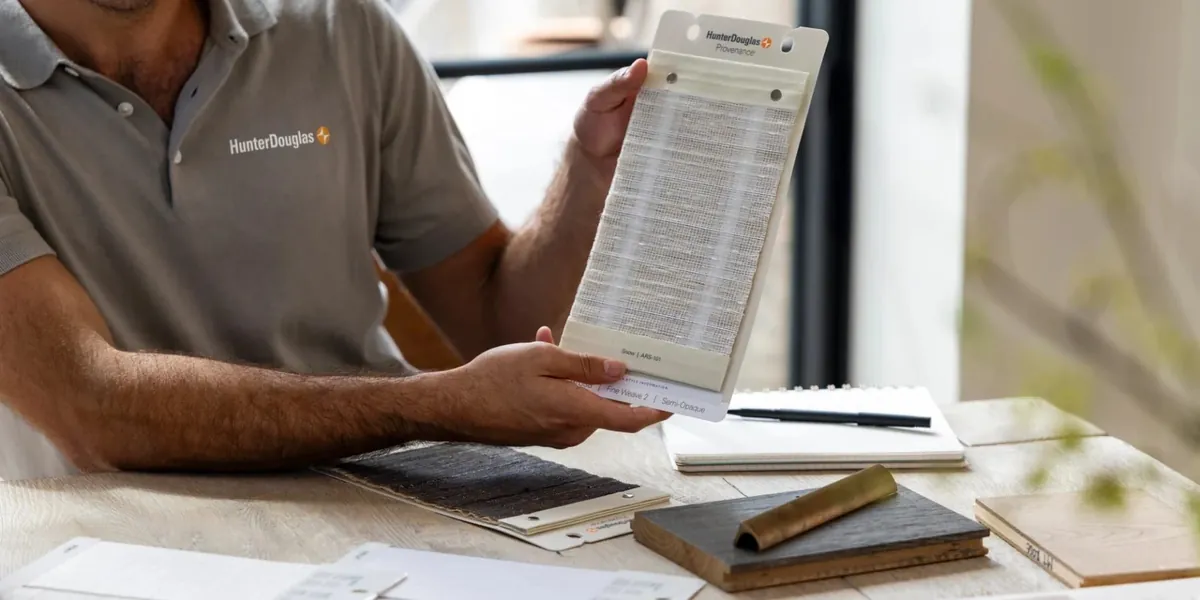
Choosing a shade for a street-level window is easiest with the street outside and the fabric in your hand. Our vans carry the samples, so a consultant brings them to your door.
- Request a consultation online, or use the call button, and pick a day.
- Your consultant arrives with Vignette and Carole Fabrics in both styles and a range of weights.
- You look at each room together and, where it matters, at the front of the building from the sidewalk.
- Swatches go flat against the glass so you can judge daylight and cover in real conditions.
- Every sash is measured, with ceiling height, frame depth and any old hardware noted.
- You get a free estimate in writing and decide in your own time.
An interior design consultation can be added to the same visit if color across a room or a whole floor is on your mind. The page on what happens at an in-home consultation explains more.
Measuring old city sash
The double-hungs in the city’s older housing have been painted, opened and shut for a very long time. Frames lean, sills dip and stops thicken with paint, and on a tall window a tiny lean at the top grows by the bottom. We take the width at the head, middle and sill, the height at both sides and the middle, and the depth where a headrail would go. Where a wall mount above the frame is planned, we check the space and the plaster above the trim.
If a frame is too far out of square for an inside fit, we suggest mounting on the casing and show you where the shade will sit. Certified Hunter Douglas installers do the fitting, level every headrail and run each shade through its full travel. The guide to what happens on installation day covers the day.
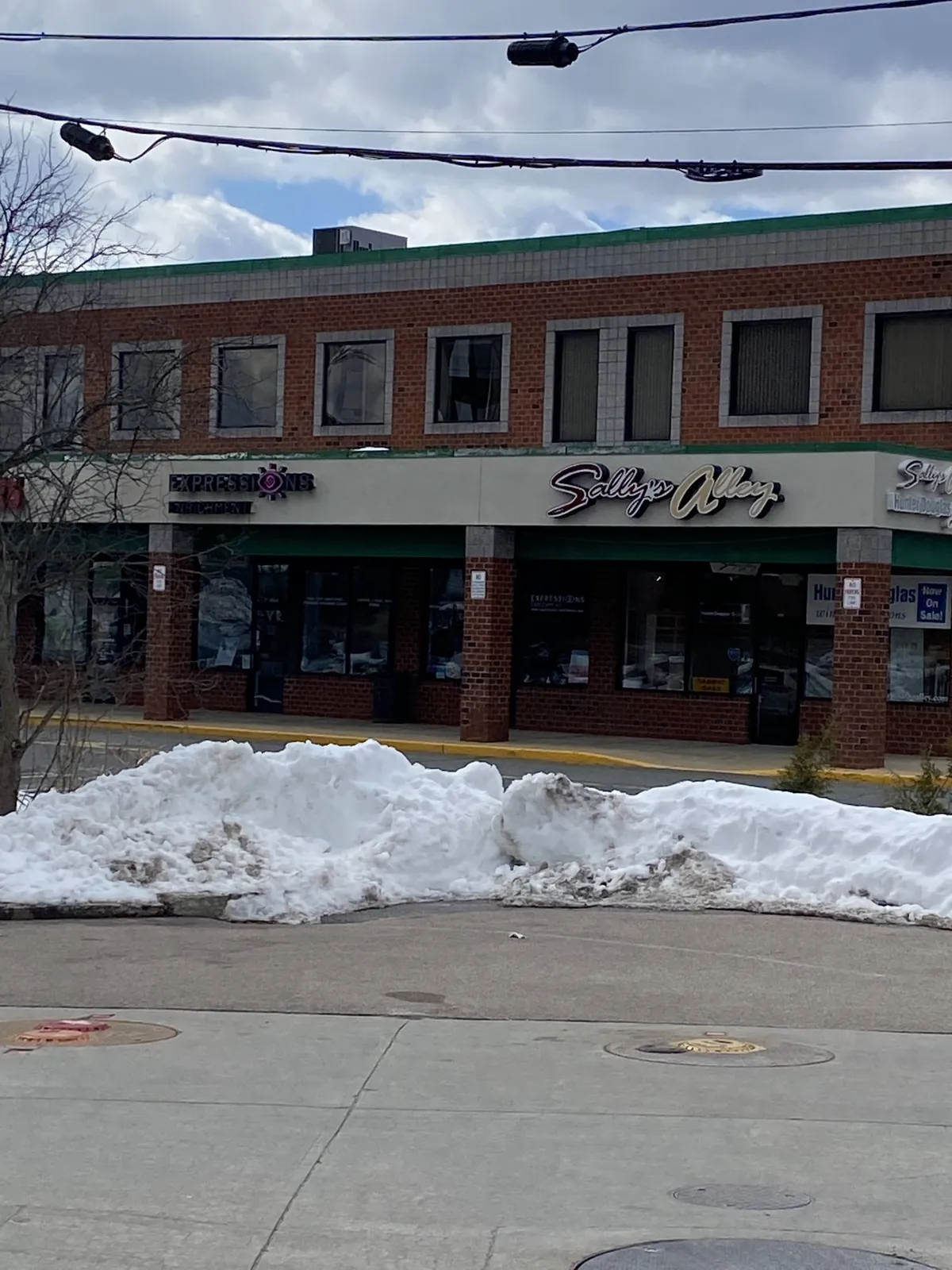
Franklin, our nearest showroom
The Franklin showroom is the nearest of ours to Woonsocket, and you are welcome to stop in during opening hours.
For a window a few steps from the sidewalk, though, the right fabric is easiest to judge in place. A home visit lets you test each one against your own street.
A Hunter Douglas Gallery dealer
Blinds & Designs is a Hunter Douglas Gallery dealer, and our installers are certified by Hunter Douglas. For a Woonsocket home that means the full Vignette and Carole Fabrics range, measured and installed by one business.
If a room would suit honeycomb shades, blinds or shutters better, we carry the wider Hunter Douglas range and can plan it at the same visit. We also repair blinds and shades you already own. Our Woonsocket page lists every service we offer in the city, and the full roman shades page shows the range.
Questions from Woonsocket
Our first-floor rooms are close to the sidewalk. Which fabric should we pick?
Dense cloth, above all for rooms you sit in after dark. Light cloth turns translucent once your lamps outshine the street; dense cloth does not.
Our windows are very tall. Will the raised shade block the top of the glass?
Not if the headrail goes on the wall above the frame. The raised fabric then sits over the wall and the whole height of glass stays open.
We own a triple-decker. Can the shades match on all three floors?
Yes. Matching outward color and stopping height on the front windows keeps the building looking tidy, while each floor chooses its own fabric inside.
The house next door is very close. Can we keep light and still have privacy?
Yes. A lighter fabric blurs the view across the gap and lets daylight in, and an outside mount closes the thin gaps down each side.
Is the estimate free?
Yes. Once your windows are measured, the estimate costs nothing.
Book a consultation
The simplest way to settle roman shades in Woonsocket, RI, is at your own window, with the street in view and the fabric in your hand. Request a consultation and a consultant will bring Vignette and Carole Fabrics samples, measure every sash and leave you a free estimate. Prefer to ask first? Use the call button, or visit our Franklin showroom.