
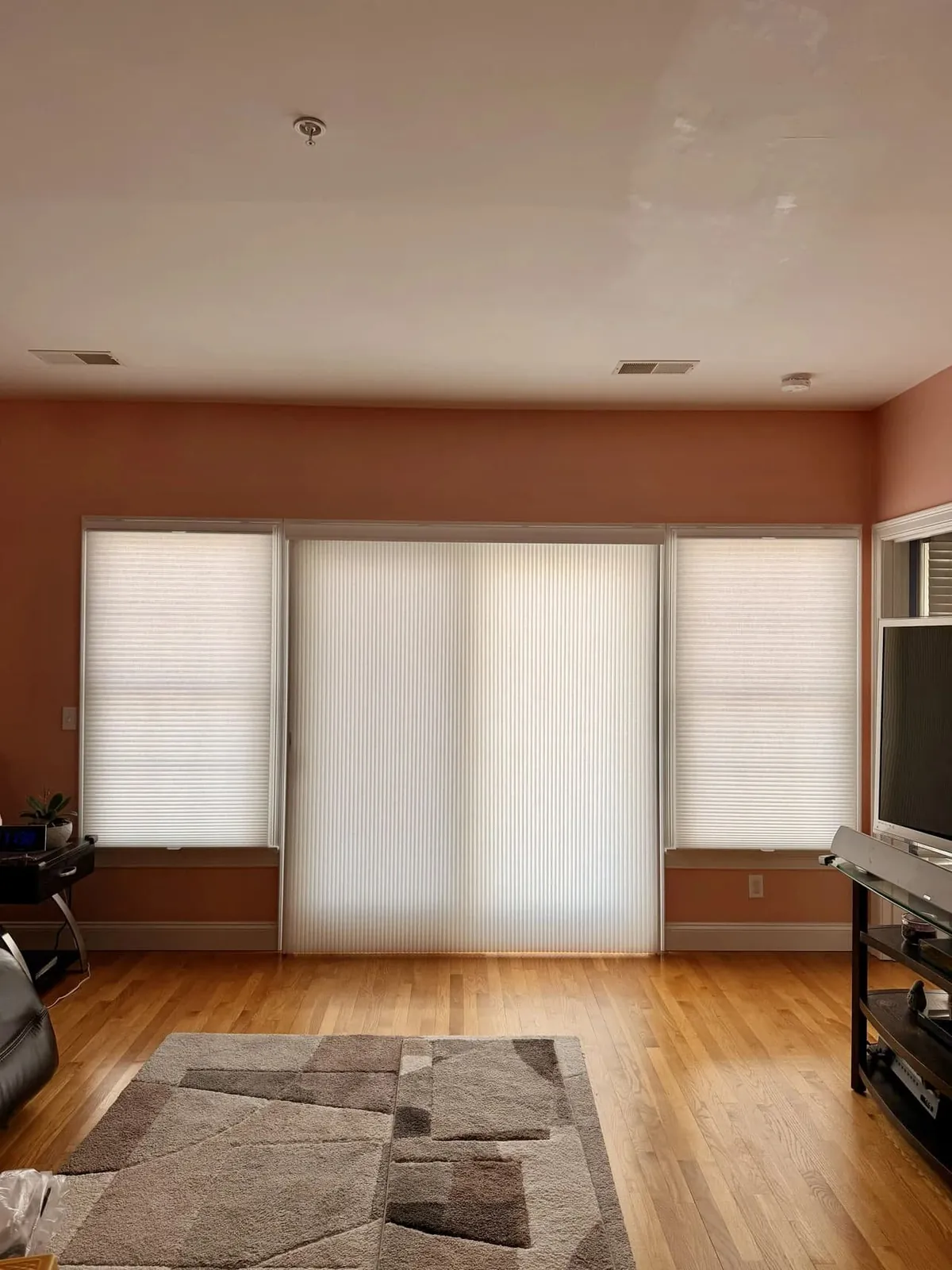
Set well back, and open to the yard
Most houses in town sit on larger lots than you find in the older mill centers nearby, and they sit well back from the road. Capes and ranches make up much of the stock, with newer colonials off Route 140 and in the neighborhoods around Norton Reservoir. Nearly all of them have standard modern openings: double-hung windows, picture windows and sliders with square frames and good depth.
That changes what a Hunter Douglas dealer in Norton, MA spends time on. With a setback that keeps the street at a distance, privacy from passers-by is a smaller worry than in a close-built town. The bigger questions are about sun across an open yard, glare on a television, darkness in a bedroom, and which product suits the style of each room.
We are a Gallery dealer for Hunter Douglas, so every one of its families is ours to offer, and the people who fit your order carry Hunter Douglas installation certification. Here is how we approach the houses in town.
Every Hunter Douglas family, for every room
Tap a card to read our full page on that product in Norton.
Custom blinds
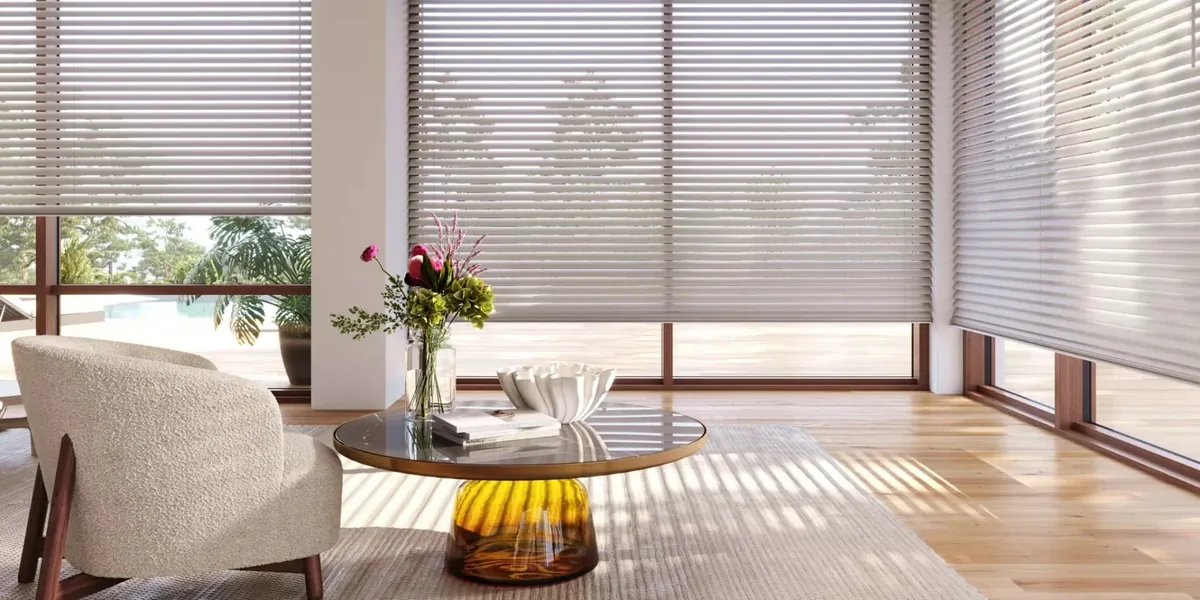
Slats in real wood from Parkland, faux wood from EverWood, or metal, plus verticals for a wide door.
Cellular shades
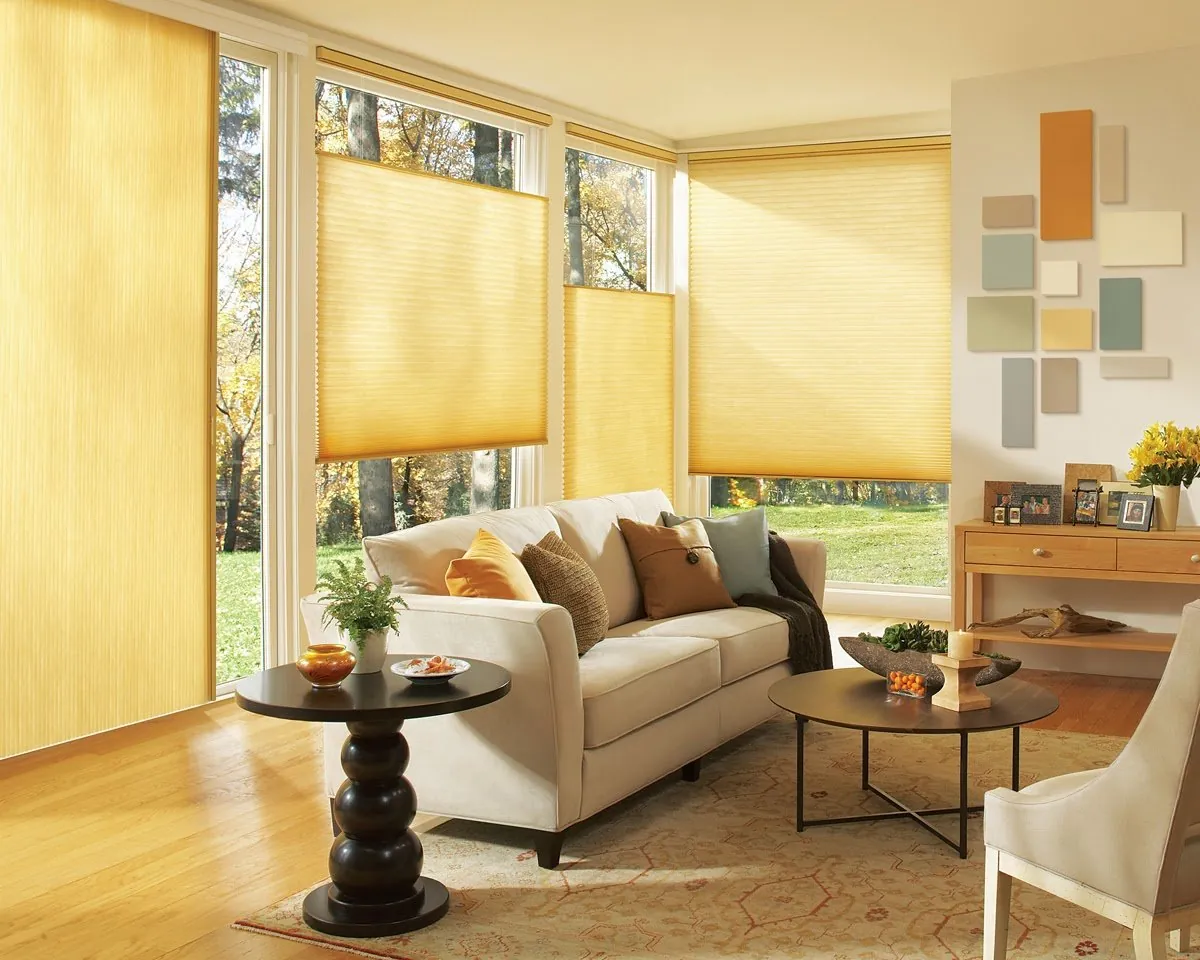
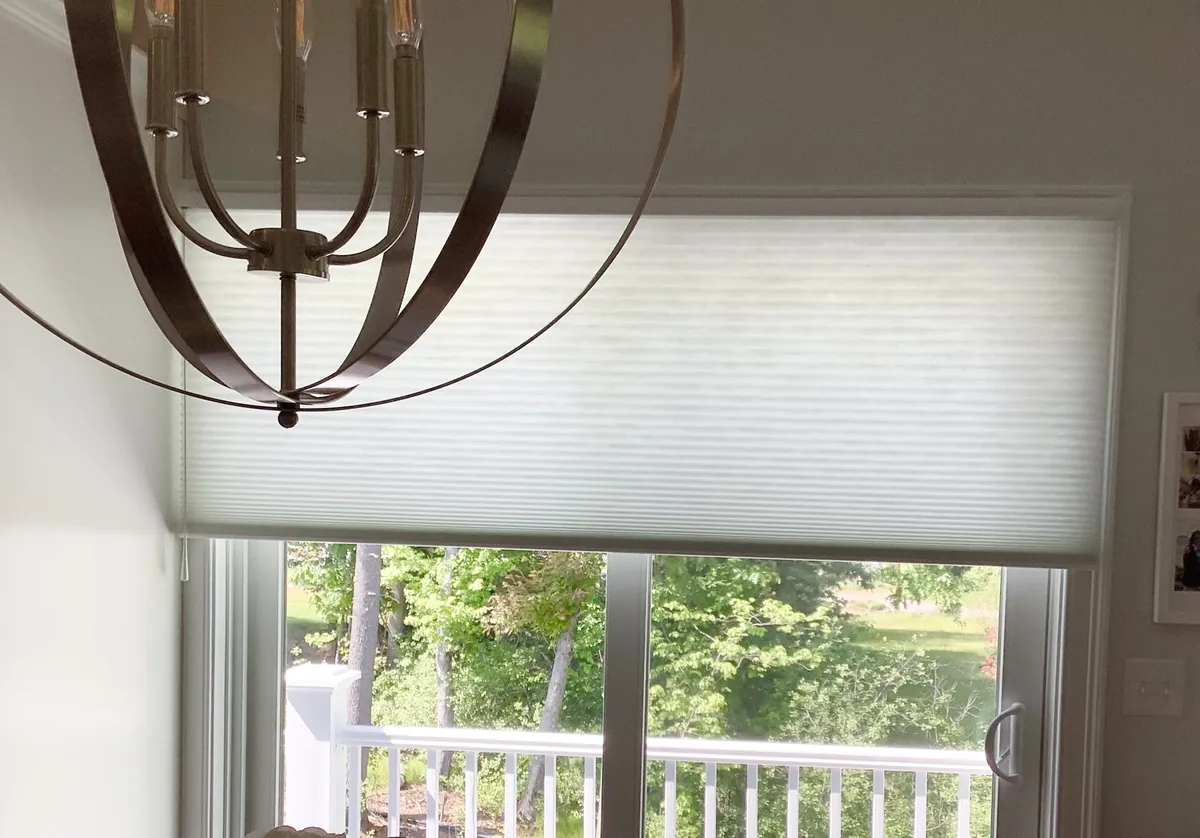
Duette or Applause honeycomb: air caught in each cell is why the room stays warmer by the glass.
Roller shades
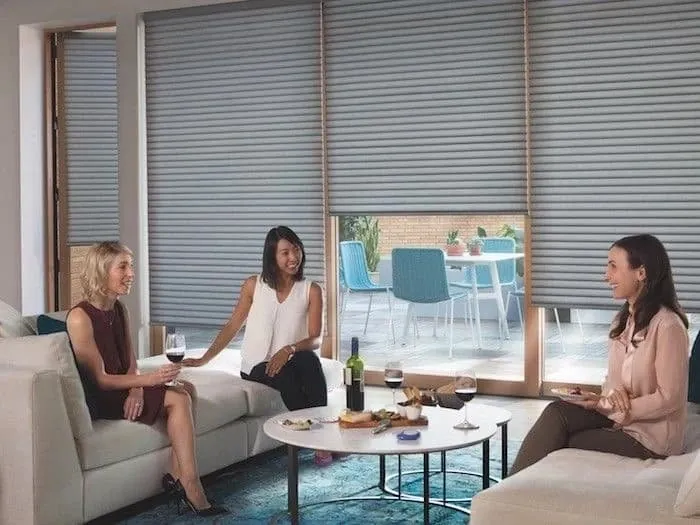
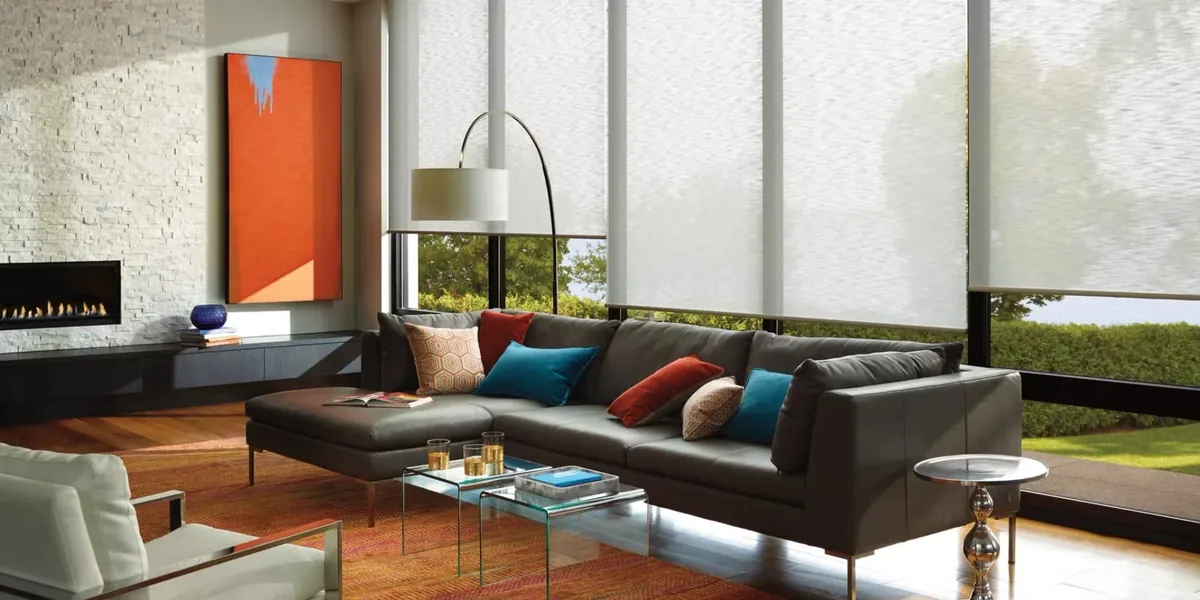
Plain rollers and solar screens from the Designer and Alustra lines, with a weave as open as your view deserves.
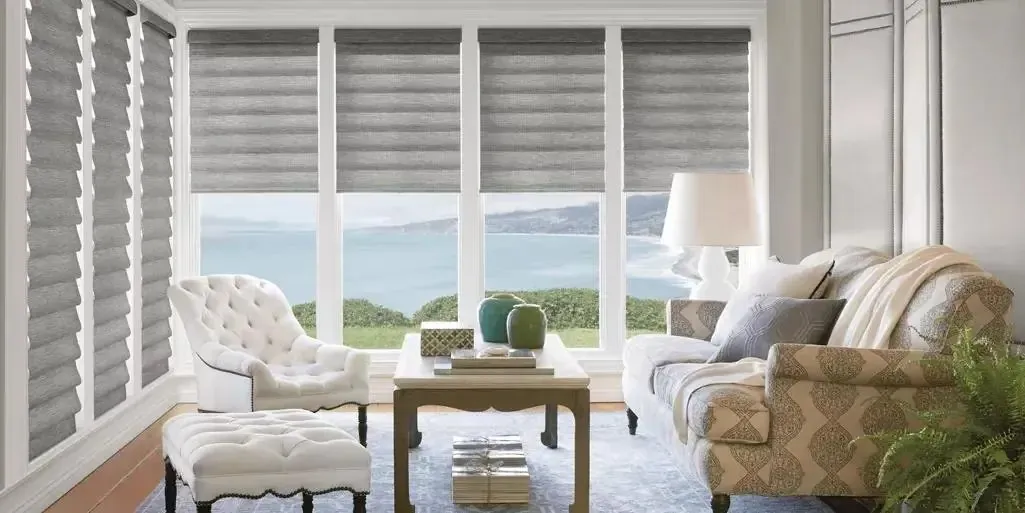
Roman shades
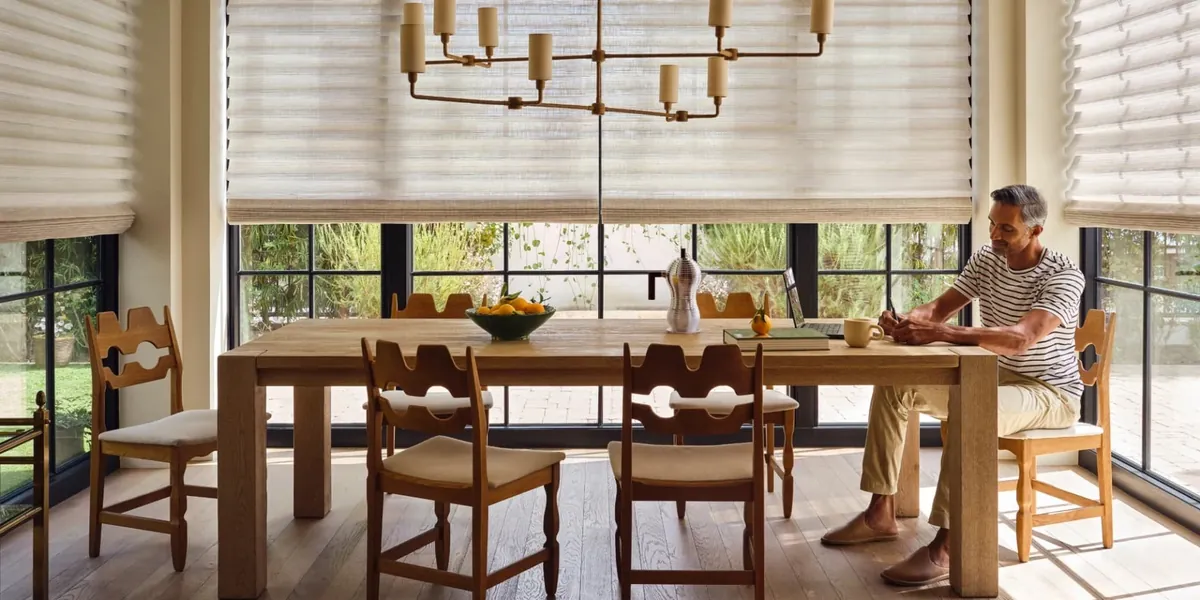
Soft folds or a flat face, from Vignette or from Carole.
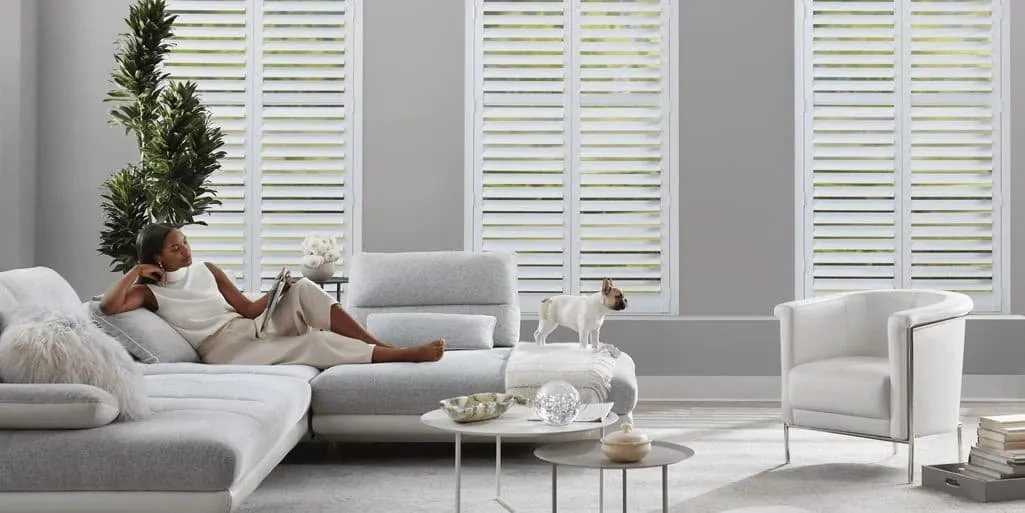
Plantation shutters
Shutters from the Palm Beach, NewStyle and Heritance lines, in the louver and frame that suit the room.
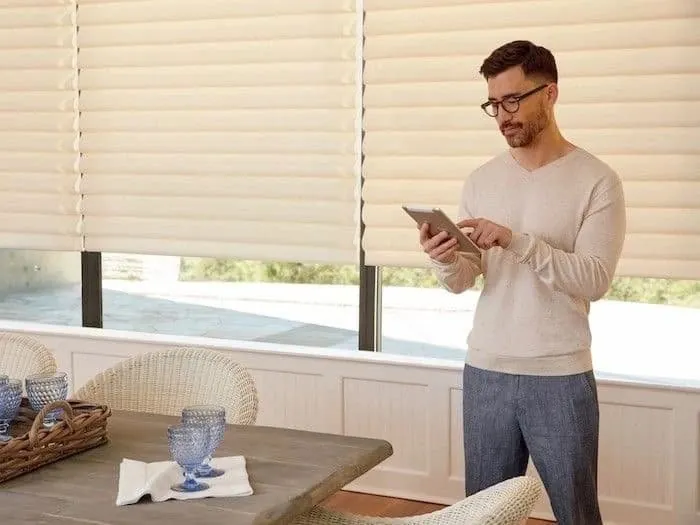
Motorized blinds and shades
PowerView, run from a phone, a handheld remote or a timetable you set.
Capes: a compact house with a busy upstairs
A cape keeps its living space on the ground floor and tucks the bedrooms upstairs under the roof. Downstairs, the windows are usually regular double-hung units either side of a centered door. Upstairs is where it gets more varied, because the bedrooms take their light from dormers set into the slope of the roof.
Dormer windows tend to be smaller than the ones below and sit in a little alcove of their own. That alcove is useful: a shade inside the dormer’s frame keeps the alcove tidy and leaves the ceiling slope clear. A honeycomb or a roller gathers into a slim band when raised, so a small dormer window keeps nearly all its glass. For a child’s room or a guest room up there, a darkening fabric helps on long summer evenings when the sun sets late.
Downstairs, a cape’s front rooms are often the sitting room and dining room. Because the house sits back from the road, many people choose lighter fabrics here than they would in a town center, keeping the room bright and leaving the view of the yard open for most of the day. Some capes have been extended over the years, with a family room or a primary bedroom added at the back; those additions usually bring newer and larger windows, and we treat them as their own room rather than forcing them to match the original front.
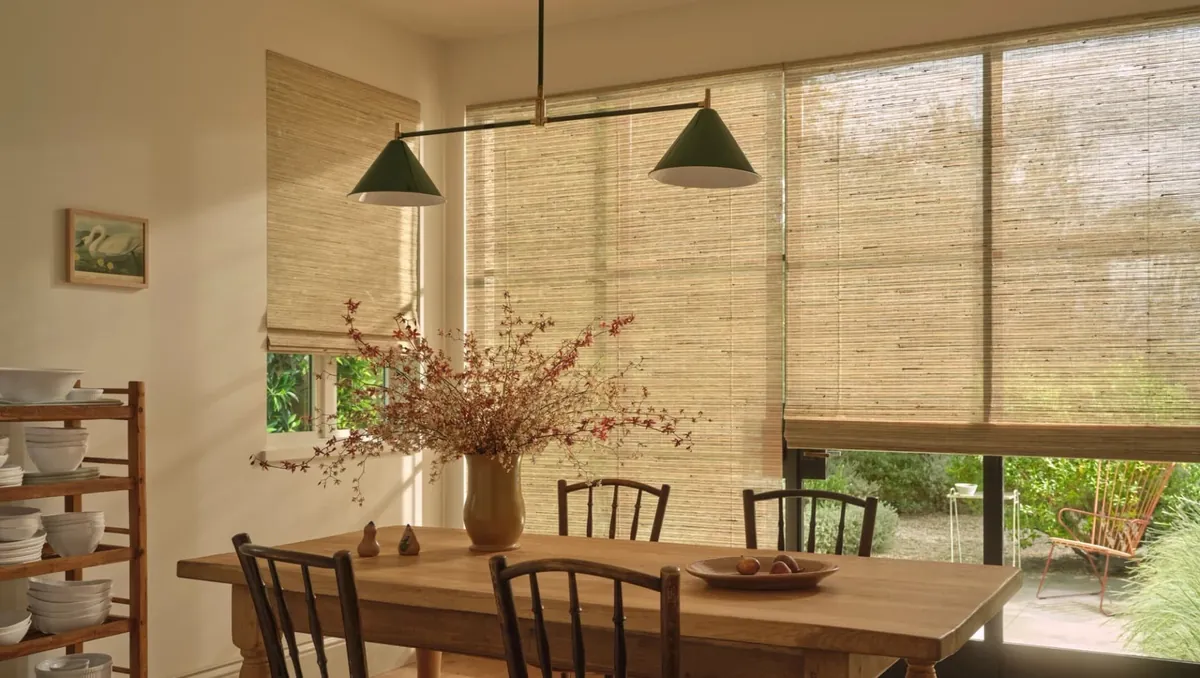
Ranches on bigger lots
A ranch spreads its rooms along one floor, so every window is at ground level and looks across the lot. On a larger property, that often means the picture window faces a long front lawn and the back rooms face the yard, with a slider or patio door somewhere along the rear.
For a ranch, we usually take the sides of the house in turn.
- Front. The picture window is the widest pane on the house and catches the most sun if it faces south or west. Silhouette, with its tilting fabric vanes, or a solar screen keeps the lawn in sight while taking the edge off the glare.
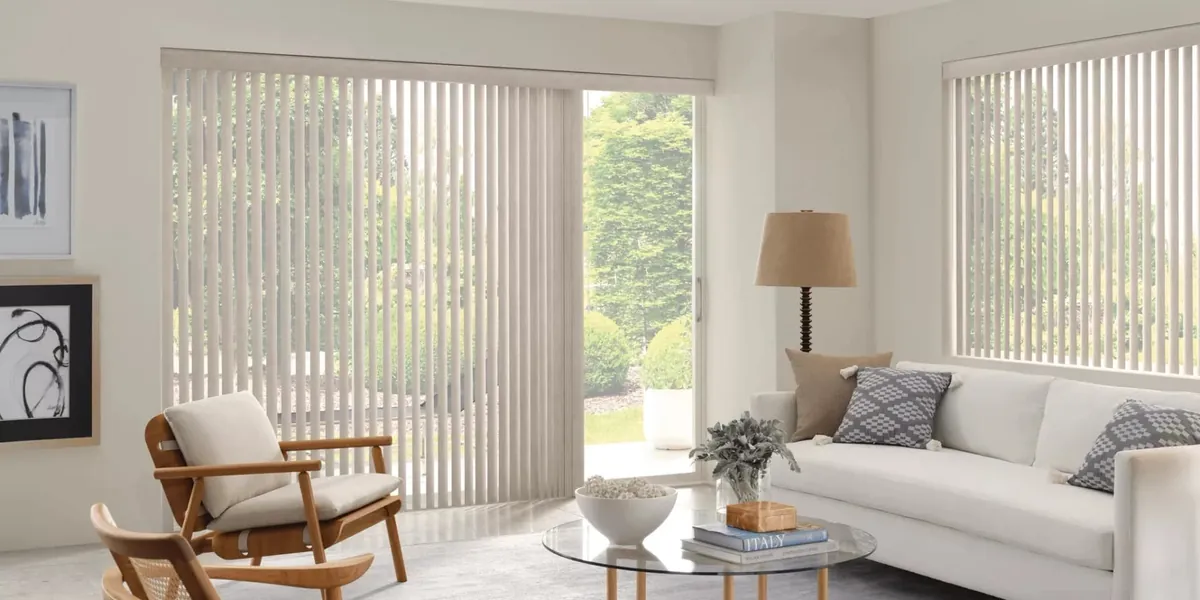
- Rear. A patio slider wants something that travels sideways with it: verticals, Luminette or a vertical honeycomb. The windows on either side can take a matching product so the wall reads as one design.
- Bedroom end. Usually at one end of the hall, with ordinary windows that will take almost any line. Darkness at night is the main wish.
- Kitchen. The window above the sink is a common spot for EverWood slats or a shutter on the lower half only.
Because the frames are square and deep, most ranches take a mount inside the casing on every window, which keeps the trim on show and the look clean.
Newer colonials off Route 140
The newer colonials off Route 140 are larger houses with more glass. A two-story entry is common, sometimes with a tall window above the door. Family rooms open to the kitchen and often carry a run of windows or a pair of patio doors. Bedrooms upstairs are generous, with standard double-hung windows.
The windows that cause the most head-scratching in these houses are the high ones. A pane above an entry or near the top of a family room wall cannot be reached by hand, and that is where PowerView becomes the practical answer rather than a luxury. A shade up there can lower with a tap on a phone or run on a timetable, and the rest of the shades in the room can be set to move with it.
The run of family room windows is another place to plan carefully. Matching the heights of every shade across the wall, and choosing one fabric that suits both the kitchen and the sitting area, makes an open room feel calm. A Hunter Douglas dealer in Norton, MA can lay out that wall at the visit, with samples against the glass.
Upstairs in a colonial
Above the family room, a colonial’s bedrooms tend to be straightforward: two windows per room, square frames, a closet on one wall. That simplicity makes it easy to treat each bedroom on its own terms. A nursery may want a darkening honeycomb; a teenager’s room might suit wood blinds that tilt for daytime light; the primary bedroom often gets shutters or a Roman shade for a softer, finished look.
Hallway and landing windows upstairs are easy to overlook. A window at the top of the stairs is seen from below as well as on the landing, so we usually match it to the entry rather than to the bedrooms.
What a setback means after dark
A deep setback keeps the road at a distance in daylight, but evenings are a different story. Once the lamps go on, a lit room is easy to see into from across a lawn, even a long one, and a house that felt private all afternoon can feel exposed at dusk. On a larger lot the neighbors may be further away, yet a side window can still face a neighbor’s yard or driveway.
So we ask how each room is used at night as well as by day. A living room used mainly in the evening may want a sheer for daytime softness and a fuller fabric for night, which two products in one window can give. A home office used only in daylight might need nothing more than glare control. As a Hunter Douglas dealer in Norton, MA, we would rather ask those questions at the window than guess from a floor plan.
Patio doors and decks
Larger lots tend to mean outdoor space, and most of the houses here open onto a deck or patio through a slider or a pair of hinged doors. These doors get heavy use, so the covering has to stay out of the way when they open and close many times a day.
A slider is best served by something that moves sideways: Luminette, a vertical honeycomb or a vertical blind stacks to one side, clear of the door’s path. Hinged French doors are different: a shade mounted to each door panel moves with the door, so it never blocks the opening. In both cases we look at the handle and the trim before we choose the mount, so nothing catches.
The windows beside a patio door deserve the same thought. If the door gets a vertical covering, the neighboring windows can take a horizontal product in a matching color, so the wall looks planned rather than pieced together. We show you a couple of combinations with samples at the visit, and you choose the one that suits the room.
Around Norton Reservoir
The neighborhoods around Norton Reservoir mix capes, ranches and newer houses, and many have their larger windows facing the water or the trees around it. Where a house leans its glass to one side like that, that side is where the light decisions matter most.
Open water and open lawn both throw light back into a room. A space facing that way can be bright through much of the day, which is lovely until the sun drops low and lands straight in your eyes. Solar screens are worth a look here: the weave can be more open or more closed, which trades outlook against glare. Sheers handle the same problem with soft vanes you tilt to the angle you want.
If the room faces east, the morning sun is the issue; if it faces west, the late afternoon. We note which way each window faces when we visit, so the fabric suits the hours you actually spend in the room.
When the window is standard, the fabric does the work
Because so many openings in town are regular modern units, the fitting rarely limits what you can have. That frees the conversation to focus on fabric and light.
- Honeycomb. Duette and Applause hold air in their cells, which helps a room keep its warmth in winter, in fabrics from light-filtering to room-darkening.
- Roller and screen. With a screen from the Designer or Alustra lines, how open the weave is decides the balance between keeping the view and stopping the glare.
- Sheer. Silhouette and Pirouette tilt soft vanes; Luminette does the job sideways across a broad opening or a door; Nantucket is a further sheer line we offer.
- Roman. Vignette and the Carole Roman line bring folds or a flat panel to a dining room or bedroom.
- Blinds. Parkland wood and EverWood faux wood slats tilt for precise control.
- Shutters. Mounted to the frame, they feel like part of the house; the louver width and frame profile are picked to suit it.
There is no substitute for seeing each option in your own light, so we load samples into the van and bring them to you.
A room-by-room starting point
Every house is different, but these pairings come up often in the capes, ranches and colonials here.
- Living or family room: a sheer or a screen, keeping the yard in view and taking the sting out of the sun.
- Bedrooms: darkening honeycomb, or shutters for a more built-in feel.
- Kitchen: faux wood slats, or a shutter on the bottom half of the window.
- Sliders and patio doors: verticals, Luminette or a vertical honeycomb that draws aside.
- High entry or family room windows: PowerView, so nobody needs a ladder.
- Dormers in a cape: a slim honeycomb or roller inside the dormer frame.
Treat it as a place to start, not a rule. When we visit we watch how each room is used and adjust from there. Before then, you might like our guide to deciding between shades and blinds.
Certified installation, even on a simple window
It is easy to assume a standard window needs no special care. In practice, small things still decide whether a room looks finished: a row of shades stopping at one height, a vertical covering on a slider clearing the handle, a headrail sitting level even where the frame is a touch off.
That is the work Hunter Douglas certifies our installers for, and it is why being a Gallery dealer matters on a straightforward house as much as an old one. Alongside the products, we offer:
- Consultations in your home, with a van of samples, because we can bring the showroom to you
- An estimate that costs nothing
- Design help with color and fabric through our interior design consultations
- Automation for new shades, and repair of blinds and shades you already have
As a Hunter Douglas dealer in Norton, MA, we would rather get those details right on a simple ranch than rush it.
PowerView in a Norton house
PowerView lets Hunter Douglas shades rise and fall from an app, a remote or a timetable. In the newer colonials it solves the windows nobody can reach. In a ranch or cape it is more about routine: the living room shades dropping as the afternoon sun swings round, or every bedroom closing together at night.
At your consultation we decide which windows are worth a motor and plan how each motor is powered. If you want to know how the controls work first, see how motorized shades are controlled.
Our visit, in four parts
The consultation happens in your rooms, with samples from our van.
- Walk-through. We go room by room and talk about light, privacy and the look you want.
- Samples at the glass. Fabrics, slats and louvers go up against your own windows.
- Measuring. Each opening is measured by us, and the mount is noted for each.
- Estimate. You get a free estimate and take whatever time you need with it.
Once you order, Hunter Douglas builds each piece to our measurements and we come back to fit it. The guide to what happens at an in-home consultation goes into more depth.

Closest showroom: Franklin
Of our showrooms, Franklin is the one nearest to Norton. Drop in before we visit, afterwards, or skip it entirely; plenty of people make every choice at home from what the van carries.
Our Hunter Douglas page tells you more about the brand, the Hunter Douglas website has the wider catalog, and our Norton page gathers every service we offer in town.
Questions from Norton
My house has ordinary modern windows. Is a Gallery dealer still worth it?
Yes. With standard openings the fitting is simple, so the value lies in matching fabric to each room’s light, and in installation that leaves every shade level and lined up.
What works on the dormer windows in a cape?
A slim honeycomb or roller fitted inside the dormer frame keeps the alcove neat and leaves most of the glass clear when raised.
How do I tame glare in a room facing the reservoir or a wide lawn?
Solar screens and sheers are the usual answers. A screen’s weave sets how much outlook you keep; a sheer lets you tilt the vanes.
Can you reach the tall window above my entry?
Yes. We fit it, and PowerView lets you raise and lower it from your phone, a remote or a timetable.
Will I be charged for the estimate?
No. It is free, and it lists each window we measured during the visit.
When you want to begin
The simplest first step is a visit. Request a consultation, and we will arrive with samples, measure the windows you want covered and leave you a free estimate. The call button on this page reaches your Hunter Douglas dealer in Norton, MA as well, and Franklin is the nearest showroom if you would like to look in person first.