
Small panes in the old center, big glass under the trees
Two very different kinds of house make up most of the town. Around the center stand antique colonials, some of them among the oldest houses in the area, with very small original sash: little panes of old glass in frames sized for a time when glass was precious and walls were thick. Further out, off North Street and along Route 27, large newer houses sit on generous wooded lots, set far back from the road behind lawns and trees.
Those two groups ask almost opposite things of a window covering. The antique houses need shades that are small, careful and almost invisible, so the old windows and their trim stay the point of the room. The newer houses need shades that can manage big glass and a lot of light, or in some rooms, the shade of the trees. Planning roller shades in Medfield, MA usually means working out which of those two problems each room has.
A roller does both jobs well because it is so plain. A single panel of fabric, made to the exact size of the opening, lowers over the glass and rolls up out of sight. In a small antique window it disappears; across a big modern window it gives a clean line. The fabric does the rest.
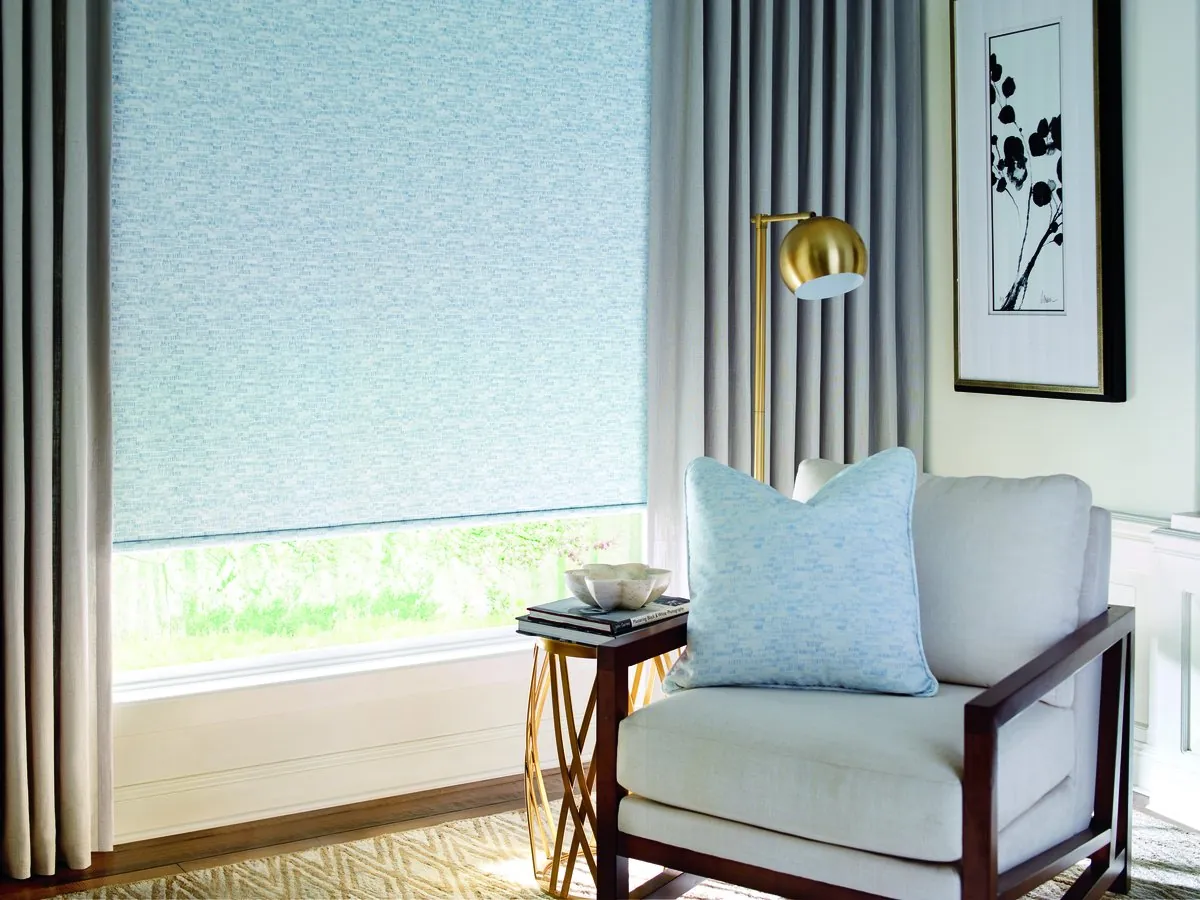
Roller shades in Medfield, MA, from the Hunter Douglas range
Three lines cover most Medfield rooms. All of them travel in our sample vans.
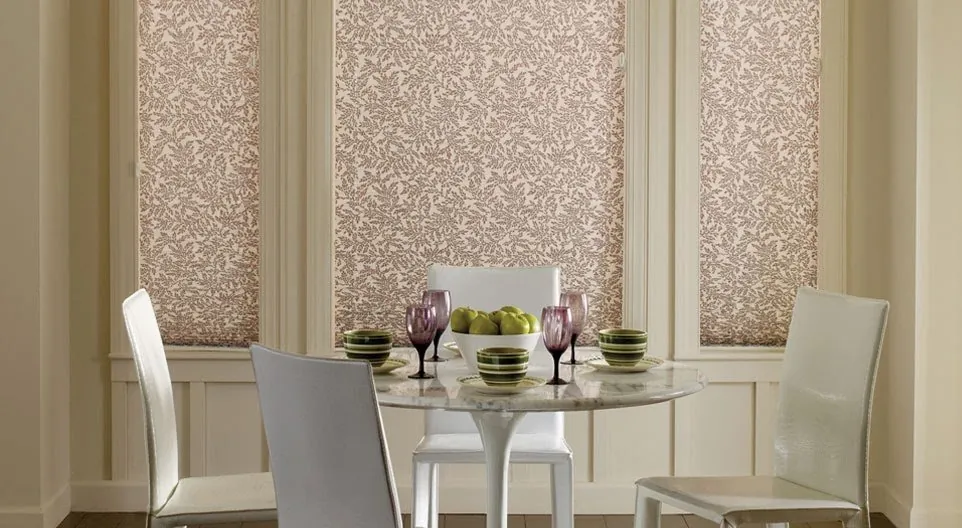
Designer Roller
A broad choice of plain, textured and patterned cloths from light filtering to blackout. The usual pick for the small windows of an antique house.
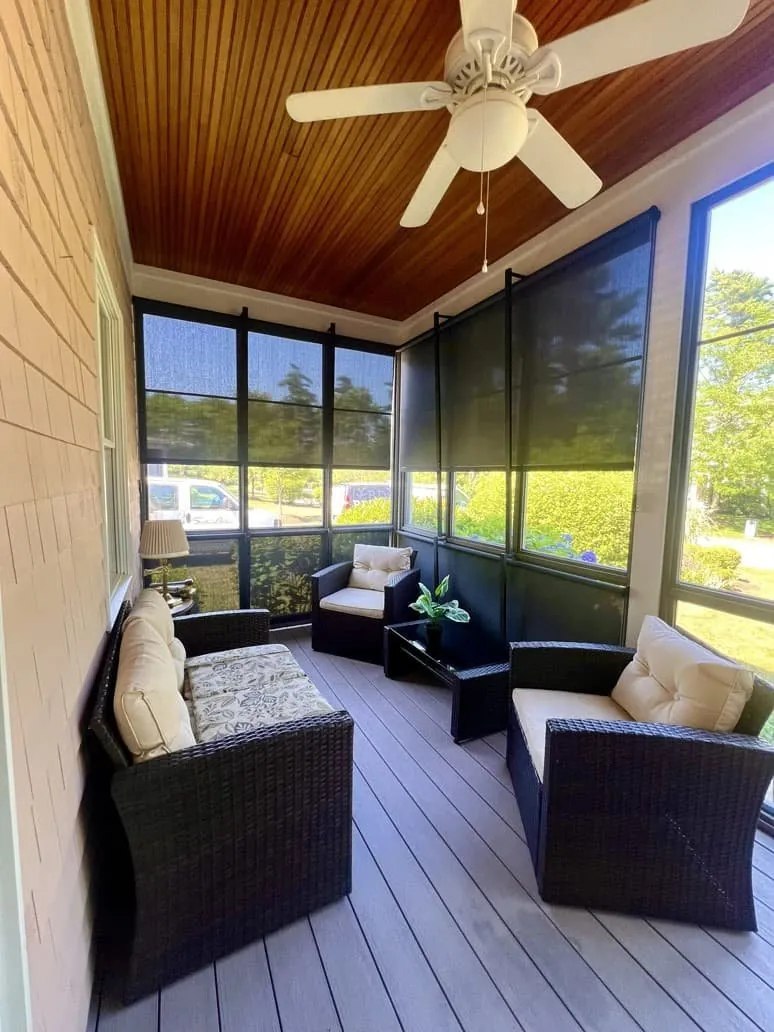
Designer Screen
Solar screen weaves that take the glare off a bright window and keep the view of the trees. Suited to the big rooms of a newer house.
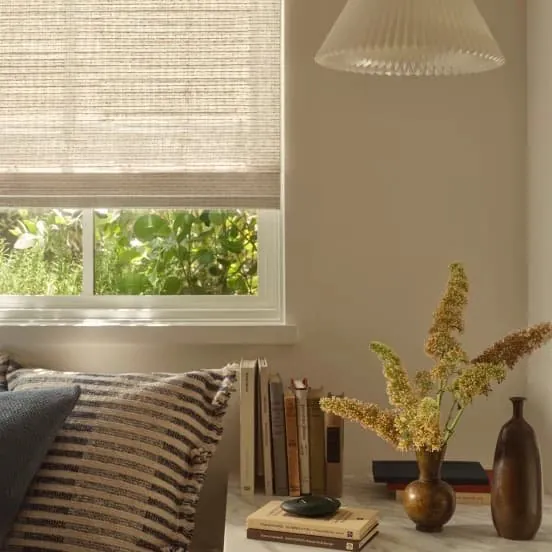
Alustra Woven Textures Roller
Roller shades in woven-look fabrics with a natural texture, which can feel more at home than a flat cloth in an old colonial room.
Very small sash in the oldest houses
The oldest colonials near the center were built with windows that look tiny by modern standards. A front room may have two or three small double-hung windows, each with a handful of old panes, set into walls thick enough to leave a deep sill. Often the glass itself is old and slightly wavy, and the trim around it has been painted many times over the years.
A roller suits those windows because there is so little to it. Mounted inside the opening, the shade sits within the frame, takes up no wall, and leaves all of the trim visible. When it is raised, it rolls up into a slim band at the top of the opening and is hard to notice at all. Bulky coverings can swamp a small antique window; a roller keeps it looking like itself.
The challenge is fit. A small, old opening leaves very little room for error, and frames that have moved over the centuries are seldom square. We measure each window at several points across and down, check the depth at more than one place, and look for anything at the top of the frame, such as old latches or stops, that could get in the way. Where an inside mount would be a struggle, we will suggest mounting on the face of the trim and explain why.
Keeping the old rooms bright
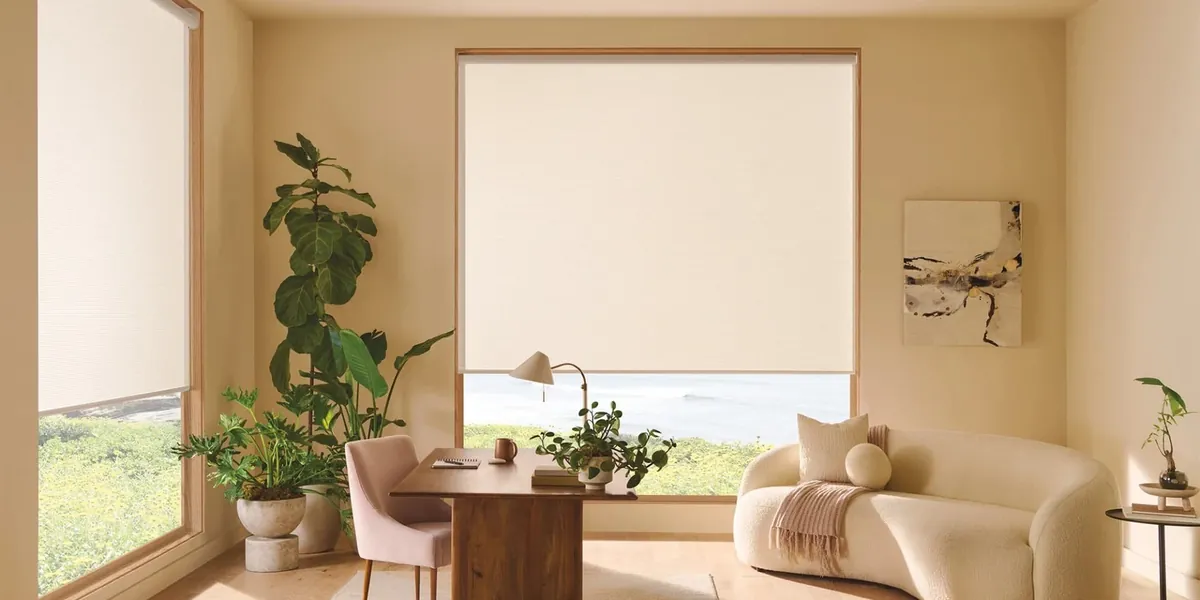
Small windows let in limited light, and the rooms behind them in an antique colonial can be quite dim even at midday. The last thing those rooms need is a heavy covering that takes away what little daylight they have.
For that reason, light-filtering fabrics are usually the right starting point in the old houses. They let the light through softly and evenly, so the room stays as bright as it can be, while still hiding the room from the street when lowered. Pale cloths in white, cream and soft natural tones keep the most light in the room and sit gently against old painted trim.
Bedrooms are the exception. Even with small windows, an upstairs bedroom in an old colonial can be bright on a summer morning, and a room-darkening or blackout cloth there is often welcome. With windows this small, the edge gap around an inside-mounted shade is a narrow strip, and many owners are happy to accept it to keep the woodwork in view.
Deep setbacks and privacy
With generous lots and long driveways, most Medfield houses, old and new, are well away from the road and from each other. Few of their windows face straight into a neighbor’s. That means privacy is rarely the main reason for a shade, at least during the day. What remains is controlling the light: glare, warmth from strong sun, and darkness for sleep.
That frees up the choice. A room that does not need screening from the street can take a fairly open solar screen and keep its view, or stay with a soft light-filtering fabric that is only lowered when the sun is on that side. Night is different; with lamps on, any room becomes visible from outside, and a light-filtering or room-darkening cloth is the answer for rooms you use in the evening.
Large houses on wooded lots off North Street
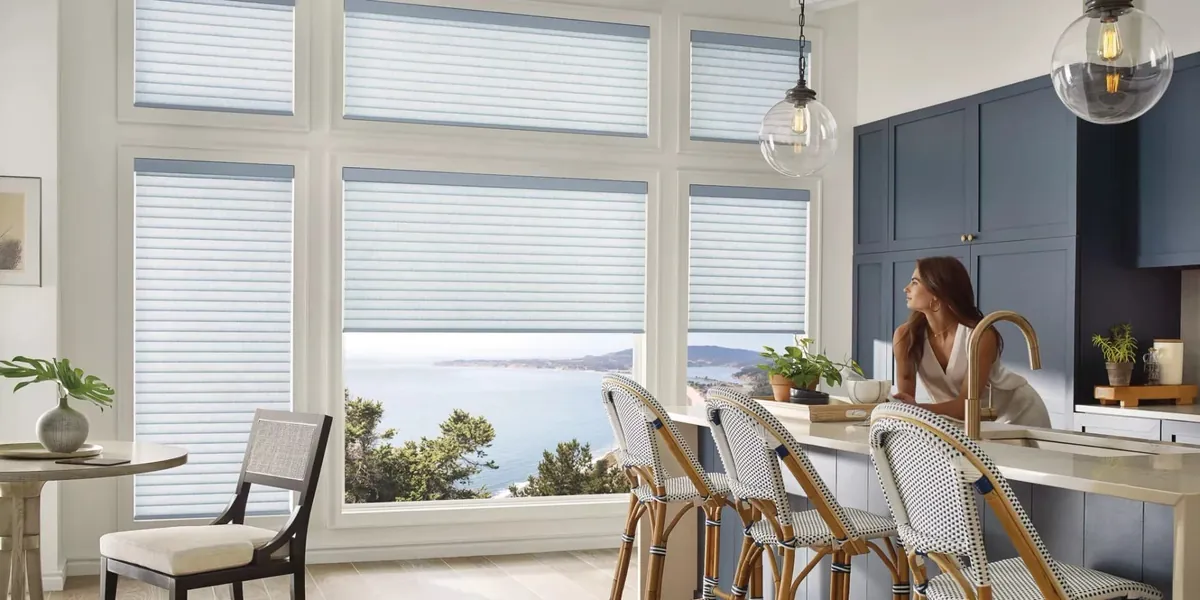
The newer houses off North Street and Route 27 are big, with big windows: a family room with a run of tall glass to the back, a kitchen that opens onto a deck, perhaps a sunroom, and a primary bedroom with windows on two walls. Most of them sit among trees, and that changes the light through the year.
In summer, a full canopy shades much of the glass, and the rooms can feel cool and green. In late autumn and winter, with the leaves down, the same windows take low sun straight through and become much brighter. A good fabric choice works in both seasons.
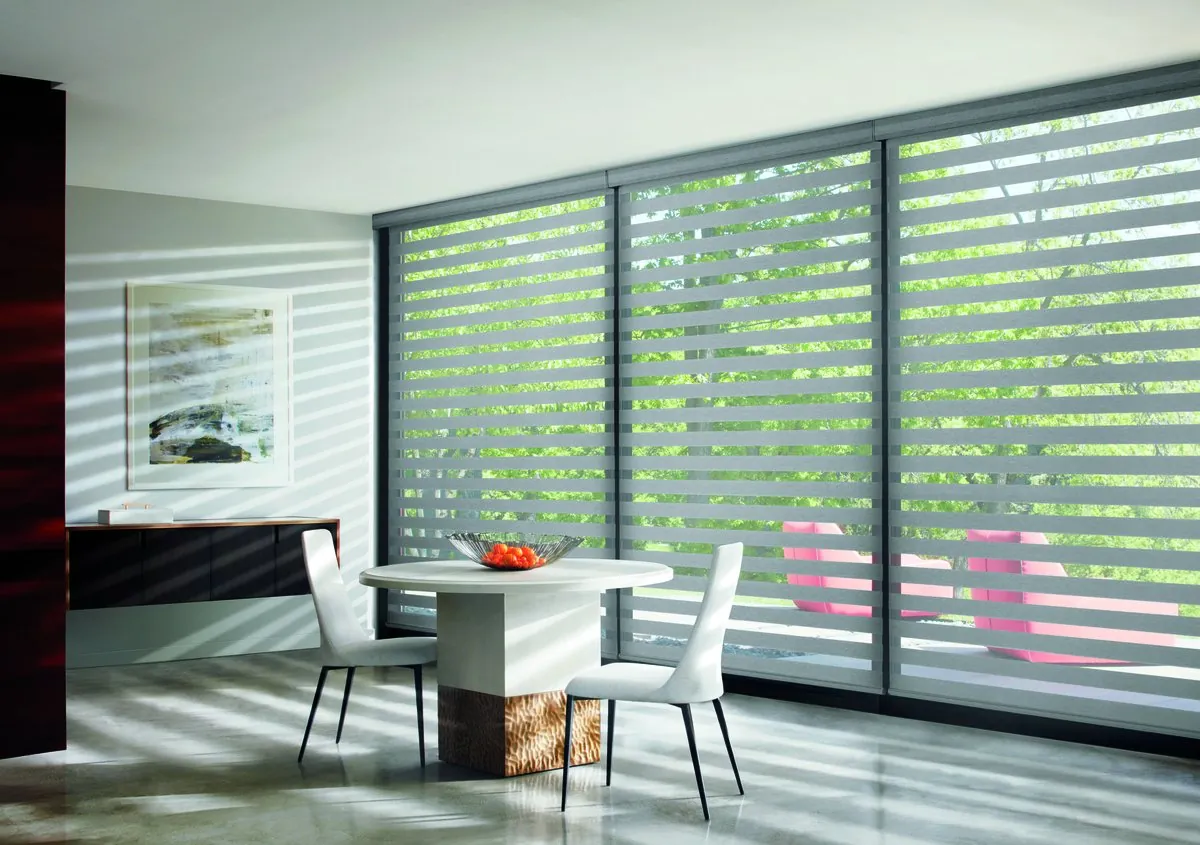
Solar screen fabrics are often the answer for the big rooms. A screen’s openness, meaning how much of the weave is open, decides how clearly you see the woods and how much glare it takes off the glass. An open weave keeps the trees crisp; a tighter weave tames the low winter sun better. We show you several at the window so you can decide which matters more in that room.
Family rooms and kitchens with tall glass
In a newer Medfield house the family room is often the largest and brightest room, with several tall windows side by side or a glass wall onto the deck. Matching roller shades across all of them keep the room tidy. Where a television sits on one wall, the window facing it may take a tighter screen than the rest, and the difference is barely visible from across the room.
Kitchens that open onto a deck usually have a slider or French doors as well as windows. A slider takes one shade sized to the full door, or two side by side, so it can be raised fully when you head out. A window over the sink is easiest with a roller, because there is nothing to fiddle with as you lean across.
Sunrooms have the most glass of all and catch the most heat on a bright afternoon. Screens on the sunniest walls make them usable through more of the year, and we size and choose each wall separately, since each faces a different way.
Primary bedrooms on two walls
A primary bedroom in one of the newer houses usually has windows on two walls, sometimes with a high window in a gable above. Light comes in from more than one direction, and on a summer morning, with sun on one wall and the other wall facing open sky, it is a hard room to darken.
Blackout fabrics on every window in the room are the obvious start, but the bigger gain usually comes from the mount. An outside mount, made a little wider and taller than each opening, covers more of the edge light that slips round a shade. In a newer house with simple trim, that is an easy decision. If the bedroom also has a window seat or a reading chair by one window, a light-filtering cloth on that one alone can keep it pleasant through the day while the rest stay dark.
When we plan roller shades in Medfield for a bedroom like this, we stand in the room at the time you wake, or ask you where the first light lands, and choose the fabric and mount for each window from there.
When an old house has a newer wing
Plenty of antique houses near the center have grown over time, with a kitchen wing, a family room or a sunroom added long after the original rooms. The windows in those additions are usually modern and larger, with standard sizes and simple trim, and they sit right beside rooms with small original sash.
That calls for a light touch. We usually keep one family of fabric color through the whole house, so the old and new rooms feel connected, and then let the new rooms take what they need: a screen in a bright addition, a light-filtering cloth in the old parlor. The roller suits both halves, which is one reason it works so well in houses like this. In a single visit we can plan roller shades in Medfield for the small sash and the big new glass together.
High windows and PowerView
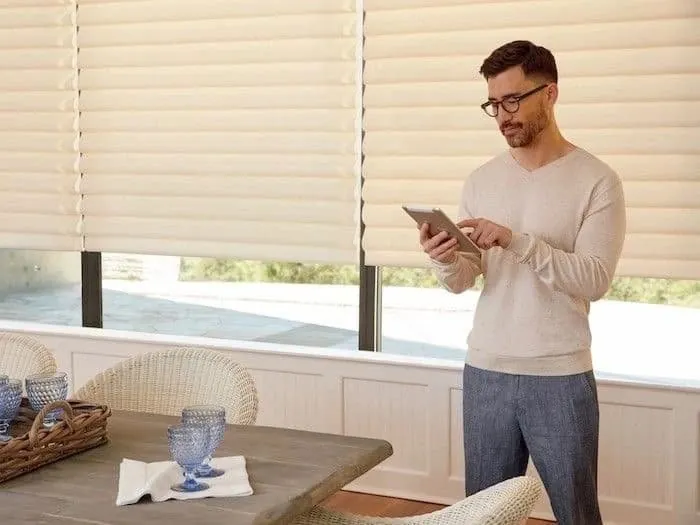
Large newer houses often have glass above reach: a two-story family room, a window over the stairs, a high gable in a primary bedroom. A shade up there is impractical to work by hand, and it is exactly where PowerView motorization is most useful.
With PowerView, the shades move from a remote or an app, singly or in groups, and they can follow a schedule. The family room screens can lower themselves in the late afternoon when the low sun comes through the bare trees, and the bedroom shades can rise at a set hour. We work out how each motor will be powered when we visit, so there are no surprises later. For more, see our motorized blinds in Medfield page.
Fabric and color in an antique house
Owners of the antique colonials often worry that any modern shade will look out of place. Chosen carefully, a roller does not. The key is the cloth. A textured or woven-look fabric in a natural tone can feel close to the linen and cotton that older rooms were furnished with, and a quiet pattern can suit a dining room or parlor. Plain whites and creams vanish against painted trim.
Alustra Woven Textures is worth a look for those rooms, because its woven-look fabrics bring warmth without bulk. Designer Roller has a wide range of plain and patterned cloths as well. We bring both, and we hold them up against your own trim, in the light that window actually gets, because that is the only fair test.
From the street, keep the front windows in one color. A pale fabric seen behind small old panes looks calm and even, which is what an antique front wants.
What happens when we come out
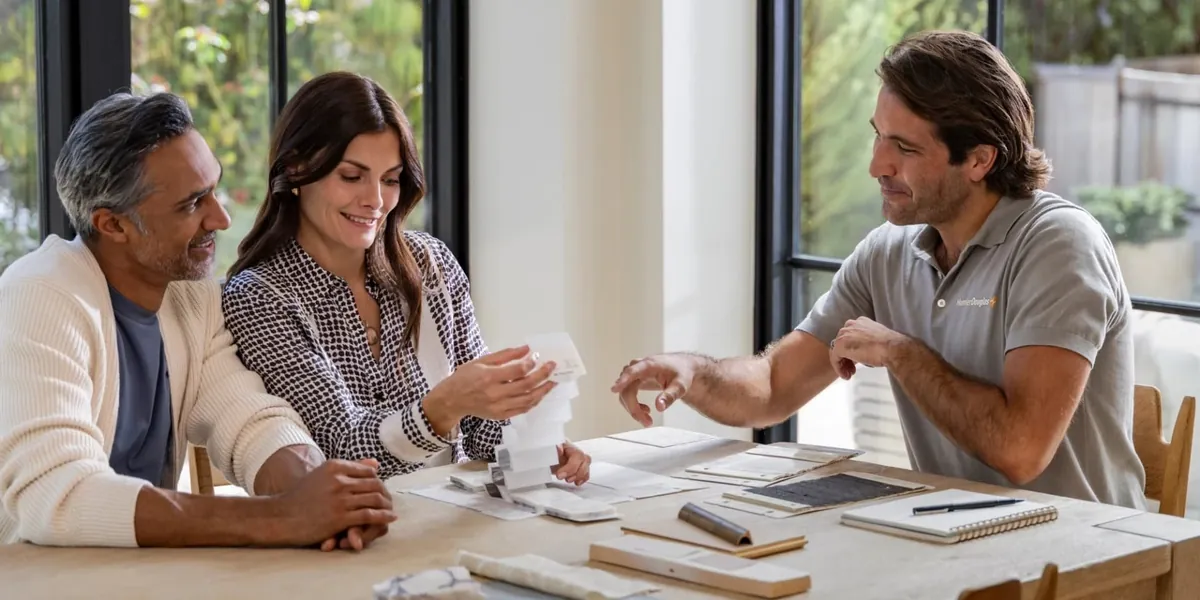
We do most of the choosing in your house, because the light in your rooms is what really decides a roller fabric. Our vans carry the samples, so we can bring the showroom to you. A visit in town usually runs like this.
- Book through Request a Consultation, or tap the call button, and pick a time.
- Show us the rooms that matter most; in an old house that is often a dim parlor, in a newer one a bright family room.
- Try the fabrics against your glass, from light filtering to blackout, plus the screen weaves at different openness levels.
- Watch us measure: every opening at several points, the frame depth for an inside mount, and anything old in the frame that needs care.
- Receive a free estimate covering the shades you have in mind.
If you would like design help pulling a whole house together, we offer interior design consultations as well, and they can happen during the same appointment. Read what happens at an in-home consultation for a fuller picture.
Fitting the shades
When the shades are ready, certified Hunter Douglas installers come to fit them. In an antique house they set the brackets carefully into sound wood, check each shade hangs level in a frame that may not be, and make sure every shade clears any old hardware as it moves. In a newer house the work is quicker, but the same checks apply. Before they leave, they show you how each shade works. You can read what happens on installation day for more.
Why Medfield houses come to a Gallery dealer
Gallery is a status Hunter Douglas reserves for dealers who meet its standards, and Blinds & Designs has it. For a house here, that means the antique parlor and the new family room can be done in one order, with every roller line on the table, from Designer Roller and Designer Screen to Banded, Sonnette and the Alustra collections.
We also repair blinds and shades that are already hanging, and take on commercial blinds and shades. When a room suits something other than a roller, our cellular shades in Medfield, custom blinds in Medfield and roman shades in Medfield pages are worth a look, and our Medfield page gathers everything we do locally. The full collection is on the main roller shades page.

Questions from Medfield
Will a roller look out of place in my antique colonial?
Not if the fabric is chosen with the house in mind. Mounted inside the frame, a roller leaves the trim on show and almost vanishes when raised. Textured or woven-look cloths in natural tones suit old rooms well.
My original windows are tiny and not quite square. Can you still fit them?
Usually, yes. We measure each one at several points and check the depth carefully. If an inside mount would be too tight, we mount on the trim instead and tell you why.
The trees shade my windows in summer but not in winter. What fabric works?
A solar screen chosen for the brighter winter months usually works all year. A tighter weave handles the low winter sun; a more open one keeps the woods clearer. We show you both at the window.
Can the shades on my high family room windows be automated?
Yes. PowerView lets you run them from a remote or app, or on a schedule. We plan how each motor is powered at the visit.
Do I pay for the estimate?
No. Once we have measured, you get a free estimate for the shades you are interested in.
Getting started
Choosing roller shades in Medfield is easiest with the fabrics in hand at your own windows, whether they are small and old or tall and new. Request a consultation and we will bring the samples, measure each opening and send you a free estimate. Our nearest showroom is in Franklin if you would like to look first, and the call button is there if you would rather talk. However you start, the choices are made at your windows, so the shades you order are the ones that suit those rooms.