
Three eras of window in one town
Drive from the center of Walpole out to its edges and you pass through three building periods in a few minutes. Victorians and colonials near the center still have tall older sash. Through East Walpole, post-war capes line the streets in neat rows. Further out, larger newer houses sit on wooded lots with standard modern openings. Planning cellular shades in Walpole, MA, starts with knowing which of those houses we are standing in, because the windows ask for different things.
The tall sash in the center is about warmth and proportion: old glass that lets the cold through, and a window shape that a bulky covering would spoil. The capes are about compact rooms that need to feel bigger and brighter. The newer houses are about big glass, trees and the light that filters through them.
A honeycomb shade covers all three because of how it is built. The fabric forms a row of closed cells, each one holding a slim pocket of air that stays still when the shade is lowered. That pocket keeps winter cold and summer heat at the glass rather than in the room, whatever the age of the window behind it.
Cellular shades in Walpole, MA, that we suggest most
These three come up in almost every consultation in town, in one combination or another.
Duette on the older sash
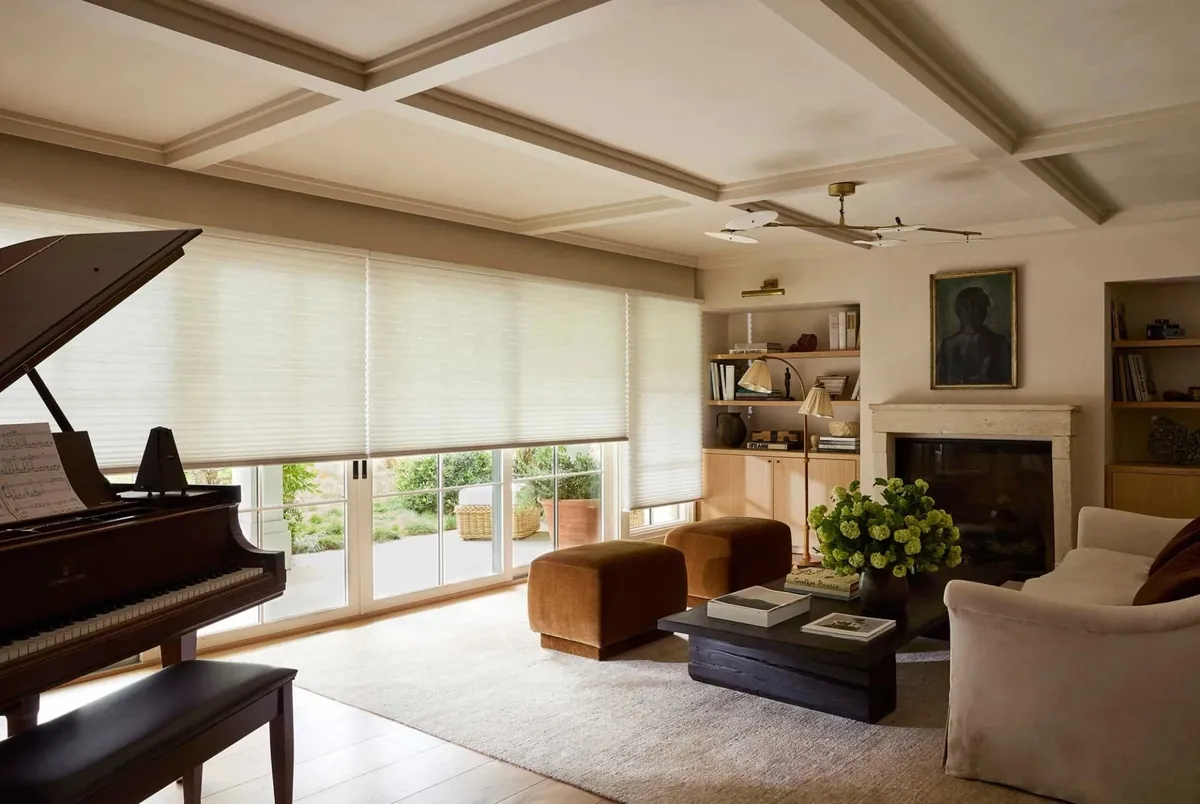
The widest Hunter Douglas honeycomb collection, made to the tall proportions of the windows near the center and mounted inside the frame where it fits.
Applause in cape bedrooms
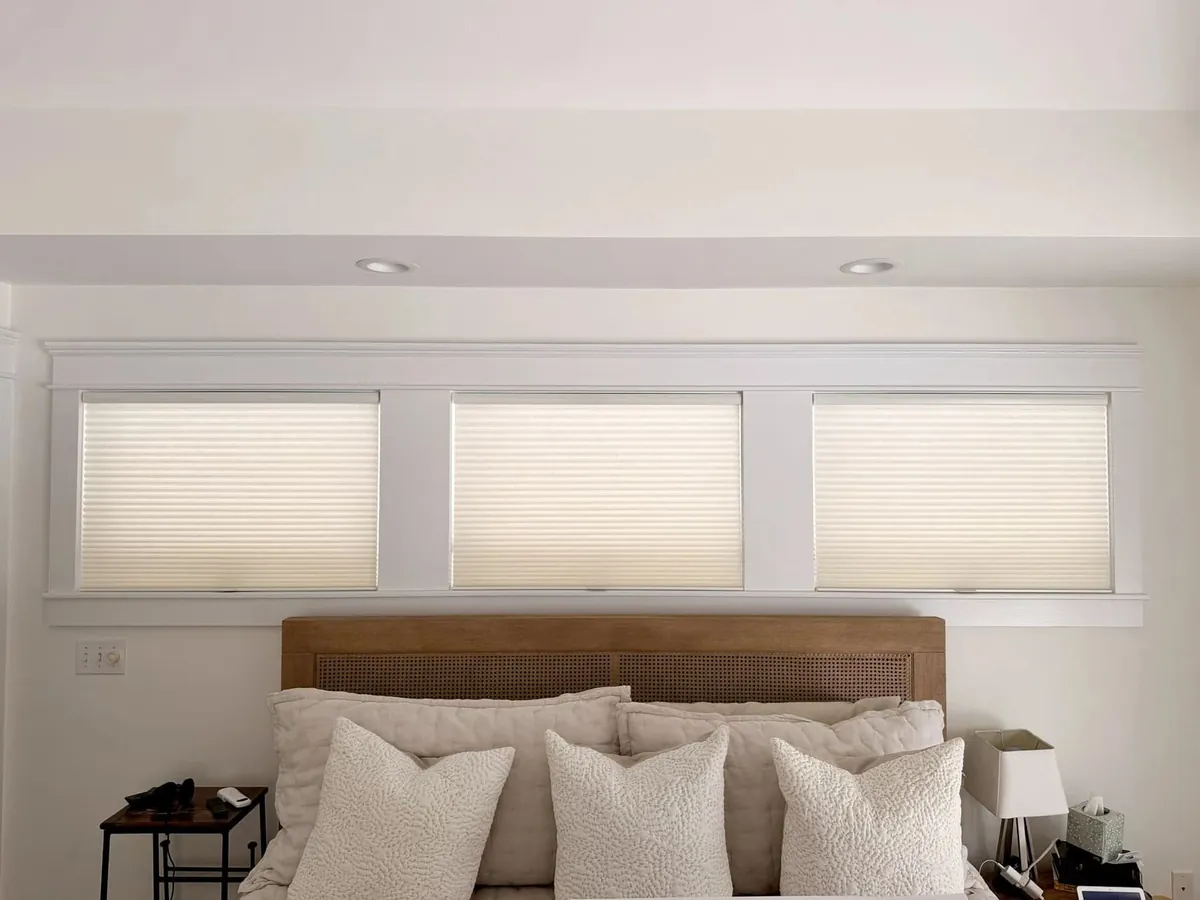
Hunter Douglas’s other honeycomb line, often in a room-darkening fabric for the bedrooms of an East Walpole cape.
Vertical honeycomb on the slider
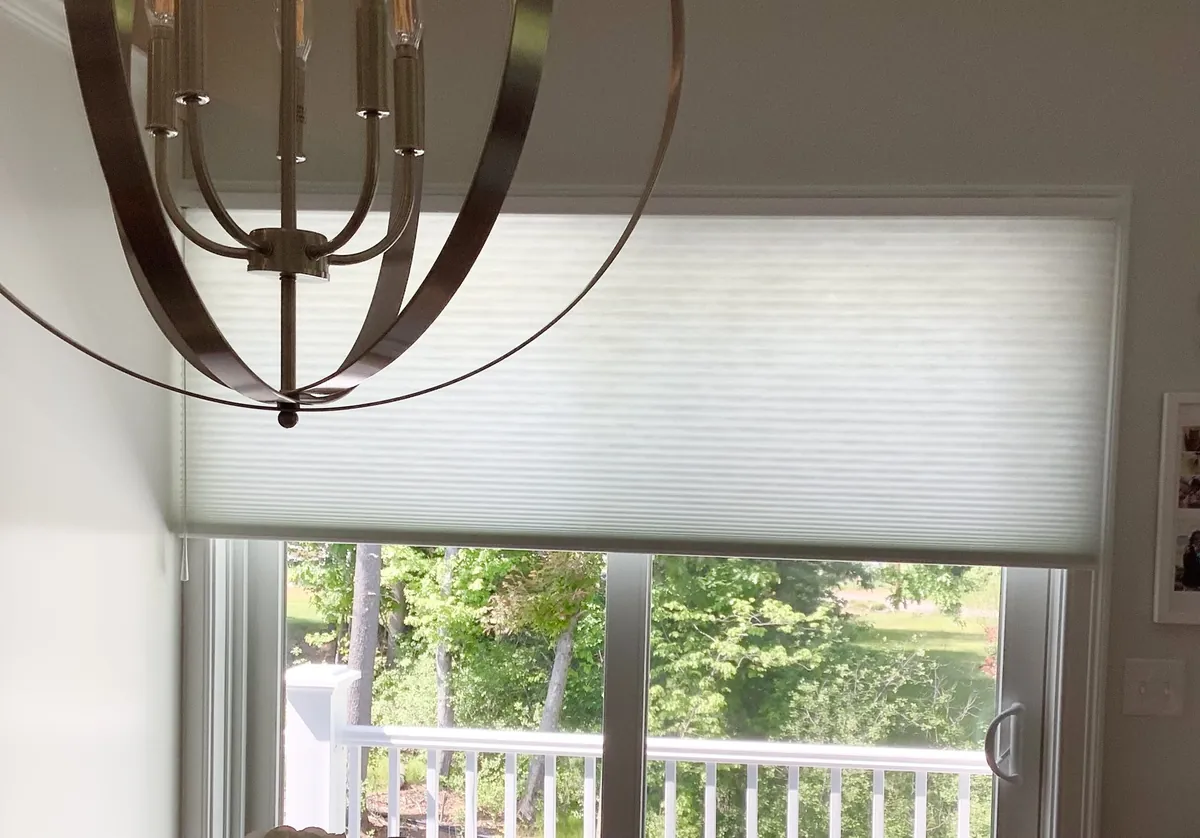
For the deck door of a newer house on a wooded lot, a shade that draws sideways and leaves the doorway clear.
Tall sash near the center
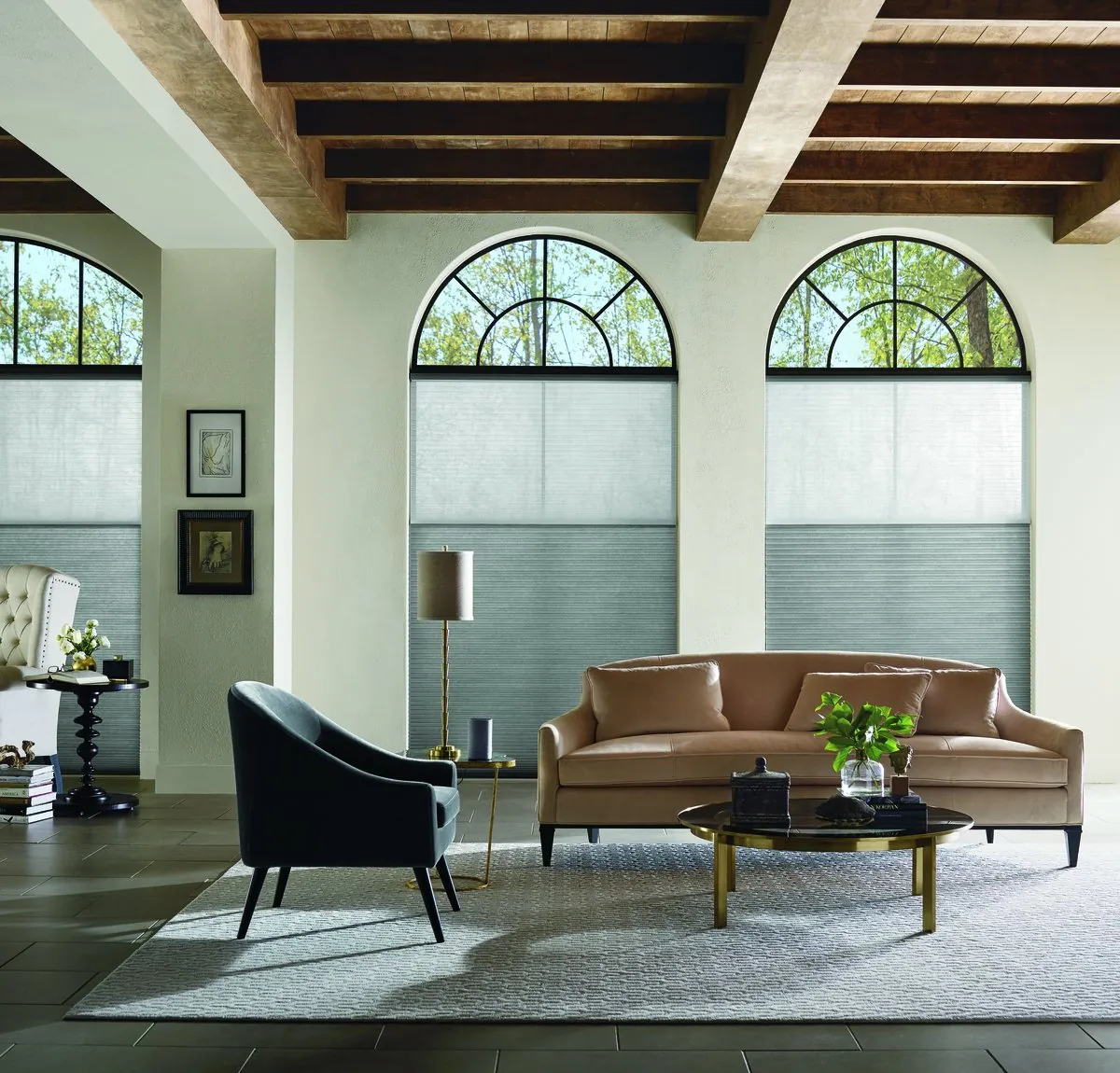
The Victorians and colonials close to the center were built with tall, narrow windows that pull the eye upward and fill the rooms with daylight. Many still have their older sash. They are handsome, and they are cold: a tall pane of old glass sheds a lot of warmth on a winter night, and the air beside it cools and slides down onto the floor.
A honeycomb shade lowered at dusk stops most of that. The still air in the cells sits between the glass and the room, so the draught by the window fades and the room keeps the heat the radiators put into it. Raised in the morning, the shade folds into a slim band at the head of the window, which keeps the tall proportion of the glass intact.
Where the frame has the depth, we fit the shade inside it so the casing and trim stay fully on show. Older frames are not always deep or square enough for that, so we check before we suggest it. A shade mounted on the face of the casing is the fallback, kept as neat and slim as possible.
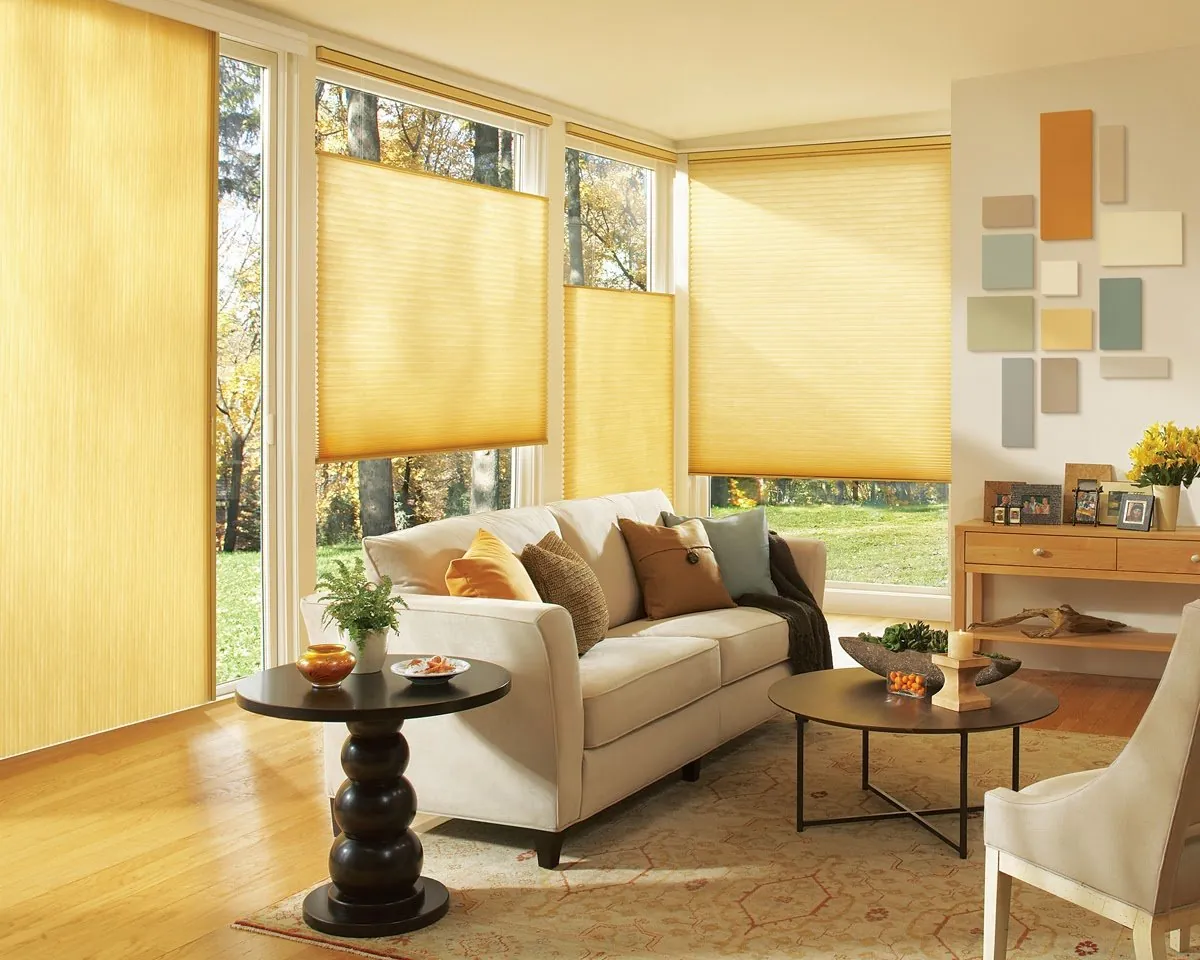
Top-down shades on a street-facing parlor
Houses near the center tend to sit closer to the street than the newer ones further out, and a front parlor with tall windows can feel exposed after dark. At the same time, closing a full-length covering on a bright afternoon wastes the best feature of the room.
A top-down, bottom-up honeycomb shade solves that neatly. Lower the top rail to let in sky and daylight over the upper sash, and keep the lower part of the window covered from the sidewalk. On a tall window the effect is particularly good: a band of daylight across the top and full privacy at eye level. At night, lower the shade completely and the light-filtering fabric glows softly without showing the room.
Dining rooms with tall windows
In the older houses near the center, the dining room often has the same tall sash as the parlor, sometimes two or three of them along one wall. It is the room used most in the evening in winter, which is exactly when those windows are coldest. Sitting at a table with a tall pane of old glass at your shoulder on a January night is not comfortable, however good the meal.
A honeycomb shade lowered before dinner makes a real difference to that room. The table end nearest the windows stops feeling chilly, and the light-filtering fabric gives the room a soft, even look in lamplight. Many people who start with one room of cellular shades in Walpole start here, because it is the room where they notice the cold most. Where the dining room windows line up with the parlor across the hall, we match the shades so the front of the house stays even.
East Walpole capes
The post-war capes through East Walpole are compact, practical houses. Downstairs, a living room and a kitchen with modest windows; upstairs, two bedrooms under the roof with dormer or gable windows. The rooms are small, so the windows matter. A heavy covering makes a small room feel smaller, and a draughty window is never far from where you sit.
Honeycomb shades suit a cape because they stay out of the way. They mount inside a standard opening, they stack into a small band when raised, and in a pale light-filtering fabric they keep the living room bright even when lowered. Upstairs, a room-darkening fabric deals with early summer light in the bedrooms, and the cells help with a room that heats up under the roof on a warm afternoon.
On the front of a cape, matching shades in the downstairs windows and the dormers above keep the house looking tidy and balanced from the street. That is often the first part of a cape we plan.
The cape kitchen is usually at the back, with one window over the sink and sometimes a second by a small table. It is a hard-working room, and the shade on that window gets moved several times a day. A light-filtering Applause fabric keeps the kitchen bright while softening the afternoon sun, and a top-down, bottom-up shade over the sink lets you keep the yard in view while covering the lower glass. The bathroom, often a small room with a single window, benefits from the same arrangement: daylight in over the top, privacy below, and a warmer room on a cold morning.
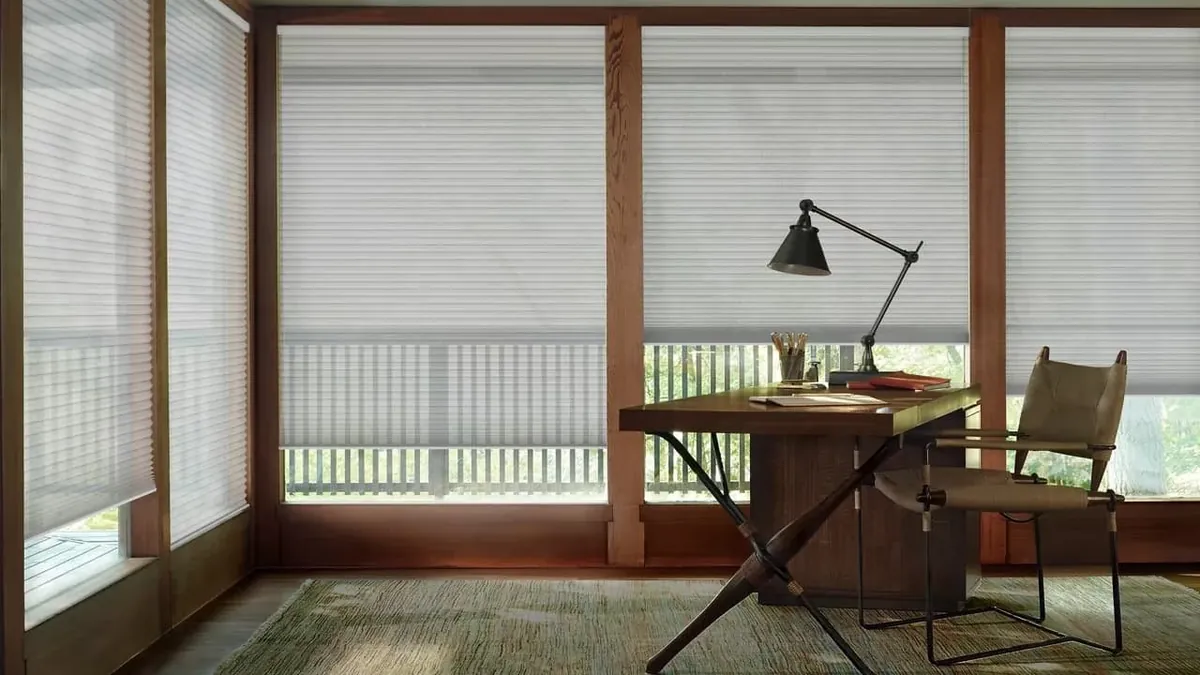
Newer houses on wooded lots
The larger houses on wooded lots further out have the most glass in town: tall first-floor windows, a family room that may open to the roof, a wide slider to a deck, and plenty of bedroom windows upstairs. The openings are standard modern sizes, which makes measuring simple, but the trees make the light complicated. In summer the canopy dims the rooms. In winter the leaves are down and low sun pours in.
Pale light-filtering fabrics handle both seasons. They let the room keep its daylight under a full summer canopy and soften the low, bright sun of a winter afternoon when the branches are bare. Bedrooms take room-darkening fabrics, and any high glass in a family room or over the stairs goes on PowerView, so it can be moved from a phone, a remote or a schedule.
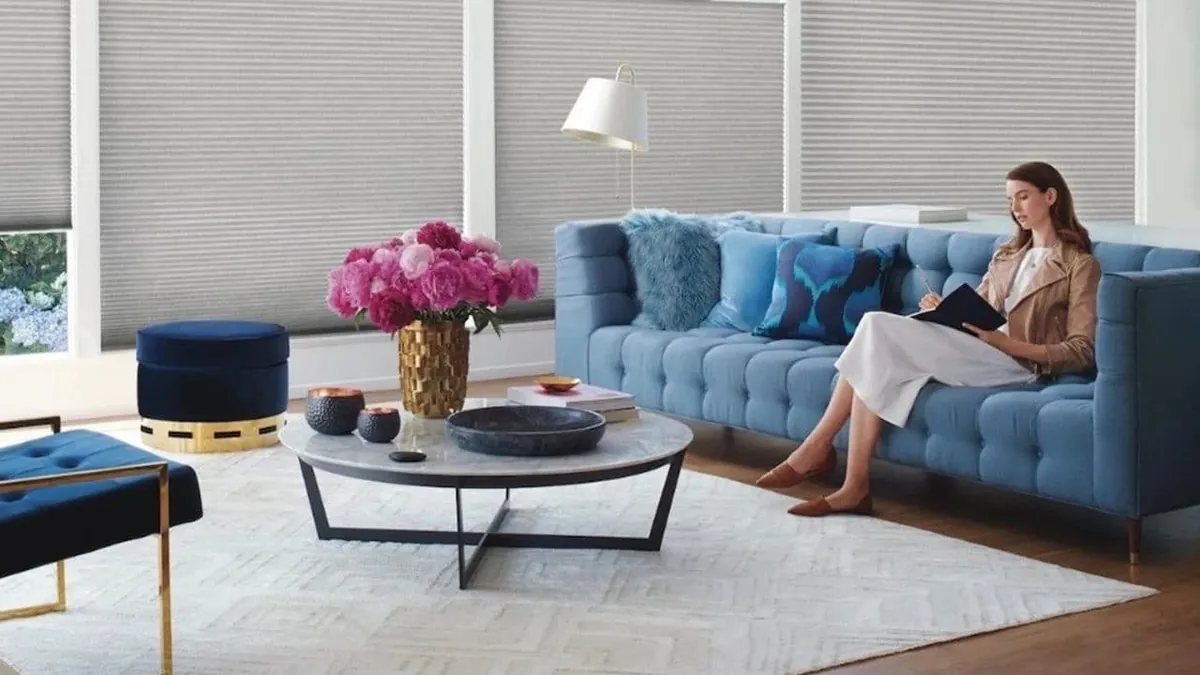
Mixing eras in a single plan
Walpole has plenty of houses that combine eras in themselves: an older house near the center with a newer family room on the back, or a cape that has been extended with a modern addition. The windows in the old part are tall and older; the ones in the addition are standard modern units. Planning cellular shades in Walpole for a house like that means making the two halves feel like one home.
We usually suggest one outward-facing fabric color across the whole house. Inside, the old rooms can take Duette in a fabric that suits their tall sash and period trim, while the new rooms take whatever opacity their use calls for. From the street and from the garden, the house looks coherent. Inside, each room still gets the shade it needs.
The join between old and new is usually where the windows change most, and it is worth a close look. A tall older sash may sit only a few feet from a wider modern window in the addition. We set the headrails and the stopping heights so the two read as related when the shades are lowered, even though the openings themselves differ. When people see their plan for cellular shades in Walpole laid out room by room, that join is often the detail they are most pleased with.
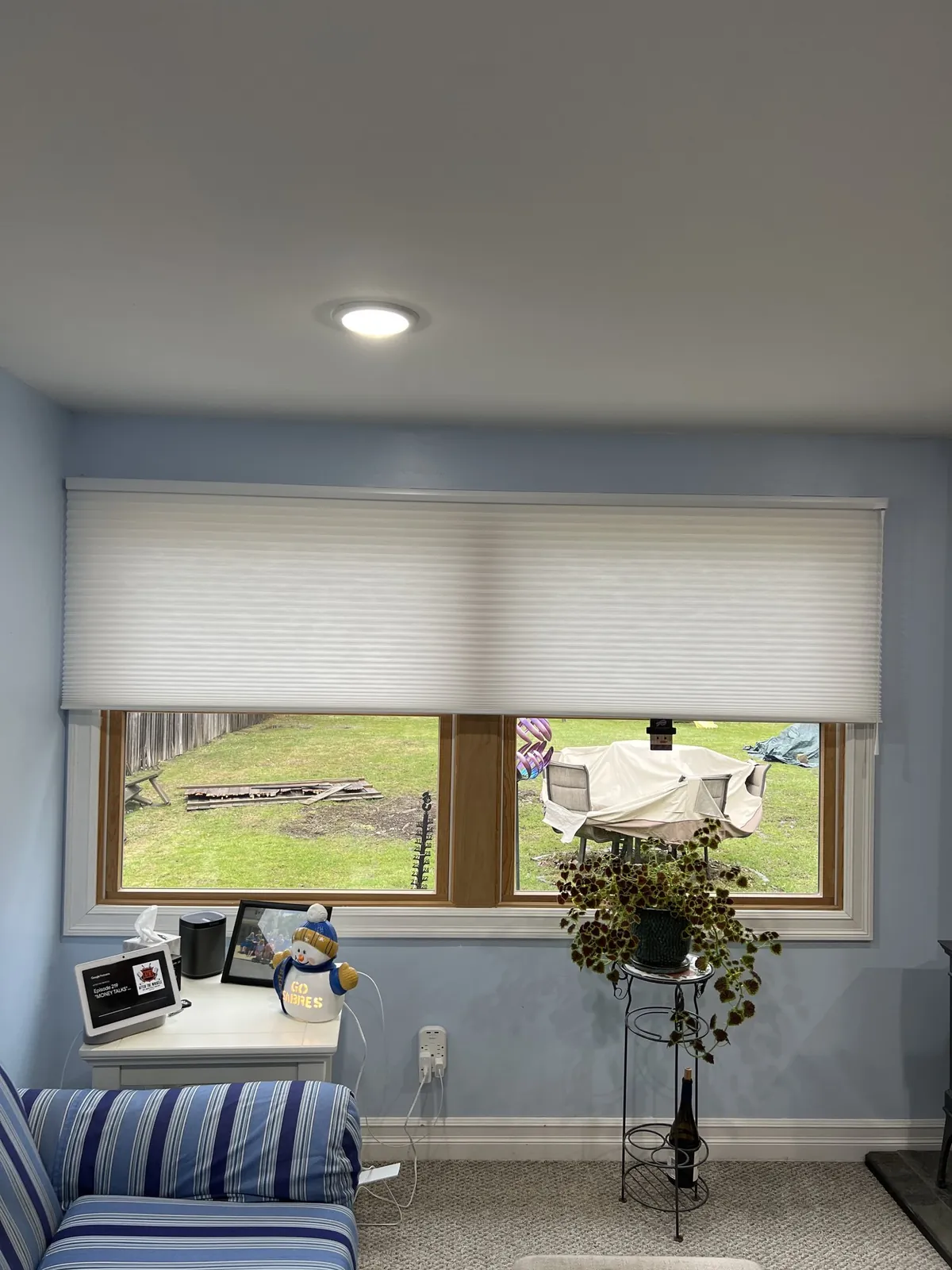
A note on high windows
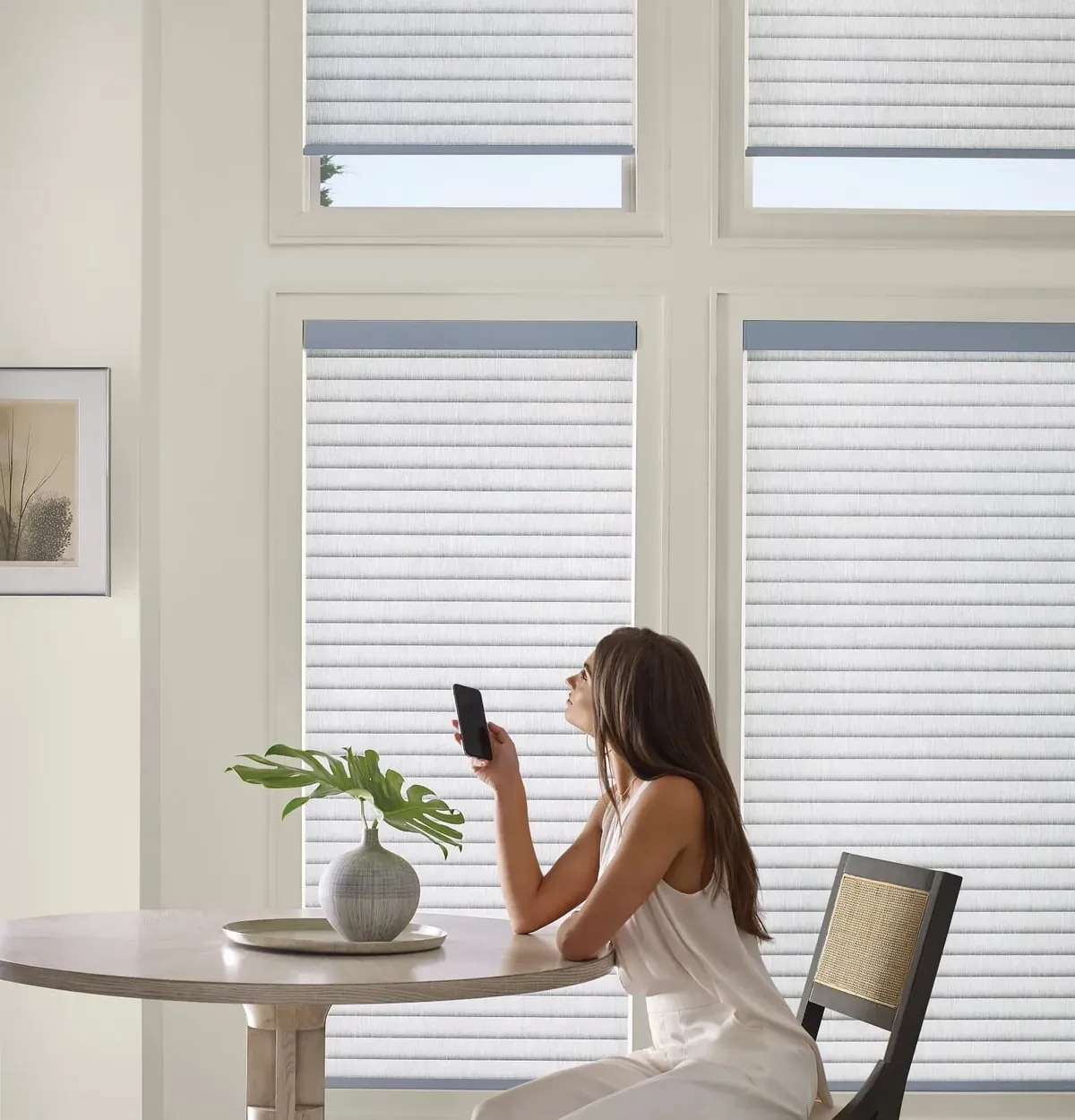
Between the tall stair windows of the older houses and the upper glass of the newer family rooms, a good share of Walpole houses have at least one window nobody can reach comfortably. PowerView motorization handles those. Each shade can be raised or lowered from the app, grouped with others so a whole room moves together, or set on a schedule so the sunniest windows close themselves through the hottest hours. How each motor is powered is something we decide at the visit, after we have seen the window and what is around it.
Motorizing does not have to mean the whole house. Plenty of Walpole plans put PowerView on just the one or two windows that are genuinely awkward, the stair window in an older house or the top row in a newer family room, and leave the rest to be raised by hand. More shades can join the same system later if you find you like it. Our guide on how motorized shades are controlled explains the controls in plain language.
Fabric choices, room by room
Rather than one fabric for the whole house, it helps to think about what each room needs.
- Parlors and front rooms near the center: a light-filtering fabric, often on a top-down, bottom-up shade, for daylight and privacy from the street.
- Cape living rooms: the palest light-filtering fabric you like, so a small room stays bright with the shade down.
- Bedrooms in every era: room-darkening fabric for long summer evenings and early sunrises.
- Family rooms under the trees: light-filtering fabric that copes with dim summer light and bright winter sun alike.
- Kitchens: an Applause fabric that softens the light over the sink without making the room dull.
Duette and Applause, and why you might use both
Both are Hunter Douglas honeycomb shades. The cell does the same job in each, holding still air against the window. The differences are in the fabric collections, textures and sizes. Duette has the broader range, including the vertical shade for sliders and sizes suited to tall sash. Applause has its own color palette and works well on the standard windows of a cape or a newer house.
A Walpole house that mixes eras often mixes the lines too: Duette on the tall older windows and the deck slider, Applause in the bedrooms and the kitchen. The pages on Duette honeycomb shades and Applause honeycomb shades go further into each line, and our main cellular shades page shows the full range.

Sample fabrics, in your own light
Our consultations happen at your house because that is where the decision really gets made. The vans carry the honeycomb range, so you are choosing with real fabric against your own trim, your own wall color and your own light, whether that is a sunny parlor near the center or a shaded family room under the trees.
A typical Walpole visit goes like this.
- You book through the Request a Consultation form or by phone using the call button.
- We look first at the room you find hardest to live with.
- You compare Duette and Applause fabrics at the window, at the time of day you use the room.
- Each window is measured and every older frame is checked for depth.
- Any hard-to-reach glass is discussed with PowerView in mind.
- You get a free estimate and as much time as you need to decide.
More about the visit is on our page about what happens at an in-home consultation. If a room is being redecorated at the same time, our interior design consultations can cover color, fabric and the other window treatments in the same appointment.
Measuring three kinds of window
Each era of Walpole house brings its own measuring quirks. The older sash near the center may have settled out of square. The cape windows are usually standard but sometimes shallow. The newer openings are reliable, but the high ones need care.
- On older sash, we take several widths and heights in each opening and use the tightest for an inside fit.
- On every window, we read the frame depth where the headrail would sit.
- On high glass, we measure the panes as a group so the shades line up across the wall.
- We confirm the mount, fabric and opacity for each window with you before ordering.
- Our certified Hunter Douglas installers then fit each shade, level it and show you how it works, including any PowerView controls.
The fitting itself is described on our page about what happens on installation day.

Gallery dealer, plainly explained
Hunter Douglas reserves the Gallery dealer title for dealers who meet its standards, and Blinds & Designs is one. For a house that mixes eras, that matters: the tall older sash, the cape dormers and the big newer slider can all be covered from the full honeycomb collection without compromise.
The installers who fit your shades hold Hunter Douglas certification, and we repair blinds and shades you already own as well. If other rooms need something different, we also offer shutters, blinds, roller shades and roman shades. Take a look at roman shades in Walpole, custom blinds in Walpole, or our Walpole page for the whole picture.
Questions from Walpole
Our house near the center has tall, old windows. Can they take an inside mount?
Many can. We check the frame depth and squareness before recommending one. If the old frame is too shallow or out of true, we mount the shade on the casing instead and keep it as slim as possible.
Will shades make our cape’s small rooms feel smaller?
Not if you choose a pale light-filtering fabric. Honeycomb shades stack into a small band when raised and keep the room bright when lowered, so they take up very little visual space.
Our house has an older part and a newer addition. Can the shades tie them together?
Yes. Using one outward-facing color across the whole house makes it look consistent, while the rooms inside can still take different fabrics and opacities.
Where can I see the shades before you come out?
The Franklin showroom is the closest of our locations to Walpole. Many people skip that step, because the samples come to the house at the consultation.
Will I be charged for the estimate?
No. Measuring and the estimate that follows are free, and there is nothing to sign at the visit.
Pick a window and we will start there
You do not have to plan the whole house at once. Start with the tall sash that chills the parlor, the cape bedroom that is too bright at dawn, or the family room that bakes on winter afternoons. Request a consultation and we will bring the samples for cellular shades in Walpole, MA, take the measurements and leave you with a free estimate to consider.