
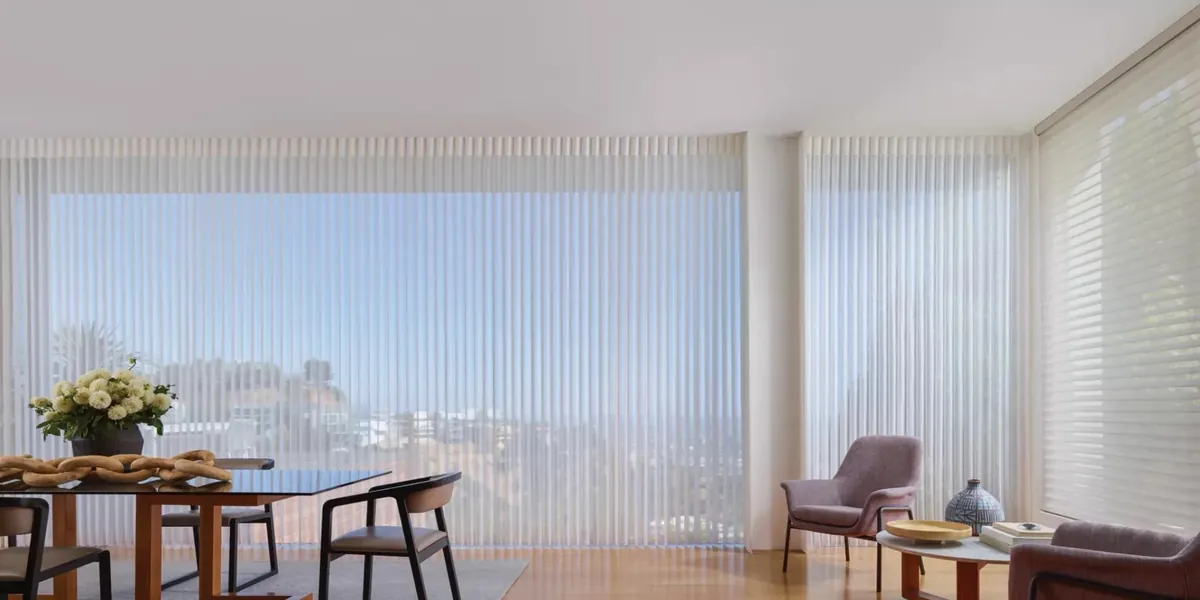
Long runs of glass under a heavy canopy
Around Lake Massapoag, many houses sit deep in the trees. Colonials and mid-century contemporaries stand well back from the road on wooded lots, and plenty of them were designed with long runs of glass and low sills, meant to bring the woods right into the room. Under that canopy, though, a room can be darker than all its windows would suggest.
That combination shapes everything we suggest as a Hunter Douglas dealer in Sharon, MA. The aim is rarely to block light. It is to keep what daylight the trees allow, deal with the moments of glare when the sun breaks through, give privacy after dark, and dress wide stretches of glass so they look planned.
Blinds & Designs is a Hunter Douglas Gallery dealer, and every installation we do is certified by Hunter Douglas. Sharon is part of our shop-at-home territory, so the consultation happens at your house, with our van bringing the samples to you.
What we fit in Sharon
Each card links to our page for that product in town.
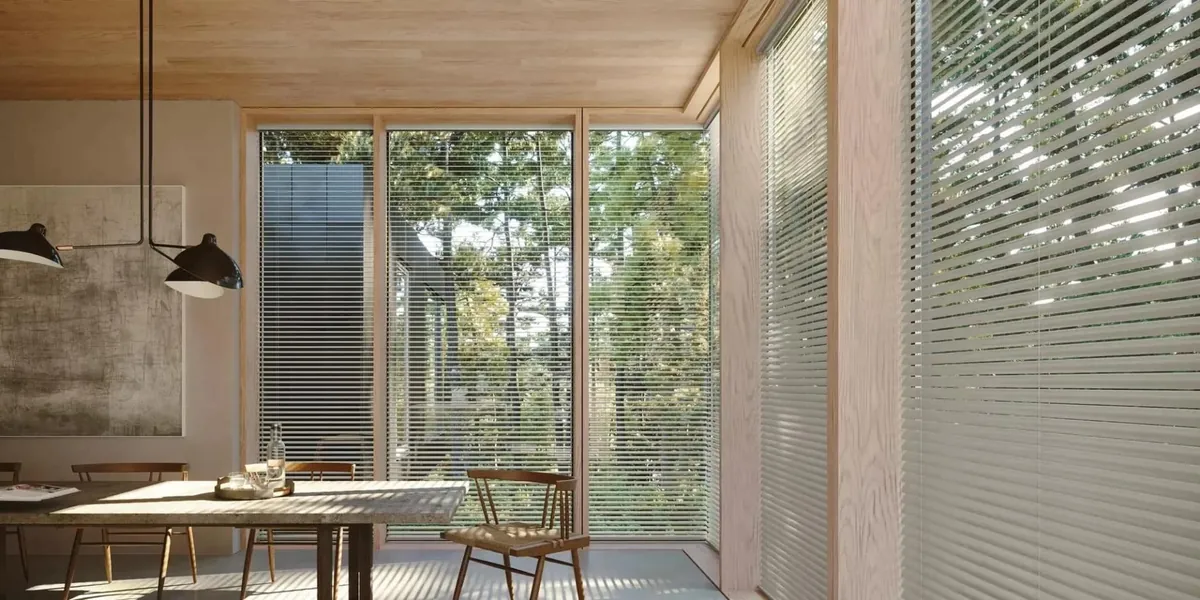
Custom blinds
Metal, Parkland wood, EverWood faux wood and verticals, matched to the room and to how you want the slats to move.
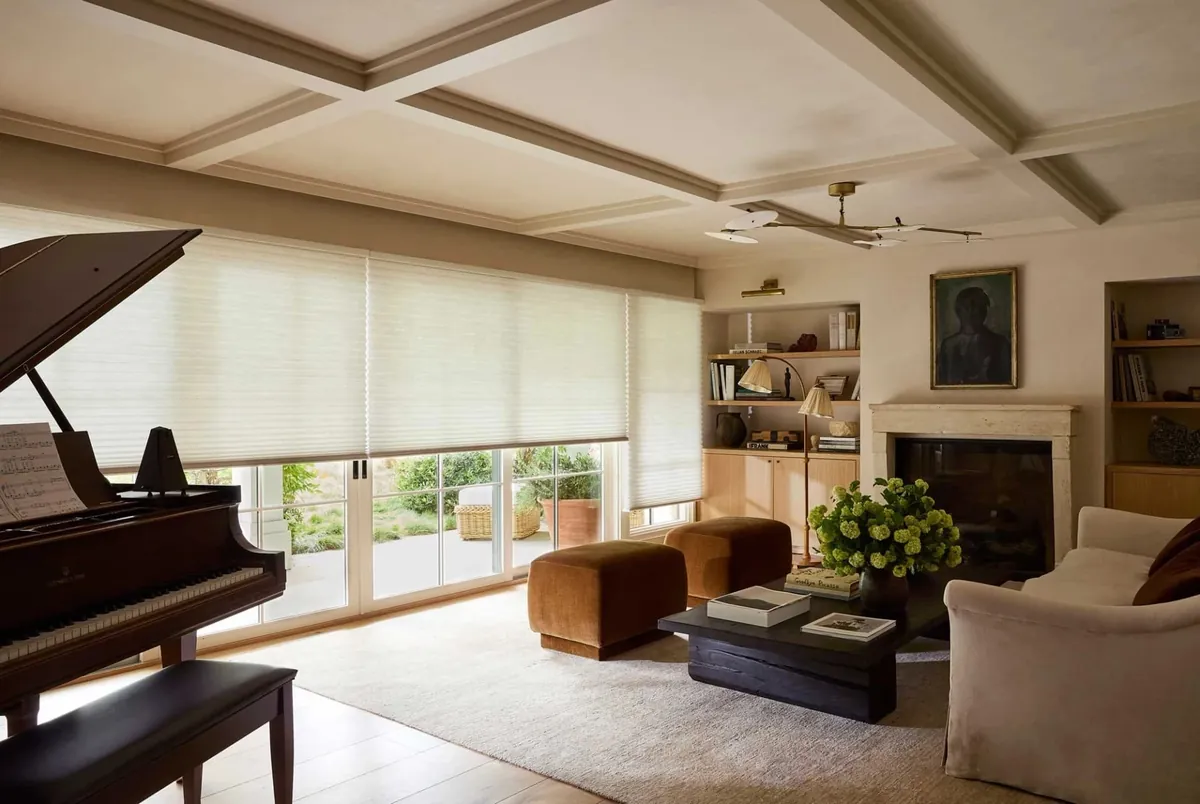
Cellular shades
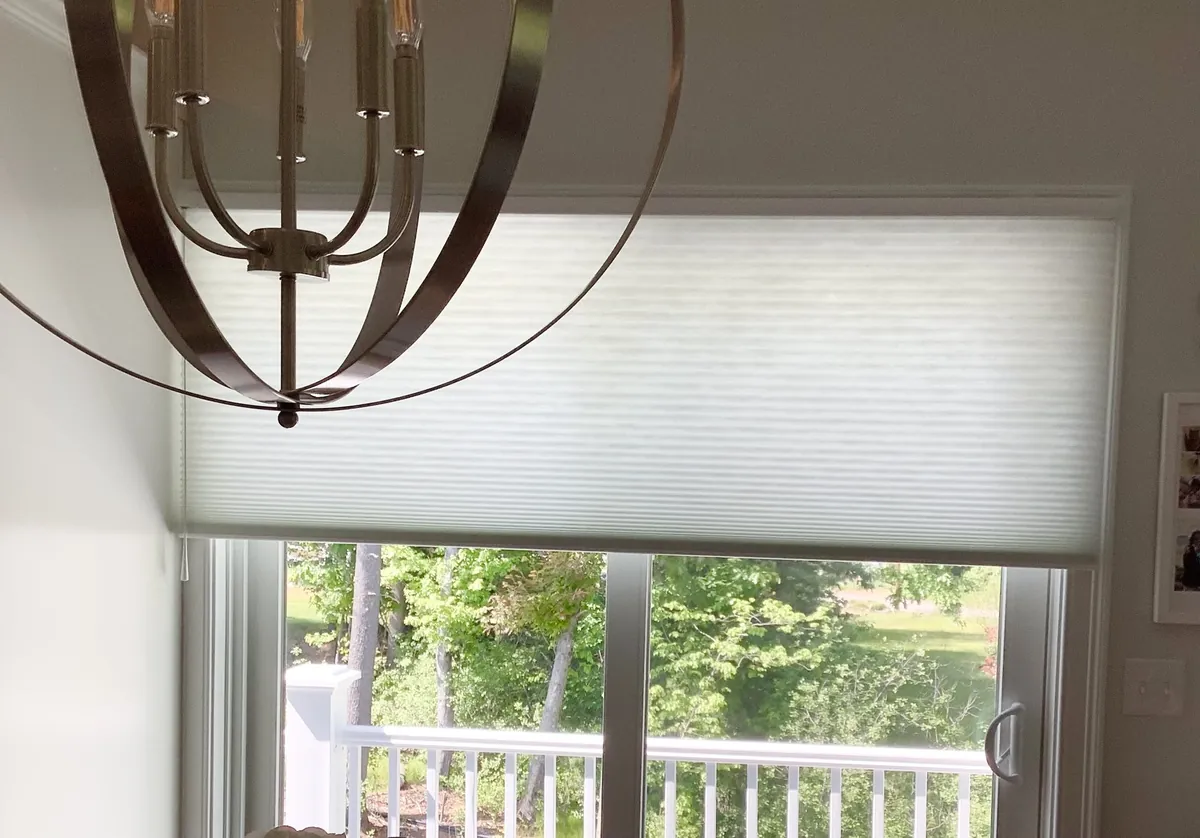
Duette and Applause; the honeycomb holds air, so a glass-heavy room keeps more of its warmth.
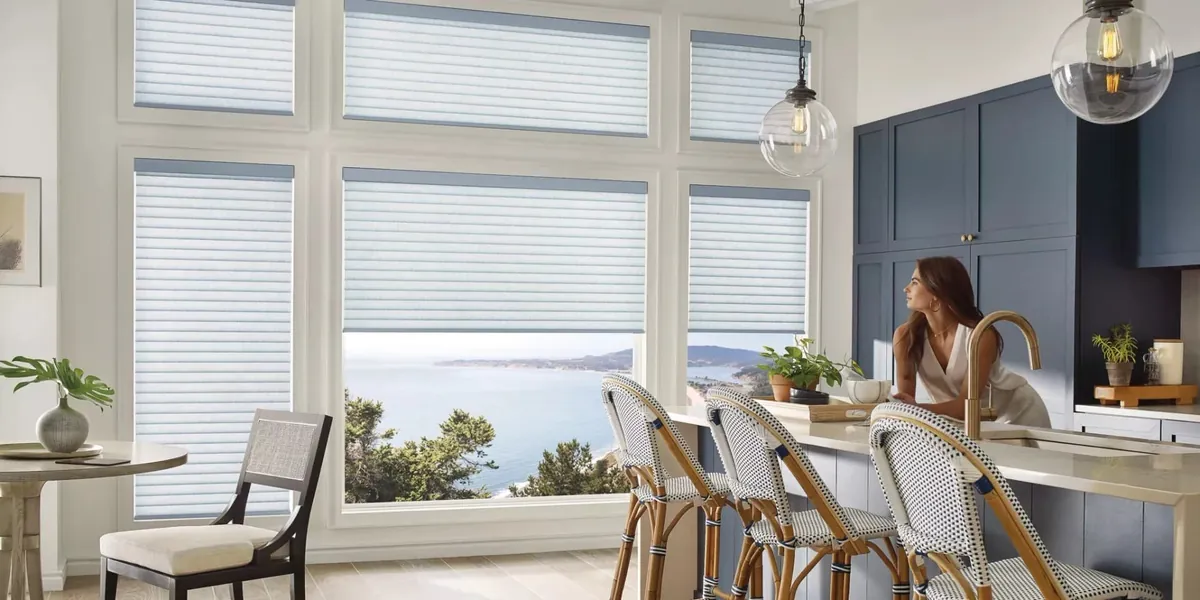
Roller shades
Designer and Alustra rollers and solar screens, with the openness set for the view you want to keep.
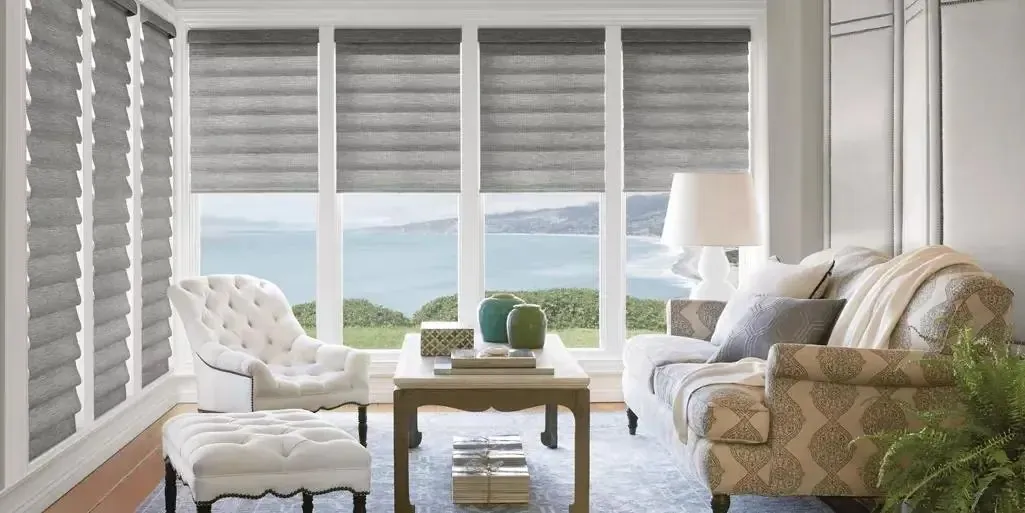
Roman shades
Vignette and Carole Roman, flat or folded, a soft finish for a colonial’s front rooms.
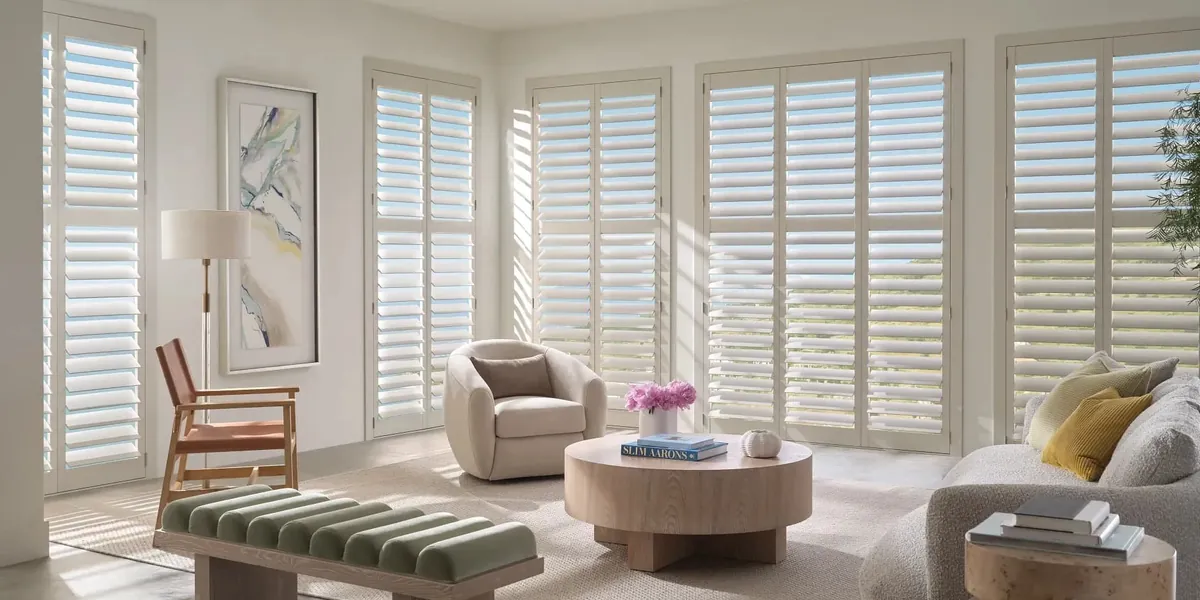
Plantation shutters
Palm Beach, NewStyle and Heritance, with the louver and frame chosen for each opening.
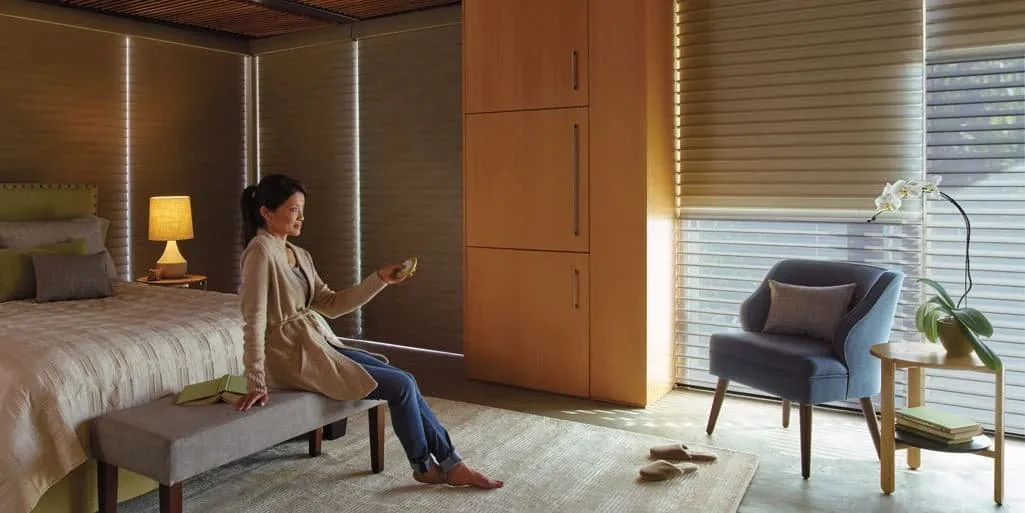
Motorized blinds and shades
PowerView shades moved by remote, by app or on a schedule.
Colonials on wooded lots
The colonials around town follow a familiar plan: a balanced front with evenly spaced windows on two floors, formal rooms either side of the hall, a family room and kitchen toward the back, bedrooms upstairs. On a wooded lot set well back from the road, the front windows look out at trees and lawn rather than at the street.
That setback means daytime privacy is seldom the first worry. What these houses usually need is a plan that keeps rooms bright under the canopy and a little more cover at night, when lit rooms show up clearly through the trees. Shutters suit a colonial’s formal rooms and can be tilted wide open by day. Roman shades in a Vignette fabric bring softness to a dining room. Honeycomb in a light fabric keeps a family room glowing even on an overcast afternoon.
Upstairs, the bedrooms in a colonial tend to have two standard windows each, which makes them easy to fit and easy to darken when needed.
The formal living and dining rooms at the front of a colonial are often the least used rooms in the house, and they can feel cool and dim under the trees. A light fabric helps, and so does a product that clears the glass completely when you want it to, so the room borrows every bit of daylight on a gray winter afternoon. Shutters opened wide, or a honeycomb raised fully to the top, both leave the windows almost bare. When the room is used for an evening gathering, the same products close for privacy and give the room a finished look by lamplight.
Mid-century contemporaries and their glass
The mid-century contemporaries are the houses that make Sharon interesting to plan. Built to connect inside and out, they often have walls that are mostly glass: long horizontal bands of windows, floor-length panes with low sills, sliding doors to a deck, and sometimes clerestory windows tucked up under a sloping roof.
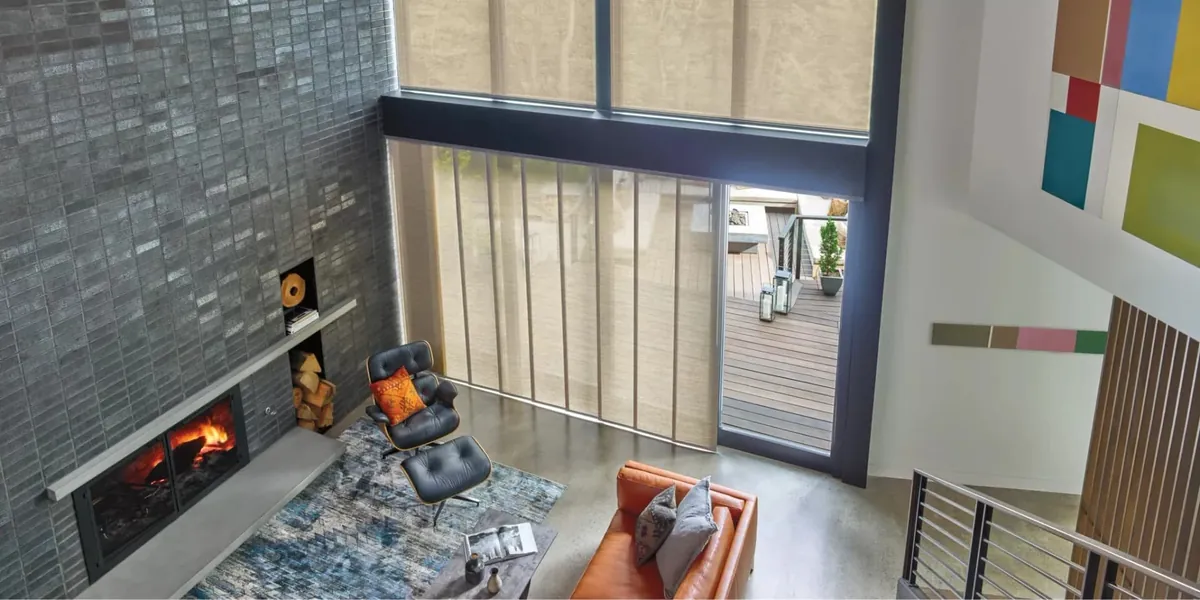
Covering that much glass without losing the spirit of the house takes restraint. Heavy, fussy products fight the clean lines. Slim, quiet ones work with them: roller shades and solar screens that disappear into a narrow headrail, honeycomb that stacks small, Luminette or vertical blinds that draw aside on a wall of glass, Silhouette sheers that soften a view without hiding it.
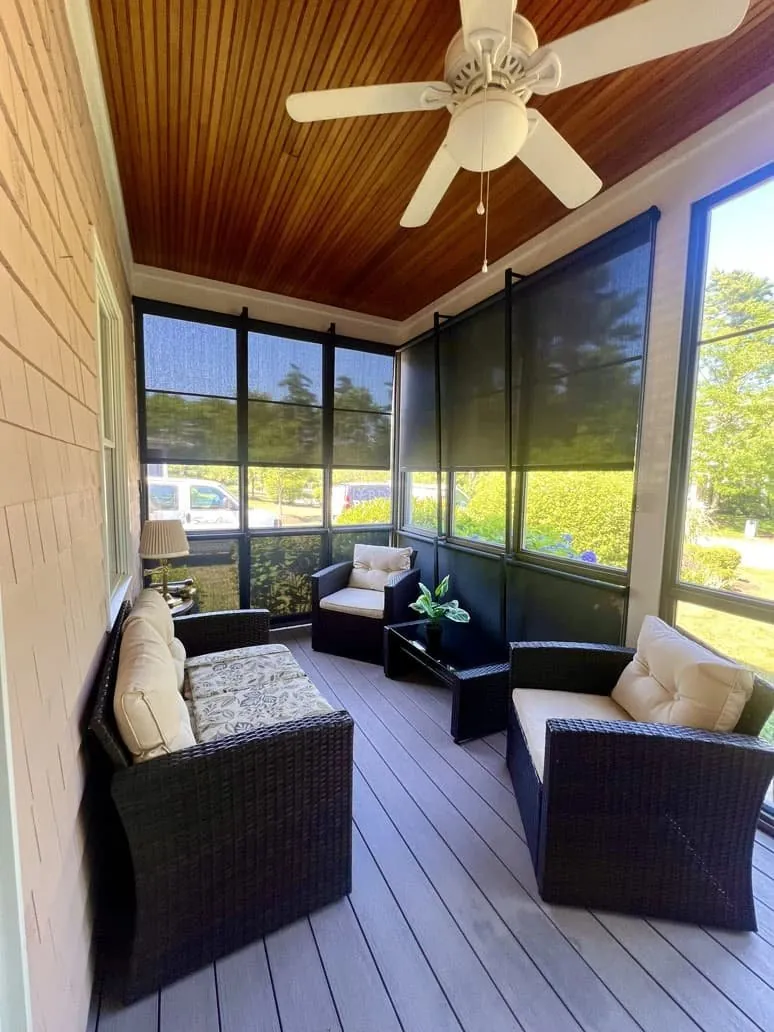
Long runs of windows, planned as one
A long run of glass is really one design problem, not a dozen separate windows. When each pane is treated on its own, the wall can end up looking patchy, with headrails at different heights and gaps between products.
We approach it like this.
- Look at the whole wall first. How the windows are divided, where the mullions fall and where any doors sit.
- Choose one product and one fabric for the run, so the wall reads as a single surface.
- Set every headrail and bottom rail to one line, even where the window heights vary slightly.
- Decide how the shades are grouped. Narrow panes can share a shade; wide ones get their own. Doors get a covering that moves with them or stacks clear.
- Consider motorizing the run, so the whole wall moves together from one remote, app or schedule.
The result is a wall that looks calm with the shades up or down.
Low sills and floor-length panes
Low sills are common in the contemporaries and in some of the colonial family rooms: windows that start close to the floor, so the glass begins at knee height or lower. They bring the garden into the room, and they make furniture placement and covering choices a little trickier.
A covering on a low-sill window comes down nearly to the floor, so it needs to look good at full length and clear any furniture or radiator in front. A roller or honeycomb lowered to the sill reads cleanly. A vertical covering suits a floor-length pane that behaves like a door. Shutters can be built tall, with a divider rail so the lower louvers close while the upper ones stay open. We check what stands in front of each window before choosing the mount.
When the trees make rooms darker than they look
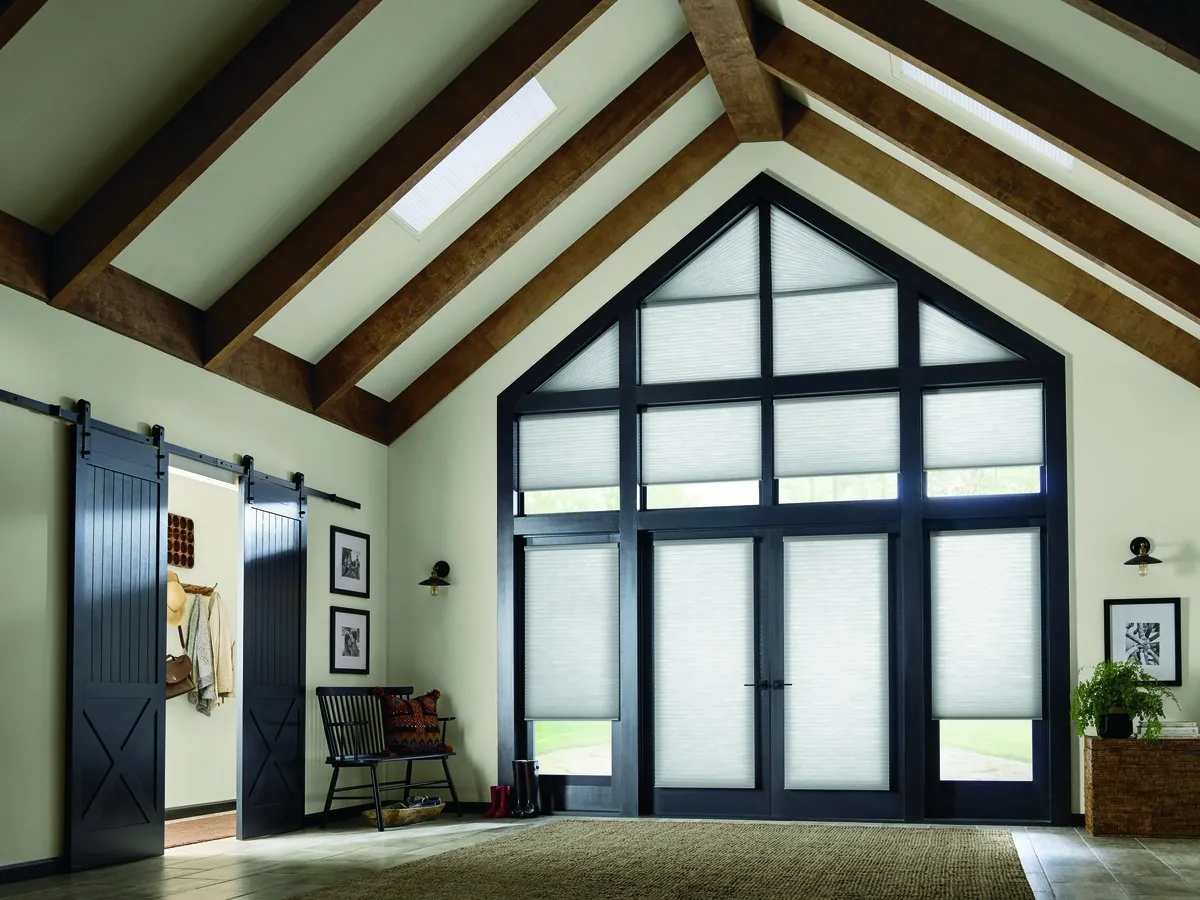
The heavy tree cover around town is beautiful, but it changes the light. A room with a whole wall of glass can still feel dim in summer, when the leaves are full and the sun is filtered. In winter the same room may be bright, because the low sun comes straight through the bare branches.
That is why we rarely start with a dark fabric here. For the main living spaces, we usually bring lighter samples first:
- Light-filtering honeycomb. Keeps rooms bright and helps glass-heavy rooms hold their warmth through the honeycomb’s trapped air.
- Silhouette and Pirouette sheers. Soft vanes that filter light and can be tilted for privacy.
- Pale roller fabrics. Slim and quiet, suited to the clean lines of a contemporary.
Darker fabrics have their place, mostly in bedrooms and in any room used for screens. We talk through which rooms need what, season by season.
Around Lake Massapoag
Houses near Lake Massapoag sometimes have a side that opens toward the water or a clearing, with the trees thinning in front of it. That side can catch strong light, especially low sun in the morning or evening, reflected off the water or across an open lawn.
Solar screens are made for exactly this. You choose the openness of the weave: more open keeps more of the view of the lake and trees, tighter cuts more glare. Sheer shades are another way to soften strong light while keeping the outlook. On the shadier sides of the same house, the lighter fabrics described above usually suit better.
As your Hunter Douglas dealer in Sharon, MA, we look at each side of the house on the day we visit and ask how the light changes through the year, so the fabric suits more than one season.
Clerestories and high glass
Many of the contemporaries have clerestory windows: a band of glass high on the wall, under a sloping roof. Some colonials have a high window in a family room or above an entry. These are out of reach by hand, and in summer they can let hard light into a room at the wrong time of day.
PowerView makes high glass practical. A motorized shade moves from a phone app, a remote or a schedule, so a clerestory can close itself in the afternoon and open again later. We look at which high windows would benefit at the visit and plan how each motor is powered. Our guide to how motorized shades are controlled explains the controls.
Some clerestories are better left uncovered, especially on a shaded side where they bring in welcome light. We will tell you honestly if we think a window should stay clear.
Natural textures for a house in the trees
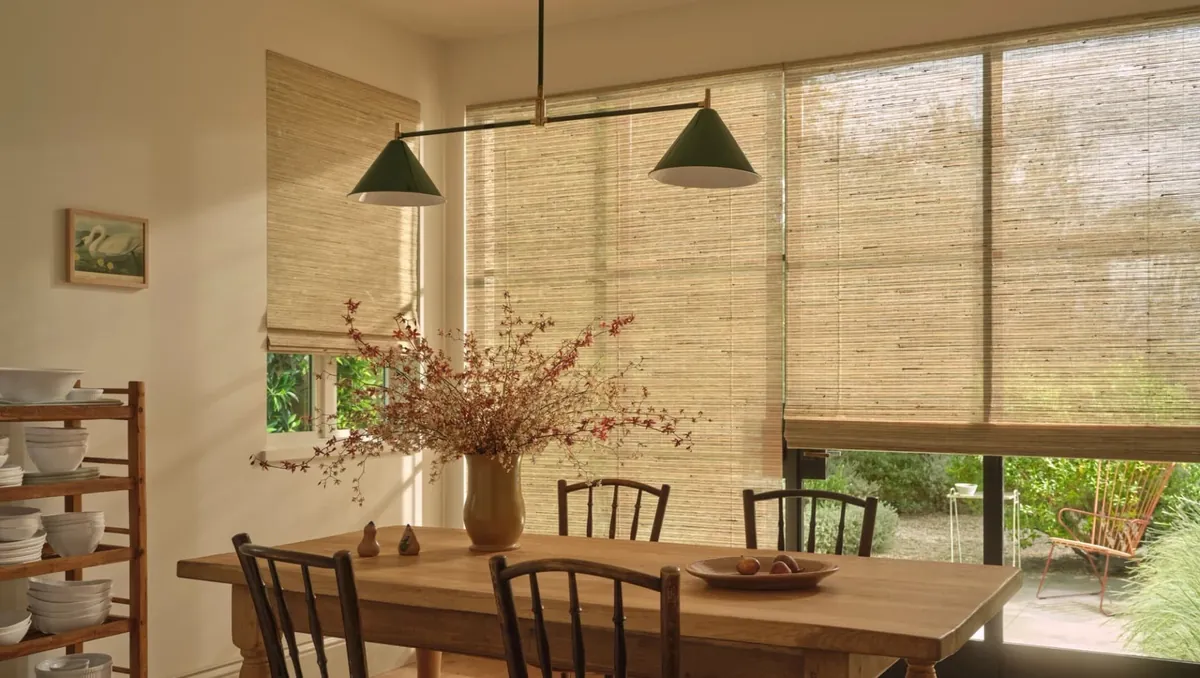
Houses set among oaks and pines often suit natural materials at the window. Provenance woven wood shades and Alustra Woven Textures bring a woven, organic look that sits comfortably with wood floors, stone fireplaces and the view of the woods outside. Parkland real wood blinds do something similar with slats, and in a mid-century contemporary a wood blind can echo the warm ceilings and panelling many of those houses have.
Woven materials vary from one weave to the next in how much light they let through, so this is one more reason to see samples at home. A weave that looks open in bright light may feel quite closed in a shaded room, and the reverse can happen on a sunny side facing the lake. As a Hunter Douglas dealer in Sharon, MA, we bring several weaves so you can compare them at the glass.
A home office looking into the woods
Plenty of houses here have a study or home office with a view of the trees, and that view is often the reason the room was chosen. The trouble is glare on a screen when the sun breaks through, and reflections on a dull day from a bright window behind the desk.
A solar screen is the natural fit: it softens glare while keeping the woods in sight, and the openness of the weave lets you decide how much view to keep. A sheer works too, tilted to throw light up toward the ceiling rather than onto the monitor. In a colonial’s front study, wood blinds give fine control over the angle of light through the day.
Kitchens, sliders and decks
The kitchens in both kinds of house often open onto a deck through a slider, with a window over the sink and sometimes a run of windows along a breakfast area. In a wooded setting these rooms are where the trees feel closest.
A slider is best with a covering that moves sideways: Luminette, a vertical honeycomb or vertical blinds stack to one side, out of the way of the door. Over the sink, a roller or a shutter on the lower half keeps things simple. A breakfast run of windows looks best with one fabric set to one height, just like the long runs in the living areas.
Bedrooms in the woods
Bedrooms on a wooded lot can be peaceful, but they can also pick up early light through the branches in summer and porch or driveway lights at night. Most people want them dark when they sleep and gently bright in the morning.
A darkening honeycomb is the usual answer, slim when raised and close-fitting when down. Shutters suit a colonial bedroom and close tight. In a contemporary with low-sill bedroom windows, a darkening roller lowered to the sill keeps the clean look. A bedroom also used by day can pair a sheer with a darker product, and we can show how that looks.
We bring the showroom to Sharon
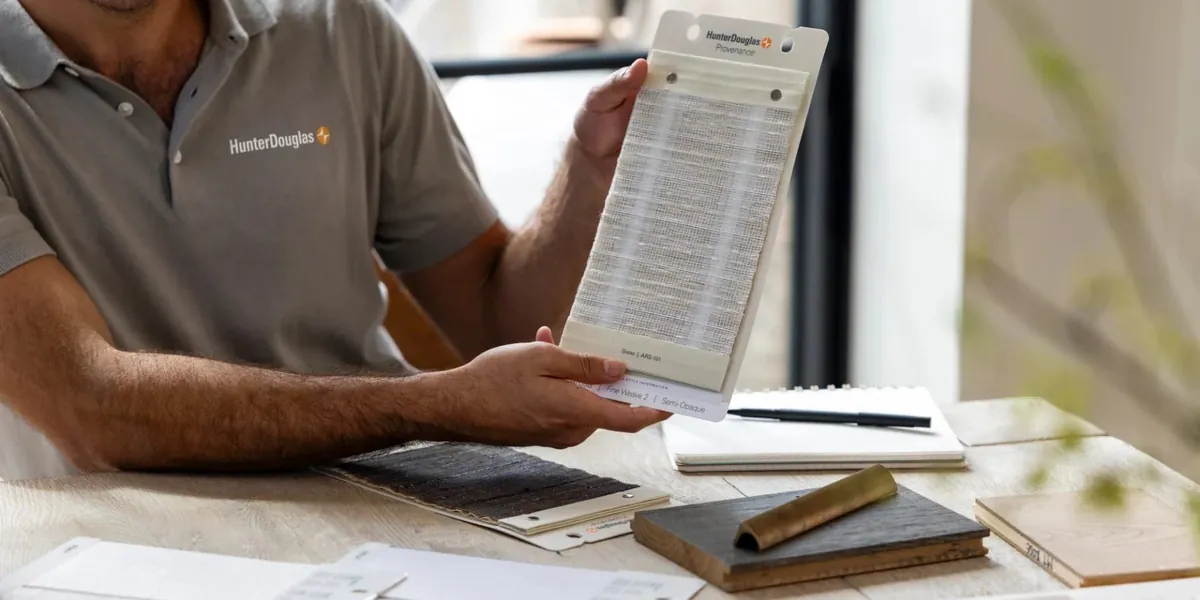
Sharon belongs to our shop-at-home territory, run from Canton. Rather than asking you to drive anywhere, we come to you: our vans carry samples of fabrics, slats and louvers, so you choose at your own windows, under your own trees, in the light you actually live with.
That matters more here than in most towns. A fabric that looks pale and bright under shop lighting can look quite different on a wall of glass shaded by oaks. Seeing it at home takes the guesswork out. Read more on our Canton shop-at-home page.
How your consultation goes
- Ask for a visit through Request a Consultation, or use the call button.
- We arrive with samples, and walk the house with you, long runs of glass and low sills included.
- You compare at the window, holding options up to your own glass at different times of day if you like.
- We measure every opening ourselves, noting what stands in front of low-sill windows and how each will mount.
- You receive a free estimate, and decide whenever you are ready.
Once you order, Hunter Douglas makes everything to our measurements, and we return to install it. Our guide to what happens at an in-home consultation goes into more detail, and best shades for sun and glare is a helpful read for the lake-facing rooms.
A Gallery dealer for glass-heavy houses
A house with long runs of glass and clerestories needs a dealer who can offer the whole range, from slim rollers and screens to sheers, honeycomb, verticals and shutters, and fit them precisely. As a Hunter Douglas Gallery dealer we can do that, and our installation is certified by Hunter Douglas.
Working with us includes:
- In-home consultations, with sample vans, so we can bring the showroom to you
- Free estimates
- Interior design consultations for color and fabric across open rooms
- Window covering automation for high and long runs of glass
- Repair of the blinds and shades you already have; see blind and shade repair
A Hunter Douglas dealer in Sharon, MA should make a glass wall look simpler, not busier, and that is how we approach it.
Seeing products in person
If you would like to see products before or after our visit, the Franklin showroom is the nearest one to Sharon. Many people never need to go, because the van carries so much, but it is there if you want it.

Read more about the brand on our Hunter Douglas page, explore the Hunter Douglas catalog, or see everything we offer in town on our Sharon page.
Questions from Sharon
Our rooms feel dark under the trees. Will shades make it worse?
Not if you choose the right fabric. We usually suggest light-filtering honeycomb, sheers or pale rollers for living spaces, so rooms keep their daylight.
How do you cover a long run of windows?
As one design: one product and fabric for the run, every headrail and bottom rail on one line, with doors given a covering that moves with them.
What works on windows with very low sills?
Rollers and honeycomb lowered to the sill, vertical coverings on floor-length panes, or tall shutters with a divider rail. We check what stands in front of each window first.
Do I need to visit a store?
No. Sharon is in our shop-at-home territory, so we bring samples to your house. Franklin is the nearest showroom if you want to look in person.
Is the estimate free?
Yes. You receive a free estimate for every window we measure.
Book a visit at home
The best place to choose for a house in the trees is the house itself. Request a consultation and we will bring samples, measure each window, from clerestories to low-sill panes, and leave a free estimate. You can also reach your Hunter Douglas dealer in Sharon, MA through the call button.