
Old sash in the village, plainer windows by the river
Dedham Village and Oakdale hold some of the oldest houses we are asked to dress: antique colonials and Victorians with tall, narrow sash, original casings, and a strong case for keeping each room looking the way it always has. Many of these houses stand close to the street, so a front parlor or dining room window is only a few steps from the sidewalk. Toward Riverdale the picture changes to post-war capes and ranches with ordinary openings and simpler rooms.
That spread is the reason a Hunter Douglas dealer in Dedham needs the whole catalog rather than one favorite product. A historic front room asks for a covering that respects the trim and the proportions of a slim window. A ranch kitchen asks for something easy, bright and practical. A cape bedroom under the roof asks for darkness and comfort.
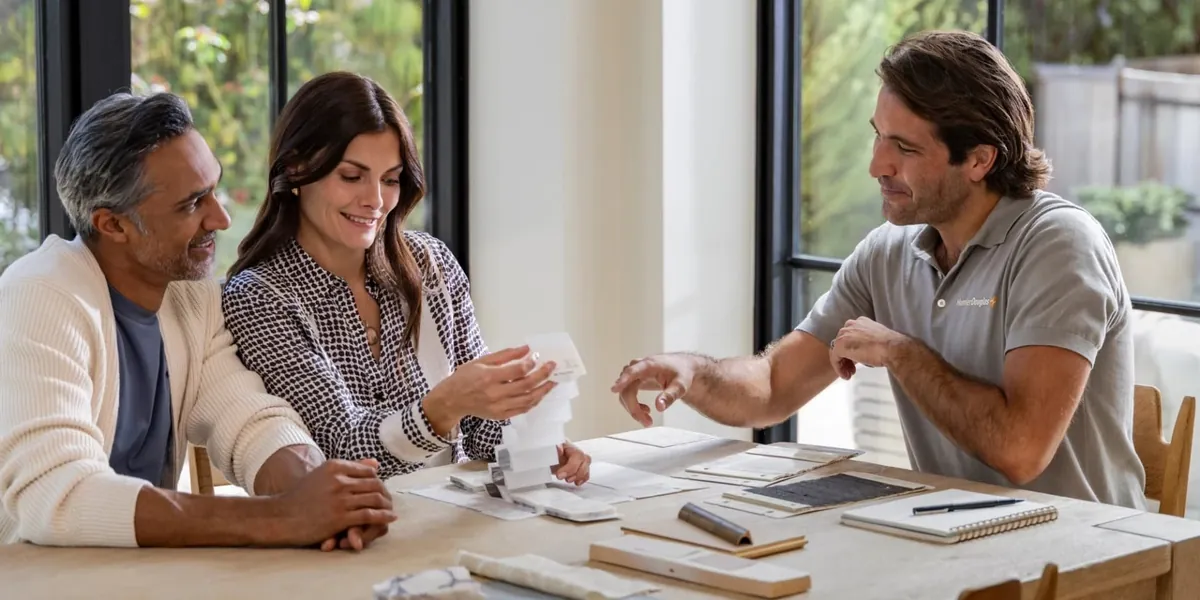
We start every Dedham project at the house itself. We come to you with samples on board, hold them up at the real windows and talk through what each room needs before anyone picks a fabric.
Hunter Douglas choices that fit Dedham windows
Six of the services we offer across town, each with its own page. Open the one that matches the room you are thinking about.
Custom blinds
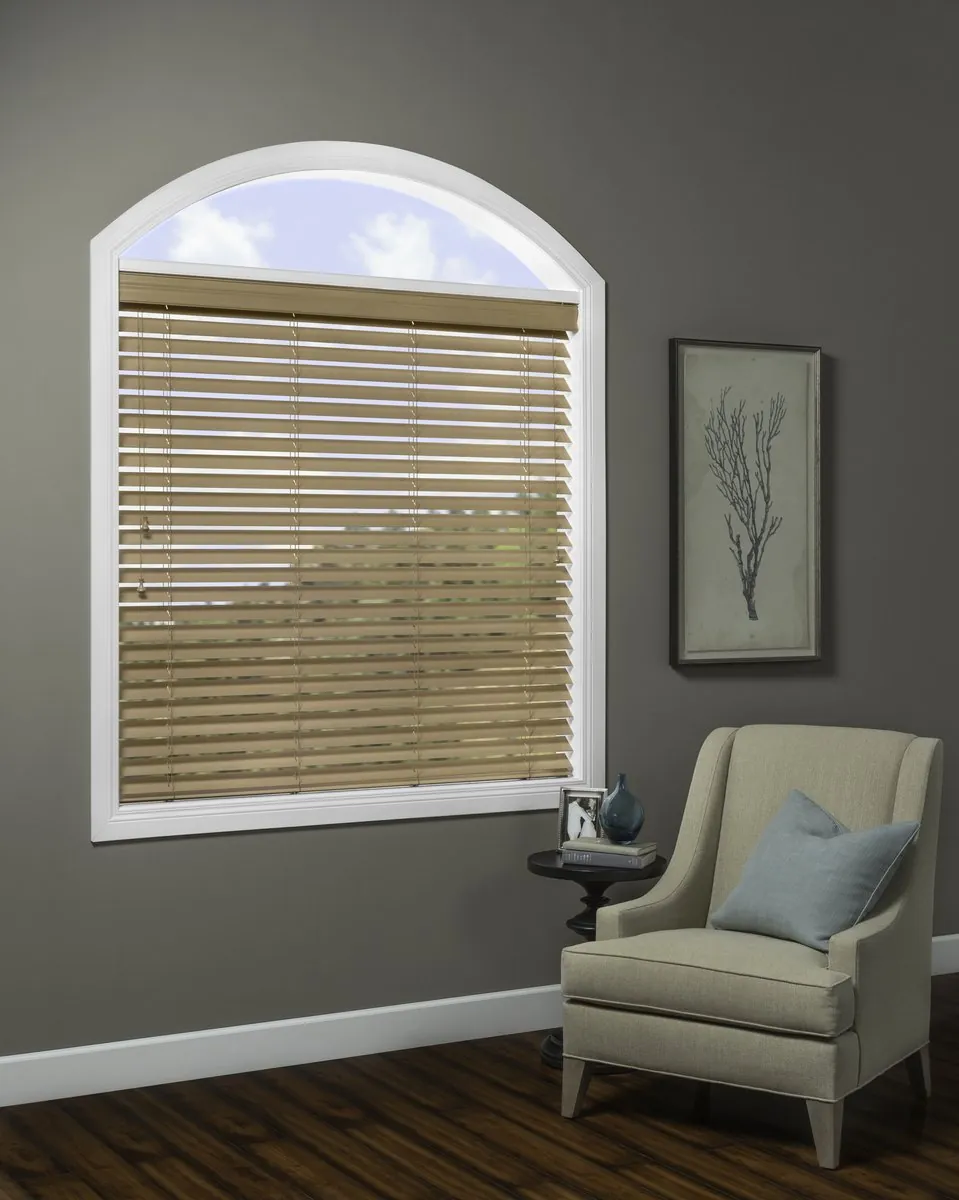
Wood, faux wood, metal and vertical blinds, chosen for the material and the way you want them to operate.
Cellular shades
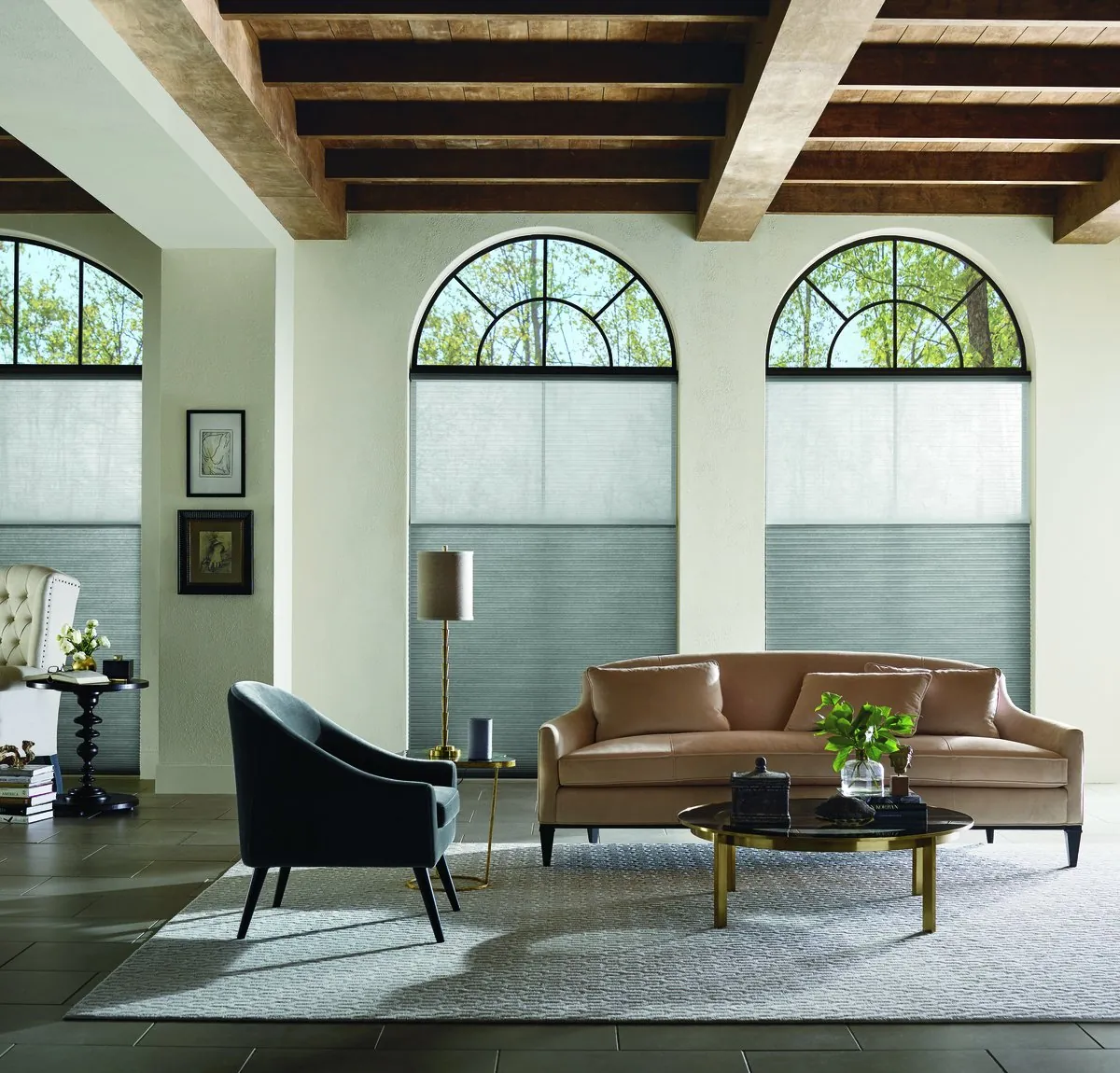
Duette and Applause honeycomb, whose cells hold a layer of air beside the glass.
Roller shades
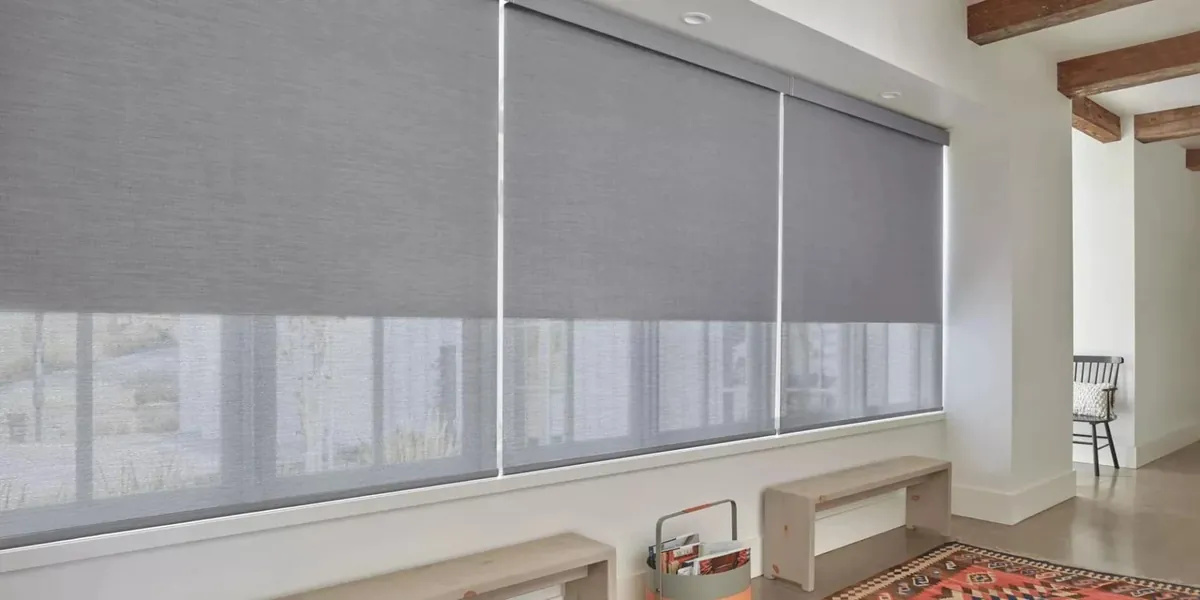
Designer and Alustra roller and solar screen fabrics, picked by how much view and glare you want.
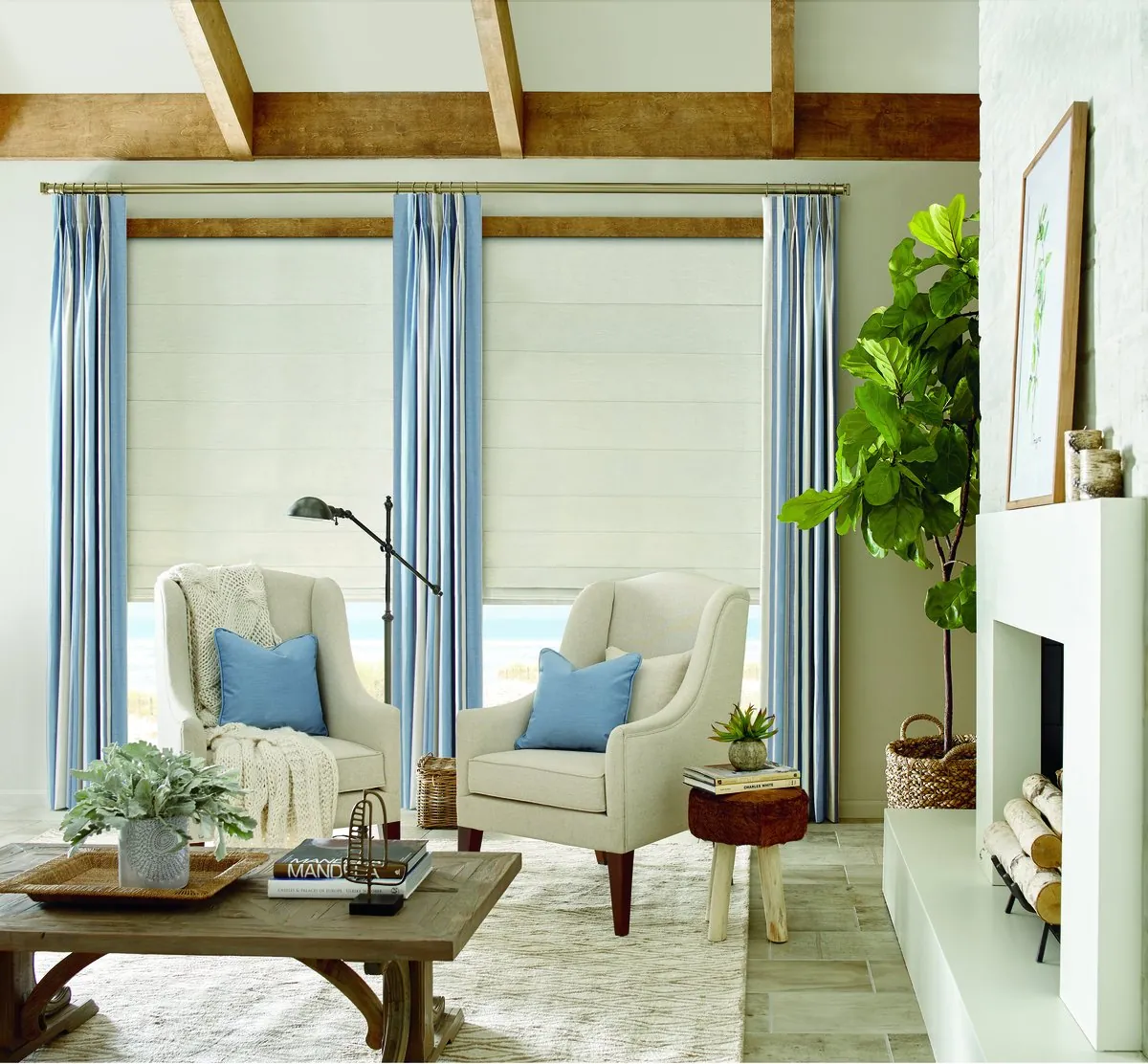
Roman shades
Vignette and Carole Fabrics, in flat and folded styles that suit a formal front room.
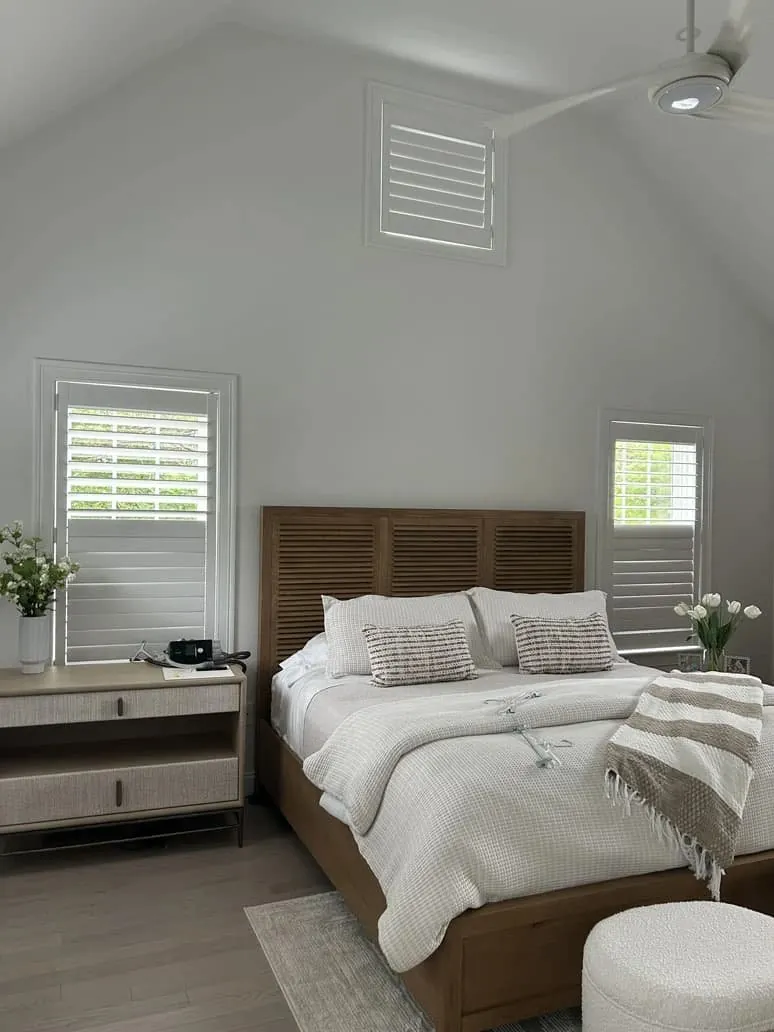
Plantation shutters
Palm Beach, NewStyle and Heritance, with louver size and frame style matched to each opening.
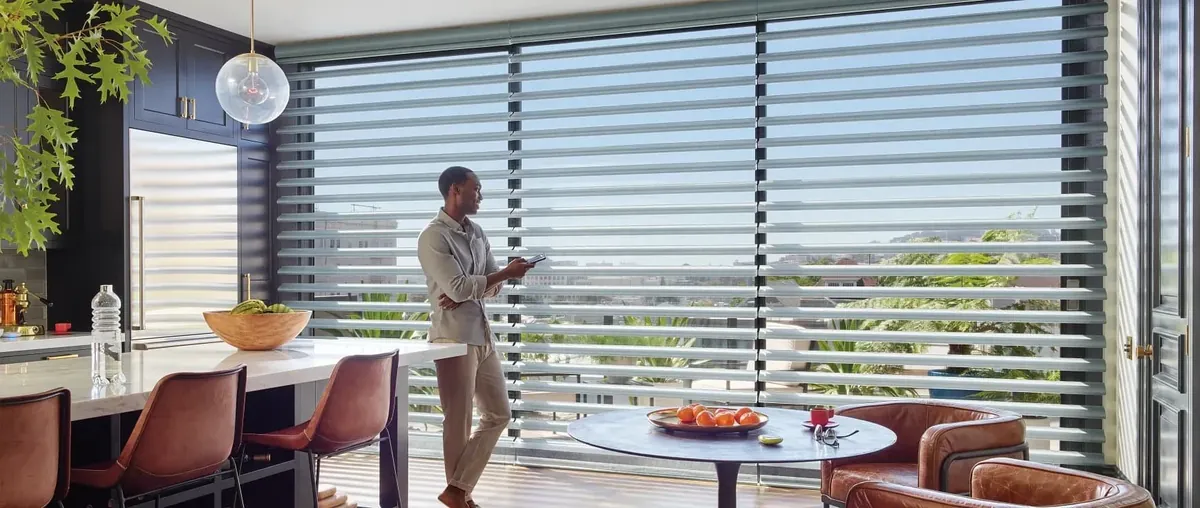
Motorized blinds and shades
PowerView, run from a remote, an app or a schedule you set once.
Why the dealer you choose matters in a historic house
Anyone can sell a shade from a picture. Fitting one to a window that has been painted, repaired and settled over its whole life is different work. As a Hunter Douglas Gallery dealer we offer the full line under one roof, and our installers hold Hunter Douglas certification, so the product that leaves the factory is the product that ends up working properly in your frame.
In the village that combination matters more than it does in a newer subdivision. Old casings are rarely square, the depth inside the frame varies from window to window, and the trim is often the best feature in the room. A Hunter Douglas dealer in Dedham who works in these houses regularly knows to check each opening on its own rather than assume the windows in a row are twins. The visit is where that checking happens, and the measurements we take become the order Hunter Douglas builds from.
There is also the question of what the house should look like from the street. Village houses near the sidewalk are seen up close by everyone who walks past. A consistent face on every street window, with matching headrails and colors that suit the exterior, keeps a historic front tidy even when the rooms behind it are dressed very differently.
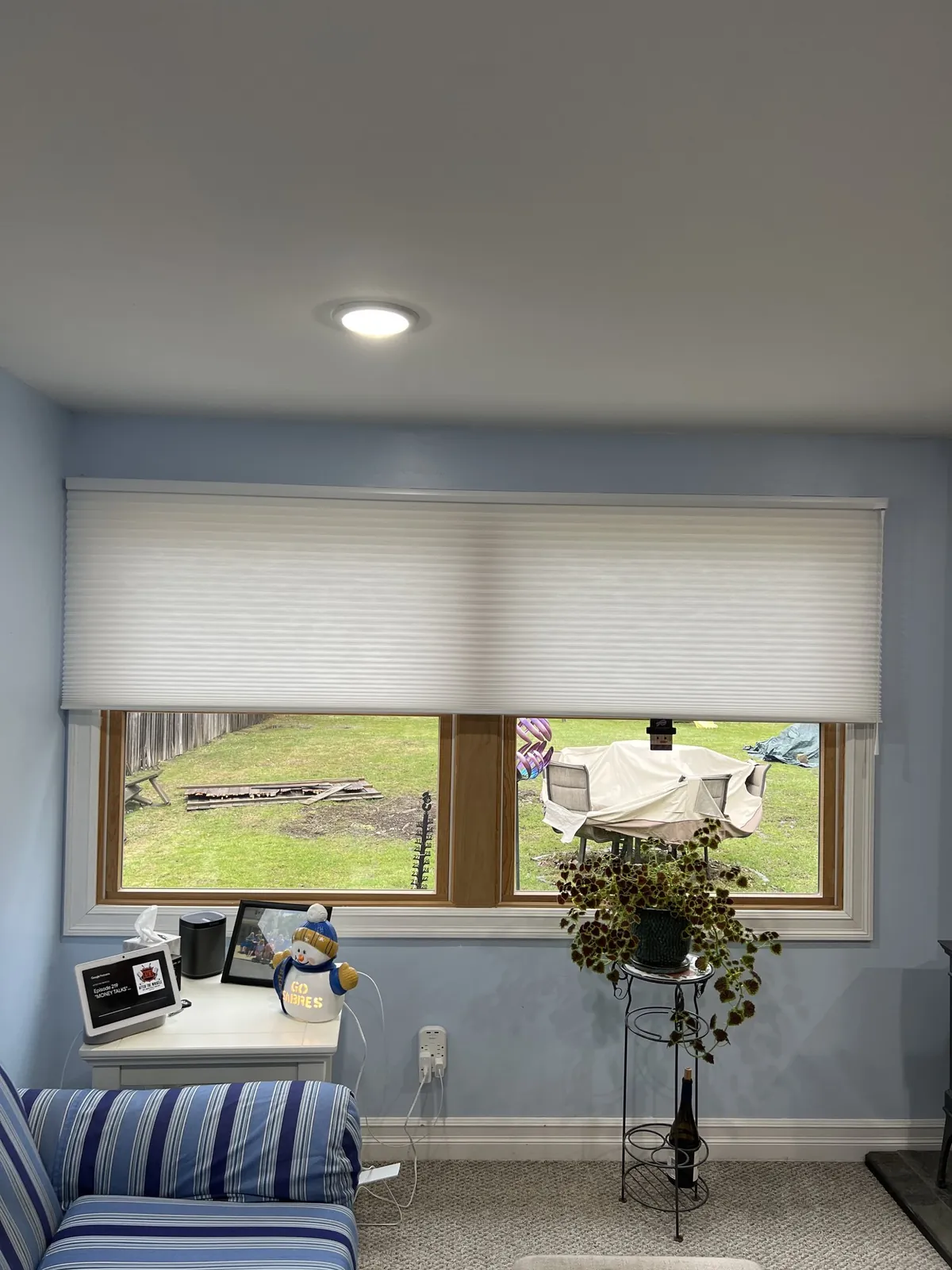
Tall, narrow sash in the colonials and Victorians
The windows in an antique colonial or a village Victorian tend to be taller than they are wide, sometimes much taller. They give the rooms their character, and they also set a few rules for whatever covers them.
Proportion comes first. A slim window looks best under a covering that reads as slim: a fine slat, a narrow louver, a soft fabric that falls straight. Wide, heavy elements can make an elegant opening look squat, and that is obvious the moment a sample goes up against the glass. Holding the options at the real window is the quickest way to see which one belongs.
Height comes next. On a tall sash the top of the shade can be well out of reach, which is one of the reasons PowerView comes up so often in the older houses. A motorized shade on a high window means nobody climbs on a chair to adjust it, and the shades in a whole room can move together.
Then there is the frame. Some village windows have room inside the casing for a neat inside mount that leaves the trim fully on show. Others are too shallow, or the old hardware is in the way, and a mount on the face of the casing is the better answer. We talk through those choices at the window so you know where every bracket will sit before anything is ordered.
Products that tend to suit the oldest rooms
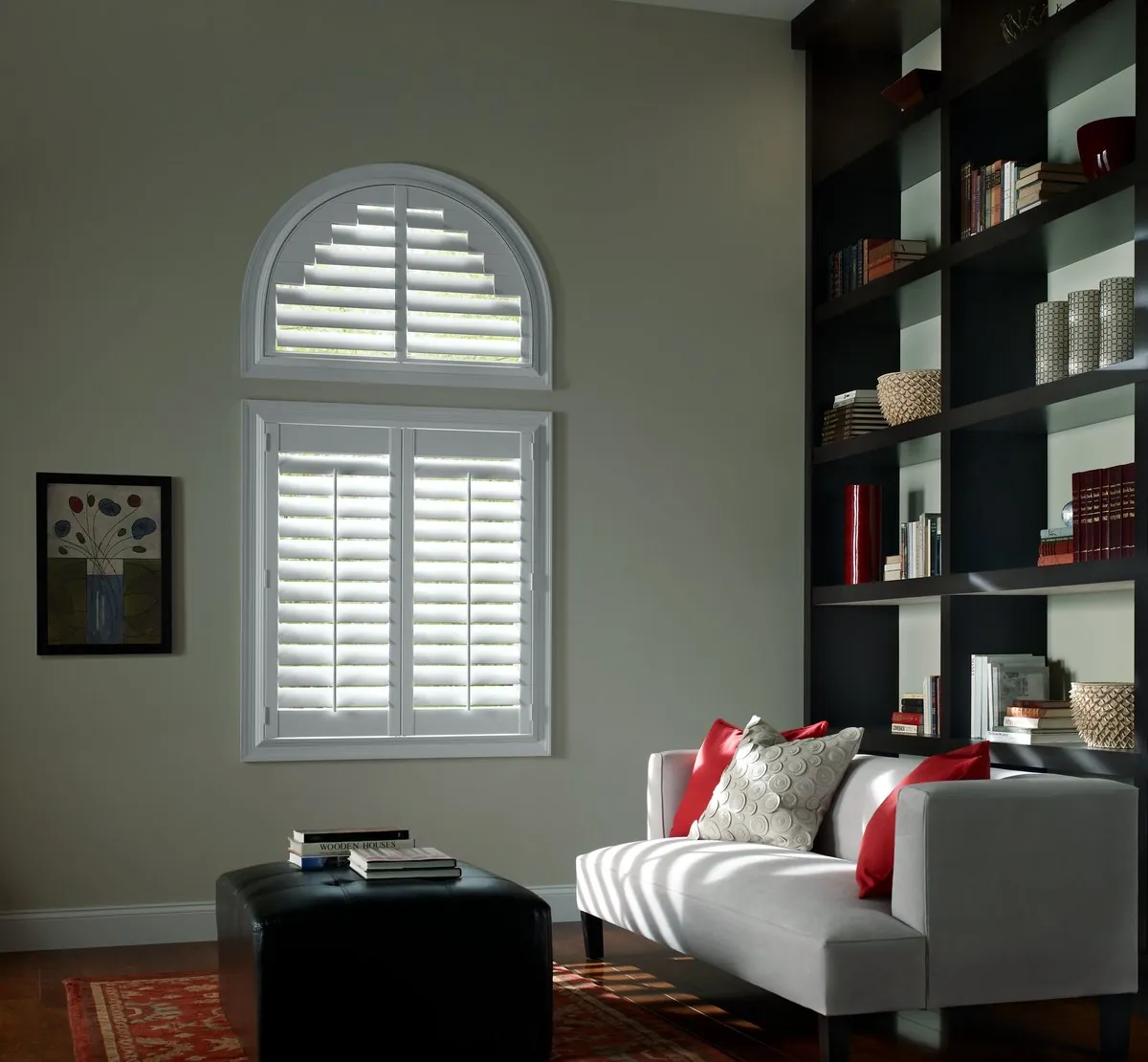
- Plantation shutters, for a front room where the louvers can tilt for privacy from the sidewalk while light still reaches the ceiling.
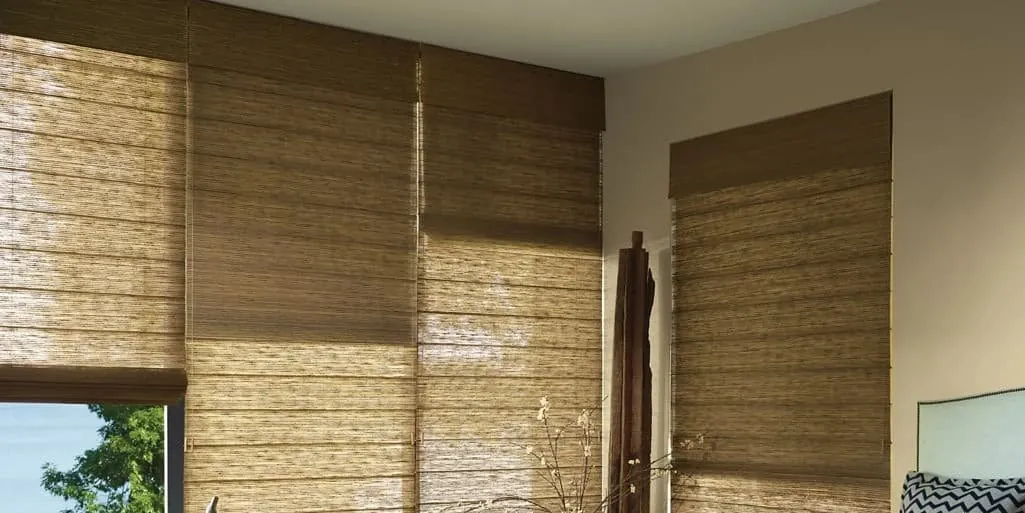
- Roman shades in a flat or folded style, for a dining room or parlor that wants softness without fuss.
- Honeycomb shades, for bedrooms and any room where the old glass makes the window side feel cool.
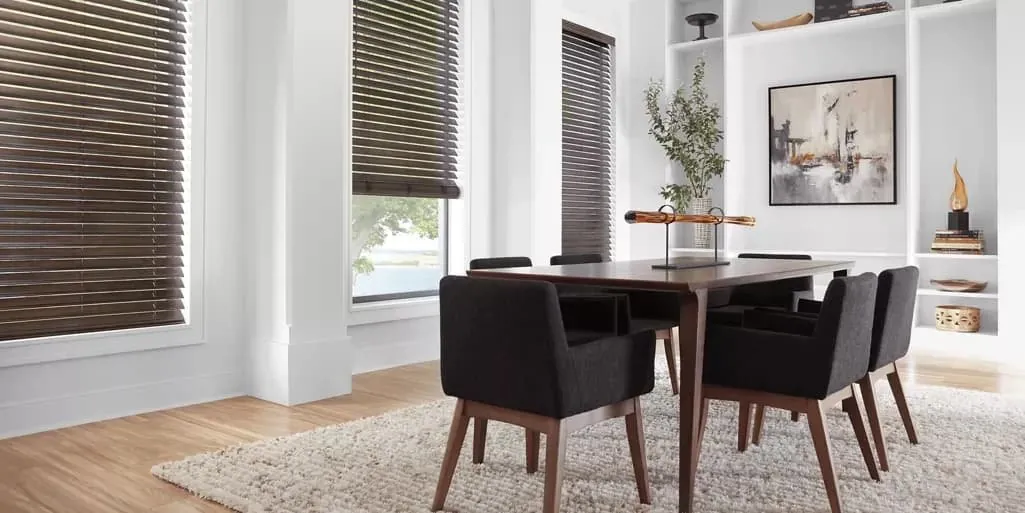
- Wood blinds, for a study or library where the warmth of real wood sits well with old floors and trim.
Houses near the street in Dedham Village
Because so many village houses sit close to the road, the front rooms deal with a steady stream of passing eyes. Privacy is the first thing most owners mention, and the challenge is to get it without turning a bright parlor into a dim one.
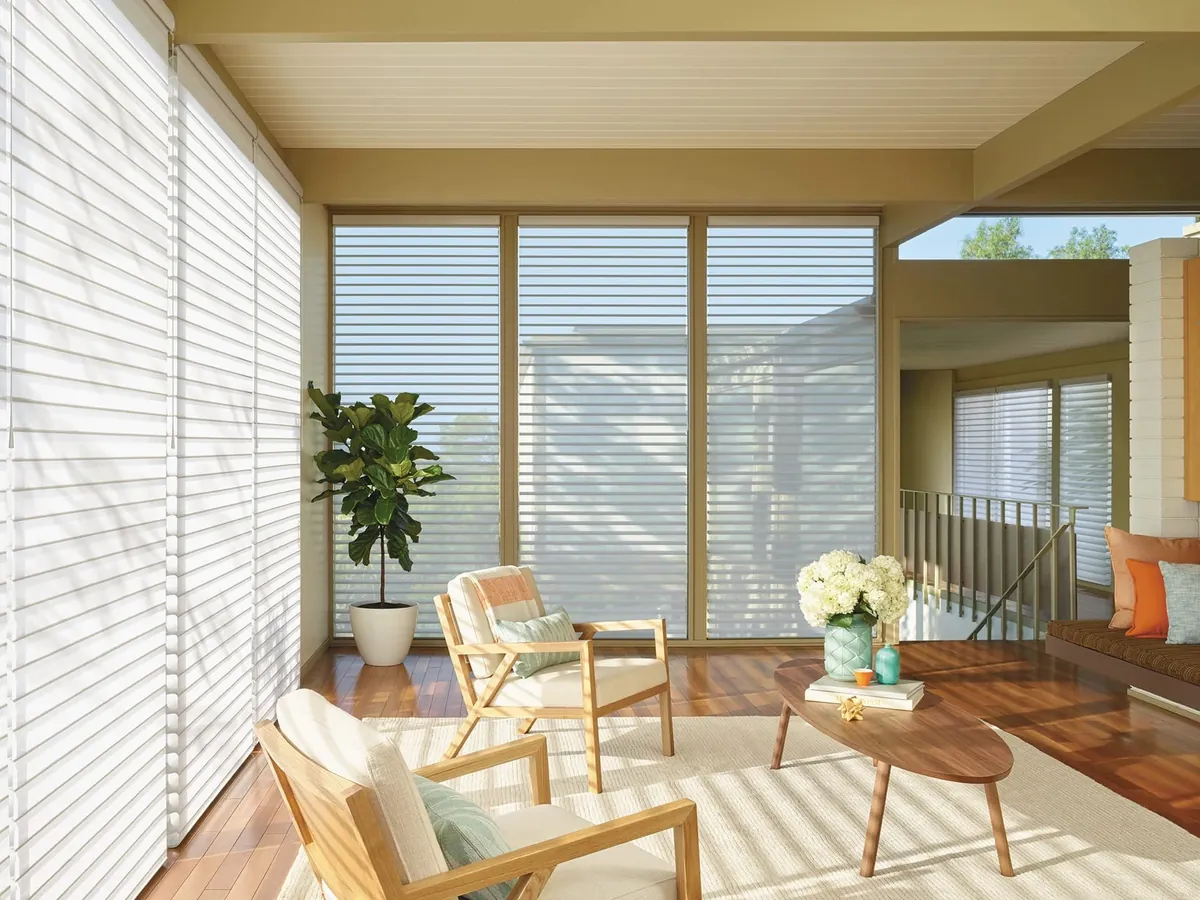
A few approaches work well here. Shutters let you angle the louvers upward so the view from the sidewalk is blocked while daylight bounces off the ceiling. Sheer shades such as Silhouette soften the view out and the view in at the same time, so a room keeps its glow. A light fabric on a Roman or roller shade gives daytime privacy without the room going dark. Which one suits your house depends on the room’s use, the trim and how you want the front to look from outside, and that is a conversation best had standing in the room.
Rooms on the side of a village house can face another house across a narrow gap. There the aim shifts toward keeping every bit of light while blurring the outlook, and pale fabrics usually win.
Capes and ranches toward Riverdale
The post-war houses toward Riverdale are a different job, and often a simpler one. Openings are standard, rooms are square, and almost anything in the Hunter Douglas range will fit. The questions turn from what the window allows to how you live in each room.
A ranch living room with a picture window facing the street might want a light-filtering shade that keeps privacy in the daytime. The back slider to the yard needs a covering that moves sideways out of the way, such as a vertical honeycomb, Luminette or vertical blinds. A cape’s upstairs bedrooms, tucked under a sloping roof with small dormer windows, usually come down to darkness and comfort, and a honeycomb shade fitted inside a dormer recess handles both.
Kitchens and baths in these houses raise their own questions about steam and splashes, and we talk through which materials make sense there at the window. A Hunter Douglas dealer in Dedham can cover a whole cape or ranch in one consultation, and the house ends up looking consistent from the street while each room gets what it needs.
Color and the outside face of a historic front
Inside, a village room can take almost any color you like. From the sidewalk, though, the back of every shade is part of the house’s face, and on a colonial or Victorian close to the street that face is seen every day. Most owners of older houses want the street windows to look calm and consistent: one tone across the front, headrails that line up from window to window, nothing that fights the paint or the trim.
That does not mean every room has to match. A Hunter Douglas dealer in Dedham can pair a warm wood blind in a study with a soft Roman shade in the dining room next door and still keep the view from outside tidy, because many fabrics and finishes are chosen with that outward face in mind. We bring samples that let you see both sides, and we look at the exterior with you before settling on a palette.
In the Riverdale capes and ranches, where houses sit back a little further and the architecture is simpler, there is more freedom. A child’s room can take a bolder fabric, a kitchen can carry a pattern, and the front still reads as one house if the street windows share a color family.
Studies, libraries and formal dining rooms
The bigger antique houses in the village often still have the rooms they were built with: a study lined with shelves, a formal dining room, a front parlor kept for guests. Each has its own needs. A study wants control over glare on a desk and the feel of a quiet, finished room, which is why wood blinds and shutters suit it so well. A dining room is used most in the evening, when privacy from the street matters and soft light from the table lamps should stay in the room. A parlor wants to look its best by day and give privacy by night.
We plan these rooms together rather than one at a time, because they usually sit side by side along the front of the house.
How a Dedham consultation runs
The in-home consultation is where all of this becomes a plan for your house. It is the heart of how we work, and it follows a simple pattern.
- We arrive with a van carrying samples, because we can bring the showroom to you.
- You tell us which rooms are bothering you and what you want from each one: privacy from the street, darkness in a bedroom, less glare on a screen, warmth by old glass.
- We walk the house together and hold real fabrics, slats and louvers up at your windows, so you judge them in your own light.
- We look at each frame and decide how each product should mount.
- We measure every window we are quoting.
- You receive a free estimate for products and certified installation, with no pressure to decide on the spot.
If you want to know more before booking, read what happens at an in-home consultation, or see our in-home consultations page. For a house where you are also weighing paint, fabric and furniture, our interior design consultations can be part of the visit.
Light, warmth and the older glass
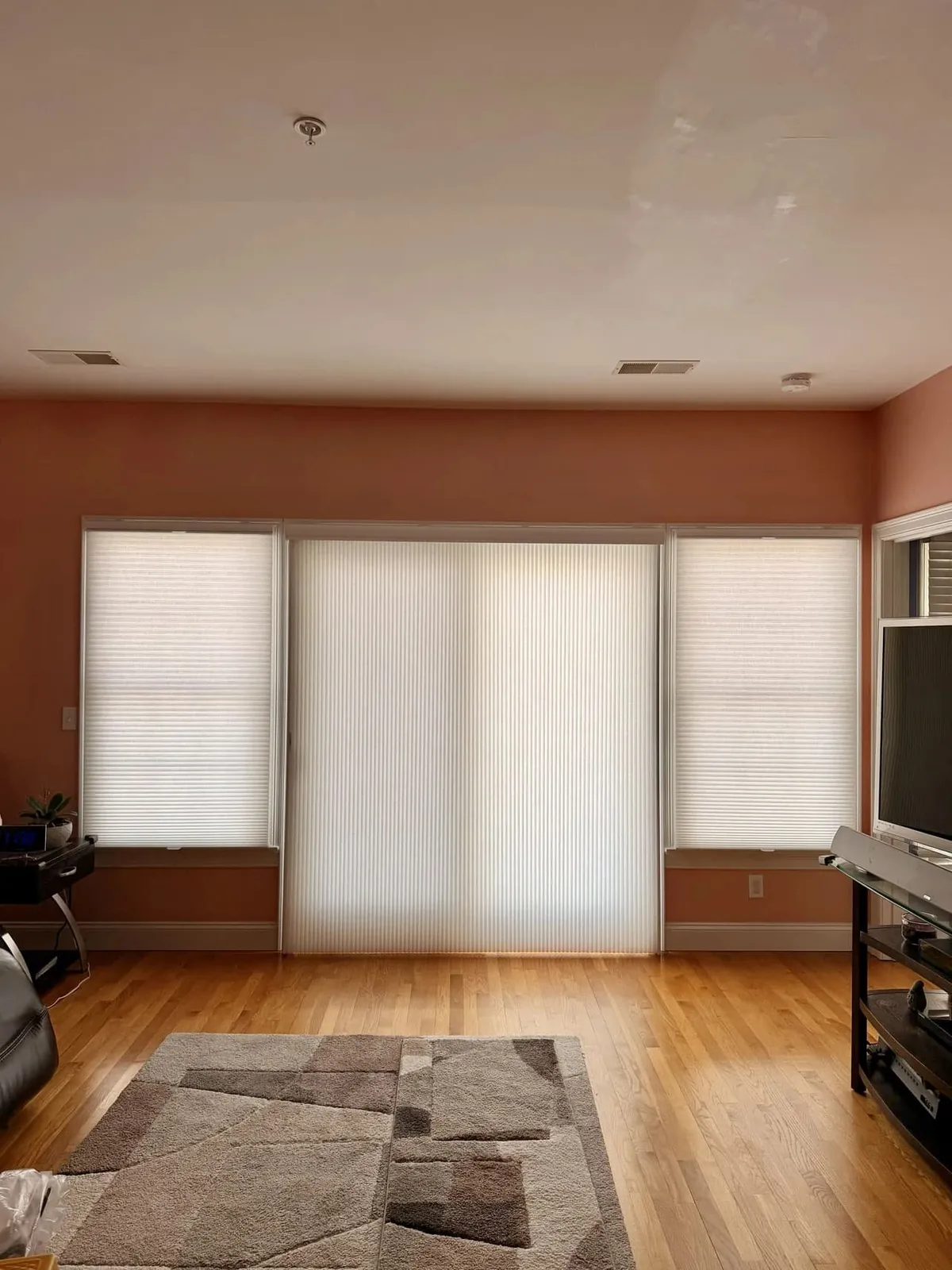
Original glass in an antique house is often worth keeping, but it is thin. Sitting beside it on a winter evening, you feel the cold coming off the pane. Honeycomb shades are the strongest answer in the Hunter Douglas range for that problem, because each cell holds still air between the glass and the room. We explain more on our cellular shades and winter heat guide.
In summer the concern flips to sun. The village houses are often shaded by neighbors and old trees, but a back room with an open aspect can take strong afternoon light. Solar screen fabrics cut glare while leaving the view, and the openness can be chosen to suit how bright that window gets. Our guide to the best shades for sun and glare covers the options.
Fitting day, step by step
When the order arrives from Hunter Douglas, our certified installers come back to put everything up. The day usually looks like this.
- We check each product against its window with you before work starts.
- Brackets go into solid material and are set level, even when the frame itself has settled out of true.
- Each covering is mounted and adjusted so it hangs evenly in the opening.
- Every lift, tilt and louver is tested, and any PowerView motors are paired and set up.
- We show you how everything works and leave the rooms tidy.
In an antique house we take extra care around old trim. Where a casing is precious, we discuss bracket positions before drilling so holes land where they will not show. You can read a fuller account of what happens on installation day.
PowerView in a house with high windows
The tall sash in Dedham’s older houses is one of the best cases for motorization. When the top of a shade sits well above head height, a remote or the PowerView app does the reaching for you. Shades in a whole room can rise or fall together, and a schedule can close the street-facing rooms at dusk without anyone remembering.
PowerView works across many Hunter Douglas lines, so honeycomb, Roman, roller and sheer shades can all be part of the same system. We plan how each motor is powered at the visit, with an eye on old plaster and trim that nobody wants opened up. Our motorized blinds and shades page explains control in more detail.
As a Gallery dealer we offer the whole range in one place, and you can look through colors and lines in the Hunter Douglas catalog before we arrive. Read more about our dealer work on the main Hunter Douglas page.
Served at home from our Canton territory
Dedham is part of the area we serve from Canton, and Canton works as a shop-at-home territory. Rather than asking you to travel, we bring the samples to your living room and make every decision at your own windows. You can read how that works on our Canton shop-at-home page.
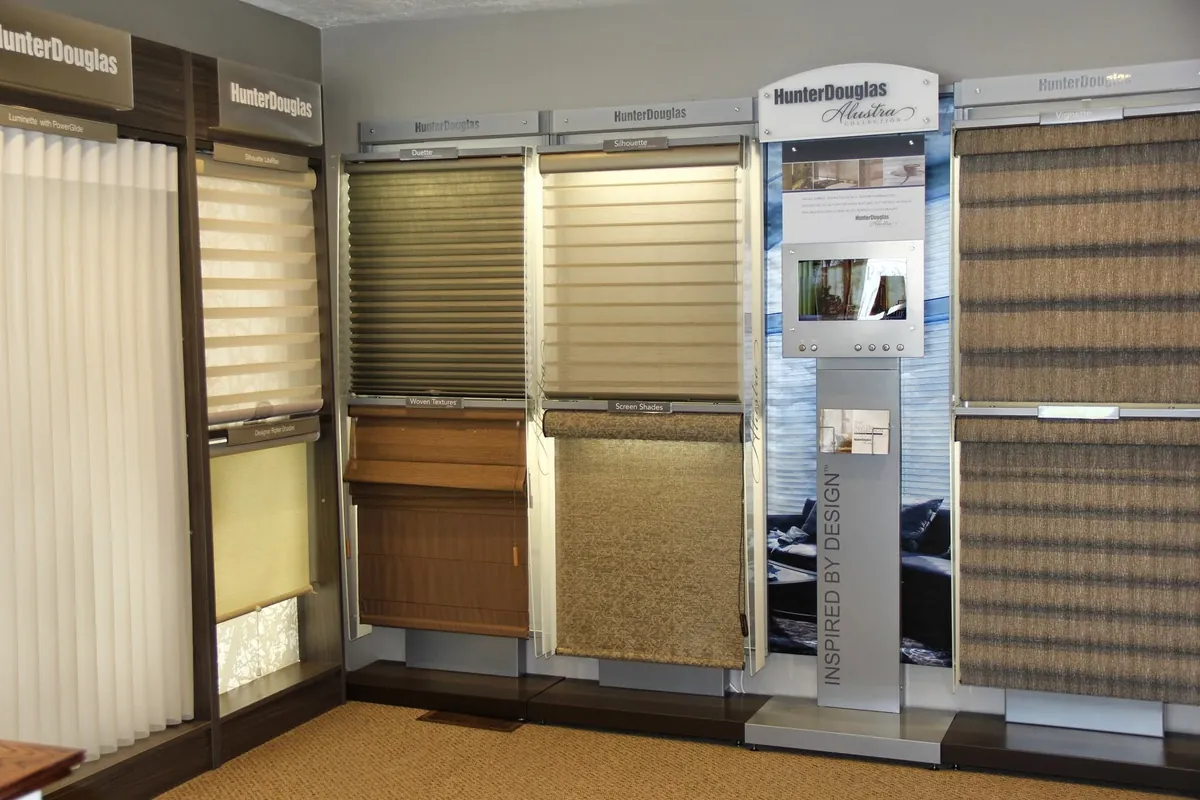
If you would like to see products in person before or after a visit, our nearest showroom to Dedham is in Franklin. The Franklin showroom page has everything you need to plan a trip.
Everything we offer around town is gathered on our Dedham page.
Questions from Dedham
My village house is close to the sidewalk. How do I keep privacy without losing light?
Shutters with the louvers tilted upward, sheer shades and pale fabrics on Roman or roller shades all block the view from outside while letting daylight in. We hold samples at your front windows so you can compare them in the room.
Will a covering suit a very tall, narrow window?
Yes. Slim slats, narrow louvers and soft fabrics keep a tall opening looking elegant. On the highest windows, PowerView saves reaching the top of the shade.
Can you fit inside the frame of an antique window?
Often, but not always. Old casings vary in depth and may have hardware in the way. We check each window during the visit and suggest an inside or outside mount for that opening.
Do you also fit the capes and ranches toward Riverdale?
Yes. Standard openings take almost anything in the Hunter Douglas range, and we can plan the whole house in one consultation.
Does the estimate cost anything?
No. Your estimate for products and certified installation is free.
Ready to plan your Dedham windows
Whether it is one parlor in the village or every room in a Riverdale ranch, the first step is the same: ask for a consultation and we bring the samples to your door. If you would rather talk it over first, the call button at the top of the page reaches our Canton team. Either way, you work with a Hunter Douglas dealer in Dedham that measures at your windows, leaves you a free estimate to consider and sends certified installers on fitting day.