
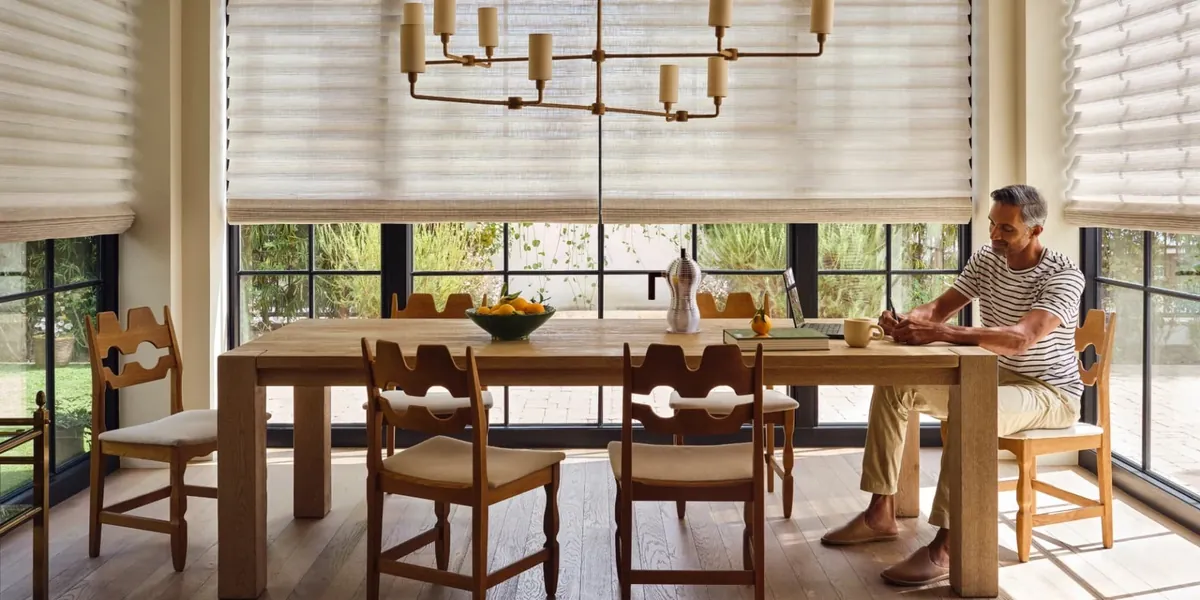
Sliders, single-hung sash and a house next door
Most of Randolph was built in one long post-war push: capes, ranches and two-families on modest lots, with the houses set fairly close together. The windows in those houses follow a pattern too. Single-hung sash, where the lower half lifts and the upper half stays put, sit beside horizontal sliders that open sideways along a track. When we plan roman shades in Randolph, MA, those two window types and the short gap between houses decide most of what follows.
A slider is wider than it is tall, so a fabric shade on it has to look right across a broad, low opening and fold away without hiding the glass. A single-hung window is the opposite shape, taller and narrower, and gives a fold room to fall. Many houses have both, sometimes in the same room, and the shades need to look like a family even though the windows do not.
The short setbacks add the third consideration. A side window that faces the neighboring house a driveway away needs privacy at night but should not turn the room dark by day. Fabric handles that well. We bring Vignette and Carole Fabrics roman shades, in flat and folded styles, to your door so you can judge all of this in the rooms themselves.
The roman shades we bring to Randolph
These three cover most requests for roman shades in Randolph, MA. Each comes on the sample van, and every one can be held up at a slider or a single-hung window before you decide.
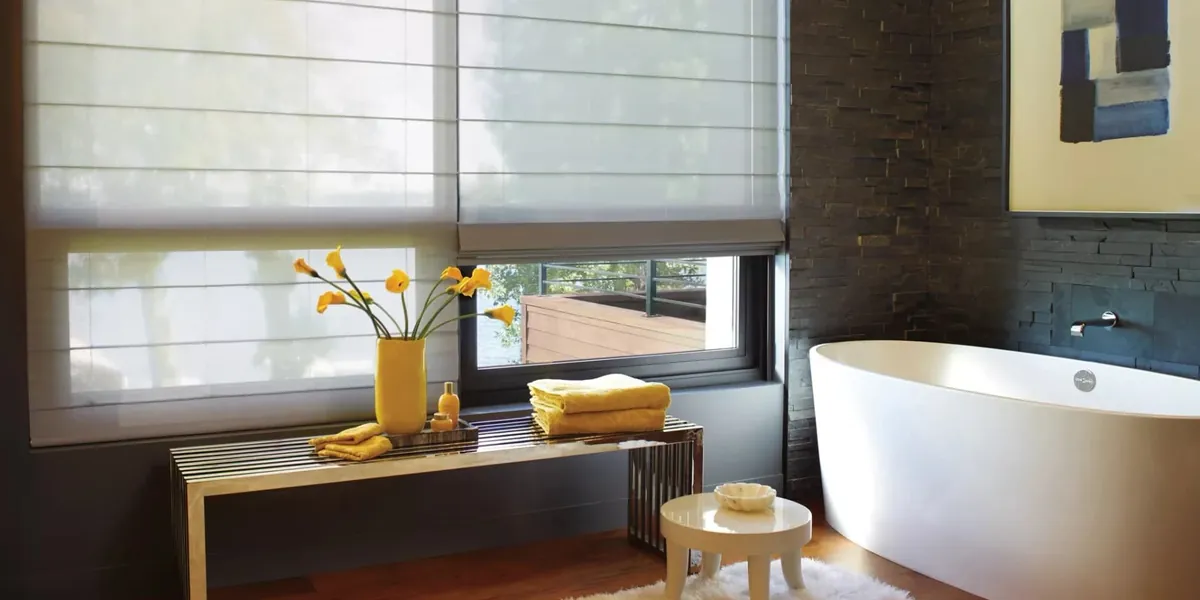
Lighter fabrics for smaller rooms
An airy fabric keeps a compact bedroom or bathroom bright with the shade down, while still blurring the view in from next door.
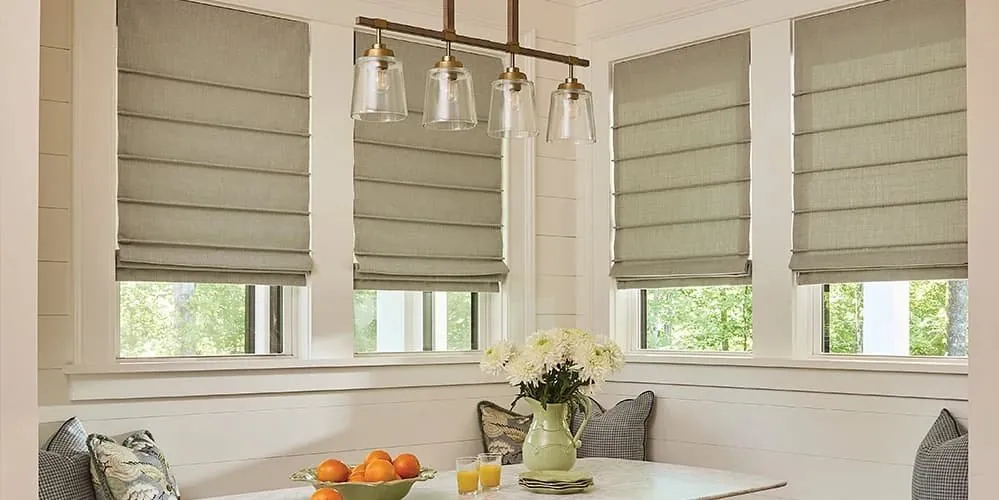
Vignette for a clean, modern line
Even folds and a crisp profile that suit the straightforward rooms of a ranch or a cape kitchen.
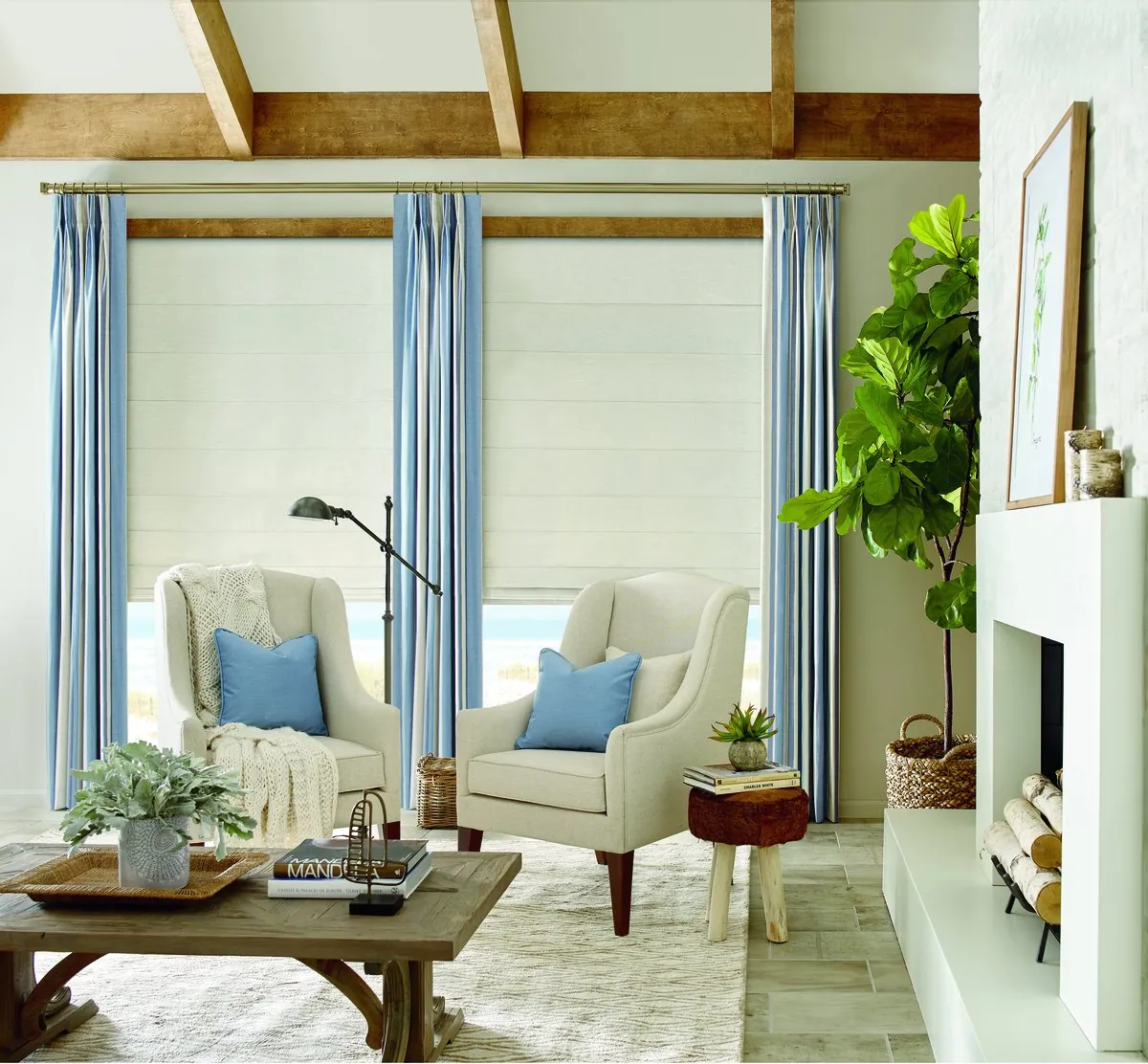
Carole Fabrics, flat or folded
A wide fabric library made up as a smooth flat panel or with soft loops. Good when the fabric itself is the point.
Fitting a fabric shade to a slider
Horizontal sliders are one of the most common windows in Randolph, and they are worth a little thought. The sash moves sideways in a track, so a shade has to clear the latch and the handle, and the person opening the window needs to reach past the fabric. Mounting the headrail so the raised shade stacks above the moving sash keeps the window easy to use.
The shape is the other issue. On a wide, short opening, a fabric shade folds up into a stack that sits across the top of the glass. A deep stack on a short window takes a noticeable bite out of the daylight, so on sliders we tend to suggest a fabric and a fold that keep the raised shade slim. Vignette is often a good fit here, as is a lighter Carole flat style. We will show you how much glass stays clear when the shade is up, before you commit.
Some sliders are wide enough that one shade looks heavy. Splitting the width between two shades side by side keeps each one easy to raise and gives you the choice of lowering only half the window, which is handy in a kitchen where the sun comes in on one side.
Single-hung windows in bedrooms and front rooms
The single-hung windows in Randolph capes and ranches are standard sizes with square frames, which makes them straightforward to fit. Most have enough depth inside the frame for a headrail, so the shade can sit within the opening and leave the trim visible. That gives a neat, built-in look that suits the simple lines of a post-war house.
In a bedroom, the question is usually how much light you want to keep out. A heavier fabric gives a dimmer room at night; a lighter one lets the morning in. In a front room facing the street, it is more often about privacy in the evening and daylight the rest of the time. Both are decisions about fabric weight and color, and both are easier to make with a sample held against the glass at the time of day you care about. Our guide to best shades for sun and glare gives some background on the bright rooms.

Two-families: one building, two households
Randolph has a good number of two-families, usually one unit above the other. Each floor is its own home, often with its own taste, but from the street the building reads as one house. When both units are being done, we often suggest choosing a shared color for the side of the fabric that faces out, then letting each household pick freely for the room side. The building looks orderly from the sidewalk, and nobody is stuck with a fabric they did not choose.
The two floors also get different light. The upper unit sits higher, sees more sky and usually catches more sun; the lower unit is closer to the neighboring houses and the street. That can mean a lighter fabric upstairs, where glare is the issue, and a fabric with a little more body downstairs, where privacy matters more. When we plan roman shades in Randolph, MA, for a two-family, we look at the windows floor by floor rather than assuming one choice suits both.
If you own the building and are fitting out one unit, a plain, neutral Vignette or Carole flat style in every room keeps things simple and consistent. We can talk through that at the visit.
Capes and ranches ask different things
A Randolph cape and a Randolph ranch were built in the same era, but their windows sit differently. A cape puts its living space on two floors. Downstairs, the front windows usually flank the door in matching pairs; upstairs, the bedrooms tuck under the roof, with dormer windows and sloping ceilings. Those upstairs rooms are often the warmest in summer and the first to catch the morning sun, so the fabric there earns its keep.
A ranch puts everything on one floor, and its windows tend to line up along the long side of the house: a broad living room window at the front, then a row of bedroom windows, then a kitchen slider at the back. Because so much of the house faces the same direction, one side can be bright all afternoon while the other stays shaded. We plan fabric weight by which way each room faces, so the sunny side gets a fabric that tames glare and the shaded side gets one that keeps what light there is.
In both, the openings are standard and the frames are square, which keeps fitting simple. The interest is in matching the shade to how each room is used.
Light through the day on a close-set street
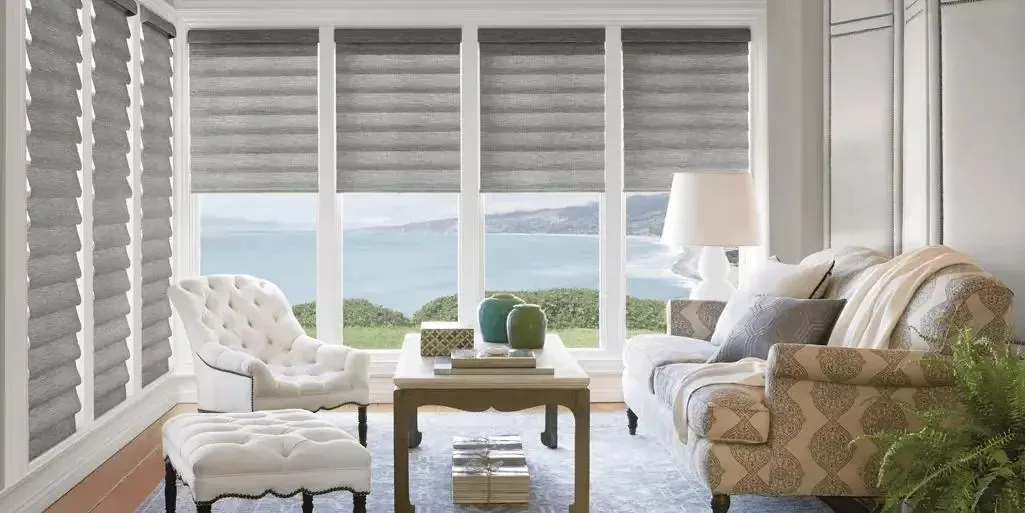
On a street where the houses stand close, daylight arrives in a particular way. The front and back of the house get open sky, while the side windows often see mostly the wall of the house next door. That means the front and back rooms take the sun, and the side rooms rely on reflected light.
For the front and back, a fabric shade that lowers partway in the afternoon cuts glare on a television or a computer screen without blacking out the room. For the side rooms, a pale fabric that lets light through matters more, because there is less of it to start with. Choosing roman shades in Randolph, MA, with that pattern in mind avoids a common mistake: picking one heavy fabric for every window and finding the side rooms gloomy.
Short setbacks and side windows
On modest lots, the side windows of one house can look almost directly into the side windows of the next. During the day, a light-colored fabric lowered partway takes the edge off that view without making the room gloomy. In the evening, with the lights on inside, the shade comes all the way down.
Because roman shades lift from the bottom, a shade lowered to about halfway covers the top of the window and leaves the lower part open. On a side window that faces a neighbor, the opposite is often wanted, so we talk through how each side window will actually be used before choosing the fabric. On a window where you mostly want privacy, a fabric with some body that you leave down for much of the day can be the simplest answer.
What happens when we visit
In Randolph, the consultation happens at your kitchen table, not ours. The town sits inside our shop-at-home service, run from Canton, so a van loaded with samples drives to you, and every fabric is judged at the window it is meant for.
- Book through the Request a Consultation form, or use the call button if talking is easier.
- Tell us which rooms are on your list: a pair of kitchen sliders, the bedrooms, or the whole cape.
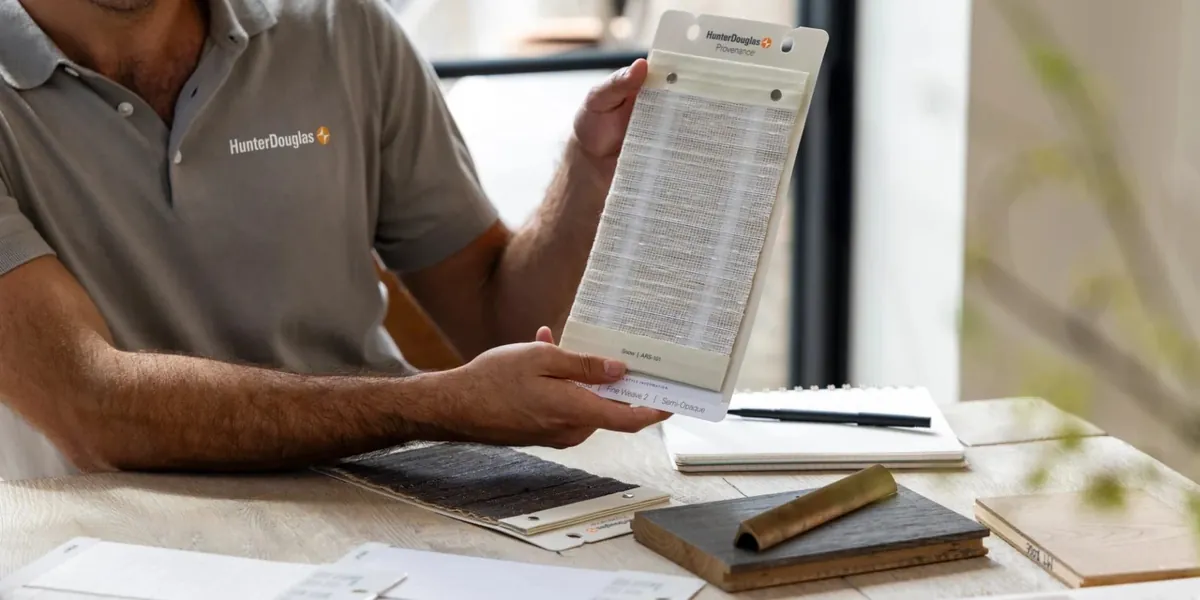
- On the day, the consultant brings the Vignette and Carole Fabrics books into the house and spreads them out where you can see them.
- Fabrics are pinned up against a slider and a single-hung window so you can compare the two window types side by side.
- Every opening is measured, with notes on latches, handles and how deep the frame is.
- Before leaving, the consultant writes up a free estimate, broken down by room.
If you would like to know more before the visit, our guide to what happens at an in-home consultation covers the usual questions, and the in-home consultations page explains the service.
Doing the whole house in one go
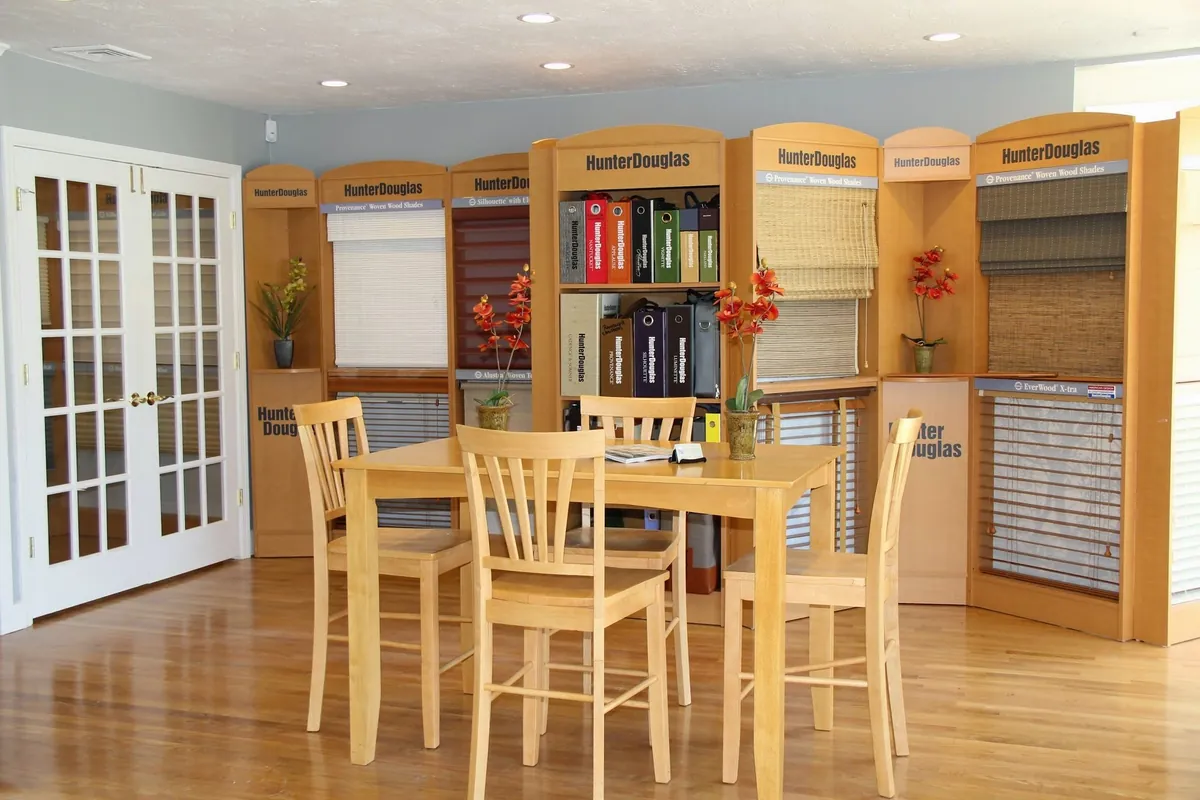
Standard openings are one of the real advantages of a Randolph house. Because so many windows share the same few sizes, a whole-house order is simple to plan and the results look consistent. A cape with matching windows either side of the front door, a row of identical bedroom windows down the side of a ranch, a pair of sliders in the kitchen: each group can have the same fabric and the same fold, so every room feels finished.
You do not have to do everything at once, of course. Plenty of people start with the rooms that bother them most, often the bedrooms or the front room, and add the rest later. Writing down the fabric and style on the estimate makes it easy to match later rooms to the first ones.
Kitchens, bathrooms and small rooms
Fabric shades are not just for living rooms. In a post-war kitchen, a Vignette or a plain Carole flat style over the sink or on a slider by the table softens a room that is otherwise all hard surfaces. In a bathroom, a lighter fabric gives privacy with the shade down while letting daylight through.
The small bedrooms of a cape, particularly under the eaves upstairs, benefit from fabric too. Hard floors and plaster walls can make a small room sound bare, and a fabric shade quietens it a little. A pale color keeps a compact room feeling larger. We bring enough samples to try several options in each room, so you can see how a fabric behaves in a small space before you decide.
Color and pattern on a modest window
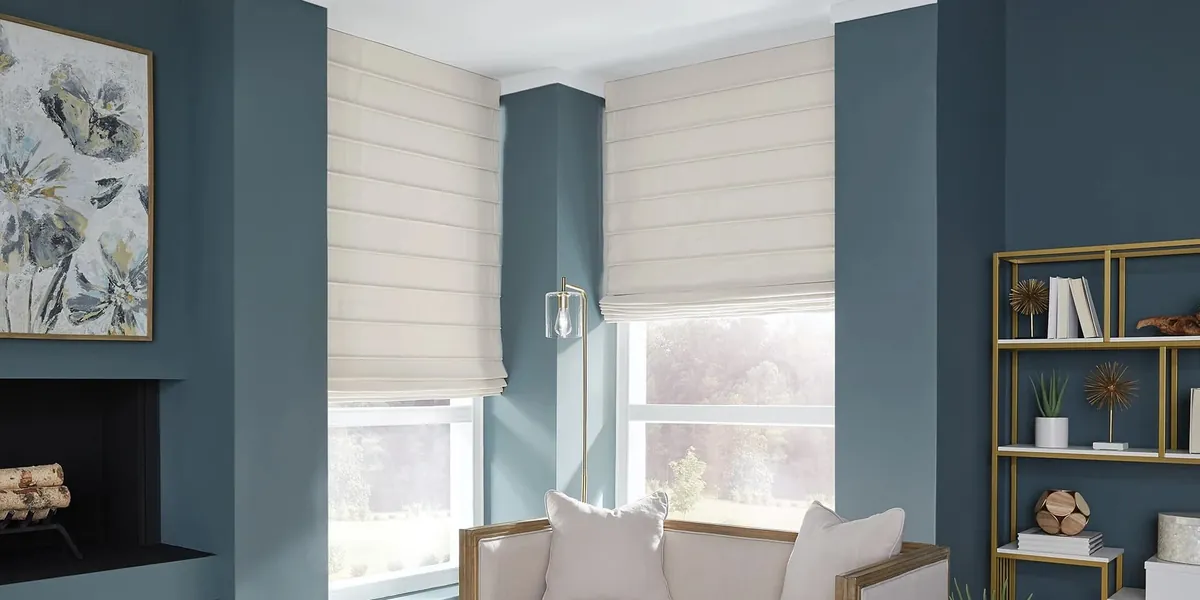
On a standard-size window, a fabric shade is a smaller canvas than on a tall Victorian sash, so pattern scale matters. A large print can look cut off on a narrow single-hung window, while a small print or a texture reads well. A stripe, running vertically, makes a short slider look a little taller.
Color is usually chosen with the rest of the room: picking up a wall color, a sofa or the floor. If you want a fuller plan that pulls together fabric, paint and furniture, our interior design consultations take that wider view. Our main roman shades page covers both Hunter Douglas lines if you want to read ahead.
Installation in a post-war house
Fitting day in a Randolph house is usually uncomplicated, and that is one of the pleasures of standard openings. Square frames and consistent sizes mean the headrails go in quickly and line up neatly from one window to the next. The things our installers watch for are the small ones: a slider latch that sits higher than usual, a window that was replaced at some point and is a slightly different size from its neighbors, or a frame where an old curtain rod left holes to work around. Every shade is fitted with certified Hunter Douglas installation and raised and lowered before anyone packs up. If you want to know what the visit involves, our guide to what happens on installation day walks through it.
Motorized roman shades
Some windows are awkward to reach: a slider behind a kitchen counter, a window over a bed, a high window over a stair. PowerView motorization lets a roman shade move from a remote, from your phone or on a schedule, so it lowers at dusk and rises in the morning without anyone touching it. We plan how each motor is powered at the visit. Our page on motorized blinds in Randolph explains what can be automated around the house.
A Gallery dealer that comes to your door
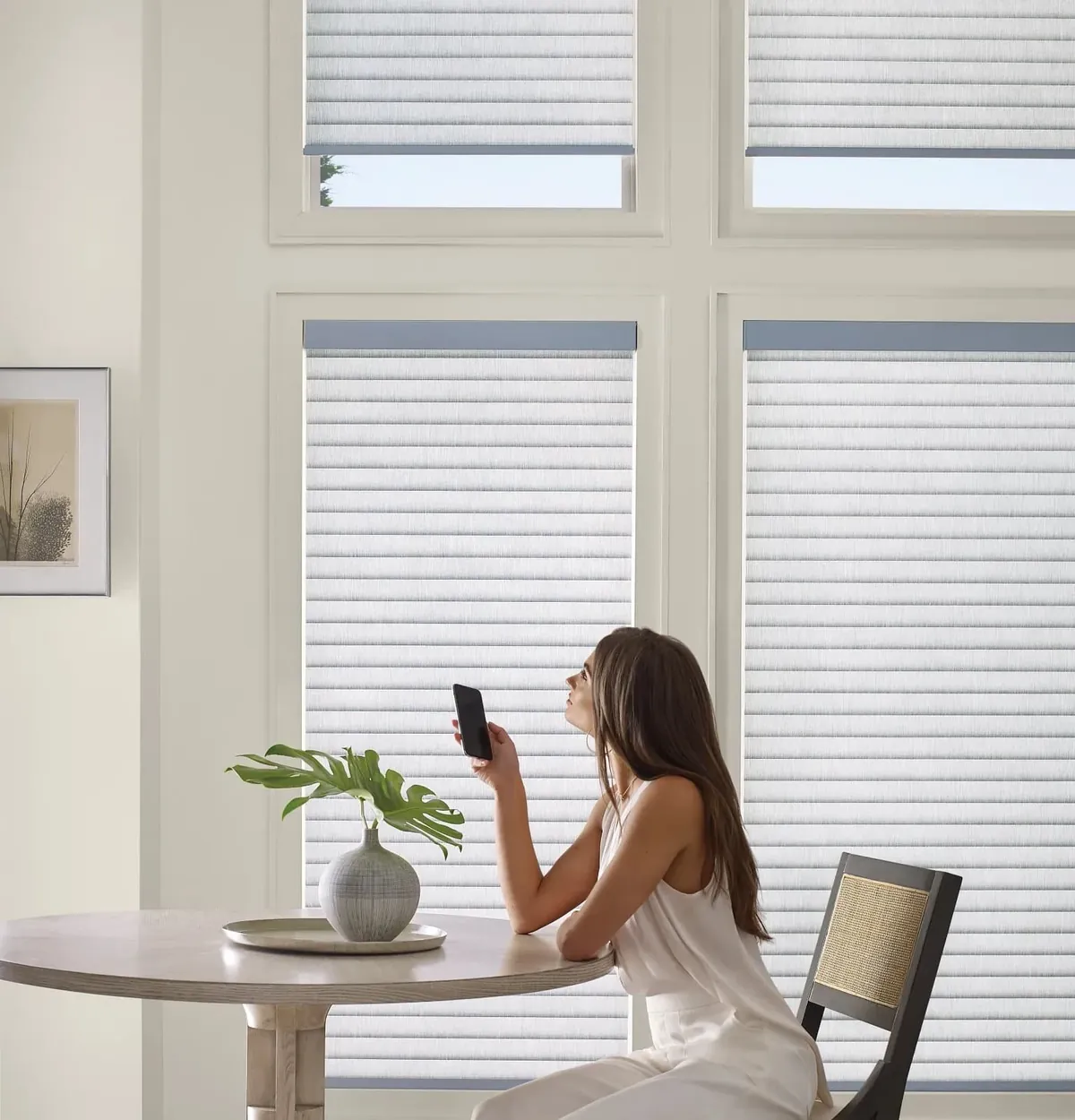
Hunter Douglas names its Gallery dealers, and Blinds & Designs is one. In practice, a Randolph cape or two-family can choose from the whole Vignette and Carole Fabrics collection, and if a room is better served by a blind, a shutter or another Hunter Douglas shade, those samples ride in the same van. Fitting is certified Hunter Douglas installation, so headrails go up level and every shade is run up and down before the installer leaves.
Estimates are free. If you have a blind or shade that needs fixing, our blind and shade repair service is happy to take a look. Bedrooms are a common place for cellular shades in Randolph, and our Randolph page lists everything we offer in town.
The in-home consultation is the usual way to start. If you would rather come to us, our nearest showroom is in Franklin.
Questions from Randolph
Can a roman shade go on a horizontal slider?
Yes. We mount it so the raised shade sits clear of the moving sash and the latch, and choose a fabric and fold that keep the stack slim on a short window.
Each floor of my two-family is a separate household. Do the shades have to match?
Not inside. Many buildings agree on one color facing the street and leave each unit to choose its own fabric for the rooms.
Will a shade fit inside my window frame?
Most single-hung windows in Randolph capes and ranches have enough depth for an inside mount. We check every window when we measure.
Can I do a few rooms now and the rest later?
Of course. The estimate records the fabric and style for each room, so later shades match the first ones.
Do you charge for the estimate?
No. The estimate is free, and you get it room by room before we leave.
Book a time that suits you
Seeing a fabric at your own slider, in your own light, is the surest way to choose. Request a consultation and a consultant will bring the Vignette and Carole Fabrics samples to your house, measure every window, and leave you with a free estimate. Planning roman shades in Randolph, MA, starts with one visit, and you can cover one room or every room in the house. If a question comes first, the call button reaches us.