
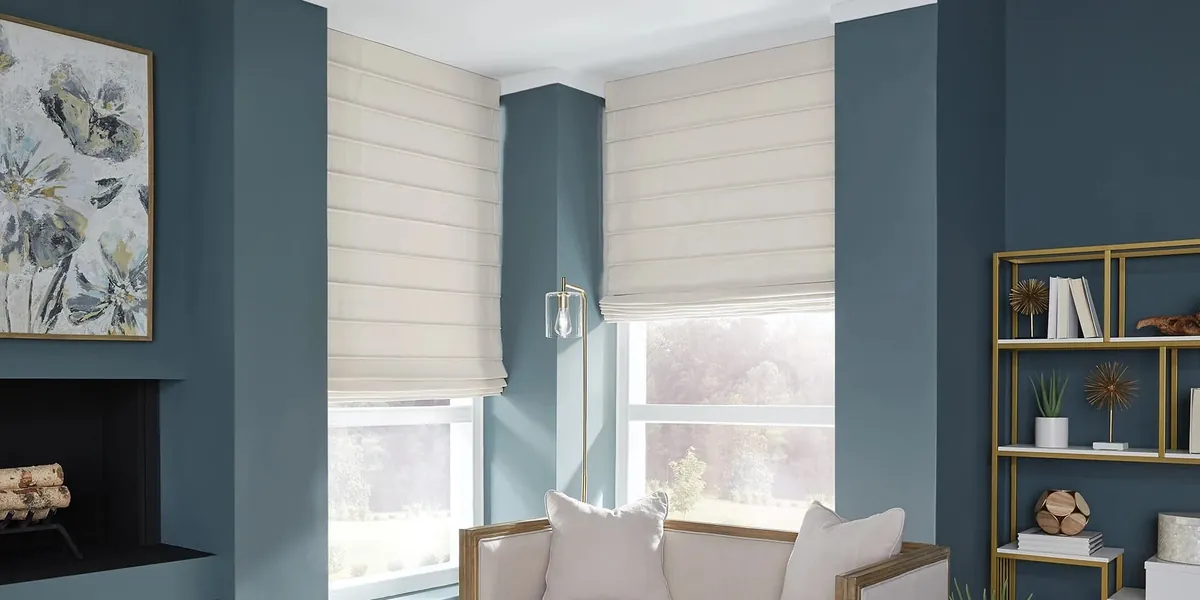
Stacked floors inland, open water on the points
Quincy asks two very different things of a window covering. Across Wollaston and North Quincy, the streets are lined with dense two- and three-families, one apartment stacked on another, with tall, narrow sash looking straight across at the house next door. Out on Squantum and toward Houghs Neck, the houses face open water, and the problem is not the neighbor’s window but the sun bouncing off the bay. Planning roman shades in Quincy, MA, means knowing which of those two jobs a window has.
Near the center, a third type has joined them: condominium conversions, older buildings divided into units, where each unit dresses its own windows but the building still has one face to the street. And Squantum has its shingled houses, with their own character and their own exposure to the weather off the water.
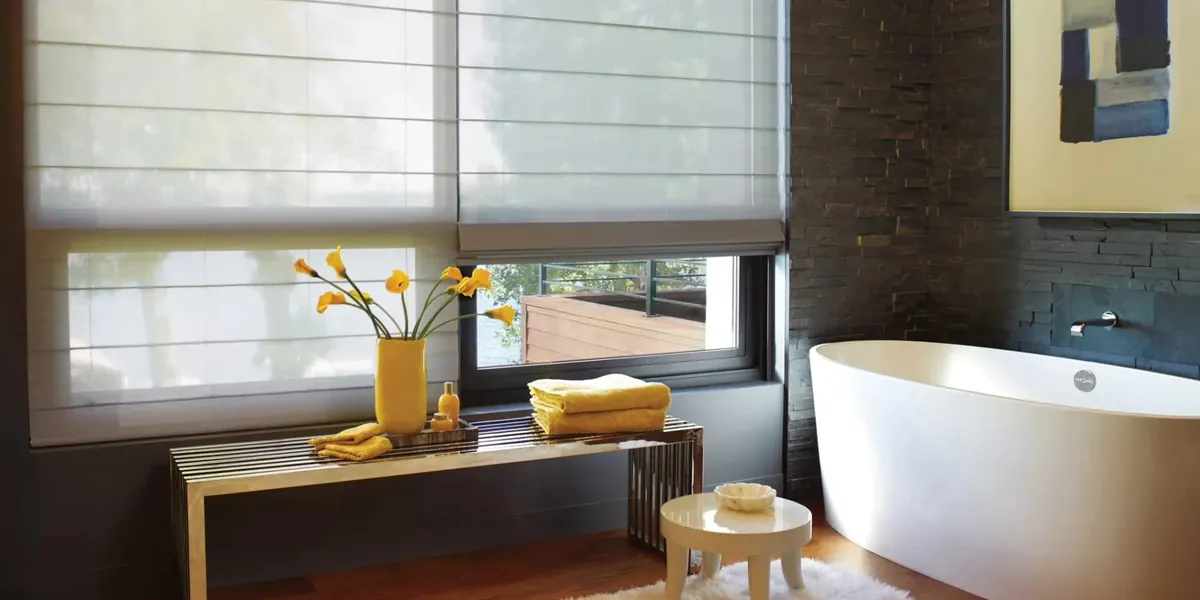
Fabric shades suit all of it. On a tall sash, a folded panel fills the long, slim opening gracefully. On a waterside window, it softens the glare without cutting off the view. We bring Hunter Douglas Vignette and Carole Fabrics roman shades, in flat and folded styles, to your door.
Roman shades in Quincy, MA, for three kinds of house
Each of these is a starting point we use often in Quincy. The fabric samples for all three travel on the van.
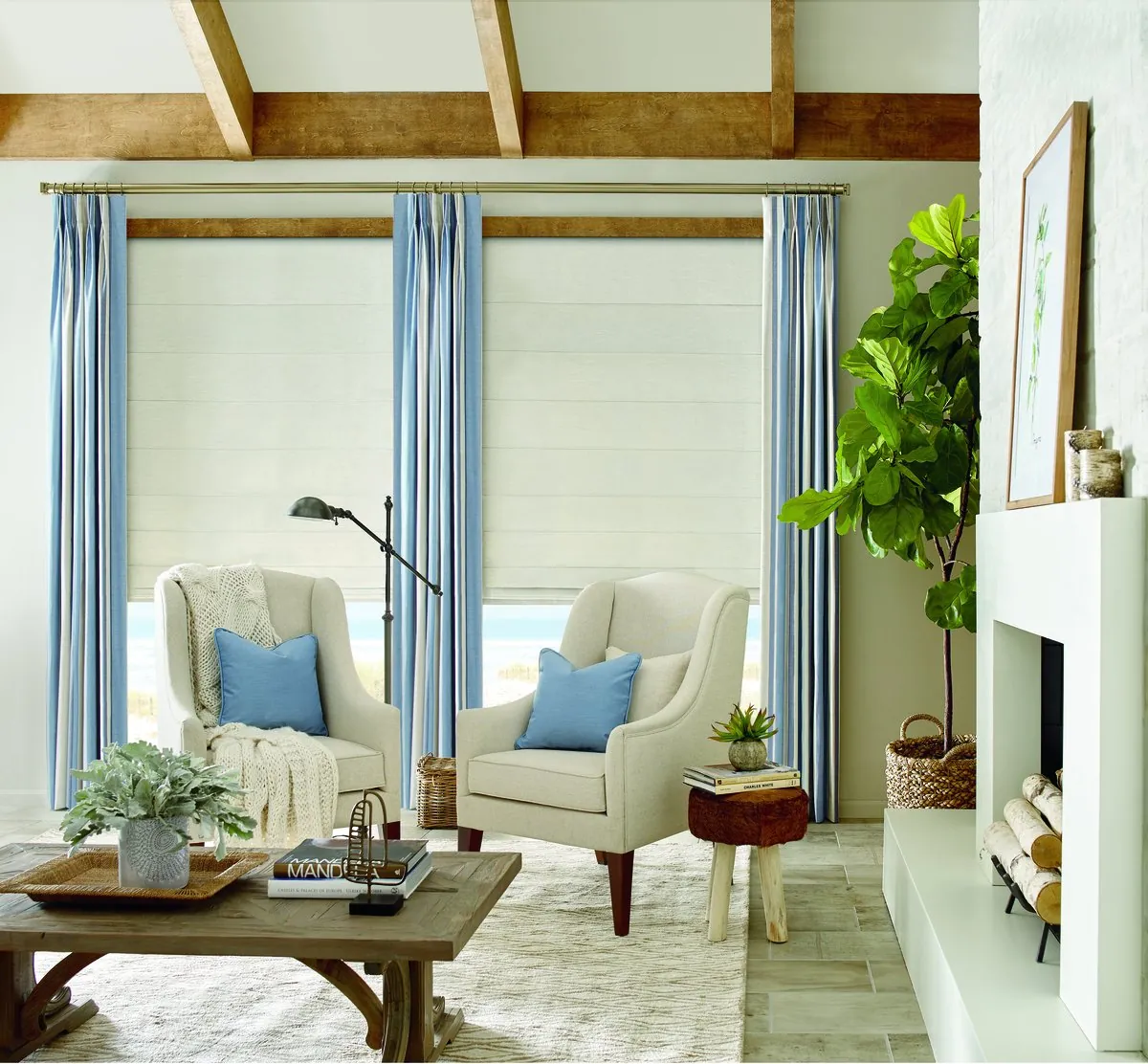
Tall sash in a multi-family
A Carole flat or folded style on a long, narrow window, with fabric weight chosen for how close the next building stands.
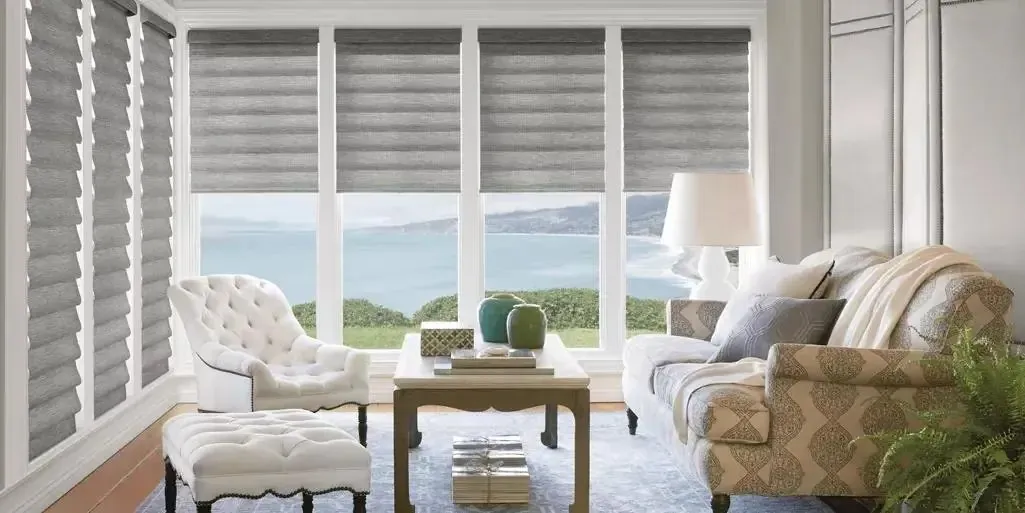
Shingled houses on Squantum
Lighter fabrics that take the glare off the water and lower partway to keep the outlook across the bay.
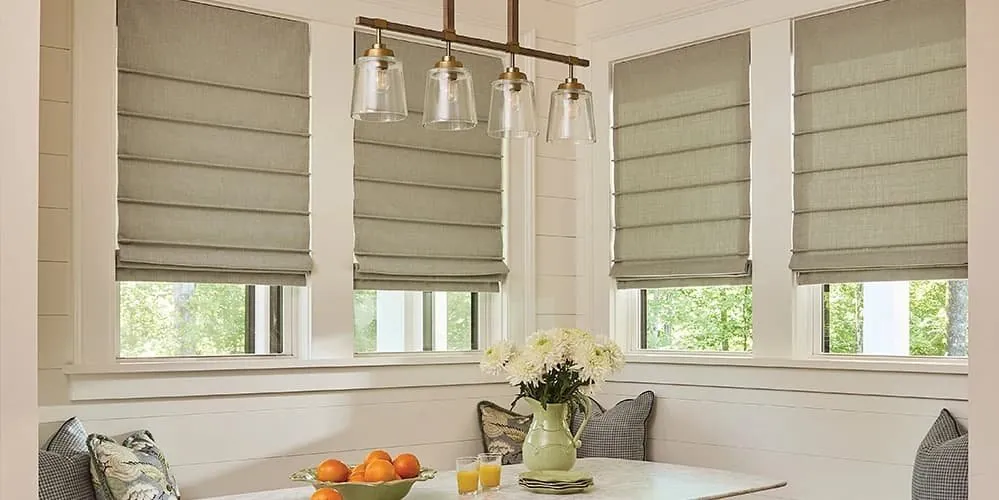
Condominiums near the center
Vignette or a plain Carole flat style, chosen so the unit looks right inside and the building looks orderly from the street.
Every floor of a three-family sees a different day
A three-family in Wollaston or North Quincy stacks three homes in one building, and each floor gets its own kind of light. The first floor sits closest to the sidewalk and the neighboring houses, and often sees the least direct sun. The middle floor gets a bit more sky. The top floor sits above most of its neighbors and catches the strongest light, especially on the side facing south or west.
That means the right fabric on the first floor is often wrong on the third. Downstairs, privacy from the street and the house next door comes first, and a fabric with some body is the usual answer. Upstairs, glare and afternoon warmth are the issues, and a lighter fabric that filters sun while keeping the room bright often suits better. When we plan a building, we take each floor as it comes rather than ordering one fabric for the whole house.
From the street, though, the building looks best when every window shows the same color. If you own the whole building, choosing one exterior-facing color for all three floors is simple. If each floor belongs to someone different, it is still easy to agree on a shared color for the street side and let each household choose its own fabric inside.
Tall, narrow sash on crowded streets
The two- and three-families of Wollaston and North Quincy were built with tall, narrow sash, and that window shape is a natural match for a fabric shade. A long drop lets the folds sit comfortably spaced, and a slim width keeps a shade light and easy to raise. When the shade is up, its folds take only a small part of the long window, so the room keeps most of its daylight.
The narrow width does mean being careful with pattern. A large print can look cut off on a slim panel, while a small print, a texture or a vertical stripe reads well and makes the window look taller. A flat style shows a pattern cleanly; a folded style turns a plain fabric into a soft column of loops.
When the sash pocket has the depth, we set the shade within it and the trim around the window stays on view. When it does not, or when a century of settling has pulled the frame out of true, the headrail is fixed to the casing a little above the glass. Measurements are taken window by window; in an old multi-family, the parlor’s two front windows can differ by enough to matter.
Side windows a few feet from the next building
On the densest streets, a side window may look directly into the side window of the next house, only a short distance away. In a room like that, privacy matters all day, not just at night. A medium-weight fabric left lowered through much of the day still lets diffused light into the room while blurring the view between buildings. On a window where privacy matters less, a lighter fabric lowered only in the evening keeps the room bright.
Because roman shades lift from the bottom, a shade lowered partway covers the top of the window and leaves the bottom open. On a side window facing a neighbor, that is usually the wrong way round, so for those openings we generally plan on the shade being fully down for privacy, and pick a fabric that lets enough light through to keep the room comfortable.
Doing a whole building at once
When one person owns a two- or three-family and wants every unit done together, the job becomes a matter of planning in floors and in sets. The street-facing windows are the first set: one exterior color, one hem height, so the front of the building looks orderly from the sidewalk. The side windows facing the next house are the second, usually in a fabric with enough body to give privacy all day. The rear windows, which often face a yard or a back porch, are the third, and can be lighter.
Within each unit, a plain, durable-looking fabric in a neutral color is the usual choice for an apartment whose furniture may change over time, because it suits almost any furniture. Vignette and the Carole flat style both work well here. Ordering roman shades in Quincy, MA, for a whole building in one go also makes the measuring visit efficient: the consultant works floor by floor, and the estimate is laid out the same way so each unit can be budgeted separately.
The same approach works if two or three households in one building decide to coordinate. Agreeing the street-facing color is the only shared decision; everything inside stays with each household.
Squantum and its shingled houses
Out on Squantum, the shingled houses have a different relationship with the outdoors. Many of their windows look toward the water, and the light comes off the bay as well as down from the sky. Shingled houses also tend to have a mix of window sizes, from small, cottage-style openings to larger windows on the water side, so a single fabric does not always suit every opening.
On the water side, the outlook is the reason the window is there, so the fabric has to work around it. Drop a shade a third of the way and it screens the band of sky where the sun sits, while the sill-level view of the bay stays clear. Where the window is wide, a pale fabric that light passes through softly still looks airy at full drop, so the room never feels shut in. For the smaller windows, a soft folded style in a plain fabric suits the relaxed character of a shingled house.
Glare off the water on the Houghs Neck side
Coastal exposure on the Squantum and Houghs Neck sides brings strong reflected light, which can be harder to manage than direct sun because it comes in low, from below the sky line, and glances off screens and polished floors. Morning rooms facing east over the water and living rooms facing west in the late afternoon catch it most.
Fabric choice does most of the work. A light-filtering fabric lowered partway softens glare across a room without darkening it, and a heavier fabric suits a bedroom that needs to stay dim once the sun is up. On windows that face the water all afternoon, soft whites, sand and pale gray tend to look right for longest; save the stronger colors for rooms that look inland. Our guide to best shades for sun and glare covers the subject in more depth, and choosing fabric for a sunny room helps narrow down the samples.
How the visit works in Quincy
Quincy is part of our shop-at-home area, run from Canton. You do not need to find parking near a store: the van brings the samples, and you decide at your own windows, whether that is a top-floor apartment in Wollaston or a shingled house on Squantum.
- Request a consultation with the form, or tap the call button, and choose a day.
- Let us know if you are on an upper floor or in a condominium building, so the consultant can plan the visit.
- The sample books come into your home, and we start at the windows that bother you most.
- Fabrics go up against the glass so you can see how each one handles your light, whether that is a neighbor’s wall or the water.
- Every window is measured, with notes on frame depth and how the shade will mount.
- You get a free estimate for each room before the consultant leaves.
If you would like to know more beforehand, the guide to what happens at an in-home consultation covers the common questions.

Condominium conversions near the center
Near the center, older buildings have been converted into condominiums, and dressing the windows of a unit has a few particular considerations. Each unit is dressed separately, but from outside the building is seen as a whole. For that reason, a neutral color on the street side of the fabric is the common choice, and it leaves the room side free for whatever fabric suits the unit, and if your building has its own guidance on window coverings, bring it to the visit and we will work within it.
A converted unit may have windows on only one or two sides, so every window matters for daylight. A lighter fabric keeps a unit bright, while a heavier one is the usual choice in the bedroom. Vignette, with its clean, even folds, suits the updated interiors of many conversions, and a plain Carole flat style is a neat choice for a kitchen or a home office in a compact unit. Roman shades in Quincy, MA, in a condominium are often a whole-unit order, which makes for a consistent look in every room.
Vignette or Carole Fabrics
In Quincy the line often follows the building. On the long sash of a Wollaston two-family, a Carole flat panel gives a pattern the whole height of the window to show itself, and that tends to be the favorite. A Squantum shingled house leans the other way, toward the Carole folded style, whose looping fabric has an easy, unfussy look that suits weathered shingle and painted trim. Converted condominiums near the center, many with freshly redone kitchens and baths, often go with Vignette, whose evenly spaced folds look crisp against new plaster and plain walls. None of this is fixed: a top-floor apartment full of antiques might want the folded style, and a modernized three-family might want Vignette throughout.
Our main roman shades page puts the lines side by side, and the Carole Fabrics page explains the fabric range.
Motorized shades for high and wide windows
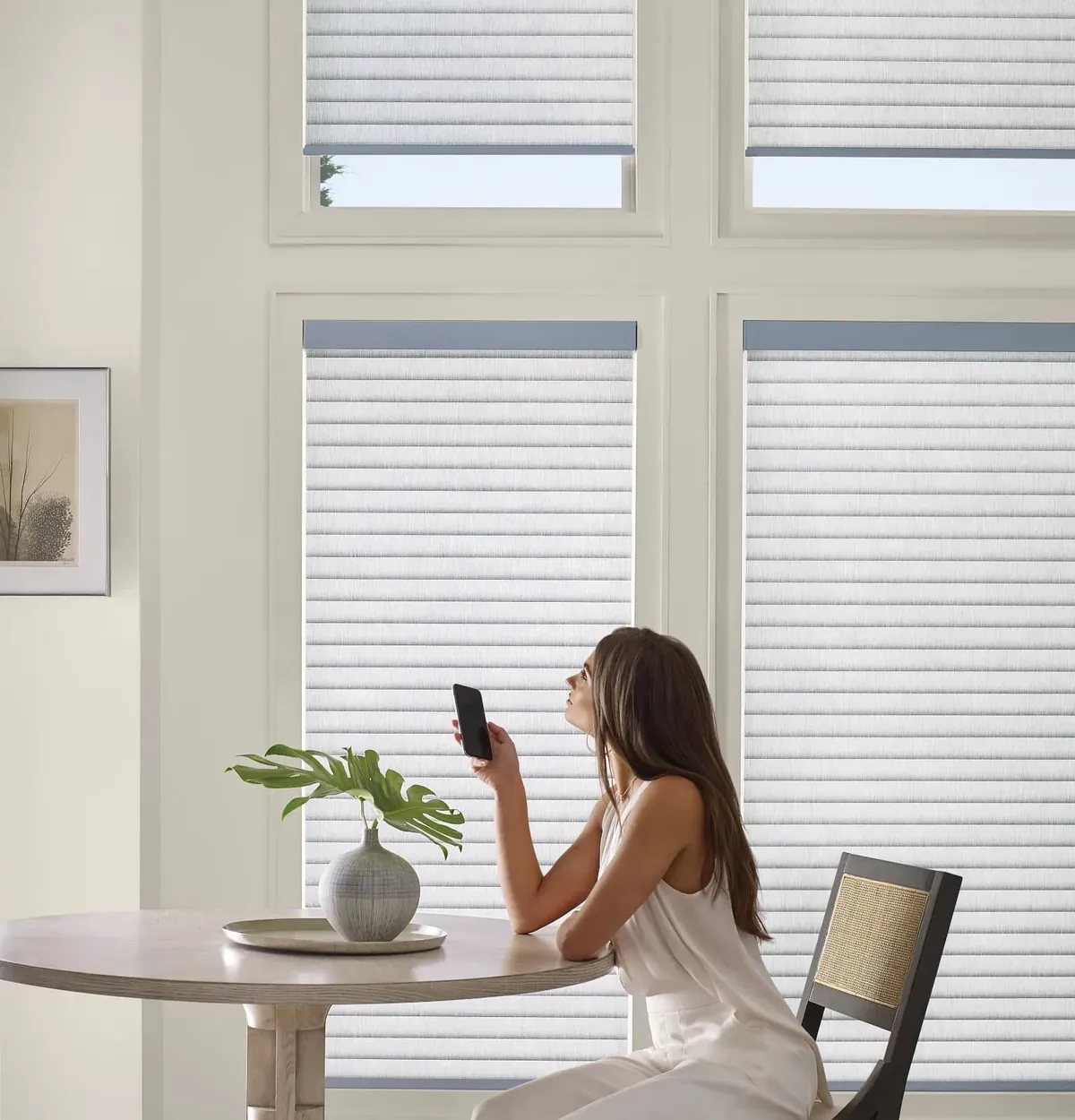
Top-floor apartments, stair windows and wide waterside windows can be awkward to reach. PowerView motorization lets roman shades move from a remote, an app on your phone or a schedule, so a set of waterside shades can lower automatically when the afternoon glare arrives. We plan how each motor is powered at the visit. The motorized blinds in Quincy page explains automation across the house.
Installation in older and taller buildings
Fitting day in a three-family means carrying shades up two flights and working in frames that have had a long time to move. Certified Hunter Douglas installation handles that: rails are leveled to the room, not to a tilted sill, and the hems on each floor line up so the building’s front looks even from across the street. No shade is signed off until it has been run all the way down and back. If you are curious about the day itself, read what happens on installation day.
Other rooms may suit other products. Bedrooms often take cellular shades in Quincy, and a waterside room may suit roller shades in Quincy. Our Quincy page lists every service we offer in town.

A Gallery dealer for every kind of Quincy house
Blinds & Designs is a Hunter Douglas Gallery dealer, so the whole Hunter Douglas range is open to a Quincy home: every Vignette and Carole Fabrics roman shade, plus blinds, shutters, drapery and other shades for rooms that call for them. Every installation is certified Hunter Douglas installation.
Estimates cost nothing, and we also offer interior design consultations for anyone planning a whole room or unit. If a blind or shade you already own needs fixing, our blind and shade repair service can help.
The in-home visit is the natural way to start in Quincy. For anyone who prefers a showroom, Franklin is our closest.
Questions from Quincy
I live on the top floor of a three-family. Do I need a different fabric from downstairs?
Often, yes. The top floor usually gets more sun and glare, so a lighter, light-filtering fabric may suit, while the first floor may want more privacy. We plan each floor separately.
Can the three units of a building have different shades?
Inside, yes. Agreeing on one color for the street side keeps the building looking orderly, and each household chooses its own fabric for the room side. Upstairs and downstairs can then suit their own light without the front of the building looking patchwork.
How do I keep the water view and still cut the glare?
Lower the shade partway. A roman shade lifts from the bottom, so a partly lowered shade covers the top of the window and leaves the lower glass open.
My condominium building has rules about window coverings. Is that a problem?
Not at all. Bring the guidance to the visit and we will choose fabrics and colors that fit within it, starting with the side that faces the street.
Is the estimate free?
Yes. We measure every window and give you a free estimate, room by room.
Choose at your own windows
A third-floor apartment off a Wollaston side street and a shingled house on Squantum could hardly be lit more differently, so we never pick a fabric for either from a photo. Send a request through Request a Consultation and the samples come up your stairs: Vignette and Carole Fabrics, light and heavy, plain and patterned. The consultant measures, talks you through each window and writes a free estimate on the spot, so your roman shades in Quincy, MA, are planned around the light each window really gets, whether that is the house next door a few feet away or the open bay off Squantum and Houghs Neck. If there is something you want to ask before booking, tap the call button.