
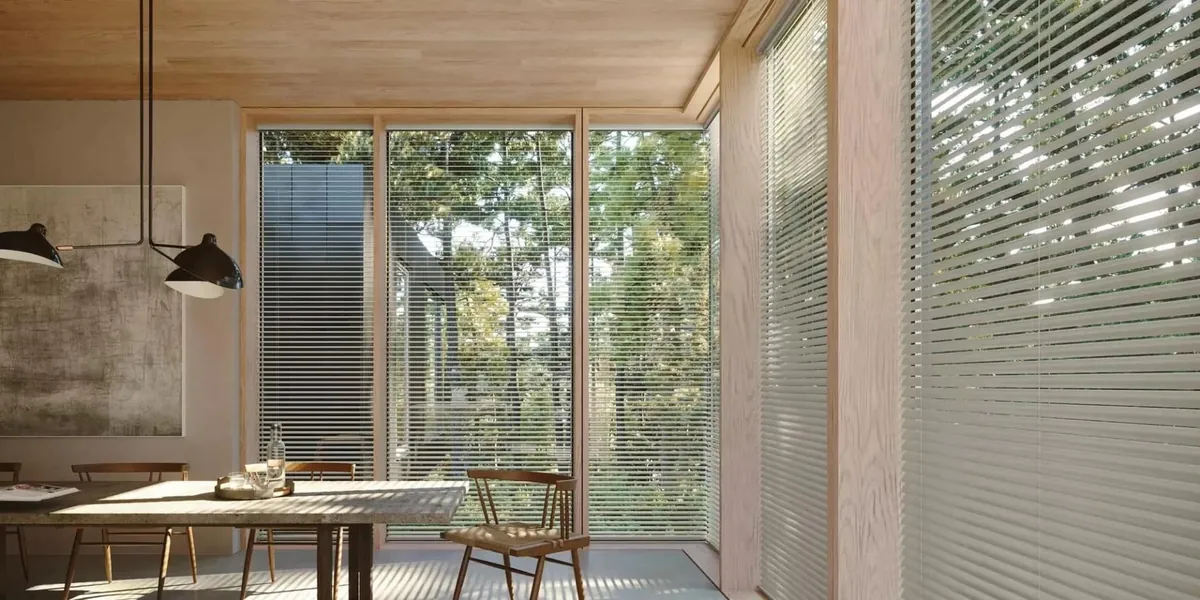
Trees, long driveways and tall sash
Easton spreads its houses out. Through most of the town the lots are generous and the setbacks deep, so a house sits well back from the road at the end of a driveway, often with woods on two or three sides. Near the villages you find antique colonials and Victorians with tall sash windows, and off Route 123 the newer colonials stand among the trees on wooded lots.
That setting shapes the work a blind does. With the road a long way off and the next house hidden by trees, privacy is rarely the first concern in daytime. Light is. A wooded lot filters the sun, shifts it through the seasons and can leave some rooms dim while others take strong low sun through a gap in the trees. Custom blinds in Easton, MA, are mostly about managing that light and keeping the view of the woods.
The windows give us two sorts of job. In the antique houses, tall sash in old frames call for long, slim blinds made for each opening. In the newer colonials, standard modern windows in repeated sizes make for a straightforward, matched set. Both get planned at your house, with the Hunter Douglas samples held up to your own glass.
Custom blinds in Easton, MA: four ways to go
Every blind is made to the measurements we take on site. These four Hunter Douglas families cover the old houses and the new ones alike.
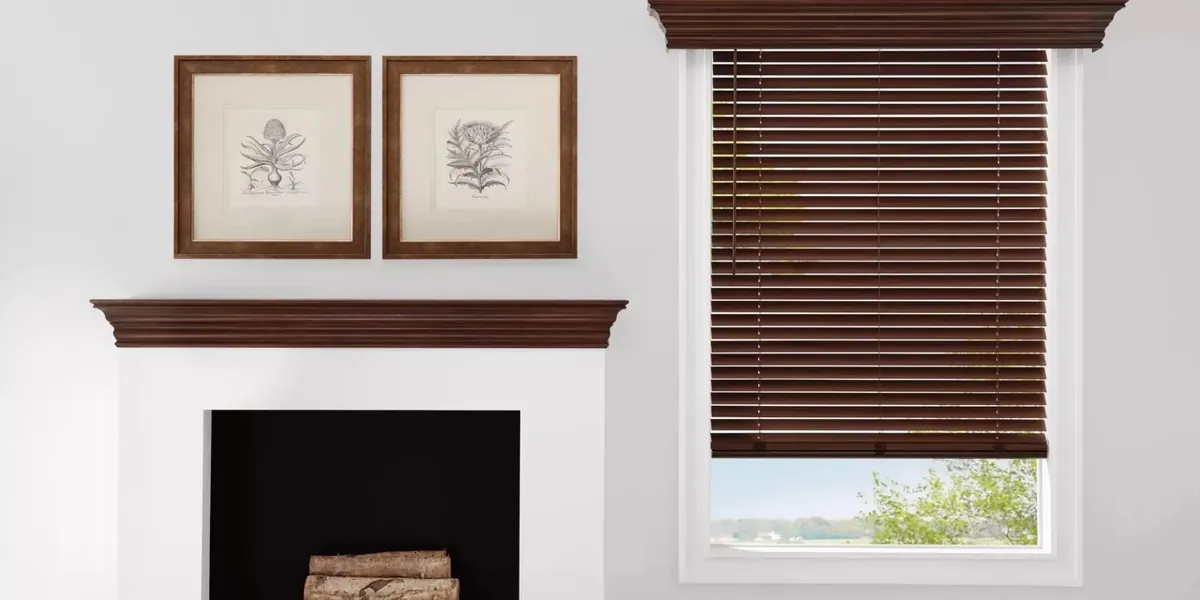
Parkland Wood Blinds
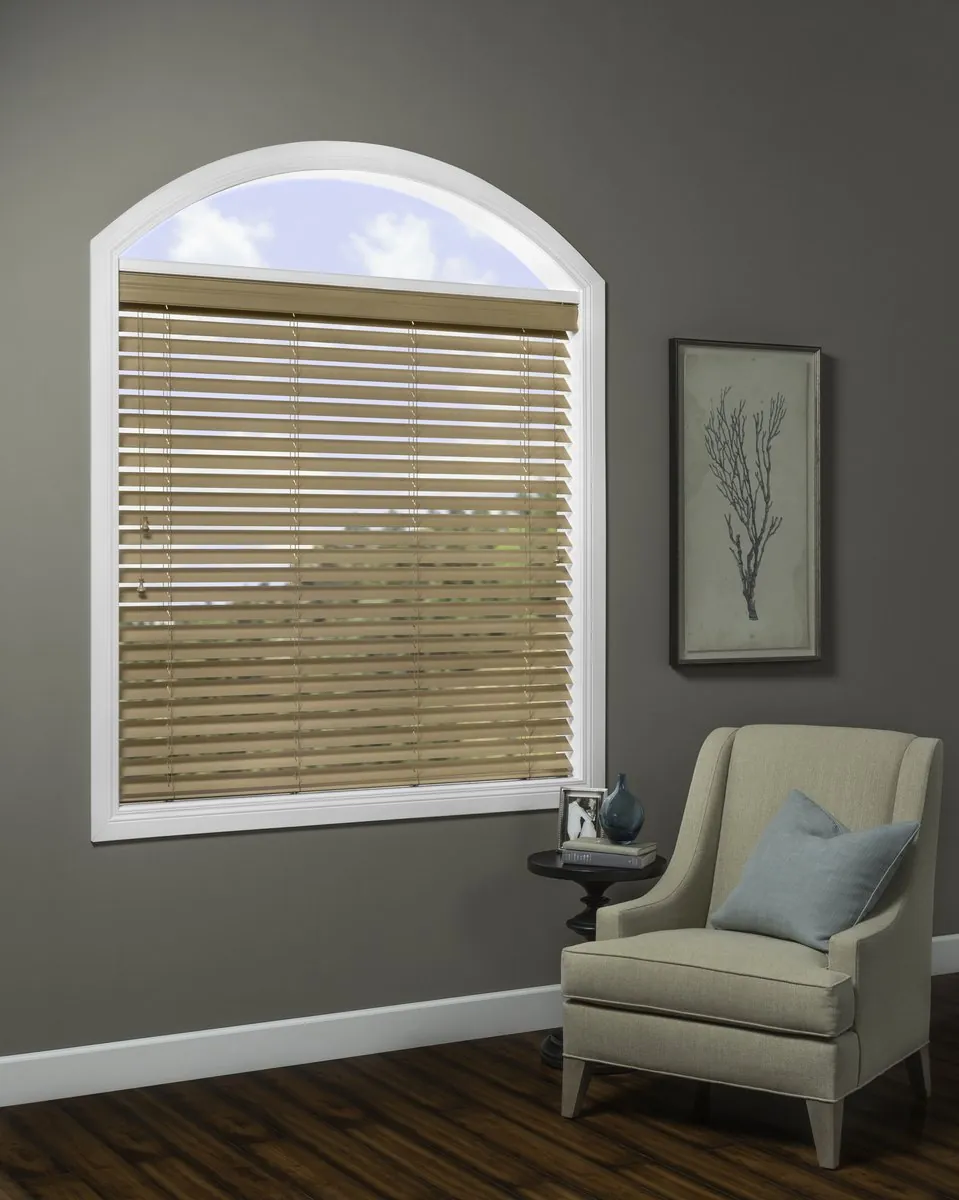
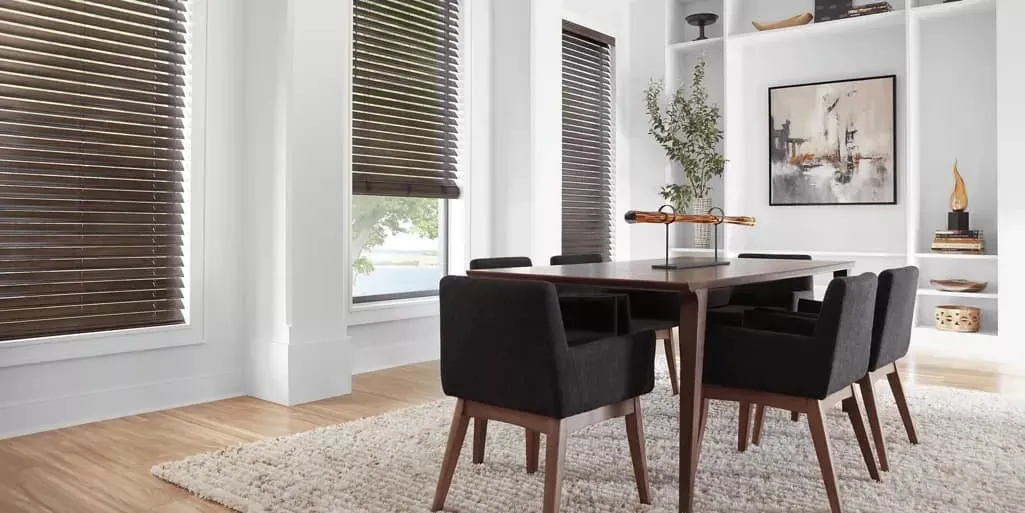
Hardwood slats in stained and painted finishes, a good partner for wide pine floors and the fireplaces of an antique colonial.
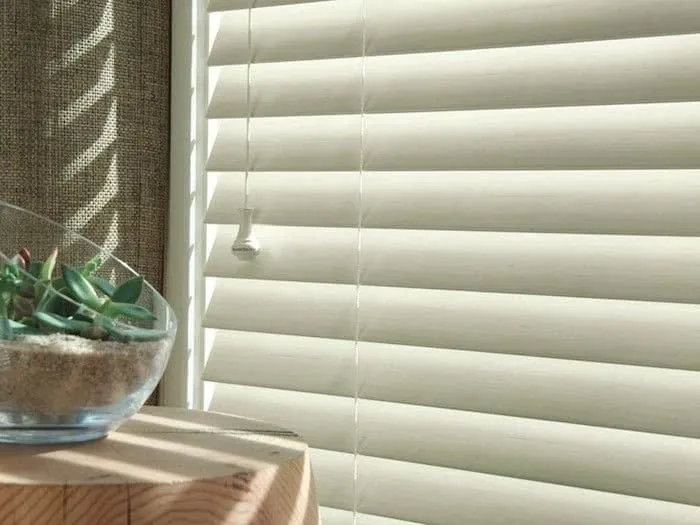
EverWood Faux Wood Blinds
A faux wood slat with a wood-grain look, often picked for kitchens, baths and mudrooms and matched to the wood elsewhere.
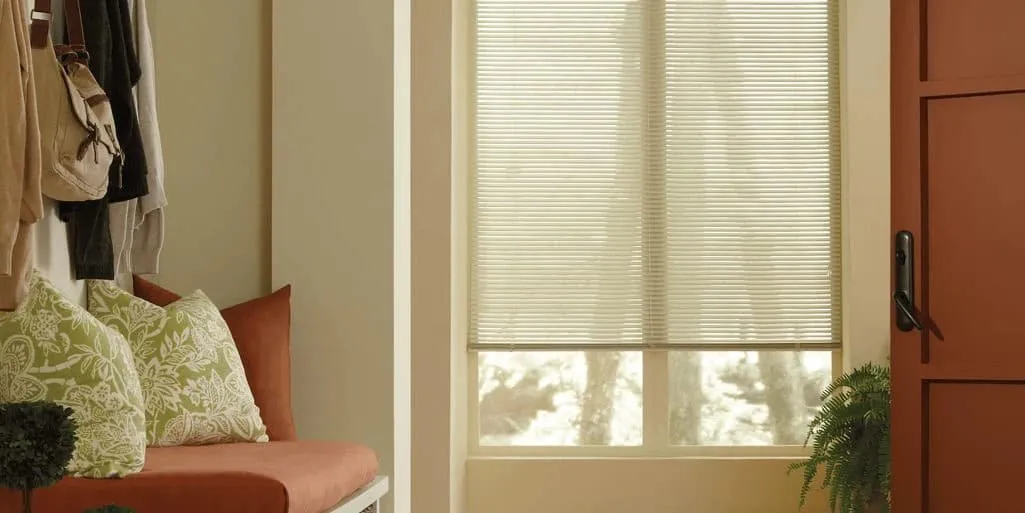
Custom Metal Blinds
Light aluminum slats on a slender headrail, handy on door glass, side lights and the shallow frames of replacement sash.
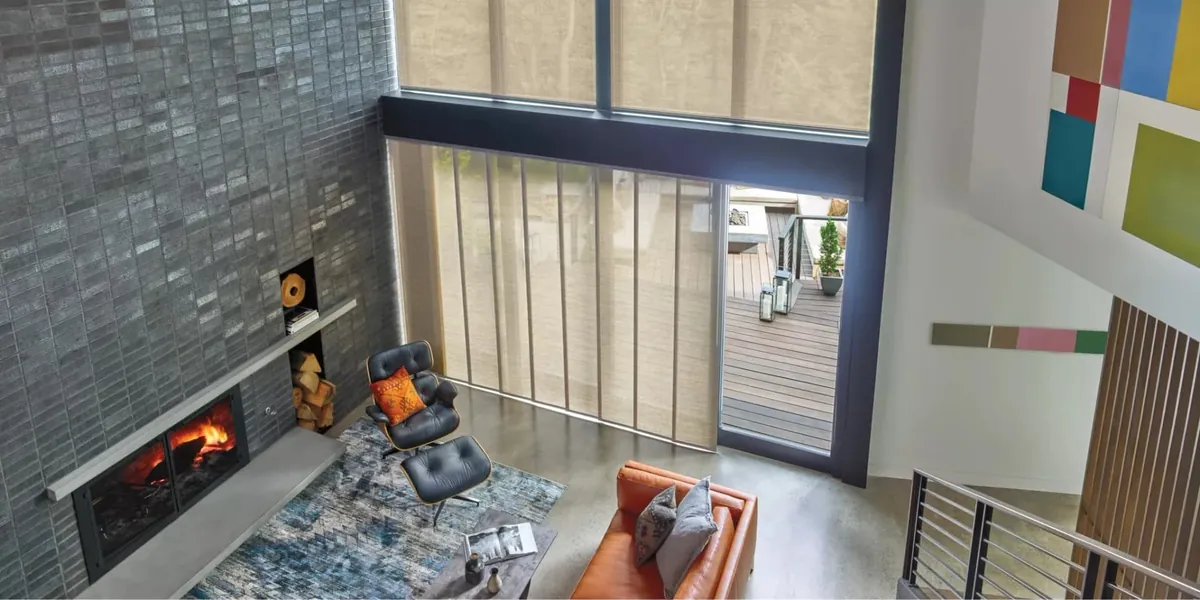
Skyline Gliding Window Panels
Wide fabric panels from the Hunter Douglas vertical family, for a slider opening onto a deck that looks into the woods.
Light through the trees
On a wooded lot, the light changes with the leaves. In summer the canopy is full and the house sits in dappled shade, with sun reaching the windows only in patches and at certain hours. In winter the trees are bare, and the low sun can reach far into rooms that were dim a few months earlier.
A horizontal blind adapts to both. When the light is soft and filtered, the slats can stay fully open or the blind can be raised out of the way, so the room takes all the daylight it can get. When the low winter sun comes straight through the bare branches into a living room or a kitchen, a turn of the slats cuts the glare without shutting out the day.
Slat color matters more here than in a house on an open lot. Pale slats, white or cream, reflect more of the limited summer light back into a shaded room. Warmer wood tones look beautiful against a view of trees and suit a room that already gets good sun. Many Easton houses end up with pale blinds on the shaded side and wood tones on the sunny side, all matched in slat width so the house still looks consistent.
Keeping the view of the woods
When a window looks out on woodland, the view is part of the room. Owners in houses like this often say they hardly want a covering at all during the day, only something for the evening and for the hours when the sun strikes the glass.
A blind can almost disappear. Raised fully, an inside-mounted blind gathers at the head of the window and leaves the glass clear. Tilted open, a wider slat leaves larger gaps than a narrow one, because fewer slats cross the view. If you want the glass completely free when the blind is up, an outside mount above the frame lets the raised blind sit above the window, at the cost of covering a little of the trim.
At night the situation flips. A lit room in a dark wood is visible from a long way off, even at the end of a long driveway, and a closed blind gives the room a sense of enclosure that bare glass never does.
Antique colonials near the villages
The older houses near Easton’s villages have the character of their age: tall sash windows, deep casings, wide board floors and trim that may have been painted many times. Their window openings are rarely perfectly square, because frames move over a long life.
A made-to-measure blind is built for one opening, to the size we record at the visit, so it hangs straight in a frame that has settled. A narrower slat often suits these windows best. It keeps the scale right on a slim sash and gathers into a shorter stack when raised, which matters on a tall window where a thick bundle of slats at the top would hide the upper glass.
Many antique houses have had some windows replaced with newer units fitted into the old openings. Those often leave a shallower frame. If a wood headrail will not fit inside, a metal blind usually will, and in a matching color it sits comfortably beside the wood blinds in the next room.
Parlors and dining rooms in the old houses
The formal rooms of an antique Easton house usually sit at the front, either side of the entry, with a fireplace, painted or stained trim and windows facing the road across the lawn. These are the rooms where real wood blinds feel most at home.
Choosing custom blinds in Easton, MA, for a parlor like this starts with the trim. If it is painted, a wood blind finished to match lets the window frame stay the feature. If it is stained, a slat stained close to it makes the blind look as though it has always been there. A matching cornice across the top of a blind can add a little weight on a tall window in a high room.
In the dining room, the slats are useful at the table. Tilted, they keep the evening sun off the plates during an early supper; closed, they make the room feel intimate for a dinner after dark.
Victorians and their bays
The Victorians near the villages bring bays, tall front windows and sometimes a stair window with decorative glass in the upper sash. A bay usually has a wide center window and two narrower side windows set at an angle, and the three are rarely the same width.
Each window in the bay gets its own blind, built to its own size, with the headrails aligned so all three raise to the same height and the slats tilt together. From the driveway the bay reads as one window, and inside it keeps the feeling of space that makes a bay worth having.
On the stair window, a blind covering only the lower sash keeps the decorative glass above on show. If it is awkward to reach from the stairs, PowerView motorization lets you lower it from a remote or a phone.

Newer colonials off Route 123
The newer colonials on the wooded lots off Route 123 are a different job. Their windows are standard modern sizes, repeated across the front and around the sides, with a center hall, formal rooms at the front and an open kitchen and family room at the back, often with a slider to a deck.
The front of a colonial is all symmetry, and from the end of a driveway that symmetry is what you see. One color and one slat width across every front window, with the headrails at the same height, keeps the house looking ordered. Inside, the rooms can each take their own approach. Because the drive is long, the front of the house is often seen first at night, with lamps lit behind the blinds, which makes a consistent color on the front even more noticeable.
The open space at the back of the house is seen all at once, so matching blinds across the kitchen, the eating area and the family room help it feel like one room. The slider takes a vertical blind or gliding panels, matched in color to the rest.
Mudrooms, kitchens and back entries
A house at the end of a wooded drive tends to have a busy back entry: a mudroom where boots, dogs and garden gear come in, often with a door that has glass and a small window or two. The kitchen usually sits next to it.
Many owners choose EverWood faux wood for these rooms, matched to the wood blinds in the formal rooms so the house looks consistent. A metal blind mounted on the back door covers the glass without catching on the handle or the storm door. In the kitchen, an inside mount keeps the blind clear of the faucet below the window.
Upper floors above the canopy
On the second floor of a colonial among tall trees, the outlook changes. Upstairs windows can sit level with the branches, so the summer view is all leaves and the winter view opens over the bare canopy to the sky. Light up here is often brighter than on the first floor, and it arrives from higher in the sky.
For bedrooms and a home office on that floor, custom blinds in Easton, MA, are often about softening that brightness rather than blocking a view in. Slats tilted slightly upward bounce the light onto the ceiling, which makes a room feel bright without the sun reaching the bed or the desk directly. Closed at night, they make the room feel tucked in among the trees rather than exposed to them. Where an upstairs room has a window on the gable end, often smaller and set higher than the rest, it gets a blind made to its own size and matched to the others, so the room reads as a set from inside and from the drive.
Bedrooms that stay dark
On a wooded lot, bedrooms can be surprisingly bright at dawn in winter, when the sun comes in low through the bare trees, and dim and green-lit in summer. Most owners want them dark at night and early in the morning either way.
A darker slat makes a closed blind feel dimmer. An outside mount that overlaps the window frame slightly reduces the bright line around the edges. Where a bedroom has windows on two walls, one slat width and one headrail height across them keeps the room calm.
If you would like the bedroom blinds to open on their own, PowerView can tilt the slats open at a set time each morning, which is a gentle way to wake up in a room that faces the trees.
Wood, faux wood and metal in one house
A large Easton colonial, old or new, will usually end up with more than one material. Real wood in the parlor, the dining room and the study. Faux wood in the kitchen, the baths and the mudroom. Metal on the door glass and a shallow replacement window. Verticals or gliding panels at the slider.
That mix looks like one set as long as the colors agree. Wood, faux wood and metal come in matching whites and wood tones, so every window facing the driveway can share a color whatever it is made of. Keep the slat width the same on windows that sit side by side and nobody will notice the difference in material.
How the blinds are operated
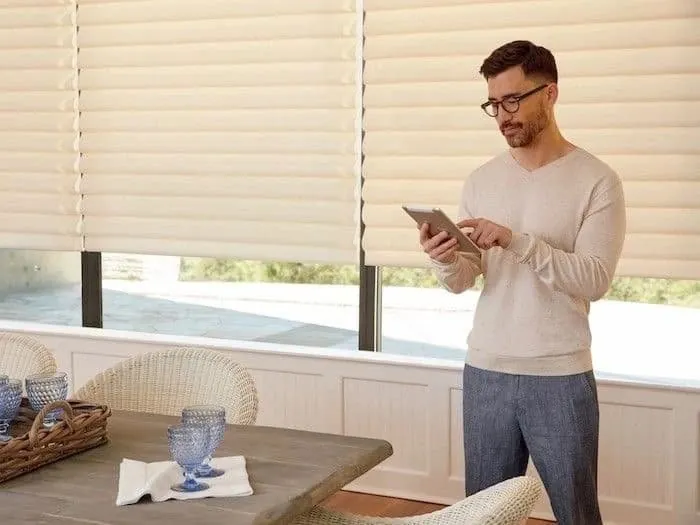
Every blind lifts and lowers, and its slats tilt. Hand controls are the familiar choice, and we bring them on the samples so you can try them at the window.
PowerView is Hunter Douglas motorization. Blinds move from a remote, from an app or on a schedule, which suits a house with lots of tall windows and a lot of light that changes with the seasons. A winter schedule can tilt the slats against the low afternoon sun in the living room, and a summer one can leave them open longer. We plan how each motor is powered at the visit. Our page on motorized blinds in Easton has more.
Planning the order at your house
For Easton we lead with the in-home consultation. Light through trees and the view from a particular window are things you can only judge in the room, and on a generous lot the visit is the simplest way to see every side of the house.
- Book through Request a Consultation, or talk to us first through the call button.
- We bring the Hunter Douglas blind samples to your door.
- We walk the house with you, from the formal rooms to the back entry.
- You hold slats in different woods, widths and colors against your own glass and watch how the light changes.
- We agree on mounts and controls and measure every opening, including old frames and replacement sash.
- You receive a free estimate and take your time.
Interior design consultations are also offered if you would like help with a whole room. See what happens at an in-home consultation for more.
For other coverings in the same house, see our cellular shades in Easton, roller shades in Easton and plantation shutters in Easton, or all of our services for the town on the Easton page.
A Gallery dealer that travels to you
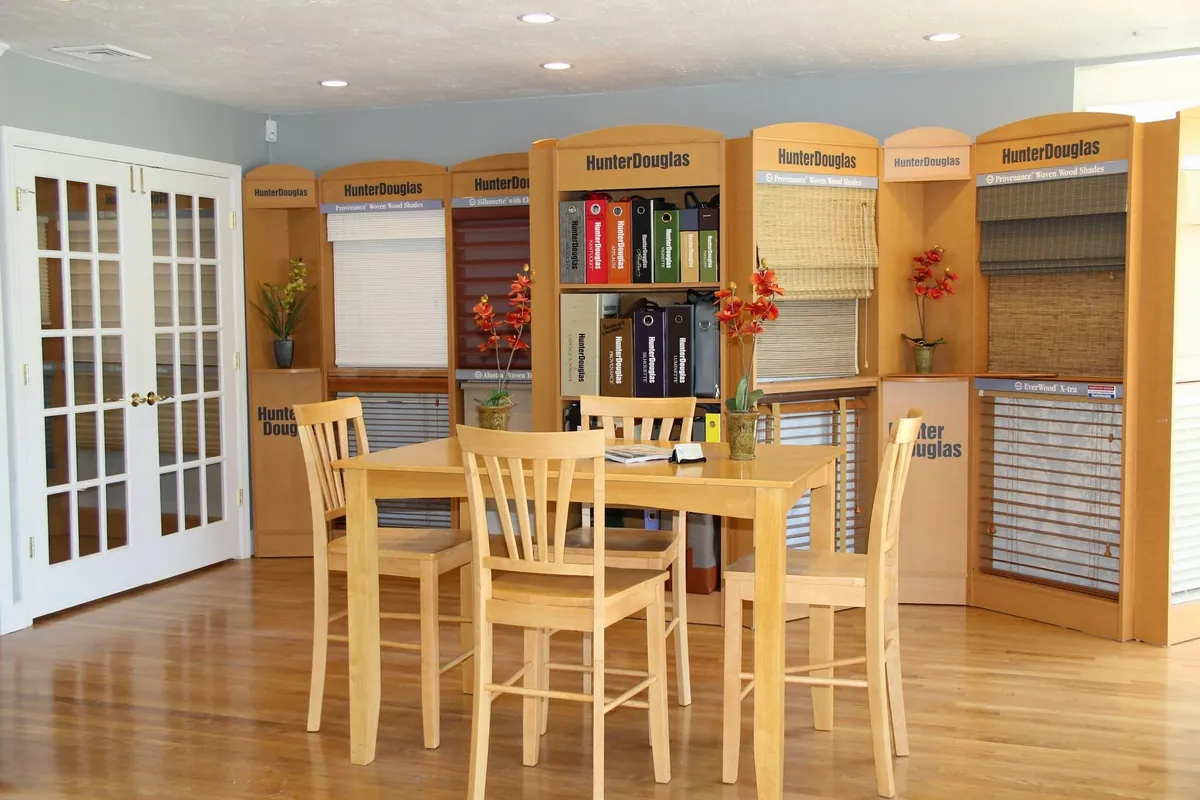
Blinds & Designs is a Hunter Douglas Gallery dealer, and installation is handled by installers Hunter Douglas has certified. The full blind range, Parkland wood, EverWood faux wood, metal and vertical, is available through us, with PowerView motorization.
Easton is looked after by our shop-at-home team based in Canton, so the van brings the samples to you.
Estimates are free, and we repair blinds and shades you already own. The whole collection is on our custom blinds page.
Questions from Easton
Our house is surrounded by trees. Will blinds make the rooms too dark?
No. Raised or with the slats open, a blind lets in all the filtered light the trees allow, and pale slats reflect more of it into the room. You only close them when you want to.
How do I keep the view of the woods?
Choose a wider slat, which gives a clearer view when tilted open, and consider an outside mount above the window so the raised blind clears the glass completely.
Will a custom blind fit the old sash in our antique colonial?
Yes. Each blind is built for its own opening from our measurements, so it hangs straight in a frame that has settled. A narrower slat often suits tall, slim sash.
What do you suggest for the slider to our deck?
A vertical blind or Skyline gliding panels, matched in color to the other blinds. They draw aside so the door opens freely.
Is the estimate free?
Yes. The estimate is free once we have measured.
When you are ready
From a row of tall sash near the village to a family room facing the woods off Route 123, the right blind is easiest to choose at the window itself. Request a consultation and we will bring the full range of custom blinds in Easton, MA, to your house, measure every opening and leave you with a free estimate. A question first? The call button reaches us. If you would like a showroom as well, Franklin and North Dartmouth are the nearest to Easton.