
Village antiques and colonials in the woods
Easton’s houses come in two main kinds. Near the villages stand antique colonials and Victorians, many with tall sash and the original proportions of their rooms. Off Route 123, newer colonials sit on wooded lots. Across most of town, lots are generous and houses are set well back from the road, often with trees all around.
For a Hunter Douglas dealer in Easton, MA, that means two quite different sets of windows, but a shared advantage: room to breathe. With deep setbacks, privacy is rarely the pressing issue it is in denser towns. The questions instead are about light, which changes with the trees and the seasons, about comfort beside old glass, and about getting the proportions right in rooms of real character.
All of that is easier to judge on site. We come to your house with samples in the van and decide each window with you, in the light it actually gets.
What we fit in Easton homes
Six services, each with a page of its own for Easton. Choose the one that matches your project.
Custom blinds
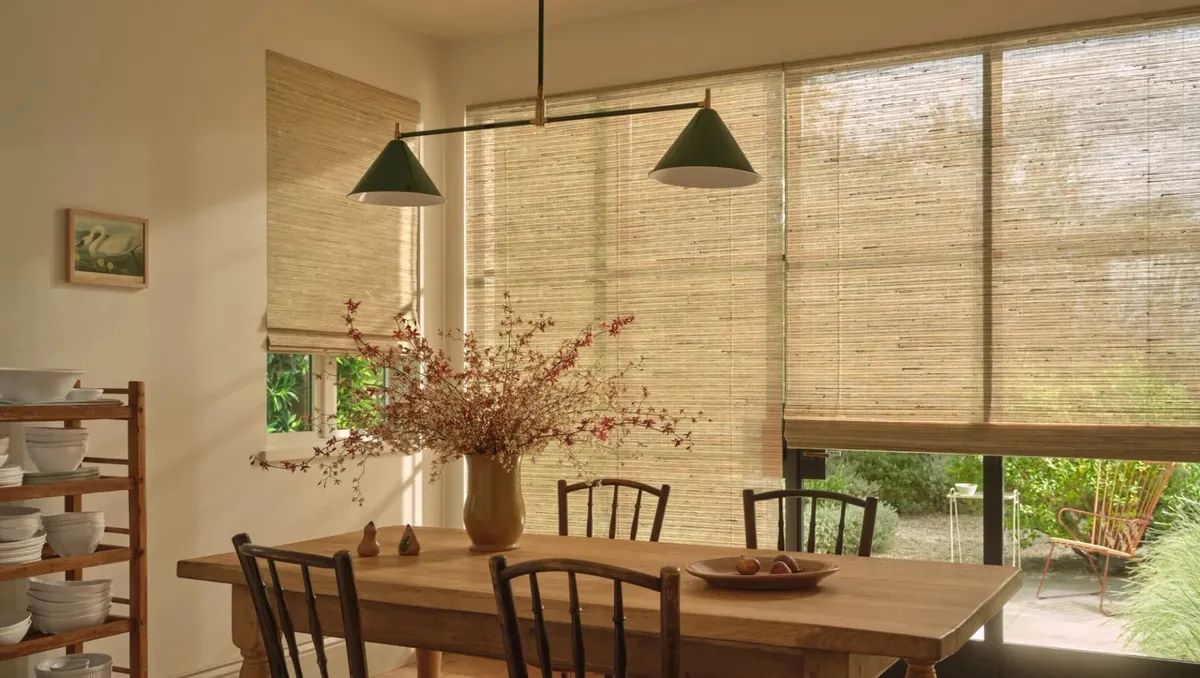
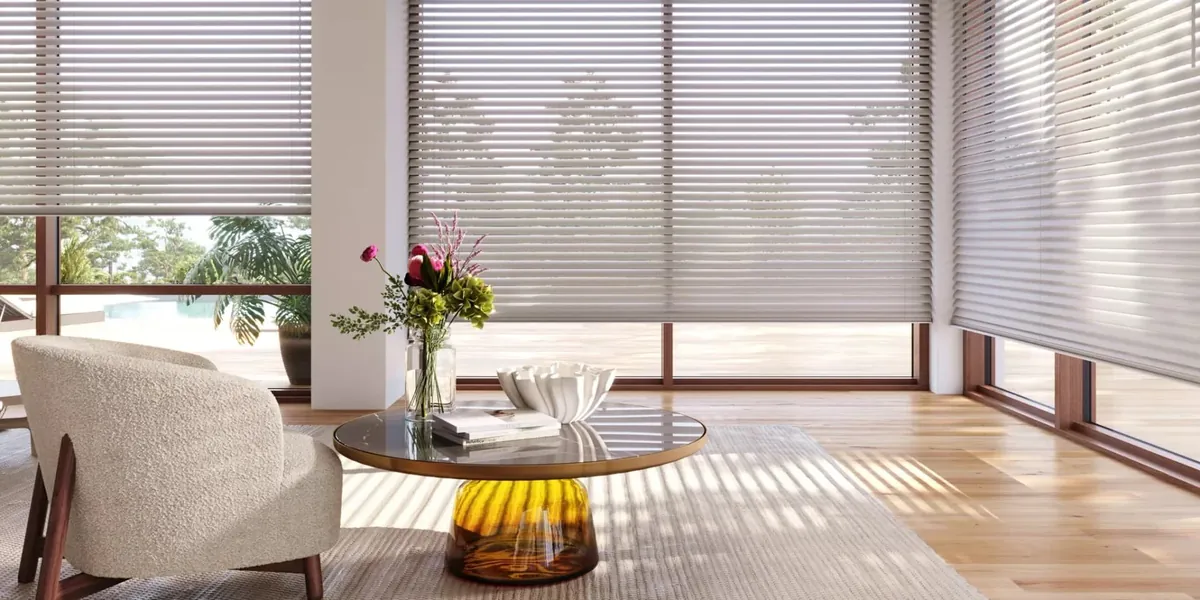
Wood and faux wood for warmth, metal for a fine line, verticals for wide glass, each chosen for how it handles.
Cellular shades
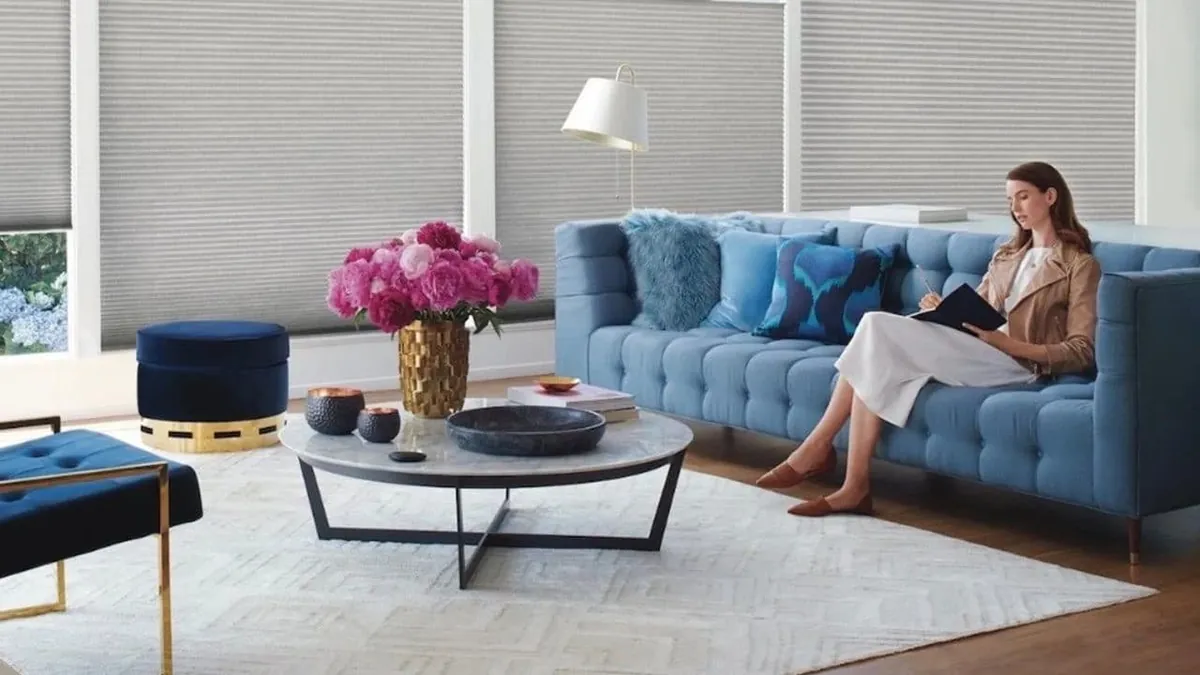
Duette and Applause, whose honeycomb cells trap air and help a room by old glass hold its heat.
Roller shades
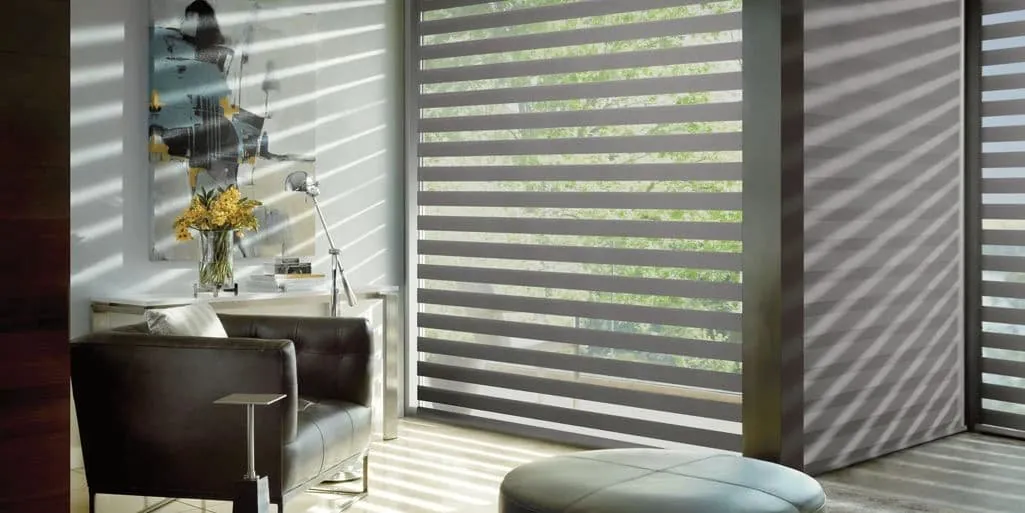
Designer and Alustra rollers and screens, with openness picked for view and glare.
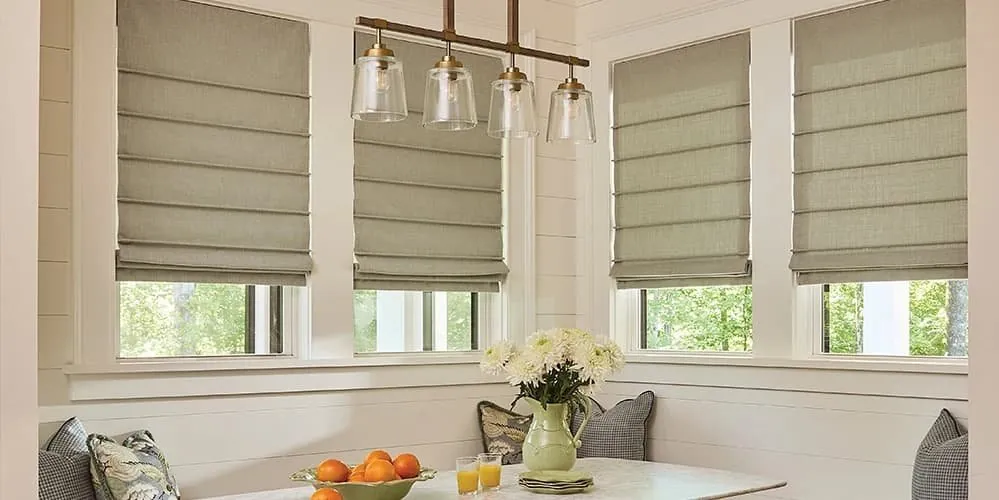
Roman shades
Vignette and Carole Fabrics in tailored flat or relaxed folded styles.
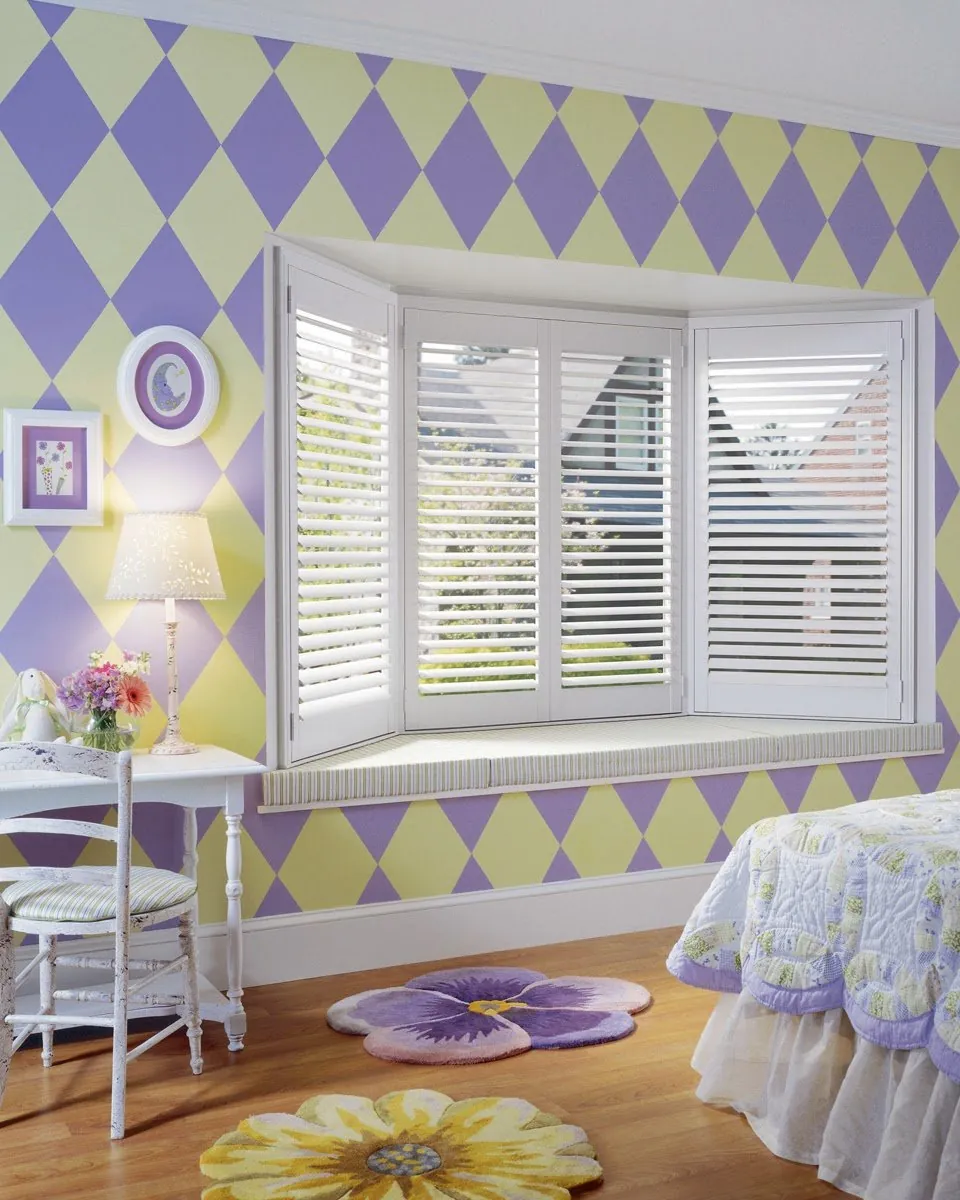
Plantation shutters
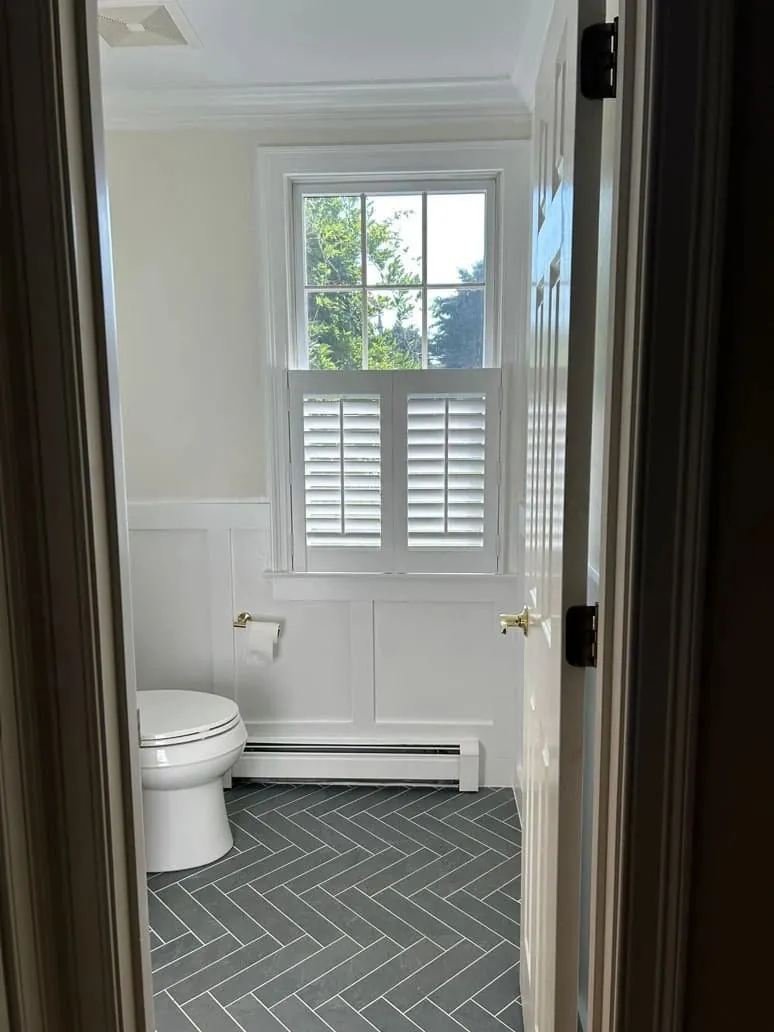
Palm Beach, NewStyle and Heritance, with louvers and frames sized to antique or newer openings.
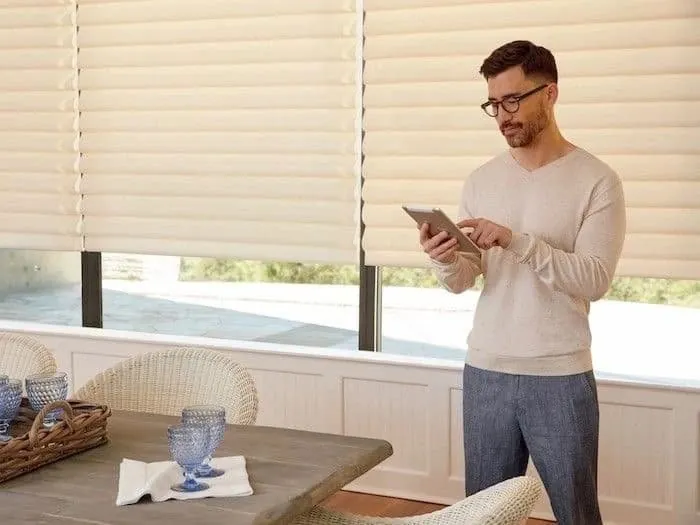
Motorized blinds and shades
PowerView, controlled from a remote or tablet, or left to run on a schedule.
Antique colonials and Victorians near the villages
The older houses near Easton’s villages carry their age in their windows. Antique colonials tend to have rows of tall sash across the front, lined up with the center door. Victorians add bays, corner rooms and taller ceilings. Both have casings and trim that are worth showing off, and frames that have settled over a long life.
A Hunter Douglas dealer in Easton who works in these houses learns to take nothing for granted. Two windows that look identical across a parlor can differ in width and depth by enough to matter. Old hardware may sit inside the frame. Paint layers change how a bracket sits. We measure every opening on its own and talk through how each covering will mount before anything is ordered.
The look matters too. In an antique house, coverings should let the architecture lead. Painted shutters that echo the trim, Roman shades in quiet fabrics, honeycomb shades that nearly disappear when raised, and wood blinds that pick up old floors all sit comfortably in these rooms.
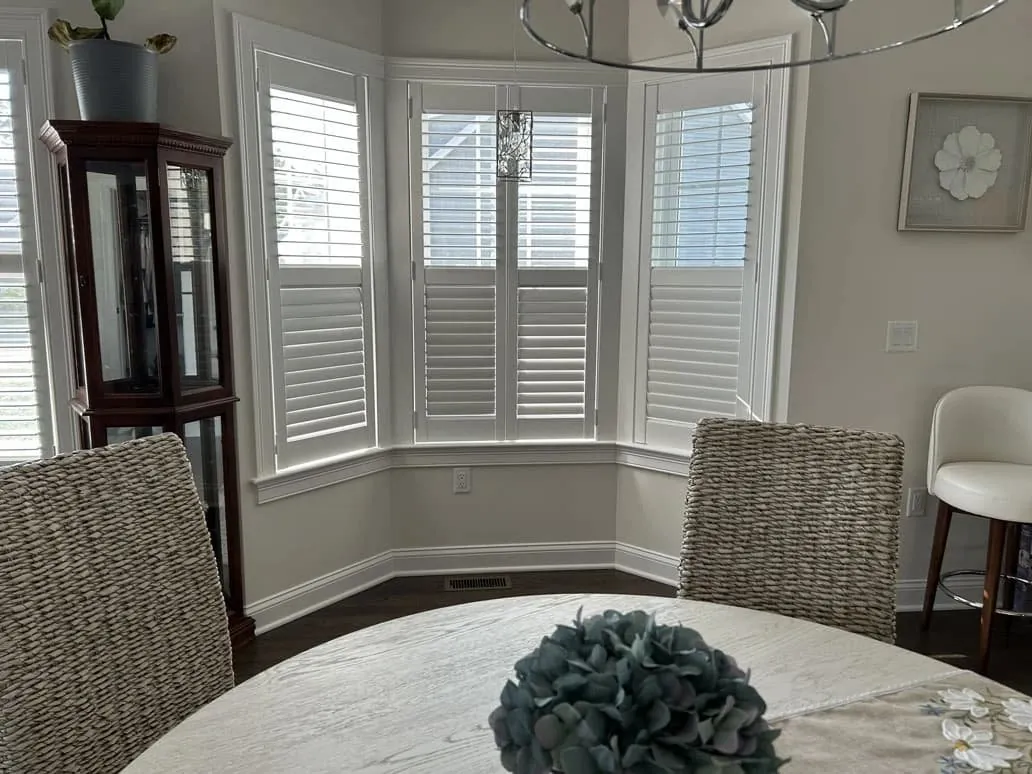
Getting tall sash right
The tall sash in the village houses is the feature people love most and the one that needs the most thought.
Proportion. A tall, slim window looks best under a covering that reads as slim. Narrow louvers, fine slats and fabrics that hang straight keep the window elegant. Wide, heavy elements tend to shorten it.
Height. The top of a tall sash can be out of comfortable reach, especially over a radiator or a piece of furniture. With PowerView, those shades answer a handheld remote or a phone, and every shade in the parlor can travel at once.
Mounting. Some frames have the depth for a neat inside mount that leaves every bit of trim visible. Others need a mount on the face of the casing. We decide that window by window with you.
Comfort. Old glass is thin, and on a winter evening you feel it. Honeycomb shades help a room hold its warmth because each cell keeps a layer of still air between the glass and the room. Our guide to cellular shades and winter heat explains more, and our shutters for older windows guide covers shutters in antique frames.
Newer colonials on wooded lots off Route 123
Off Route 123, the newer colonials are a different job. Windows are standard modern openings, frames are square, and the whole Hunter Douglas range fits without fuss. What sets these houses apart is the setting: wooded lots, trees close to the house on several sides, and a lot of distance from the road.
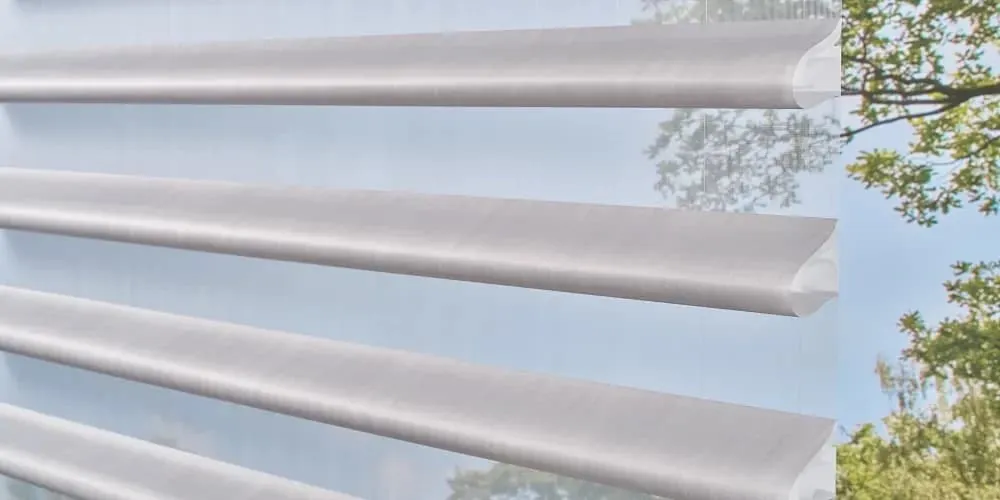
Trees shape the light more than anything else here. In summer, rooms facing the woods can be green and dim, and a heavy covering would make them darker still. In winter, when the leaves are down, the same rooms can be bright, with low sun coming through the trunks. A good choice handles both seasons: a light-filtering fabric that keeps rooms bright in summer and softens glare in winter, or a screen that cuts brightness while keeping the woods in view.
The newer colonials also tend to have more windows overall, often grouped in threes across a family room or kitchen, and a slider to a deck at the back. Grouped windows look best treated as a set, with matching fabric and resting heights. For the deck door, think sideways: Luminette, a vertical honeycomb or vertical blinds all draw clear of the opening so the door can be used freely.
What deep setbacks change
With houses set well back across most of Easton, the usual fight for privacy is mostly absent. Front rooms are far enough from the road that a sheer or a woven shade gives all the daytime privacy needed. Side windows often look at trees rather than a neighbor’s wall.
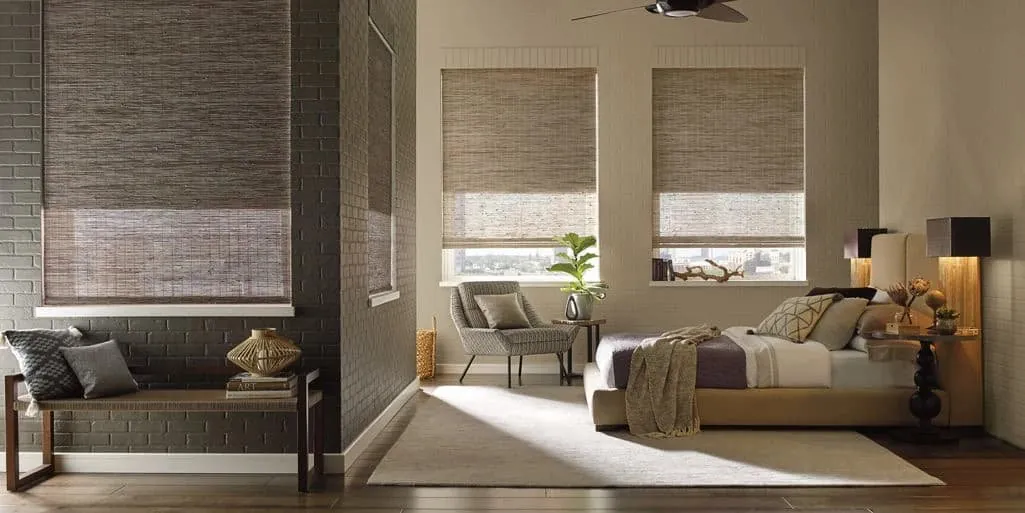
That opens up the choice. Rooms can take lighter fabrics, more texture and more of the view. A dining room can wear woven wood shades. A living room can keep shutters open most of the day. A study can have wood blinds tilted for light without anyone seeing in.
Privacy still matters at night, when lamps make a room visible even from a distance, and in bedrooms and baths at any hour. Those rooms get coverings that close fully. Everywhere else, the focus can stay on light and comfort.
Foyers, stairs and great rooms
Many of the newer colonials off Route 123 have a two-story foyer with a tall window above the front door, and some have a family room with a high ceiling and an upper row of windows. Those upper windows are hard to reach and often catch strong light at certain times of day.
PowerView is the most common answer: a shade on a high window moves from the app, a remote or a schedule, so nobody needs a ladder. Where motorization is not wanted, a fixed covering chosen for light rather than for opening and closing, such as a sheer, can work well. A Hunter Douglas dealer in Easton will look at how each high window behaves through the day before suggesting one.
The antique houses near the villages have their own version of this question in a stair window on the landing. It lights the stair and the hall, and it often faces the street. A sheer or a slim shade gives privacy while keeping the stair bright.
Light through the seasons on a wooded lot
Easton’s wooded lots make the light in a house change more through the year than it does on an open street. Understanding that helps you pick a covering you will be happy with in July and in January.
- Summer. Leaves filter the light, rooms facing the woods are cooler and dimmer, and the strongest sun comes in through any gaps in the canopy. Light fabrics keep rooms bright.
- Autumn. As leaves fall, rooms get brighter week by week, and the low afternoon sun starts to reach further in.
- Winter. Bare trees let in the most light of the year, low and bright, often straight into a family room or kitchen. Screens and light-filtering fabrics soften the glare, and honeycomb shades help a room hold its heat after dark.
- Spring. The canopy fills back in, and rooms soften again.
Our guide to the best shades for sun and glare goes further into fabric choices.
Your consultation at home
Easton is served from our Canton territory, which means the consultation comes to you. On a wooded lot, we like to see the light in each room for ourselves, so the visit happens at the house.
- We drive up with a van of samples, which is how we bring the showroom to Easton.
- We start by asking what each room is for and what bothers you about it now.
- We walk the rooms together, holding fabrics, slats and louvers against your windows, from the tall sash of an antique to the grouped windows of a newer colonial.
- We look at high windows and talk about whether PowerView makes sense.
- Every window on the list gets measured.
- You receive a free estimate for products and certified installation to consider at your own pace.
For more detail, read what happens at an in-home consultation or see our in-home consultations page. If you are also choosing paint, fabric or furniture, our interior design consultations can be part of the visit.
Studies, libraries and the quiet rooms
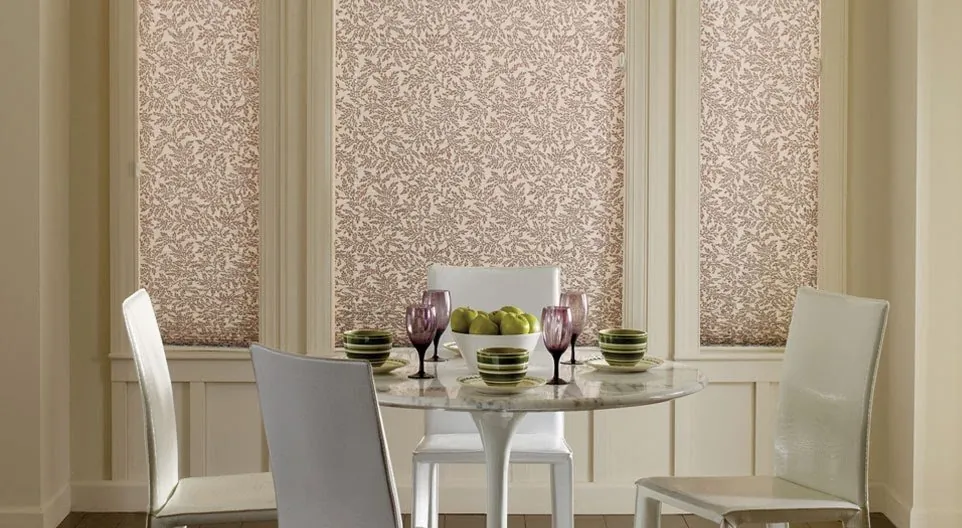
Plenty of Easton houses, antique or newer, have a room set aside for reading or work, whether that is a study off the front hall, a library with built-in shelves or a spare bedroom turned office. These rooms need steady light without glare on a page or a screen, and they tend to look best with coverings that feel solid and finished.
Wood blinds are a natural fit, tilting to send daylight up and away from the desk while keeping the view of the woods. Shutters give a study a built-in look that suits shelving and paneling. In an office with a bank of newer windows, a light screen shade takes the glare off a monitor without darkening the room. A Hunter Douglas dealer in Easton can show you all three side by side at the window, which is the quickest way to see what belongs.
Porches and sunrooms
If your house has an enclosed porch or a sunroom looking into the trees, it is probably the brightest room you own: warm in summer, cool in winter and wrapped in glass.
A solar screen across the windows keeps the view of the woods while taking the edge off the glare. Roller shades in a neutral fabric give a clean, even look along a long run of windows. Where the room is used all year, honeycomb shades make it more comfortable on cold evenings. We look at how the room faces and how it is used before suggesting a mix.
Bedroom floors in old and new houses
In the antique colonials, bedrooms upstairs share the tall sash of the rooms below, sometimes with the windows tucked under the eaves. In the newer colonials, the main bedroom suite may have windows on two or three walls, plus a bath with a window of its own.
Darkness and comfort lead the choice in both. Honeycomb shades handle both well and look neat in an old frame or a new one. In a large main bedroom, PowerView lets every shade close together at night and open together in the morning. In a child’s room, a darker fabric helps bedtime on long summer evenings.
Installation in an antique or a newer house
Your order is made by Hunter Douglas to the sizes taken at the visit, and certified installers bring it back to the house. In an antique house, that means extra care around old casings and plaster, with brackets placed where they will hold firmly, and positions agreed with you before drilling so holes sit where they will not show. In a newer colonial, square frames make fitting straightforward, though every window is still checked.
Then each piece goes up, gets leveled and is run up, down and through its tilt until it behaves. A PowerView shade is linked to its controls on the spot. Before the crew drives off, someone walks you through every covering, and the floor is swept. Read the installation day guide for the full sequence.
Matching old rooms and newer ones
Some Easton houses mix both worlds, an antique core with a newer addition, or a newer colonial built to echo the old ones. The windows in each part can be quite different. The trick is to let each part have the coverings it needs while keeping the house feeling like one place: a shared color family, consistent headrails on the street side, and products from the same Hunter Douglas families where it makes sense.
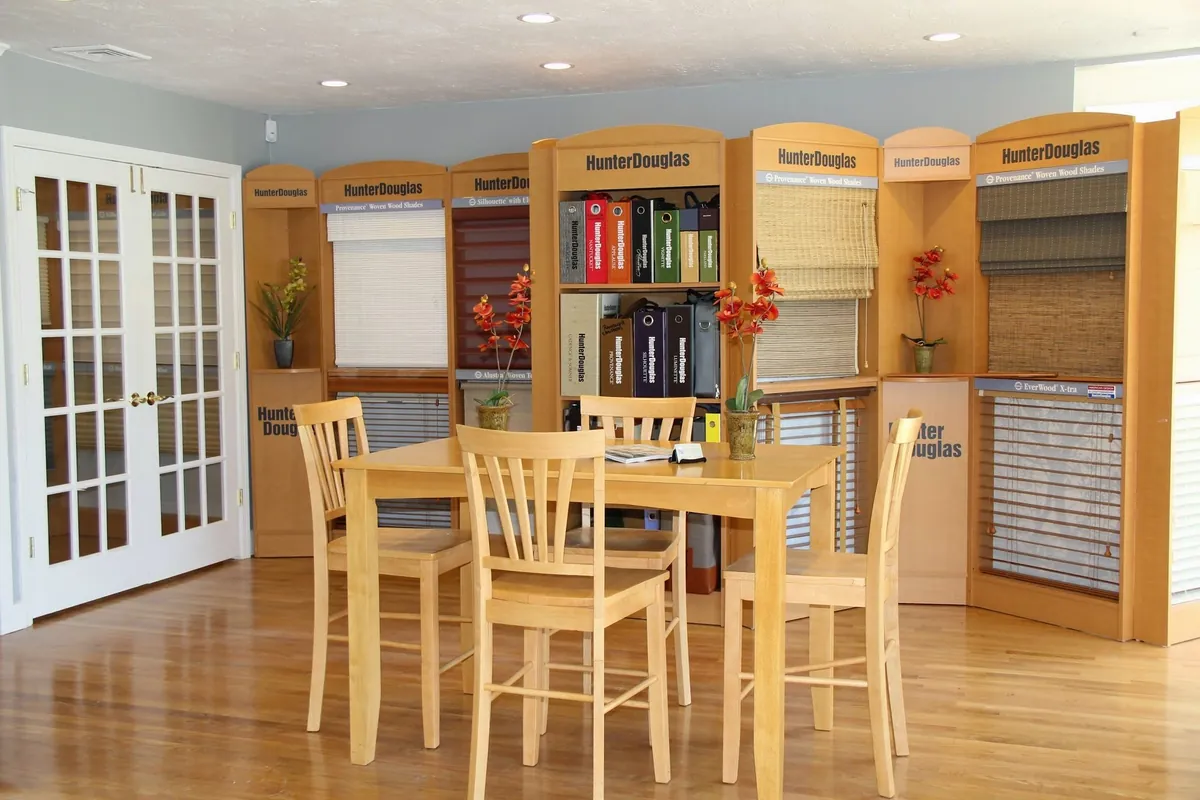
A Gallery dealer for Easton
Gallery dealer status means one appointment can cover an antique parlor and a newer family room without sending you to a second supplier. Shades of every kind, blinds, the three shutter lines, Hunter Douglas drapery and PowerView automation all come through us, measured by the same people.
The people who fit your order hold Hunter Douglas certification, so a made-to-measure product goes into an old Easton frame the way the maker intended. If a shade you already own has stopped working, we welcome blind and shade repair as well.
The main Hunter Douglas page tells you more about our dealer work, and the Hunter Douglas catalog is a good place to look at colors before the van arrives.

Samples brought to you, a showroom in Franklin
Our Canton team looks after Easton on a shop-at-home basis: no storefront trip, just a van of samples parked in your driveway and a walk through your rooms. How that service runs is set out on the Canton shop-at-home page.
Some households like to see products in a store as well. For Easton, Franklin is the closest of our showrooms, and directions are on the Franklin showroom page.
Every service we bring to town sits on the Easton page. For a closer look at app and remote control, visit motorized blinds and shades; powering each motor is worked out with you during the visit.
Questions from Easton
My house is on a wooded lot. How do I choose for changing light?
Light-filtering fabrics and screens handle both the dim summer months and the bright, low winter sun. We look at each room’s light during the visit and suggest fabrics that suit it year-round.
Will coverings suit the tall sash in my antique colonial?
Yes. Slim slats, narrow louvers and straight-hanging fabrics keep a tall window elegant, and we decide inside or outside mounting window by window.
How do I reach the window above my two-story foyer?
PowerView lets you move a shade on a high window from a remote, the app or a schedule. A sheer that stays down is another option.
My house sits far back from the road. Do I need privacy fabrics?
Less than in a denser town. Front rooms can often take sheers or woven shades, while bedrooms and baths still get coverings that close fully.
Is the estimate free?
Yes. The estimate for products and certified installation is free.
Plan your Easton windows
From a village antique with tall sash to a newer colonial in the woods off Route 123, the first step is a consultation at your house. Ask for a visit, and a Hunter Douglas dealer in Easton arrives with samples, takes measurements and hands over a free estimate. Questions before you book? The call button up top connects you.