
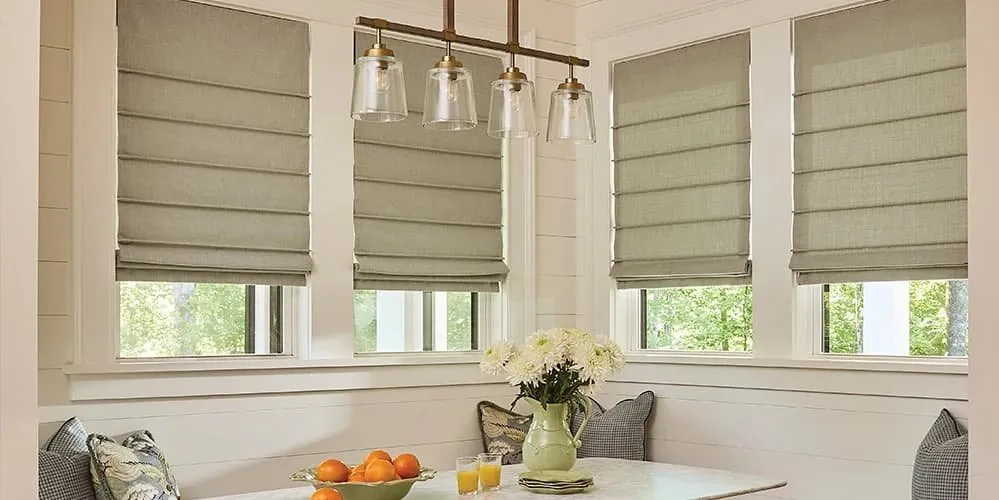
Small lots, very short setbacks
Holbrook’s housing was largely built in one post-war wave: capes and ranches on small lots, with standard openings throughout and very short setbacks between the houses. On many streets the gap between one house and the next is little more than a driveway, and the front step is close to the sidewalk. Those tight spacings are the starting point whenever we plan roman shades in Holbrook, MA, because they decide which windows need privacy, when they need it, and how much light can be spared.
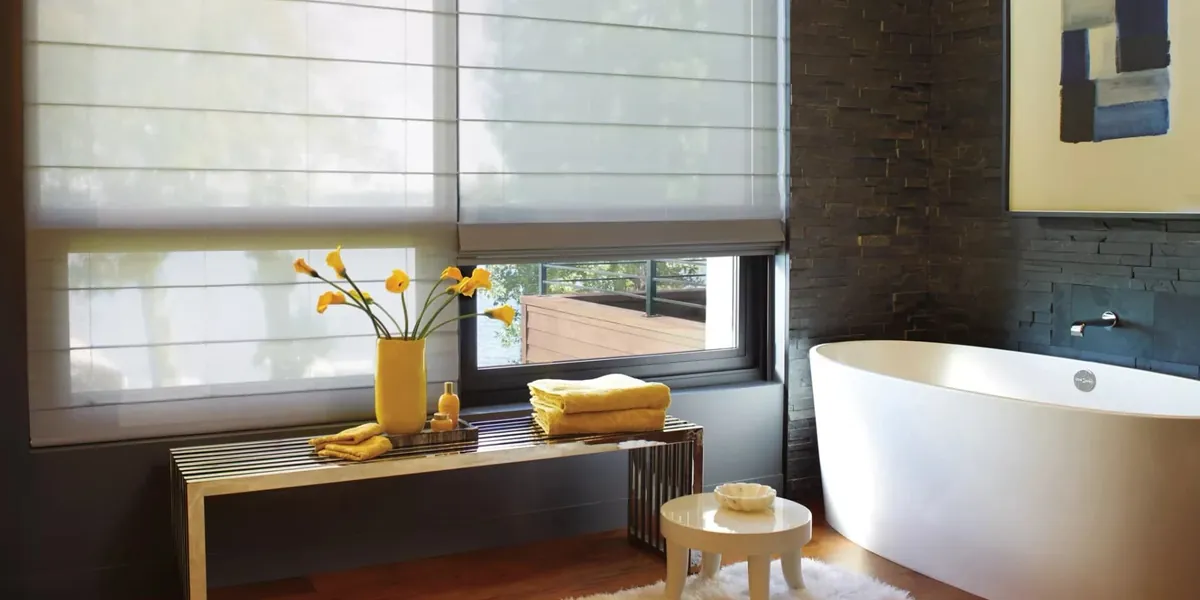
A fabric shade is a natural fit for houses like these. It gives privacy with a soft, finished look rather than the hard lines of slats, and it suits the modest scale of a cape or ranch room. Pulled up, the fabric stacks at the head of the window and the panes are left uncovered, so the room keeps its daylight. Lowered, it screens the view in from next door while the fabric lets as much light through as you choose.
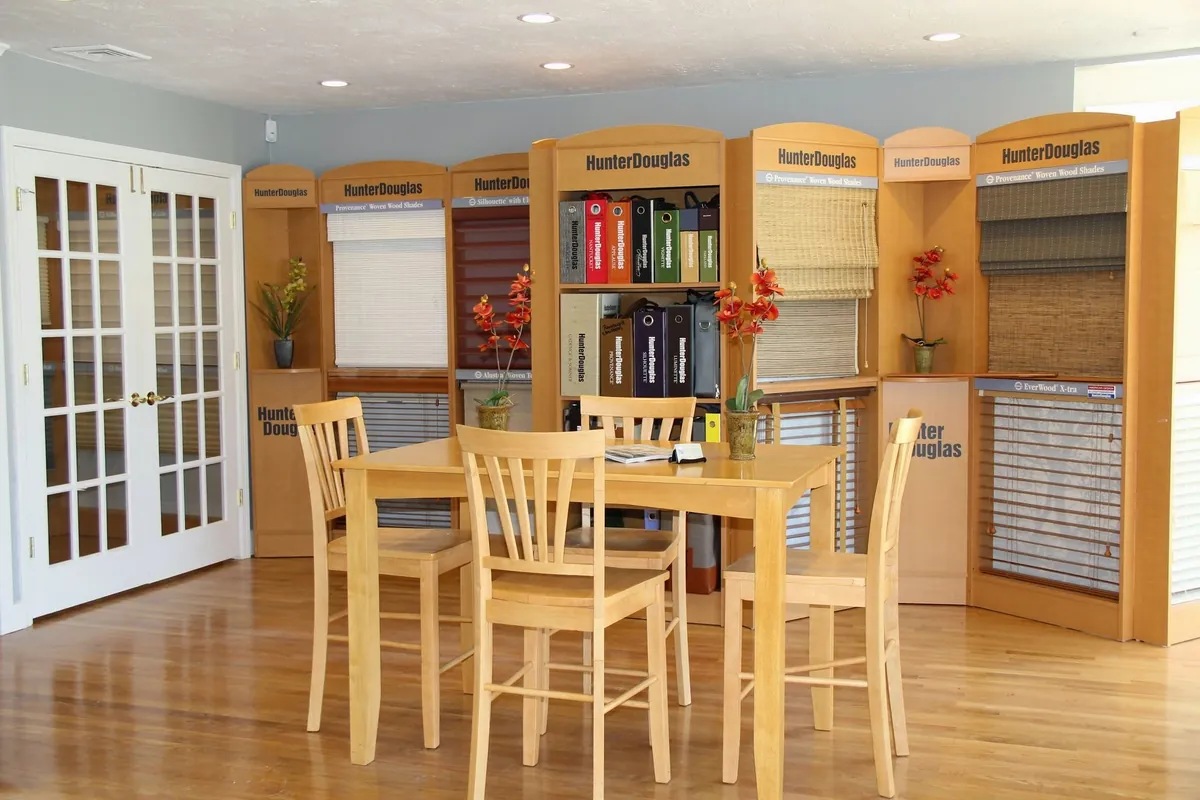
The standard openings make the practical side easy. Frames that are square and sized alike measure quickly and fit cleanly, which leaves the visit free for the part that matters: choosing the fabric. Both Hunter Douglas lines come with us on the van: Vignette, and Carole Fabrics in its flat and folded styles.
Roman shades in Holbrook, MA: the three choices
When you strip it back, choosing a fabric shade in a Holbrook house comes down to three decisions: the style, the fabric weight and how you want to raise it. These cards start that conversation.
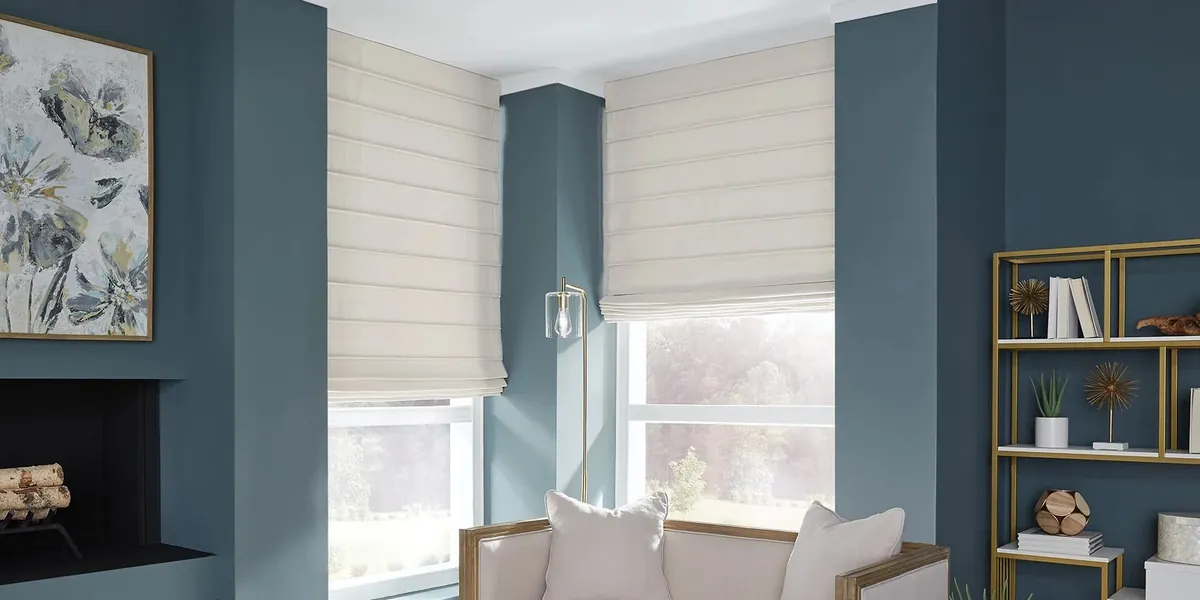
The style: flat or folded
Carole Fabrics comes as a smooth flat panel or with soft loops kept in the fabric. Flat is tailored; folded is relaxed.
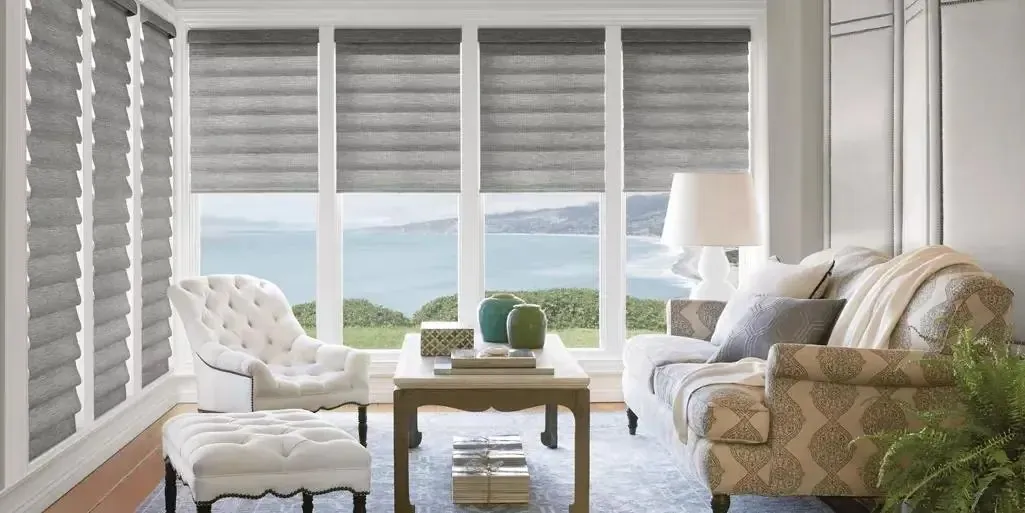
The line: Vignette
The Hunter Douglas modern roman shade, with even folds that suit the plain, square rooms of a post-war house.
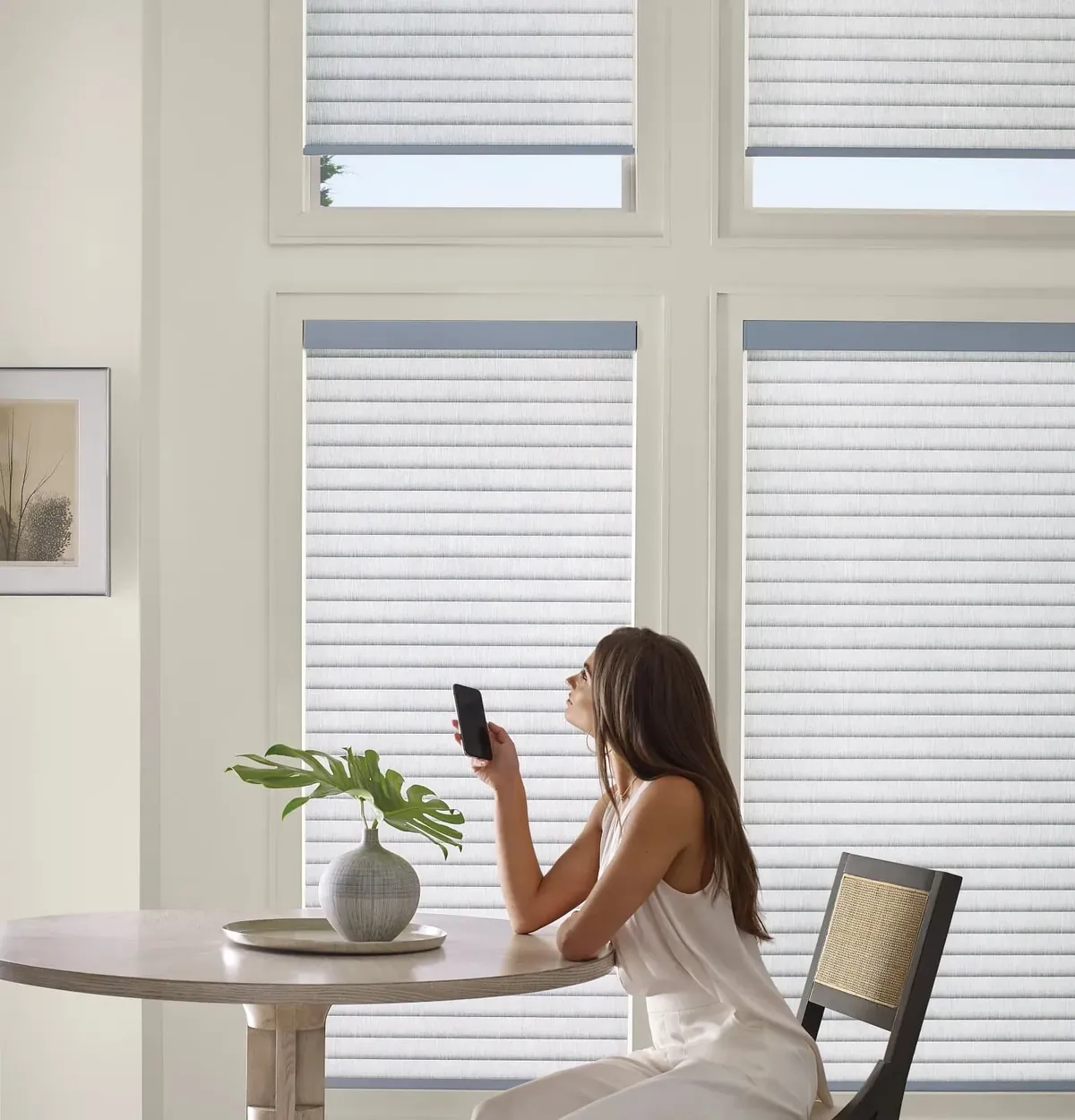
The control: by hand or PowerView
Shades can be raised by hand, or moved from a remote, an app or a schedule with PowerView motorization.
Decision one: which windows really need privacy
On a street with very short setbacks, it is tempting to treat every window the same and cover the lot with one heavy fabric. That usually leaves the house darker than it needs to be. A better approach is to sort the windows by what they face.
Windows that face the house next door. Side windows on a small lot can look straight across a narrow gap into a neighbor’s window. These need privacy for much of the day, not just after dark, and they get little direct sun because the next house blocks it. A fabric that you can leave lowered and still live with is the right choice here: enough body to blur the view, light enough to let the room breathe.
Windows that face the street. Front windows are close to the sidewalk, so in the evening, with lamps on, they are on show. During the day the angle into the room is usually less direct. These shades tend to be raised by day and lowered at dusk.
Windows that face the back yard. The rear of a Holbrook house often has the most open outlook and the most sky. Privacy matters least here, and daylight matters most, so a lighter fabric often suits.
Sorting the windows like this before choosing fabric is one of the most useful things we do at a consultation, and it usually means different fabric weights on different sides of the house, all in one outward-facing color so the house still looks orderly.

Decision two: flat, folded or Vignette
Once you know what each window needs, the style is a matter of taste and room.
The Carole flat style hangs as one smooth panel and folds up into crisp, stacked pleats. It is the tidiest look, it suits a kitchen, an office or a front room that faces the street, and it is the best way to show a pattern. The Carole folded style keeps soft loops in the fabric from top to bottom, even when lowered, which gives a gentle, comfortable feel to a living room or a bedroom. Vignette, the more contemporary of the two lines, has regular, even folds and a clean profile that sits well in the simple, square rooms of a post-war house.
Many Holbrook houses use more than one. A Carole folded style in the living room, Vignette in the kitchen and a Carole flat style in the bedrooms is a common combination, and because the windows are standard sizes, the mix still looks consistent from outside. For more on each line, the roman shades overview sets them next to each other.
Decision three: how much light to keep
In a small house, daylight is precious, and the fabric is what controls it. Lighter fabrics let soft, diffused light through when the shade is down, so a room stays bright while the view in is blurred. Heavier fabrics shut out more light, which suits bedrooms and any room used for watching television in the afternoon.
The trick on a small lot is to use the heavier fabrics only where they are needed. A side bedroom that faces the neighbor and wants darkness at night is a good candidate. A kitchen or a back living room facing the yard almost never is. Getting that balance right keeps the house private where it counts and bright everywhere else.
Color plays its part too. Pale colors let more light through and make a small room feel larger. Deeper colors look rich but can make a compact room feel closer. If you are unsure, read choosing fabric for a sunny room before the visit; the consultant can show you the difference at your own window.
Applying the three decisions to a cape
Run a Holbrook cape through those three decisions and a plan falls out quickly. The two windows flanking the front door face the street, so they take a matching pair of shades with one outward color, raised by day and lowered in the evening. The side windows on the ground floor face the neighbor across the drive, so they get the fabric with more body, the one you can leave down. The kitchen at the back faces the yard and gets something light.
Upstairs is where a cape differs. The second-floor rooms are tucked under the roofline, and their windows are short. On a short window, every inch of raised fabric is an inch of lost daylight, so we lean toward Vignette or a thin Carole fabric that gathers into a narrow band. Those rooms also collect heat under the roof on summer afternoons; a little more fabric weight on the sunny gable makes them noticeably more comfortable to sleep in.
Applying them to a ranch
A Holbrook ranch lays the same decisions out along a single floor. The big window at the front of the living room faces the street. A string of bedrooms down one flank faces the house next door, sometimes only a few steps away. The kitchen and often a family room face the back yard.
The flank of bedrooms is the priority, and it is where roman shades in Holbrook, MA, earn their keep: a fabric with enough body for privacy, in one color so the side of the house reads as a single row from the driveway. The front living room window, the widest in the house, can be split between two shades so the sunny half drops on its own. And the kitchen window, usually over the sink, wants a shade that is light to lift with one hand or a motor to do it for you.
What happens at the consultation
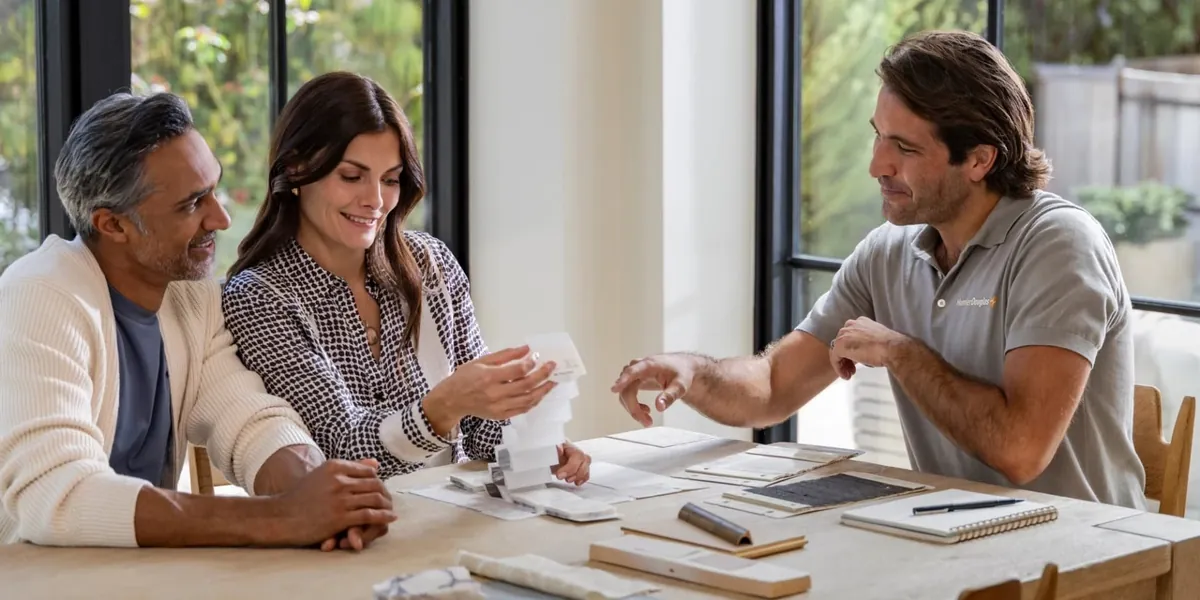
Holbrook is covered by our shop-at-home service from Canton, so the choosing is done at your house. A van brings the sample books to your driveway, and the decisions above are made one window at a time, in your own light.
- Get in touch with the Request a Consultation form or the call button.
- We settle on a day and talk briefly about which rooms are the priority.
- The consultant walks the house with you first, sorting windows into those facing the neighbor, the street and the yard.
- Then the samples come out: light and heavier fabrics, flat and folded styles, and Vignette, each tried at the glass.
- Each opening is measured, and we confirm how the shade will mount in the frame.
- You keep a free estimate, laid out by room, to think over.
There is more on the visit in what happens at an in-home consultation, and the in-home consultations page describes the service as a whole.
Why standard openings are good news
Standard openings throughout make a Holbrook house one of the simplest to fit. The frames are square and true, and most have enough depth for the shade to sit inside the opening. That gives a clean, built-in look and leaves the window trim fully visible.
It also makes the order simple. With so many windows sharing a size, matching shades across a whole side of the house is easy, and rooms done later will match rooms done first. Starting with the windows that bother you most, often the side bedrooms or the front room, and adding the rest over time is a perfectly good plan. The estimate records each room’s fabric and style so nothing is lost between orders.
Motorizing the hard-to-reach windows
Few windows in a cape or ranch are truly out of reach, but some are awkward: the window over the kitchen sink, a window behind a bed or a sofa, or an upstairs window at the top of a narrow stair. PowerView motorization lets a roman shade move from a remote, the app on your phone or a schedule. A side bedroom shade can be set to lower at dusk without anyone remembering. We plan how each motor is powered at the visit. The guide to how motorized shades are controlled explains the options in plain terms.

Evenings on a tight street
Most of the privacy questions in a Holbrook house come down to the evening. In daylight, glass is surprisingly hard to see through from outside, because the outdoors is brighter than the room. Once the lamps come on inside, that reverses, and a room with uncovered windows is easy to see into from the sidewalk or from next door, even at a glance.
That is why so many Holbrook shades spend the day raised and the evening lowered. It is also why the fabric for street-facing and neighbor-facing windows matters more than its daytime look alone suggests. A fabric that looks lovely in sunlight but turns almost transparent with a lamp behind it will not do the job after dark. At the consultation, we can check this simply: hold a sample against the glass, switch on a lamp in the room, and look from outside. It takes a minute and settles the question for good.
For roman shades in Holbrook, MA, that check is worth doing on every window that faces the street or the house next door, because on a small lot those are most of them.
A matching face to the street
On a street of small lots, the front of every house is close to the sidewalk and close to its neighbors, so it is seen more often and at closer range than a house set far back. That makes a consistent outward face worth having. One color for every shade that faces the street, and the front shades set at one height during the day, keeps the house looking tidy and deliberate.
A soft white, ivory or light neutral on the outward face suits most siding and trim, and it lets each room choose freely on the inside. That balance, uniform outside and personal inside, is how most Holbrook orders end up.
Layering in the living room
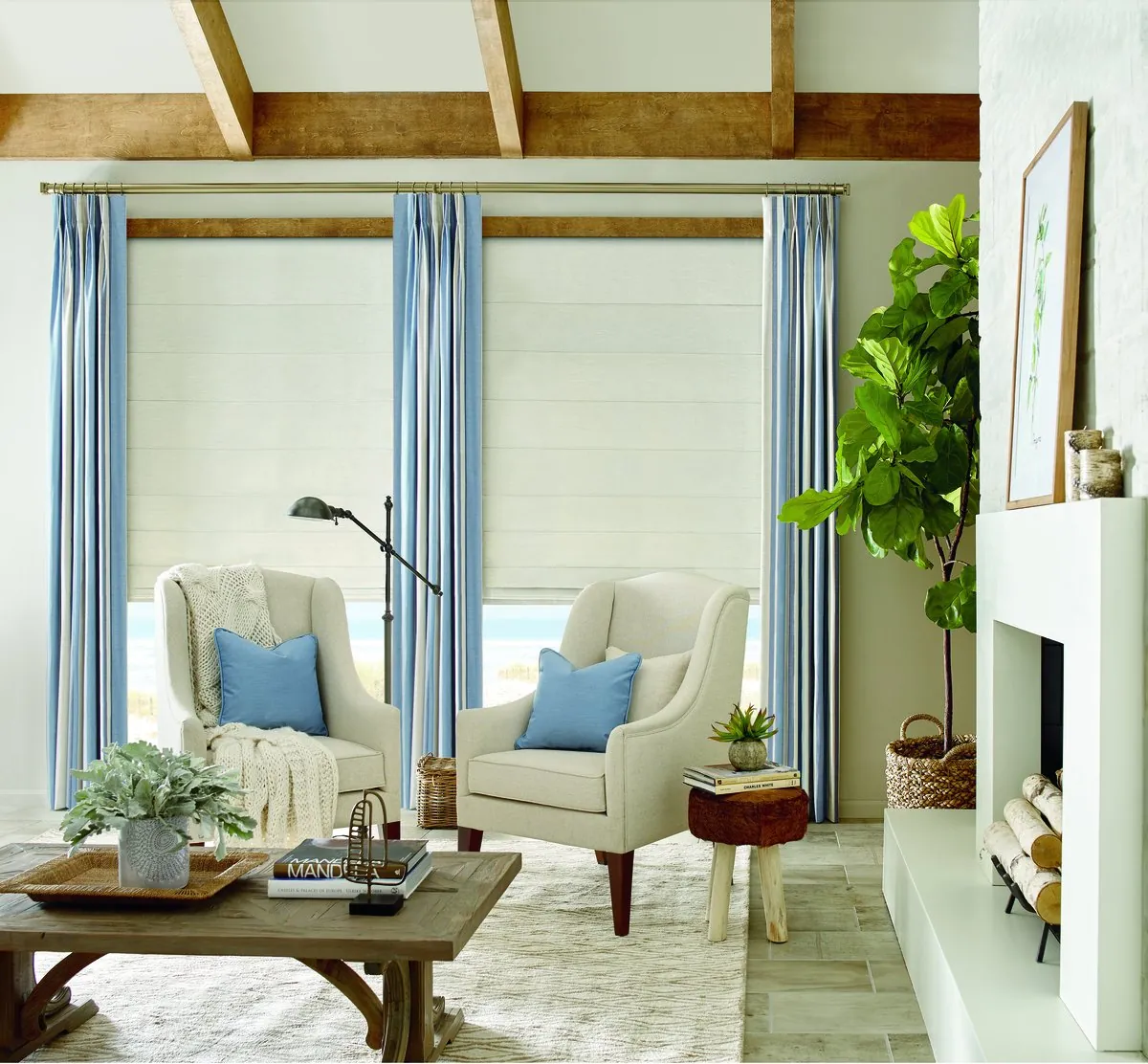
In a living room where you want a little more softness, a fabric shade can sit within the frame with Hunter Douglas drapery panels outside it. The panels add color and height and frame the window, while the shade does the daily work of light and privacy. In a compact room, light panels that stay open keep the effect airy rather than heavy. Our interior design consultations can help pull the fabrics and colors together.
Installation and the rest of the house
Fitting day in a Holbrook house is usually straightforward. Every shade gets certified Hunter Douglas installation: the headrails are leveled and lined up with one another, so a row of shades lowers to one even line, and each shade is run through its full travel before the installer leaves. The guide to what happens on installation day explains the visit.
Some rooms are better with something else, and the same visit covers them. A cold back bedroom might want cellular shades in Holbrook; a small bathroom on the side facing the neighbor might want plantation shutters in Holbrook. The Holbrook page lists every service we offer in town.
A Gallery dealer on your street
As a Hunter Douglas Gallery dealer, Blinds & Designs can offer a Holbrook cape or ranch the entire Hunter Douglas collection. That covers the full Vignette and Carole Fabrics roman shade range, and if a bathroom or bedroom is better served by a shutter, a blind or another kind of shade, that sample is in the van as well.
Estimates carry no charge. A blind or shade you already own that has stopped working can be looked at by our blind and shade repair service.
For Holbrook, the in-home consultation is the usual start. When you would prefer to visit a showroom, Franklin is the nearest.
Questions from Holbrook
The house next door is very close. Will I need to keep the shades down all day?
Only on the windows that face it directly. We usually suggest a fabric for those windows that you can leave lowered and still have a comfortably bright room, while the front and back windows stay open by day.
Should every window in the house have the same fabric?
Not necessarily. Different sides of the house have different needs, so fabric weight can vary. One shared color facing outward keeps the house looking consistent.
Which style suits a post-war cape best?
Any of the three can. Vignette and the Carole flat style give a crisp look; the Carole folded style is softer. We hold up each one at your windows.
Can you fit a shade inside my window frame?
Almost always. Holbrook’s standard openings usually have square frames with enough depth for an inside mount.
What does the estimate cost?
Nothing. You receive a free estimate for each room before the consultant leaves.
Book the visit
On a street where the next house is a few steps away, the right fabric on the right window makes the difference between a dark, closed-up house and a bright, private one. The easiest way to get it right is with the samples at your own windows. Request a consultation, and we will bring the Vignette and Carole Fabrics books, sort your windows by what they face, measure each one and leave a free estimate. Your roman shades in Holbrook, MA, start there. A question before booking? The call button connects you.