
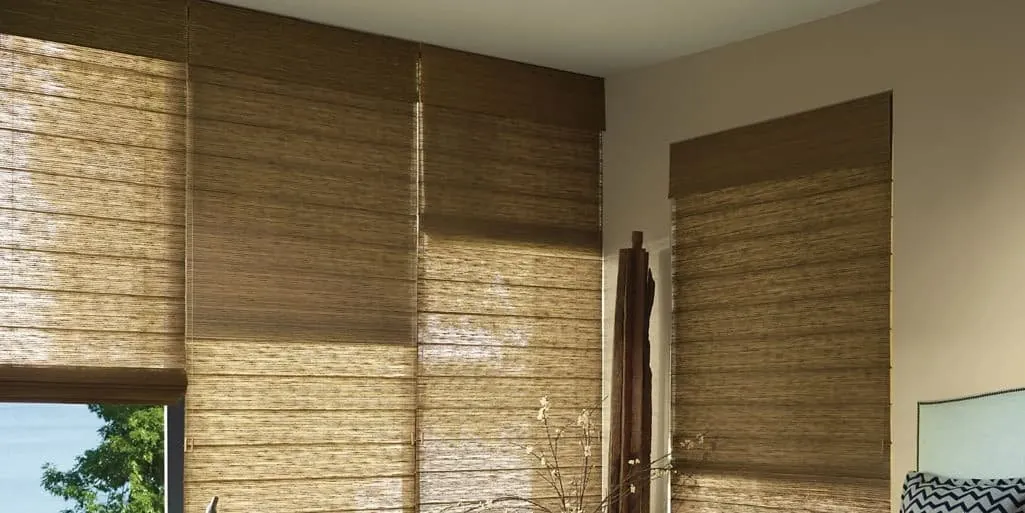
Deep sills and open land around the house
East Bridgewater is spread out. Antique colonials and farmhouses sit on larger lots, some well back from the road, and between them run newer streets of post-war capes and more recent colonials off Route 18 and Central Street. The older houses have something in common that shapes every decision about a fabric shade: small sash set deep into thick walls. Planning roman shades in East Bridgewater, MA, often begins at one of those deep window recesses.
Low density changes the question as well. In a town where the nearest neighbor may be a field or a stand of trees away, privacy from next door is rarely the first concern. The shade is chosen more for the light: how much of it to let in, how to soften it, and how dark the bedroom should be at six in the morning.
We work with two Hunter Douglas lines here, Vignette and Carole Fabrics, each available flat or with soft folds, and we carry the swatches into your house so every choice is made at the window it is for.
Fabric shades for old houses and new ones
Most homes in town end up choosing among these three approaches. All of them come out of the van for you to see at your own glass.
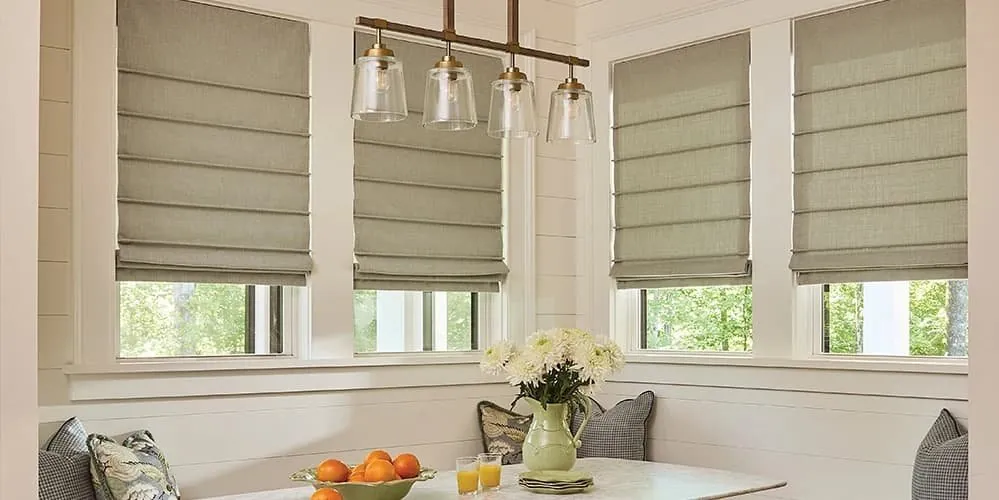
Vignette in a deep recess
Neat, even folds that sit tidily inside a deep window opening, and just as much at home in a newer colonial.
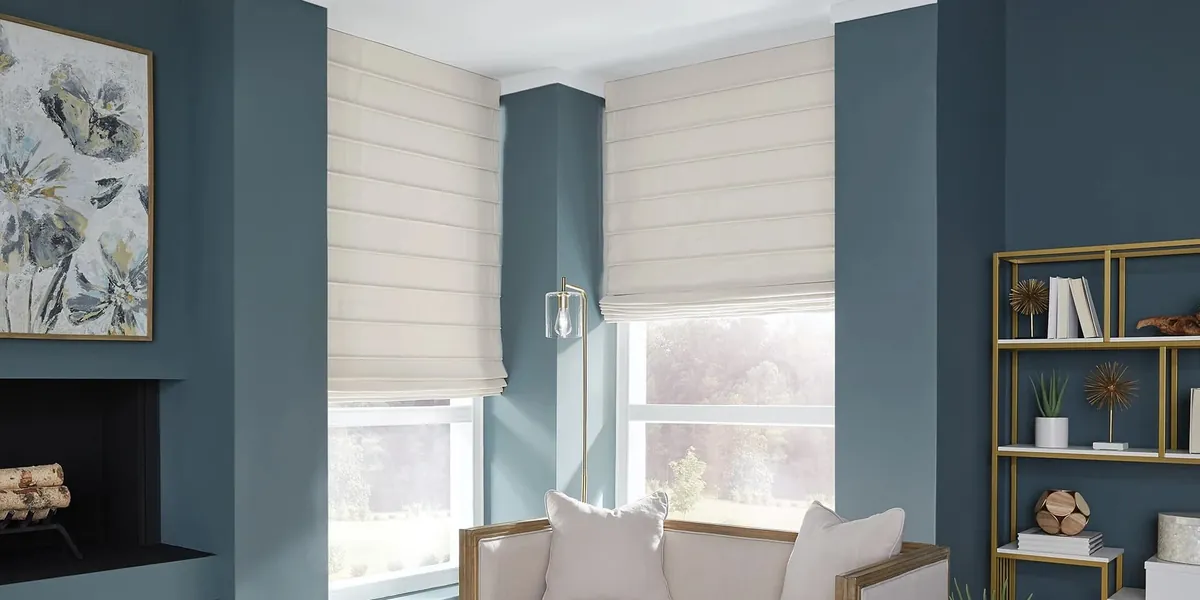
Carole Fabrics for period rooms
A large choice of cloths, flat or softly folded, that can suit the plain plaster and old woodwork of an antique house.
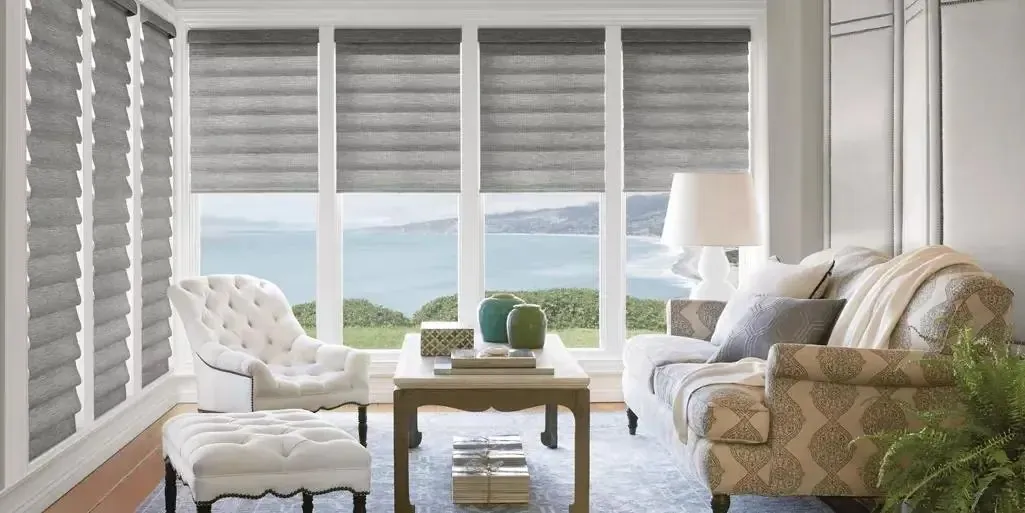
Soft folds for open outlooks
Where a room looks over a yard or field, a relaxed fold in a lighter cloth frames the outlook rather than closing it off.
Small sash in thick walls
In East Bridgewater’s antique houses, the window often sits well inside the wall, leaving a deep reveal between the glass and the room. Those deep openings are one of the pleasures of an old house: a sill wide enough for a plant or a lamp, and a sense of solidity around each window. They also give a roman shade a natural home.
A deep reveal usually has room for the headrail inside the opening, so the shade can sit within the window and leave the surrounding trim and plaster fully on view. Lowered, the fabric fills the recess like a panel. Raised, it folds up inside the opening rather than over the wall.
Because the sash is small, the raised shade is worth watching. A roman shade gathers into a stack at the top when it goes up, and on a short window that stack can take a meaningful share of the glass. A flat fold in a lighter cloth stays slimmer. Sometimes mounting the shade toward the front of the recess, rather than right against the glass, gives the folds a little more room. These are the small decisions we make with you at the window. When fitting roman shades in East Bridgewater, MA, into an antique house, each recess is measured separately, because old openings are rarely identical.
Rooms in an antique colonial
An antique colonial has a particular rhythm: windows set evenly across the front, a center chimney or hall, and rooms that are often modest in size with plain plaster walls and simple painted or natural woodwork. The windows are part of the character, and many owners want the shade to respect that rather than compete with it.
Soft, natural-looking fabrics tend to suit these rooms. A Carole cloth with a gentle texture in an off-white or a muted color sits quietly in a period room, especially in a soft fold. In a kitchen or a back room that has been updated over the years, a cleaner flat Vignette may feel more at home. Nothing has to match from room to room inside an old house, though the windows along the front often look tidiest in one color from the road.

Farmhouses on larger lots
The farmhouses in East Bridgewater often sit on generous lots, sometimes with outbuildings, open yards or fields around them. Rooms in these houses can take light from two or three sides, with windows that look out over land rather than at another house.
That openness is the point of living there, and a shade should not take it away. In most farmhouse rooms, a fabric that lowers partway to soften a strong sun, then lifts clear to give back the view, makes more sense than a heavy cloth that stays down. A lighter weave with some texture works well in a kitchen or a sitting room that looks over the yard.
Bedrooms are different. With no streetlights or neighboring houses nearby, a farmhouse bedroom can be very dark at night but very bright early on a summer morning. A heavier fabric on the window that catches the sunrise lets you choose when the day starts.
When privacy is not the main problem
On a low-density street, the nearest house may be some distance away. During the day, few rooms need screening at all. After dark, though, a lit room on an open lot can be seen from the road or across a field even from a fair distance, because it is the only light in view.
So most East Bridgewater households want shades that stay up through the day and come down in the evening. That makes ease of use matter: a shade you raise and lower every day should move smoothly and stack neatly. It also means fabric weight is mostly a question of how dark you want each room, not how well it hides you from next door.
Living with a wide sill
A deep reveal leaves a broad sill, and in an antique house that sill rarely stays empty. Plants, a lamp, a row of old bottles or a cat in the afternoon sun all claim it. A roman shade fitted inside the recess comes down to meet the sill, so it is worth deciding at the start whether the shade should stop just above whatever lives there or come all the way down.
Most owners keep a few inches clear and let the lowered shade hang just above the plants. The fabric still covers the glass, and nothing has to be moved each evening. Where the sill is used as a seat or a shelf for books, a shade mounted toward the front of the recess, with the sash behind it, can work better. The consultant looks at how each sill is used and suggests the arrangement that fits. Small details like this are a big part of getting roman shades in East Bridgewater, MA, to feel at home in an old house rather than added to it.
Post-war capes off Central Street and Route 18
The capes along the newer streets off Central Street and Route 18 are a familiar type: a pair of windows either side of the front door, living space downstairs and bedrooms under the roof upstairs, often with dormers. Their windows are standard sizes and regular in shape, which makes them straightforward to fit and easy to treat as a set.
Lots here are smaller than around the antique houses, so the sides of a cape can face the next house at a closer range. Side bedrooms and bathrooms may want a translucent fabric that screens the view while letting light through. Upstairs, a dormer takes a flat fold well, because it keeps the raised shade compact in a small, recessed window.
Newer colonials
The newer colonials in town are two full floors with a regular grid of windows across the front. Inside, the front rooms face the road, the family room and kitchen usually face the yard, and the bedrooms are upstairs. Windows are standard modern openings, larger than those in the antique houses and without the deep reveal. With a shallower frame, the headrail may sit on the trim rather than inside it, which also lets the raised shade clear more of the glass. Either way looks neat on a modern window, and we show you both before you choose.
In these houses, a consistent look is easy to achieve. One color and fold across the front windows gives a tidy facade, while the weight of the fabric can change from room to room inside. A family room that faces the afternoon sun might take a lighter, glare-softening cloth; a bedroom a heavier one. Vignette’s clean profile suits the simple trim of a newer colonial, though a Carole flat style in a textured cloth works just as well.
Matching the shade to the age of the house
East Bridgewater has houses from very different eras within a short drive of one another, and a shade that looks right in one can look out of place in another. A rough guide helps.
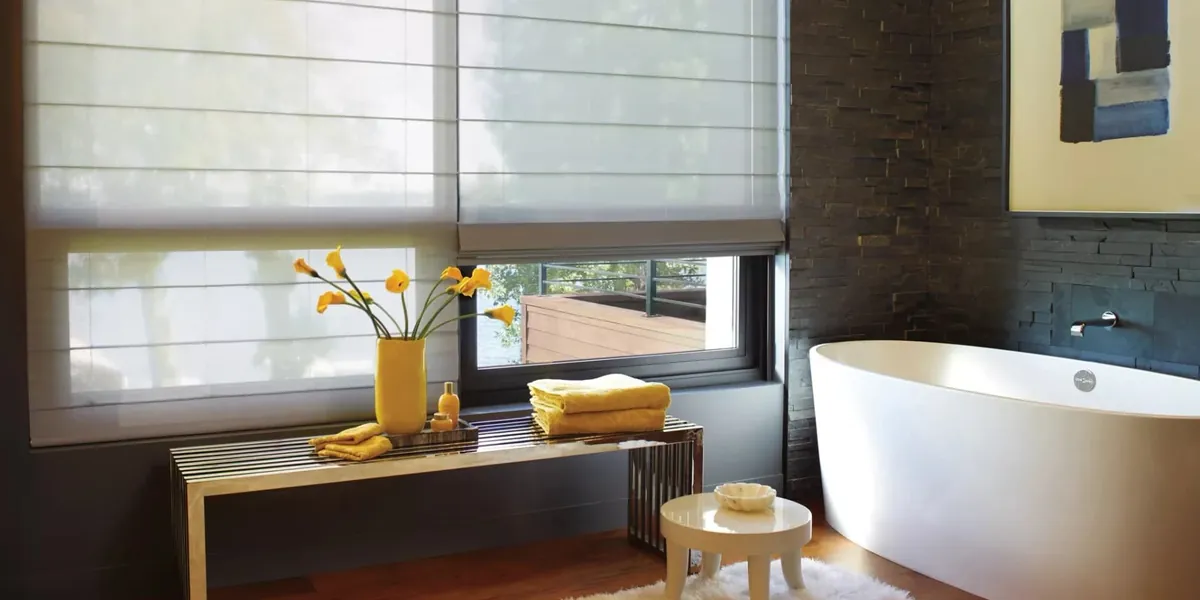
In an antique colonial or farmhouse, natural textures, muted colors and soft folds tend to sit comfortably with old plaster and woodwork. A shade fitted inside a deep reveal looks built in. In a post-war cape, simpler flat styles in light colors suit the plain trim and modest rooms. In a newer colonial, almost anything works, and the choice comes down to the furniture and wall colors. When people ask us about roman shades in East Bridgewater, MA, we often begin by asking when the house was built, because it narrows the field quickly.
Booking a visit
East Bridgewater is part of the shop-at-home area we serve from Canton. The consultant drives out to you with the swatch books, so you choose in your own rooms rather than in a store. The Canton shop-at-home page explains how that works.
- Use Request a Consultation, or the call button, to find a time.
- Tell us about the house: an antique colonial, a farmhouse, a cape or a newer colonial, and which rooms are on the list.
- On the day, the swatch books come inside and are opened near the windows.
- Cloths are tried in a deep-set antique window and, if you have one, a newer standard window, to see how they differ.
- The consultant measures each opening, noting the depth of every reveal.
- You receive a free estimate for each room before the visit ends.
The guide what happens at an in-home consultation covers the details.
Morning and evening light on an open lot
Without houses or tall buildings close by, rooms in East Bridgewater can get the full arc of the sun. An east-facing kitchen is bright from first light. A west-facing sitting room can be flooded in the late afternoon, with low sun shining straight across the room.
Low sun is the hardest kind to manage, because it comes in under any roof overhang and straight into your eyes. A fabric shade lowered partway in the late afternoon blocks the direct beam while the top of the window keeps the room bright. On a west-facing room, a medium-weight cloth often strikes the best balance. In a bedroom that faces east, a heavier fabric keeps the dawn out. Our guide to best shades for sun and glare goes further into the bright rooms.
Color with old wood and plaster
Antique houses tend to have warm, uneven surfaces: wide floorboards, painted trim, plaster that has softened over the years. Crisp bright whites can look stark against them, while off-whites, creams, flax and soft grays sit more naturally. A gentle texture in the cloth also suits a room where nothing is quite perfectly flat.
Newer houses give more freedom. A post-war cape or a newer colonial can carry a stronger color or a pattern without looking out of place. A vertical stripe can make a short window look taller. If you would like help coordinating fabric, paint and furnishings, we offer interior design consultations as well.
Automated shades with PowerView
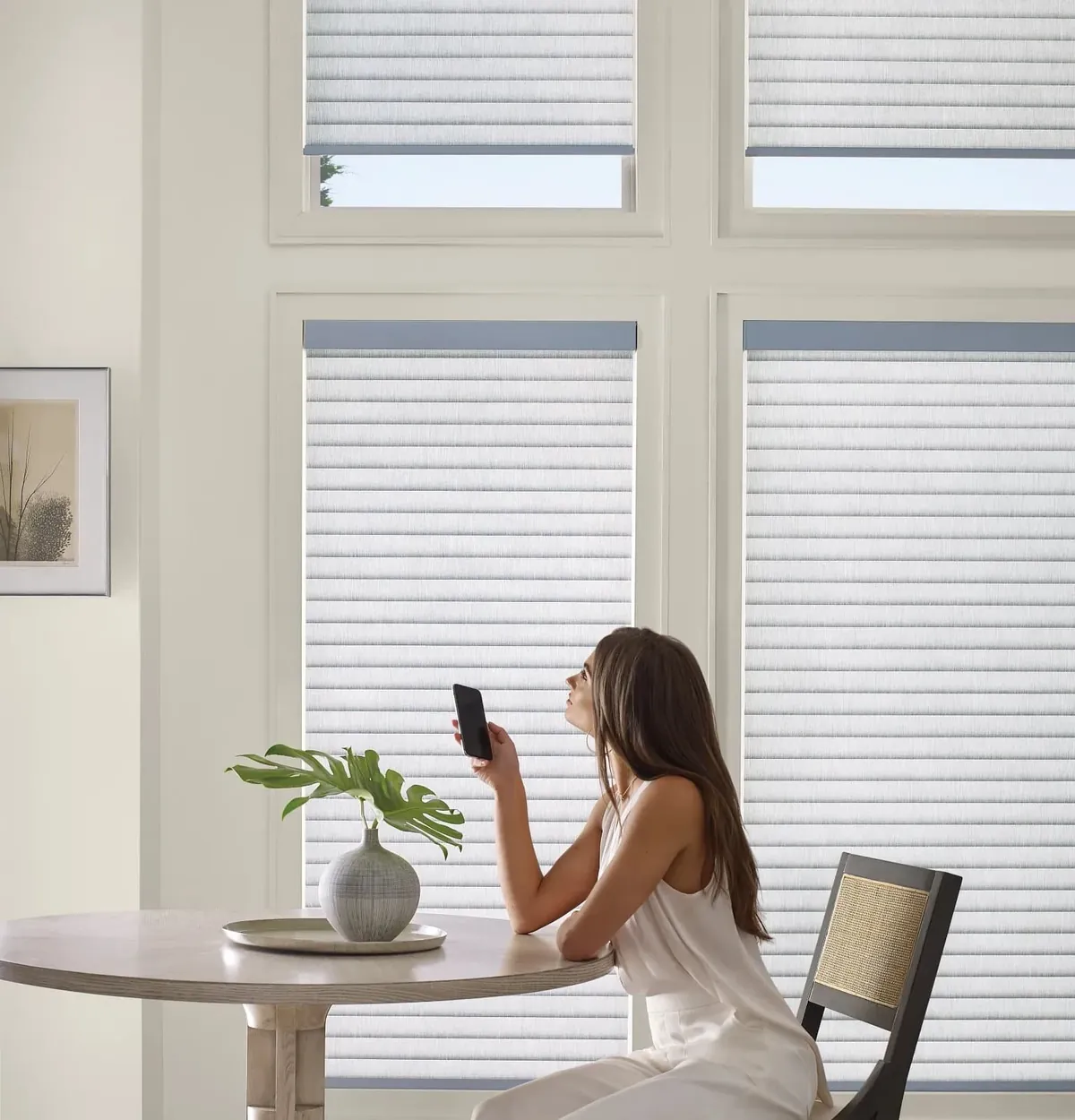
On a large lot, a house can have a lot of windows, and lowering every shade each evening takes a walk through every room. PowerView motorization gives each roman shade a motor that responds to a remote, a phone app or a schedule. Set the shades to close at a time you pick each evening and open at another each morning, and the house is covered after dark whether anyone is home or not. The power arrangement for each motor is decided at the consultation. More is on our page about motorized blinds in East Bridgewater.
Fitting into an old frame
Antique window openings are rarely square or identical. The installer allows for that, setting each headrail level even when the recess around it is not, and taking care with old plaster and painted woodwork. On the newer houses, standard openings make the work simpler, with headrails lining up neatly along each wall. In every house, the work is done through certified Hunter Douglas installation, and each shade is raised and lowered to check it before the installer goes. Read what happens on installation day for more.

Gallery dealer status, and where to find us
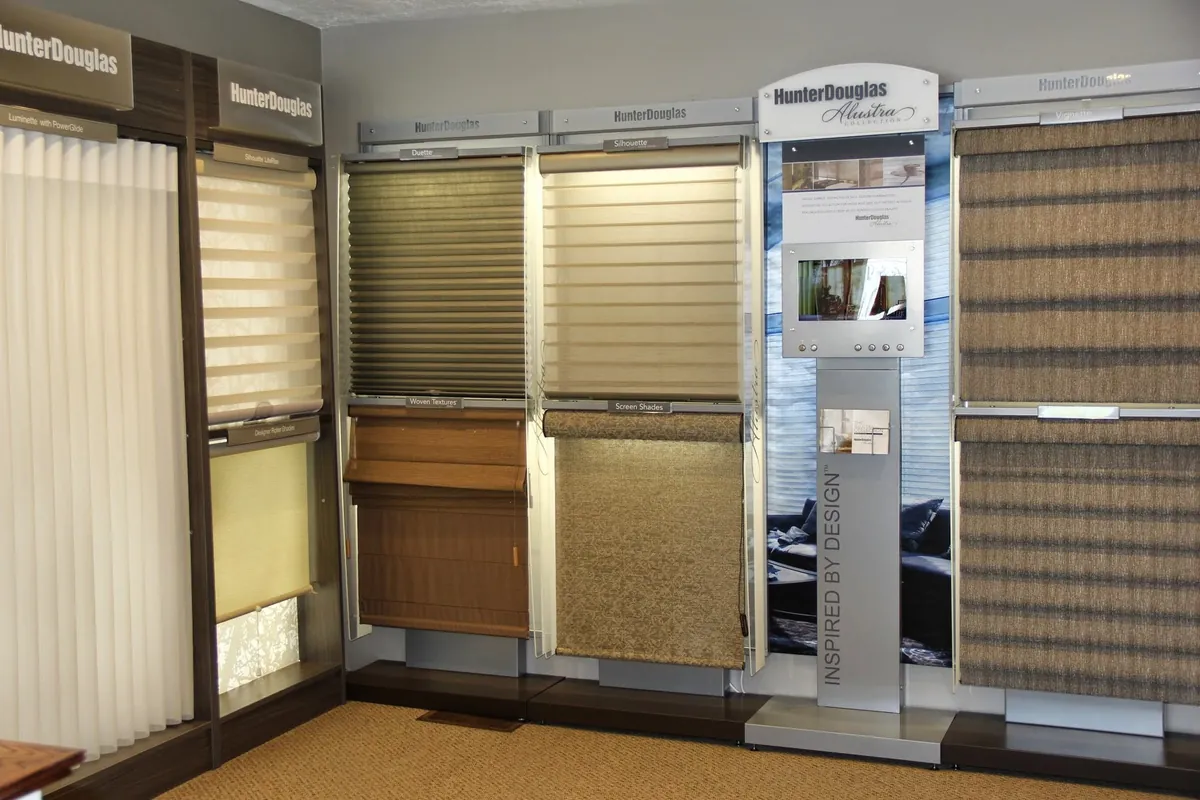
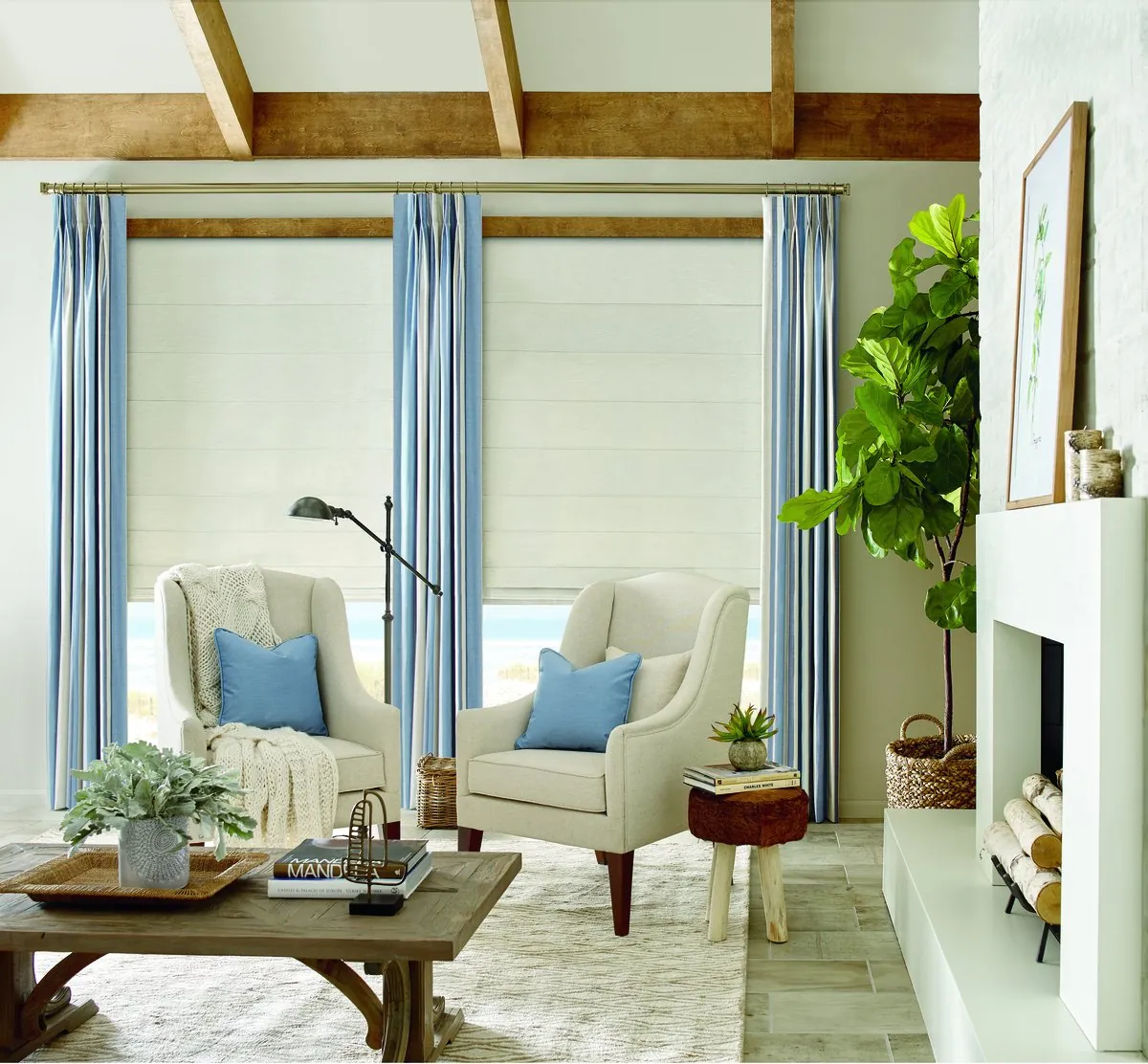
Hunter Douglas recognizes Blinds & Designs as a Gallery dealer. For an antique farmhouse or a newer colonial in East Bridgewater, that means neither fabric collection is trimmed down before you see it, and if a room would be better with a blind, a shutter or a different shade, those samples are in the van as well. Installation is certified Hunter Douglas installation.
There is no charge for an estimate. We also offer interior design consultations and repairs to blinds and shades you already own. Owners here often consider plantation shutters in East Bridgewater for some rooms, and the East Bridgewater page gathers every service in town. Both fabric lines are described on our roman shades page.
The home visit is where nearly every project begins. If you would like to see us in person, our main showroom is in North Dartmouth.
Questions from East Bridgewater
My windows sit deep in the wall. Can a roman shade go inside the recess?
In most antique houses, yes. A deep reveal usually has room for the headrail, so the shade sits within the opening and the trim stays on view.
The sash in my old house is small. Will the raised shade block much of it?
It does not have to. A flat fold in a lighter cloth stacks slimmer, and we show you the raised shade in your chosen fabric before you decide.
We have no close neighbors. Do we still need a heavy fabric?
Often not. Many rooms on an open lot only need a fabric that softens the sun, with heavier cloth kept for bedrooms that catch the early light.
Will the same shade suit our farmhouse and our newer addition?
It can, but many owners choose soft folds and natural textures for the old rooms and a cleaner flat style where the house is newer.
How much does the estimate cost?
Nothing. The consultant leaves you a free written estimate, room by room.
Start with the windows you have
Deep recesses, small sash and wide outlooks are all easier to plan with real fabric in hand. Book through Request a Consultation and the consultant will bring both collections to your door, take measurements and write a free estimate on the spot. From an antique farmhouse to a cape off Central Street, roman shades in East Bridgewater, MA, are planned at home, one window at a time. If something needs answering first, the call button will reach us.