
Shingle, salt and the open ocean
Few towns on this coast put a house quite so close to the weather. In the village and around the harbor, the houses are shingled, many of them with small-paned sash, narrow side lights and window seats tucked under the eaves. Out along Jerusalem Road the properties grow larger and turn to face the open ocean, with long runs of glass, wide sliding doors and rooms that take the full glare off the water from morning to evening.
Both kinds of house live with constant salt air, and both ask a lot of a window covering. That is the work we do as a Hunter Douglas dealer in Cohasset, MA: matching the right Hunter Douglas line to each opening, whether it is a deep window in a village front room or a wall of glass looking out past the rocks.
Cohasset sits inside our Canton shop-at-home territory, so the consultation happens in your house. We arrive with a van of samples and hold them up to the windows you actually live with.
Pick a starting point for your Cohasset house
Every one of these has its own Cohasset page, and as a Hunter Douglas dealer in Cohasset, MA we can show any of them side by side at the visit. Open the one closest to the room on your mind.
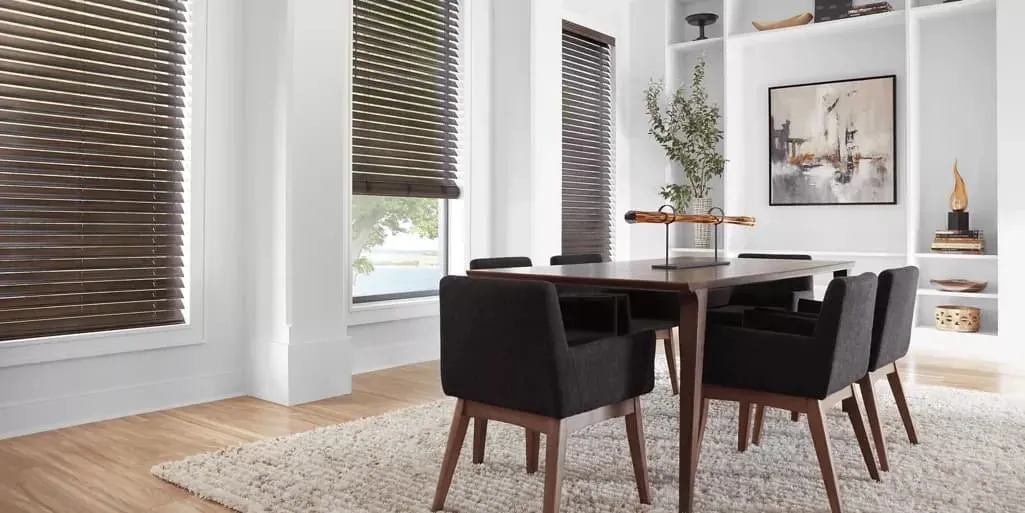
Custom blinds
Slatted blinds in real wood, faux wood or metal, plus verticals for wide doors. Good for a study or a dining room that wants a crisp line.
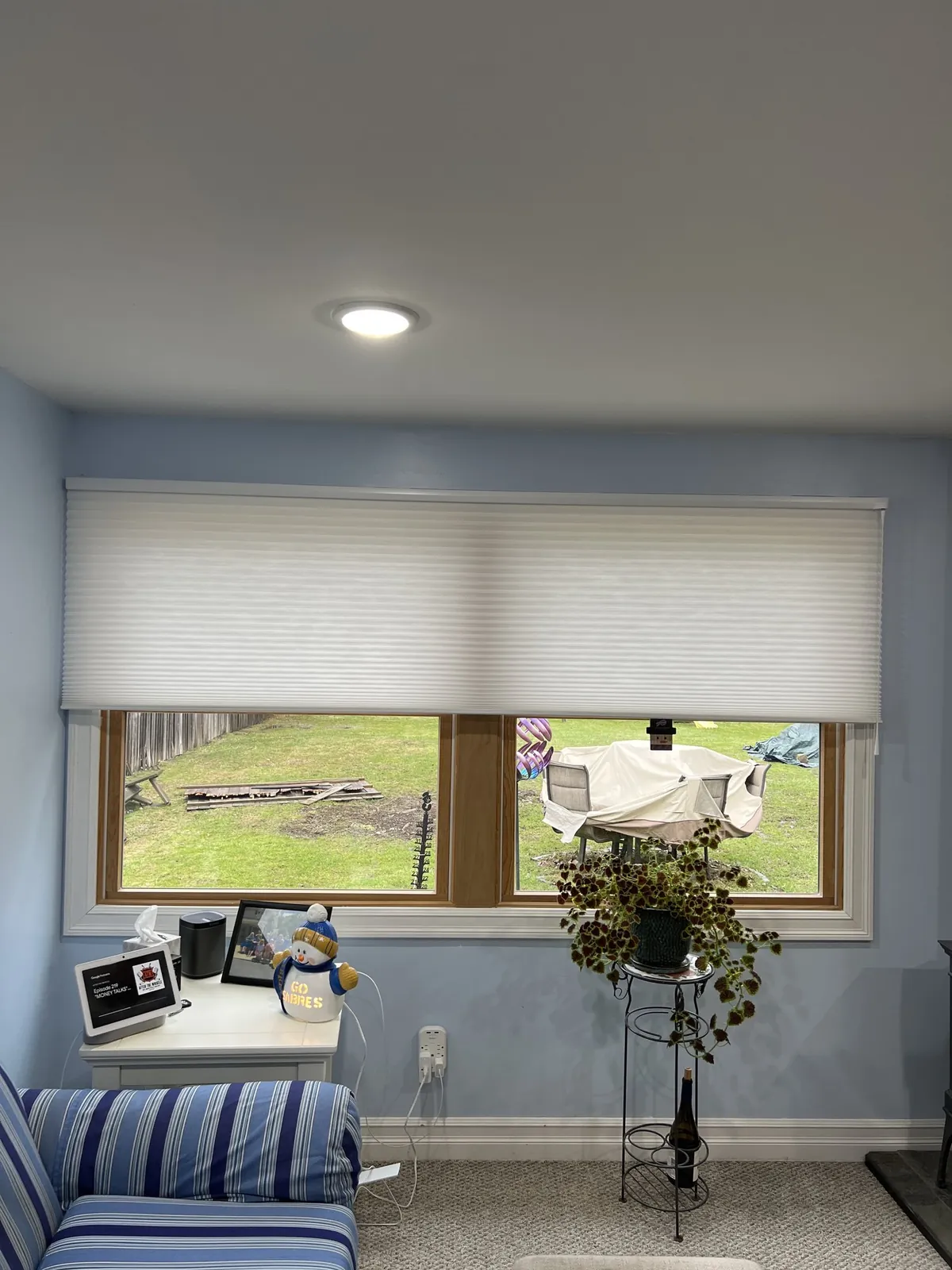
Cellular shades
Honeycomb shades from the Duette and Applause collections. The cell holds a layer of air, which is why a room with them holds its heat.
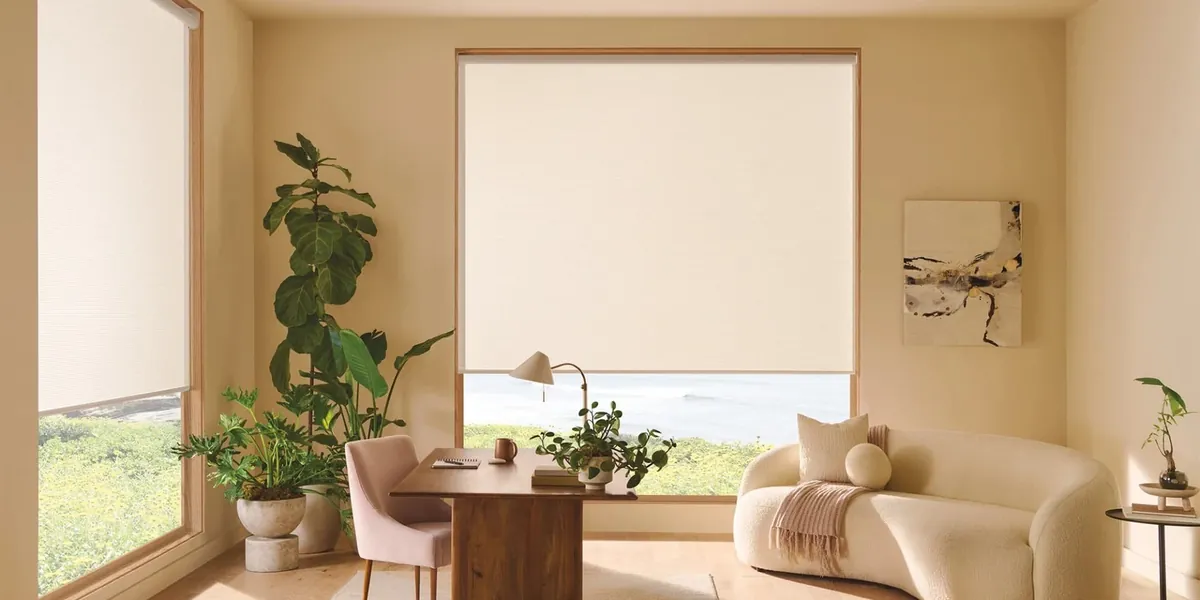
Roller shades
Plain rollers and screen shades from Designer and Alustra, a natural first look for a wall of ocean glass.
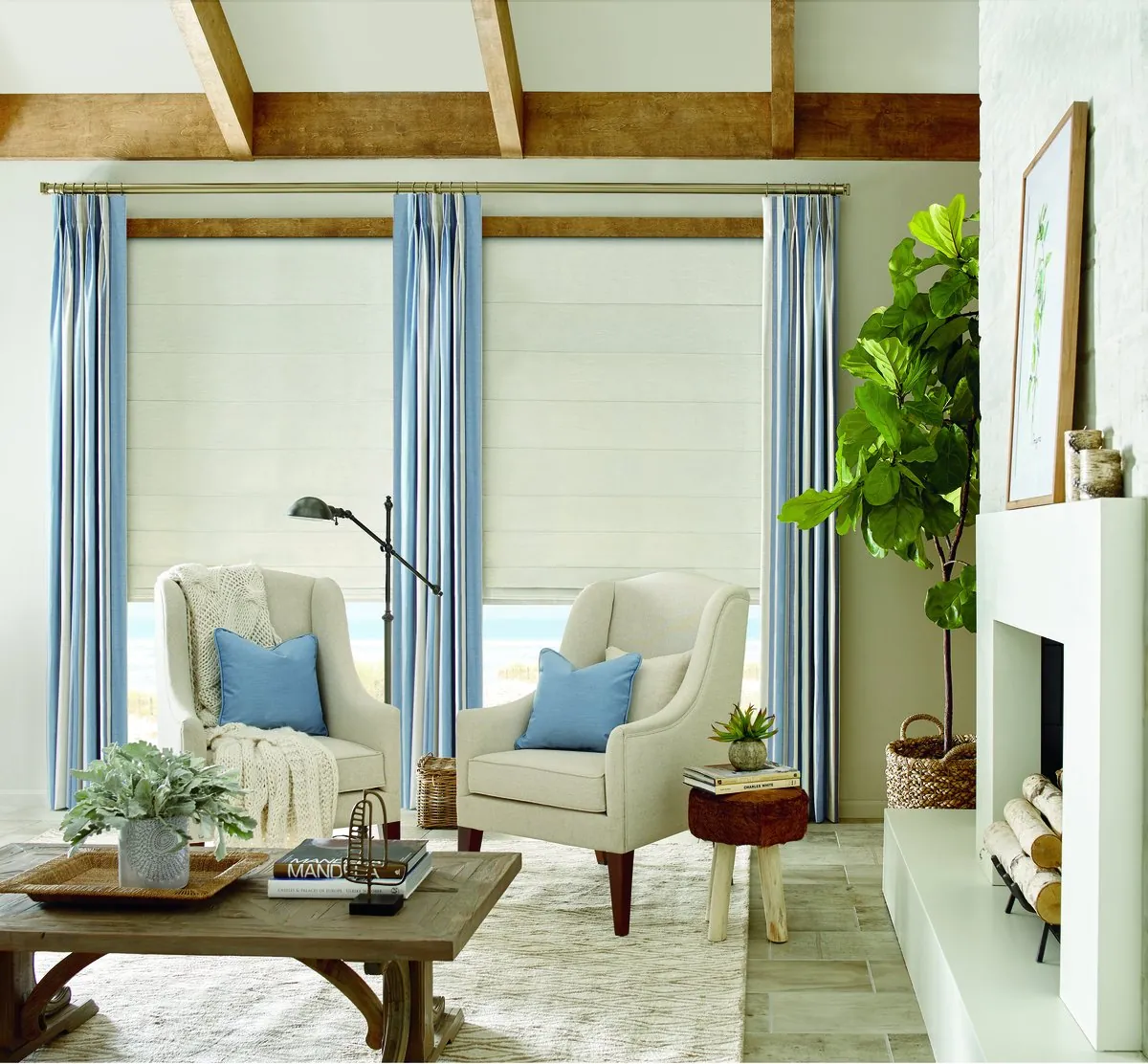
Roman shades
Soft fabric folds from Vignette and Carole, often paired with side panels in a formal village parlor.
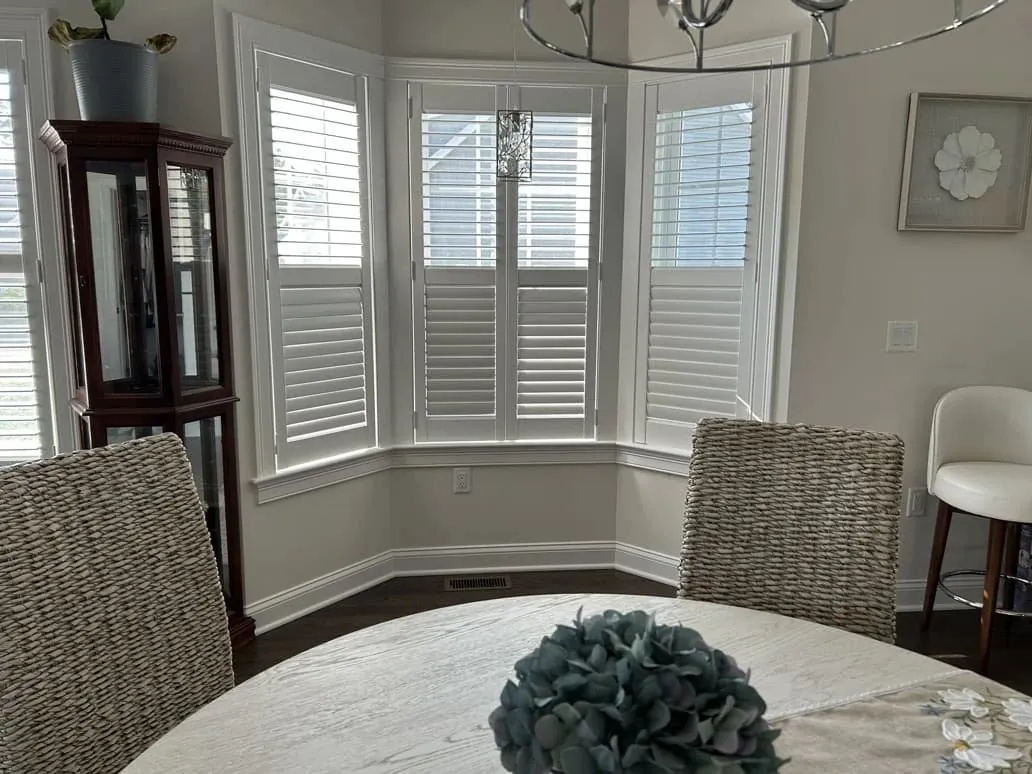
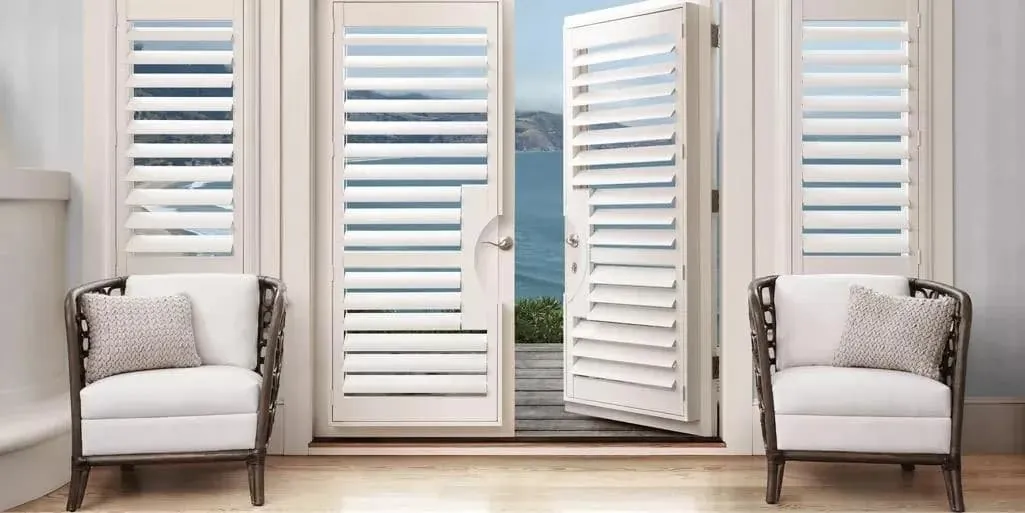
Plantation shutters
Built to the opening, which helps with the odd shapes in older shingled houses. The lines are Palm Beach, NewStyle and Heritance.
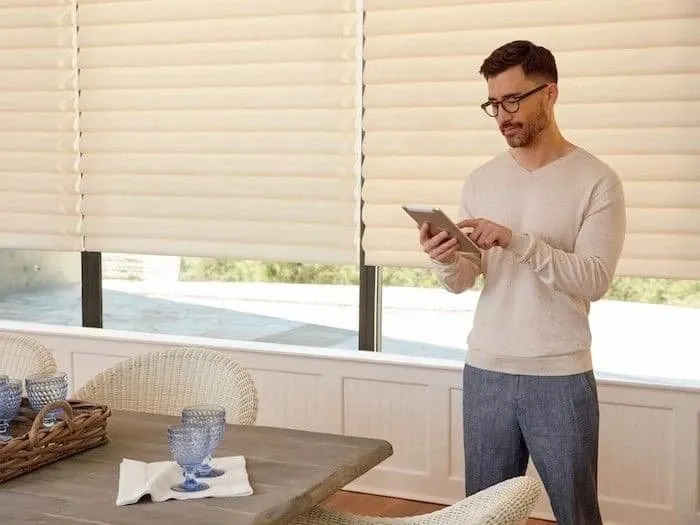
Motorized blinds and shades
PowerView puts tall glass and long runs of shades on a remote, the app or a timetable you choose.
Glass that faces the Atlantic
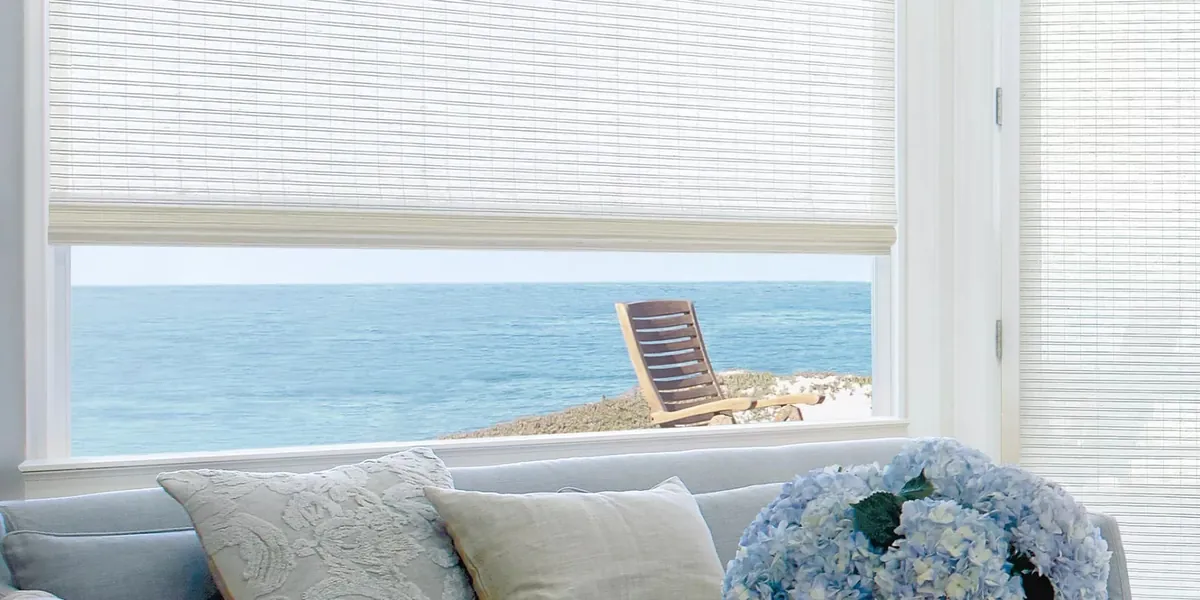
The ocean side of Jerusalem Road changes the brief completely. A room with a long wall of glass toward the water gets the low sun straight in, plus the light bouncing back off the sea, and the view is the reason the house was built. Nobody wants to hide it. The question is how to take the edge off the brightness while keeping the horizon in sight.
Screen fabrics are often where that conversation starts. A Designer Screen or Alustra screen shade cuts glare and still lets you read the water through the weave, and the openness of the fabric is chosen by how much view you mean to hold on to. Silhouette and Pirouette work differently: soft fabric vanes sit on sheer fabric, so you can tilt the vanes closed for privacy or open them for a filtered view. On sliding doors to a deck, Luminette’s vertical sheer vanes draw across the opening and gather to one side.
As a Hunter Douglas dealer in Cohasset, MA, we bring those fabrics to the actual room so you can judge them in the light the water throws back. Our write-up on the best shades for sun and glare covers the same ground in more depth.
Many rooms, many exposures
A big shoreline property is rarely one problem. The great room facing the water wants glare control, the primary bedroom upstairs wants real darkness on summer mornings, the guest rooms at the side want privacy from the drive, and the back hall or mudroom just wants something that stands up to daily use. Each of those is a different job, and each may point to a different Hunter Douglas line.
That is one reason a large house benefits from a single plan. We walk the whole place with you, room by room, and keep a running note of what each window faces and how the room is used. Then the colors, headrails and mounting heights can be kept consistent from room to room, even where the products themselves differ. Seen from the lawn or the road, a house dressed that way looks settled rather than pieced together over several years.
Bedrooms deserve a particular word. On the ocean side, first light comes in early and bright across open water. A cellular shade or a roller in a dense fabric gives a bedroom a calmer start to the day, and a sheer shade or drapery layer can sit in front for a softer look during the day. We bring examples of each so you can stand at the bedroom window and compare.
Shingled houses around the harbor and the village
Closer in, the scale drops. A shingled house near the harbor or on a village side street usually has smaller sash, often divided into panes, set in wood frames that have been painted many times. The window seat under a dormer, the narrow light beside a front door and the low window on a stair landing all turn up again and again, and each needs its own answer.
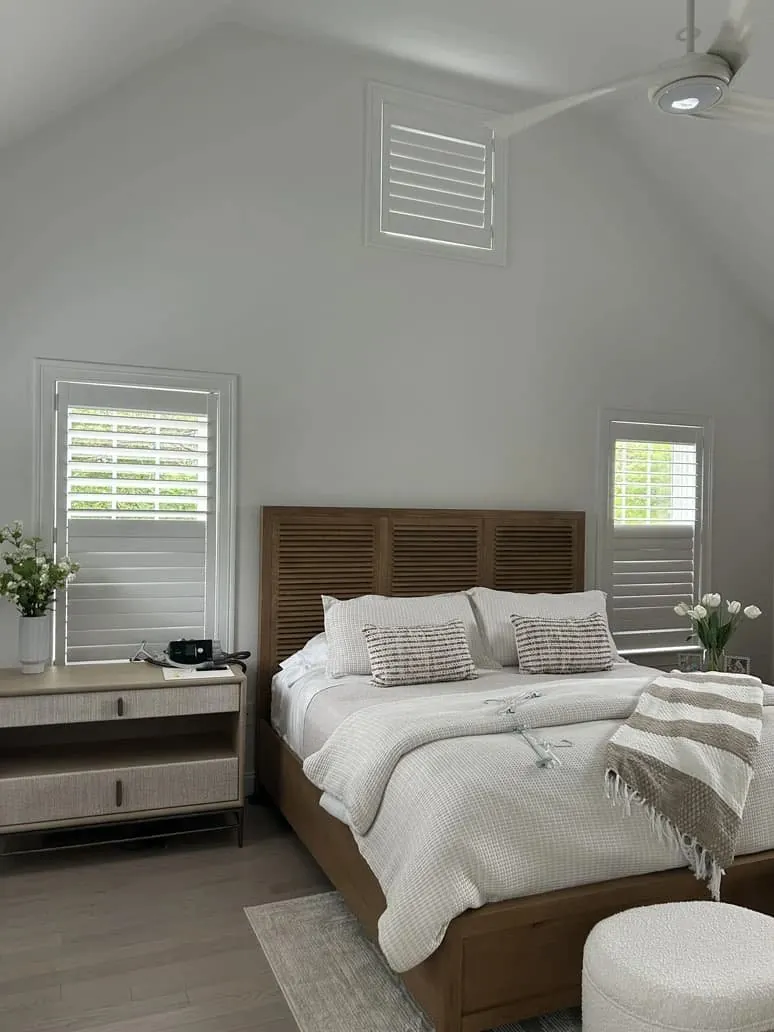
Inside-mounted cellular shades or Roman shades sit neatly within a frame when the depth allows, leaving the trim on show. Where the casing is shallow, a mount over the trim can look just as tidy. Shutters suit a lot of these rooms, because a shutter frame can be built to the shape of the opening and the louvers tilt to let light in without opening the room to the street. Our page on shutters for older windows goes further into fitting old frames.
Village houses often sit close to the road and to each other, so privacy on the street side is a common request. Shutters and sheer shades both handle it well, letting daylight in while keeping passers-by from seeing straight in. None of these choices is made from a catalog page. We study each frame, the condition of the trim and how the room gets used before suggesting a line.
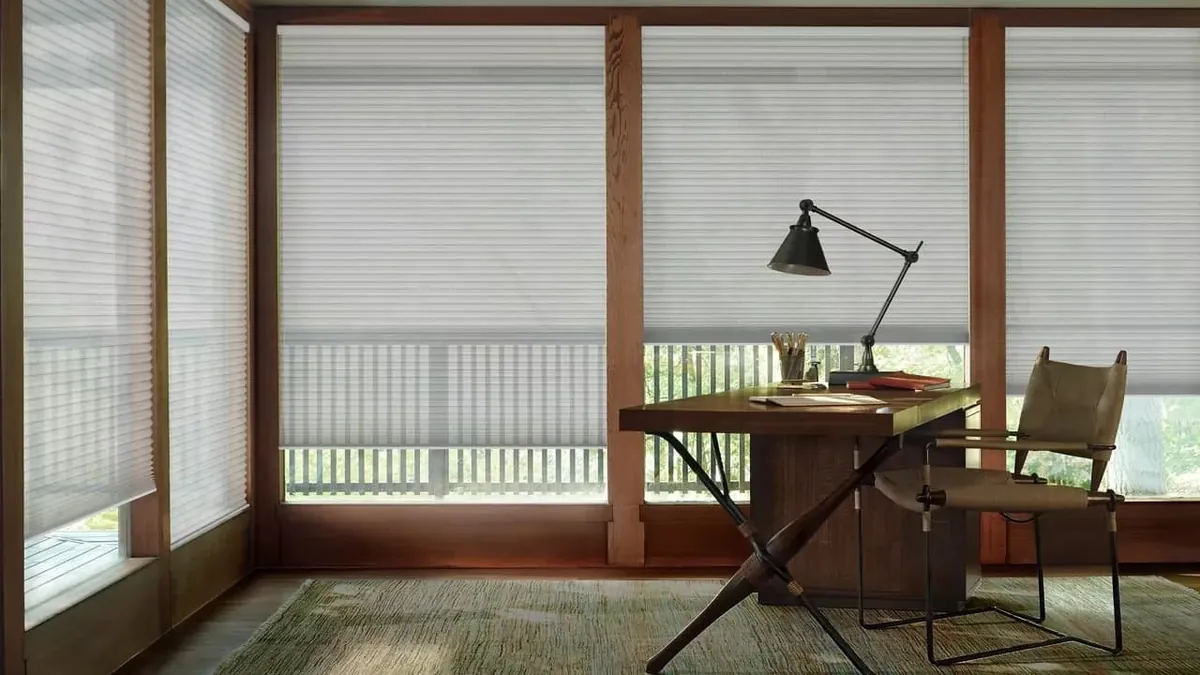
Dormers, eaves and window seats
Upstairs in a shingled cape or an older house in the village, windows tuck into dormers and under sloping ceilings. A dormer window is often small and set deep in a little alcove, sometimes with a built-in seat below. The covering has to clear the seat cushion, sit within a narrow reveal and still look right from the bedroom door.
A shade mounted inside the dormer keeps the alcove neat and leaves the seat free. Where the window sits right up under the slope, we check how far a shade will stack when raised so it does not block the top of the glass. A gable window high on an end wall is a separate question again, and usually best left to a motorized shade or a fixed covering that stays put. We bring examples of each and judge them in the room.
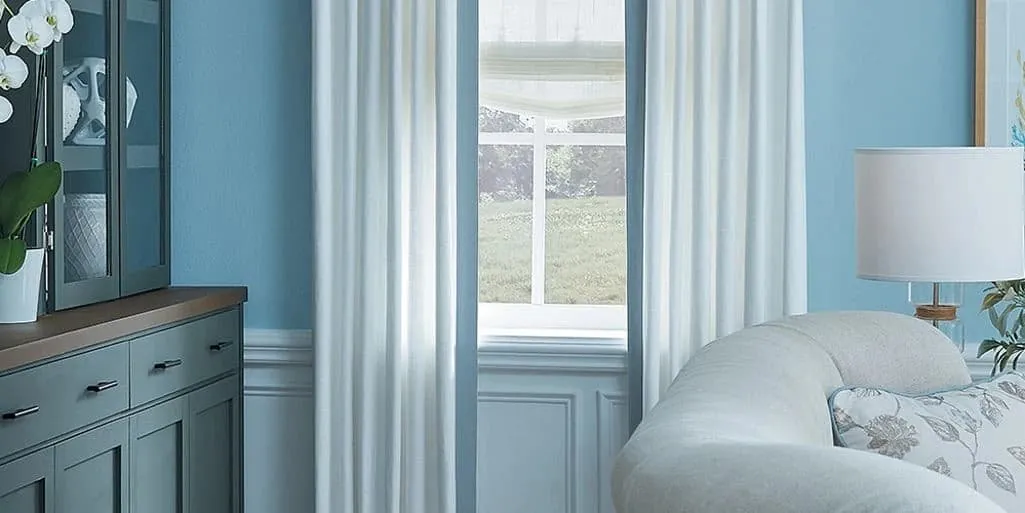
Formal village rooms where drapery is expected
Some of the village houses keep a front parlor or dining room with the proportions of an older era: tall windows, high ceilings and a fireplace wall. In rooms like that, a bare shade can look unfinished, and drapery belongs in the scheme.
Blinds & Designs supplies Hunter Douglas drapery alongside its shades, so the two layers get planned at the same sitting rather than one after the other. A Vignette Roman shade or a sheer shade inside the frame handles light and privacy, while panels at the sides frame the window and soften the room. Choosing both at once means the colors, the stacking and the mounting heights cooperate instead of fighting for the same few inches of wall.
Salt air and the parts that move
Any house this near the water lives with salt in the air, and it settles on everything, including the headrails, cords, brackets and motors of a window covering. That is worth talking through before anything is ordered. At the consultation we ask which rooms take the most spray and wind, which windows stay open through the summer, and where a covering will be raised and lowered every day.
Those answers shape the recommendation. A porch-side room might suit one line, a sheltered bedroom at the back of the house another. We would rather have that frank conversation at your window than make a promise on a web page, and we will tell you plainly where we think a product fits and where it does not.
Sunrooms, porches and the summer house
Many shoreline properties have a room that is mostly glass: an enclosed porch, a sunroom built off the kitchen, or a screened room that faces the harbor. These rooms get the most sun of anywhere in the house, and in high summer they can become too bright to sit in by mid-afternoon. Because the walls are largely windows, the coverings end up being the main feature of the room, so the choice deserves care.
Screen shades and woven shades are common choices here, one for a clean modern line and the other for a warmer, more natural texture that suits a shingled house. Where a room is used year round, cellular shades help it feel more comfortable on a cold January evening as well. We look at how the room is framed, how many separate panes there are and whether the shades should all move together, which is where PowerView earns its place.
A Hunter Douglas dealer in Cohasset, MA should also think about how a glass room looks from outside. From the water or the road, a row of shades at mismatched heights looks untidy, while a set that rests at one line looks deliberate. Matching fabrics and headrails across the whole room keeps it calm from both sides.
If a covering you already own has stopped working, we take on blind and shade repair too, so mention anything that is sticking or tired when we visit.
What a Gallery dealer brings to the coast
Blinds & Designs is a Hunter Douglas Gallery dealer, and every installer we send is certified by Hunter Douglas. For a Cohasset homeowner, that means one visit can cover almost any kind of covering: honeycomb and roller, screen and Roman, sheer, woven and vertical shades, blinds in four materials, all three shutter collections, drapery and PowerView motorization.
A typical property here has so many different openings that the breadth really counts. A sunroom, a parlor, a primary bedroom with a sea view and a back hall can each get the line that suits it, and still be planned by one dealer so the house hangs together. If you like to browse ahead, the Hunter Douglas catalog shows the lines and colors, and our main Hunter Douglas page says more about how we work with the brand.
For help with a whole room, from fabric and color to how the coverings sit with furniture and walls, ask about our interior design consultations.
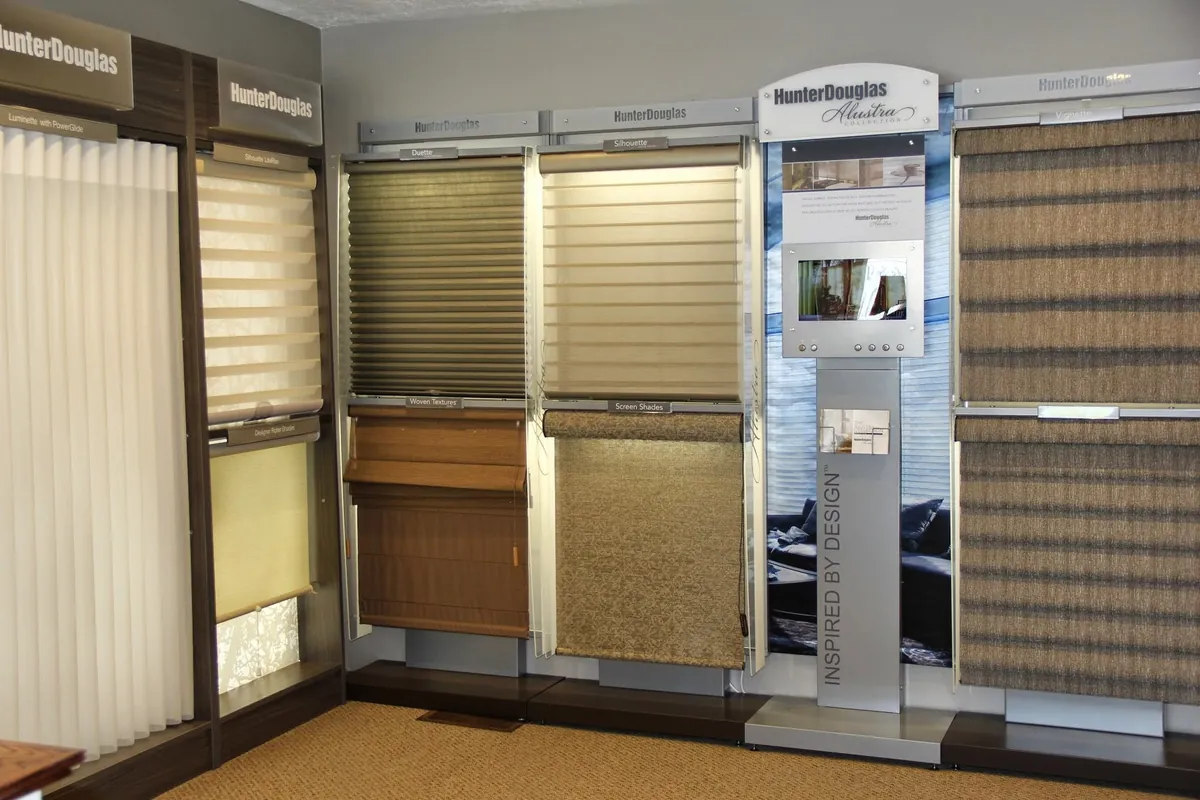
One dealer for the whole house
The appeal of working with a single Hunter Douglas dealer in Cohasset, MA is that nothing gets planned in isolation. The ocean room and the village front room may need very different products, but the person choosing them sees both.
That carries through to the order and the fitting. One estimate covers the products and the certified installation, and the same company fits the order once Hunter Douglas has made it.
Have a room that does not fit any of the usual boxes, such as a curved bay, a tall stair window or a skylight? Bring it up. Those are often the windows where the depth of the range helps most.
Your consultation, step by step
Cohasset is served from our Canton shop-at-home territory, so the whole visit takes place under your own roof. Here is the usual order of things.
- A van loaded with samples pulls up at your house, since we can bring the showroom to you.
- You show us the rooms on your list, starting with whichever bothers you most, whether that is the glare in the sunroom or a bare window in the dining room.
- Fabrics, slats and louvers go up against each window so you see them in the daylight that room really gets, ocean side and street side alike.
- Where shades and drapery will share a window, both layers are planned at once.
- Every window in the plan is measured.
- We leave a free estimate covering products and certified installation, and you decide in your own time.
Our pages on in-home consultations and free estimates explain more, and what happens at an in-home consultation describes a visit in full.

Wide doors, high glass and PowerView
The bigger properties along the shore often have the windows that are hardest to reach by hand: a transom over a slider, a clerestory in a great room, a stack of glass in a double-height entry. PowerView automation lets those shades rise and fall from a remote, the PowerView app or a schedule you set, so a whole wall can move together with one touch.
We plan how each motor is powered at the visit, and motorized shades can be grouped with the rest of a room’s coverings so the house works as a set. For someone who keeps a second home here or is away for stretches, a schedule that raises and lowers the shades on set times can be a real help. The page on how motorized shades are controlled shows the options for day-to-day control.

Shop at home, with Franklin nearby
Cohasset belongs to our Canton shop-at-home territory, so the samples travel to you. The Canton shop-at-home page sets out how the service works.
Prefer to see products in a showroom too? The nearest is in Franklin, and the Franklin showroom page lists where to find it.
For everything we offer in town, from blinds to shutters, see our Cohasset page.
Questions from Cohasset
Can you keep the ocean view while cutting the glare?
Usually, yes. Screen fabrics and sheer shades with soft vanes are designed for that balance. We bring several to the room so you can compare them against the water in real light.
Do you fit the small-paned sash in older village houses?
Yes. We check how deep each frame is first, then suggest mounting inside the frame or over the trim. Shutters, cellular shades and Roman shades all suit these windows.
Should salt air change what we choose?
It is worth discussing. We ask which rooms take the most wind and spray and plan the recommendation around that, room by room.
Can we plan a shade and drapery for the same window?
Yes. Hunter Douglas drapery is part of what we supply, so the shade and the panels are picked at one visit and suit each other.
What does the estimate cost?
Nothing. Every estimate for products and certified installation is free.
Starting with one room
Plenty of Cohasset projects begin with a single problem window, such as the sunroom that is too bright by afternoon, then grow once the first room is done. Wherever you want to start, the next step is to request a consultation. We bring the samples to your door, measure what needs measuring and leave a free estimate behind. To talk it over first, use the call button at the top of this page.