
Two extremes in one city
Boston asks two very different things of a window covering. Through the Back Bay, Beacon Hill and the South End, brownstones and row houses have tall, narrow sash set into deep masonry reveals, many of them inside historic districts where changes to the street face go through review. A short walk away, new high-rise condominiums are wrapped in floor-to-ceiling glass, with whole walls of window and views across the rooftops and the water.
One house wants coverings that respect old proportions and sit quietly behind a historic facade. The other wants control over a huge amount of light without losing the skyline. As a Hunter Douglas dealer in Boston, MA, we work at both ends of that market, because the Hunter Douglas range is broad enough to answer each one properly.
Boston is part of our Canton shop-at-home territory. The consultation comes to your home, with a van of samples, so every choice is made against the window it is meant for.
Services we plan for Boston homes
Each of these has a page of its own for Boston. Follow whichever fits your brownstone floor or your condo, and we can compare it with the others when we visit.
Custom blinds
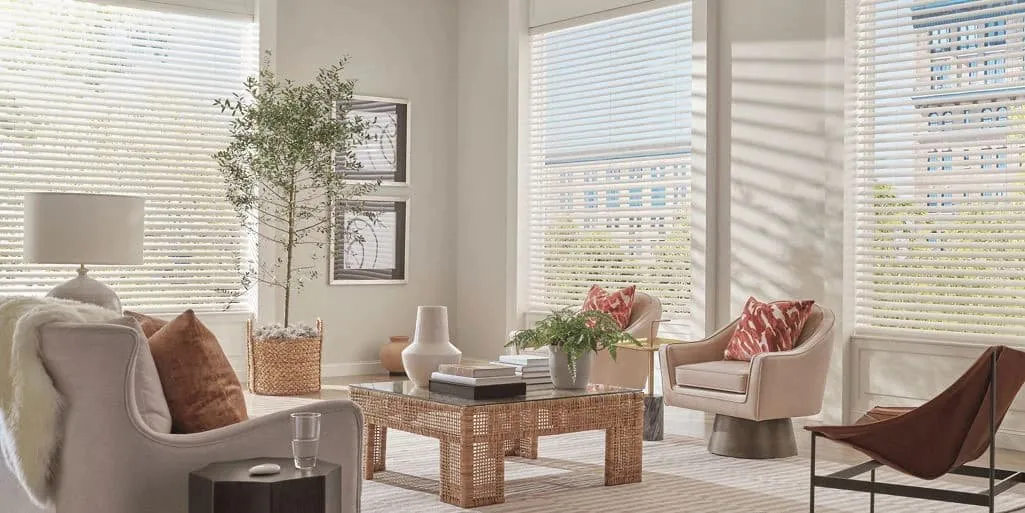
Wood, faux wood and metal slats for a tall row house window, and verticals for a condo slider.
Cellular shades
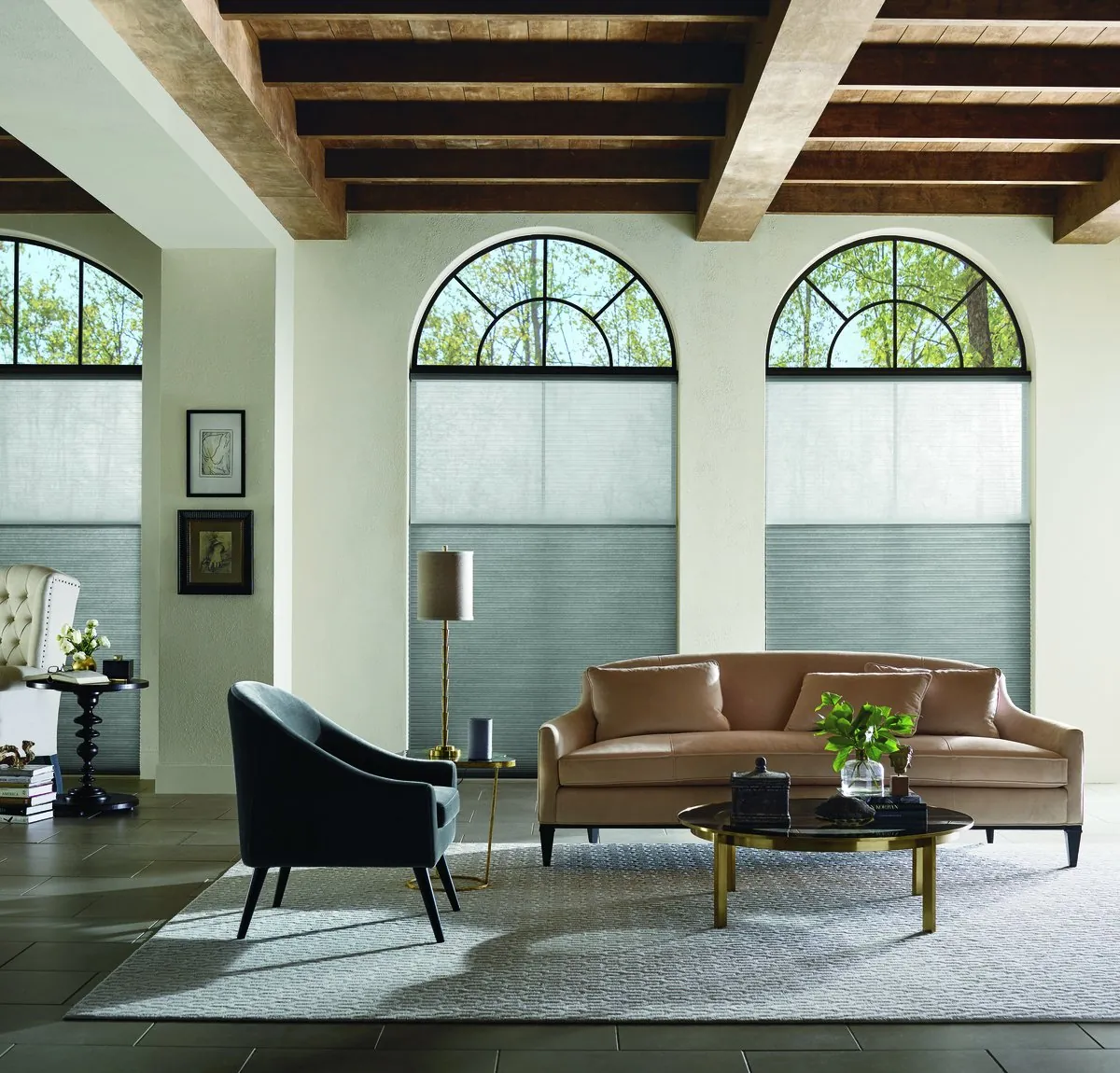
Duette and Applause honeycomb, whose cells hold a layer of air against cold glass in winter.
Roller shades
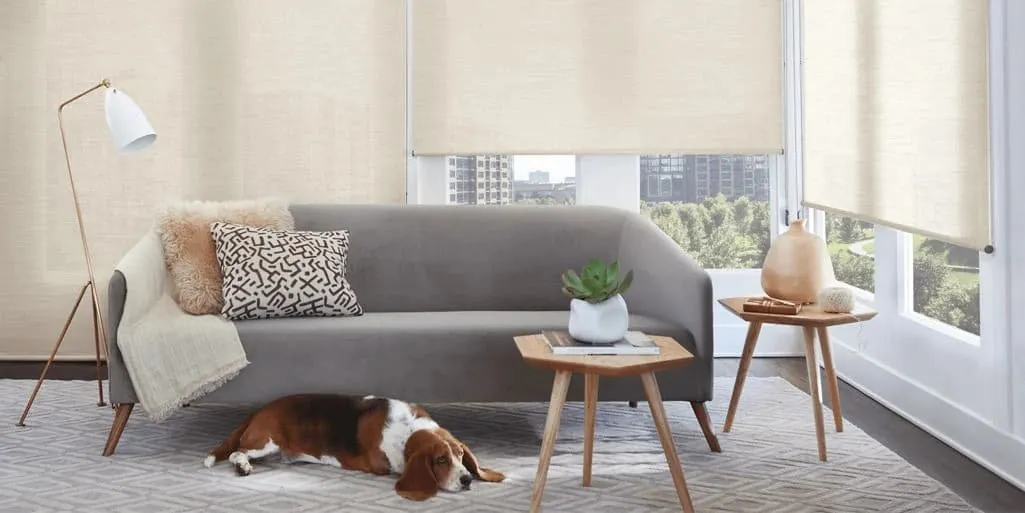
Designer and Alustra rollers and screens, chosen by how much skyline should stay visible.
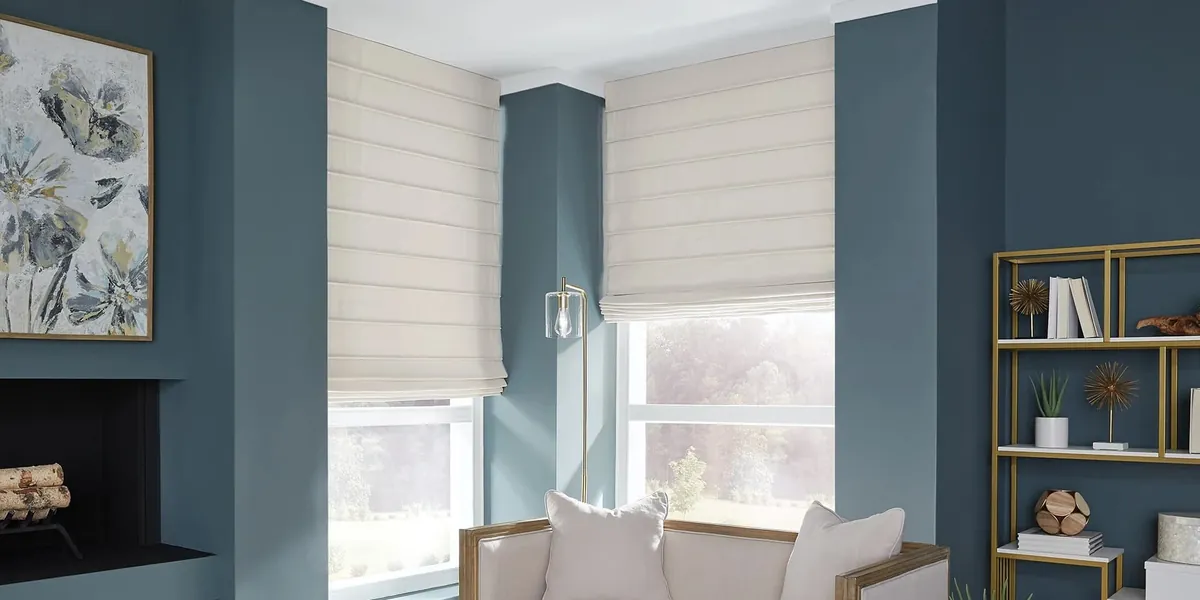
Roman shades
Vignette and Carole Fabrics folds, a soft finish on a parlor floor window.
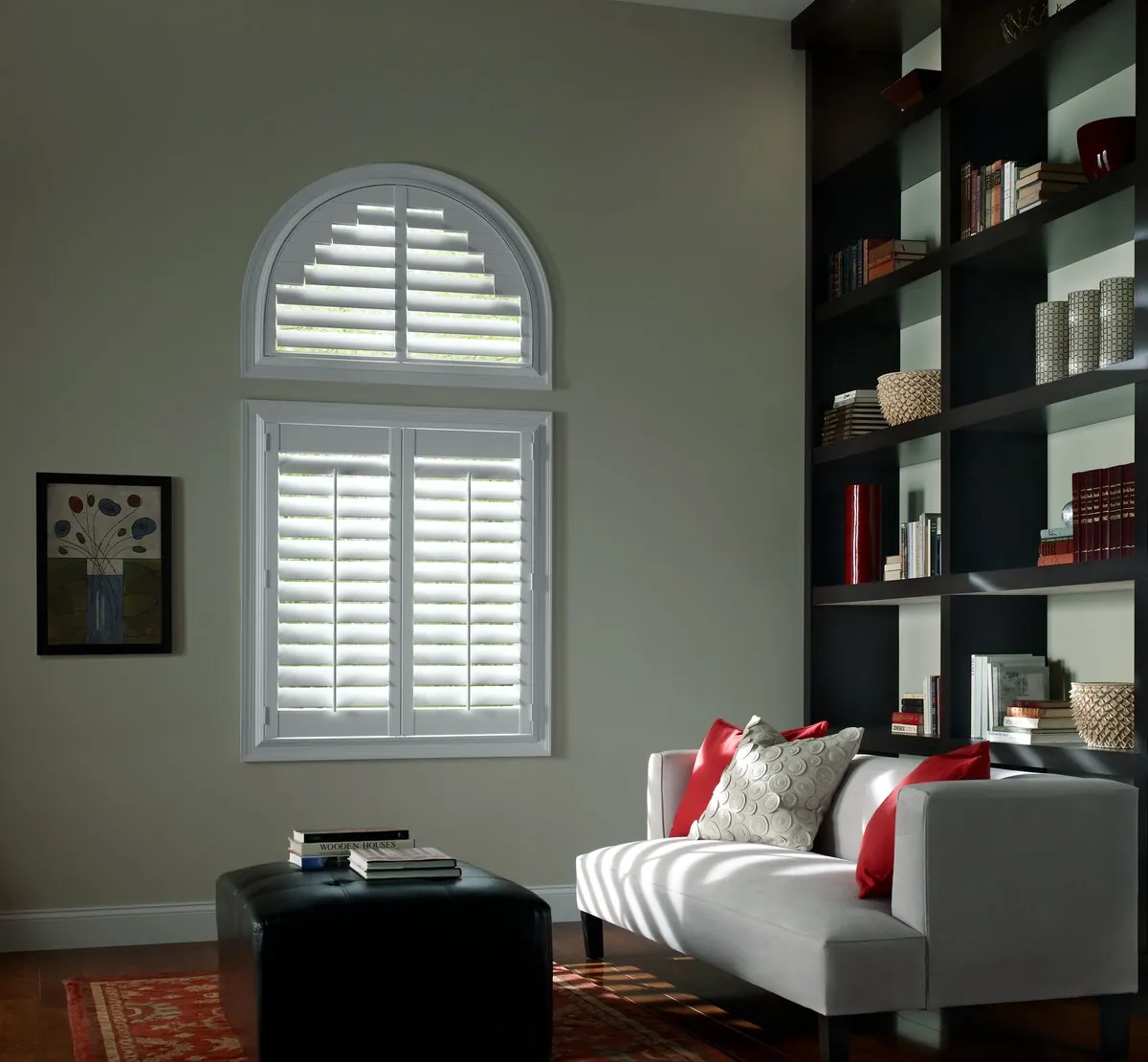
Plantation shutters
Palm Beach, NewStyle and Heritance shutters, sized to a tall sash and a deep reveal.
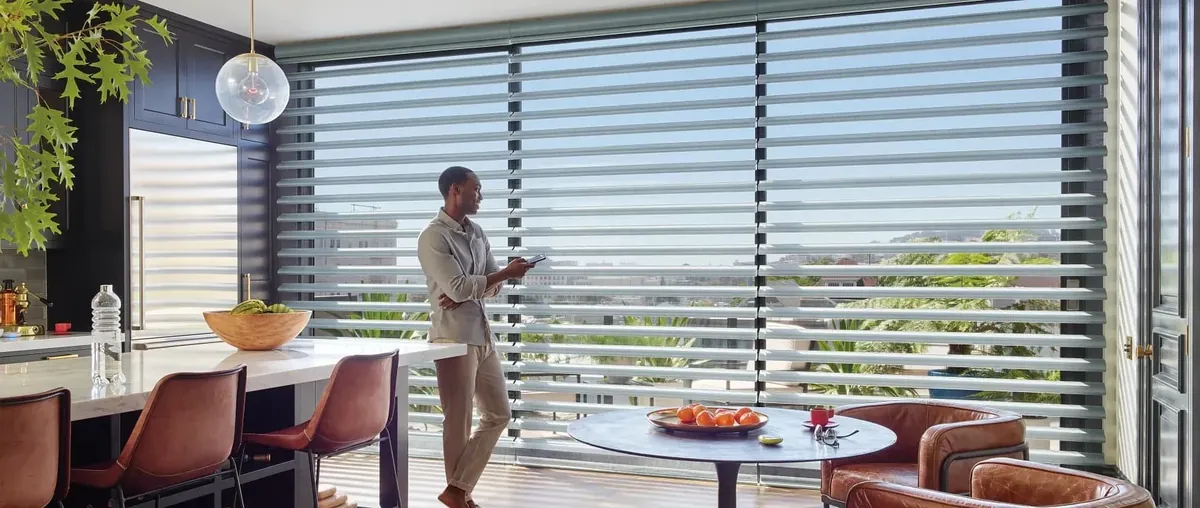
Motorized blinds and shades
PowerView moves a wall of shades together from a remote, the app or a set timetable.
Tall, narrow sash behind brick and brownstone
A typical row house window is much taller than it is wide, with a long lower sash, a long upper sash and a frame set well back into the wall. Those deep reveals are a gift. They leave room to mount a shade or shutter inside the opening, so the covering sits within the masonry and the original trim stays fully on show.
The proportions shape the choice. On a tall narrow window, a Roman shade or a cellular shade stacks into a neat band at the top when raised, and the long drop reads as one clean panel when lowered. Shutters suit these windows especially well, because the louvers can be tilted to let daylight in while the room stays private from the sidewalk. Our page on shutters for older windows explains more about fitting old frames.
Older frames are rarely perfectly square, and an old masonry building can settle unevenly over time. We look closely at each opening before suggesting an inside mount, and if a frame is too far out we will say so and suggest mounting over the trim instead.
Historic districts and the view from the street
Much of the Back Bay, Beacon Hill and the South End sits inside historic districts, where the face of a building is reviewed before it changes. Window coverings sit inside the glass, but they are still part of what the street sees, especially on a front facade lined with matching sash.
We cannot tell you what a review board will or will not accept, and we will never guess at it. What we can do is help you choose coverings that keep a facade looking calm: consistent colors across the front windows, shades that rest at matching heights, and fabrics in a quiet neutral where the street sees them. If your building or district has guidance on what shows from outside, bring it to the consultation and we will plan around it.
Inside, you have far more freedom. The garden level, the parlor floor and the bedrooms upstairs can each take a different look, as long as the front face stays composed.
Floor-to-ceiling glass in the new towers
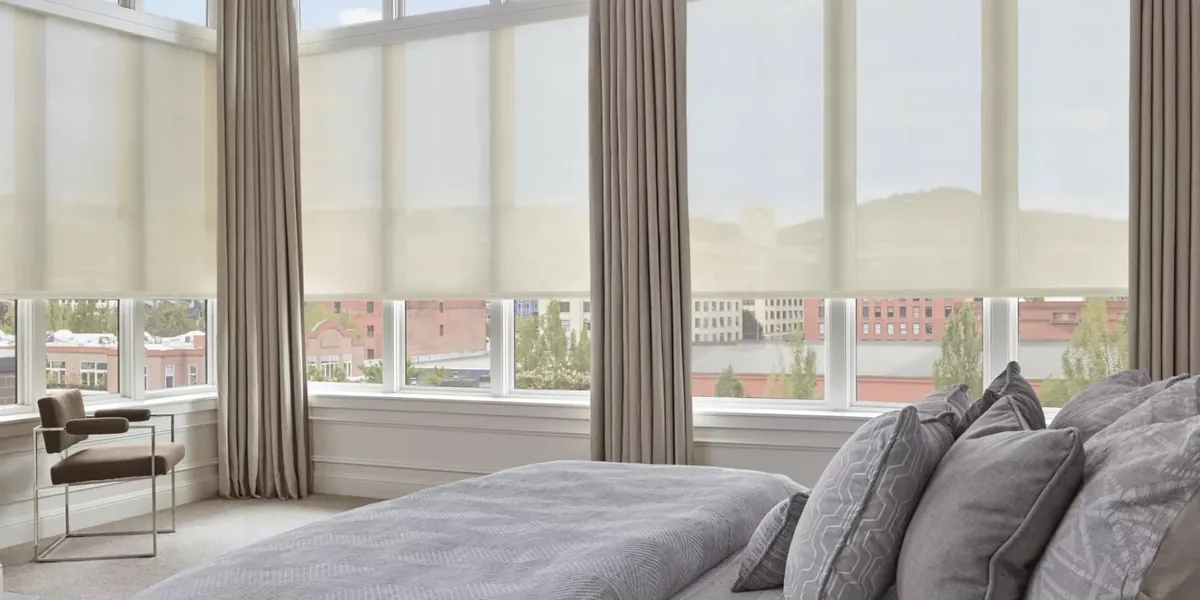
The new high-rise condominiums are the other extreme. Here a living room may have one or two walls made entirely of glass, from the floor to the ceiling, often facing the harbor, the river or the skyline. The light is constant, the glare can be fierce on a sunny afternoon, and at night a lit room becomes a display case for the building across the street.
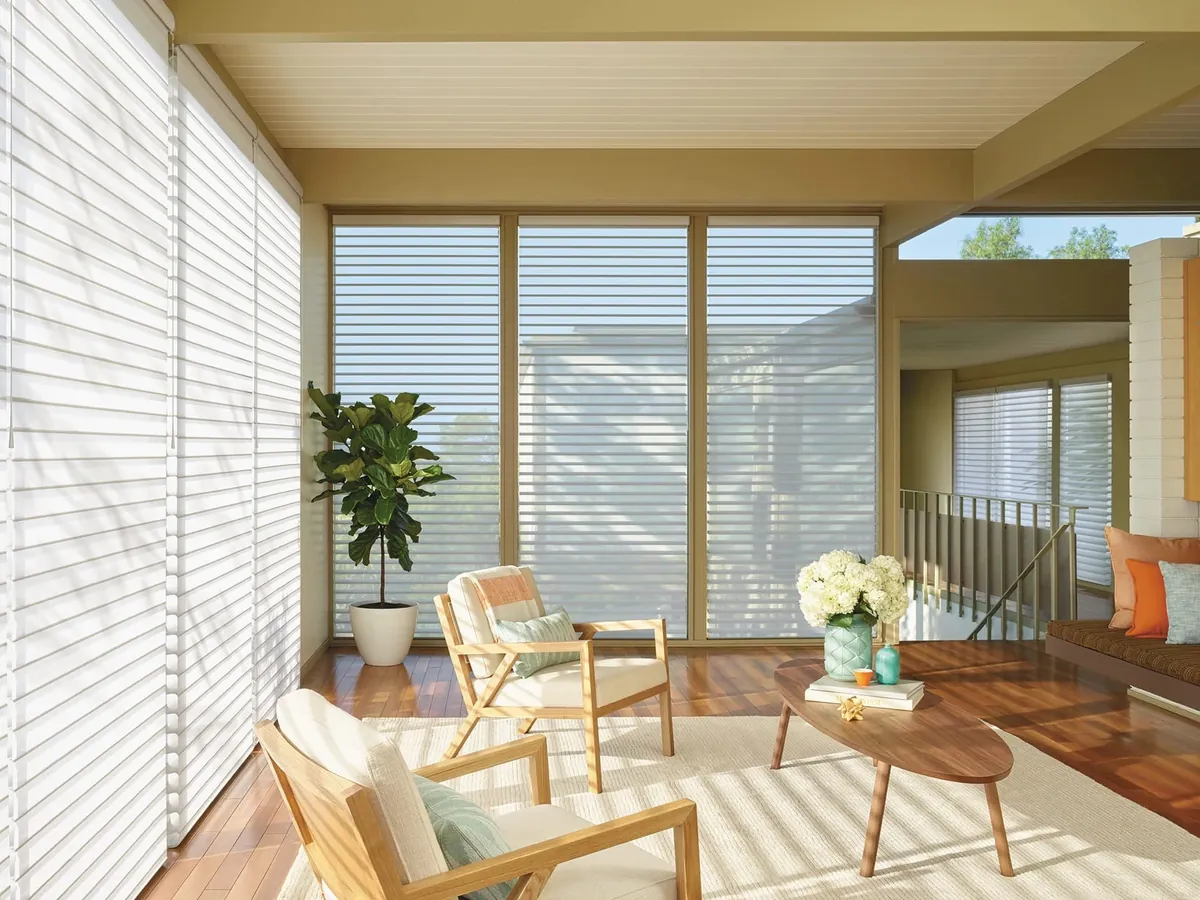
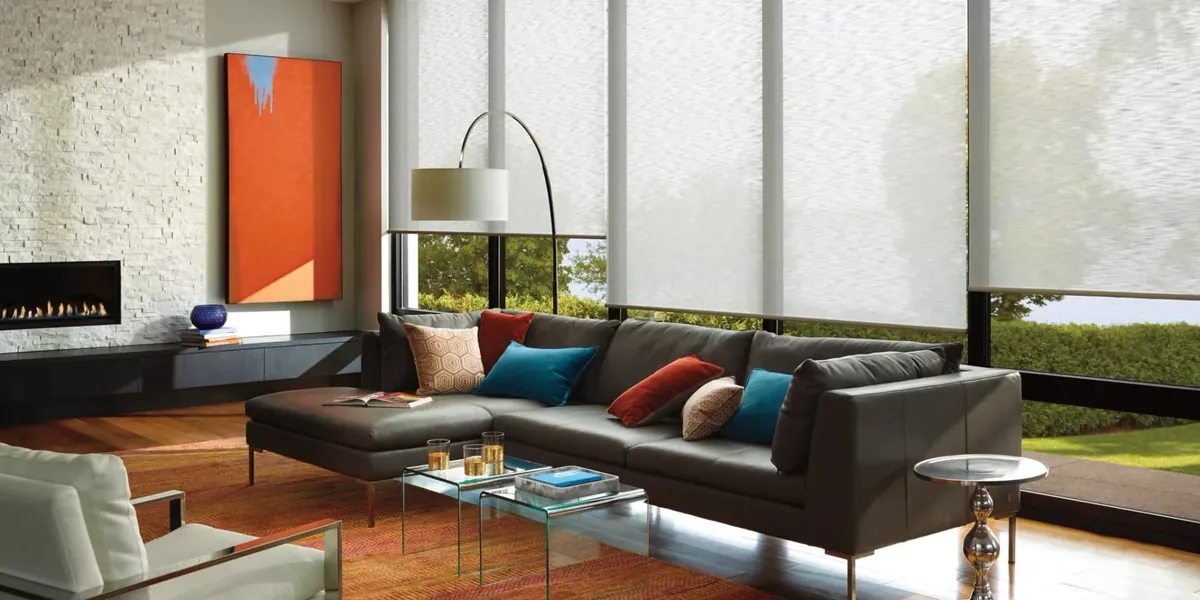
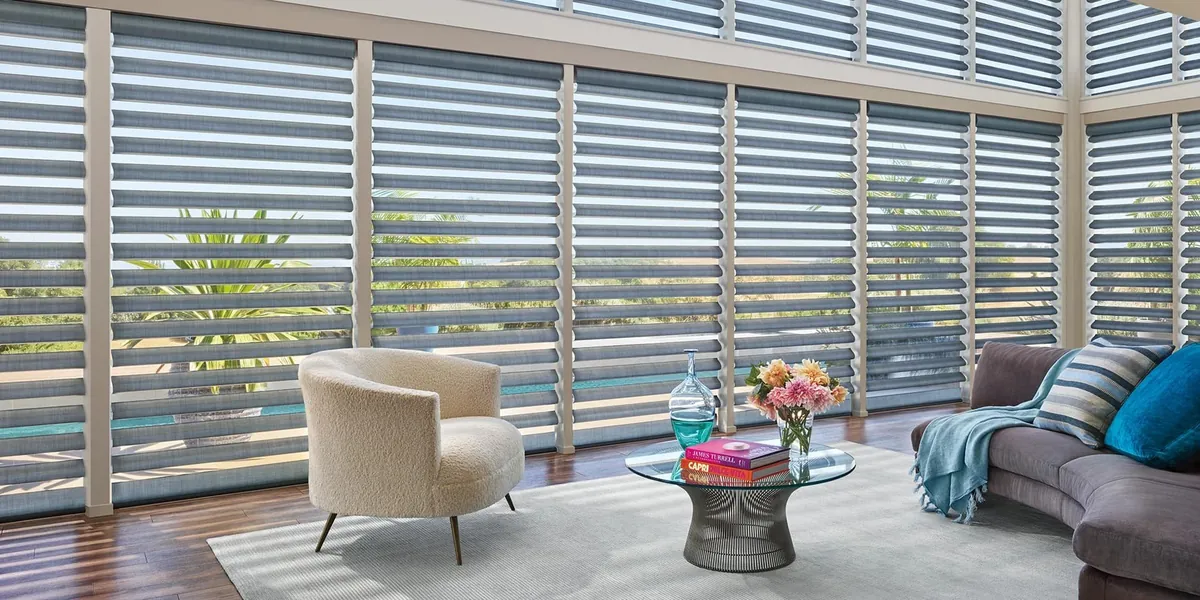
Screen shades are a common answer for the daytime, cutting glare while keeping the view legible through the weave. The more open the fabric, the more of the city you see. Sheer shades such as Silhouette add softness to a modern room, with fabric vanes that tilt for privacy, and Luminette’s vertical vanes work well on a tall run of glass or a balcony door. For evenings, a second, denser layer gives real privacy.
A Hunter Douglas dealer in Boston, MA should also think about scale. A run of glass that wide may need several shades side by side, and they should line up perfectly, rest at the same height and move together. That is where PowerView comes in, letting a whole wall rise or fall as one. Our page on the best shades for sun and glare goes further into fabric openness.
Privacy after dark, at street level and up high
City living makes night-time privacy a concern in both kinds of home, for different reasons. In a row house, the parlor floor and garden level sit close to the sidewalk, and passers-by are a few feet from the glass. In a tower, a lit apartment is visible from neighboring buildings at the same height.
For the row house, shutters and layered shades let you keep daylight in by day and close the room fully at night. A shade that can be lowered over the whole window, with drapery in front, gives a parlor room both privacy and warmth. For the condo, the answer is often a pair: a screen or sheer for the day, plus a room-darkening shade behind or beside it for night. We bring both kinds to the visit so you can try them in your own space after the sun goes down if you wish.
Bedrooms, streetlight and the early sun
City bedrooms have a problem country bedrooms rarely do: the light never fully goes away. Streetlamps outside a row house shine straight into a second-floor bedroom, and the glow of the city reaches even a high condo floor. In summer the sun rises early, and an east-facing tower bedroom can be bright well before anyone wants to be awake.
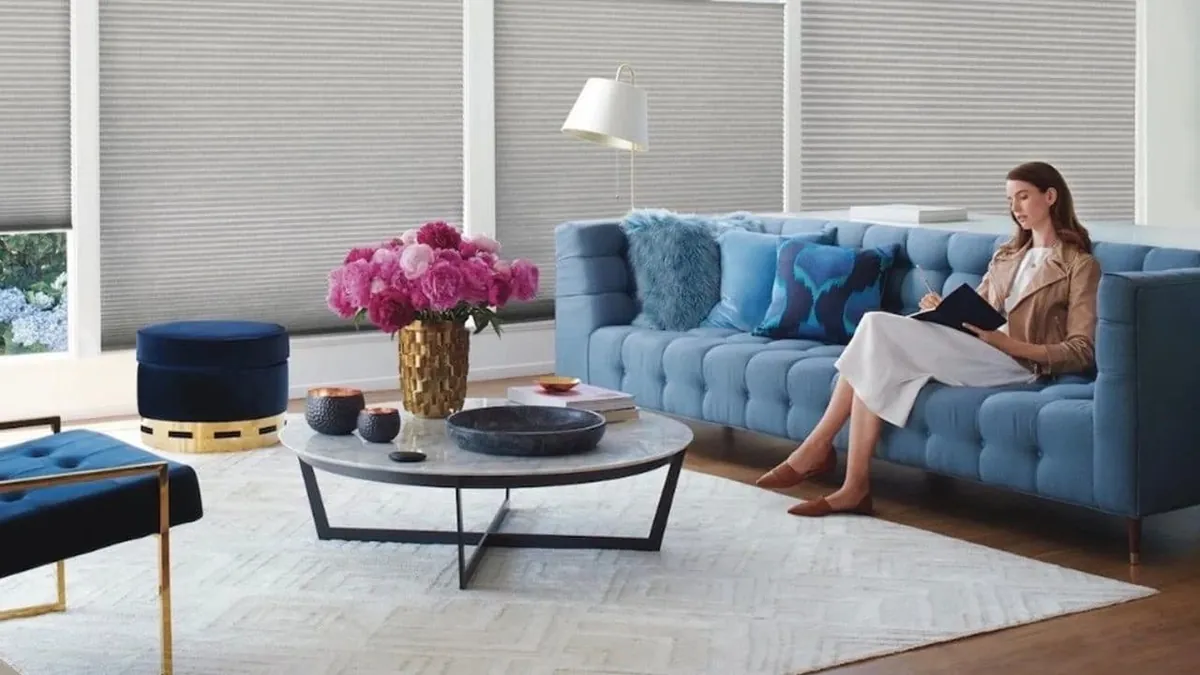
For sleep, a denser fabric that covers the whole glass makes the biggest difference. A cellular shade in a darker fabric fits neatly inside a brownstone’s deep reveal and closes the window off cleanly. In a condo, a roller in a dense fabric can sit behind a sheer, so the bedroom keeps a soft look by day and goes dark at night. Where a bedroom window is very tall, PowerView means nobody has to climb to adjust it.
We bring examples of each, so you can hold them up to the bedroom window and judge how much light gets past at the edges.
Parlor floors, high ceilings and drapery
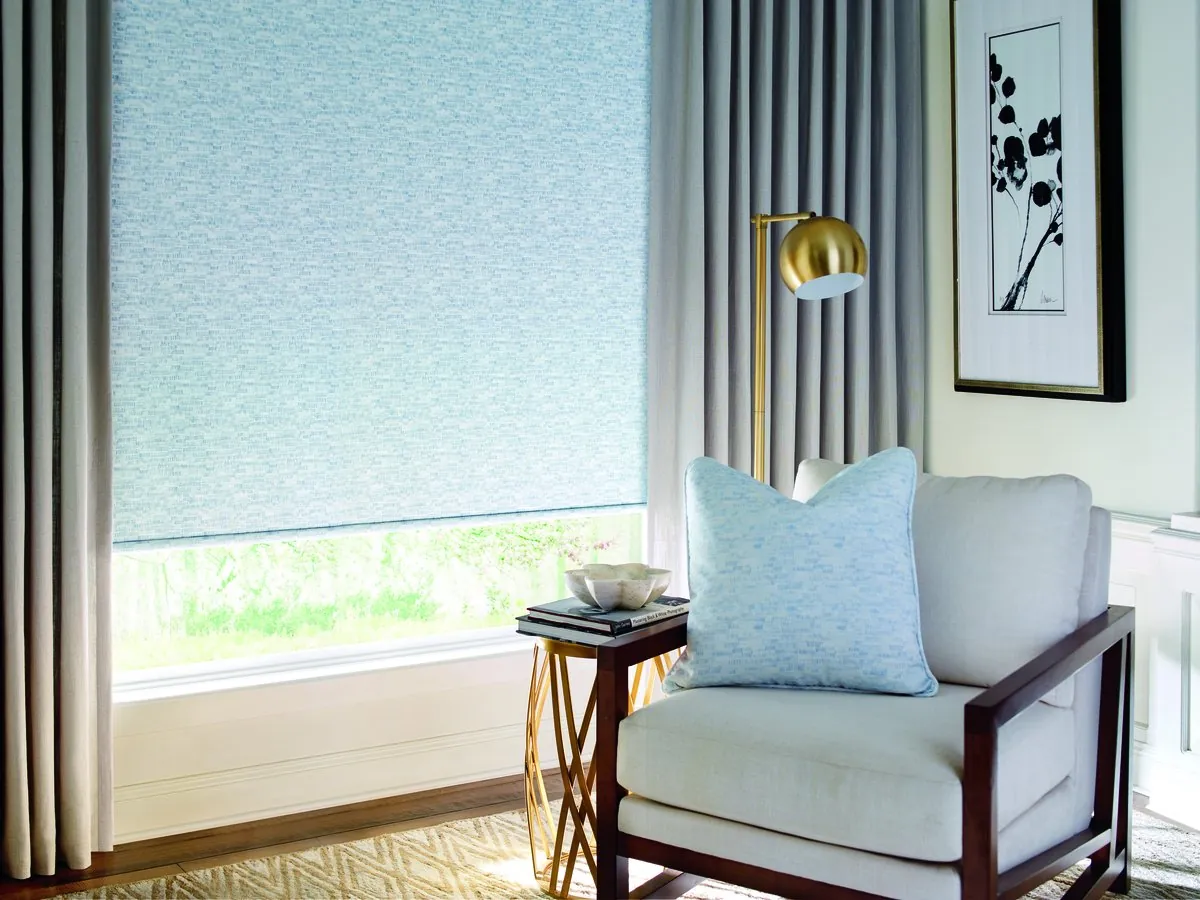
The parlor floor of a brownstone is usually the grandest level in the house, with the tallest windows, the most formal proportions and ceiling heights that call for drapery. A shade on its own can look thin in a room of that scale.
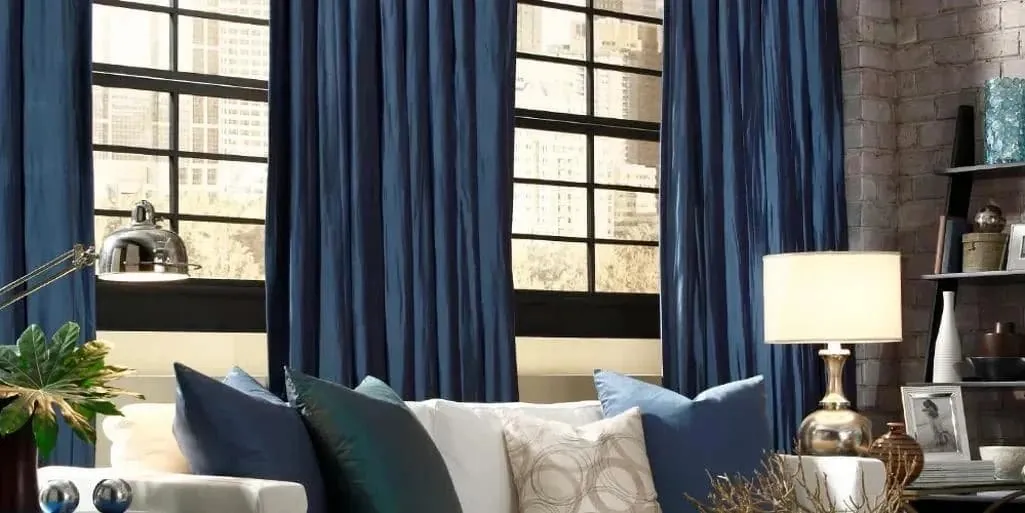
Blinds & Designs supplies Hunter Douglas drapery as well as shades, so both layers are chosen together. A Roman shade or sheer shade inside the deep reveal handles daylight and privacy, and full-length panels hung high above the frame bring the eye up and frame the window. Planned at the same time, the colors and mounting heights work together, and the panels clear the shade when it is raised.
The upper floors often have lower ceilings and simpler windows. Bedrooms there may need darkness more than formality, and we plan them that way.
Planning a row house floor by floor
A single row house can hold four or five floors, each with its own character. The garden level sits at or just below the sidewalk. The parlor floor is formal. The upper floors are bedrooms, studies and baths, and the top floor may have a skylight or a roof deck door.
Rather than treating each floor as a separate project, we walk the whole house with you and plan it as one. That keeps the front facade consistent, which matters on a historic street, and lets each floor take the product that suits it. A garden-level window close to the sidewalk might want shutters for privacy; a top-floor bedroom might want a cellular shade for darkness; a stair window between floors might be easiest to manage with PowerView.
Stair halls deserve a mention of their own. In many row houses a tall window lights the stair between floors, out of easy reach from any landing. A Hunter Douglas dealer in Boston, MA has a few good answers for it: a PowerView shade that moves at the touch of a button, a shutter that can be set once and left, or a sheer that softens the light without ever needing to move. We look at the stair with you and suggest whichever suits how you use it.
For condominium owners, the same principle applies on one level. An open-plan living room, a bedroom and a home office may face different directions and need different things, yet the unit should look like one home.
Garden levels and windows at the sidewalk
The garden level of a row house is its own small world. Its windows sit at or just below the sidewalk, so the view out is often of railings, steps and passing feet, and the view in is all too easy for anyone walking by. These rooms are frequently kitchens, family rooms or guest suites, and they need both daylight and privacy at the same time.
Shutters are a strong choice here, because the louvers can be angled upward to admit sky light while blocking the line of sight from the street. Sheer shades and light-filtering cellular shades are softer alternatives that keep the room bright without leaving it exposed. As a Hunter Douglas dealer in Boston, MA, we plan these windows with the floors above in mind, so the front of the building reads as one design from the sidewalk.
Condominium buildings and their guidance
Many of the new towers, and plenty of converted older buildings, have their own guidance on what can show from outside. Some prefer a uniform color facing out across the building. If yours has such guidance, bring a copy to the consultation. We plan the choices around it, keeping the outward face consistent while you choose freely on the inside. Working with a Hunter Douglas dealer in Boston, MA who knows the whole range makes that easier, because there is almost always a fabric in the right color in the line that suits the room. The same goes for older buildings converted into condominiums, where tall original sash sits behind a shared front door. Those units often combine the narrow brownstone window with the building rules of a modern tower, and we plan for both at once.
A Gallery dealer for city homes
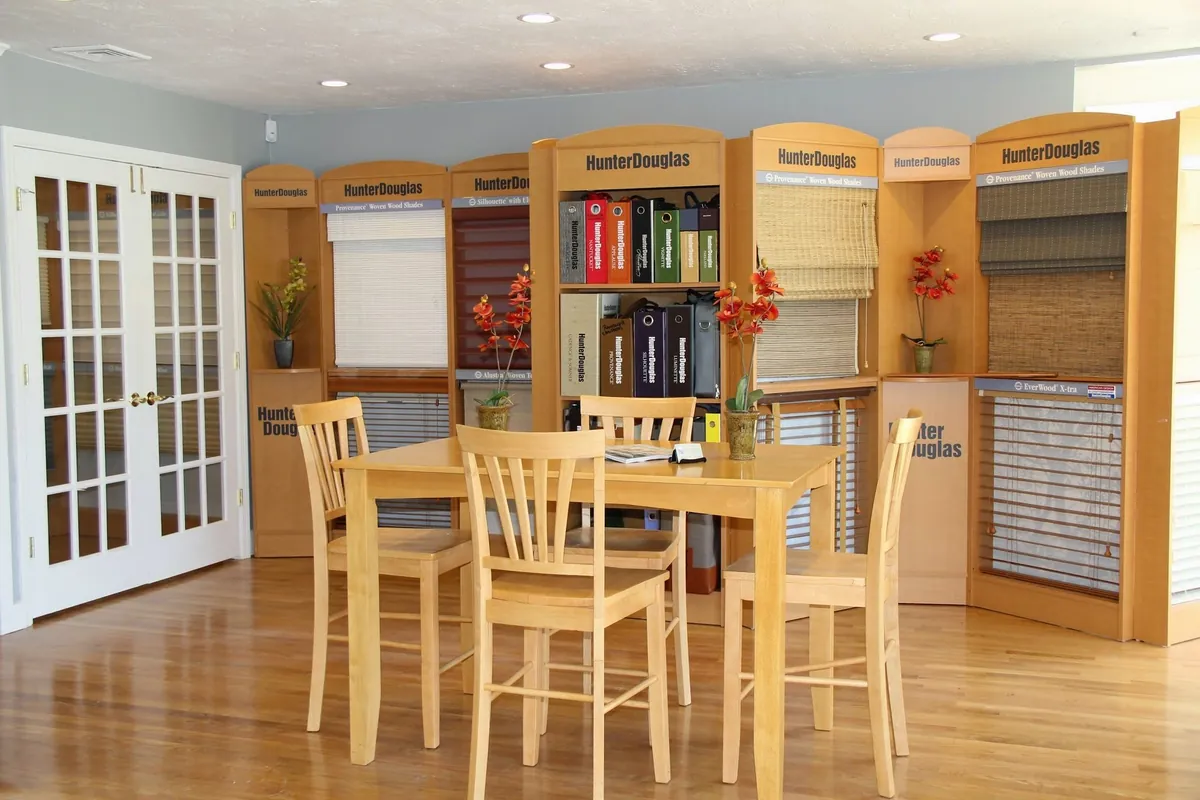
Blinds & Designs is a Hunter Douglas Gallery dealer with certified Hunter Douglas installation. In a city home, one visit puts the whole catalog within reach, from honeycomb and screen shades to shutters, blinds in every material, drapery and PowerView.
That breadth matters when one house runs from a historic parlor to a modern kitchen. Browse ahead in the Hunter Douglas catalog, or see how we work with the brand on our main Hunter Douglas page.
Need help with a whole room? Ask about interior design consultations. Got an old shade that has stopped working? We do blind and shade repair too.
How a city consultation works
Boston is served from our Canton shop-at-home territory, so we come to your door rather than asking you to travel. This is how a visit usually goes.
- Samples arrive at your door with us, since we bring the showroom to you.
- You tell us which rooms or floors come first and what is wrong with them today, whether it is glare across a condo living room or a bare parlor window facing the street.
- Swatches, slats and louvers are tried in each window in its real light, deep masonry reveals included.
- If drapery is part of the plan, we look at it alongside the shades.
- We measure every window in the plan.
- You receive a free estimate covering products and certified installation, with time to decide.
Read more on our in-home consultations and free estimates pages, or see what happens at an in-home consultation for the full picture.

PowerView for tall sash and long walls of glass
Two things make motorization especially useful in Boston homes: the height of a brownstone’s sash and the width of a condo’s glass. A shade at the top of a parlor window can be hard to reach, and a wall of six or eight shades is slow to adjust one by one.
PowerView lets you raise and lower shades from a remote or the PowerView app, or set a schedule so they move at the times you choose. A whole wall can move as one, and different rooms can follow different schedules. We plan how each motor is powered at the visit. The page on how motorized shades are controlled covers the controls in more depth.
At home first, Franklin when you want a showroom
Boston belongs to our Canton shop-at-home territory, which means the samples come to you. Read how it works on the Canton shop-at-home page.
For a look at products in a showroom, Franklin is our closest; find it on the Franklin showroom page.
All of our services for the city are gathered on the Boston page.
Questions from Boston
Can shades mount inside a deep brownstone reveal?
Usually, yes. Deep masonry reveals leave room for an inside mount, which keeps the original trim on show. We look closely at older frames first, because they are not always square.
Will coverings affect a historic district review?
We cannot speak for a review board. We can help you keep the street face consistent, with matching colors and heights, and plan around any guidance your building or district gives you.
What works on a wall of floor-to-ceiling glass?
Screen shades and sheer shades are common choices for daytime glare and view, often with a denser layer for privacy at night. PowerView lets the whole wall move together.
Can you plan a whole row house at once?
Yes. We walk every floor with you and plan the house as one, so the front windows match and each room gets the product that suits it.
Do you charge for the estimate?
No. The estimate for products and certified installation is free.
Your next move
Whether it is a parlor window on a historic street or a wall of glass high above the city, the way to start is to request a consultation. We bring the samples to your home, measure every window and leave a free estimate. If you have a question first, the call button at the top of the page reaches our Canton team.