
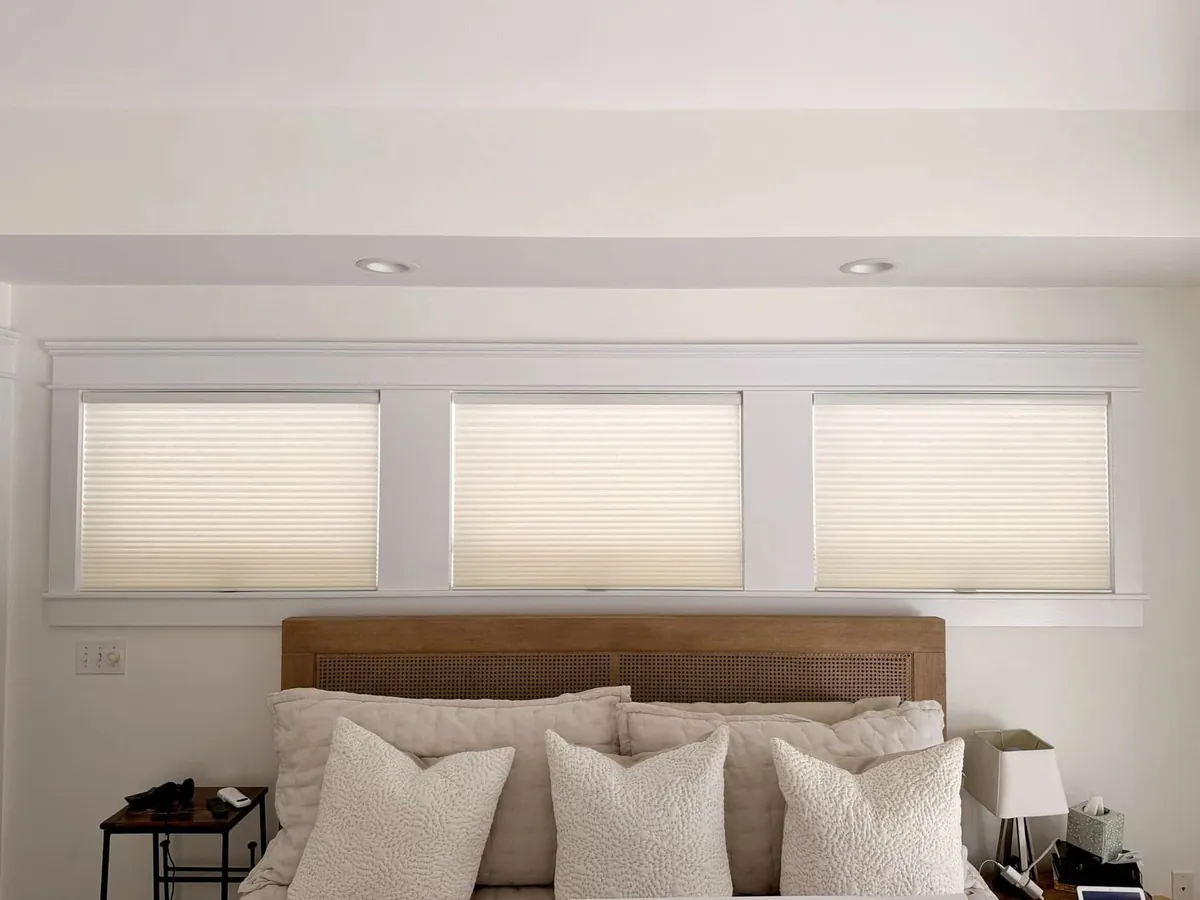
Small old openings, made to measure
Drive Main Street or follow the Acushnet River north and the houses tell you how the town grew. The oldest are farmhouses and capes, set well back on wide lots, with small original windows that were sized by the carpenter on site rather than ordered from a catalog. Between them sit the post-war ranches that filled in the open land. Planning window treatments in Acushnet, MA, starts with that mix, because a shade bought off a shelf rarely fits either kind of house well.
The older openings are the hard part. A farmhouse bedroom might have four windows that look the same and measure differently at every corner. A cape’s front room can have sash so narrow that a stock blind would hang past the trim on both sides. So nearly everything we fit in town is made to the exact size of the opening it goes into, and that is how Hunter Douglas products are built anyway.
The low density helps in one way: plenty of rooms have no neighbor in sight. Privacy matters most on the windows facing the road.
Window treatments in Acushnet, MA, service by service
Each card leads to a separate Acushnet page with the detail. Start from the room that bothers you most, or let one visit cover the house.
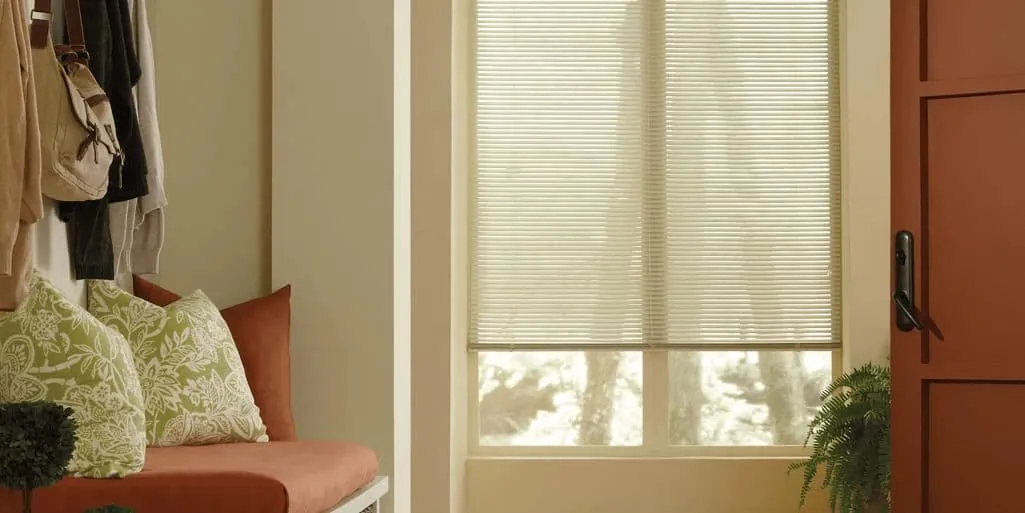
Blinds cut to the opening
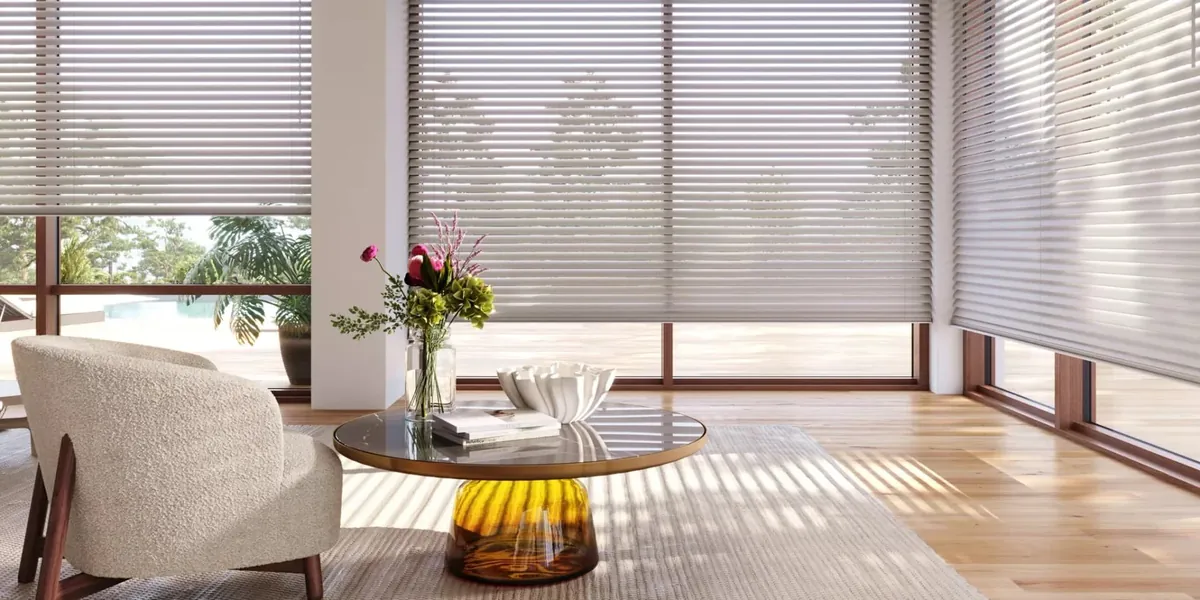
Slats in real wood, faux wood or metal, plus verticals for a slider, each sized for a narrow farmhouse window or a wide ranch kitchen.
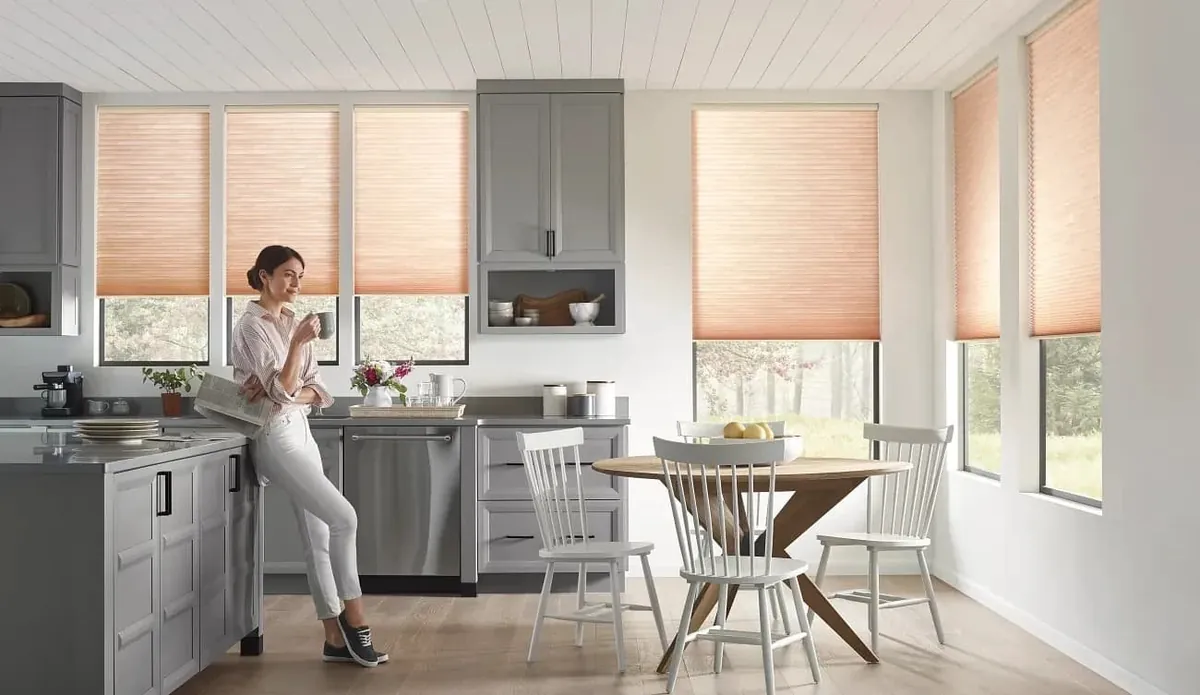
Honeycomb shades
Duette and Applause cells trap a layer of air against old single glass, which is why a drafty cape room feels warmer behind them.
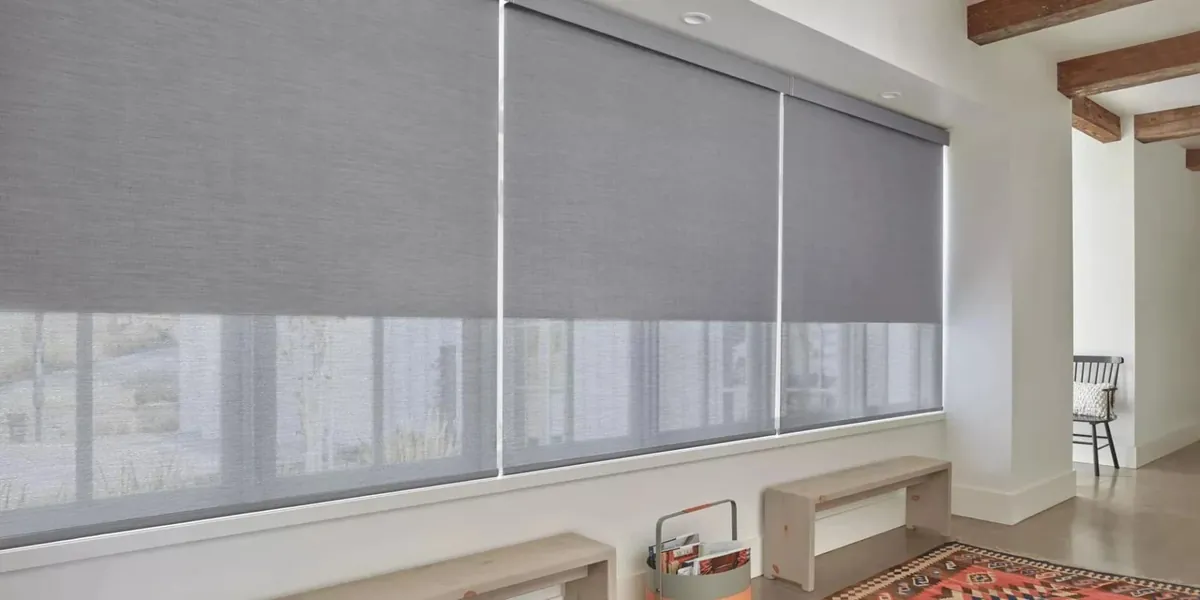
Roller and screen shades
Slim Designer rollers and Alustra fabrics, with screen weaves picked by how much of the yard you want to keep in view.
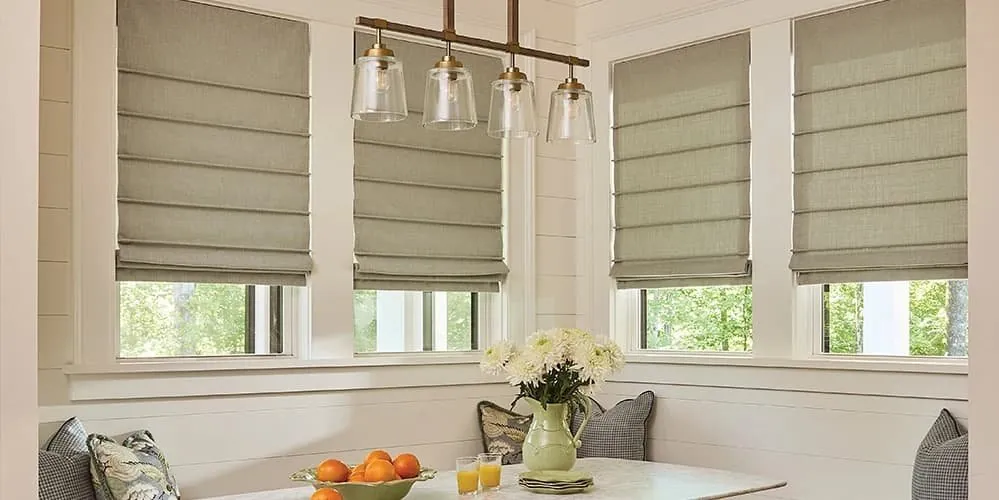
Romans for the front room
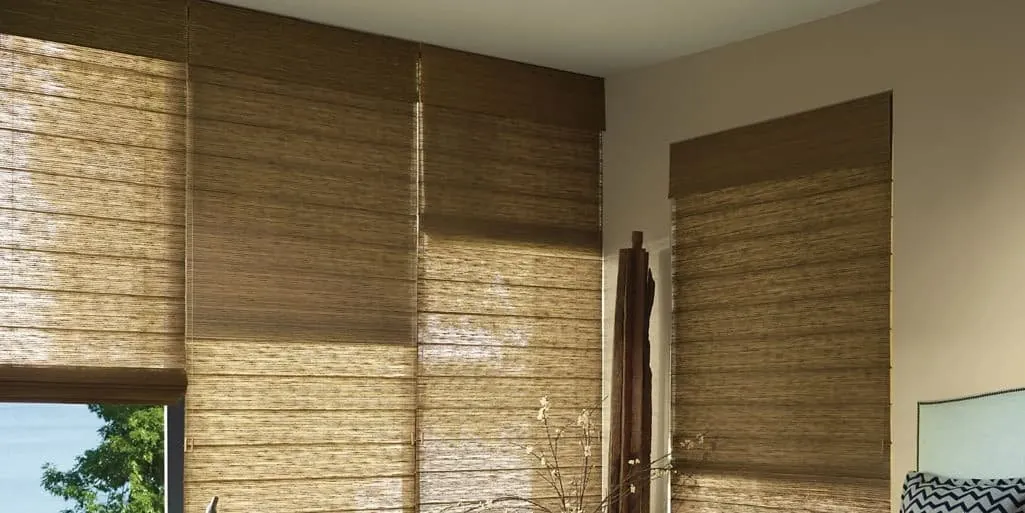
Vignette or Carole Fabrics, flat-folded or looped, a gentle fabric for a farmhouse parlor that still stacks neatly on a small cape window.
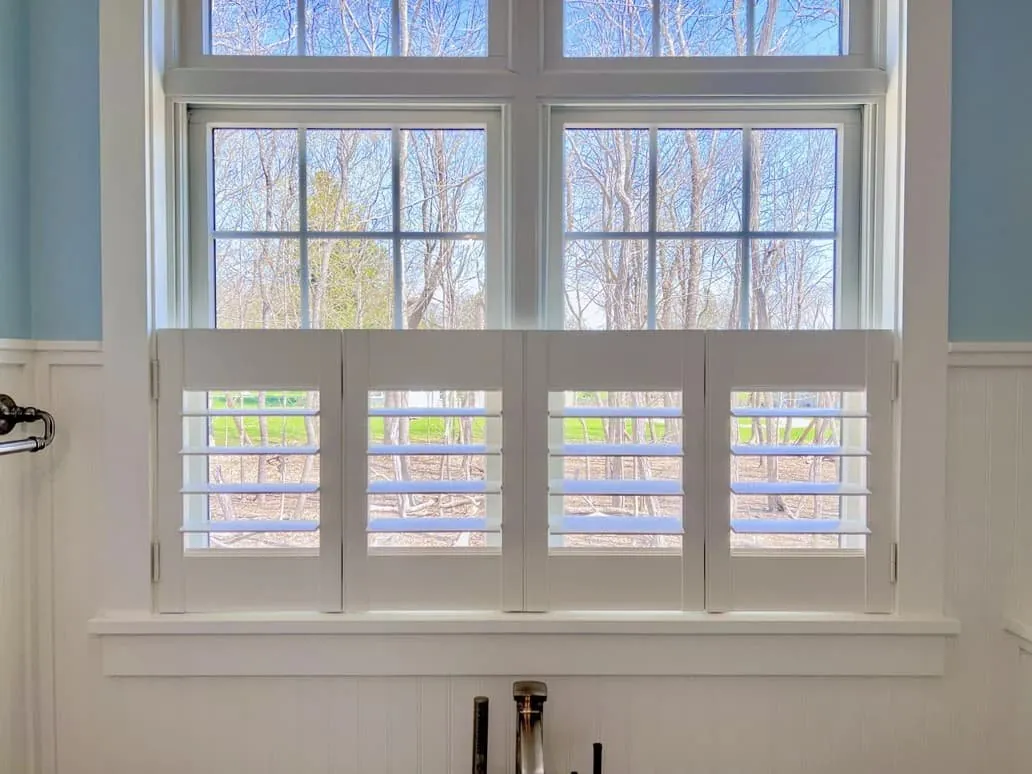
Plantation shutters
Shutters from the Palm Beach, NewStyle or Heritance lines, louver width and frame matched to an old casing or a plain ranch opening.
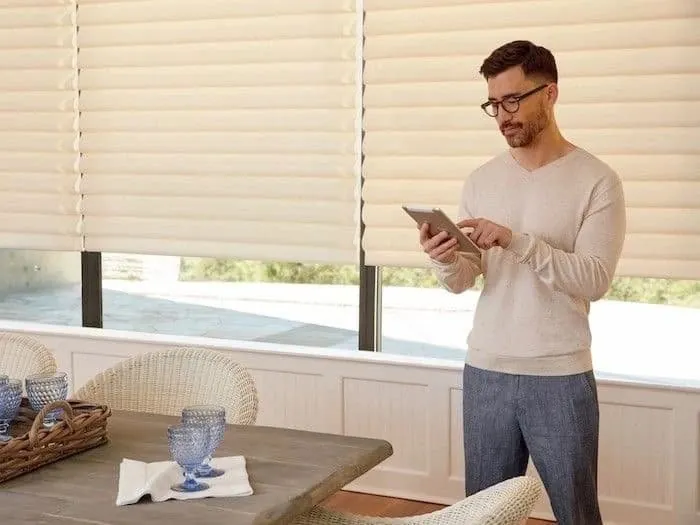
Motorized shades
PowerView moves a shade from a handheld remote, your phone or a timed scene, handy on a window above a stair or a deep sink.
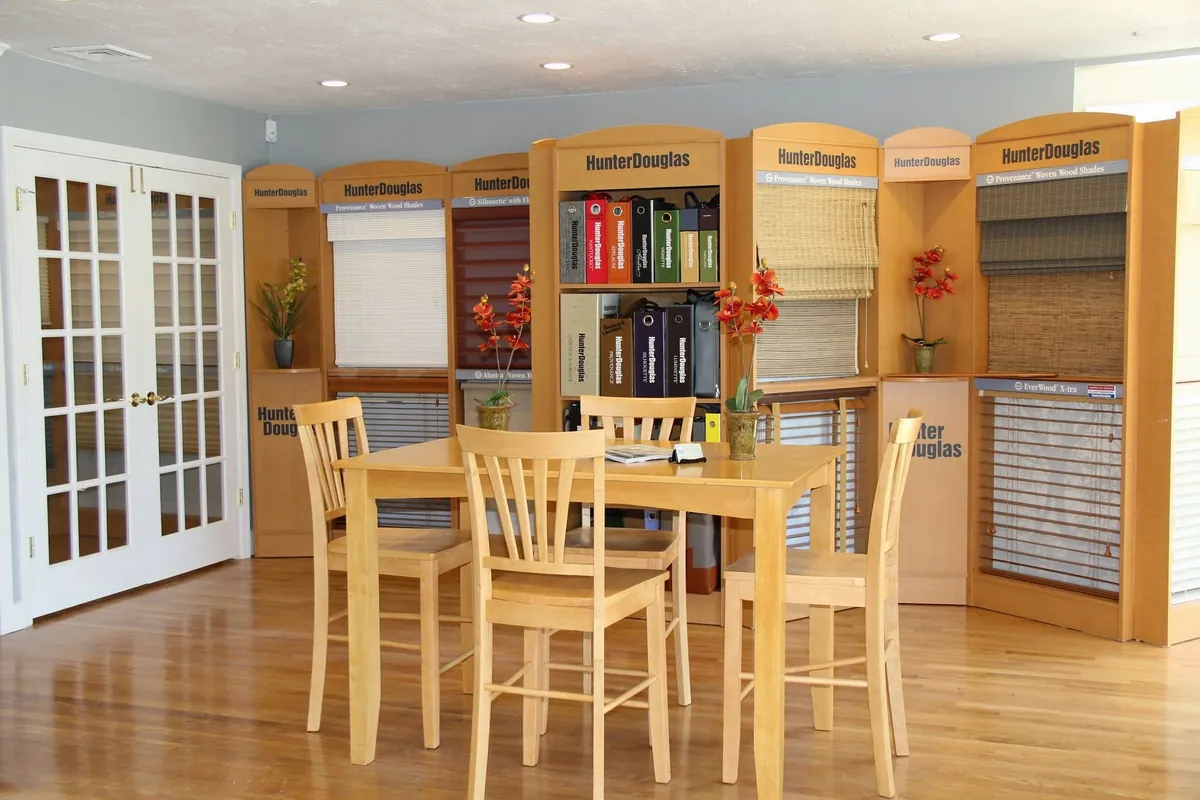
A Gallery dealer nearby
Every Hunter Douglas line through one Gallery dealer, with certified Hunter Douglas installation on each order.
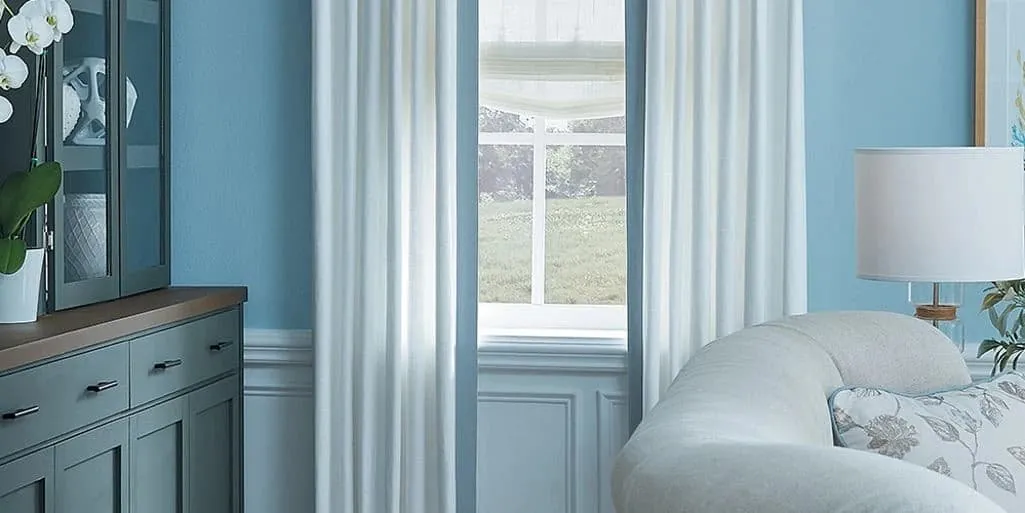
Drapery panels
Hunter Douglas drapery to soften a formal room, often hung above a shade so the window keeps its working layer.
Why an old window needs a made-to-size treatment
A farmhouse window that has been in its frame for well over a century has moved with the house. The head may have dropped on one side. The sill may slope toward the room. The opening can be a touch wider at the top than at the bottom, and none of that shows until a straight headrail is held up against it.
A stock blind assumes a square hole of a standard width. Put one into a window like that and you get a gap at one edge, a slat that rubs at the other, and a bottom rail that never sits level with the sill. Made-to-size shades and shutters avoid the problem because they are built from measurements taken at your window, not from a size chart.
That is also why we measure the width in several places and the height at both sides before anything is ordered. The smallest figure decides an inside mount, so the shade clears the tightest point. Where the opening is badly out of square, a mount on the trim itself usually looks better, because the shade then hides the variation instead of outlining it.
Small windows bring one more question: how much of the glass the stack covers when the shade is up. On a short cape window a bulky stack can block a third of the view. Cellular and roller fabrics gather into a slim band at the head, and a roman can be set to pull up above the glass line when the frame allows.
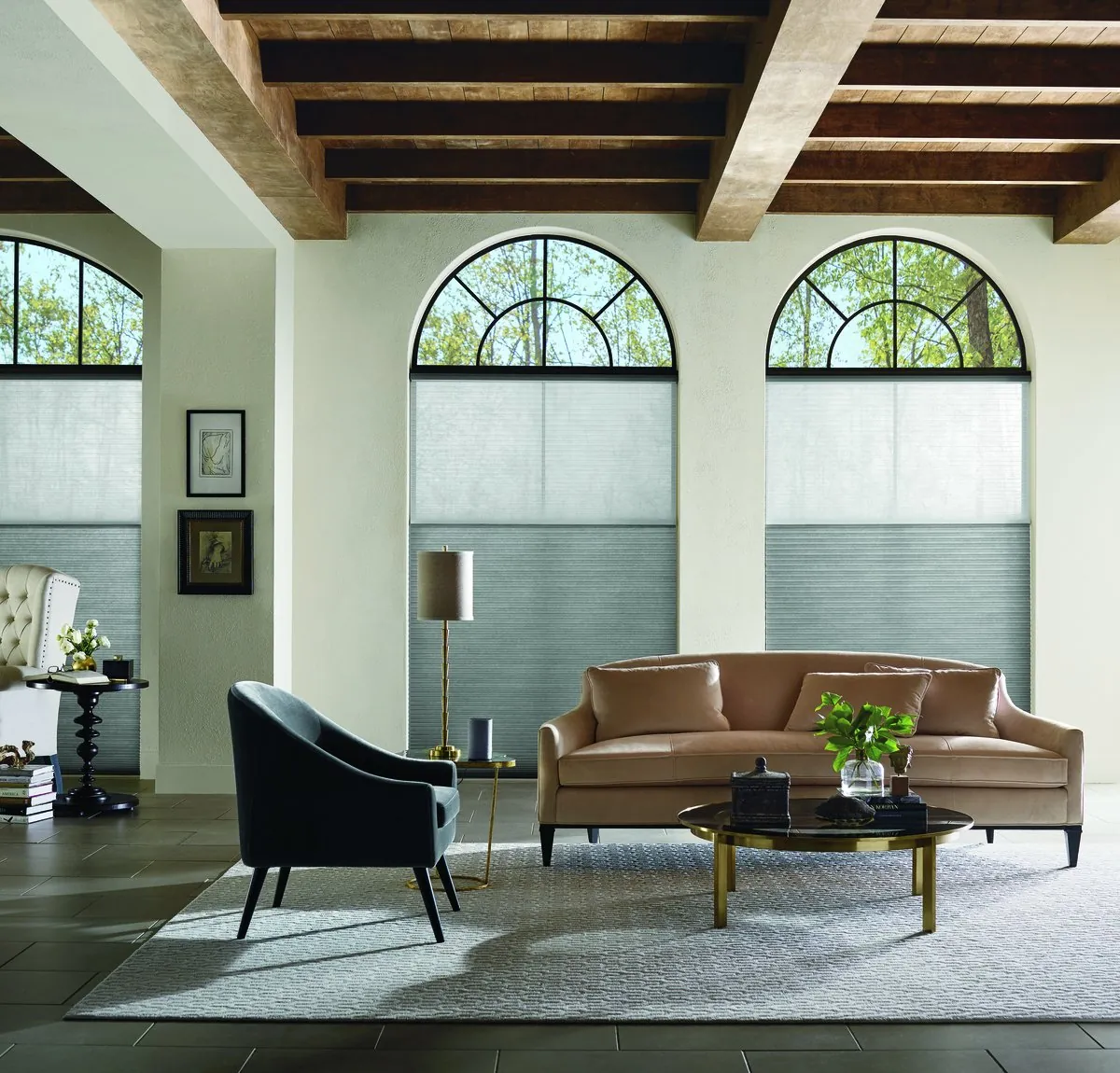
Farmhouses along the river
The farmhouses near the Acushnet River were built for a working life, and the windows show it. They are modest, evenly spaced and placed for light and air rather than for a view. Walls are often thick, so the sash sits back in a deep reveal, and the old wood trim around it is worth keeping on show.
Inside mounts suit these openings well when the depth is there. A honeycomb shade tucks into the reveal and leaves the trim clear. A slim-framed shutter fits the reveal too, and on a farmhouse it seems to have been part of the building all along. Wood blinds in a warm stain pick up the tone of old floors and doors.
Many of these houses have been added on to over the years, so one floor can hold a nineteenth-century front room, a later kitchen ell and a modern family room at the back. We plan each part on its own terms and then keep a few things the same, such as the color facing the glass, so the outside still looks like one house.
Rooms on the river side can be bright in the afternoon. A light-filtering fabric softens that sun without turning the room dim, and a shade that lowers from its head rail covers the upper glass against the glare while the lower panes stay clear.
Capes on Main Street
A cape packs a lot of window problems into a small house. Downstairs, the front windows sit close to the road and want privacy. Upstairs, the rooms tuck under the roof, with dormer windows set into short knee walls and sometimes a gable window that is a different shape from everything else.
Dormers are the classic challenge. The window is small and deep, the walls on either side are close, and there is little room for a stack or for drapery to draw back. A shade mounted inside the dormer opening is usually the answer: cellular for warmth in a room that runs cold in winter, or a room-darkening roller where a child sleeps.
Downstairs, plantation shutters are a strong choice for a cape’s front rooms. Angle the louvers up and the passer-by sees ceiling while the room still gets its daylight. A cafe-style shutter on the lower sash only is another option, leaving the upper glass bare.
Cape kitchens are often small, with one window over the sink. A faux wood blind or a roller in a wipeable fabric copes with steam and splashes, and a cordless lift keeps the window easy to reach across a counter.
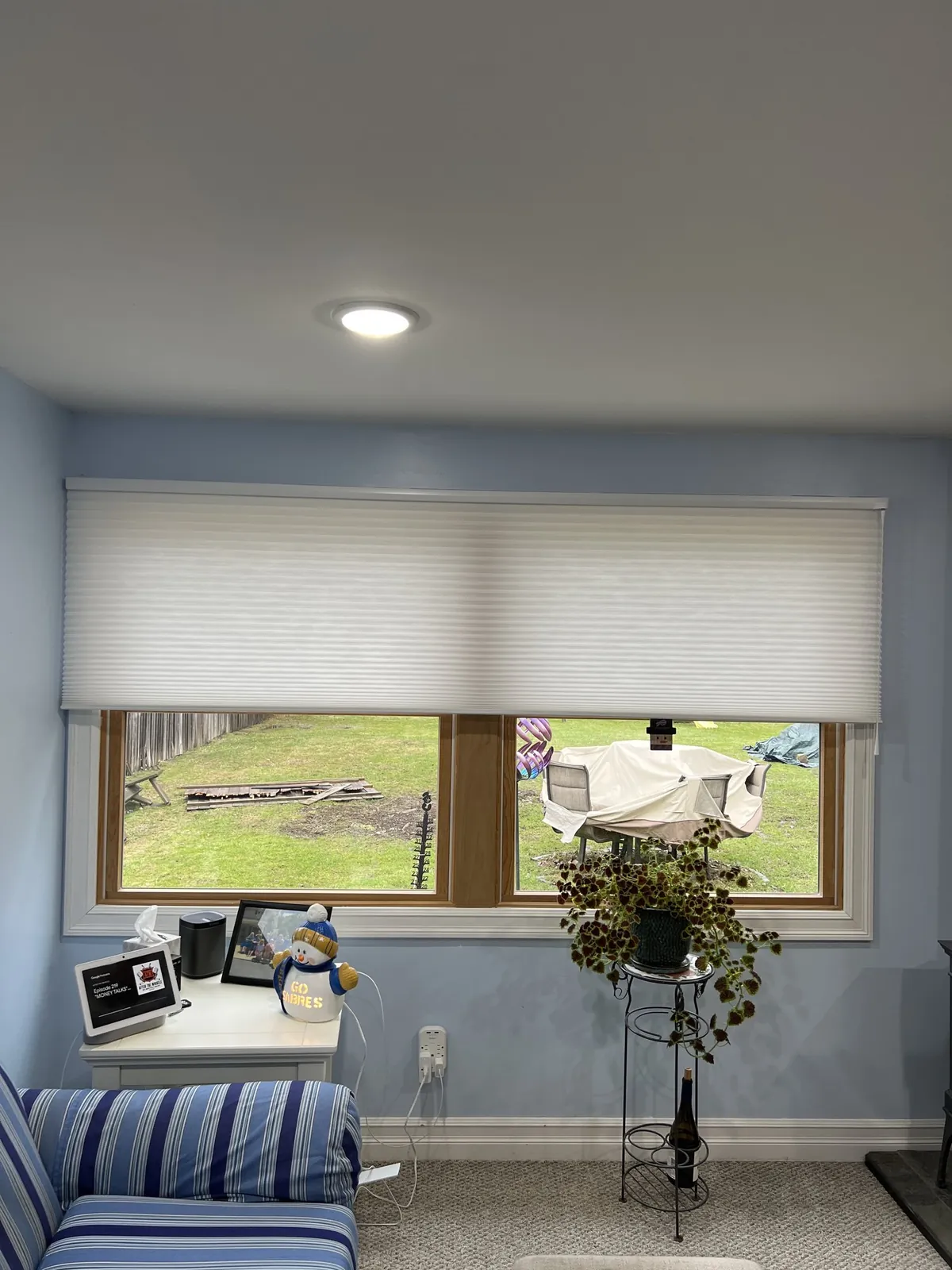
Winter on single glass
Plenty of the older houses in town still have original sash, sometimes with storm windows outside, sometimes without. Either way, the glass in those frames is the coldest surface in the room on a January night, and the chill pours down off it onto the floor below.
A cellular shade answers that better than anything else we sell. Its fabric is folded into cells, and each cell holds a pocket of still air between the room and the glass. Lowered at dusk, it keeps the warmth of the room from meeting the cold pane so directly, which is why the chair by the window stops feeling draughty. Our guide to cellular shades and winter heat goes into the reasons.
For the coldest rooms, a double-cell fabric adds a second layer of air, and a close inside fit with little gap at the edges helps too. Drapery drawn over the shade in the evening adds another layer and frames a farmhouse window handsomely by day. Roller and roman shades help a little, but if the cold window is the main complaint, the cell is the place to start.
The ranches that filled in the lots
The post-war ranches between the older houses are a different job entirely. Their openings are wider and lower, they are closer to square, and the main room usually has a picture window that is the largest piece of glass in the house.
When a picture window is wider than a single shade can span, we build it as a pair or a trio that share one rail. You lift them as a single unit for a clean line, or separately when the sun only reaches part of the room. For January, cellular fabric is the warmer covering on that glass; for looks, a plain roller suits a mid-century house.
Ranch bedrooms often have short, high windows over the bed. A shade with a cordless lift is easy to work from the side, and a motorized one comes down at the press of a button without anyone leaning across the headboard.
Sliding doors to the back yard need something that parks off to one side, leaving the doorway open. Cellular fabric that travels sideways, gliding panels or verticals all manage it. Vertical blinds also tilt, which is handy when you want the light but not the view in from the yard.
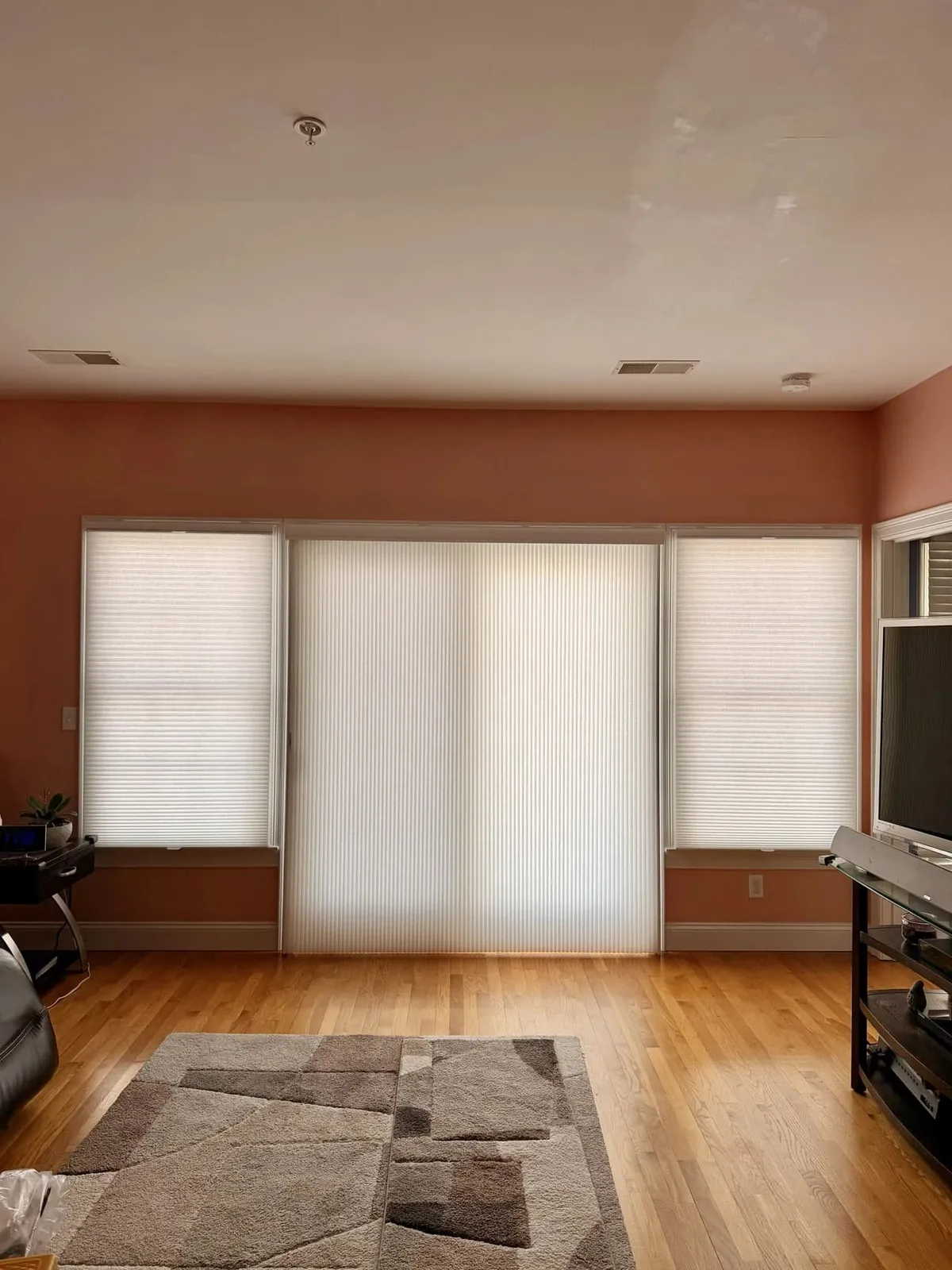
Measuring an opening that is not standard
Because so many windows in town are small, old or both, measuring carries most of the weight. This is how it goes at your house.
- Width goes down three times for every opening: near the head, halfway and near the sill.
- Height is read at the left jamb, the right jamb and the middle.
- Reveal depth is checked, along with whatever sticks into it, such as a latch, a crank handle or the track of a storm window.
- Together we settle, opening by opening, whether each piece fits within the reveal or across the trim.
- Fabric, color, opacity and the lift are all agreed with you before we place the order.
- On the fitting visit every piece goes up level, gets run up and down, and you get a walk-through of how to work it.
The guide to window measuring terms explains inside and outside mounts in plain language, and what happens on installation day covers the fitting visit.
Privacy on the road-facing side
On a big lot, the back of the house can go without much covering at all. The front is another matter. Main Street and the older roads run close to the farmhouses and capes that face them, and at night a lit room shows everything to the road.
For the front rooms we usually look at three options. Shutters block the road with the louvers shut and let light through once tilted. A shade that opens from the top hides the lower panes from the road while the sky stays visible above. And a light-filtering fabric, closed in the evening, keeps the room private while the lamps are on without making it feel shut in.
The back rooms can then stay light and simple. A roller or roman that lives fully raised most of the day may only be lowered on a hot afternoon or for sleep. Choosing a lighter treatment for those rooms keeps the view of the yard and the trees open.
Mudrooms, porches and the back entry
On a farmhouse or a cape the door most used is rarely the front one. It is the side or back entry, often through a mudroom or an enclosed porch that was added later, with a mix of small windows, a glass storm door and sometimes a long run of porch windows on three sides.
These rooms take boots, dogs and wet coats, so the treatments need to be tough and simple. Faux wood blinds shrug off a knock and wipe clean. A roller shade in a durable fabric stays out of the way when raised. On an enclosed porch, screen fabrics cut the afternoon heat while keeping the yard in sight, and they can be lowered all the way round when the sun swings onto the glass.
Getting window treatments for Acushnet porches right is mostly about the frames, which were often built by hand and can be shallow. We check each one and suggest an outside mount where the frame will not take a shade inside it.
Mixing products across one house
A house with a farmhouse front and a ranch-era addition almost never suits one product throughout. A common plan for window treatments in Acushnet, MA, is shutters across the road-facing rooms, cellular fabric upstairs, something wipeable over the sink and a soft roman where the family eats.
The trick is to repeat what an eye catches. Seen from Main Street, the backing color on the glass side is what registers, so one white or neutral across the front ties the house together even when each room has its own fabric facing in. Indoors, keep the rail color and the mounting style steady on any one level.
Thinking about the whole house at once also leaves the door open for PowerView. Motorized shades join one app and share timed scenes wherever they hang, so you can begin with the windows nobody can reach and add the rest another season. Our page on how motorized shades are controlled explains the options.
The full range is on our window treatments page if you want to read across every product before the visit.
What a Gallery dealer brings to the house
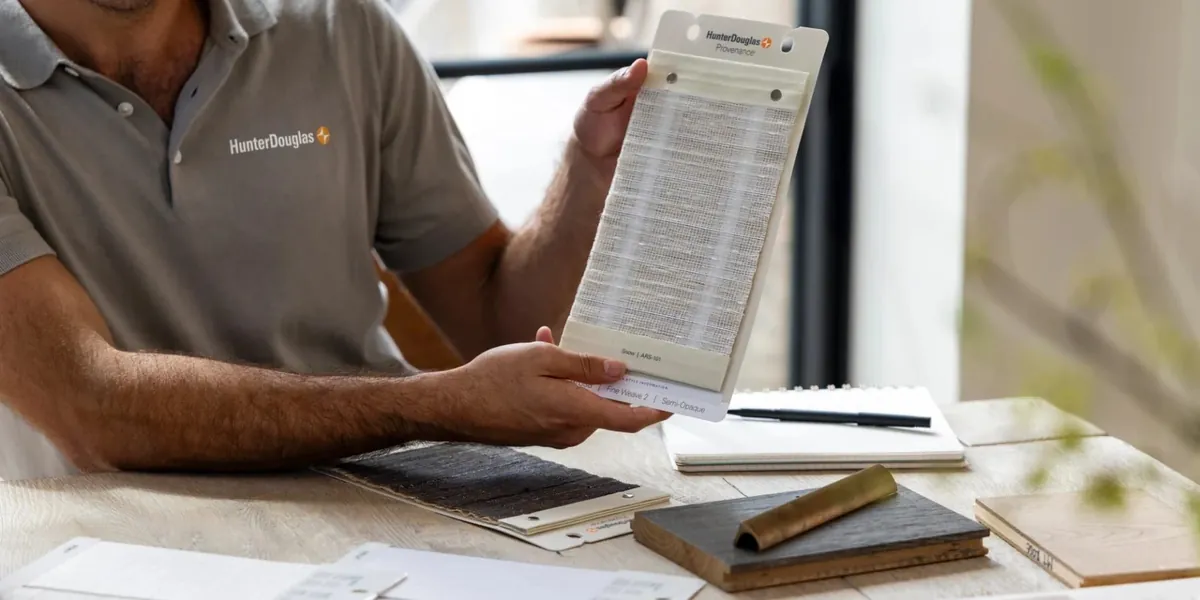
Gallery is the Hunter Douglas name for a dealer that carries the whole line, and Blinds & Designs holds it. So the cellular fabric for the dormer, the shutters for the parlor and the motorized roller for the stair window all come from one source and one visit.
Certified Hunter Douglas installers hang every piece. Interior design consultations are there when matching fabric across a farmhouse and its additions feels like a puzzle, and repairs are welcome on blinds and shades bought years ago.
The sample van means you judge each fabric against old painted trim and real afternoon sun, not shop lighting. The brand story sits on our Hunter Douglas page.
The closest showroom to Acushnet
Head south toward Faunce Corner and you reach the North Dartmouth showroom, the closest of ours to town. Plenty of Acushnet jobs are chosen entirely at the kitchen table, yet a look at a working shade can settle a question before the visit.
Whichever you pick, measuring, ordering and fitting stay with one crew, and you get a free estimate.
Questions from Acushnet
My farmhouse windows are all slightly different sizes. Can one style still look even?
Yes. Every shade is built to its own opening, so the sizes vary while the rail color, fabric and raised height stay level from window to window. Inside and from the road, the set looks deliberate.
Is a dormer window too small for a shade?
Rarely. Cellular and roller fabrics are made in narrow widths and mount inside a shallow dormer opening. We measure the depth first and suggest a mount on the trim if the frame is too tight.
Which product suits the picture window in our ranch?
A pair or trio of cellular or roller shades on a single rail handles it, lifted as one or separately. The consultant brings both fabrics so you can compare them against that glass.
Can the whole house be done at once?
It can. The consultant goes room to room, takes every measurement and writes up a single free estimate, whether the plan is one product throughout or a different choice per room.
Can I add motorized shades later?
You can. New PowerView shades join the app you already use, so starting with one awkward stair window and adding more later works fine.
When you are ready
Pick the room that frustrates you most and start there. Request a consultation, and a consultant brings the van to your door, measures each opening, from the dormers to the slider, and writes up a free estimate for window treatments in Acushnet, MA. Prefer a conversation first? The call button reaches us, and the North Dartmouth showroom keeps regular hours.