
Walls of glass and formal rooms
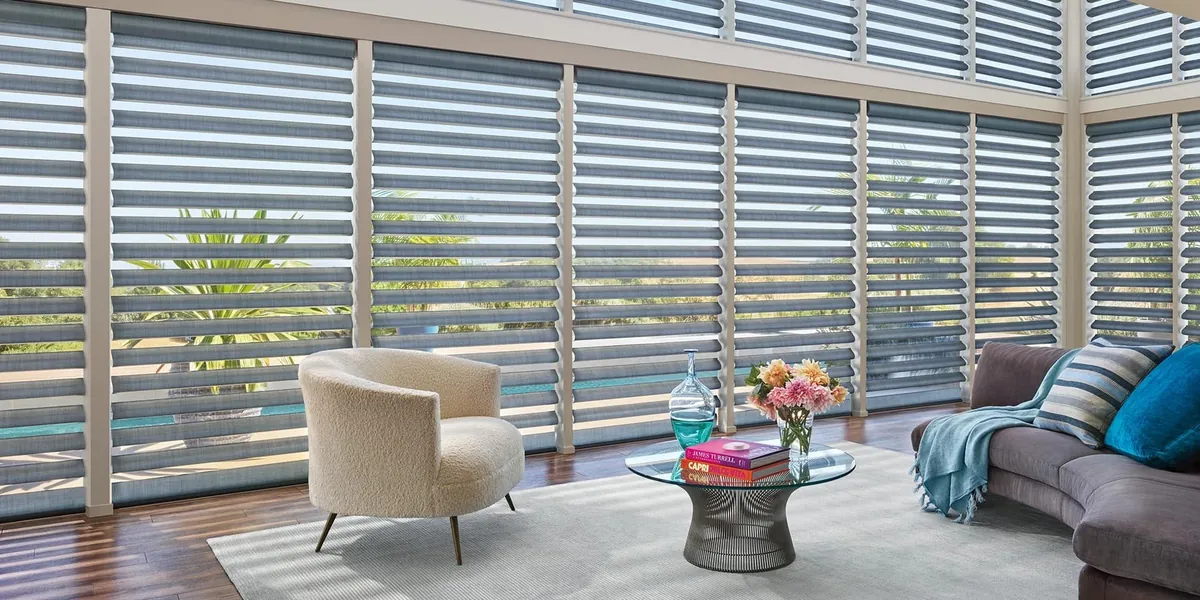
The houses around Osterville village and out toward Wianno and Oyster Harbors are some of the largest on this part of the Cape: shingled, set on generous lots, often with the main rooms turned toward the water. Many are seasonal and built to a high standard, with tall walls of glass on the water side and formal living and dining rooms on the other. Planning window treatments in Osterville, MA, usually means working on both at once.
The water-facing rooms take strong light and strong salt air. The formal rooms want a finished, tailored look, and in many of them drapery is simply expected. Between the two sit bedrooms, guest rooms, kitchens and baths, each with its own needs.
We bring the samples to the house in the van, so fabrics, finishes and louver sizes can be judged in your own rooms, next to your own furnishings and in the light off the water.
Window treatments in Osterville, MA: our services
Each of the services below has an Osterville page of its own with more about the products and where they suit.
Wood and metal blinds
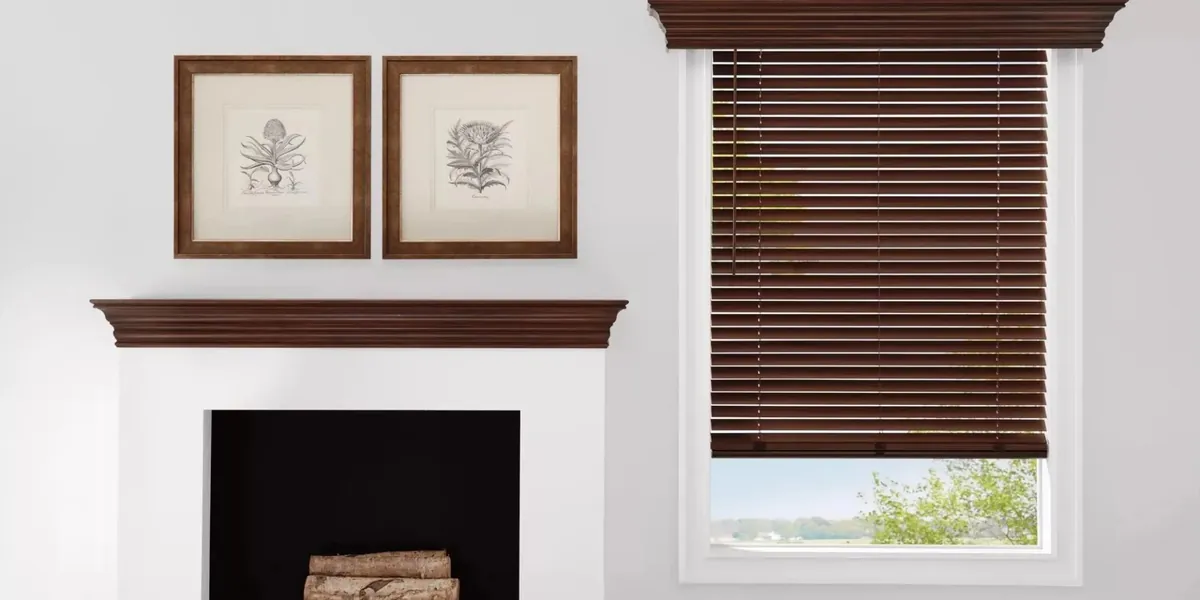
Real wood blinds with a matching cornice for a study or library, faux wood for a kitchen, metal and vertical blinds where the look should be spare.
Cellular shades
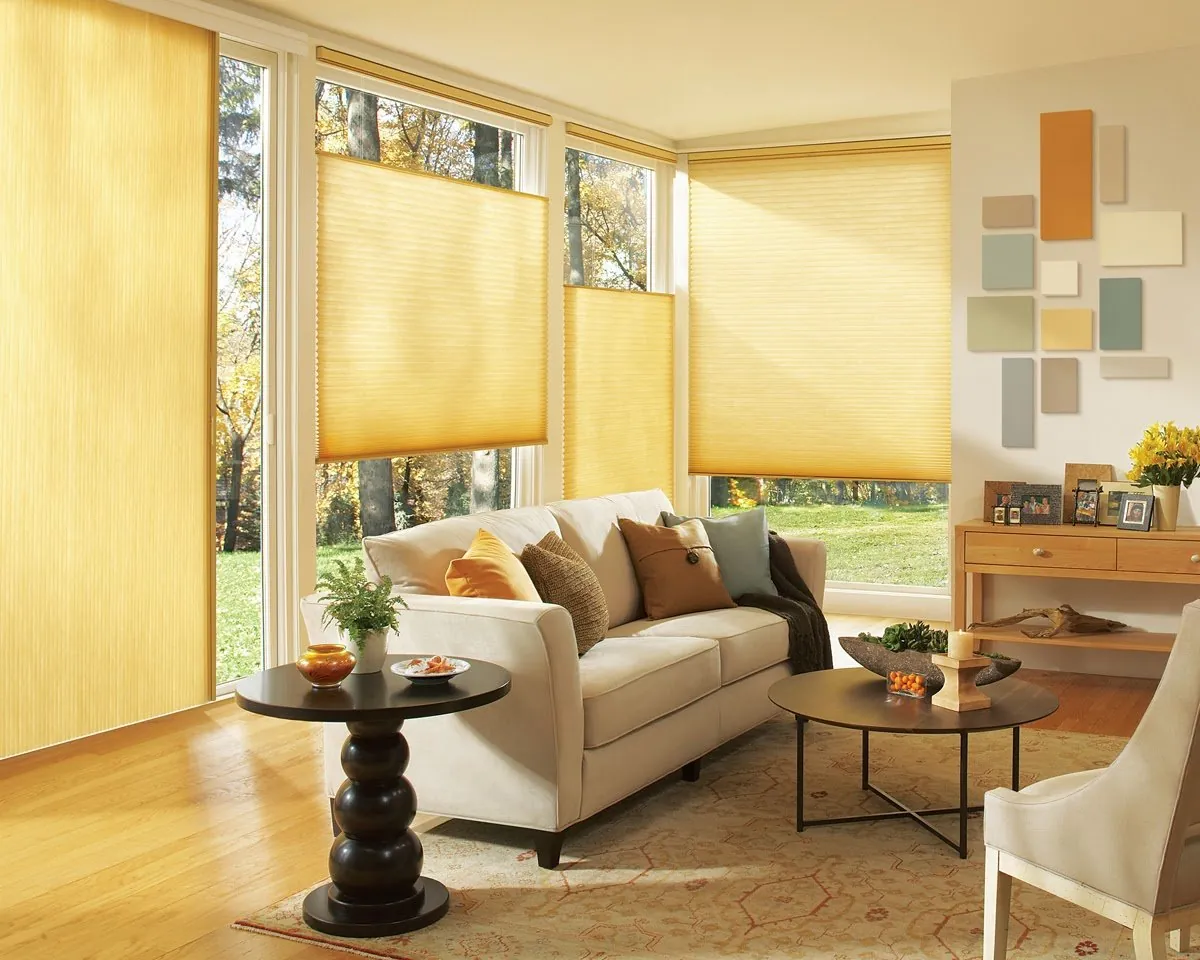
Duette and Applause honeycomb, in top-down styles and vertical versions for the doors that open onto the lawn.
Roller and screen shades
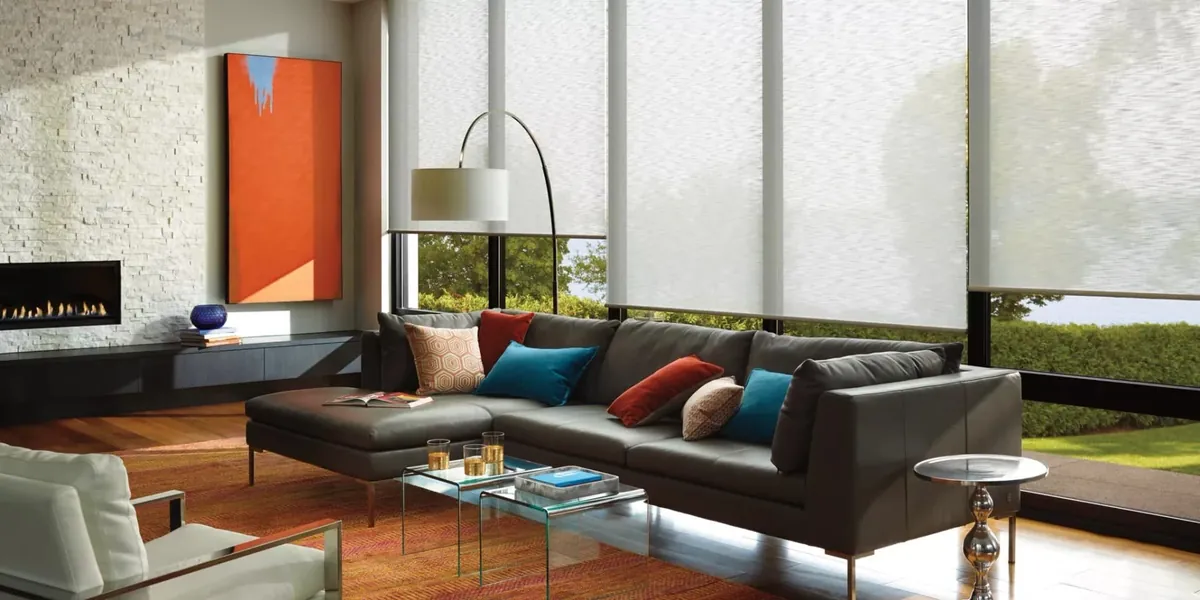
Designer and Alustra rollers and solar screens that tame the glare off the bay while keeping the view across the water.
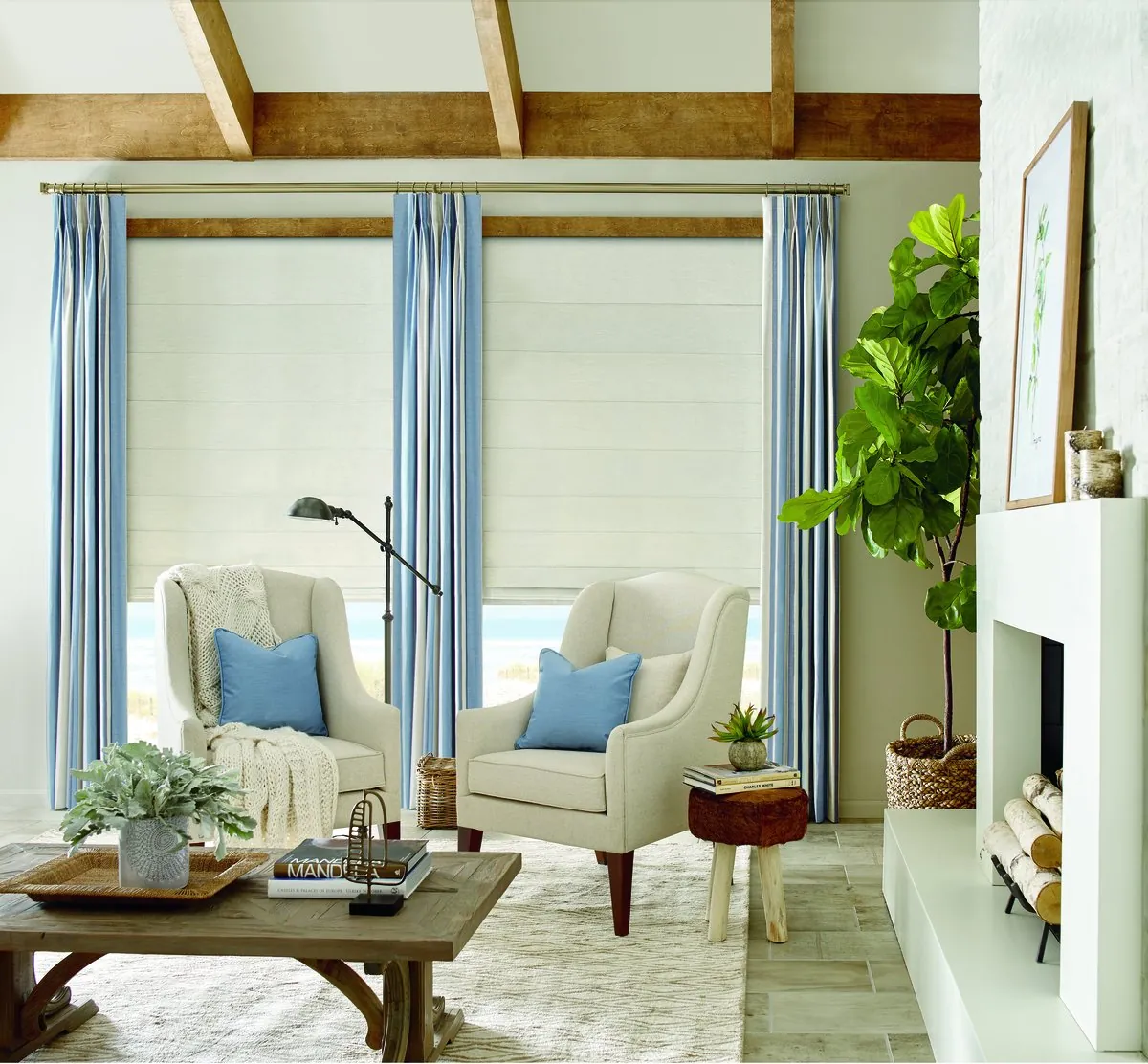
Roman shades
Vignette and Carole Fabrics romans, often paired with drapery panels in the formal rooms for a layered, finished window.
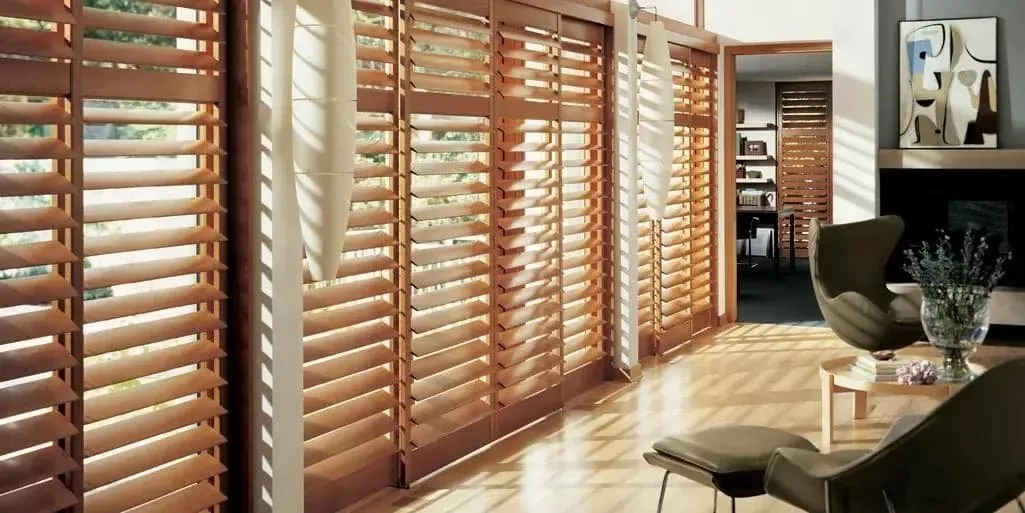
Plantation shutters
Palm Beach, NewStyle and Heritance shutters in painted or stained finishes, sized to the large openings of a shingled house.
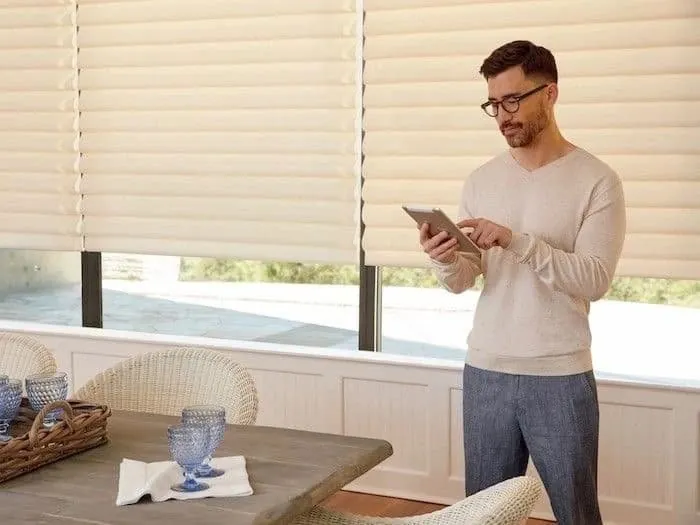
Motorized blinds and shades
PowerView across the whole house, grouped into scenes and schedules so every wall of glass moves at the right time.
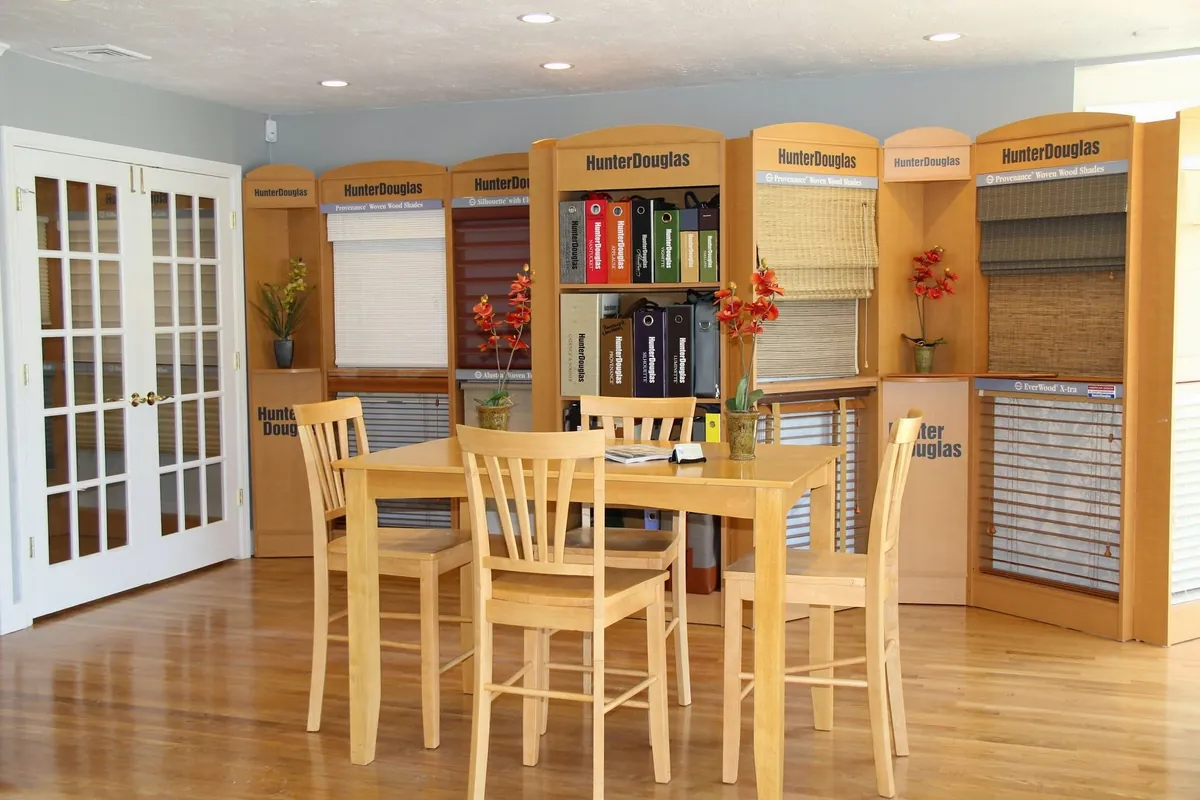
Hunter Douglas Gallery dealer
The complete Hunter Douglas range through a Gallery dealer, with certified installation for a project of any size.
Custom drapery
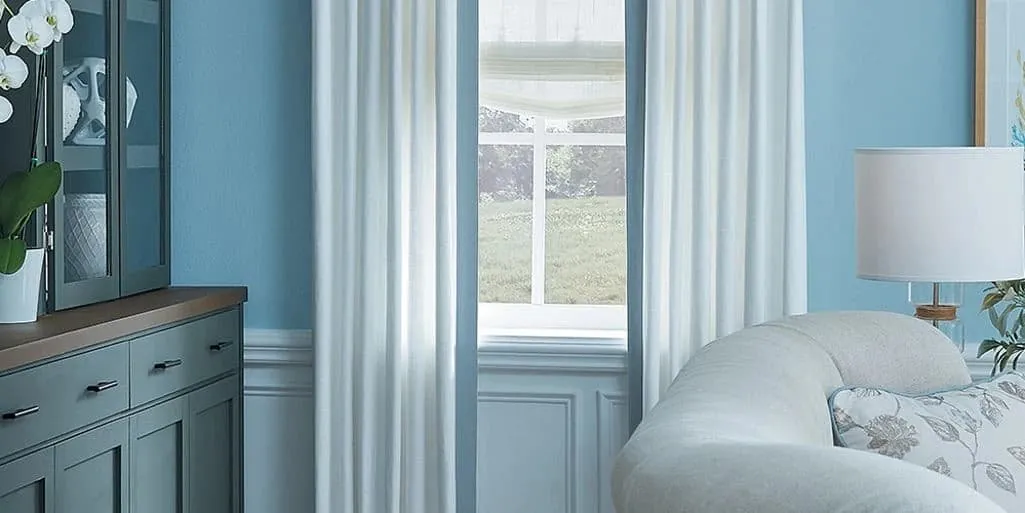
Hunter Douglas drapery for the formal living and dining rooms, hung high and full and layered over a shade beneath.
The formal rooms
In many Osterville houses the living room, dining room and library are the formal heart of the house: high ceilings, tall windows, fine mouldings and furniture chosen with care. In rooms like these a bare window, or a shade on its own, can look unfinished. Drapery is often what completes them.
Good drapery starts with proportion. Panels hung close to the ceiling and allowed to fall to the floor make a tall window look taller and give the room a sense of height. Width matters as much as length: panels that stack just beyond the edge of the glass when open leave the whole window clear, while still looking generous. The fabric, its weight and the way it folds all change the character of the room, from crisp and tailored to soft and relaxed.
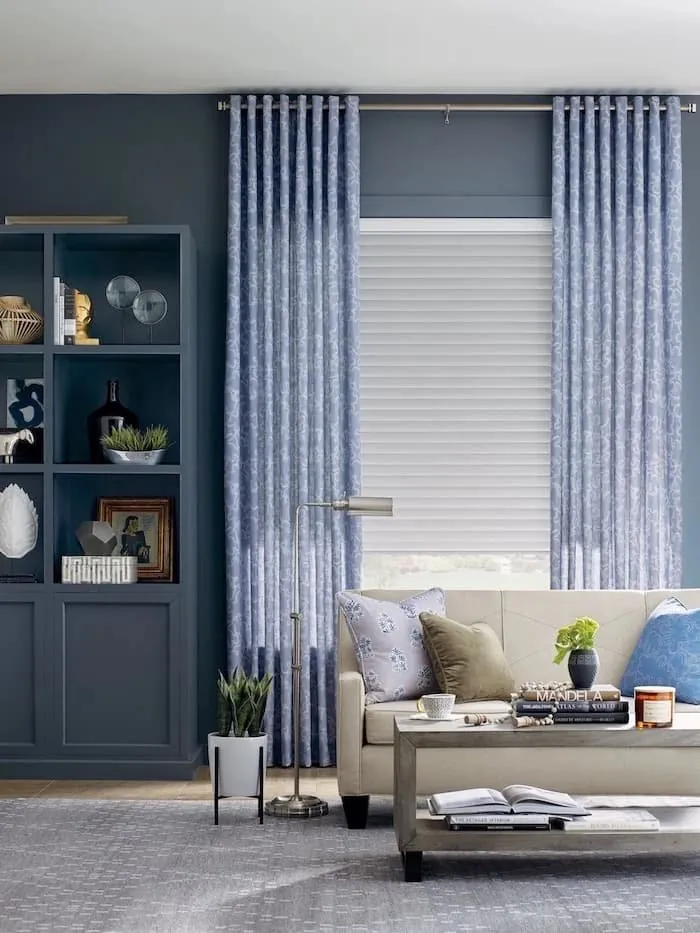
Drapery rarely works alone. In most formal rooms we pair it with a shade that does the daily work of light and privacy, so the panels can stay open and simply frame the window. A roman shade in a coordinating fabric is a classic partner. A sheer shade softens the light beautifully behind panels. A honeycomb shade adds warmth on a cool evening when the house is open in shoulder season.
Walls of glass toward the water
On the water side, the houses open up. Great rooms with two stories of glass, wide sliding walls onto a terrace and long runs of windows down a gallery or hallway all look out over the bay, the sound or the harbor. This is the view the house was built for, and the treatments here need to protect it as much as they control it.
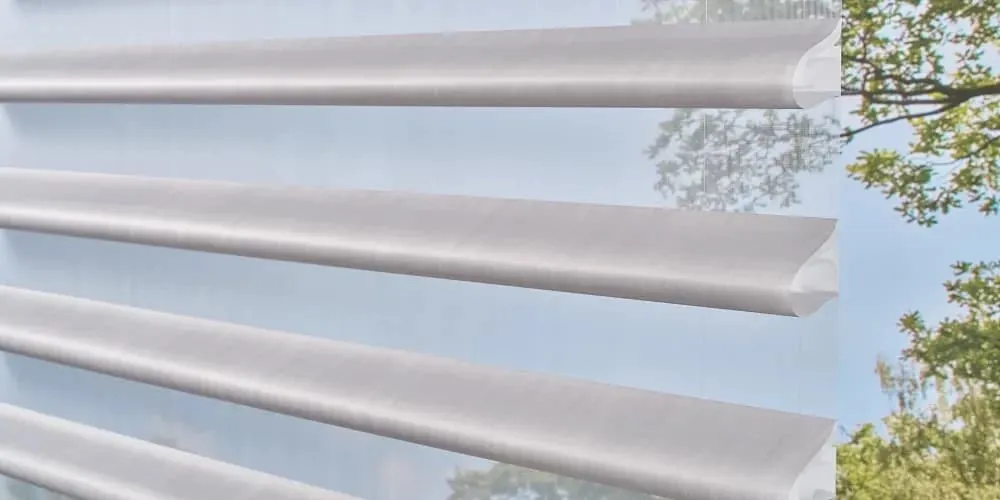
The light comes off the water as well as the sky, low and bright for much of the day. Solar screen rollers are the usual starting point: they cut the glare while you still see the water through the weave. The more open the screen, the more view and the more light you keep; a tighter screen gives a calmer room. Sheer shades with soft fabric vanes are another favorite here, because they filter the light into a gentle glow and turn the view into a soft blur that you can open up with a turn of the vanes.
Very wide openings may need two or three shades sharing one head rail, which can move together or separately. Very tall glass is the natural home of motorization, covered further down.
Salt, sun and the materials that hold up
Waterfront houses take the full weight of the salt air, especially on a breezy day with the windows open. Salt settles on any metal near the glass, and strong sun works on fabric over time. Neither rules out a product, but both shape our suggestions for the rooms closest to the water.
Shades with their mechanisms enclosed in the head rail, such as honeycomb, roller and sheer shades, keep their working parts away from the air. Cordless and motorized lifts do away with cord locks. Shutters have little hardware beyond their hinges. For fabrics, lighter colors facing the glass reflect rather than absorb the sun and keep every window looking alike from outside. If you have a particular metal blind or fabric in mind for a water-facing room, we will talk through how it suits that window.
Lowering shades through the brightest hours also protects floors, rugs and upholstery in the rooms that face the water, which matters in rooms furnished with care.

A whole house on PowerView
In a large house with many windows, motorization moves from a convenience to something close to a necessity. Walking from room to room to raise and lower dozens of shades is nobody’s idea of a morning, and some of the tallest glass cannot be reached at all without a ladder.
PowerView lets you group the shades however suits the house: by room, by floor or by the side of the house they face. Scenes move a whole group at once with one tap, such as morning for the bedrooms facing east, afternoon for the great room on the water side, or evening for the whole house. Schedules run those scenes on their own at set times or with the sunrise and sunset, so the water-side shades lower before the sun reaches them. You can use a remote in each room, the app on your phone or both.
For a seasonal house, schedules also keep the sun off the furnishings while you are away and keep the house looking occupied. When planning PowerView, we look at every window and decide how each motor is powered at the visit. The guide on how motorized shades are controlled explains the options in more detail.
Shutters on a shingled house
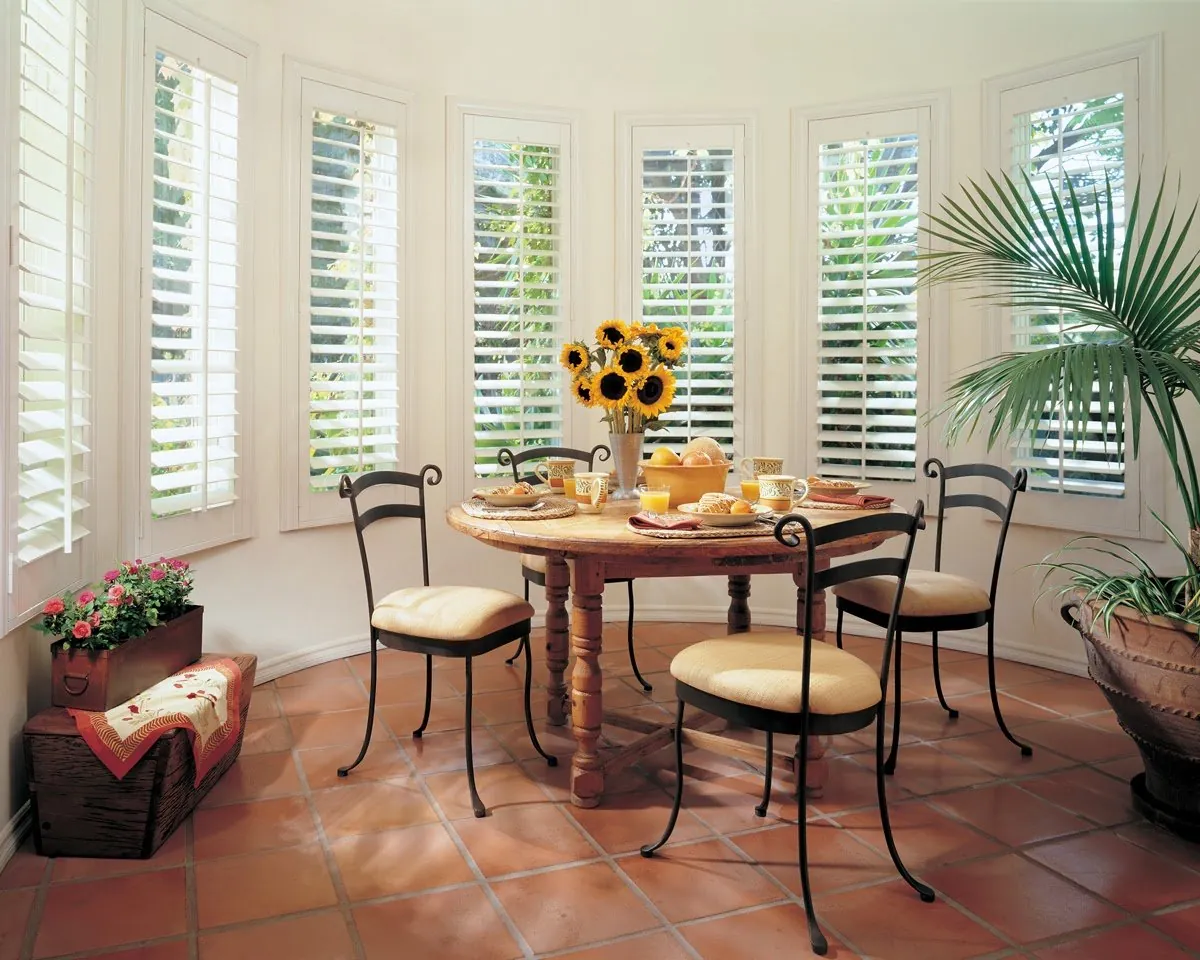
Plantation shutters look at home on a shingled house. They give privacy without giving up the light, they suit both formal and relaxed rooms and they are practical in bathrooms and kitchens because they wipe clean and cope with steam.
On large openings, frame style and louver size become important design choices. Wider louvers open up more of the view between the slats and suit large windows; narrower louvers look more traditional. Painted finishes in white or a soft color match most interiors, while stained wood shutters give a warmer, richer look in a library or a den. Palm Beach, NewStyle and Heritance each offer different combinations, and we bring samples so you can see them against your own trim and floors.
Shutters also suit the many smaller rooms in a large house: a powder room, a mudroom, a laundry or a back stair, where they look neat and need almost no attention.
Bedrooms and guest rooms
Bedrooms on the water side wake early with the sun off the bay, and guest rooms need to work for anyone who stays. In both, the main question is how dark the room should be.
Where sleep matters most, we pair a dimming fabric with a mount that leaves no halo: a blackout roller tucked tight into the opening with slim channels down each side, or a room-darkening honeycomb set on the face of the trim so it overlaps the glass all round. Full drapery across the whole wall then finishes the job, and it makes a large bedroom feel far more restful. For a gentler start to the day, light-filtering fabrics spread the light evenly, and a motorized shade can be set to rise slowly at the hour you choose.
Guest rooms in a seasonal house are often closed for long stretches. A shade left lowered keeps the sun off the bed linen and the floor, and with PowerView it can be raised from the app before guests arrive.
Kitchens, baths and the service rooms
The working rooms of a large house deserve as much thought as the formal ones. Kitchens with big windows over the counter and doors to the terrace, butler’s pantries, mudrooms by the garage and baths with tubs set under a window each need something practical.
Faux wood blinds and shutters handle steam and splashes. A roller shade in a wipeable fabric gives a clean look over the sink. A top-down, bottom-up shade or shutters with the louvers tilted up keep a bath private while letting in daylight. A door to the terrace suits a shade mounted on the door itself, or a vertical honeycomb that draws aside. Planning window treatments in Osterville for these rooms at the same time as the main rooms keeps the colors and head rails consistent through the whole house.
How a consultation works in a large house
A large house with many rooms deserves time, and the consultation is where the plan comes together. We bring the samples to you so that every fabric is judged in its own room.
- Pick a date on the Request a Consultation form, or ask for one through the call button.
- Your consultant pulls up with the sample van: shade fabrics, blind slats, shutter louver sections and drapery swatches.
- We go room by room, from the formal rooms to the water side to the bedrooms and service rooms, and talk about what each needs.
- You see the samples against your own walls, floors and furnishings, in the rooms facing the water and the rooms facing away.
- Every window is measured, along with frame depths and anything that affects the mount, such as hardware or trim.
- You receive a free estimate for the whole house to review in your own time.
If you would like help coordinating color and fabric across many rooms, our interior design consultations are designed for just that. You can also read about what happens at an in-home consultation beforehand.
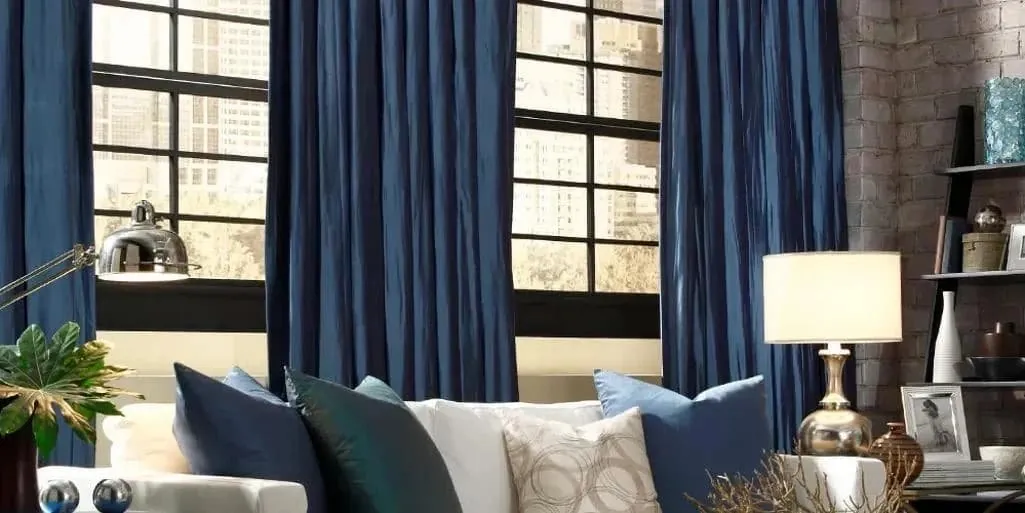
Layering a window
Layering is how many formal rooms reach their finished look, and there is more to it than hanging panels over a shade. Each layer has a job. The shade nearest the glass handles the light: a screen or sheer for the day, or a room-darkening fabric where you want the room dim. The drapery in front handles warmth, color and softness, and frames the window. A valance or cornice at the top, where it suits the room, hides the head rail and finishes the composition.
The layers should agree with each other. A patterned drapery usually sits best over a plain shade; a richly colored shade can take a simpler panel. Head rails and rods need to be planned together so the drapery clears the shade when it moves. And on a tall window, both layers can be motorized so the whole window responds to one button. Working through window treatments in Osterville room by room, we hold the shade sample and the drapery swatch together at each layered window during the consultation, so you can see how the two pieces work as a pair, by day and with the lamps on, before anything is ordered.
Installation
Our certified Hunter Douglas installers carry out the fitting. In a large house that means working through room by room, mounting and levelling each piece, hanging drapery to the agreed height and testing every shade and shutter. PowerView groups, scenes and schedules are set up and shown to you before the installers leave. The page on what happens on installation day has more.
One plan for the whole house
A house of this size will use several products, and that is as it should be. A typical plan for window treatments in Osterville might combine drapery and roman shades in the formal rooms, motorized screens on the water side, shutters in the baths and service rooms and room-darkening honeycomb in the bedrooms. Keeping the color toward the glass and the head rail finishes consistent is what ties it together from outside and in. Our window treatments overview shows the range.

What a Hunter Douglas Gallery dealer offers
A house with formal rooms, walls of glass and a long list of bedrooms needs a supplier who can do all of it. Blinds & Designs is a Hunter Douglas Gallery dealer, so drapery, every type of shade, wood and metal blinds, three shutter collections and whole-house PowerView all come through one consultation.
Everything is fitted by our own Hunter Douglas certified installers. Our interior design consultations help with color and fabric, and we look after repairs on blinds and shades you already own. See our Hunter Douglas page for more.
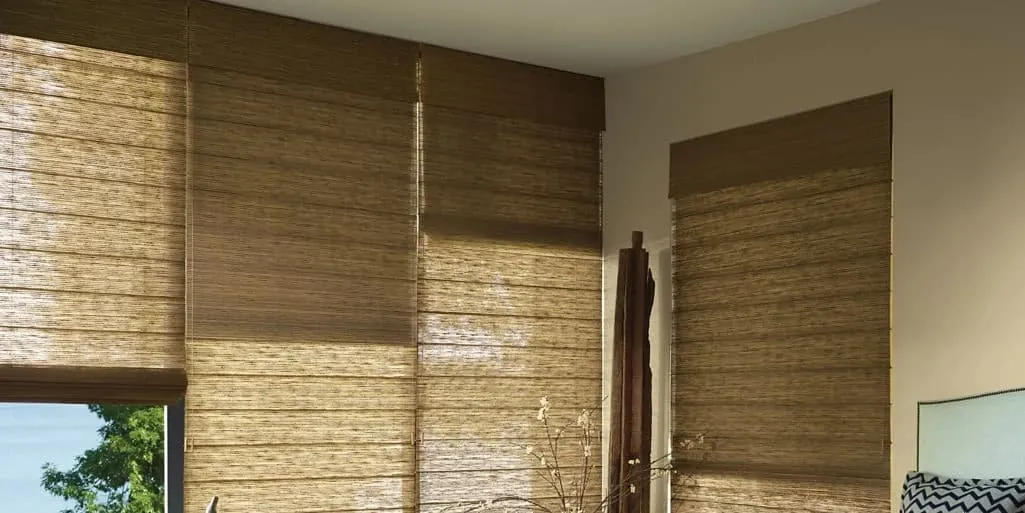
The nearest showroom to Osterville
Choosing for a house this size is best done in its own rooms, which is why the van comes to you. Should you want a first look beforehand, Sagamore is our closest showroom to the village, and whoever you meet there carries the project through measuring and fitting.
Questions from Osterville
Our living room faces the water with a two-story wall of glass. What works?
Motorized solar screens or sheer shades, grouped so the whole wall moves together and scheduled to lower before the sun reaches it. Screens keep the view; sheers soften it.
Should drapery in a formal room be paired with a shade?
Usually, yes. The shade handles light and privacy day to day, so the drapery can stay open and frame the window. A roman, sheer or honeycomb shade all pair well.
How do we protect the house while it sits empty?
PowerView schedules keep shades lowered through the brightest hours and raise them morning and evening, so the furnishings are protected and the house looks lived in.
Will salt air harm new treatments?
It does not rule anything out. Enclosed mechanisms, cordless and motorized lifts and shutters expose the least metal. We talk through any metal blinds or fabrics you are considering for the water side.
Can you plan and estimate the whole house at once?
Yes. We walk every room, measure every window and give you one free estimate for the house.
Start with a consultation
Book a time through Request a Consultation, and we will walk the formal rooms, the water side and everything between, measuring as we go. A free estimate for the whole house follows. A quick word beforehand is easy through the call button, and the Sagamore showroom is there for a first look.