
Two towns between the bay and the sound
Yarmouth runs from Cape Cod Bay down to Nantucket Sound, and the houses change completely on the way. Up on the bay side, along Route 6A through Yarmouth Port, the antique capes and old village houses sit under big trees with small windows and low ceilings. Down on the sound side, around South Yarmouth and along Route 28, the streets fill with post-war ranches and cottages packed closely onto small lots. The light changes too: soft, cool northern light on the bay side, and a strong southern sun toward the sound.
That makes window treatments in Yarmouth, MA, a question of which half of town you live in before anything else. An antique cape needs something quiet that fits a small, old opening and respects the trim. A sound-side ranch needs sun control on wide glass and privacy from a neighbor a few yards away.
Our consultants bring the samples to your door in the van, so whichever house you have, you choose standing at your own windows.
Window treatments in Yarmouth, MA: what we offer
Each of these has its own Yarmouth page with more on the products and the houses they suit.
Custom blinds
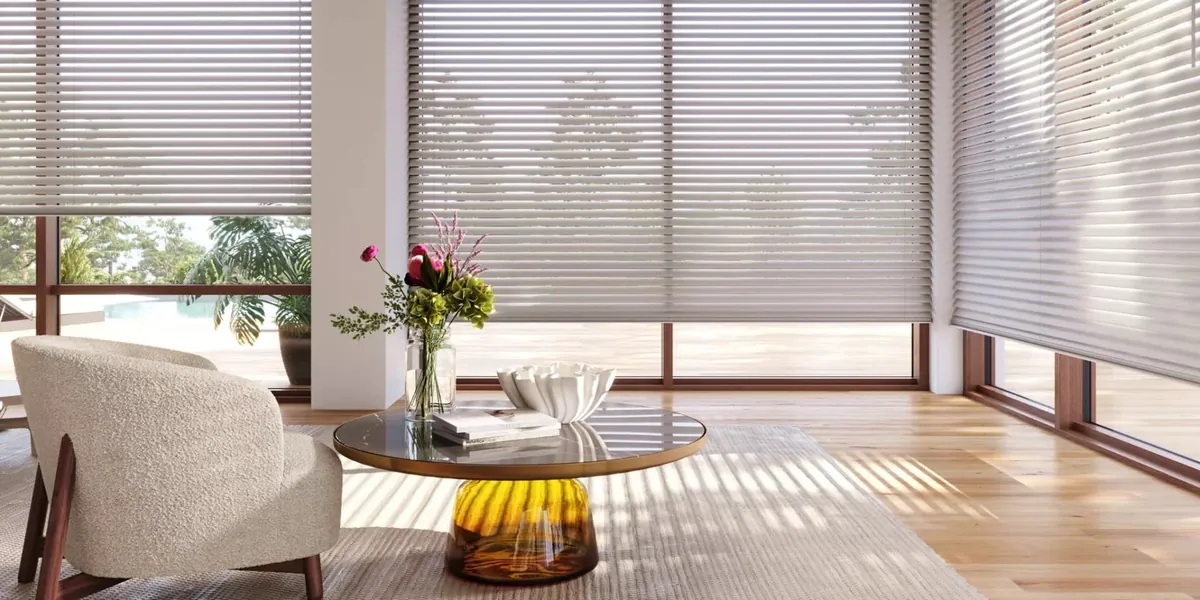
Faux wood for a ranch kitchen near the sound, real wood for a cape sitting room, plus metal and vertical blinds.
Cellular shades
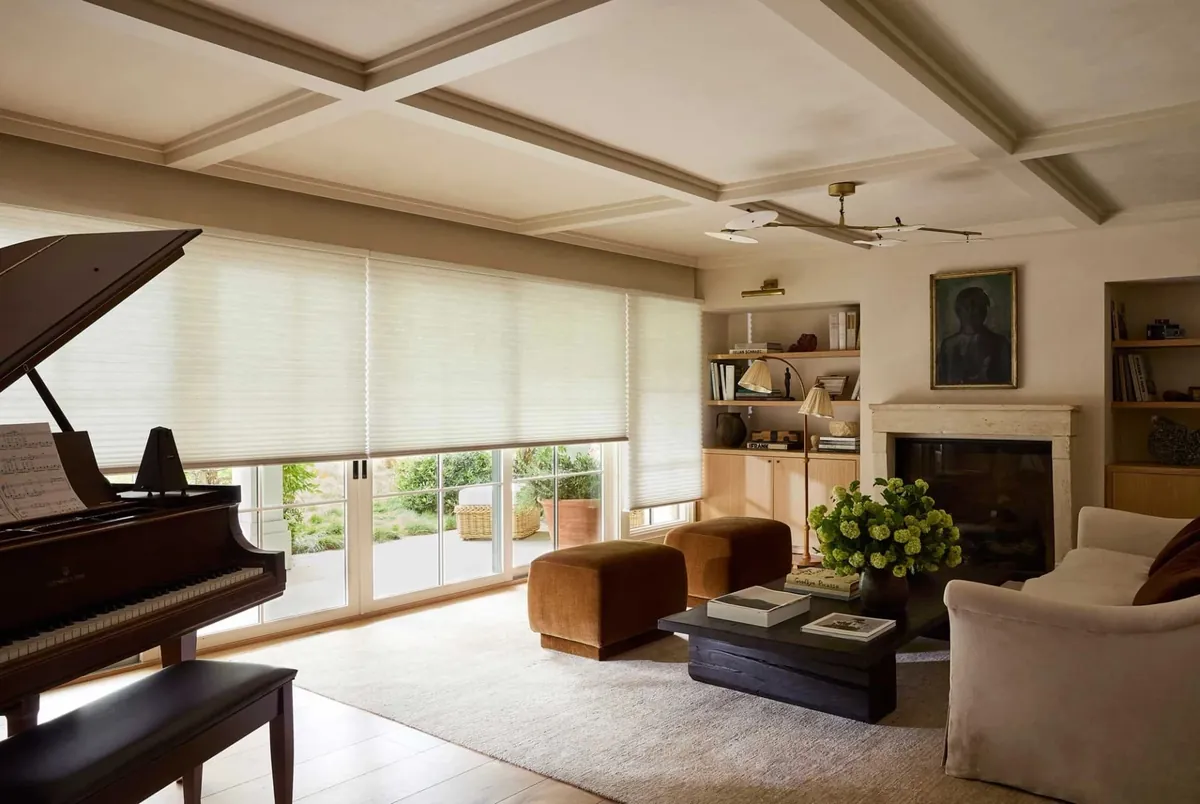
Duette and Applause honeycomb that steadies the temperature by a cold bay-side window or a hot south-facing one.
Roller shades
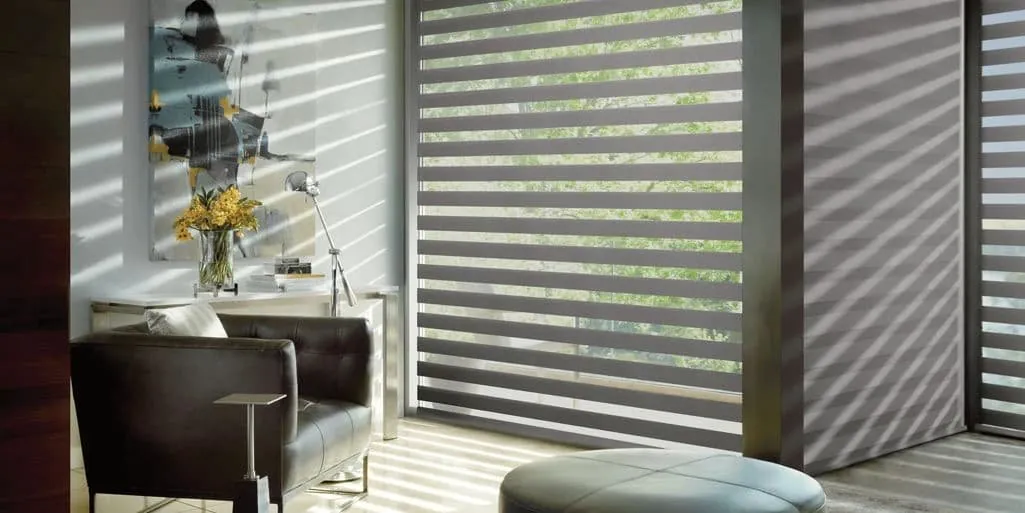
Designer and Alustra rollers, screens and banded shades for the bright, wide windows of a South Yarmouth ranch.
Roman shades
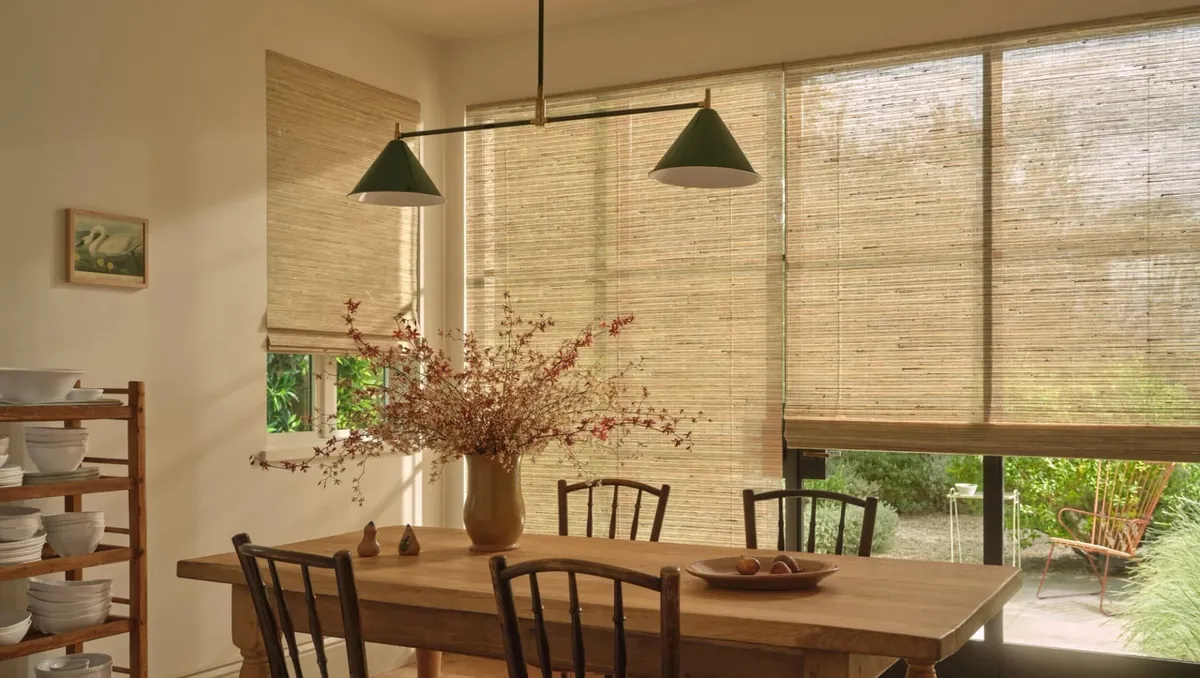
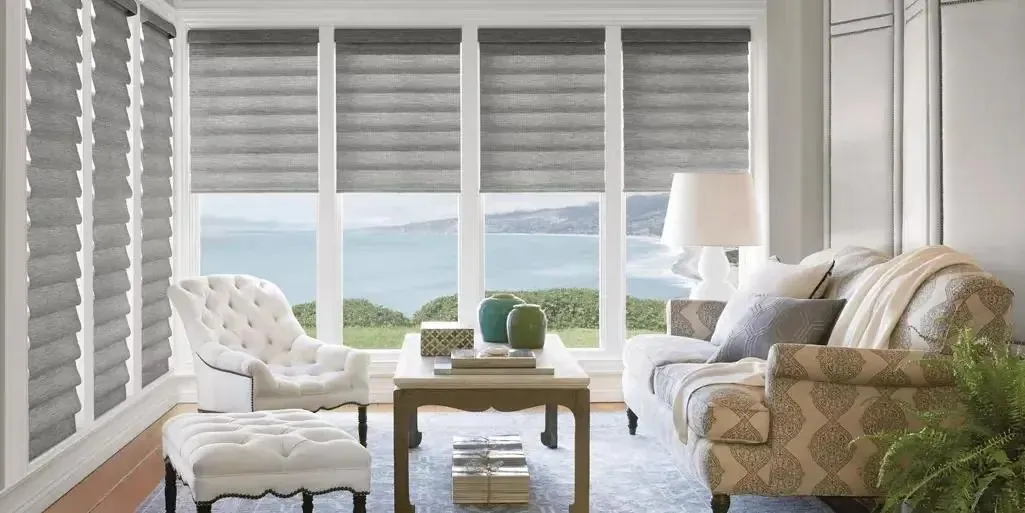
Vignette and Carole Fabrics romans, flat or softly folded, that suit the cosy rooms of an antique cape.
Plantation shutters
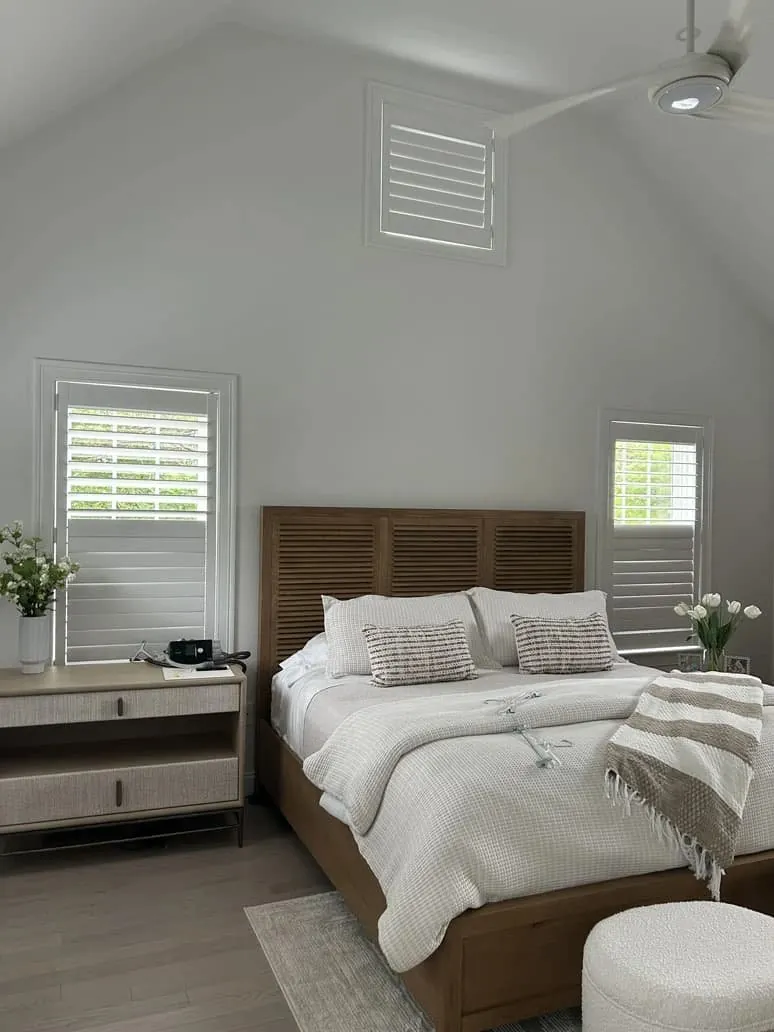
Palm Beach, NewStyle and Heritance shutters, with narrow louvers for a small cape sash or wider ones for a ranch.
Motorized blinds and shades
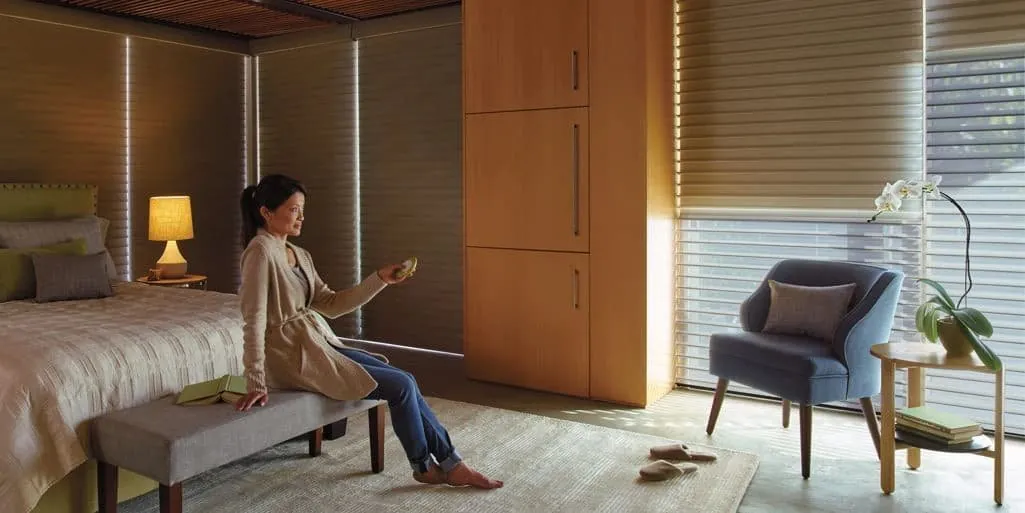
PowerView shades that lower themselves when the southern sun gets strong, by remote, app or schedule.
Hunter Douglas dealer
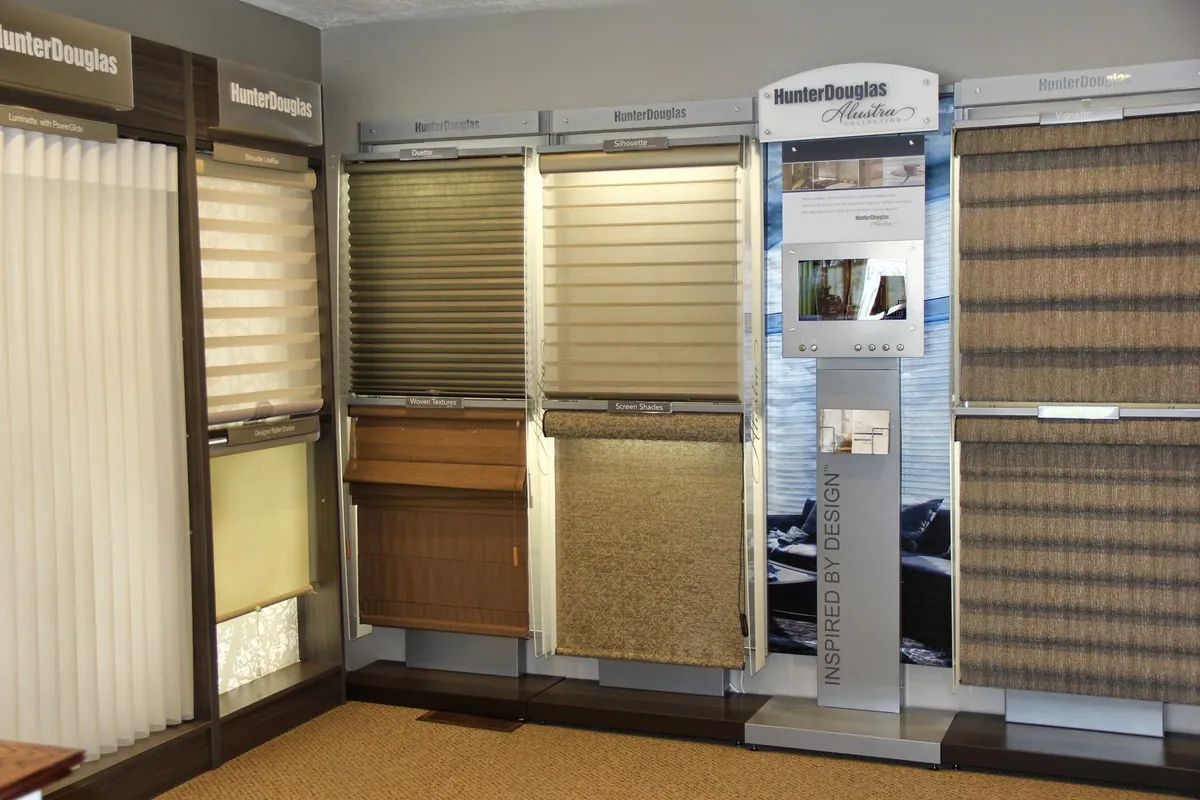
The full Hunter Douglas range from a Gallery dealer, with certified installation, for either side of town.
Custom drapery
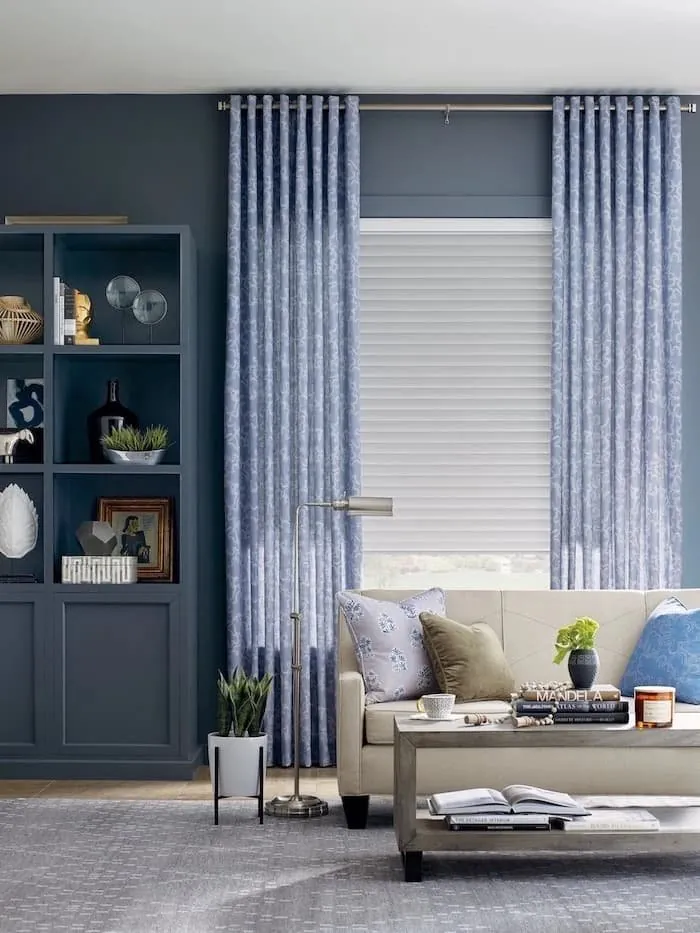
Hunter Douglas drapery for a village front room on 6A, drawn at night over a shade that does the daytime work.
Low ceilings and small rooms on 6A
Step inside an antique cape in Yarmouth Port and the first thing you notice is the scale. Ceilings are low, rooms are small and the windows are modest, often with a deep sill and a frame that has been painted many times over. Upstairs, the bedrooms tuck under the roof with knee walls and dormers.
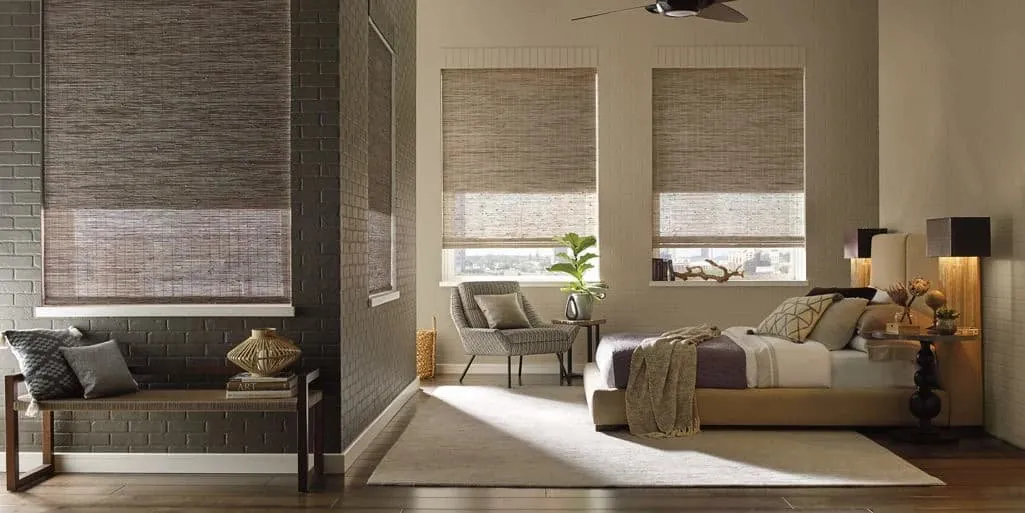
In rooms this size, every inch at the top of the window counts. A treatment with a bulky head rail or a deep stack when raised eats into the glass and makes a low room feel lower. That is why we lean toward products that almost vanish when they are up. A honeycomb shade folds into a very shallow stack. A roller tucks onto a slim tube. A flat roman shade gathers neatly at the head, and in a plain linen-look fabric it suits the simplicity of an old cape.
Mounting inside the opening keeps the old casing in full view, which matters in a house where the trim is part of the charm. Old frames are seldom square, so we measure each window in several places and size the shade to fit the tightest point. Where an opening is too shallow or too uneven to mount inside, the shade goes on the face of the trim instead, set just above the top of the casing to make the window look a touch taller.
North light on the bay side
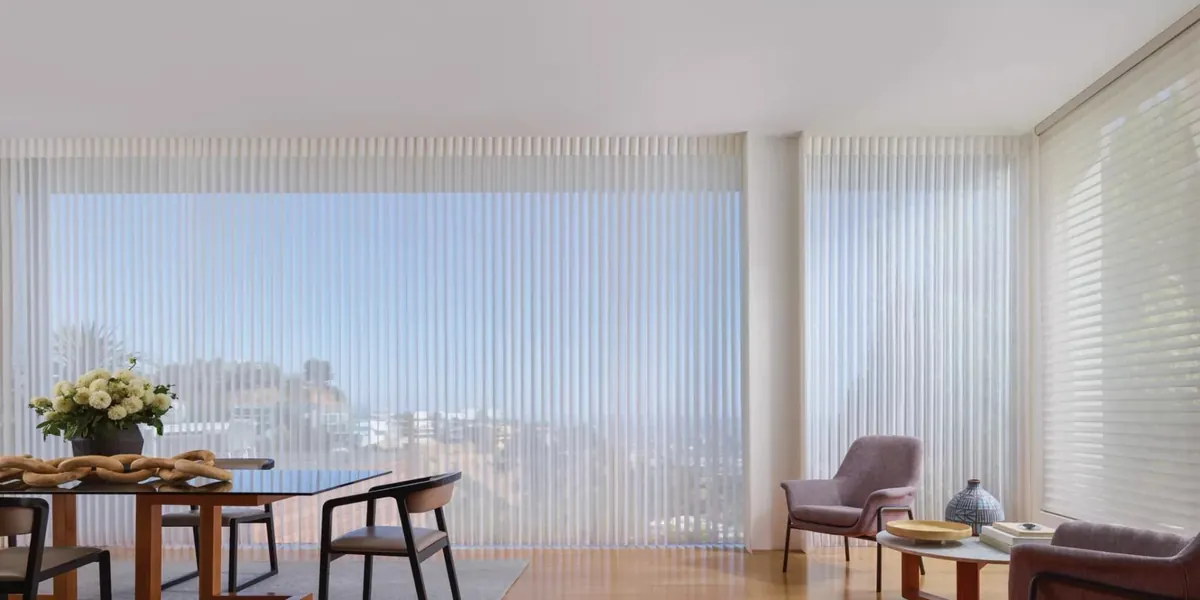
The bay side of town looks north, toward Cape Cod Bay and the marshes. North light is steady and soft, with very little direct sun, which is one reason artists like it. It also means rooms on that side can feel dim and cool, especially in winter, when the wind comes in off the bay.
For those rooms, the aim is to let in every bit of daylight while keeping the warmth in. Light-filtering fabrics keep a north room bright even with the shade down. Honeycomb shades hold still air in their cells, which takes the chill off an old window on a winter evening. Drapery drawn at night adds another layer in a front parlor. Heavy, dark fabrics are best kept for the bedrooms, where you want the room dim in the morning.
Where an old cape has a south side as well, those rooms can take a very different treatment. It is quite normal for the front and back of the same house to need different fabrics.
Shutters in an antique house
Plantation shutters are often the first thing people ask about for an antique cape, and they can look wonderful there, provided they are scaled to the house. Small windows call for narrower louvers, which keep the proportions in line with the panes. The frame style matters too: a slim frame that sits right inside the opening looks the most original, while a frame with a little trim can cover the gaps in a window that has gone out of square.
Shutters give privacy at street level on a cape that sits close to 6A, while letting you tilt the louvers to steer light to the ceiling. A cafe shutter over just the lower sash is a lighter alternative that keeps the top of the window open. Palm Beach, NewStyle and Heritance each offer different combinations of louver, frame and finish, and we bring samples to try on your own trim. The guide to shutters for older windows has more.
South Yarmouth’s ranches and cottages
Down toward the sound the houses are mostly post-war: ranches on small lots, cottages close together on the side streets, and here and there a newer house where an older one stood. The windows are larger and more regular than on 6A, and many have been replaced with modern units. Picture windows, sliders to the patio and long bedroom windows are typical.
These houses have the opposite problem to the antique capes. Instead of making the most of a little light, they need to control a lot of it, and with houses so close together, privacy matters at every side window. Choosing window treatments in Yarmouth for a ranch near the sound usually begins with the living room picture window and the bedrooms facing the street.
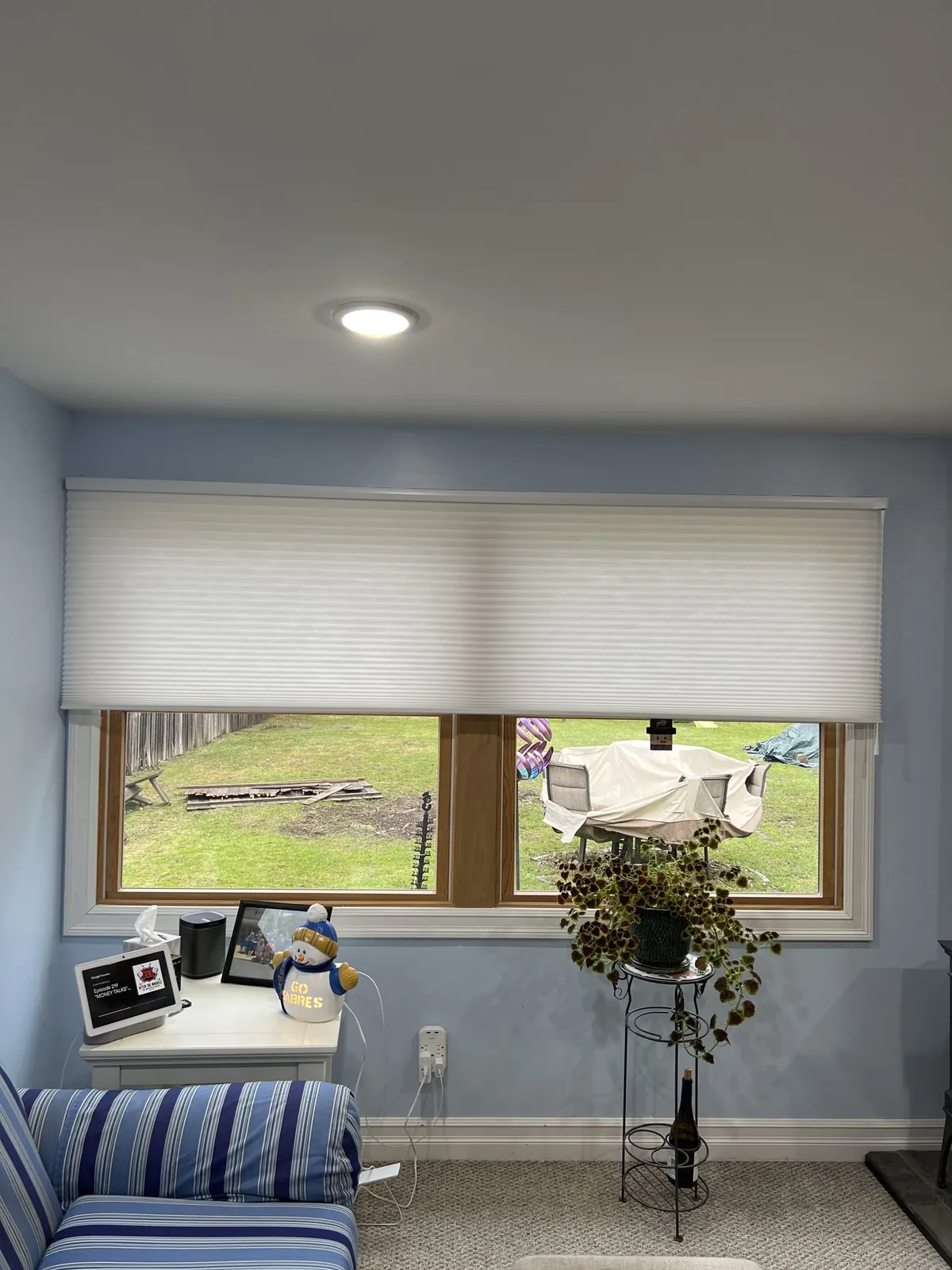
A picture window is often too wide for one shade, so we split it into two or three that share a head rail. A slim roller in a cassette gives a clean line; a honeycomb keeps the room cooler in July and warmer in January. Bedrooms take a room-darkening honeycomb or blackout roller. Side windows facing the house next door suit a top-down, bottom-up shade, which lets in the sky while covering the lower glass.
The little cottages off Route 28
Between the ranches, the side streets near the sound are dotted with small cottages, some still used mainly in summer and others lived in all year. They tend to have a handful of plain windows, often of slightly different sizes because rooms were added one at a time, and a front window that sits only a few steps from the road.
Small, plain windows like these suit simple, made-to-measure products. A light-filtering honeycomb or a roller in a soft neutral fabric keeps a cottage bright and private without fuss. Faux wood blinds are hard-wearing and easy to wipe down after a sandy summer. A cafe shutter on the street-side window gives privacy at eye level and still lets the sun into the room above it.
Because every shade is cut to its own opening, a cottage with mismatched windows can still look neat: we set the head rails at a common height wherever the walls allow, so the shades line up when they are raised. It is a small detail, but on a house this size it is one of the things that makes window treatments in Yarmouth look finished.
The southern sun and the glare off the water
Toward the sound, and along the Bass River, south- and west-facing rooms get strong sun for most of the day, and near the water it reflects back off the surface too. A room that is pleasant in the morning can become too bright and too warm by mid-afternoon.
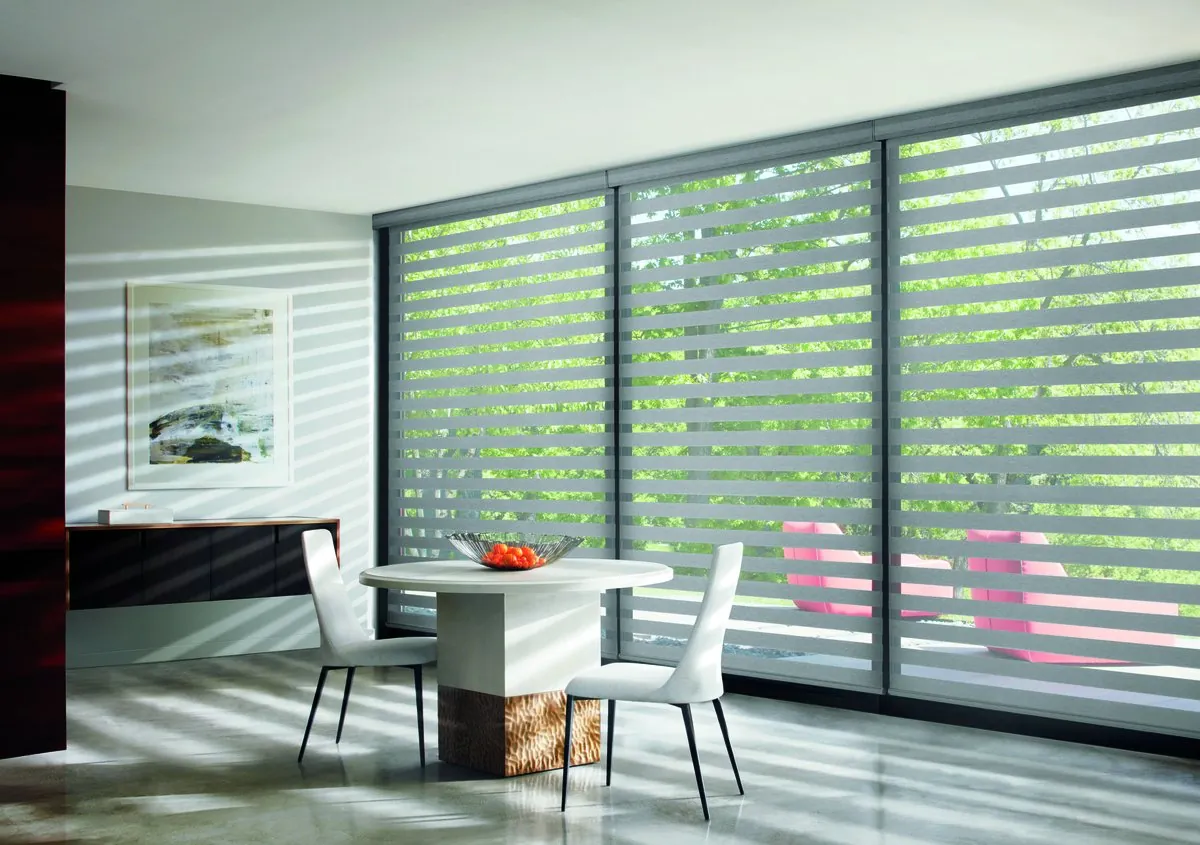
Solar screen rollers are a good answer where there is something to look at. The weave cuts the glare while you still see out, and the openness you choose decides how much view and how much light you keep. Banded shades, with sheer and solid stripes, let you switch between a filtered view and full privacy. Where the room needs cooling more than the view, a honeycomb shade does more to slow the heat through the glass. The guide to the best shades for sun and glare explains the trade-offs.
Strong sun also fades floors and fabrics over time. Lowering the shades in the brightest hours helps, and motorized PowerView shades can do it on a schedule without anyone remembering to.
Sliders, patios and the back of the ranch
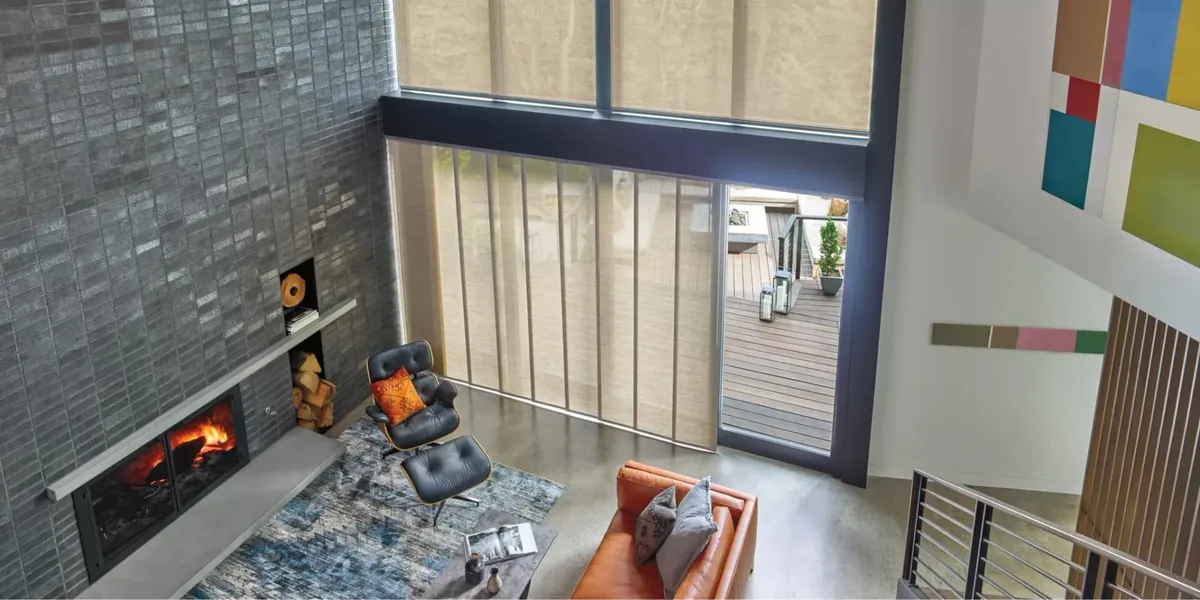
Most sound-side ranches have a slider at the back, out to a patio or deck, and it is usually the door everyone uses in summer. Whatever covers it needs to move out of the way easily and stand up to daily use.
A vertical honeycomb shade draws to one side and stacks neatly, and it helps the slider feel less cold in winter. Gliding fabric panels slide on a track and overlap when open, a modern look that suits a renovated ranch. Vertical blinds can be tilted to let light in without being drawn back at all.
Kitchens and bathrooms on both sides of town
Cape kitchens on 6A often sit in an old ell at the back of the house, with a small window over the sink. Ranch kitchens in South Yarmouth have a window over the counter and an eating area by the slider. Baths on either side tend to be small, with one window by the tub.
These rooms want practical, wipe-clean choices. Faux wood blinds and shutters both cope with steam. A cafe shutter over the sink keeps the lower window private while the top stays open. In a bathroom, shutters with louvers tilted up or a top-down shade give privacy with daylight. A roller in a wipeable fabric gives a neat look on a newer kitchen window.
Planning motorization
PowerView suits both halves of town in different ways. On the sound side, schedules lower the south- and west-facing shades before the sun gets strong and raise them in the evening. On the bay side, motorized shades can open at sunrise to bring in every bit of the soft morning light. In a cape with dormer windows that are hard to reach behind a bed or a chest, a motorized shade saves a lot of stretching.
Shades can be grouped by room or by side of the house and run from a remote, the app or a schedule. When you are planning PowerView, we look at each window and plan at the visit how its motor is powered. Our motorized blinds and shades page explains more.
The consultation at your house
A consultant comes to you in the van, with samples of shades, blinds, louvers and drapery fabric. We walk the rooms together, and you tell us what each needs. In a 6A cape that is often warmth and a look that suits the old house; on the sound side it is usually glare and privacy. You hold the samples up against your own windows and walls, and see how they behave in your own light.
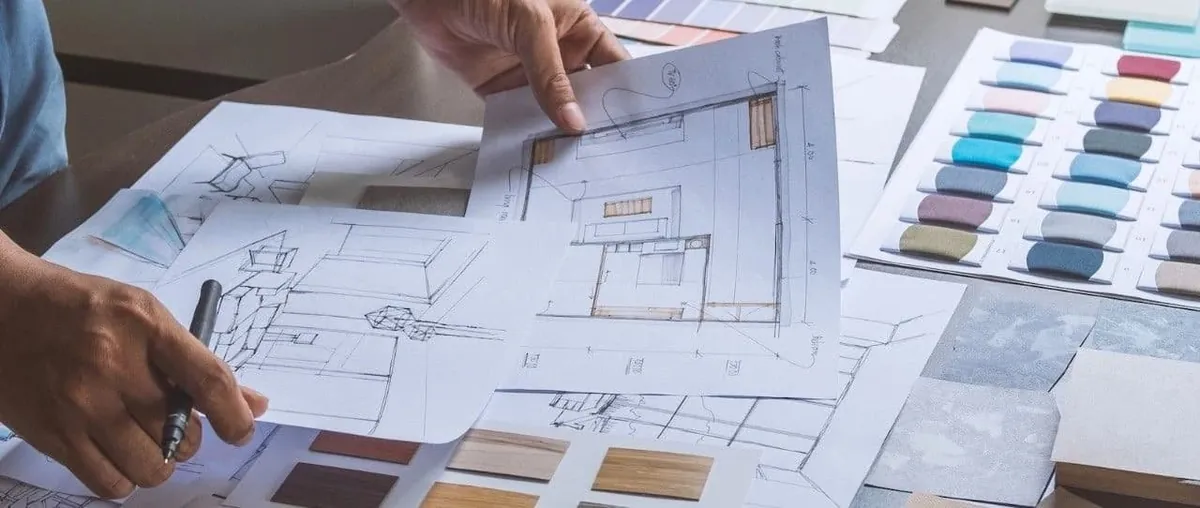
Every window is measured, with its depth and anything that might get in the way, and a free estimate follows, which you can consider at your own pace. If you would like help putting colors and fabrics together, our interior design consultations are there for that, and the guide to what happens at an in-home consultation covers the visit in more detail.

How installation day goes
Once everything is made, our certified Hunter Douglas installers come to fit it. A typical day looks like this.
- The installers check each window against the order before anything goes up.
- Brackets are fixed into solid framing so every shade and shutter hangs level.
- Each piece is mounted, adjusted and run up and down, or opened and tilted, until it moves smoothly.
- PowerView shades are paired with their remotes and the app, and any schedules are set up with you.
- You are shown how everything works before the installers leave.
The page on what happens on installation day explains it further.
One house, the right mix
Very few Yarmouth houses suit a single product throughout. A cape on 6A might have shutters in the front rooms, flat romans in the bedrooms and drapery in the parlor. A South Yarmouth ranch might pair rollers on the picture window with room-darkening honeycomb in the bedrooms and a vertical honeycomb on the slider. Keeping the color toward the glass and the head rails consistent is what makes a mix look deliberate. Planning all your window treatments in Yarmouth at once also gives you one free estimate. Our window treatments overview shows the full range.
Buying from a Hunter Douglas Gallery dealer
An antique cape and a sound-side ranch need very different things, and a Hunter Douglas Gallery dealer can supply both. That means slim inside-mount shades for small old windows, screens and banded shades for wide sunny glass, three shutter collections, drapery and PowerView, all from one conversation with us.
Our own installers are Hunter Douglas certified. We also offer interior design consultations, and repairs on blinds and shades you already have. Our Hunter Douglas page tells you more about the brand.
Sagamore is the closest showroom
Since the samples ride along in the van, most Yarmouth customers make every choice at home. To see the range in person first, head for our Sagamore showroom at the canal, the nearest to town. It is the same team from first look to final fitting.
Questions from Yarmouth
Our antique cape has low ceilings and small windows. What will not crowd them?
Shades that stack very slim when raised, such as honeycomb, roller or flat roman shades, mounted inside the opening. They keep the glass and the trim clear.
Which side of town needs which kind of shade?
Bay-side rooms usually want warmth and as much soft light as possible, so light-filtering honeycomb is common. Sound-side rooms usually need glare and heat control, so screens, banded shades and honeycomb lead the way.
The house next door is very close to our ranch. What gives privacy without darkness?
A top-down, bottom-up shade lets in the sky and covers the lower window. Shutters or blinds with the louvers tilted up do the same.
Do shutters suit a very old window?
They can, with narrow louvers and a frame chosen for the opening. We measure each window carefully, because old frames are rarely square.
Is the estimate really free?
Yes. After the consultation and measuring, the estimate costs nothing and covers every window on your list.
Book your visit
Fill in Request a Consultation with a day that suits you, and a consultant will arrive with the van, go through the house from the front room to the back slider, measure every window and leave you a free estimate. If a quick conversation would help first, use the call button, or drop in at the Sagamore showroom.