
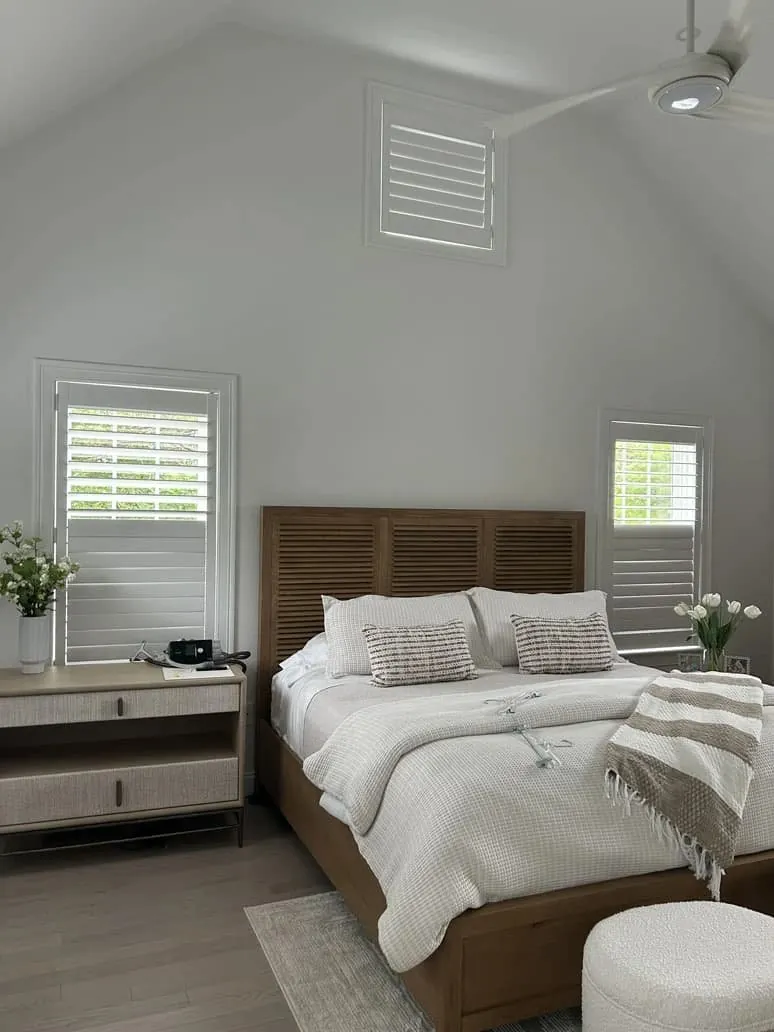
Tiny old panes and tall new glass in one town
Along Main Street the houses are antique colonials, many still holding very small original sash: narrow frames, little panes and trim shaped by hand long before anyone thought about fitting a shade. Turn off toward Route 123 and the picture flips. Out there the houses are large and newer, set well back from the road on wooded lots, with modern two-story glass in the family room or over the front stair. Choosing window treatments in Norwell, MA, usually means working with one of those two extremes, and sometimes with both under one roof, where an old house has been added onto.
The generous lots change the brief as well. With a long drive and a screen of trees between the front door and the road, privacy from the street is less of a worry than it is in a tight village center. What matters more is light: how the sun filters through the woods in each season, how a tall window warms a room through the afternoon, and how a small antique opening can be covered without hiding the woodwork that makes it worth keeping.
We look at every opening on its own terms first, then pull the house together into one plan.
Services with a page of their own in Norwell
Each card opens the Norwell page for that service, with more about how it suits the houses here. Between them they cover the full set of window treatments in Norwell, MA, that we plan, supply and fit.
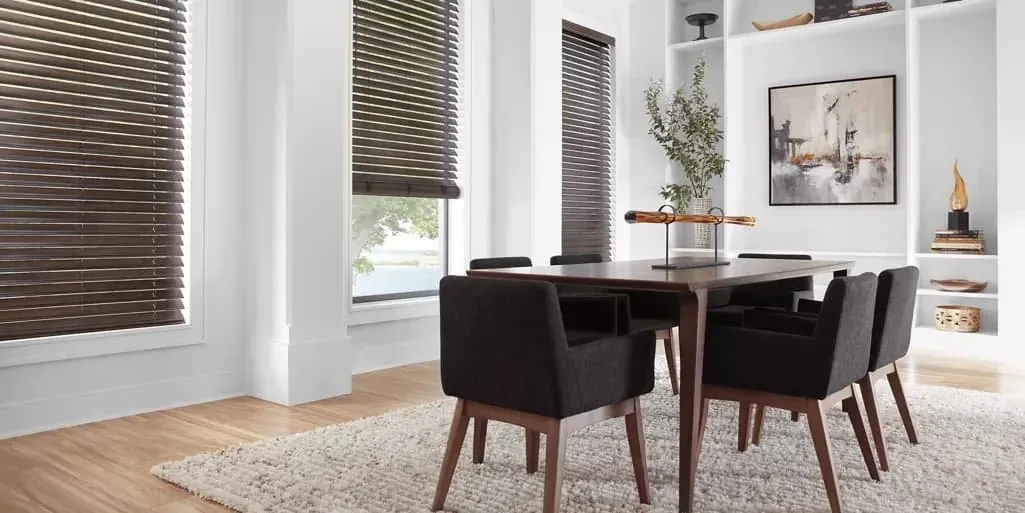
Custom Blinds
Wood, faux wood, metal and vertical blinds. A real wood slat sits comfortably beside the dark trim of an antique dining room.
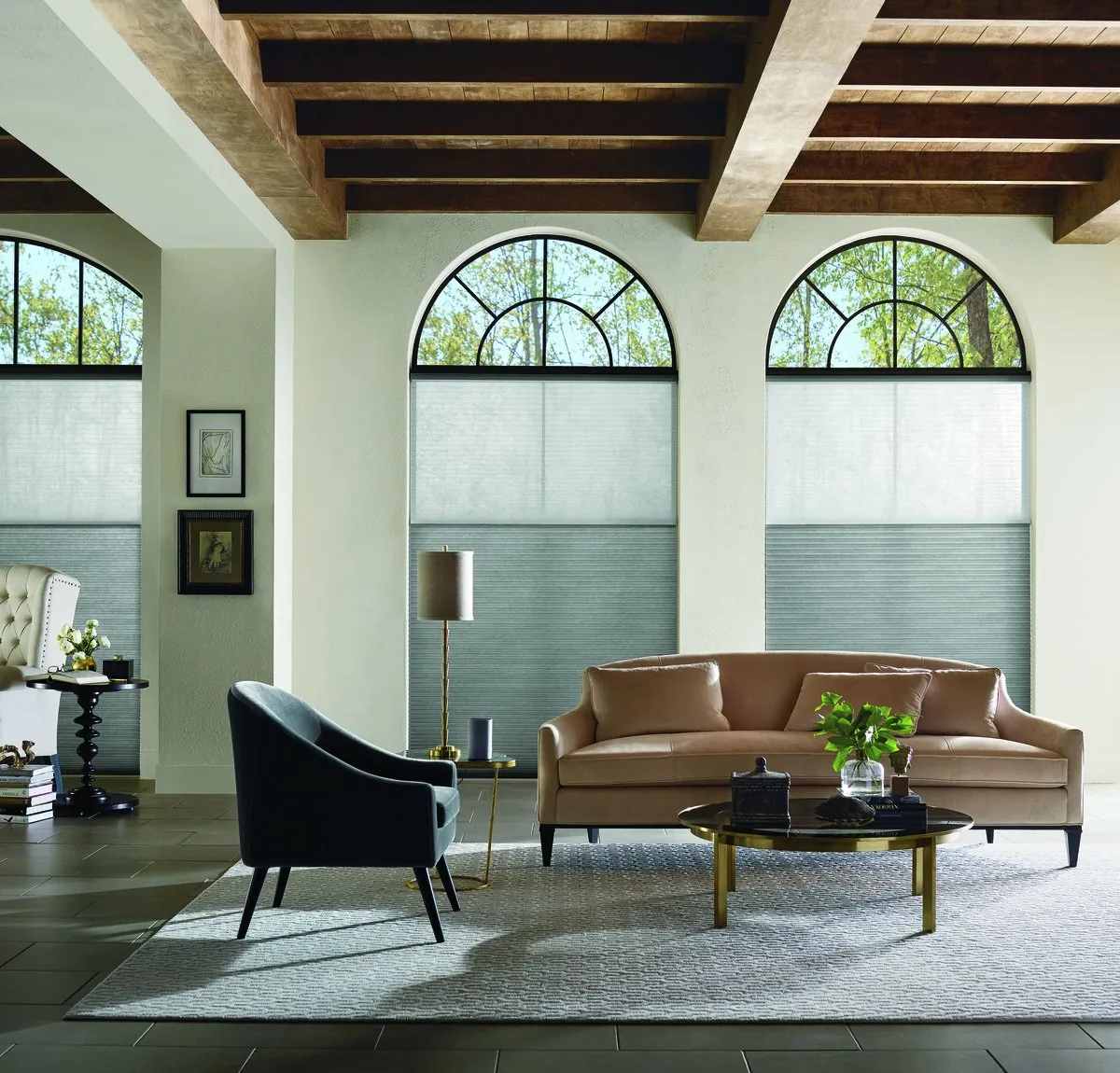
Cellular Shades
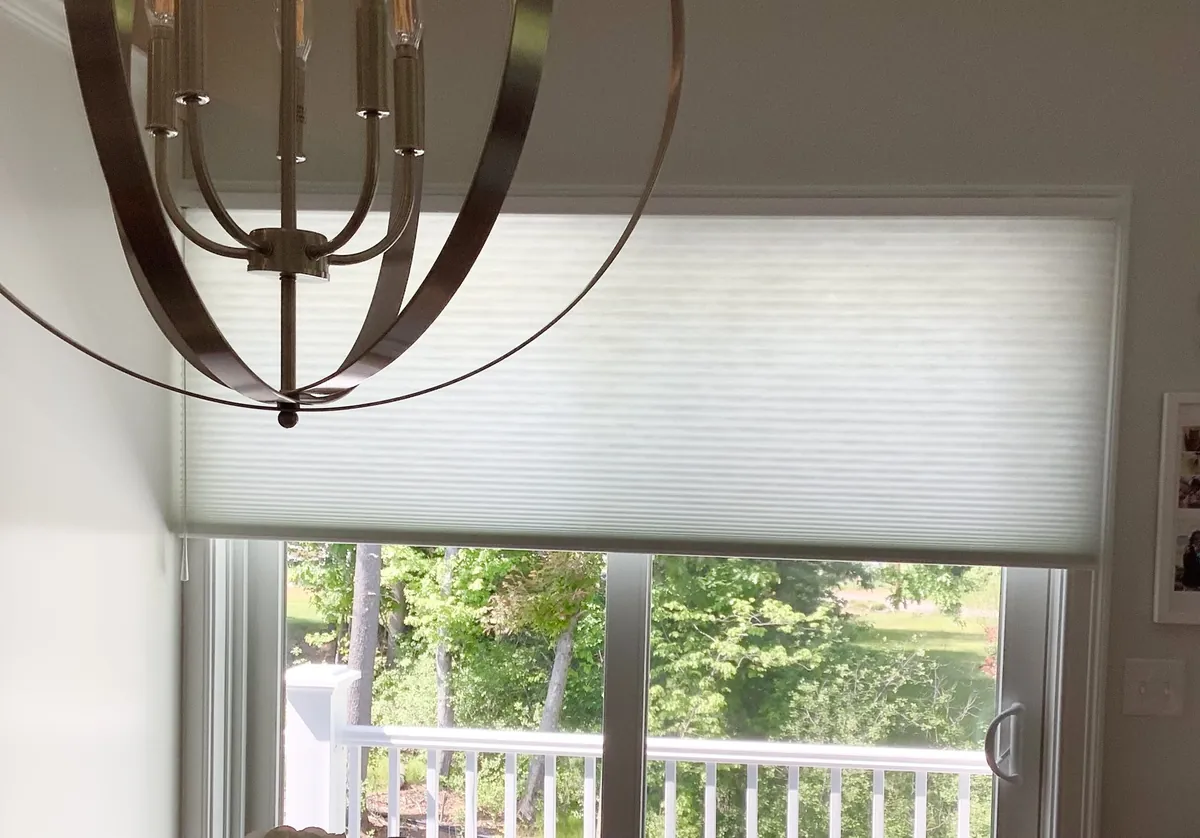
Duette and Applause honeycombs. Each cell holds a pocket of air against the glass, which is why a room keeps its warmth.
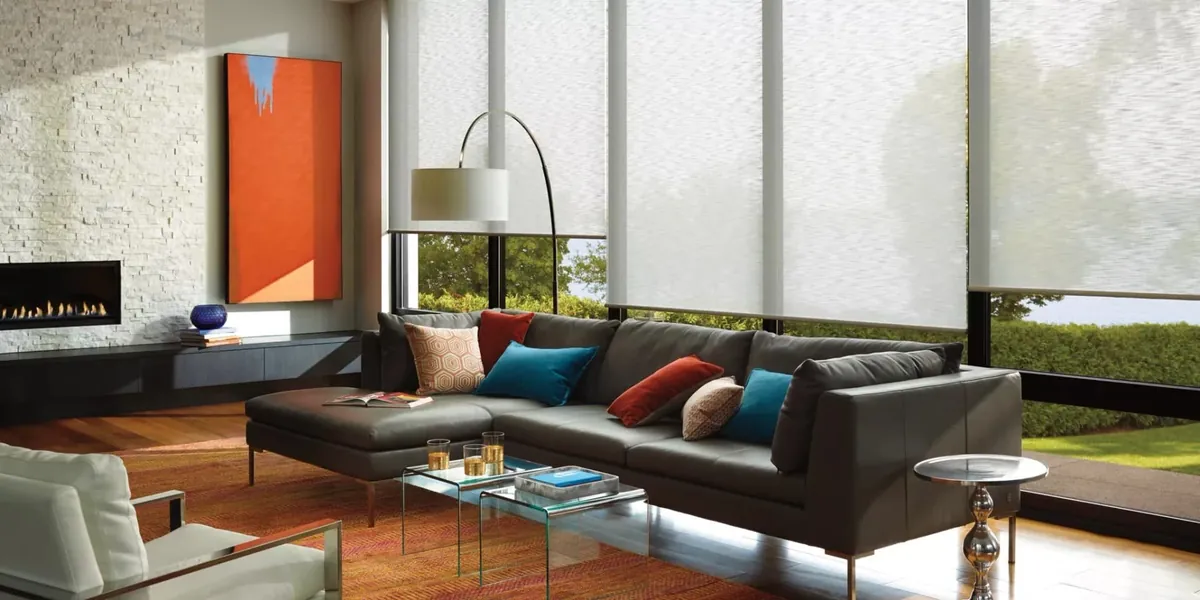
Roller Shades
Designer and Alustra rollers and solar screens. The openness of a screen decides how much of the woods you still see.
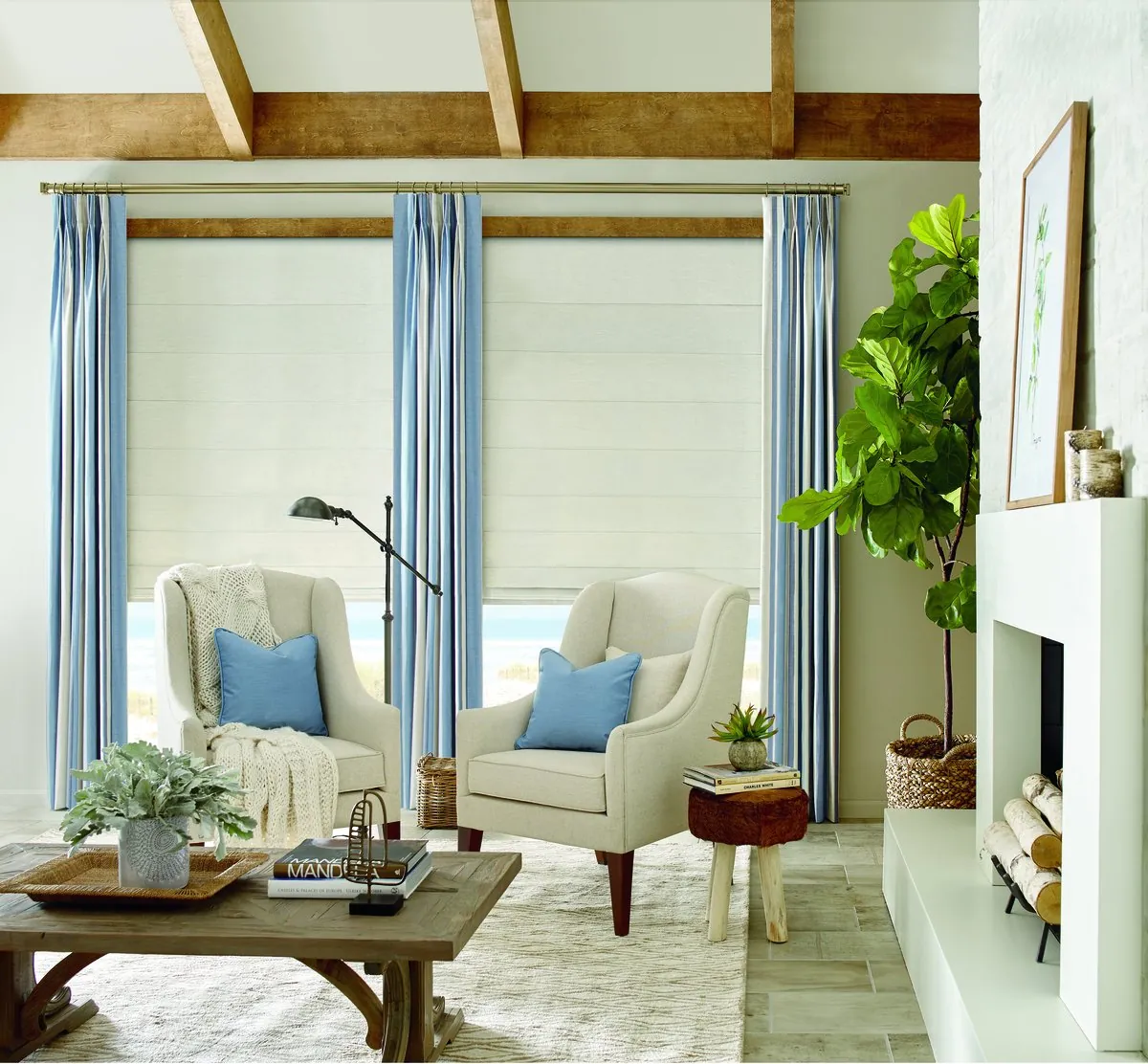
Roman Shades
Vignette and Carole Fabrics romans, flat or folded, for a front parlor or a formal dining room that wants soft fabric.
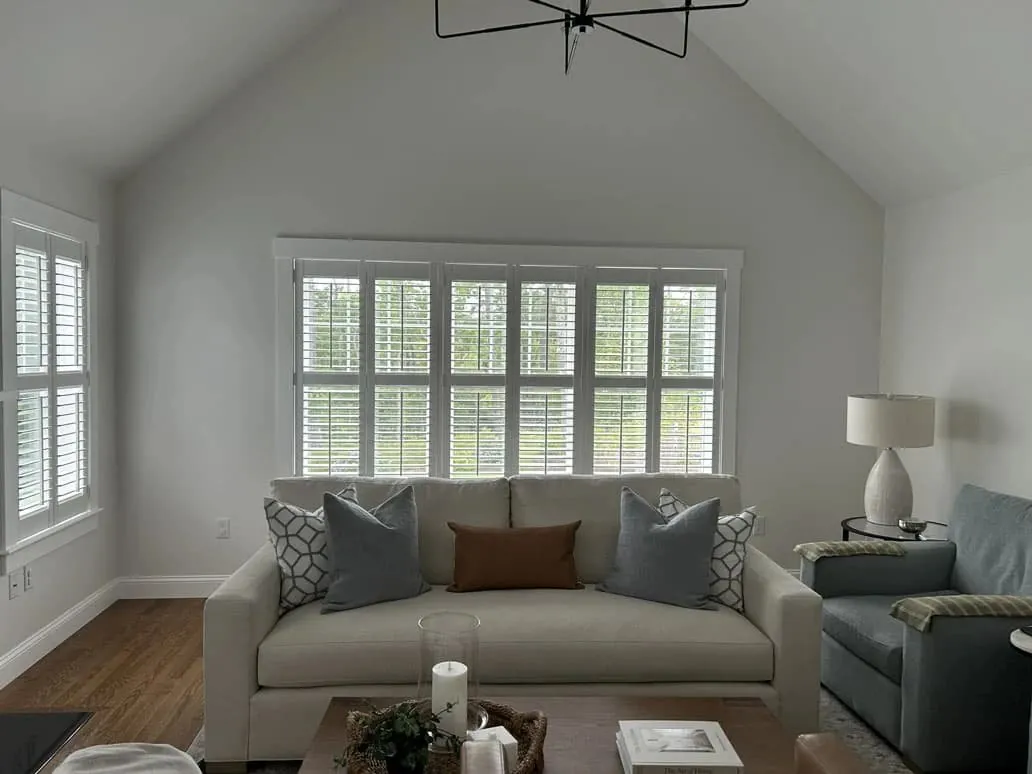
Plantation Shutters
Palm Beach, NewStyle and Heritance, with the louver size and frame style picked to suit each opening.
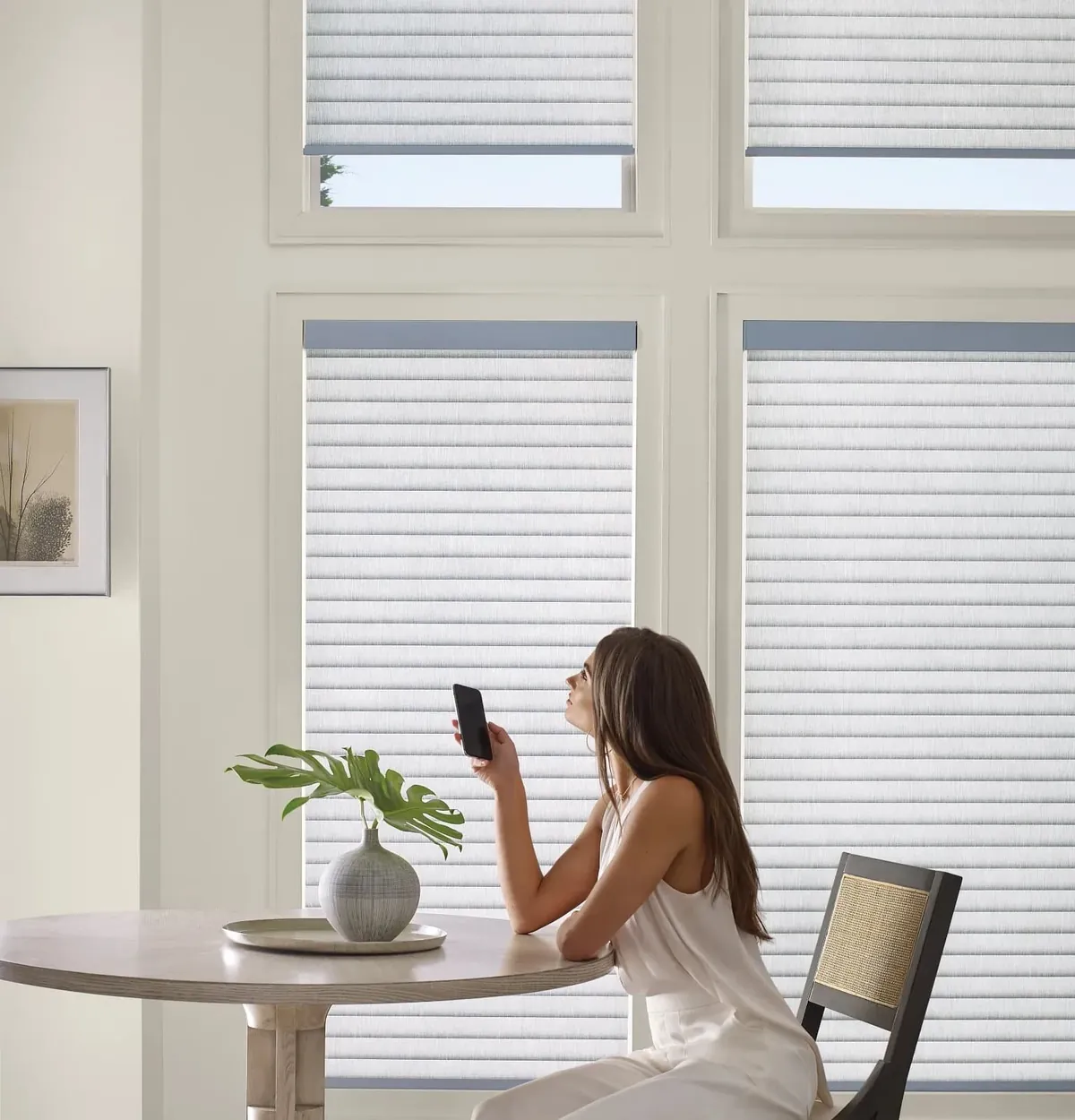
Motorized Blinds and Shades
PowerView runs shades from a remote, an app or a schedule, which is how most two-story glass ends up being worked.

Hunter Douglas Dealer
The whole Hunter Douglas catalog through a Gallery dealer, with certified Hunter Douglas installation on each order.
Antique colonials on Main Street
The older colonials in the center were built to a pattern: a front door in the middle, rooms either side, a big chimney and rows of small sash windows lined up across the facade. Inside, those windows often sit in thick walls with a deep sill and a wide casing, sometimes with interior shutters that were painted shut years ago. The panes are small, the frames are narrow, and very few of them are perfectly square any more.
That combination is where a careless fit shows. A blind or shade that is a fraction too wide catches on the trim. One that is a fraction narrow leaves a bright line of light down each side. A headrail chosen for a modern window can look heavy on a frame this slender. So the first question in an antique room is not which product you like, but how much room the frame gives us and how much of the old woodwork you want to see.
In many front rooms the answer is a slim inside-mounted honeycomb, a roman shade that folds up neatly above the glass, or a shutter built to the opening. In a room where the casing is the best thing about the window, we may suggest mounting nothing on it at all and setting a shade inside the frame so the trim stays fully in view.
Measuring a small original sash
Old frames move. Over many winters they settle, swell and shrink, so one side of an opening can be a little taller or wider than the other. That is why an antique window gets measured more than once:
- across the top, the middle and the bottom of the opening, to find the narrowest point;
- down both sides and the center, to see how far the frame has leaned;
- front to back at the head, to see whether there is depth for a headrail inside the frame;
- and around any lock, latch or old pulley that sticks out into the space a shade has to travel through.
Those figures settle whether a covering mounts inside the opening or on the casing, and they go straight into the order, so what arrives is made for that frame rather than for a stock size. Our guide to window measuring terms explains inside and outside mounts if you want to follow along.
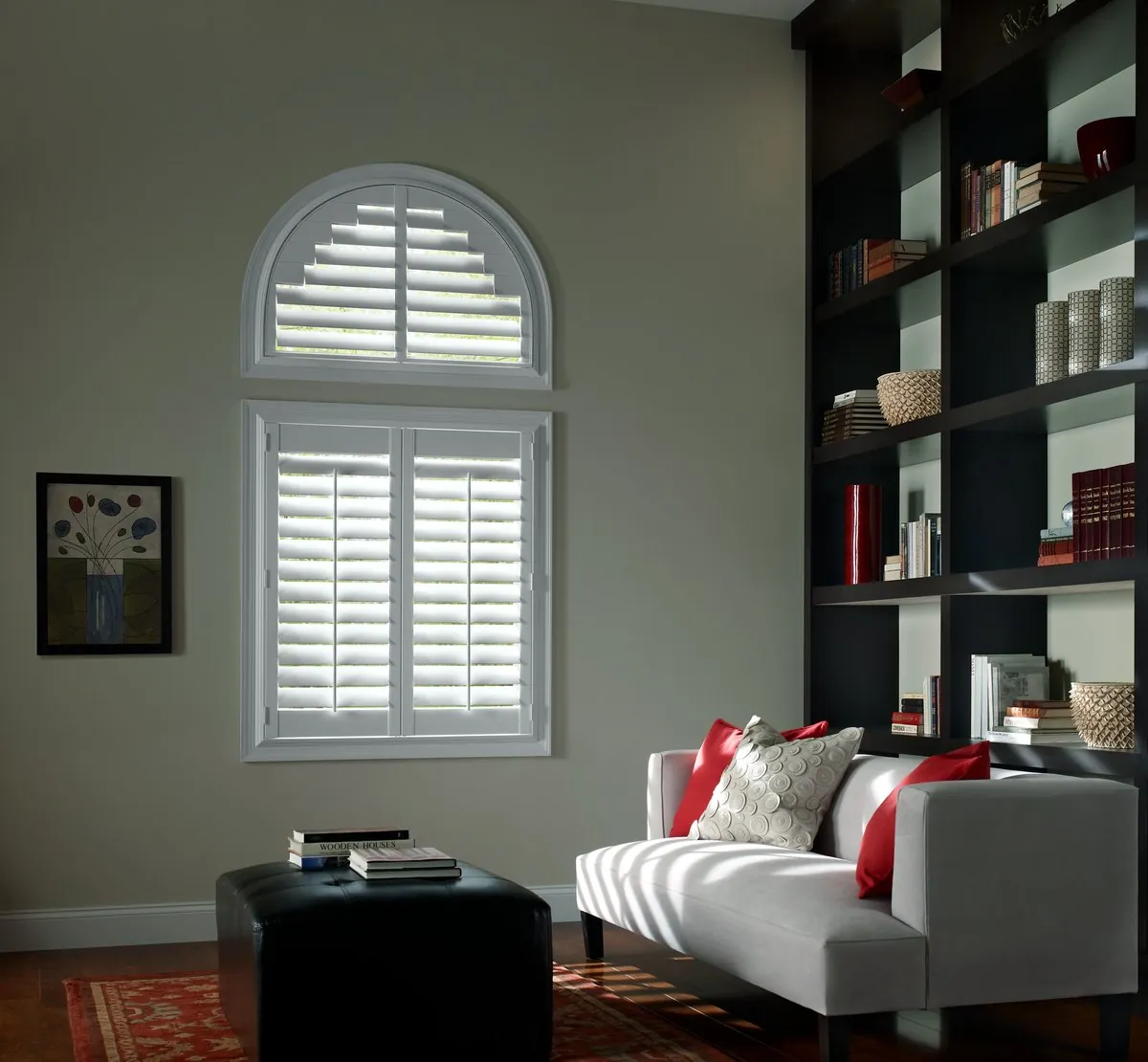
Keeping the woodwork on show
Plenty of Main Street houses have trim, window seats and built-ins that have been carefully restored. Covering them up would be a waste. Shutters suit these rooms well because a shutter panel can sit inside the opening and swing clear when you want the full window, and the louvers can be tilted for light without opening anything. Our page on shutters for older windows goes into the fitting in more depth.
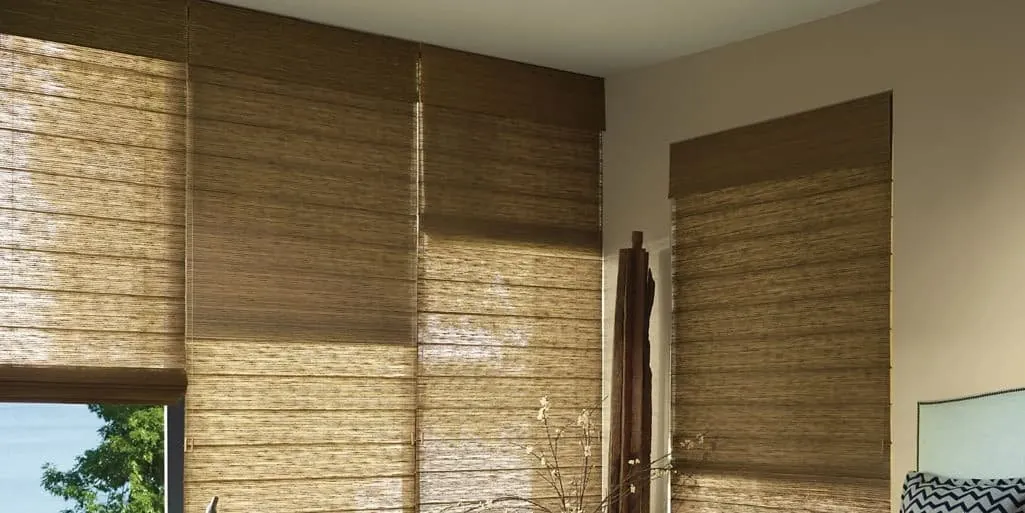
Fabric is the other route. A flat roman in a plain linen weave can sit quietly inside a deep frame and fold away into a tidy stack at the top. Natural woven shades bring texture without fuss and look at home against painted wood. Whatever you pick, we keep the line of the frame clean, so the window still reads as the original.
Big houses on wooded lots off Route 123
The newer houses out toward Route 123 are built on a different scale. They tend to have a two-story foyer, a family room open to the kitchen, a bank of glass across the back facing the woods and plenty of bedrooms upstairs. The windows are modern and square, so fitting is straightforward, but there are a lot of them, and a few are large enough to need real thought.
Because these houses sit back from the road among the trees, the back windows are often left bare at first, with coverings added only when the afternoon sun becomes a nuisance or a bedroom will not stay dark on a summer morning. That is a sensible order to work in. Start with the rooms that bother you most, then match the rest of the house so the windows look consistent from the drive. We are happy to plan the whole house at the first visit and fit it in stages, so the order you buy in is up to you.
Two-story glass: reaching it and running it
A tall window over a foyer or a family room is where people stall, because nobody wants a shade they cannot reach. Motorization solves it. With PowerView, the upper shades go on a remote, the app on your phone or a schedule, and you never need a ladder to lower them. We plan how each motor is powered at the visit, and the installers set the shades to stop where you want them.
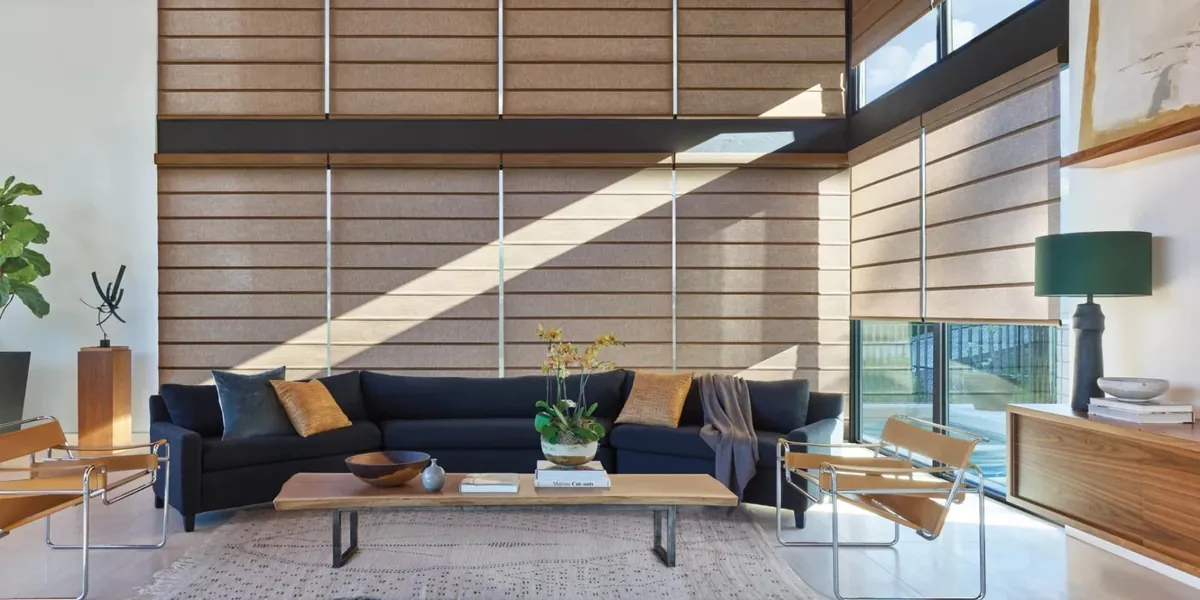
Which fabric goes up there depends on the sun. A sheer or a light screen softens glare and keeps the treeline in view. A honeycomb holds more warmth at night. On a south or west wall, a solar screen with a tighter openness cuts heat and brightness on the furniture through the late afternoon. The best shades for sun and glare guide compares them side by side.
Light through the trees, season by season
A wooded lot gives a house very different light through the year. In summer the canopy shades the walls and the rooms stay dim and green. In late autumn the leaves come down and the low winter sun pours straight in, often onto floors and furniture that were in shade for months. A room that seemed to need nothing in July can feel glaring in December.
That is worth planning for. A shade that filters light rather than blocking it handles both seasons: open in summer when the trees do the work, lowered in winter when the bare branches let the sun through. Honeycombs and sheers both do this well. In a bedroom, where you want darkness all year, a heavier fabric does the job regardless of what the trees are doing.
Old at the front, new at the back
Some of the most interesting houses in town are antique colonials with a modern addition behind: a kitchen and family room with tall new windows, joined to front rooms full of small original sash. Walking from one to the other, you go from frames a few inches deep to openings that run floor to ceiling.
The trick is making the two halves feel like one house without forcing the same product onto both. We often pick a color and a fabric family that works in each part, then change the product. Shutters or slim honeycombs in the old rooms, larger honeycombs or rollers on the new glass, all in the same white or the same warm neutral. From the drive the house reads as one, and each room still gets a covering that suits its windows. Of all the window treatments in Norwell, MA, that we plan, these joined houses take the longest to settle, simply because there are two sets of rules to respect.
Why work with a Hunter Douglas Gallery dealer
Blinds & Designs is a Hunter Douglas Gallery dealer, and every order is hung by certified Hunter Douglas installers. For a house with small antique sash in one wing and two-story glass in the other, that matters: the whole catalog is open to you, and the people fitting it know the product.
The same company handles in-home consultations with vans full of samples, free estimates, interior design consultations, PowerView automation and repairs to coverings you already own. One plan, one order and one installation crew, from the first swatch to the last bracket.
The rooms you use most
Kitchens. In the newer houses the kitchen is usually open to the family room, so the windows over the sink and the glass on the slider are seen together. A matching honeycomb or roller across both keeps the space calm, with a vertical honeycomb or vertical blind on the slider so it stacks to one side when you step out to the deck.
Bathrooms. Faux wood blinds and shutters are the usual choice where a room gets steamy. In an antique bath with a single small window, a shutter panel sized to the opening gives privacy and a finished look.
Bedrooms. Upstairs rooms on the east side catch the first light, which comes early in summer. A fabric that dims the room, inside a frame that leaves no gaps, makes the difference. On the very small antique sash, a honeycomb with a narrow headrail fits where little else does.
Studies and libraries. Plenty of the older houses have a small front room used as an office or library. A wood blind lets you angle the light off a screen or a reading chair without closing the room in.
In a big newer house it is easy to end up with a different covering in every room. We would rather help you choose window treatments in Norwell, MA, that share a color and a line, so the house looks considered from the drive and from the woods behind it.
How a home visit runs
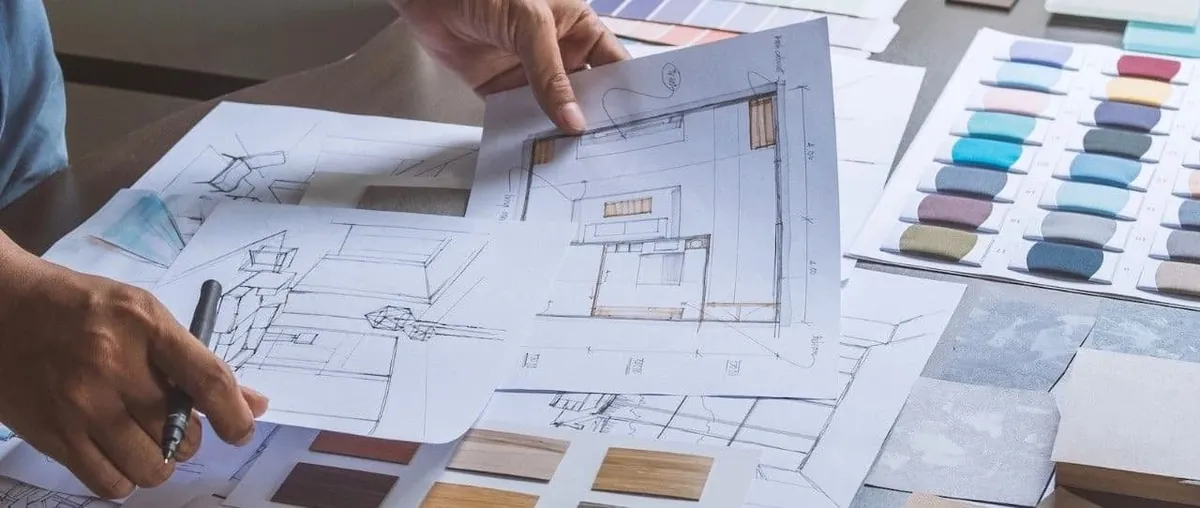
Most of our work in town starts with a visit to the house, because nobody can judge an antique sash or a two-story window from a photograph. We can bring the showroom to you: the vans carry samples of shades, blinds, shutters and drapery fabrics. The visit goes in this order:
- You request a consultation online or tap the call button, and we agree a time.
- A consultant arrives with the van and walks the house with you, front rooms and addition alike.
- Samples are held up in each window, so you see how the light comes through in your own rooms.
- Every opening is measured, with extra care on the old frames.
- We talk through options room by room, including which windows might be worth putting on PowerView.
- You receive a free estimate, and there is no rush to decide.
If color and fabric across an open-plan room feel hard to judge, our interior design consultations are there for that. The in-home consultations page has more on the visit itself.
Installation day
When the order arrives from Hunter Douglas, we arrange a date for fitting. The certified installers check each covering against its opening, mount the brackets level into solid wood, hang and adjust each shade, and pair any motors with the remote or app. On the antique frames they take particular care around old trim and plaster. Before they leave, they show you how each covering works and take the packaging with them. Our installation day guide walks through it in more detail.
Repairs on what you already have
Not every visit is about new coverings. If a shade in one of the older rooms has stopped lifting evenly, or a blind will not tilt, we are glad to look at it. Repair is a service we welcome, and if replacing something would be the better spend, we will say so. See blind and shade repair for more.
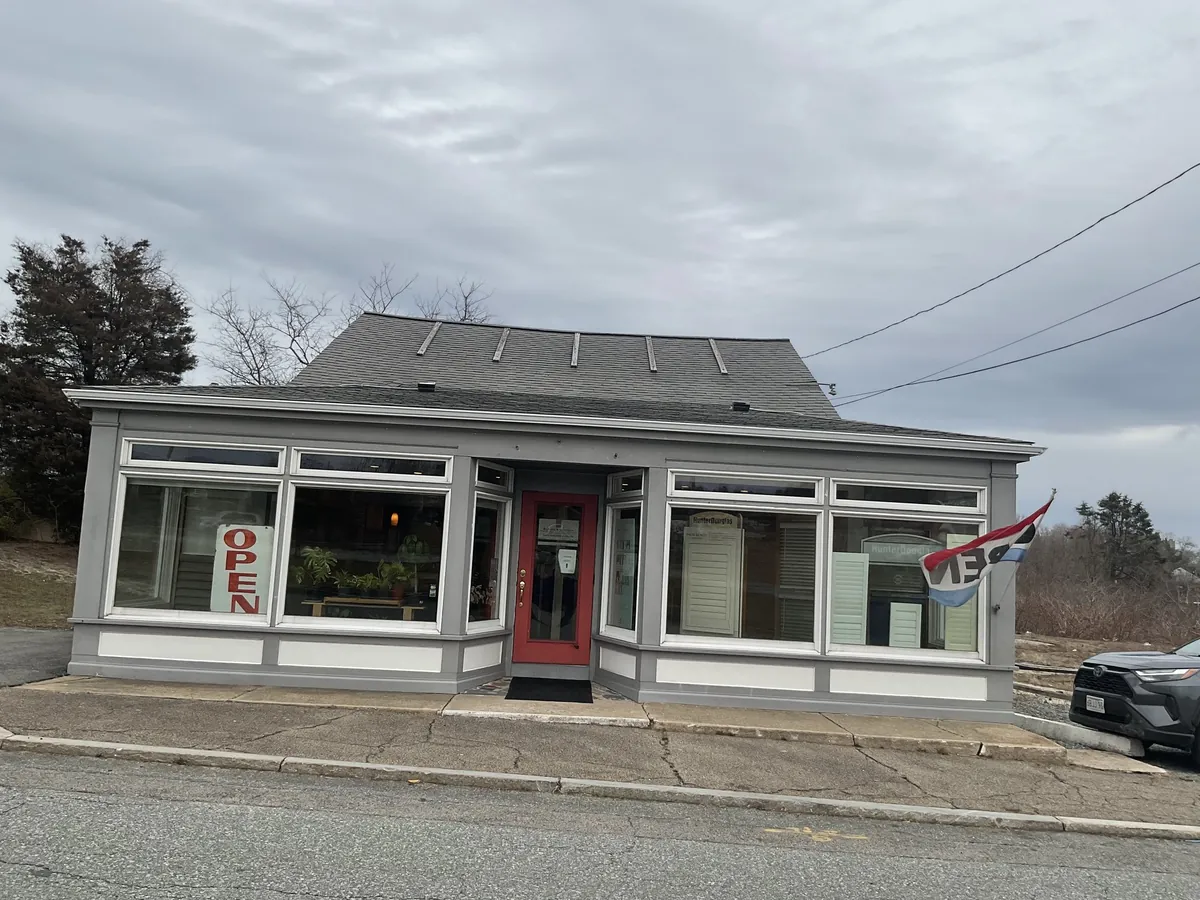
The Sagamore showroom is our nearest
The showroom nearest to Norwell is in Sagamore. Some people like to stop in before a home visit with a photo of a tricky window or a fabric swatch from the sofa.
Most decisions still get made at home, where you can see a sample against your own walls and in your own light. Both routes work, and you are welcome to use either.
Questions from Norwell
Can you fit a shade inside a very small antique window?
Often, yes. We measure the depth of the frame at the head before anything else. If there is room for a headrail inside, a slim honeycomb, a roman or a shutter can sit within the opening and leave the trim on show. If not, we mount on the casing and keep the hardware as discreet as we can.
How do I lower a shade on a window over the foyer?
Most two-story glass ends up on PowerView, with the shades run from a remote, an app or a schedule. We plan how each motor is powered at the visit, so you know what to expect before you order.
My back windows face the woods. Do they need anything at all?
In summer the trees do most of the work. In winter the leaves are gone and the low sun comes straight in, which is when a filtering shade earns its place. Bedrooms usually want a darker fabric year round.
Should the old part and the new addition match?
They should look related, not identical. We usually keep one color and fabric family across the house and choose the product to suit each set of windows, so the front rooms and the addition both look right.
Is there a charge for the estimate?
No. Estimates are free. After the visit you receive a written estimate for the coverings you chose, and you can take your time with it.
Ready when you are
Window treatments in Norwell, MA, start with a look at the actual windows. Whether it is one antique sash or every window from the foyer to the back deck, the first step is the same: request a consultation and we will arrange a visit. The samples come to you, each opening gets measured, and a free estimate follows. Prefer to talk first? Use the call button, or stop by the Sagamore showroom.
If you want to see the whole range first, our window treatments page has it all.