
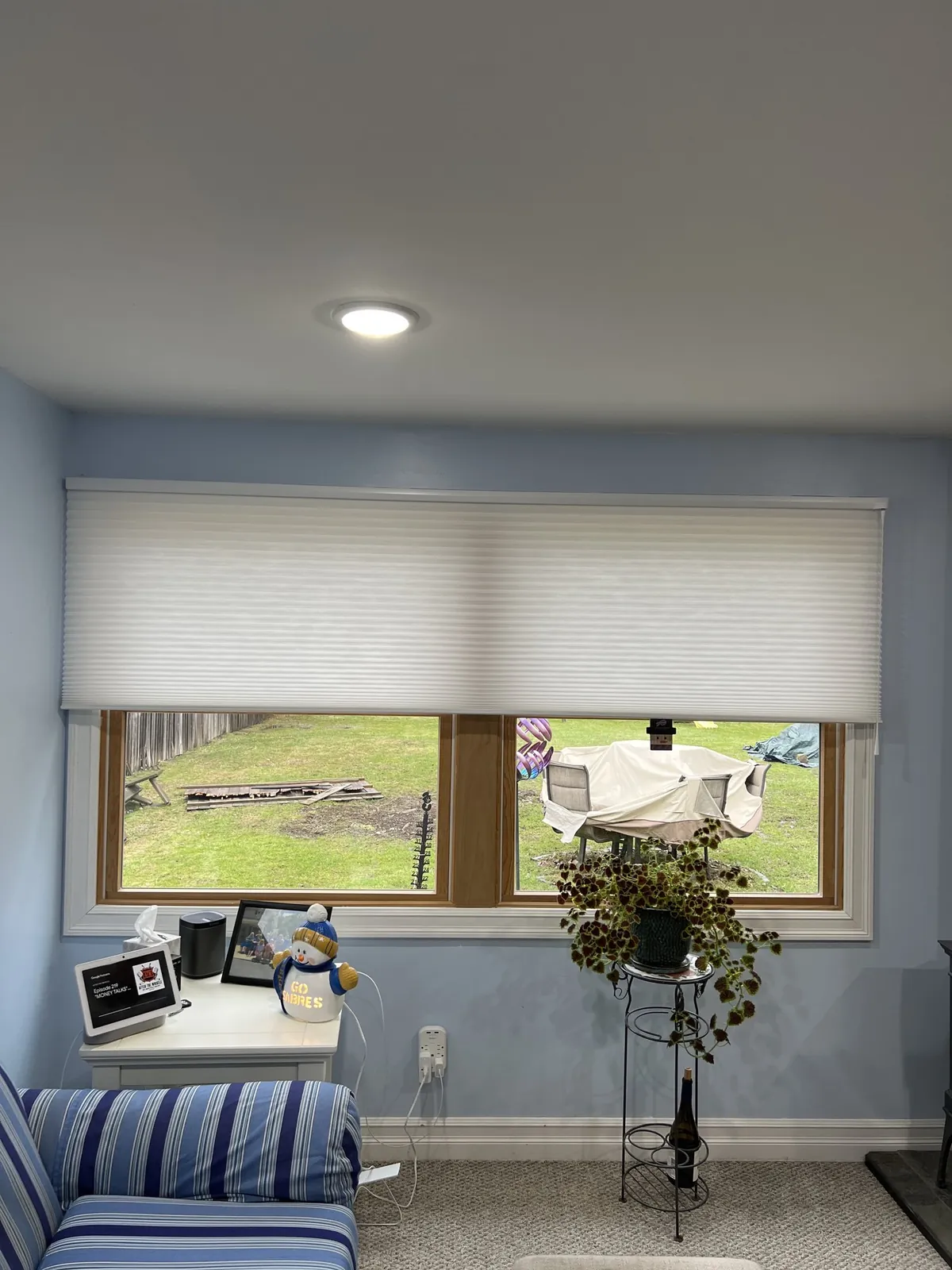
Tiny old openings, set well back from the road
Upton is a low-density town. The antique colonials and farmhouses sit on large lots, many of them with deep setbacks that keep the house well back from the road. In the oldest of those houses, the original openings are very small, sometimes surprisingly so, and a room may have only one or two of them.
Newer colonials make up much of the rest, especially off Route 140. Their windows are standard modern sizes, there are more of them, and the rooms are generally brighter.
So window treatments in Upton, MA, start from opposite ends. In an antique house with tiny openings, the job is to protect every bit of daylight the windows let in, while still giving warmth and privacy when needed. In a newer colonial, there is light to spare, and the job is to manage it across many windows in a consistent way.
Upton pages for every service
Each card links to the Upton page for one service. Those pages go deeper into how it suits the antique houses and the newer colonials.
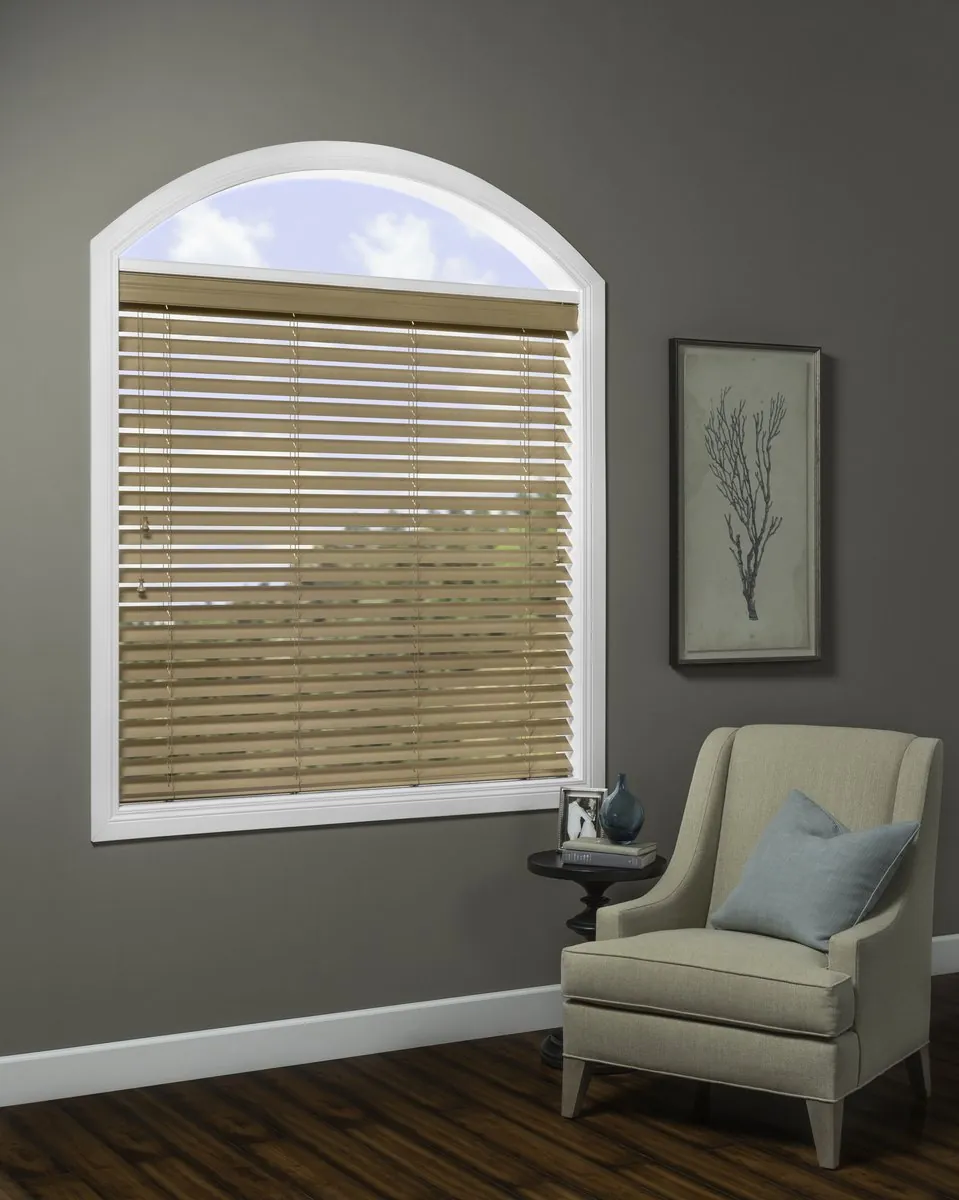
Custom blinds
Wood, faux wood, metal and vertical blinds, each one built to its own window’s size.
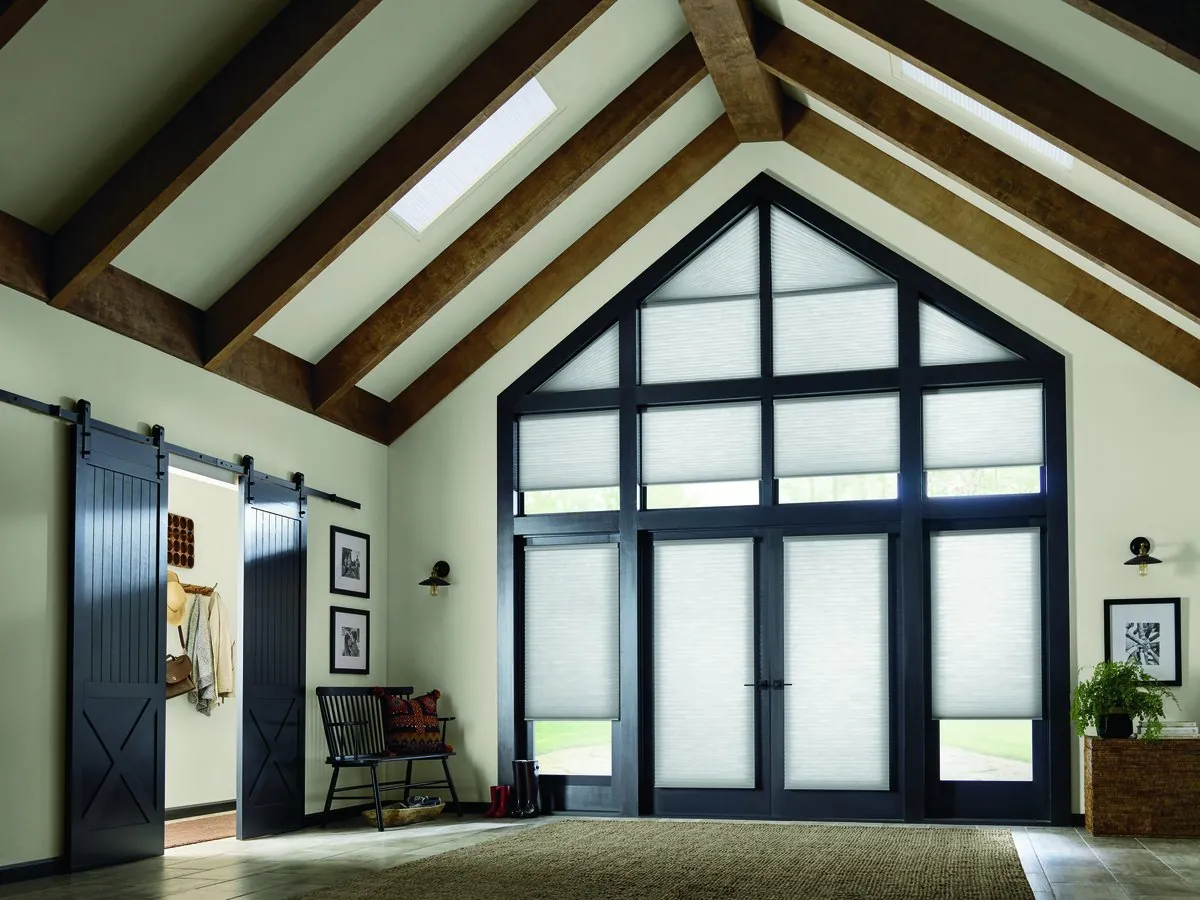
Cellular shades
Duette and Applause. Their cells trap air against the glass, so a cold antique room stays warmer.
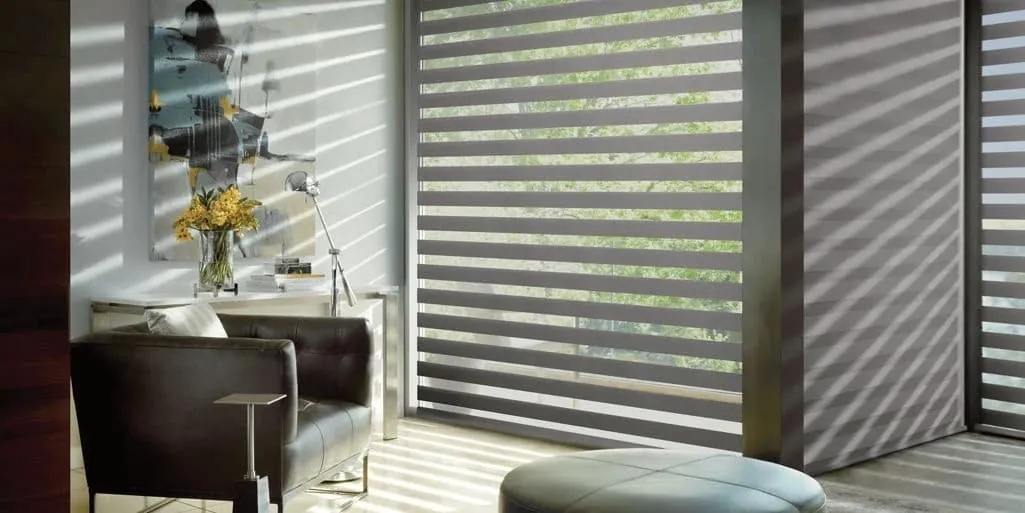
Roller shades
Designer and Alustra rollers and screens. The screen’s openness trades view against glare.
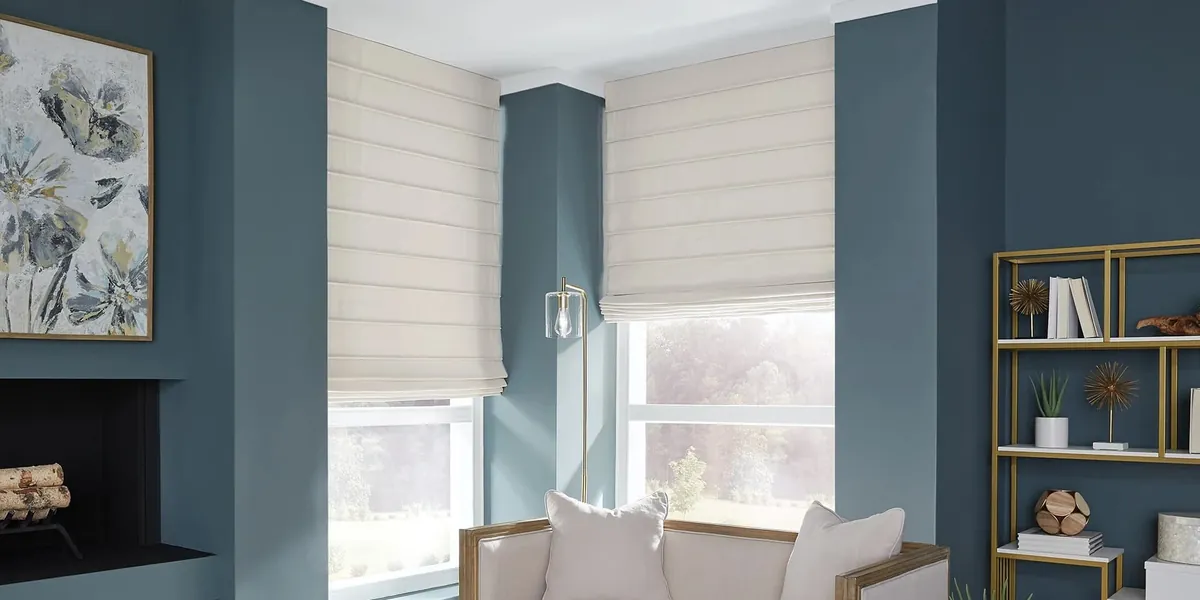
Roman shades
Vignette and Carole Fabrics, in flat and folded styles, to soften a parlor or a colonial bedroom.
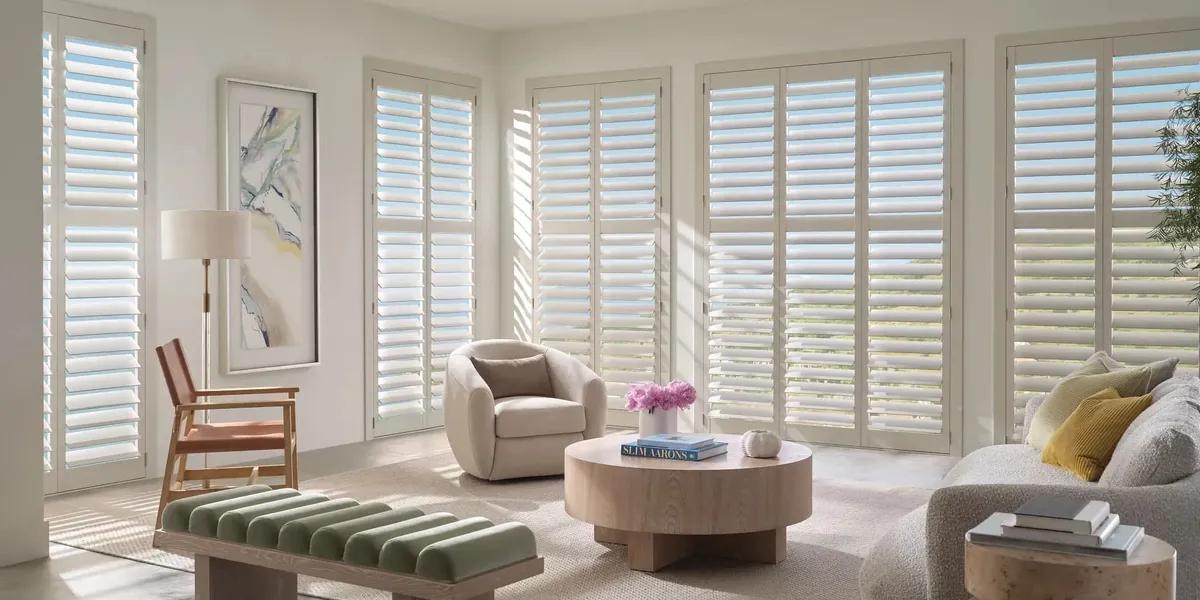
Plantation shutters
Palm Beach, NewStyle and Heritance. A small antique opening needs a louver and frame in proportion.
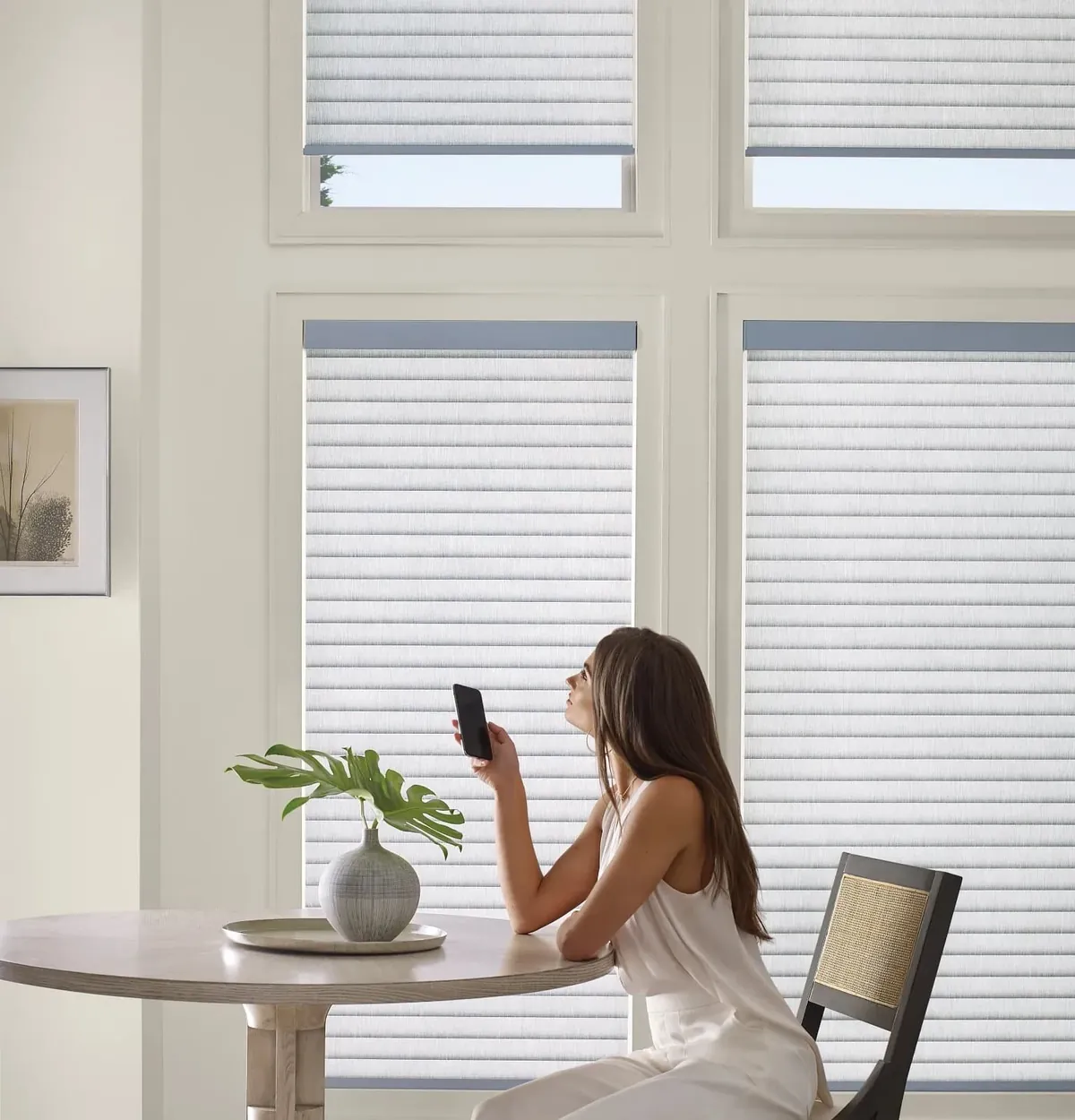
Motorized blinds and shades
PowerView control by remote, app or schedule, handy in a big colonial with many windows.
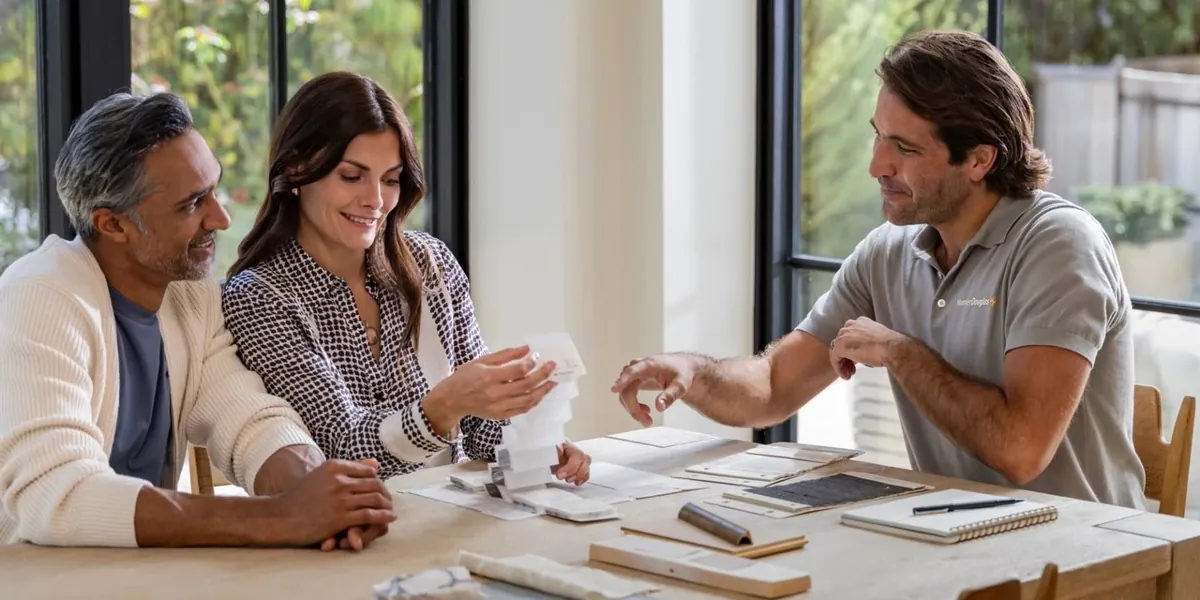
Hunter Douglas dealer
We are a Hunter Douglas Gallery dealer. Certified Hunter Douglas installers fit what you order.
Every pane counts in a small-windowed room
In the oldest Upton houses, the openings are small, and a room with two small windows has only so much daylight to work with. A covering that blocks part of the glass even when it is raised can make a noticeable difference to how bright the room feels.
That changes how we choose. In these rooms, we look for coverings that clear the glass well when they are open, so the window lets in all the light it can during the day. A roller rolls up into a slim tube at the top. A honeycomb folds into a compact stack. A shutter swings fully open, leaving the whole opening clear. A blind can be raised all the way up, or simply left down with its slats open, which keeps most of the light.
We also think about the fabric. A heavy, dark fabric that suits a large modern window can make a small antique room gloomy in the daytime. A lighter color and a light-filtering weave usually work better, with a denser option kept for bedrooms where darkness matters at night.
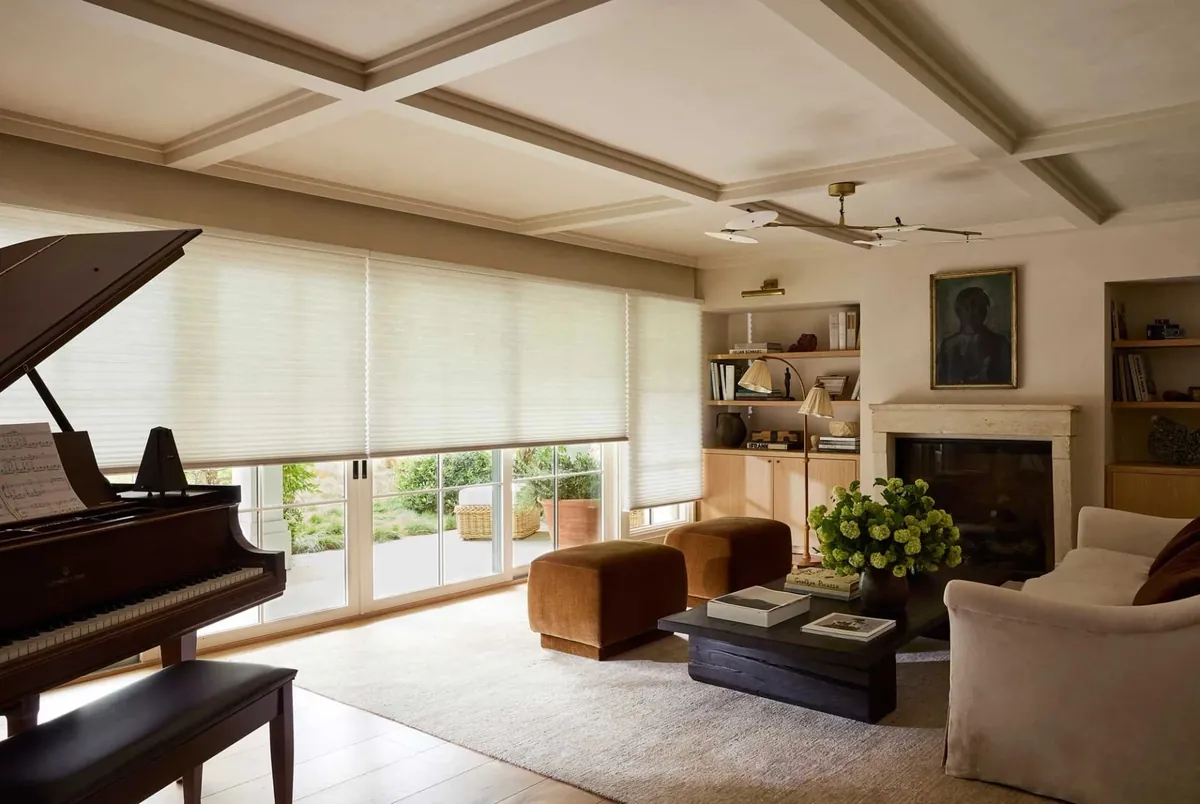
Making a very small window look its best
A very small window can look lost on a wide wall. The right covering can help it sit better in the room. Mounted inside the frame, a shade or blind keeps the old casing visible and lets the window read as part of the house’s original fabric, which suits a formal antique room. Mounted just outside, with the covering a little wider than the glass, it can make the window feel slightly larger, which suits a room where the window looks too small for the wall.
Which way to go depends on the casing, the room and what you prefer, and we show you both at the visit. The consultant also checks each frame, because in an old house two windows on the same wall can be different sizes, and a frame may not be square. The guide to window measuring terms explains inside and outside mounts if you want to read ahead.
Choosing a product for an antique room
Not every product suits a very small opening. Some have hardware that looks bulky on a tiny frame, and some fabrics are too busy for a window that is only a few panes wide. These are the choices we suggest most often in Upton’s oldest houses:
- Honeycomb shades fold up small and hold warmth at the glass. A good everyday choice for bedrooms and sitting rooms.
- Shutters look as if they belong to the house. A louver size in proportion to the window and a slim frame keep them from overwhelming a small opening.
- Wood blinds in a stained finish sit well against old woodwork and tilt for privacy.
- Flat roman shades in a plain or quiet fabric give a soft, tailored look in a parlor.
- Rollers are the simplest of all and disappear almost completely when raised.
For more on older windows, see our guide to shutters for older windows.
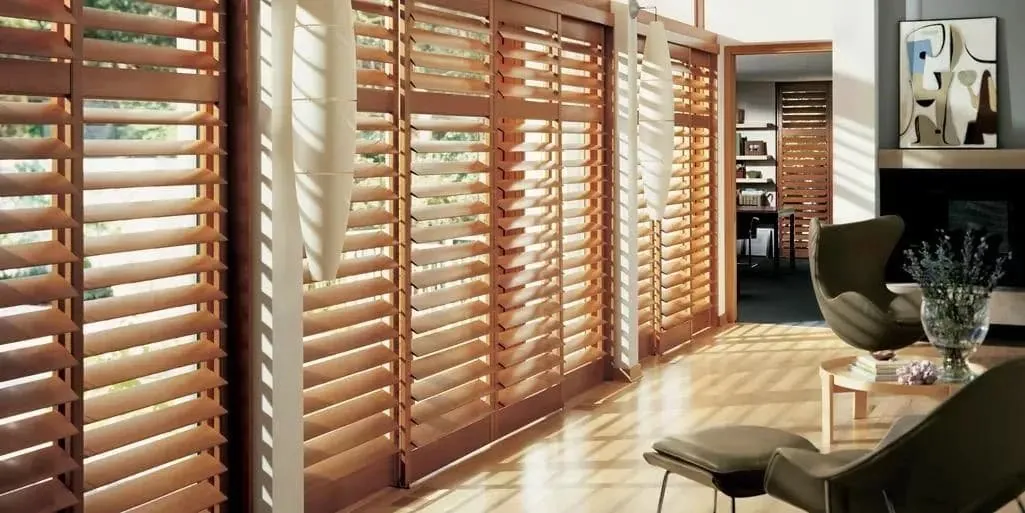
Old houses and cold glass
An antique colonial or farmhouse with small original openings was built long before modern glazing, and the glass can feel cold in winter. Small windows lose less heat than big ones, simply because there is less glass, but a cold pane next to a reading chair is still uncomfortable.
Honeycomb shades help in a direct way. The cells hold a layer of air between the room and the glass, so a Duette or Applause shade lowered on a winter evening keeps more of the room’s warmth in. Our guide to cellular shades and winter heat explains how.
For a parlor, layering adds warmth and softness: a honeycomb or roman inside the frame with drapery hung outside it. Because the windows are small, drapery panels can be hung so they rest beside the glass when open, keeping the daylight the room relies on.
The newer colonials off Route 140
Off Route 140, the newer colonials are a different kind of house altogether. They are larger, with more windows on every side, standard modern sizes and frames deep enough for most products to sit inside the opening. Light is rarely in short supply here.
What these houses need most is a plan. A colonial can have many windows across two floors, and choosing one at a time can leave the house looking patchy from outside. Choosing window treatments in Upton, MA, for a newer colonial usually starts with picking one main product and color for most of the house, then deciding where to make exceptions.
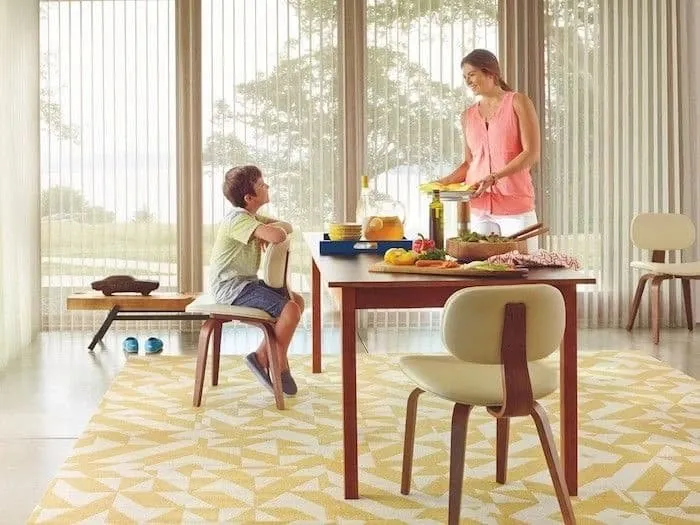
A common pattern looks like this: honeycombs or shutters in most rooms, in white or a soft neutral; faux wood blinds in the kitchen and bathrooms; solar screens on any west-facing family room that takes the afternoon sun; and a vertical blind or vertical honeycomb on a slider to the deck.
Even set well back, the front of a colonial is what you see first as you come up the drive. Two floors of evenly spaced windows look their best when every covering facing that way shares one color and sits at a similar height when raised. Inside, each room is free to use what suits it.
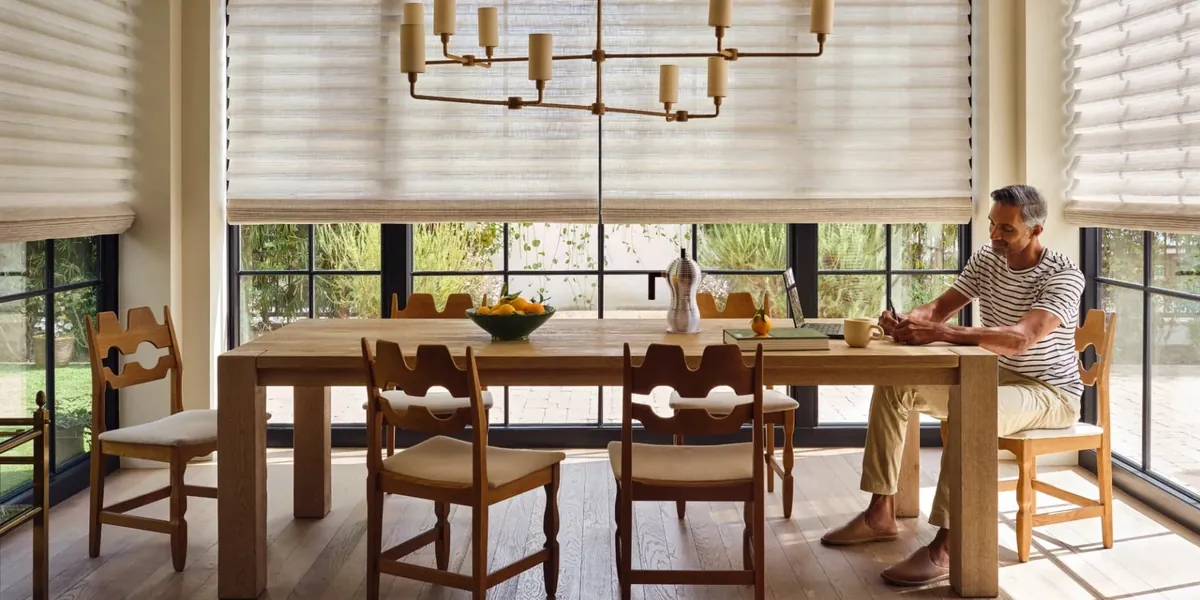
Family rooms and open plans
Many newer colonials have an open kitchen and family room at the back, with a wide window or a slider looking over the yard. These rooms get used all day, and the light in them changes a lot from morning to evening.
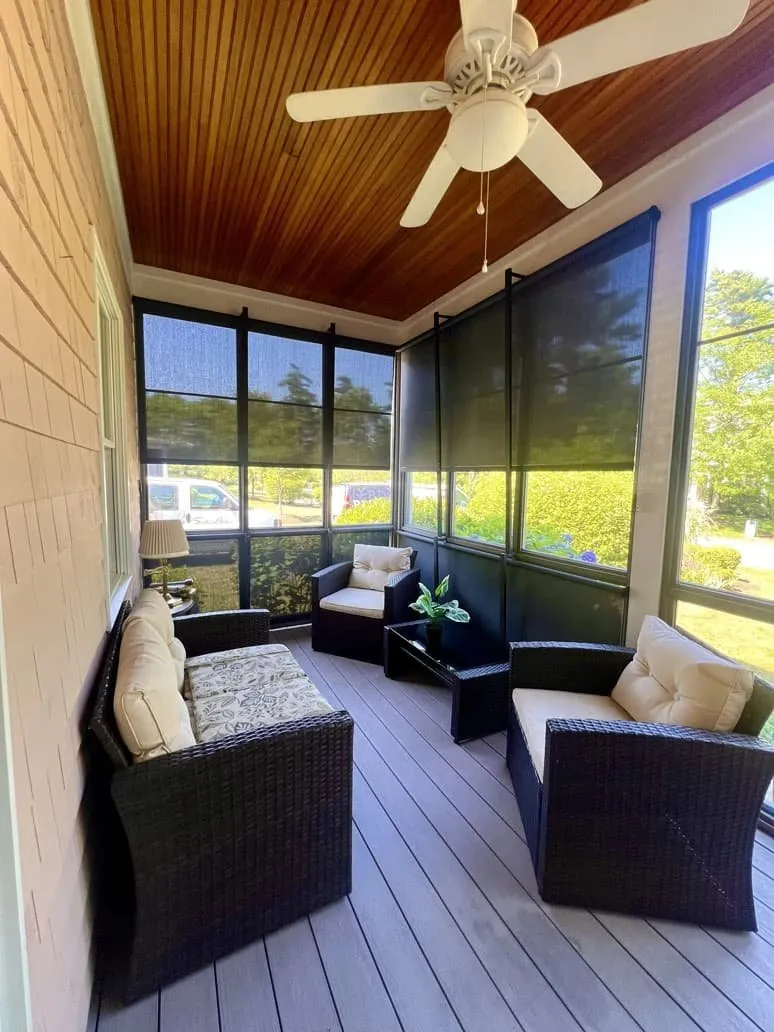
A solar screen is a strong choice for a family room facing west. The openness of the screen decides how much of the yard stays in view and how much glare is cut, so we bring a few to compare in your own window. A light-filtering honeycomb is another option if you prefer a softer look. On the slider, a vertical covering that stacks to one side keeps the door easy to use.
In an open plan, the kitchen and family room are seen together, so we keep the coverings in step: the same color, and often the same product, with a faux wood blind or a roller at the kitchen window if it sits above the sink.
Bedrooms in a low-density town
On a large lot with deep setbacks, bedrooms can be very dark at night and very bright at dawn, with little between them and the sky. In an antique house, the small bedroom windows may face east and catch the first light straight across the bed. In a newer colonial, the main bedroom may have two or three windows on more than one side.
For a bedroom, a darker honeycomb or roller fabric is usually the most practical choice. It dims the room for sleep, and a honeycomb also holds air at the glass for a warmer room in winter. If you like to wake with the light, PowerView can raise the shades at a set time each morning. Choosing window treatments in Upton, MA, for bedrooms often comes down to that single question: do you want the morning in, or kept out?
Children’s rooms deserve a word of their own. A room that is used for naps in the afternoon needs as much darkness as a main bedroom does at night, and a shade that sits inside the frame, made to the exact size of the window, leaves less of a gap around the edges for light to slip through.
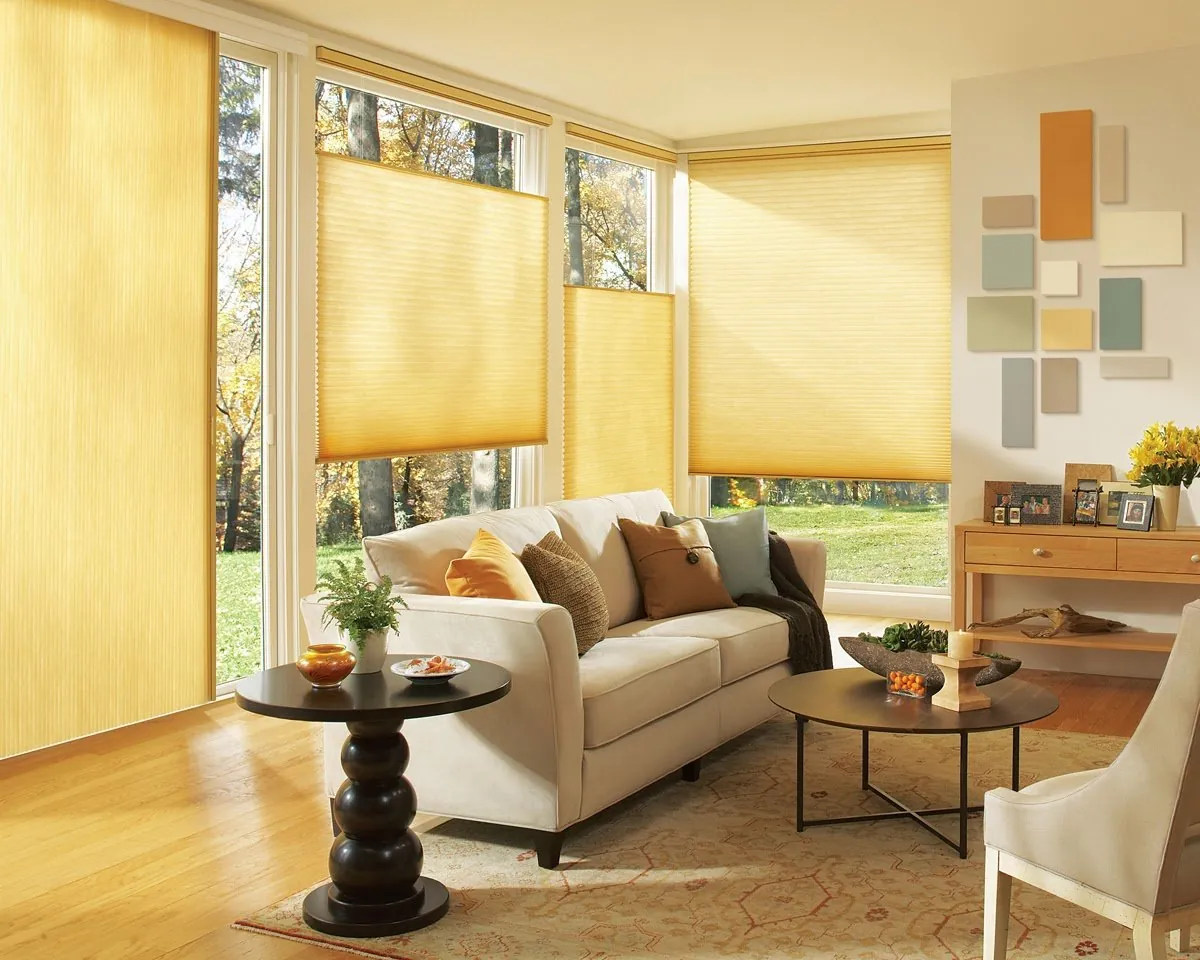
Two floors of windows, one touch
With many windows across two floors, raising and lowering every shade by hand adds up. PowerView takes that off your hands. Shades can be grouped so a whole floor moves at once, set to a schedule so they lower before the afternoon sun and rise in the morning, or worked from a remote or app.
It is especially handy for a window above a stair, a high window in a two-story room or a run of bedroom shades you want to open at the same time each morning. At the visit, we work out how each motor will be powered, so it is settled before the order goes in. The page on window covering automation and our guide on how motorized shades are controlled have more.
Deep setbacks and privacy
With large lots and deep setbacks, privacy from the road is less of a concern in Upton than in a busier town. A house well back from the road is not easy to see into during the day, and the rooms at the back face only the yard.
Evenings are a little different. Once the lamps are on, a lit room can be seen from further away, especially a front room facing the road. For those rooms, we suggest a covering that closes fully when you need it, such as shutters, blinds or a honeycomb in a denser fabric, while the rooms at the back can stay as open as you like. When we plan window treatments in Upton, MA, we ask which rooms you use most after dark.
Color and wood in an old interior
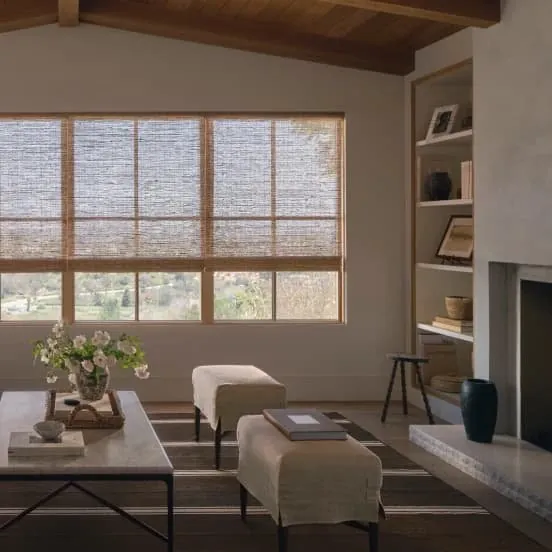
Antique houses often have original woodwork: painted trim, stained doors, wide floorboards. The coverings sit right against that, so color matters. Painted trim usually pairs well with a white or off-white shutter or shade, which reads as part of the window. Stained wood can be matched or complemented with a wood blind or a natural woven shade, or set off by a soft neutral fabric.
We bring samples in several colors so you can see them against your own trim and walls. In a small-windowed room, a color close to the wall also helps the window feel a little larger, while a contrasting one makes it a feature.
Antique house, newer addition
Some antique houses have a newer wing or addition, with modern windows beside the original small openings. Coverings that tie the two together make the house feel like one home. Usually that means the same color, and sometimes the same product, with the mounting chosen to suit each window: inside the frame in the old rooms where the casing is worth showing, and whatever suits the frame in the new part.
Why a Hunter Douglas Gallery dealer suits Upton
A tiny antique opening and a wide modern family room window need very different coverings. As a Hunter Douglas Gallery dealer, Blinds & Designs can offer the full Hunter Douglas range for both.
Every order is installed by certified Hunter Douglas installers. Alongside the products, you can count on in-home consultations with vans full of samples, free estimates, interior design consultations and PowerView automation. If an older blind or shade has stopped working, ask about blind and shade repair.
What we look at in each room
We bring the showroom to you, with samples carried in the van, because in a small-windowed antique room you need to see how much light a fabric lets through in that very window. During the visit, the consultant works through each room in turn:
- How much daylight the window gives and how much you can afford to lose.
- The size and depth of the frame, measured, and whether an inside or outside mount suits it.
- Where the sun comes from and when, especially on a family room off the back of a newer colonial.
- Which samples look right against your walls, woodwork and furniture.
- What it adds up to, in a free estimate you can take your time over.
More on in-home consultations, free estimates and our interior design consultations.
Certified Hunter Douglas installers do the fitting once your order arrives, working carefully around old casings, setting up any PowerView shades and showing you how each covering works. See what happens on installation day.
Our nearest showroom to Upton is Franklin
Franklin is the closest Blinds & Designs showroom to Upton. Some people like to call in before a home visit with a photo of a small antique window or a large family room window.
The decision is usually made at home, where samples can be held up to your own small openings with their own light. Either route is fine.
Questions from Upton
Our antique house has very small windows. Will a covering make the room darker?
It does not have to. We suggest coverings that clear the glass well when open, such as rollers, honeycombs or shutters that swing back, in lighter fabrics, so the room keeps the daylight it has.
Can a covering make a small window look bigger?
Mounting it just outside the frame, slightly wider than the glass, can make a small window feel larger. Inside the frame keeps the old casing on show. We show you both at the visit.
We have a newer colonial with lots of windows. Where do we start?
With a plan: one main product and color for most rooms, then exceptions for the kitchen, bathrooms, a sunny family room or a slider.
Can motorized shades handle a whole floor?
Yes. PowerView shades can be grouped to move together, run on a schedule, or worked from a remote or app.
Is the estimate free?
Yes, always, and there is no pressure to decide on the day.
When you are ready
For window treatments in Upton, MA, in an antique farmhouse with tiny openings or a newer colonial off Route 140, a home visit is the easiest place to begin. Request a consultation and we will bring the samples, measure every window and leave a free estimate. The call button is there if you want to talk first, and the Franklin showroom is our closest.
Every product line we offer is gathered on our window treatments page.