
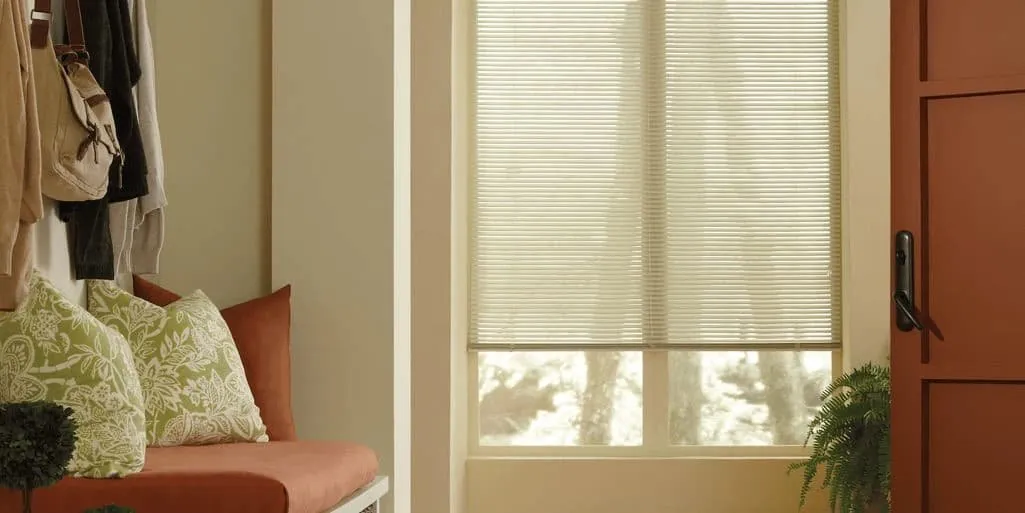
Very small sash in the oldest colonials
The antique colonials around the center were built when glass was precious, and it shows. Their original sash is small, sometimes very small, with modest openings spaced along thick walls. Those windows let in less light than a modern one of the same height, so whatever covers them has to give that light back the moment it is raised. Thoughtful window treatments in Medfield, MA, for the oldest houses begin there: keep the covering in scale, keep the glass clear by day, and close it neatly at night.
A short drive out along North Street or Route 27, the houses are a different proposition altogether: large and newer, set far back on generous wooded lots. Their windows are bigger and more numerous, but the trees around them filter the sun before it ever reaches the glass.
Small antique sash and big shaded rooms: two very different starting points, with the same goal of rooms that feel right at every hour.
One card per service we offer in town
Choose a service below and the button takes you to its Medfield page, with more on the antique colonials and the newer houses in town.
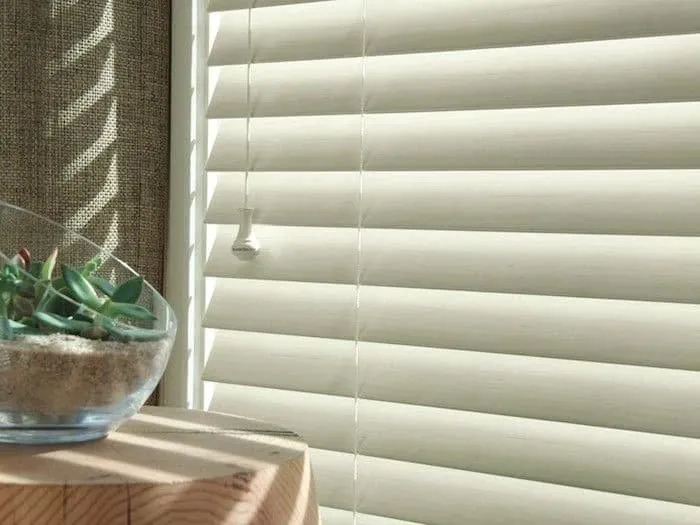
Blinds for small frames
Wood, faux wood, metal and vertical blinds, with the slat size chosen so a little window does not look crowded.
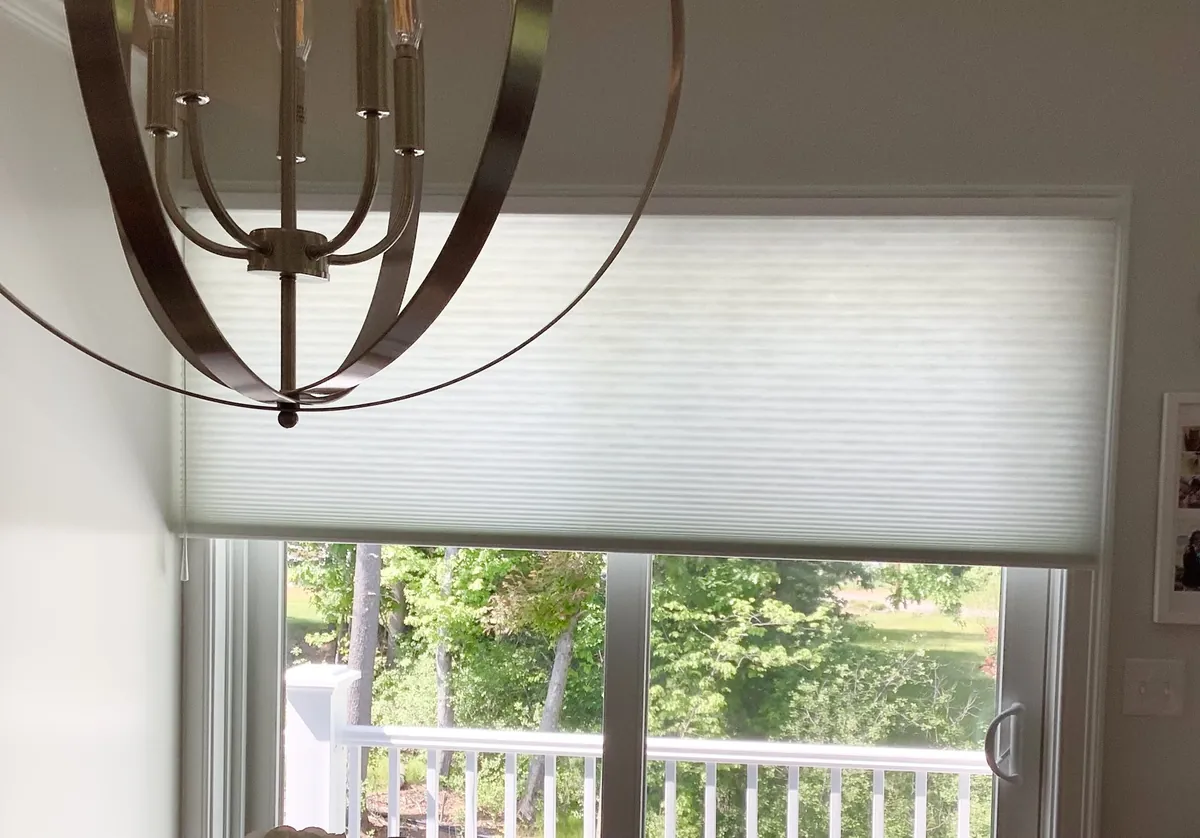
Cellular shades
Duette and Applause honeycombs. Their cells hold air at the glass, a help beside old sash in midwinter.
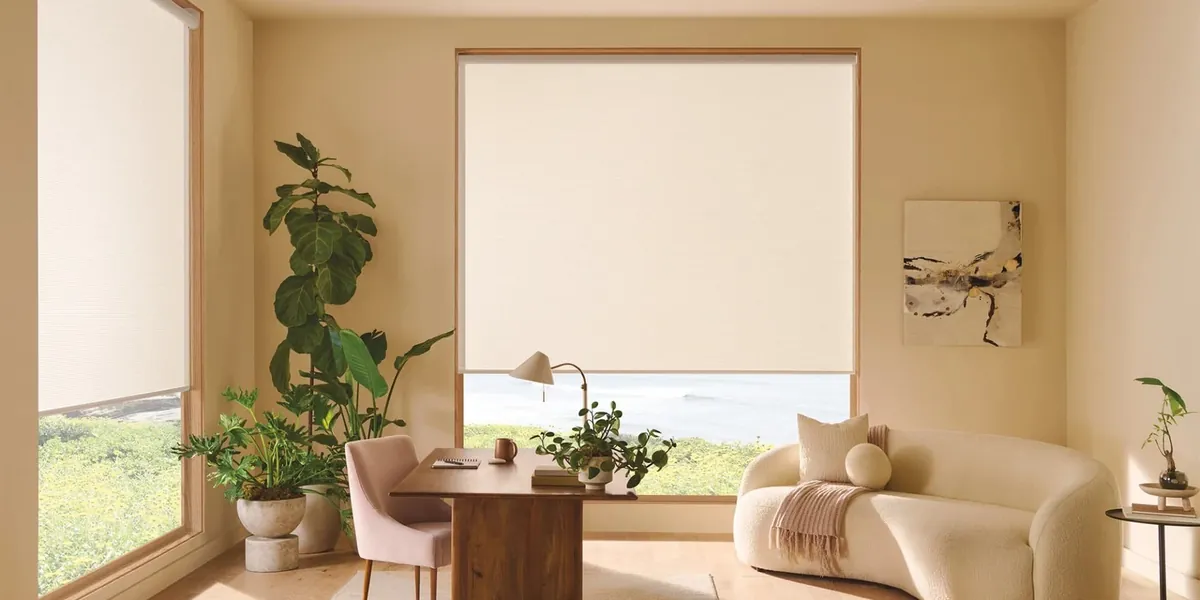
Roller shades and screens
Designer and Alustra. The openness of a screen fabric decides how much view you keep and how much glare you stop.
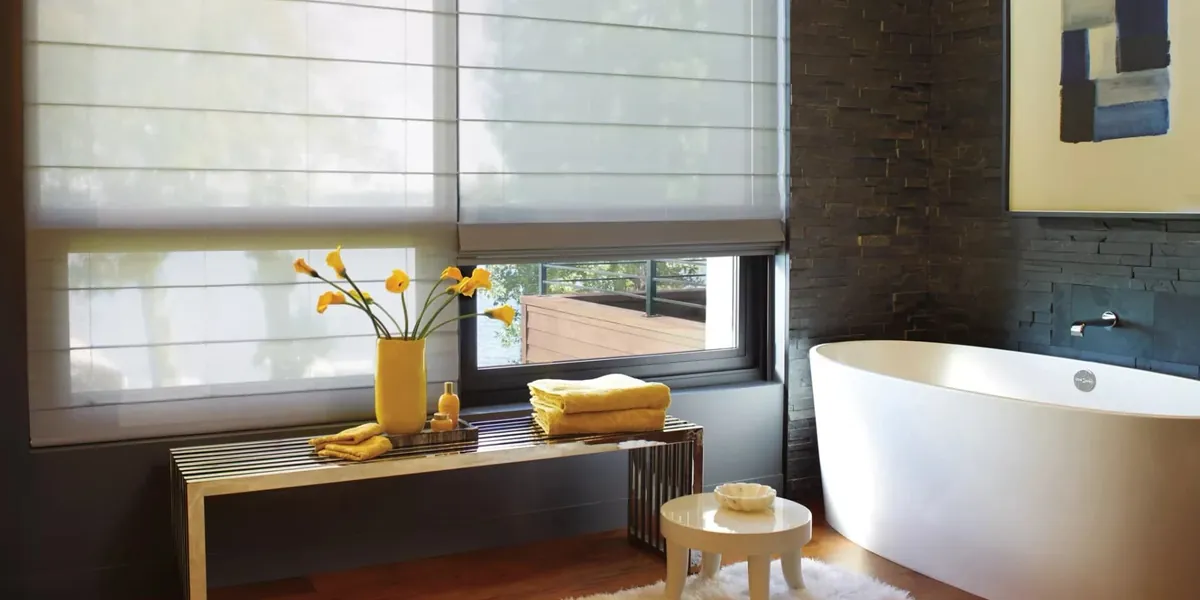
Roman shades
Flat and folded romans from Vignette and Carole Fabrics, scaled to the width of each window.
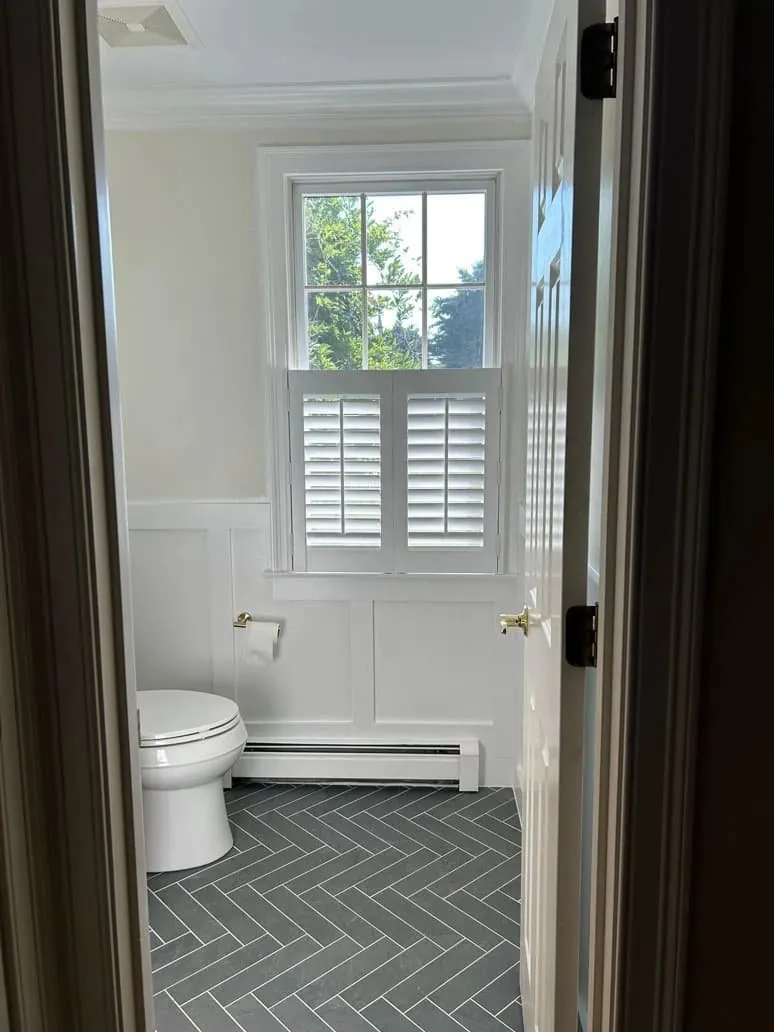
Plantation shutters
Palm Beach, NewStyle and Heritance, from full-height panels to cafe shutters on a small lower sash.
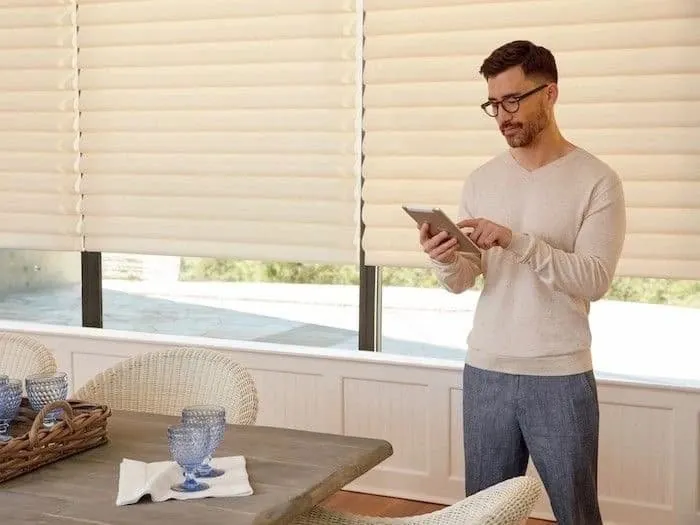
Motorized blinds and shades
PowerView for a house with many windows: one schedule, a remote or an app moves them all.
Hunter Douglas dealer
A Hunter Douglas Gallery dealer with certified Hunter Douglas installation from start to finish.
Keeping a small window in proportion
On a very small sash, everything shows. A headrail that would disappear on a big modern window can cover a noticeable slice of the glass. A wide slat can look clumsy. A stack of fabric that sits at the top of the frame when raised can block the very light you were trying to let in.
So we work to the scale of the window. A honeycomb or roller mounted inside the frame tucks into a slim band at the top, leaving nearly all of the glass open. On blinds, a narrower slat looks more at home on a little window and lets more light past when tilted open. On shutters, the louver size and frame are chosen to suit the opening, and on the smallest windows a cafe shutter across the lower sash can be all that is needed, leaving the top clear for daylight.
Antique frames are seldom square. Walls have shifted and trim has been repainted many times, so each opening is measured at the top, middle and bottom, and the covering is sized to the tightest point. That keeps it running smoothly rather than catching on one side.
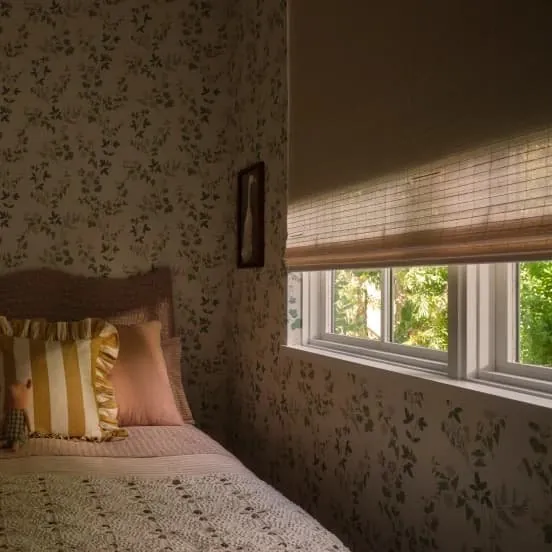
What we look at on an antique window
Before suggesting anything for an old colonial, we check a few things at each opening.
- How much light it actually brings in. A small window in a north room may need nothing more than a sheer or a cafe shutter.
- The depth of the frame. Thick old walls often leave room for an inside mount, which keeps the trim in view.
- Whether the frame is square. Measurements at several points tell us how much it has moved.
- The trim. Original woodwork deserves to be seen, so we avoid covering it unless you want extra darkness.
- How the window is used. Some open every summer day; some stay shut. The covering should suit the habit.
- What faces it. A window toward the road wants evening privacy; one toward the back garden may only need softening.
The guide to shutters for older windows goes into more detail on fitting shutters to antique openings.
Rooms around the center
The antique colonials around the center tend to have a few main rooms on the ground floor, each with its small windows, and bedrooms upstairs under the roof. Light is precious in these rooms, so the coverings that work best are the ones that disappear when raised.
In the front rooms, a light-filtering honeycomb or a sheer shade with fabric vanes lets daylight in while softening the view from the road. Shutters with their louvers tilted upward send light onto the ceiling. A soft roman in a dining room adds warmth without heaviness, as long as its folds are scaled to the narrow width.
Upstairs, the bedrooms want darkness at night. A room-darkening fabric inside a small, deep frame leaves little room for light to creep round the edges. These are the kinds of window treatments in Medfield, MA, that let an old house keep its proportions and still suit how you live in it.
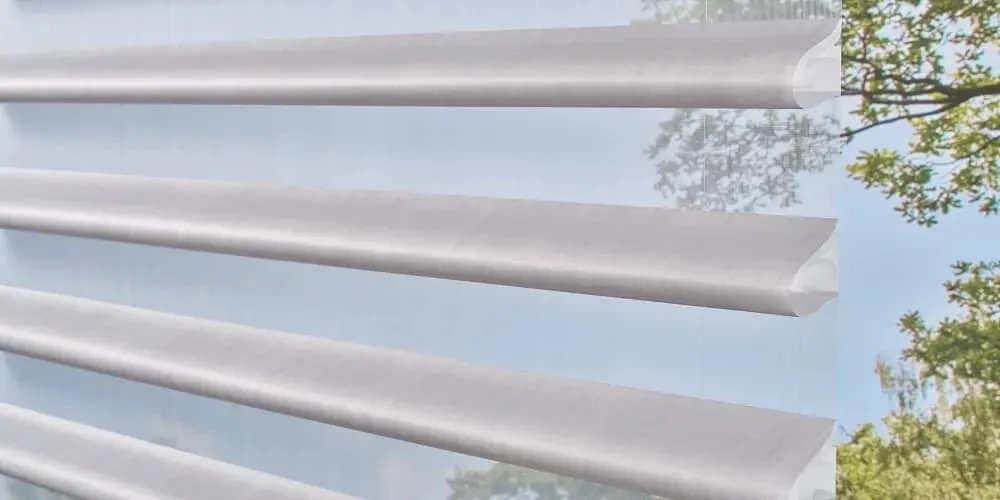
Front doors, halls and the small windows beside them
Many of the antique colonials have small windows near the front door and in the hall. These are often the windows people skip, but they are also where a lit hall shows most clearly to the road at night. A small honeycomb or a slim roller, made exactly to the frame, covers one without fuss. Where a window is purely for light and faces nothing in particular, leaving it bare is a perfectly good answer, and we will say so.
The upstairs rooms of the oldest houses sometimes have the smallest windows of all. A room-darkening fabric in a small, deep opening works especially well because there is so little room around the edges for light to get past. That makes these some of the easiest bedrooms in town to darken properly, a nice surprise in a house that is otherwise full of awkward frames. Getting window treatments in Medfield, MA, right in these little rooms is mostly a matter of careful measuring.
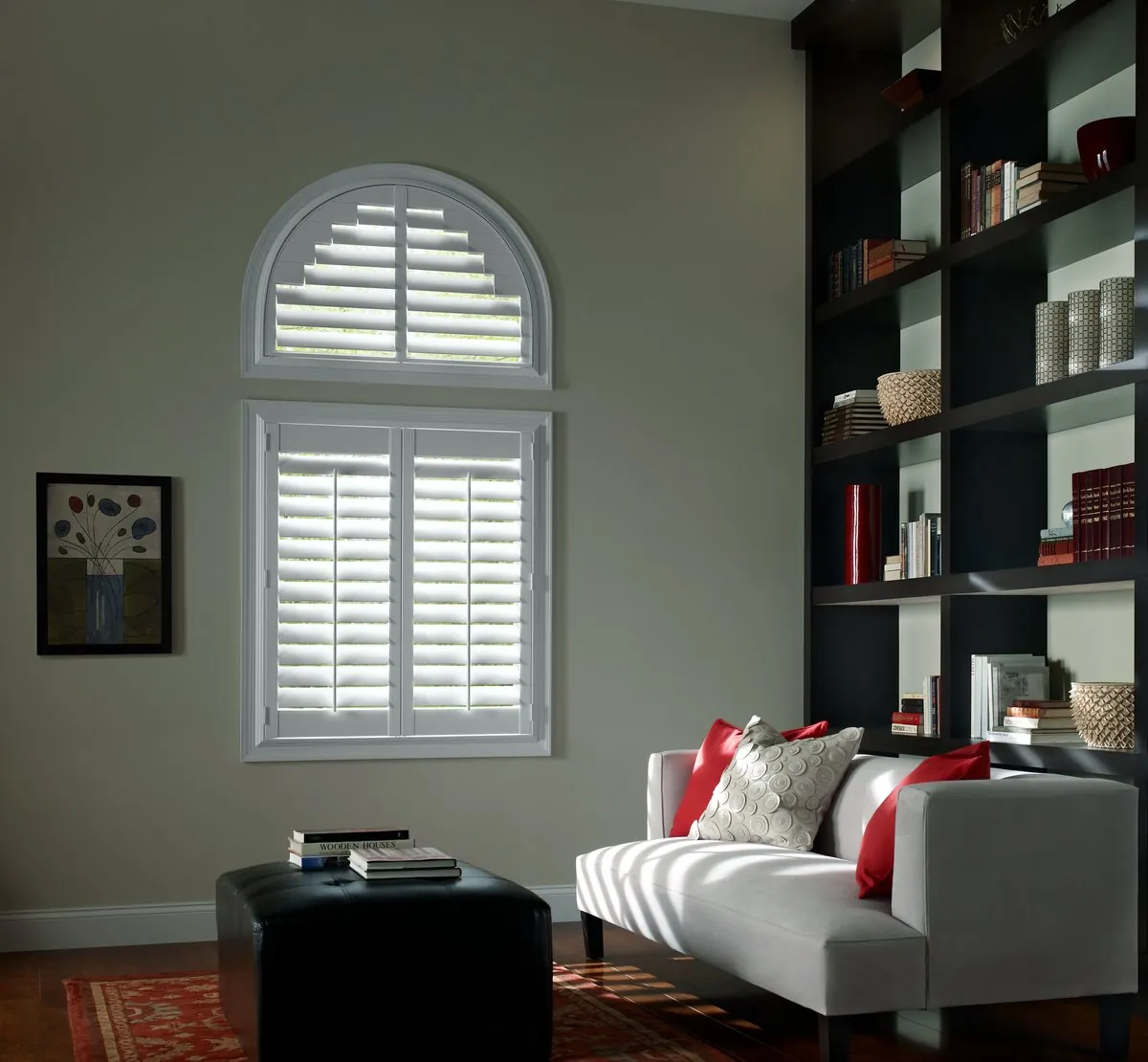
Cold evenings by old glass
Original sash in an antique house can make the air by the window feel cool on a winter night. A honeycomb shade lowered at dusk helps, because each cell traps air between the glass and the room. Inside a deep frame, the shade sits close to the window, which is where it does the most good. Because the windows are small, covering every one of them in a room with a honeycomb is a modest job that can make a real difference to how the room feels. Our guide to cellular shades and winter heat covers the idea in more depth.
Large newer houses on wooded lots
Off North Street and Route 27, the newer houses are large and sit well back on generous lots, often among mature trees. Their windows are bigger and there are many more of them, across two full stories, with a family room at the back and plenty of glass looking into the woods.
Here the trees do a lot of the work that a shade would do elsewhere. Sun reaches the glass filtered through leaves for much of the year, so many rooms are softer and darker than their window area suggests. The covering’s job shifts from cutting glare to keeping as much daylight as possible while still giving privacy at night.
That means lighter colors and fabrics, coverings that clear the glass completely when raised, and sheer or light-filtering options for the daytime. A heavy fabric left half down in a shaded room makes it feel gloomy; a pale honeycomb or a sheer shade keeps it bright.
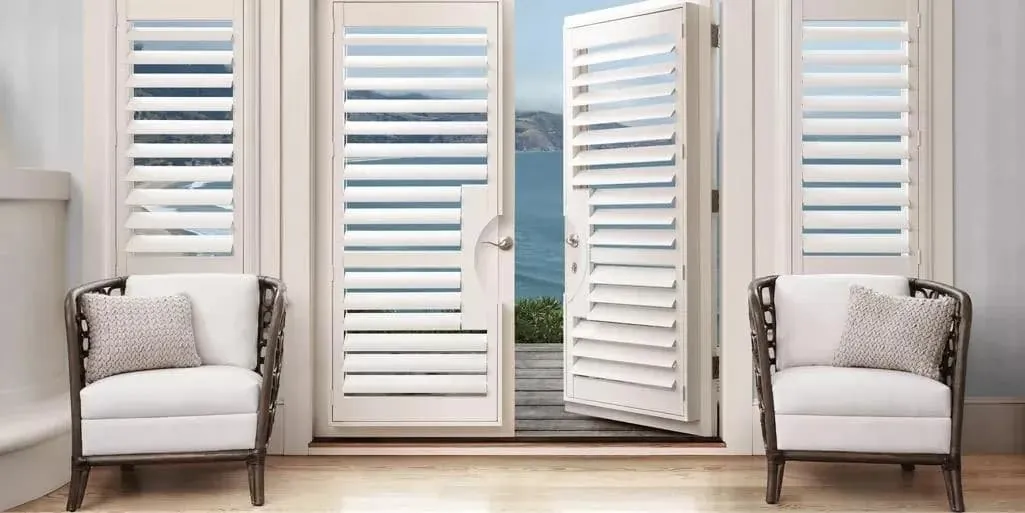
How trees change the seasons
On a wooded lot the light in a room changes a great deal through the year. In summer, with the trees in full leaf, the rooms are shaded and cool, and you may hardly need to lower a shade by day. In winter, with the branches bare, low sun can reach right into the house and glare across a family room or a kitchen.
That is worth planning for. A solar screen or a light-filtering honeycomb handles winter glare without darkening the room. In summer it can stay up. A PowerView schedule can follow the seasons too, so the shades lower in the winter afternoons and stay raised through the summer.
Deep setbacks and privacy
With the houses set far back from the road, daytime privacy is rarely a concern. From the street you see the shape of the house, not into its rooms. That lets you keep front windows lightly covered or open through the day.
At night, though, a lit room shows clearly through the trees, and the newer houses with large windows are visible from a long way off. Every window that faces the road or a neighbor still needs a covering that closes fully in the evening. We plan both: what each window should do in daylight and what it should do after dark.
The road, the lot and the light through the leaves
Choosing coverings for the newer houses comes down to three questions we ask at each window: does it face the road, does it face a neighbor, or does it face only trees? Road and neighbor windows need a fabric that closes fully for evenings. Tree-facing windows, which are often the majority on a wooded lot, can stay lightly covered or open most of the time, so the choice there is about softening glare and keeping heat in during winter. Sorting the windows into those three groups early makes window treatments in Medfield, MA, for a big house far simpler to plan, and keeps the estimate focused on the windows that really need covering.
Many windows, one plan
Deciding window by window in a big newer house wears anyone out. It goes faster with a house rule. Settle on one product and one shade of fabric for the bulk of the rooms, and the outside reads calmly through the trees. Then allow the handful of rooms that genuinely differ to break the rule on purpose: the main bedroom gets a darker fabric for sleep, the baths get faux wood, and the room that catches the low winter sun gets a screen. Window treatments in Medfield, MA, for a large house tend to fall into place once that rule is written down.
Motorizing a large house
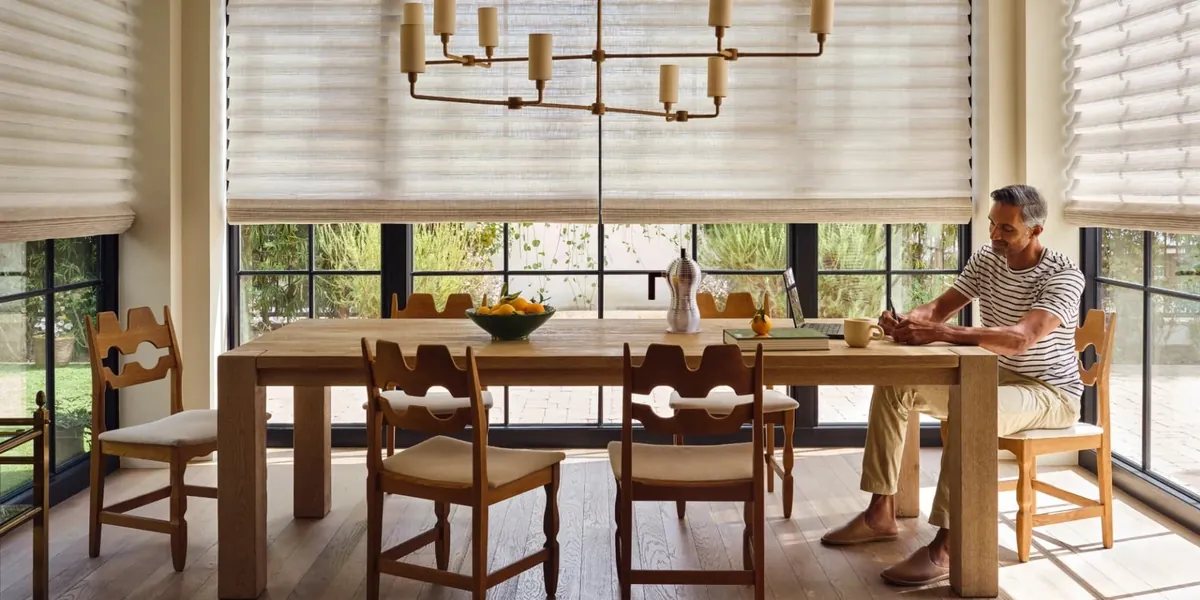
With so many shades spread over two floors, nobody wants to make the rounds twice a day. PowerView takes that job. Shades can be grouped however suits you, say every bedroom upstairs or the whole wooded side, and told when to move. A winter timetable might drop the shades that take the low afternoon sun and lift them again at supper, while a summer one leaves them up. Your phone or a handheld remote overrides any single shade whenever you want. Tall glass over a family room is where most people begin. Our page on how motorized shades are controlled has more.
Kitchens, baths and family rooms
In an antique colonial, the kitchen may have one small window over the sink. A roller or a small faux wood blind keeps it simple. In a newer house, the kitchen often opens onto a family room with a slider to the deck, which takes a vertical honeycomb or a vertical blind that draws aside. Baths in both want privacy first: cafe shutters across the lower sash, or faux wood blinds that tilt open and close fully.
Family rooms facing the woods are often the darkest rooms in a newer house during summer. Leave them light: a pale honeycomb, a sheer shade or a solar screen with plenty of openness keeps the room bright and the trees in view.
How it works, from booking to the last shade
- Pick a time with Request a Consultation.
- The van pulls into your drive loaded with sample books and swatches. We can bring the showroom to you, which matters in a shaded house where the light inside looks nothing like a store.
- Room by room, we talk through what each window should do, starting with the tiny antique sash or the big glass facing the woods.
- Swatches go against the actual window, morning light or afternoon, so the color you pick is the color you get.
- Measurements are taken across each frame, more than once where an old opening has shifted.
- A free estimate follows, itemized so you can tackle a floor or a single room first if you prefer.
- Your order is built by Hunter Douglas. Our certified installers then put every piece up, run each shade through its paces and walk you through the PowerView app if you chose motors.
See what happens at an in-home consultation and what happens on installation day for more. If you would like help choosing colors and fabrics across the whole house, ask about our interior design consultations. And if older blinds or shades in the house need attention, we offer blind and shade repair on coverings you already own.
Why a Gallery dealer suits Medfield’s two kinds of house
The small sash of an antique colonial and the big shaded windows of a newer house need very different coverings. Blinds & Designs is a Hunter Douglas Gallery dealer, so the full Hunter Douglas range is available through one consultant, from narrow slats and cafe shutters to motorized shades for a large family room.
Installation is handled by Hunter Douglas certified installers. Around that sit the other parts of the service: consultants who come out with sample vans, estimates at no charge, design help with color and fabric, automation, and repair work on coverings already in the house.
Visiting our Franklin showroom
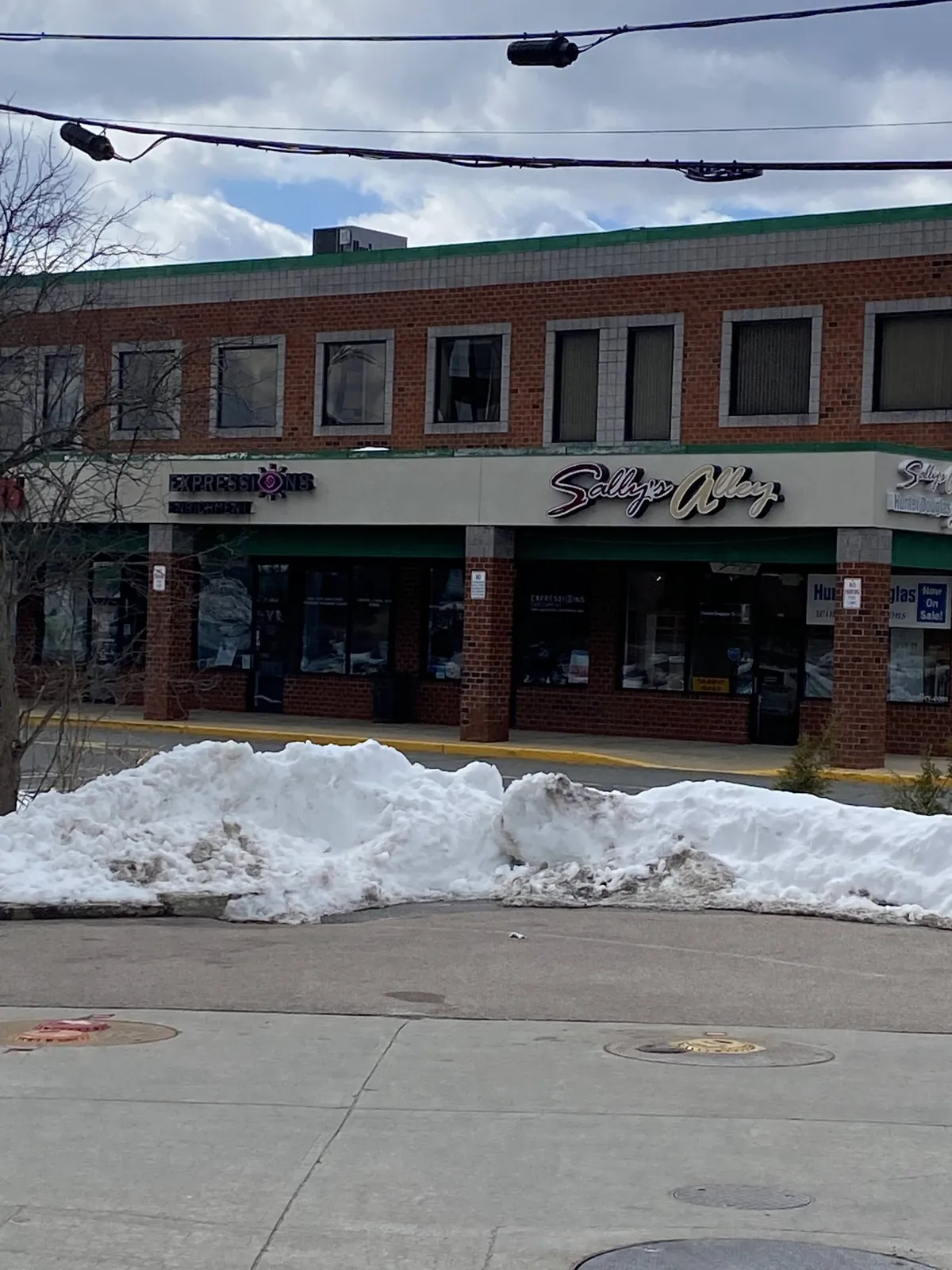
Of our showrooms, Franklin sits nearest to Medfield. Some people like a look around before anyone comes to the house.
Even so, a tiny antique sash or a family room under tall trees can only really be judged on site, where the actual light is. Plenty of projects begin with the showroom and finish at the kitchen table.
Questions from Medfield
Our antique colonial has very small windows. Will a shade block too much light?
Not if it is in scale. A shade mounted inside the frame stacks into a slim band at the top when raised, leaving nearly all of the glass open. On the smallest windows a cafe shutter on the lower sash may be all you need.
Our house is surrounded by trees and feels dark. What should we choose?
Lighter colors and fabrics that clear the glass completely. A pale honeycomb, a sheer shade or a solar screen with plenty of openness keeps rooms bright while giving privacy at night.
Do we need to cover front windows if the house is set far back?
By day, often not. At night a lit room shows through the trees from far away, so a covering that closes fully is still worth having.
Our old frames are not square. Is that a problem?
No. We measure each opening at several points and size the covering to the tightest point so it runs smoothly.
What does an estimate cost?
Nothing. The estimate is free and comes after we have measured every window.
Ready when you are
Whether your house has the small original sash of the center or a long wall of windows facing the woods off Route 27, the first move is the same. Set a time through Request a Consultation and we arrive with the samples. Every window gets measured and every room gets talked through, and you keep a free estimate with no pressure attached. Franklin is the showroom to visit in person, and the call button is there for any question before then.
If you want to see the whole range first, our window treatments page has it all.