
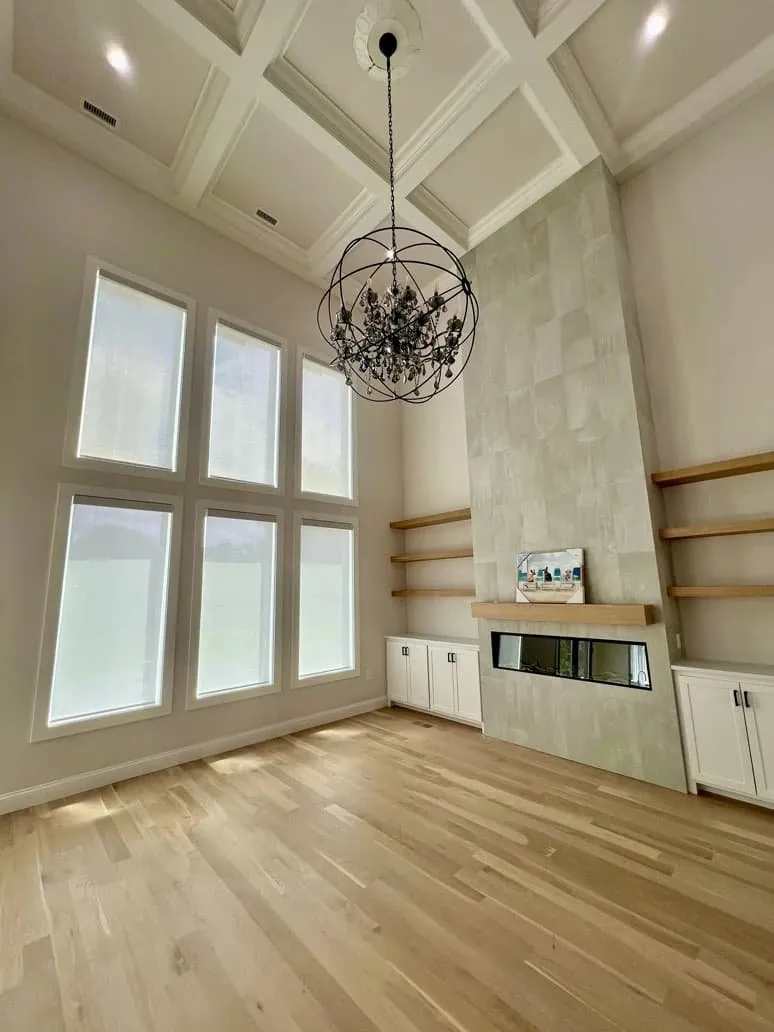
Afternoon glare off Apponagansett Bay
The rooms in South Dartmouth that face the water have a view most houses would envy, and an afternoon problem to go with it. As the sun drops toward the west it lies low over Apponagansett Bay, and the light that bounces off the water lands square on the sofa, the television and the dining table. Pulling a heavy curtain kills the view you bought the house for. Roller shades in Dartmouth, MA, solve it more gracefully, because a solar screen fabric can take the hard edge off that glare while the harbor stays in sight.
Dartmouth is also where our main showroom sits, on Faunce Corner Road, so we know the range of houses well. The older colonials and shingled capes around Padanaram village sit beside the ranches built in the 1960s and 1970s off Faunce Corner and Slocum Road. Out toward Russells Mills the farm properties still have their nineteenth-century sash, set deep into thick walls.
That spread matters, because a shade that suits a ranch picture window is not automatically right for a farmhouse window with a deep reveal. We look at each house on its own terms.
Roller shades in Dartmouth, MA: three ways to dress a window
Most roller orders here come down to one of these, or a mix of them across the house.
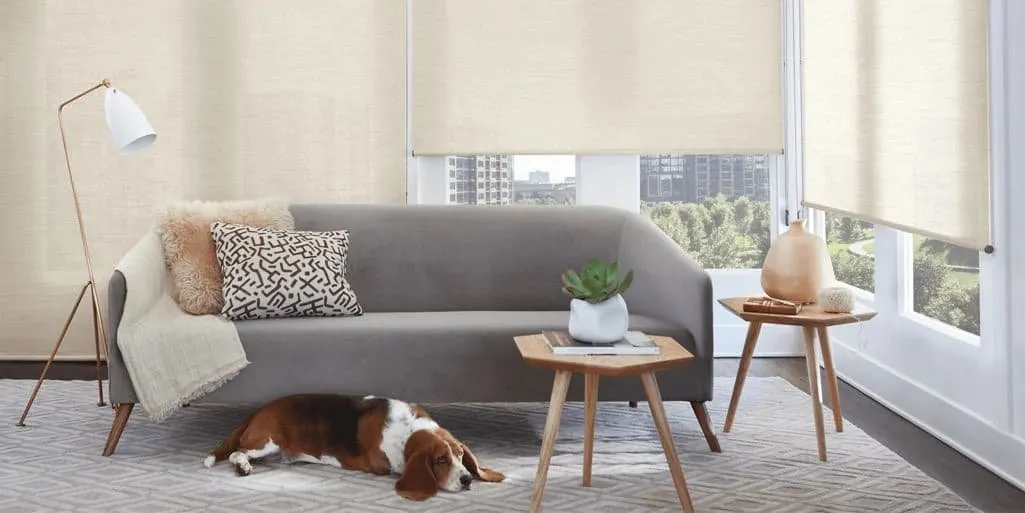
Solar screens for the bay side
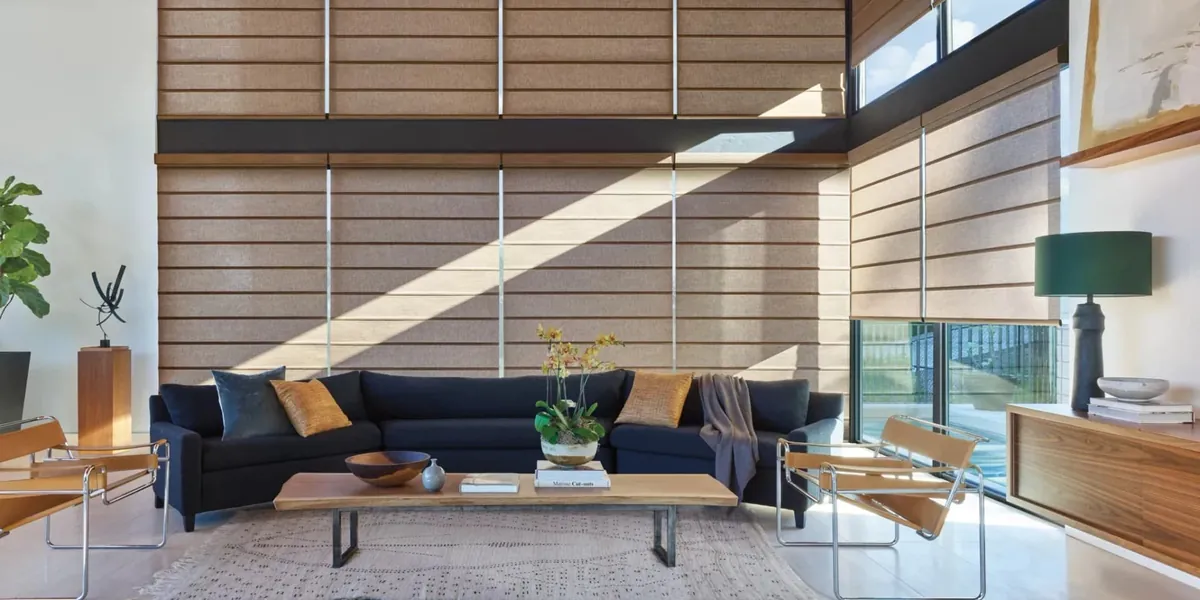
Designer Screen and Alustra screen fabrics cut the afternoon glare while keeping the water in view. You choose the weave that balances the two.
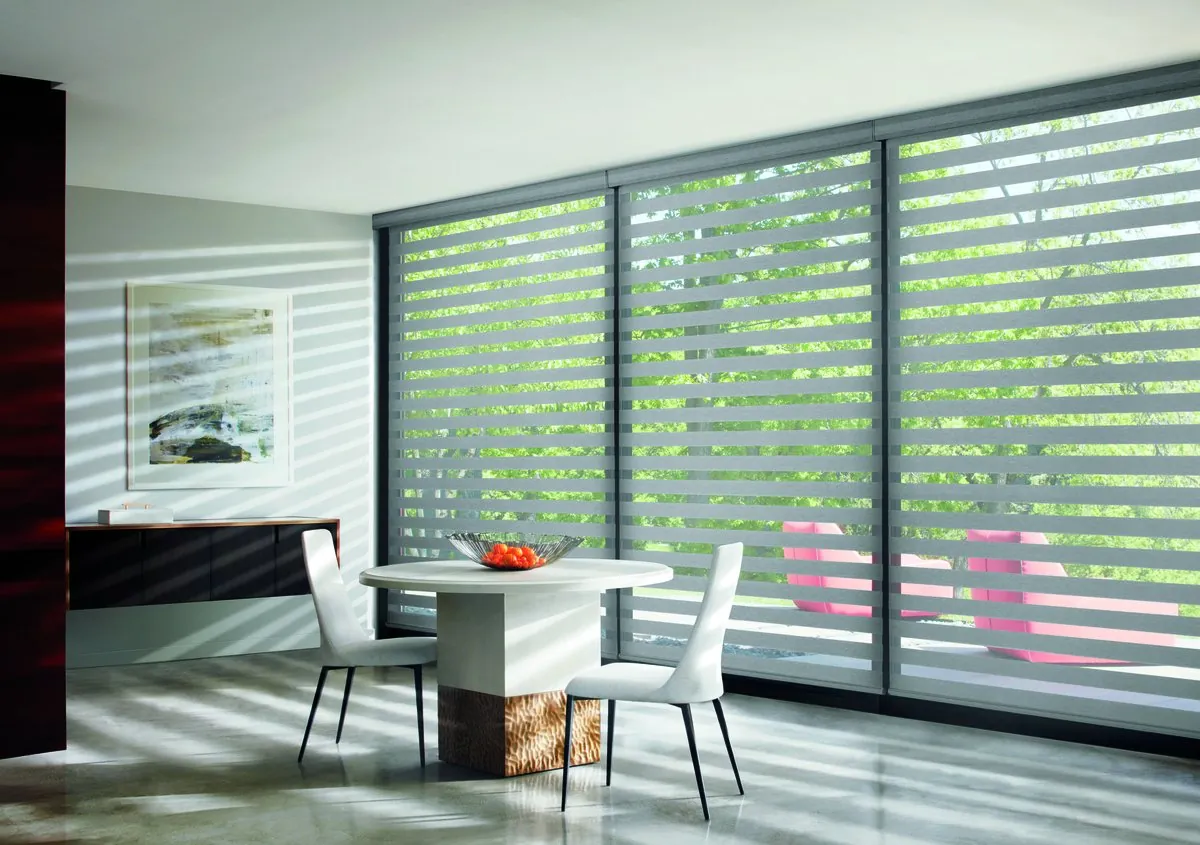
Light filtering through blackout rollers
Designer Roller fabrics run from soft and translucent to fully opaque, so a living room and a bedroom can share one look with different light.
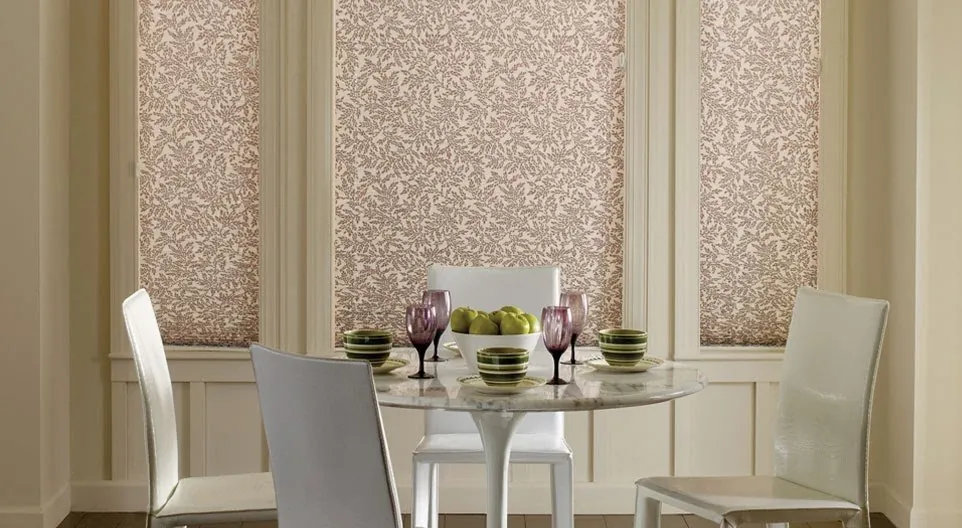
Patterned and textured fabrics
For a dining room or a study where the shade should add something, the Alustra collection brings richer textures and more distinctive fabric.
How a screen handles west light
West light is harder to manage than morning sun. It arrives later in the day when the house has already warmed up, it comes in at a flatter angle, and on the water side it arrives twice, once from the sky and once off the bay. A south or west window in South Dartmouth can turn a living room into a squint in late afternoon through most of the year.
A solar screen is woven with small open spaces between the threads, and the proportion of open space is called its openness. A tighter screen blocks more of that late sun and keeps more heat out, at the cost of a softer view. A looser screen keeps the outlook sharp but lets more brightness through. The color of the screen shifts the balance again: dark screens are easier to see through and reduce glare more, light screens bounce more heat back toward the glass.
There is no one right answer for the whole town, and often not for the whole house. A family room with a television on the west wall may want a tighter weave, while a sunroom used mostly in the morning can take a looser one. Our article on choosing fabric for a sunny room sets out how fabric, color and weave work together.
Padanaram colonials and capes
The houses near the village center were built with symmetry in mind: a row of double-hung windows across the front, evenly spaced, each with its own casing and often original shutters outside. From the street they read as a set, so the shades behind them should read as a set too.
Roller shades work well here because they are flat and quiet. Raised, they leave nothing but a thin roll at the head of each window; lowered to the same height, they line up across the whole front of the house. We usually suggest the same fabric, or at least the same outward-facing color, on every street-side window, even where the rooms behind need different light.
Capes add a wrinkle: dormer windows. A dormer opening is small and often set into a sloped ceiling, with very little room above the glass. Rollers can be made narrow, and a compact headrail fits where a bulkier shade would not. Where the dormer is too shallow for an inside mount, the shade can sit on the face of the trim instead.
Faunce Corner and Slocum Road ranches
The ranches off Faunce Corner and Slocum Road were built for open living: a living room with a wide picture window, a kitchen and dining area running into each other, and a slider to the back yard. Those windows are broad and low, and they take sun across most of the day depending on how the house is turned.
A wide picture window is a natural home for a roller shade. The fabric spans the opening without slats to bow or cords to tangle, and where the glass is wider than a single shade can be made, two or three shades share one bracket and move together. For a slider, the shade mounts above the door frame so it clears the handle completely when raised.
These houses often benefit from layering. A screen shade on the living room glass handles daytime glare, and a light filtering or blackout roller behind it, on its own bracket or combined in a dual shade, handles evening privacy and a dark room for television. When you are fitting roller shades in Dartmouth, MA, across a single-level house, matching the bottom bars and headrails from room to room keeps the house feeling calm.
Deep sash in the Russells Mills farmhouses
The older farm properties out toward Russells Mills have windows unlike anything in the newer parts of town. The sash sits deep within walls that are thick by modern standards, which leaves a generous reveal between the glass and the room. That depth is a gift for an inside mount: a roller sits fully within the opening, almost invisible from inside, and the deep sill stays clear for plants or books.
The catch is that old frames are rarely square. A window that has stood for well over a century may be wider at the top than the bottom, or lean slightly to one side. We measure each opening at the top, middle and bottom, and at both sides, and the shade is built to the tightest point so it rolls freely without rubbing.
Farmhouse rooms also vary a lot in how they are used. A kitchen with a wood stove, a front parlor that is kept for guests, an upstairs bedroom under the eaves: each needs a different level of light. Rollers are easy to mix in one house, because the hardware stays the same while the fabric changes.
Sunrooms and porches on the water side
Plenty of South Dartmouth houses have added a sunroom or glassed in a porch to get closer to the bay. Those rooms are mostly glass, often on three sides, and they swing from pleasant to overheated within an hour on a clear afternoon. They are also the rooms where a heavy treatment looks most out of place.
Screen rollers are the usual answer. Mounted on each run of glass, they take the glare down to a comfortable level and slow the heat, while the room still feels open to the water. Because every panel works separately, you can lower the west side and leave the north side clear. In a room with many windows, PowerView makes it easy to move all of them together with one button, or to have them come down by themselves as the sun swings round.
Where a sunroom ceiling slopes, or the top of the glass sits right against the roof framing, we look closely at where the brackets can go. Sometimes the shade mounts on the face of the beam above the glass rather than inside the opening, and the fabric is chosen so its back looks tidy from the garden.
Choosing the lift
How you raise and lower the shade is worth as much thought as the fabric. There are three main ways.
- Cordless. You push the bottom bar up or pull it down and it stays put. Clean looking and simple, best on windows you can reach easily.
- Continuous cord loop. A loop of cord or bead chain at one side turns the tube. Easier on a large or heavy shade, and the loop is held taut by a small tensioner on the wall.
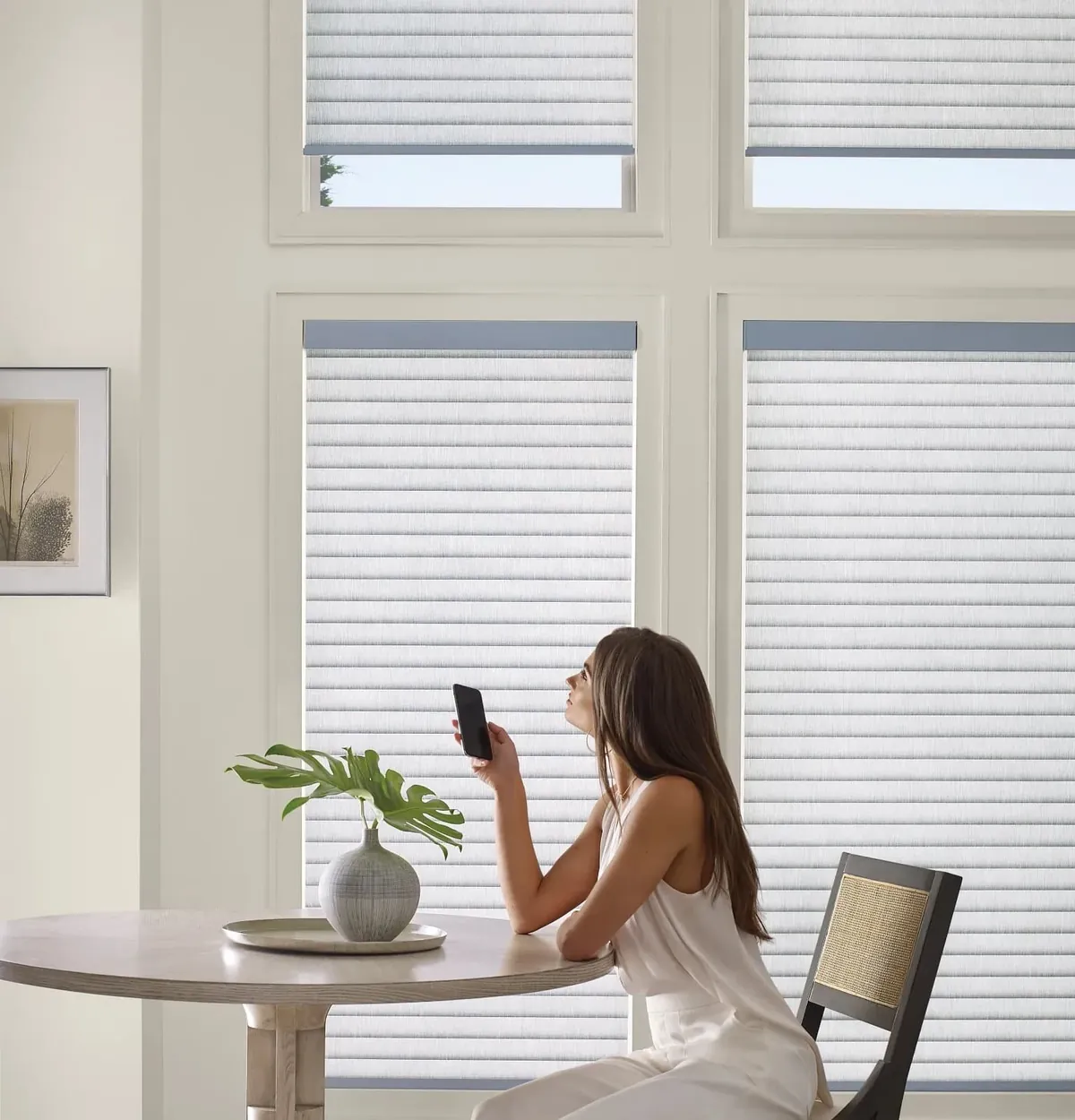
- PowerView motorization. A motor in the tube, run from a remote, the app or a schedule. The obvious choice for tall windows, for a run of shades you want to move together, and for a west-facing room you want shaded before you get home.
For the bay-facing rooms in South Dartmouth, a schedule that lowers the screens as the afternoon sun reaches the glass is one of the most useful things PowerView does. You can read more in how motorized shades are controlled.
What a visit looks like
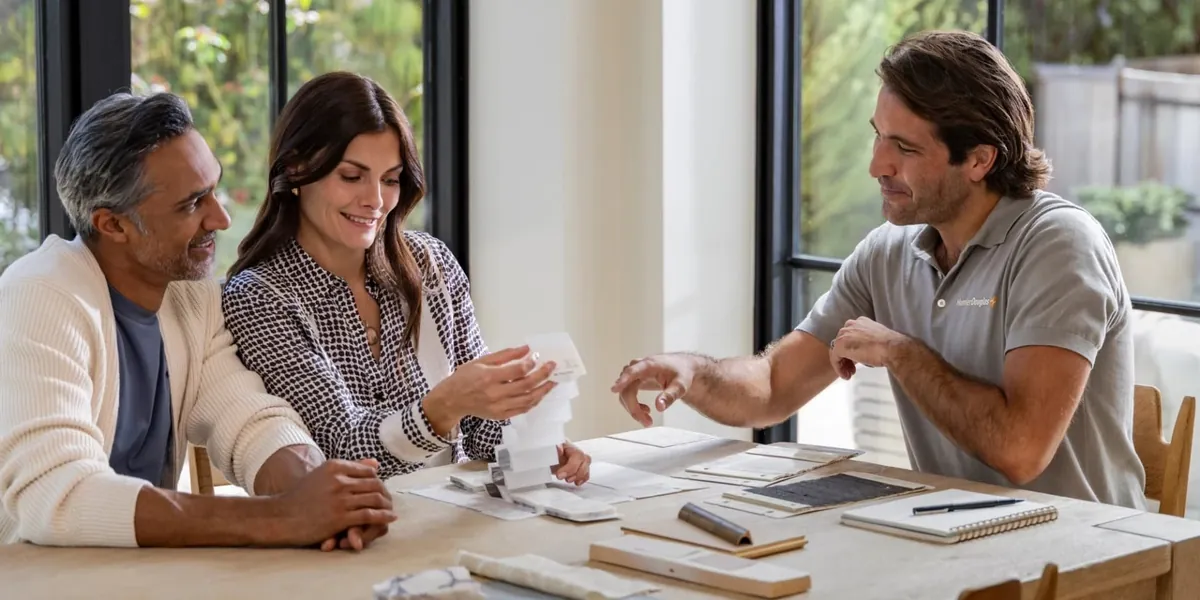
You can start at the showroom or start at home, and many Dartmouth customers do both. Either way, the in-home visit is where the decisions get made, because only your windows show how a fabric behaves in your light. Our vans carry the samples, so we bring the showroom to you.
- You request a consultation, and we set a day and time that suit you.
- We walk through the house with you, room by room, and talk about what bothers you in each one: glare, heat, privacy or a room that is too dark.
- You try screen, light filtering and blackout samples against your own glass, on the sunny side of the house if possible.
- We measure every window, check the reveal depth and note anything that affects the mount.
- We talk through lift options and any window that would suit a dual or banded shade.
- You receive a free estimate and take whatever time you need to decide.
If you would like guidance on color and fabric across a room or the whole house, our interior design consultations can happen at the same visit. More on the process is on our in-home consultations page.
Bedrooms that need a properly dark room
Screens are about daylight and view, but a bedroom has a different job. If a room faces east toward the rising sun, or sits under a streetlight on Slocum Road, you want it dark. A blackout roller is made from fabric that blocks light completely, and it rolls up out of sight in the day so the window looks no heavier than any other in the house.
The edges are where light gets in. An inside-mounted roller leaves a thin gap at each side, and on a blackout shade that line of light is easy to notice at dawn. An outside mount that overlaps the trim on all sides narrows it, and a cassette headrail hides the roll and closes the top. Many people choosing roller shades in Dartmouth, MA, for a bedroom pair the blackout roller with side drapery, which covers the gaps and softens the room at the same time.
For a child’s room or a nursery, cordless lift or a motor keeps the window free of any hanging loop, which is one more reason the cordless option is so popular.
Banded shades and Sonnette
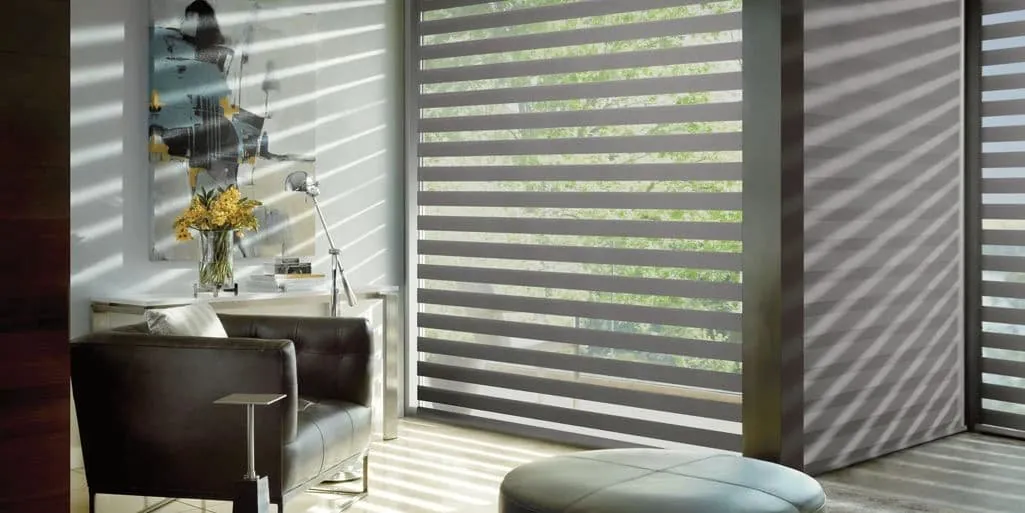
Two other members of the roller family come up in Dartmouth houses. Designer Banded shades have alternating sheer and solid stripes on one continuous loop of fabric. Move the shade a little and the stripes either line up, letting light and a view through the sheer bands, or overlap, closing the room off. They suit a dining room or a home office where you want control without raising the shade.
Sonnette is a cellular roller: the front of the fabric has a soft curved profile with an air pocket behind it, so it rolls up like a roller but adds a little more body at the window. It suits a bedroom in an older house where you want a softer look than a flat fabric. The roller shades page describes the whole family, including Designer Banded.
Installation by certified installers
Once the shades are made, our certified Hunter Douglas installers come back to fit them. In an older Padanaram or Russells Mills house that means finding solid wood behind old plaster for each bracket, so the shade hangs level and stays that way. In a ranch it can mean mounting high above a slider or bridging a long run of glass with shared brackets.
Every tube is levelled, every shade is run up and down, and any motorized shade is paired with its remote or added to the app before the installer leaves. You are shown how each lift works. Our page on what happens on installation day has the details.
Close to home, and a Gallery dealer
Blinds & Designs is a Hunter Douglas Gallery dealer, a designation Hunter Douglas reserves for dealers who meet its standards. For roller shades in Dartmouth, MA, that means every Designer and Alustra fabric, the screen weaves, banded and Sonnette shades and PowerView, all through one consultation.
Our installers hold Hunter Douglas certification, and the shop also takes on blind and shade repairs, so the people who sell the shade are there if it needs attention later.
If other rooms need something different, look at plantation shutters in Dartmouth for the colonial front rooms, or roman shades in Dartmouth for a softer fabric look. Everything we offer in town is on the Dartmouth page.
Questions from Dartmouth
Which screen weave keeps the bay view clearest?
A more open weave in a darker color gives the sharpest view out. A tighter weave cuts more glare and heat but softens the view. We bring screen samples in several weaves so you can judge them against the bay at your own window.
Can a roller fit the deep windows in an old farmhouse?
Deep reveals are ideal for an inside mount, because the whole shade sits within the opening. Old frames are often out of square, so we measure at several points and have the shade made to the tightest one.
Is a solar screen private at night?
Not on its own. By day the bright outside hides the room, but after dark, with lights on, people outside can see in. A dual shade, a second roller behind the screen, or a banded shade gives you privacy in the evening.
Should every front window have the same fabric?
On a symmetrical colonial it looks best if the street-facing side of every shade matches. The rooms behind can still have different opacities, and we can suggest fabrics that look alike from outside.
Do I need to visit the showroom first?
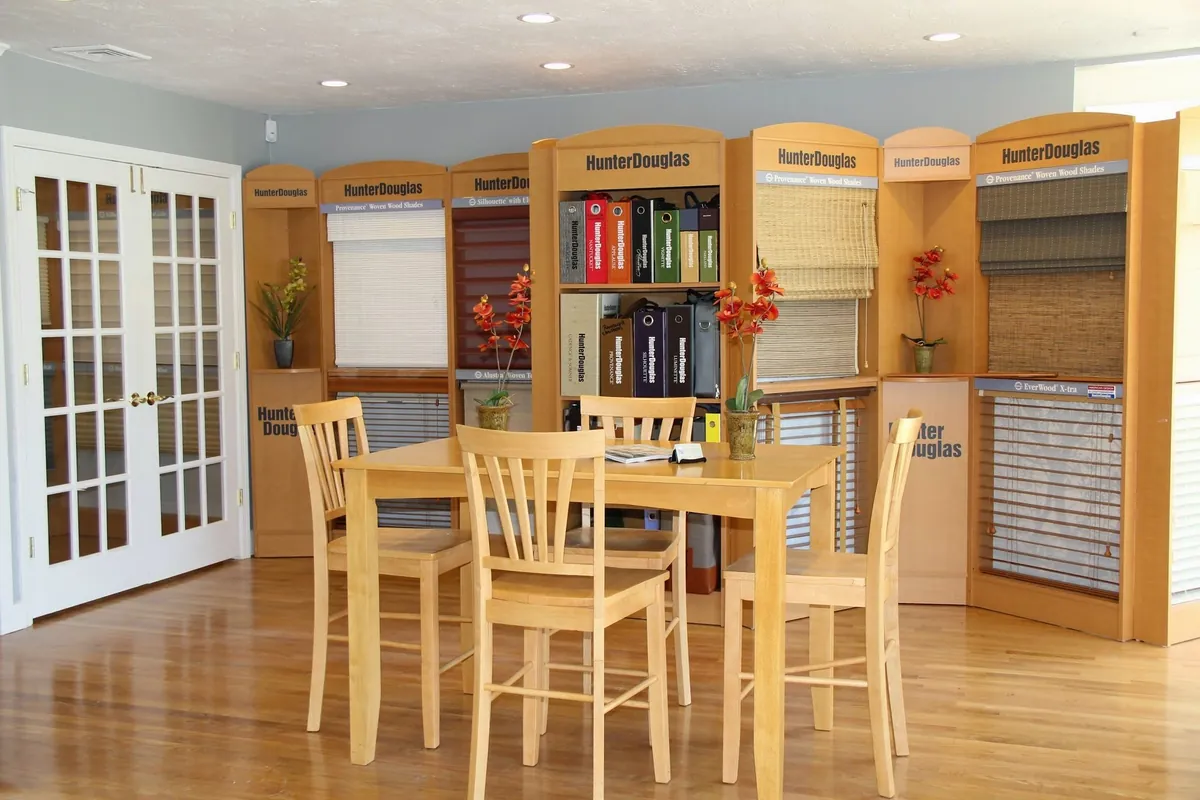
No. You can start with an in-home consultation, where we bring samples and measure, and you get a free estimate. The showroom is there if you would like to see more first.
Getting started
The quickest route to the right shade is to see the fabric at your own glass at the time of day the sun gives you trouble. Request a consultation and we will bring the roller and screen samples to you, measure every window and leave a free estimate. You are also welcome to stop by our North Dartmouth showroom and look at working shades before we visit.