
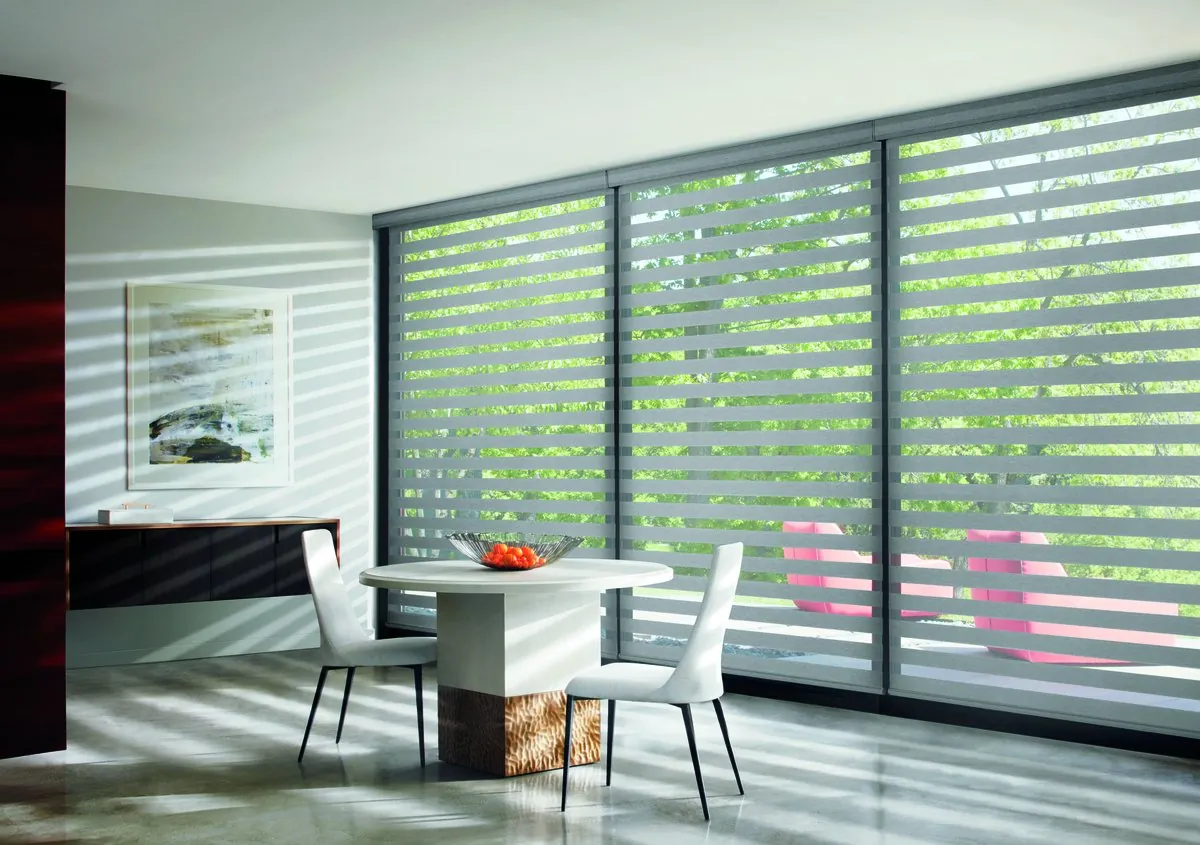
Rooms with windows on every wall
Freetown houses are spread out. Between the village of Assonet and the edge of the state forest, capes and ranches sit well back on large wooded lots, and the river houses along the Taunton face the water across their own long yards. With that much room around them, the houses were built to take light from more than one direction. It is common to find a living room with windows on two walls, or a kitchen and dining area that takes sun from three.
That is lovely on a gray day and a puzzle on a bright one. Morning sun comes in one side, afternoon sun the other, and there is rarely an hour when every window wants the same thing. Roller shades in Freetown, MA, help because each window can do its own job: one shade down against the glare, the next one up for the view, all in fabrics that match.
The trees add their own pattern. On a wooded lot the light shifts through the day as the sun moves behind and between the trunks, and it changes again when the leaves come down in autumn.
Roller shades in Freetown, MA, chosen window by window
These are the Hunter Douglas rollers we fit most often in Freetown, all from the Designer and Alustra families. The van brings a sample of every one.
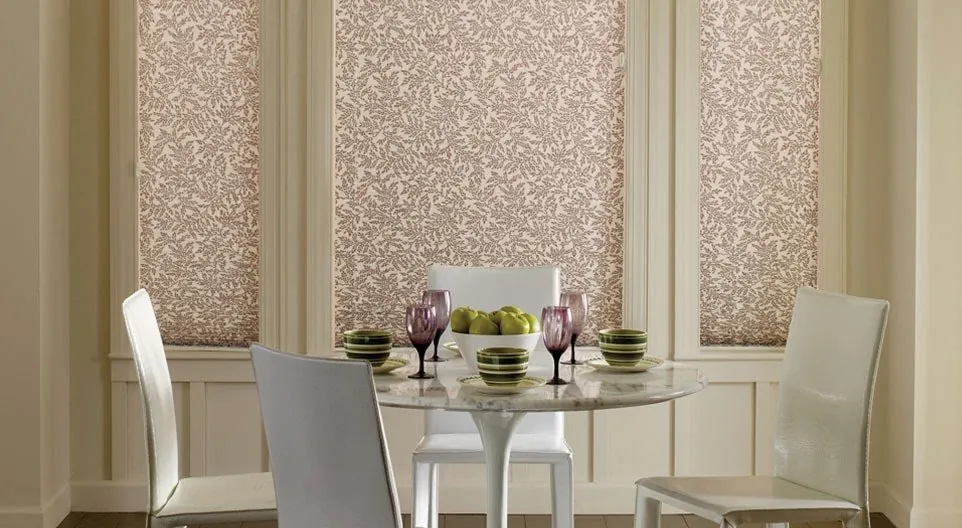
Patterned roller fabrics
A printed or patterned roller gives a dining room or breakfast nook some character, and it suits a house that looks out into the woods.
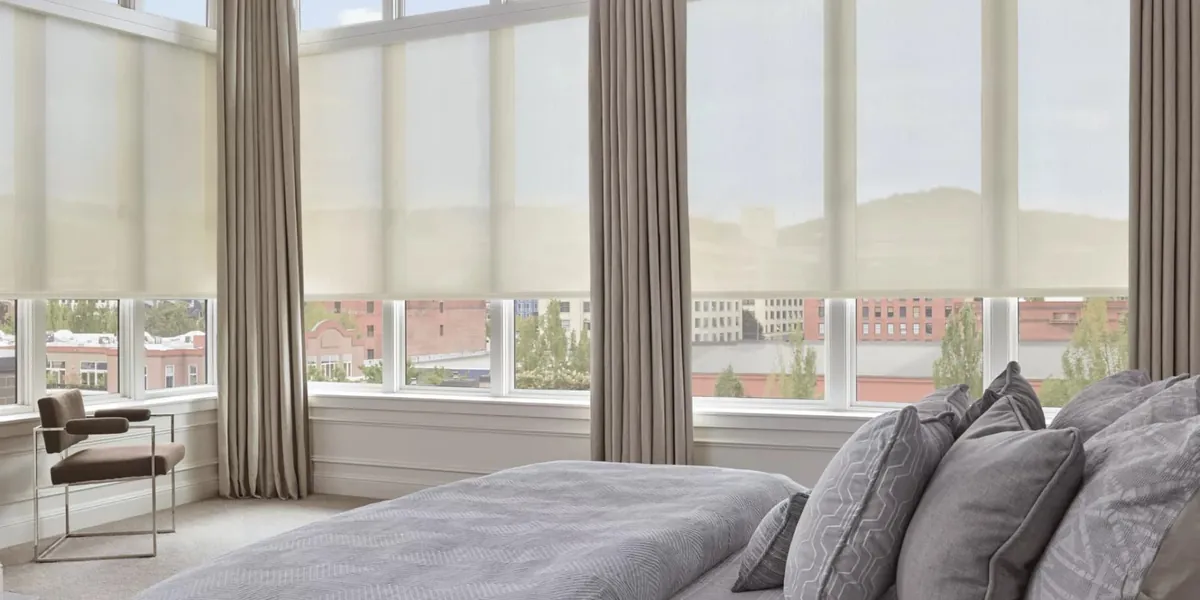
Screen fabric facing the Taunton
A woven screen that tames the brightness coming off the water by day, so the river is still there when you look up from the couch.
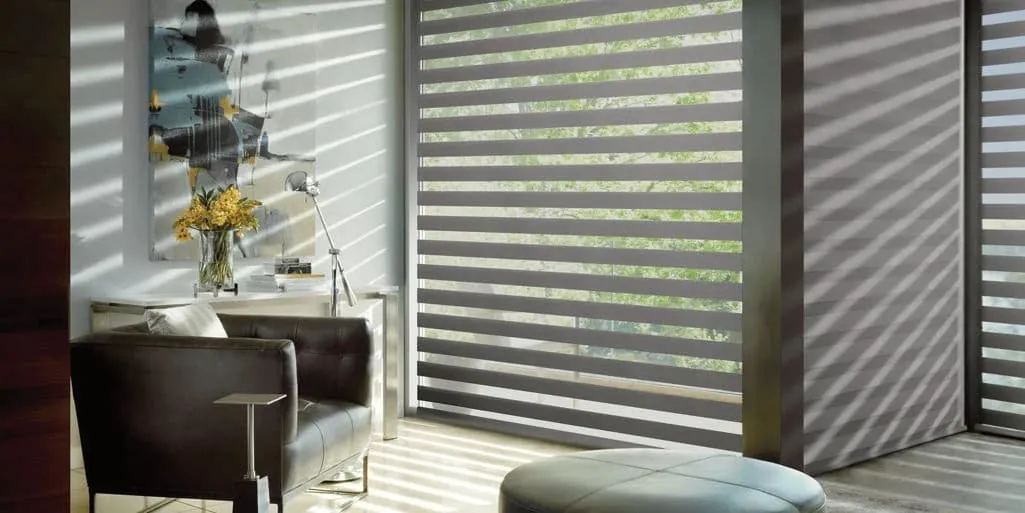
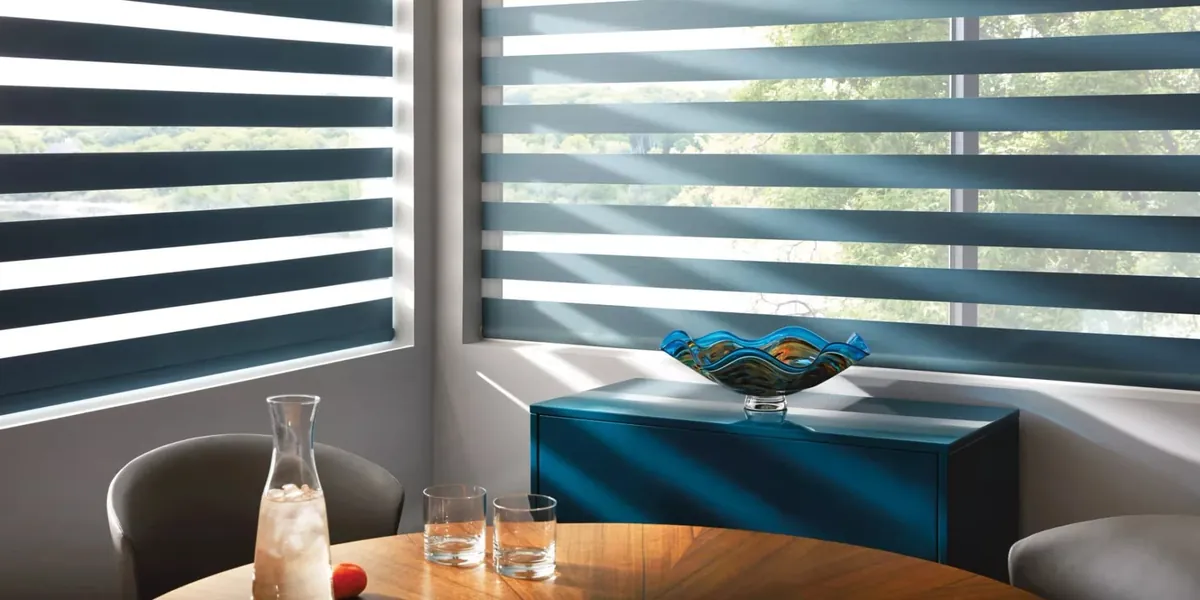
Banded shades for corner rooms
Shift the stripes on one wall to block the sun and leave the other wall open. Good for a room where the light moves from side to side.
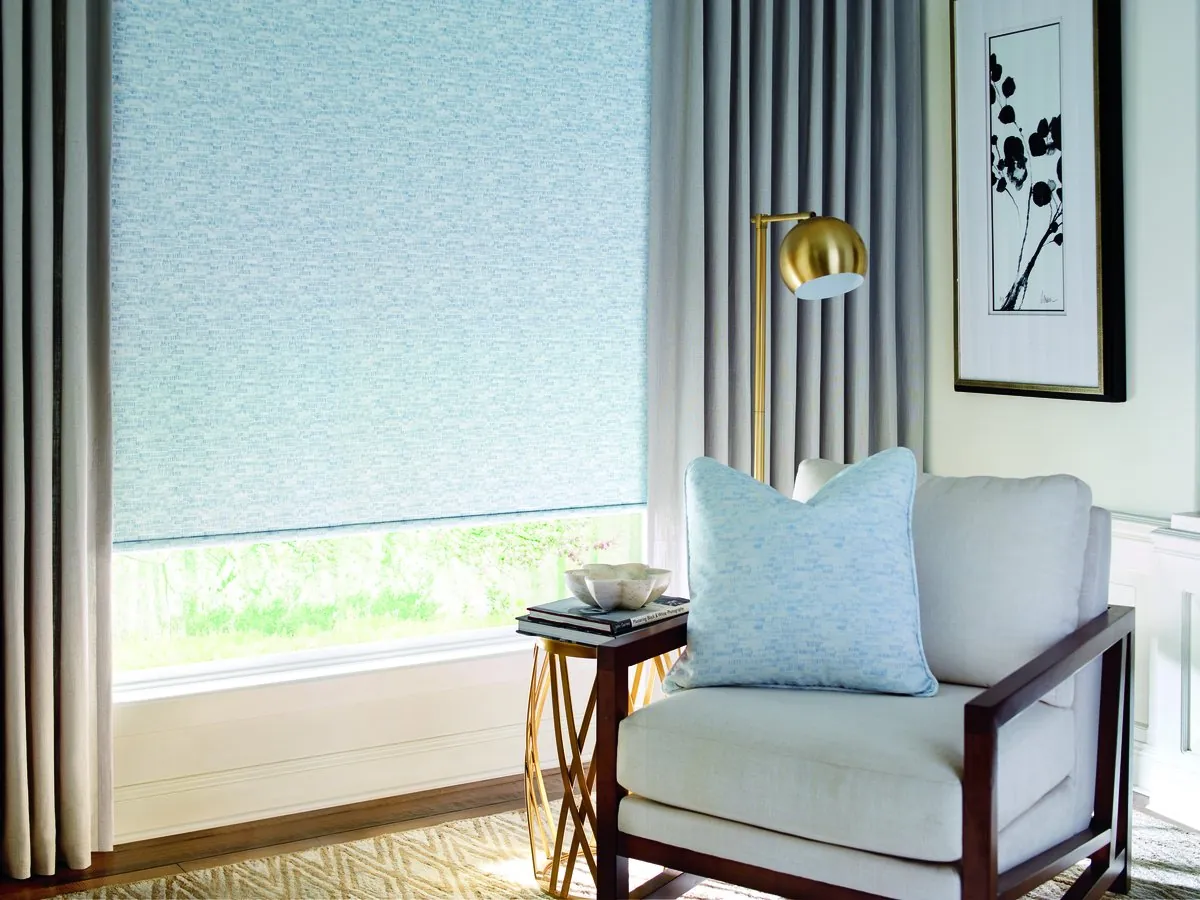
Rollers with drapery
A roller does the daily work at the glass while side panels soften the room. A common pairing in a cape living room.
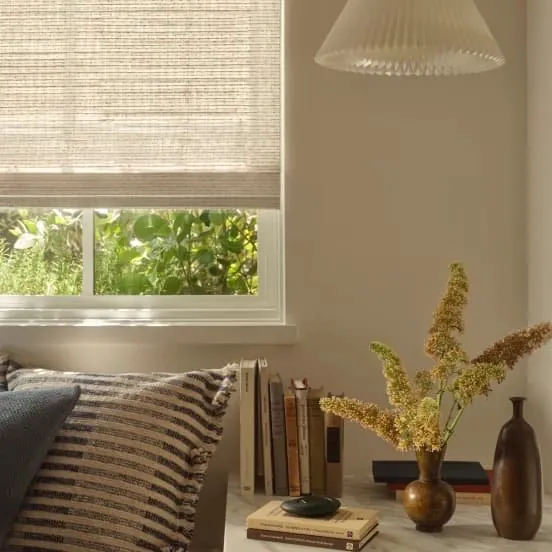
Woven textures on a roller
Alustra Woven Textures brings the look of natural weave to a simple roller, a good match for a house among the trees.
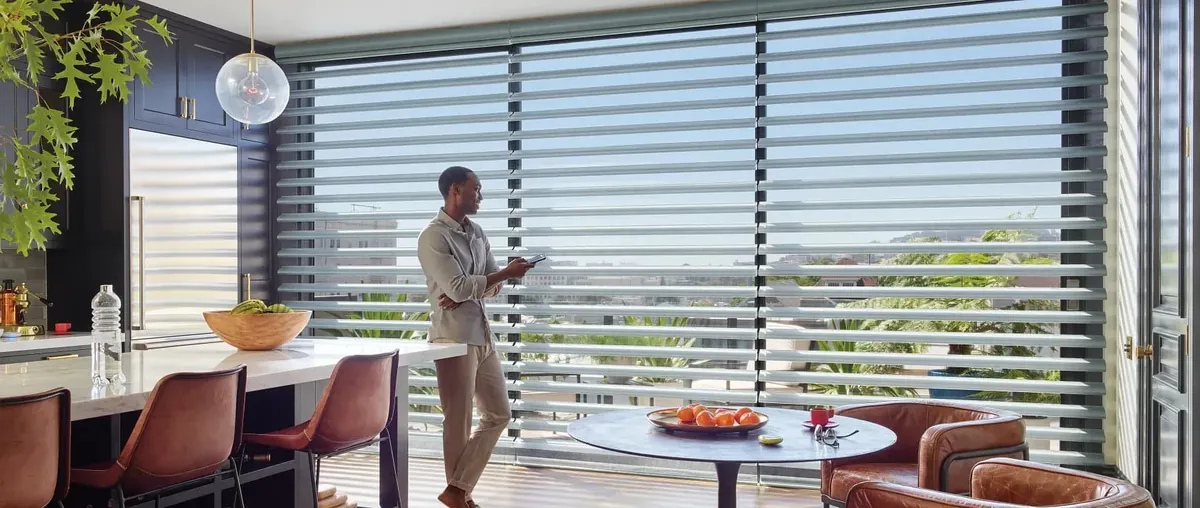
PowerView across the house
Group the east windows and the west windows, then let each group follow its own schedule, run from the app or a remote.
Light from two and three sides at once
A room with windows on one wall is easy to shade: you pick a fabric for that wall and you are done. A room with windows on two or three walls asks more of you, because the sun is only ever on one side at a time. The east windows glare at breakfast, the south windows warm the room through the middle of the day and the west windows catch the low sun before dinner.
The trick is to choose one fabric family and use it in more than one opacity. For example, a Designer Roller in a light filtering weave on every window keeps the room looking unified, and a screen in the same color family on the west wall handles the late-day glare. Because each window has its own shade, you lower only the ones in the sun and leave the rest open to the trees.
Corner windows need a little care. Where two windows meet at a corner post, the shades should meet cleanly without a gap of light or fabric rubbing. We measure each side to the post and plan the brackets so the shades sit neatly beside each other.
Dappled light on wooded lots
Woods change the way sun reaches a house. On a summer morning, light comes through the leaves in moving patches, bright one moment and soft the next. In winter, with the branches bare, the same windows suddenly take full, low sun for hours. A room that needs nothing in July can need a shade in January.
That is a good argument for rollers. A light filtering fabric evens out dappled light into a steady glow, so the room is not flickering between bright and dim. In winter, a partly lowered roller cuts the band of low sun at eye level while letting warmth reach the floor. And because a raised roller winds away almost completely, it does not get in the way during the months when you want the full view of the trees.
Fabric color matters on a wooded lot too. An ivory or oatmeal tone keeps a room under the trees from feeling dark. A deep gray or charcoal can feel heavy unless the room gets plenty of sun.
Capes toward Assonet
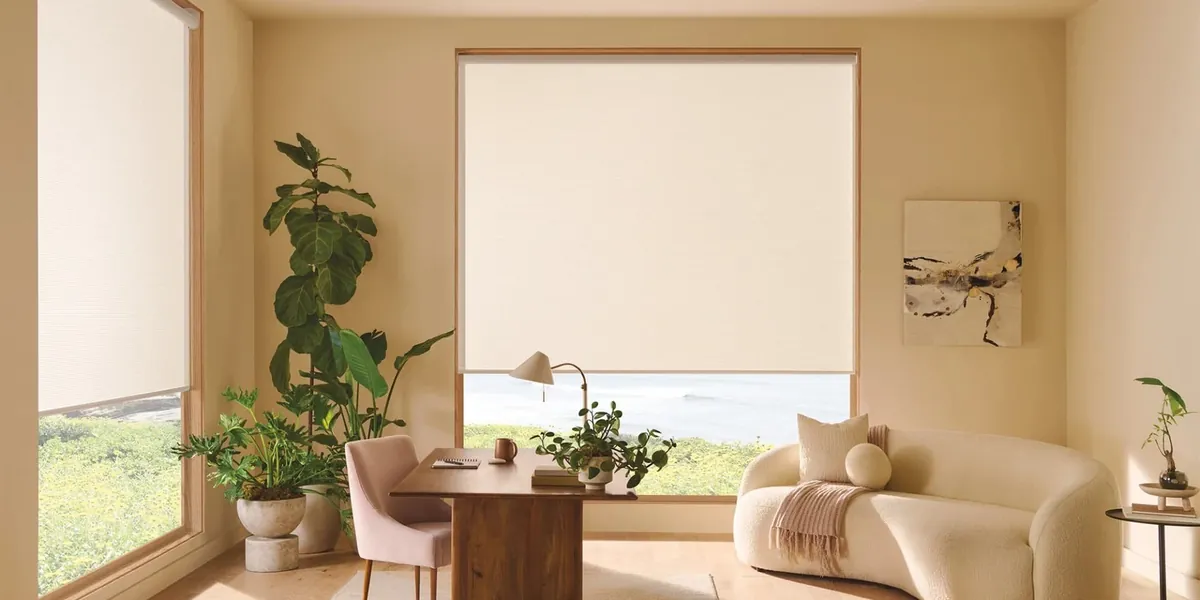
The capes on the roads toward Assonet are often modest in size and generous in windows. Downstairs you find double-hung windows on most walls, sometimes a bay in the front room. Upstairs, dormers and gable-end windows light the bedrooms, with knee walls that bring the ceiling down at the sides.
For the downstairs rooms, an inside-mounted roller keeps the trim visible and the window clean when the shade is up. A bay is handled with one shade per window, all made to the same bottom height so they line up when lowered. In the dormers, space is tight: the window sits in a small recess with sloping ceilings close by, so we check the clearance above each window before choosing a bracket. A roller is one of the few coverings that fits comfortably in that tight space.
Upstairs bedrooms in a cape often face the morning sun. A blackout roller, mounted inside a dormer, keeps them dim until you are ready to get up.
Ranches on wide lots
A Freetown ranch usually stretches along its lot, with the living space at one end and the bedrooms down a hall at the other. Because the house is long and low, the two ends often face completely different directions, and they are used at different times of day.
The living end is where the big glass is: a broad front window, perhaps a pair of windows facing the side yard, and a glass door to the deck at the back. A front window too wide for a single fabric panel is made as a set of rollers hung from one continuous bracket, so the bottoms stay level and they can be raised together or one at a time. The deck door gets its shade fixed high on the wall above the frame, so the fabric lifts clear and the door handle never snags it.
The kitchen in these houses is often small and busy, with its window behind the faucet. Leaning over a wet counter for a cord is nobody’s idea of fun, so a cordless shade, nudged up or down at its hem, makes more sense there, or a motor if you would rather not reach at all.
The bedroom wing tends to look into the woods at the side of the lot. With trees for neighbors, darkness at night is the real need, and a room-darkening fabric covers it. When we plan roller shades in Freetown ranches, we treat the two ends of the house as separate projects that share a color palette.
River houses on the Taunton
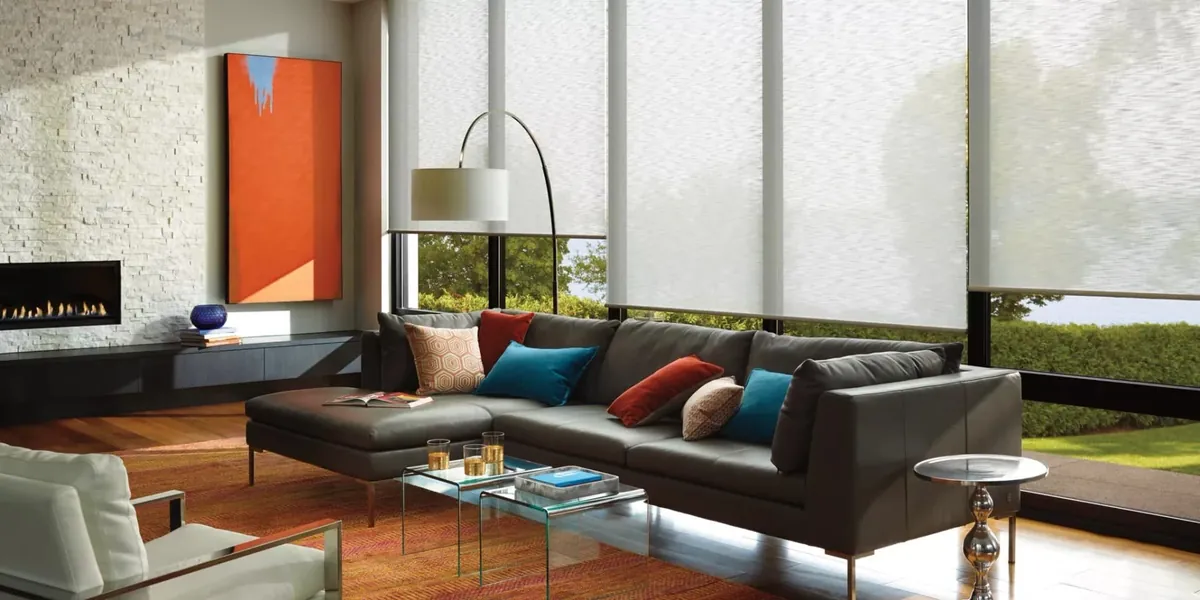
The houses that back onto the Taunton have a second source of light that inland houses do not: the river itself. Moving water catches the sun and throws it upward, under the eaves and straight into the room, so the brightest moment of the day is not always when the sun is facing the house. Screens become hard to read, wood floors and upholstery lose their color over the years, and a west-facing room can be too bright to sit in through a summer evening.
Solar screen is the fabric designed for this. Each screen has a stated openness, which is simply the share of the weave that is open air. Pick a higher openness and the river stays crisp but more brightness gets in. Pick a lower one and the room calms down, with the water turning to a softer outline behind the fabric. Color shifts the balance too. Charcoal, bronze and other deep tones absorb the glare and are the easiest to look through. Whites and pale grays bounce heat back outside, but they light up when the sun strikes them and the view goes hazy.
For a riverside family room, we bring a spread of openness levels in both dark and light colors and set them side by side in the window during your visit. Seeing two screens next to each other against the real river usually settles it quickly. If you want to read up beforehand, our guide to the best shades for sun and glare compares the options.
Bedrooms that face the sunrise
Because so many Freetown houses sit among trees or face east across a clearing, bedrooms often take the first light of the morning. In June that can be very early. A blackout roller is the simplest fix: an opaque fabric that keeps the room dark until you raise it.
How dark depends on the mount. Inside the frame, a blackout leaves a slim line of light down each side. Mounted on the wall over the trim, with the fabric overlapping the opening, it closes most of that gap. Some like a little light at the edges as a gentle alarm clock, and others want the room fully dark. We show you both and let you decide room by room. A dual roller is another option for a bedroom with a view you love, pairing a screen for daytime with a blackout behind it for night. Of all the rooms in the house, bedrooms are where roller shades in Freetown most often end up in a blackout fabric.
How we measure a room lit from several sides
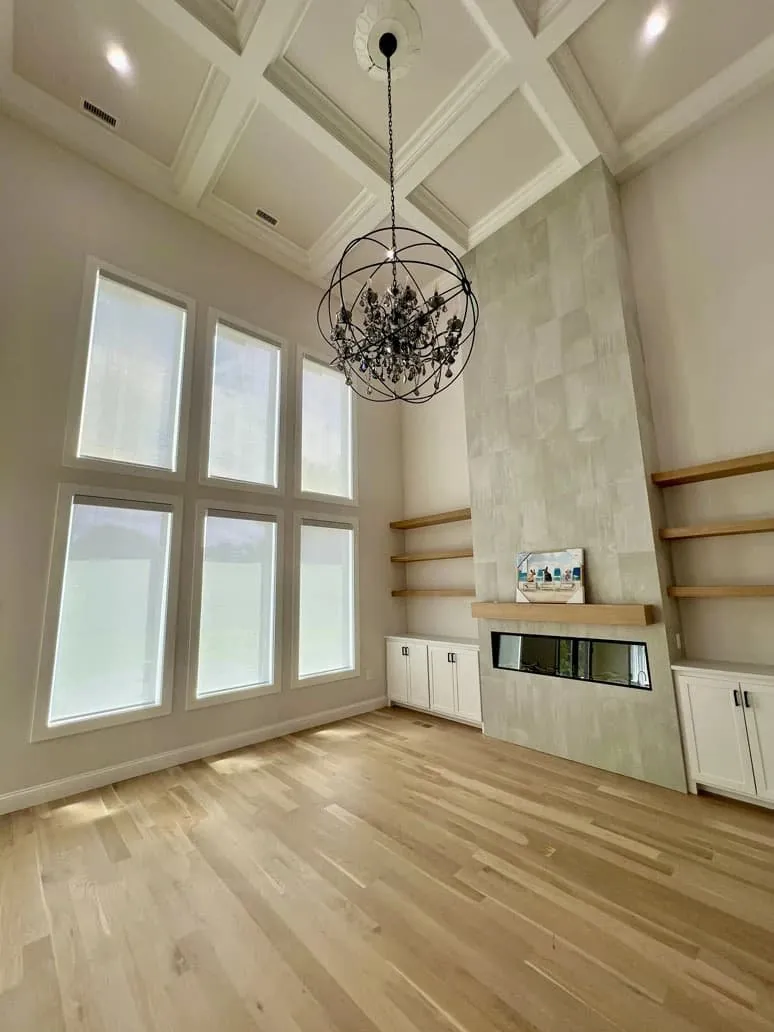
A room with windows on several walls is where careful measuring shows. The shades have to fit each opening and line up with each other, so the room looks planned rather than pieced together.
- We measure each window’s width at the top, middle and bottom, and its height on both sides and in the center.
- We check the depth of each frame for an inside mount and note anything in the way, such as a crank handle, a latch or a wide sill.
- At corner windows, we measure each side to the corner post so the shades meet cleanly.
- We note the bottom height of every window on a wall, so shades of different sizes can be set to line up when lowered.
- We confirm the fabric, mount and lift for each window with you before anything is ordered.
Our guide to window measuring terms explained covers the language we use, if you want it before we come.
The consultation at your house
In a room lit from three sides, a fabric chip in a catalog tells you very little, which is why most Freetown projects begin at home. The van is stocked with roller samples, and in effect it carries the showroom up your driveway. We walk from room to room, ask which windows annoy you at which hour, and drape real fabric over your own glass so you can watch it change as the light moves. Once everything is measured, you get a free estimate covering the shades you liked, and you can take as long as you need to think it over.
Color and fabric across a whole house is a bigger question, and our interior design consultations are there for it. That conversation can happen on the same visit.
Fabric families and opacity
Hunter Douglas rollers come in four broad levels of light control, and most Freetown houses use two or three of them.
- Light filtering: daylight comes through softly and the room stays private by day. Good for living rooms, kitchens and rooms among the trees.
- Room-darkening: most light is blocked. Useful in a den or a guest room.
- Blackout: full darkness for bedrooms, especially the east-facing dormers.
- Screen: about view and glare more than privacy. The right choice for river rooms and the west wall of a corner room.
Designer Roller covers the broad range of light filtering through blackout. Designer Screen is the solar screen line. Designer Banded combines sheer and solid stripes. Alustra adds more tailored fabrics and hardware, including Alustra Woven Textures. You can read about each on our pages for Designer Banded, Alustra Woven Textures and Designer Screen, or on the main roller shades page.
Lifts, motors and long rooms
How you raise each shade is the last decision, and in a house with this many windows it matters. Cordless rollers move with a hand on the hem and hold their position wherever you let go, which keeps the window clean of dangling hardware. A loop control, fixed to the wall, suits a heavy or very wide roller where a steady, geared lift feels better.
Motors earn their keep when a room has shades on two or three walls. With PowerView, each shade can belong to a group: the east wall, the west wall, the whole living room. A morning scene closes the east group while you eat breakfast, an afternoon scene handles the west wall, and an evening scene lowers everything for privacy. You can trigger scenes from the app or a handheld remote, or let them run on their own timetable and adjust it when the seasons change. Our page on motorized blinds in Freetown explains whole-house automation in more detail.
A Gallery dealer for every window in the house
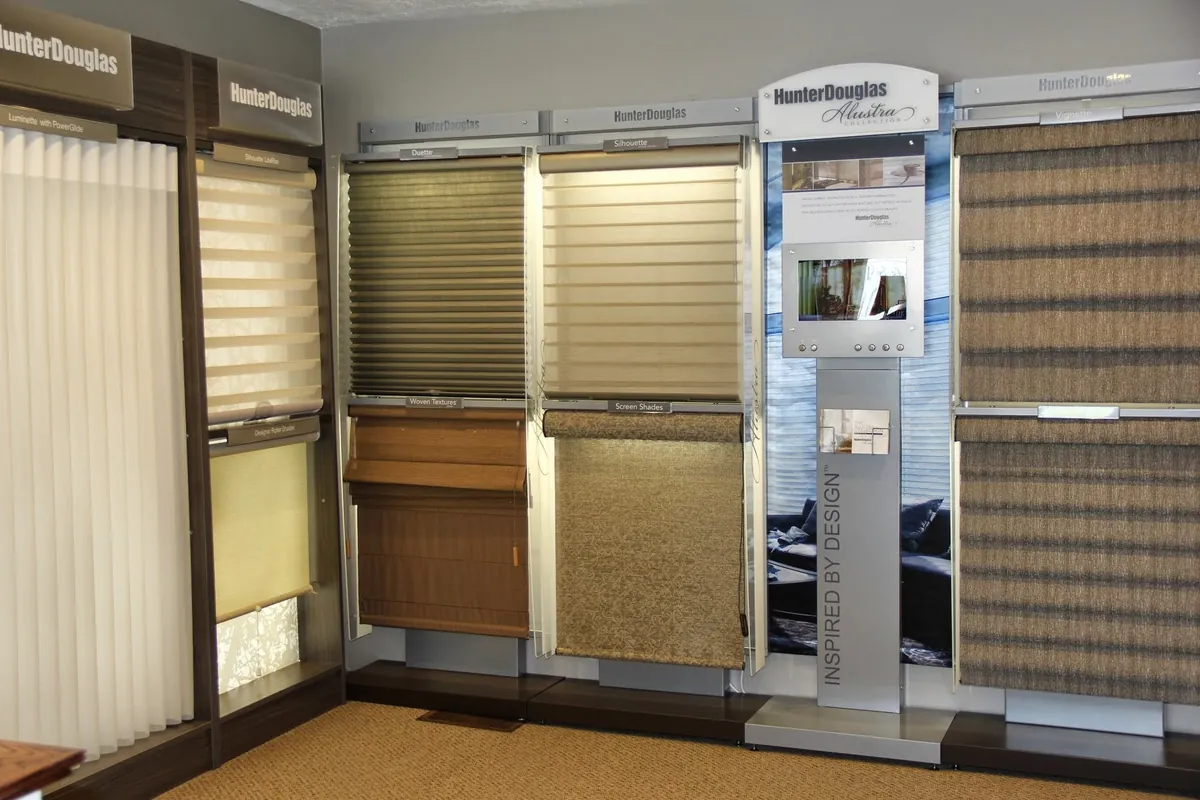
Gallery dealer is a title Hunter Douglas reserves for dealers who meet its standards, and Blinds & Designs holds it. What that means on your project is simple: the entire roller lineup, every fabric collection and PowerView, all ordered through one local business.
The people who fit your shades are certified Hunter Douglas installers. On a corner wall they set the brackets so neighboring shades meet tidily, they screw into framing rather than just drywall, and they run each roller up and down before calling it done. Should anything wear out down the road, blind and shade repair is part of what we do.
Few houses need only one kind of window covering. The front room of a cape might suit roman shades in Freetown, and a ranch den might be better with custom blinds in Freetown. Every service we offer in town is gathered on our Freetown page.
Questions from Freetown
My living room has windows on three walls. Do all the shades have to match?
They should belong together, but they do not have to be identical. We often use one fabric family in two opacities, a light filtering roller on most windows and a screen on the sunniest wall, in related colors.
Will rollers fit in my cape’s dormer windows?
Usually, yes. Rollers need little space, which makes them one of the best fits for a dormer. We check the clearance above each window, because sloped ceilings can sit close to the frame.
What works on windows facing the Taunton River?
Solar screen. It softens the brightness off the water while you keep looking out. Deep colors give the clearest view, and we line up a few openness levels in your window so you can compare.
Can the shades on different walls lower at different times?
Yes. With PowerView motors, we group the shades by direction and set each group on its own schedule, so the east windows close in the morning and the west windows in the afternoon.
Do you charge for the estimate?
There is no charge. Once we have measured, the estimate comes to you free of cost.
See it in your own rooms
Roller shades in Freetown, MA, are easiest to choose with the fabric in your hand and the light coming in from every side, the way it really does. Book a time through Request a Consultation and we will carry the Designer and Alustra samples into your house, measure each window and leave a free estimate. North Dartmouth is the nearest showroom if you prefer to start there, and the call button reaches us if a question comes first.