
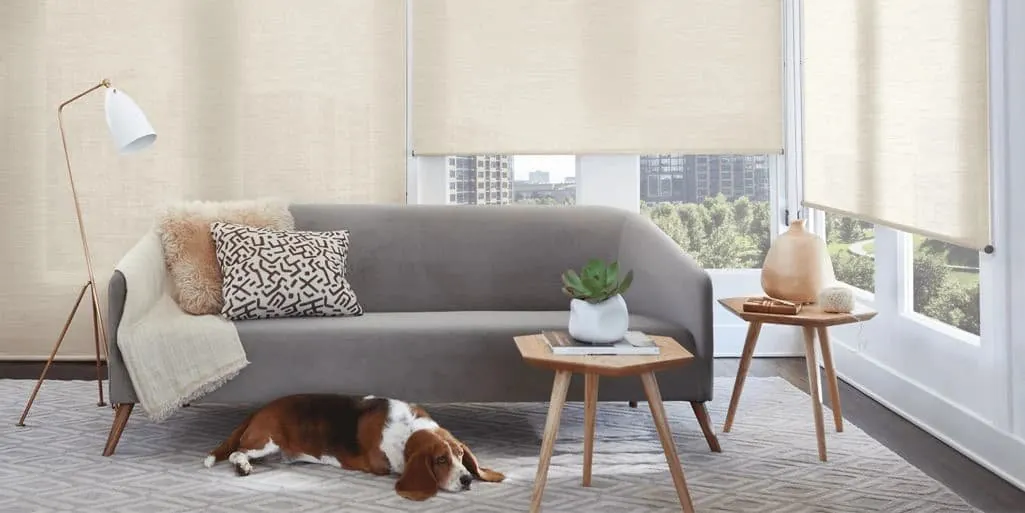
Nothing heavy between you and the pond
Around Assawompset and Long Pond the houses face the water, and the rooms that look toward it were built around the view. Some started life as small summer camps a few steps from the shore and have been winterised, extended and lived in year round. Others are newer colonials on bigger lots set further back, with a family room or a sunroom angled toward the pond. Either way, the best windows in the house are the ones you least want to cover.
That rules out anything bulky. Heavy drapery, deep valances and stacks of folded fabric all take a bite out of the glass, even when they are open. A roller is the opposite. Lowered, it controls the sun and the glare; raised, it winds up into a slim roll at the head of the window and the frame is almost bare. That is the main reason roller shades in Lakeville, MA, are such a natural choice for pond-facing rooms.
The pond also brings its own light. Water reflects the sun into the house, which means the glare can arrive from below as well as above, and that shapes the fabric we suggest for each window.
Roller shades in Lakeville, MA, that keep the pond in view
Every shade on this list is Hunter Douglas, from the Designer and Alustra lines. Samples of each travel with us, so you see them against your own water view.
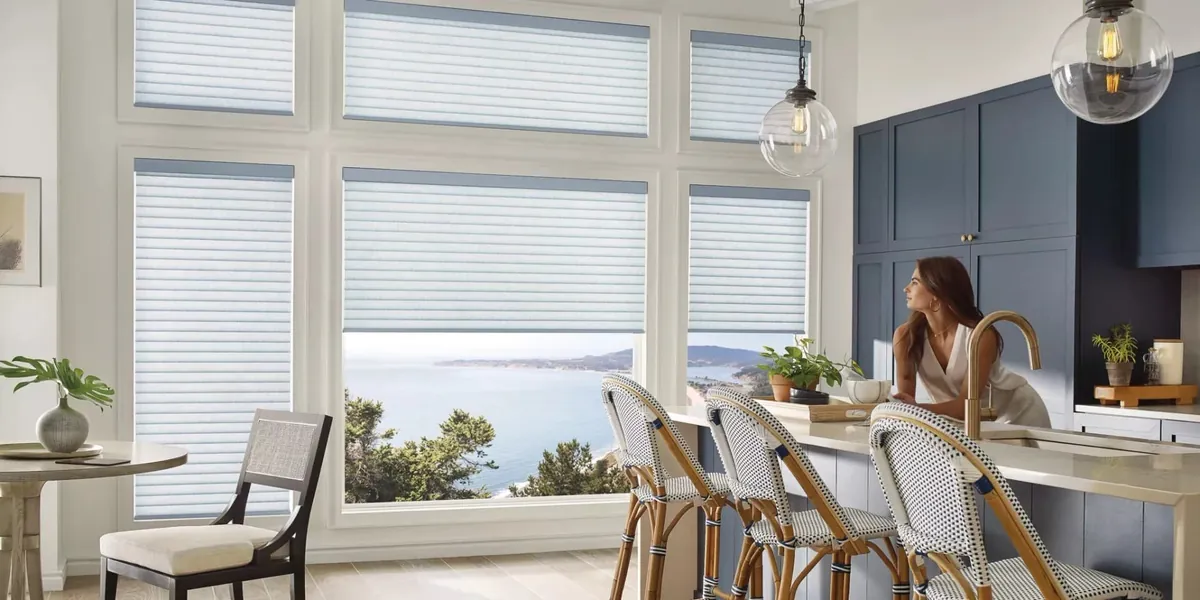
Screens that leave the view open
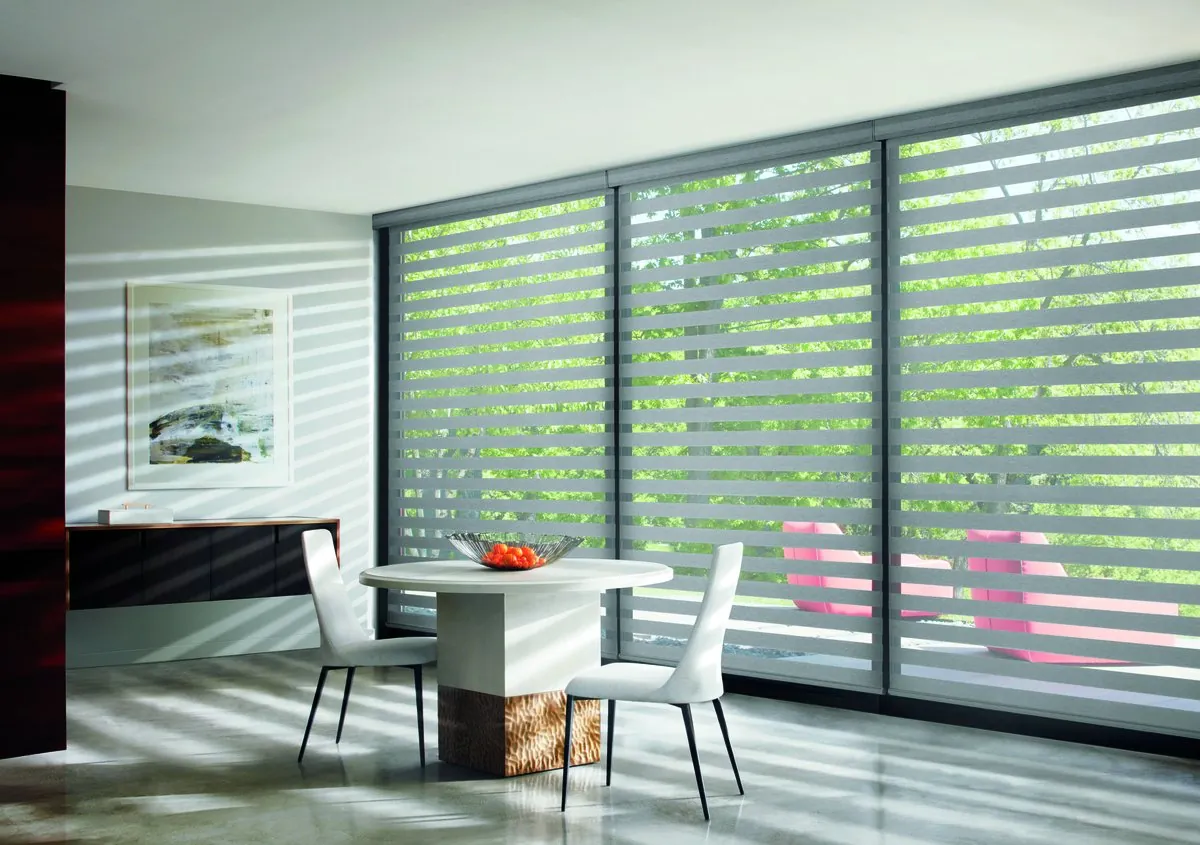
Designer Screen and Alustra screen weaves calm the brightness coming off the pond. You still see the far shore through the fabric.
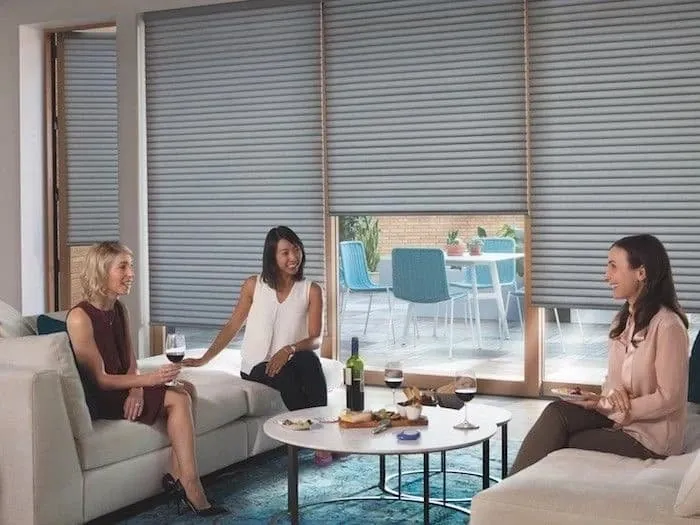
Sonnette for a converted camp
A roller made from a curved cellular fabric. It rolls up tight like any roller and adds a little warmth to a room that was first built for summer.
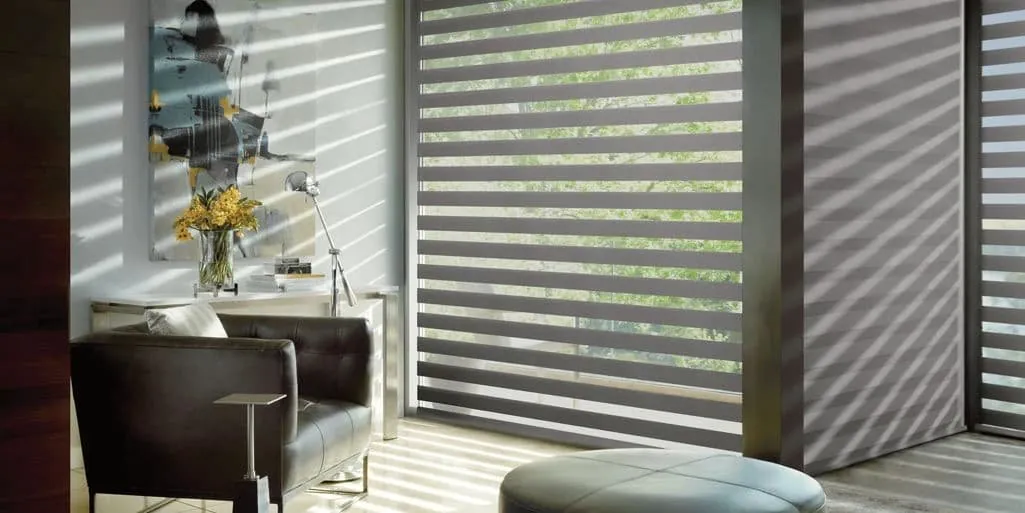
Banded privacy
Designer Banded pairs sheer and solid stripes. Line them up to see out, stagger them to close the room, all without raising the shade.
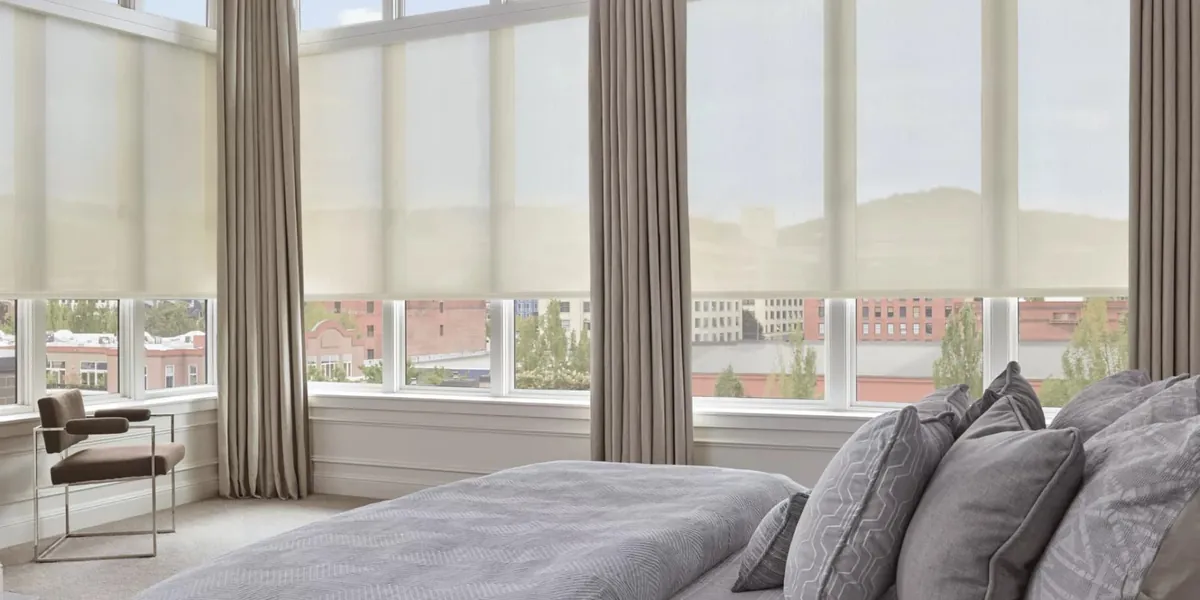
Dark nights for lakeside bedrooms
A blackout roller behind a screen on one bracket gives a pond bedroom a view by day and darkness at night.
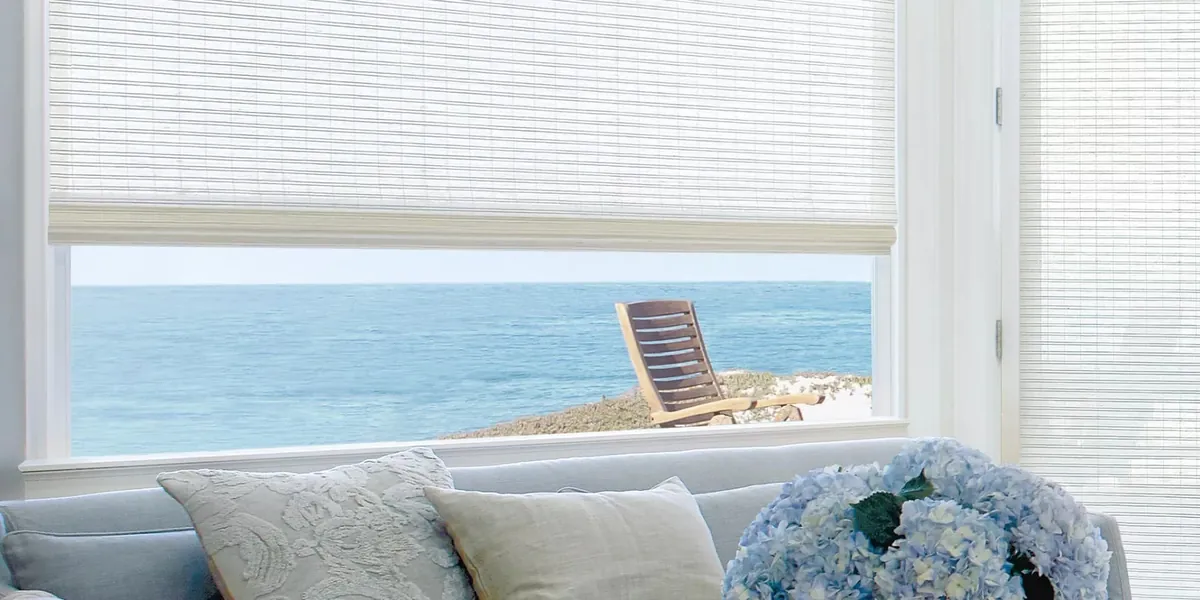
Natural texture
Alustra Woven Textures has the look of a woven shade on a simple roller, which suits knotty pine, painted boards and a relaxed waterside room.
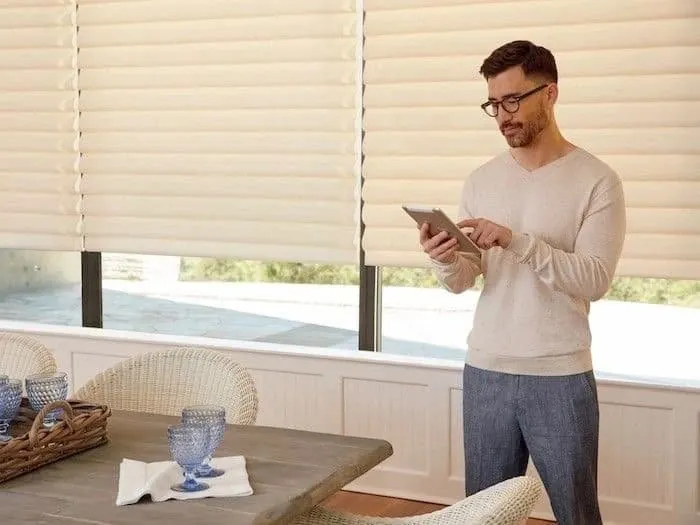
Motors for tall glass
PowerView lets you raise and lower shades from a tablet, a phone or a remote, or on a schedule that follows the sun across the water.
Glare off the water, and what a screen does about it
Anyone who has sat in a pond-facing room on a sunny afternoon knows the problem. The sun on the water bounces a hard, bright light straight through the glass, low enough to land in your eyes and on the television. It fades rugs and wood floors over the years, and in summer it heats a room faster than the thermostat would suggest.
Solar screen is designed for this exact job. The fabric is a tight weave with small, regular gaps, and every screen has an openness figure that describes how much of the fabric is open. The more open the weave, the clearer the pond looks and the more brightness reaches the room. The tighter the weave, the calmer and cooler the room gets, with the view softening behind the fabric.
Color matters as much as weave. Dark screens, such as charcoal, espresso or bronze, are surprisingly easy to see through and very good at cutting glare. Pale screens push more heat back outside, but they brighten when the sun strikes them and the view fades. For most pond rooms we start with a dark screen in a middle openness and adjust from there. Our guide to choosing fabric for a sunny room goes further into the choice.
Camps that became year-round houses
The older houses closest to the water often began as camps. Over the years they were insulated, given a proper heating system, opened up and added to. The windows tell the story. You might find a row of small original windows in what used to be the porch, a pair of newer double-hungs in a bedroom added later, and a wide picture window or slider put in when the living room was opened to the pond.
The ceilings in these houses are often low, which leaves very little wall above the windows. Some coverings need a good hand’s width of space above the frame for their hardware. A roller needs far less, and it can usually sit inside the frame where the depth allows. Where the frame is shallow, the bracket can mount on the narrow strip of trim or the ceiling itself.
Because the windows vary so much, we tend to plan these houses as a whole rather than window by window. One or two related fabrics across the house, with the bottoms of the shades lined up where windows of different heights sit side by side, makes a pieced-together set of windows look calm and deliberate. A Sonnette cellular roller is worth considering in the coolest rooms, since it adds a layer at the glass without the bulk of a pleated shade.
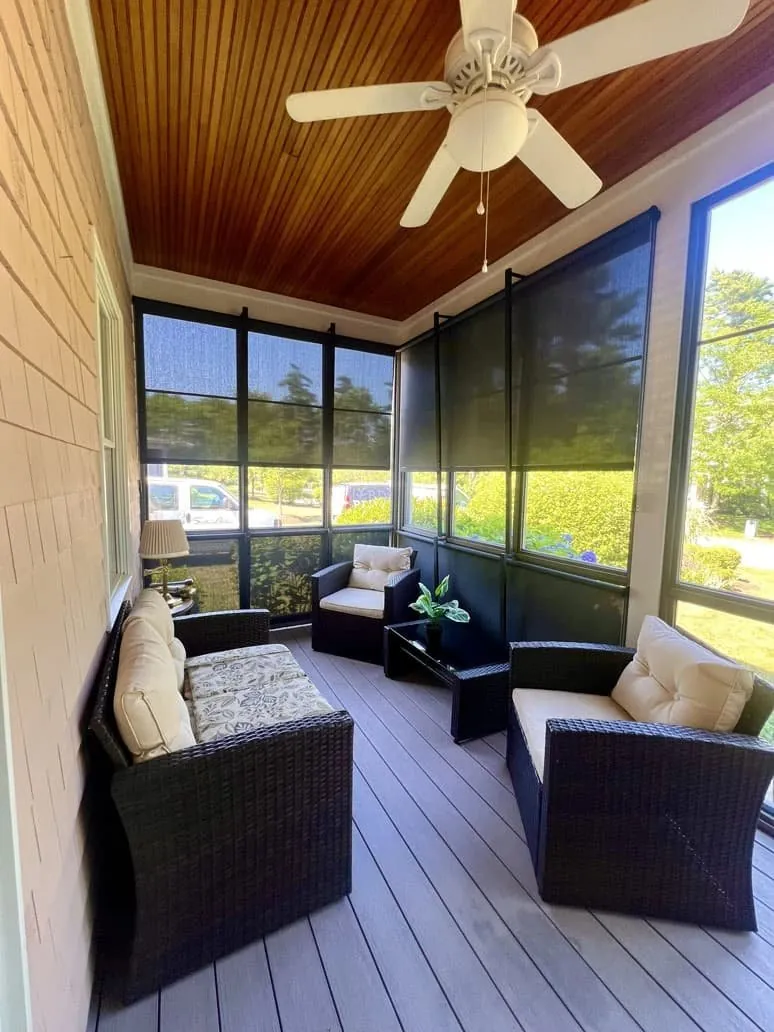
Porches and sunrooms on the shore side
Many camp conversions kept a porch or sunroom on the water side, now glazed in, and it is usually the most-used room in the house from spring to autumn. Glass on three sides makes it bright and warm, and it also makes it the room that needs the most help on a hot afternoon.
Each window in a sunroom gets its own roller, which keeps the shades small and easy to handle. Grouped together, they can be lowered as a set when the sun is strongest. A dark screen keeps the room usable while leaving the pond in sight. If the sunroom has a door to the yard or the dock, a roller mounted above the frame rolls clear so you can walk straight through.
For a sunroom that doubles as a guest room, a dual roller carries a screen for daytime and a blackout behind it, both on the same slim bracket. It adds privacy at night without adding anything heavy.
Newer colonials on larger lots
Set back from the shore, Lakeville’s newer colonials are larger and more regular. Most have standard double-hung windows through the front and bedrooms, then open up at the back with a family room, a kitchen with a long window over the counter and a slider or French doors onto a deck. Some add a great room with tall windows and transoms facing the water.
Here the challenge is scale rather than odd sizes. A window wall in a great room can be too tall to reach and too wide for one shade. We split wide openings into several rollers on a shared bracket so they line up and move together, and we suggest PowerView motors for anything above the doors. A schedule can bring the high shades down before the afternoon sun reaches them and lift them again in the evening.
For the rest of the house, a light filtering Designer Roller in the front rooms gives daytime privacy from the road, and blackout in the bedrooms gives darkness on summer mornings. When we plan roller shades in Lakeville colonials, we usually pick the fabric for the pond side first, then match the rest of the house to it.
The kitchen deserves its own thought. A long window above the counter usually faces the yard or the water, and it is awkward to reach across a sink or a row of appliances. A cordless roller moves with a light touch at its hem, and a motor removes the reach altogether. A light filtering fabric keeps the counter bright while you cook, without the glare in your eyes.
Keeping the frame clean
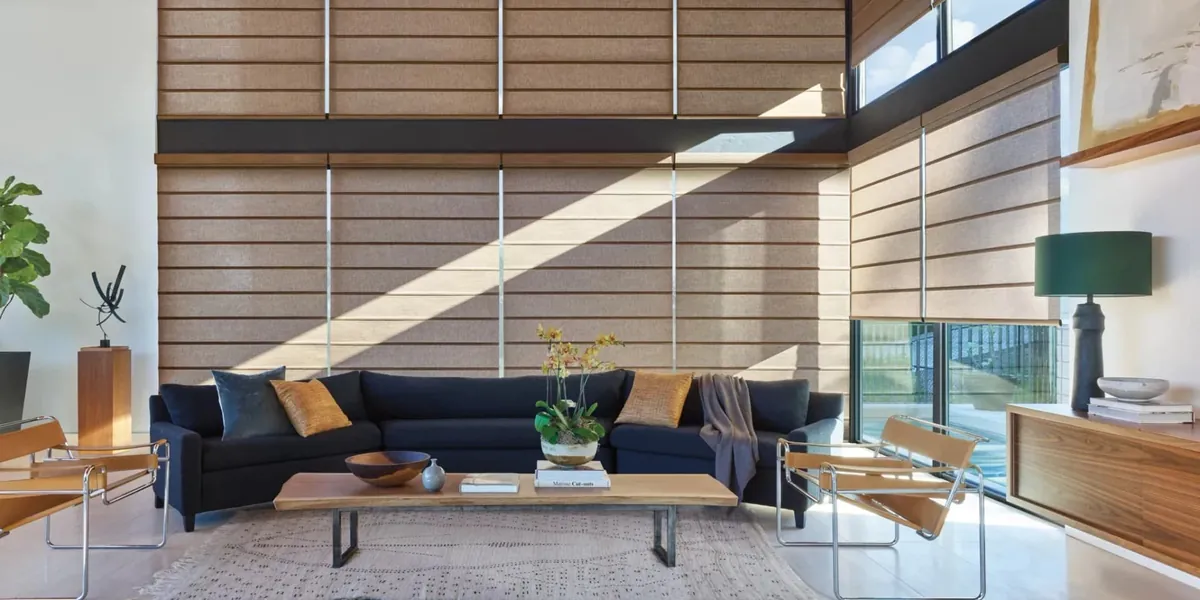
On a pond-facing window, the hardware matters almost as much as the fabric. A shade that hangs off a bulky headrail or leaves a long cord swinging at the side spoils the clean line of the frame. Rollers give you several ways to keep things tidy.
- Inside mount: the shade sits within the frame, so the trim stays visible and the raised roll is almost hidden.
- Cassette or fascia: a slim cover across the top hides the rolled fabric and the brackets, for a finished look.
- Reverse roll: the fabric comes off the front of the tube, which hangs it a little further from the glass and clears crank handles on casement windows.
- Cordless lift: you lower and raise the shade by its bottom rail, with nothing hanging at the side.
- PowerView: no lift at the window at all, just a phone, a remote or a schedule.
We look at each window and suggest the combination that keeps it closest to bare glass when the shade is up.
Seasons on the pond
The light across the water changes through the year. In summer the sun is high and the glare comes mostly in the afternoon. In autumn and winter it swings lower and stays in the sky for less time, but when the pond is frozen or snow lies across the ice, the reflected light can be fierce on a clear day.
A roller handles both seasons well because you can set it at any height. In summer, a screen lowered most of the way calms the afternoon. In winter, the same shade lowered just a little cuts the band of glare at eye level while the low sun still warms the floor. If you want the shades to keep up without thinking about it, PowerView schedules can shift with the seasons. Our page on motorized blinds in Lakeville explains how.
Bedrooms that wake with the water
A bedroom on the pond side gets a double dose of morning light: the sun itself, and its reflection rising off the water. In early summer that can fill the room long before anyone wants to be up. Light filtering fabric will not hold it back, so for most pond bedrooms we suggest a blackout roller.
How it is mounted decides how dark the room gets. Inside the frame, a blackout roller leaves a slim gap of light at each side, which some people like as a soft wake-up. Mounted over the trim with a little overlap, it closes most of that gap. In a converted camp, where the bedroom windows are often small and close to the ceiling, an outside mount on the trim can also make a little window look larger.
If the bedroom has the view you bought the house for, a dual roller keeps both: a screen in front for reading in the afternoon with the pond in sight, and a blackout behind it for night. Quite a few roller shades in Lakeville bedrooms end up set up this way, and it takes up no more room at the top of the window than a single shade with a cassette.
Guest rooms and bunk rooms in camp conversions are another good place for blackout, since they are often used on summer weekends when the light comes early and the house stays busy late.
Choosing a collection
Hunter Douglas makes more than one family of rollers, and we carry them all.
Designer Roller covers the widest range of colors, textures and opacities, from soft light filtering through blackout. Designer Screen is the solar screen line, with a choice of openness levels and colors. Designer Banded is the striped shade for flexible privacy. Alustra is the more architectural end of the range, with tailored fabrics and hardware, and Alustra Woven Textures brings a natural woven look. Sonnette puts a cellular fabric on a roller.
A pond house often mixes them: screens on the water side, Designer Roller elsewhere, perhaps woven textures in a pine-panelled room. Read more on our Designer Screen, Sonnette and Alustra Woven Textures pages, or start on the main roller shades page.
Bringing the samples to the lake
Choosing a screen for a pond view is almost impossible from a catalog, because what you are judging is how the fabric looks against your own water at your own time of day. So we come to you. Our vans are stocked with samples, which lets us bring the showroom to your door.
- Ask for a visit through Request a Consultation, or use the call button, and pick a time that suits you, ideally when the sun is on the water.
- We start in the pond-facing rooms and look at the glare, the view and the heat.
- You hold several screen openness levels and colors up to the glass and compare them side by side.
- We go through the rest of the house and the fabrics for each room, then measure every window, including frame depth and the space above each one.
- We leave you with a free estimate. There is no rush to decide.
Interior design consultations can be part of the same visit if you want help with color and fabric across the house. Our guide to what happens at an in-home consultation has more.


What a Gallery dealer brings to a pond house
Blinds & Designs holds Hunter Douglas Gallery dealer status, which Hunter Douglas grants dealers who meet its standards. For a pond house that means every roller family, every screen weave and PowerView automation in one place, so we can match the fabric to the view rather than to what happens to be in stock.
Installation is done by our certified Hunter Douglas installers. In a converted camp they find solid wood behind panelling and old trim, set shades of different sizes to line up, and check every one runs straight. If a shade needs a repair later, we look after blinds and shades already in place too.
Rollers sit well beside other Hunter Douglas products. A front room might suit plantation shutters in Lakeville, and a cool bedroom might want cellular shades in Lakeville. Everything we offer in town is listed on our Lakeville page.
Questions from Lakeville
Will a shade spoil my view of the pond?
A screen roller softens the view rather than blocking it, and when it is raised it rolls up out of sight. Darker screens and more open weaves keep the water clearest.
My converted camp has low ceilings. Is there room for a roller?
Usually. Rollers need very little space above the window and can often sit inside the frame. Where the frame is shallow, the bracket can go on the trim or the ceiling.
What helps with glare off the frozen pond in winter?
The same screen that works in summer, lowered just enough to cut the bright band at eye level. The low sun still reaches the floor and warms the room.
Can I hide the roll and brackets?
Yes. A cassette or fascia across the top covers the rolled fabric and hardware, and an inside mount keeps it within the frame.
Is the estimate really free?
It is. We measure your windows at the consultation and the estimate costs you nothing.
Your pond view, with the sun under control
The easiest way to pick roller shades in Lakeville is to stand at your own pond-facing window with the screens in your hand. Use Request a Consultation and we will bring the Designer and Alustra range to you, measure every opening and leave a free estimate. If you want a look before then, the North Dartmouth showroom is our closest, or press the call button to ask us anything.