
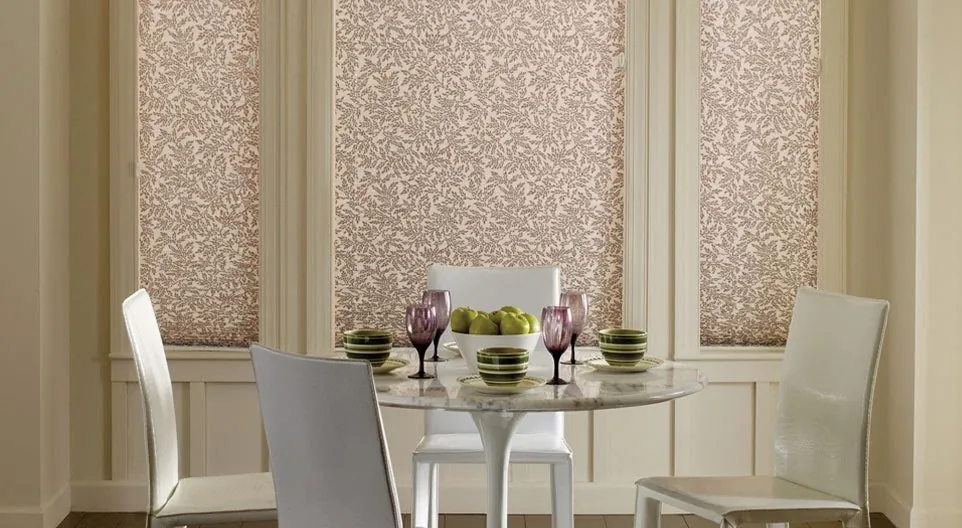
From the 6A village to the bay shore
Barnstable runs the full width of the Cape, from Cape Cod Bay on one side to Nantucket Sound on the other, and the light inside a house depends heavily on which part of town it stands in. A view room on the bay side, looking north across the water, mostly sees bright reflected light. A room facing south toward the Sound takes the sun head on through the middle of the day. The same fabric will feel quite different in each, which is why roller shades in Barnstable, MA, are never a one-size order.
The houses span centuries as well as shorelines. Along the 6A village the antique capes and Federal houses keep their small, deep-set sash, and the historic district brings its own expectations about how a house should look from the road. On the bay side stand larger, newer houses built around big windows and open rooms.
A roller shade bridges both worlds well. In an old house it is modest enough to sit inside the frame and nearly vanish. In a new one it can span a wide opening cleanly and run on a motor. The choices that matter are the fabric, its openness, and where the shade is mounted.
Roller shades in Barnstable, MA: where most rooms begin
These three Hunter Douglas lines cover most of the rooms we see in town. Samples of each come with us on every visit.
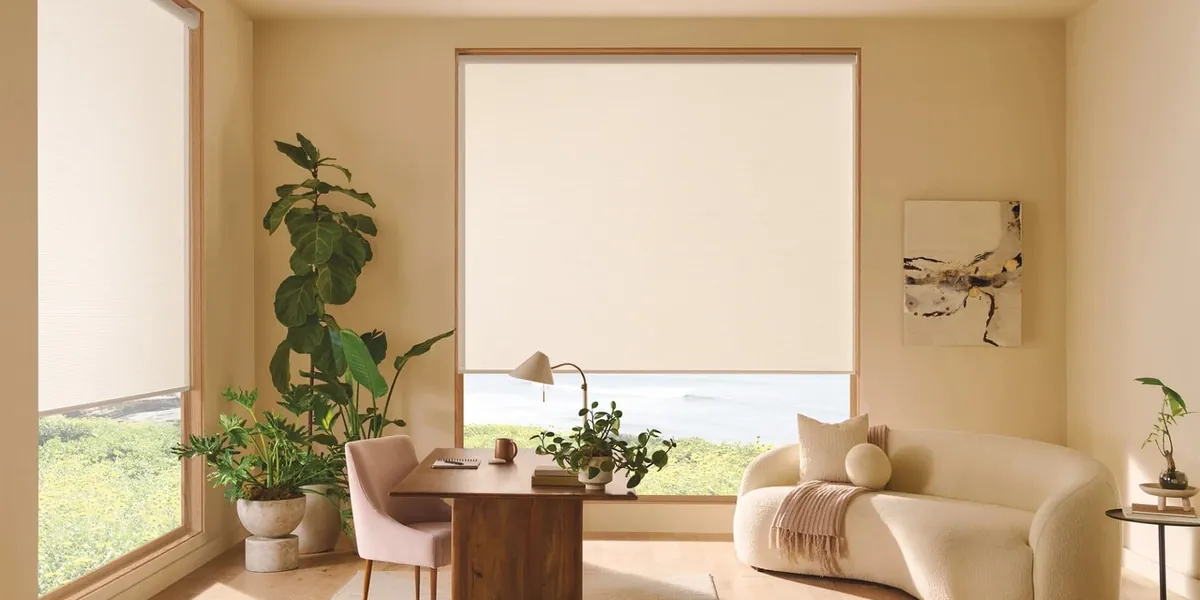
Designer Roller
Light filtering or blackout fabric on a slim roll. Well suited to the small rooms of an antique house, where you need privacy without losing the little daylight there is.
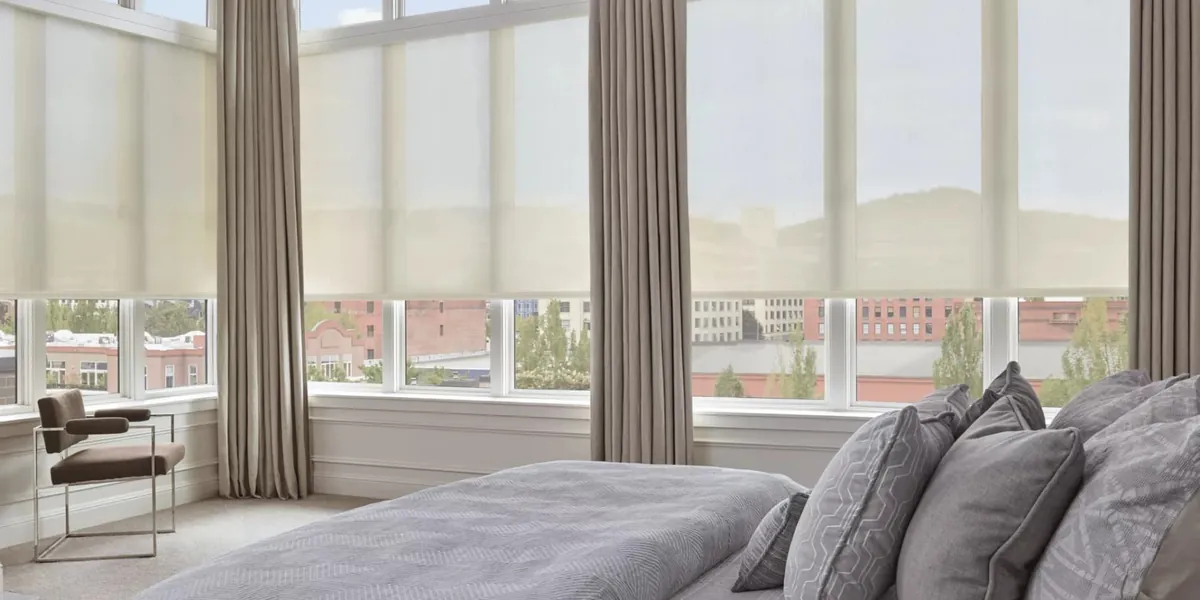
Designer Screen
A see-through screen weave for the rooms that take the strongest sun, so you control glare while keeping the water or garden in sight.
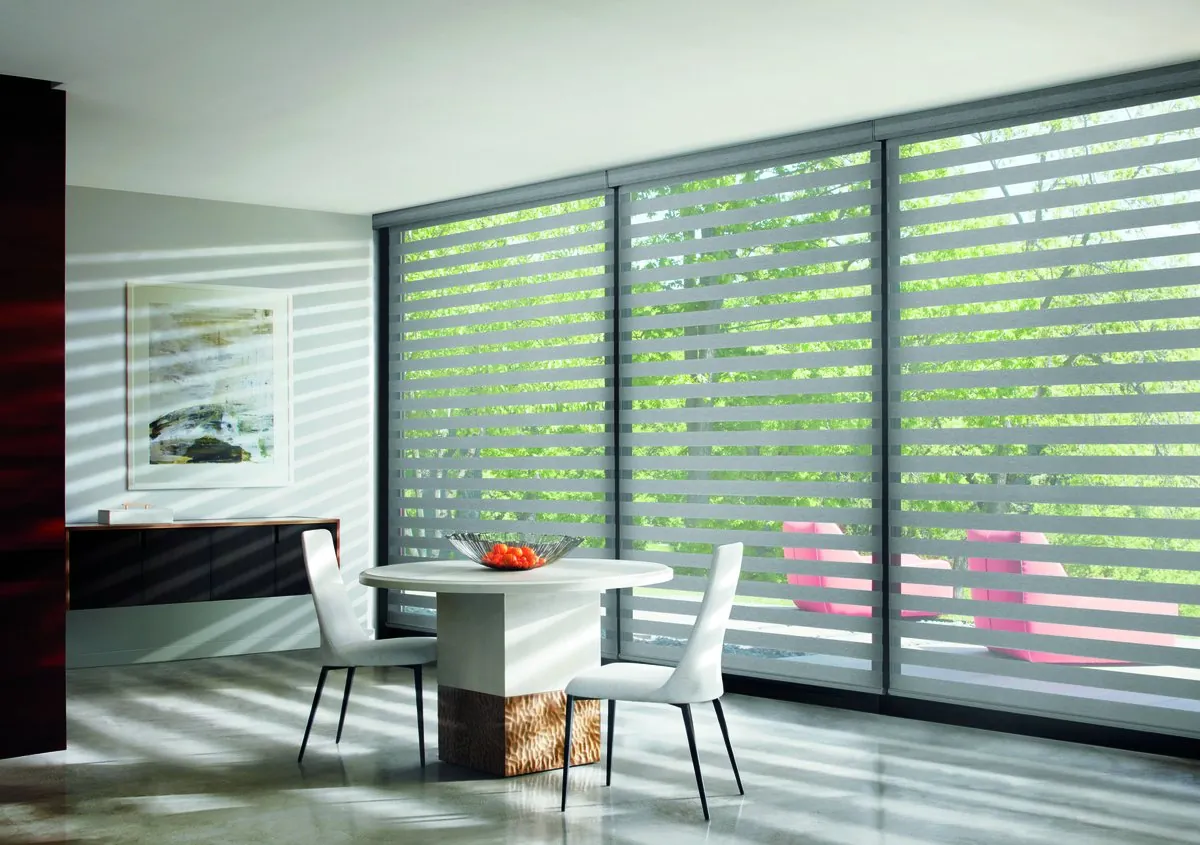
Designer Banded
Sheer and solid stripes on one continuous loop, for rooms that switch between view and privacy several times a day.
Deep-set sash in the antique capes
The oldest capes along the 6A village were built with heavy timber frames, and the sash often sits well back in the wall. Inside, that leaves a deep reveal around each window, sometimes with a wide sill you can set a plant or a lamp on. It is one of the loveliest features of these houses, and a good roller shade respects it.
That depth is actually a gift for a roller. With room to spare in the head of the frame, the shade can sit right back against the sash, out of sight behind the casing when it is raised. The reveal and the sill stay clear, and from inside the room the window looks almost untouched. In a shallower modern frame you would see the roll; in a deep antique one you often do not.
The catch is the shape of the opening. A frame that has stood this long has usually moved. The head may not be level, the sides may lean slightly, and the reveal may taper from front to back. Before recommending an inside mount, we check whether the shade can roll freely all the way down without catching on a high spot.
Small panes and small windows also mean these rooms are often a little dim. We usually suggest a lighter, more translucent fabric for an antique cape, one that gives you privacy without making a modest room darker than it already is.
The historic district and the view from the road
The Federal houses along the old road are the formal faces of the village: symmetrical fronts, a central door, rows of evenly spaced windows. In a historic district, what those windows show to the street is part of the character everyone shares.
Roller shades keep that face calm. Raised, they are almost invisible from outside. Lowered, each window shows a single flat panel, and if every panel on the front of the house is the same light neutral color, the façade reads as one even composition rather than a patchwork of fabrics. We suggest that approach for any street-facing elevation in the village, then let the room-side fabrics vary inside.
If you are unsure what your district expects, it is wise to ask before ordering anything that shows from outside. We are happy to hang samples at the glass and step out to the road with you, so you can see exactly what a passer-by sees.
Inside, Federal rooms are taller and the windows larger than in a cape, with fine trim and sometimes original interior shutters. A roller can work as the quiet layer behind those shutters, handling light and privacy while the shutters stay folded back in the jamb.
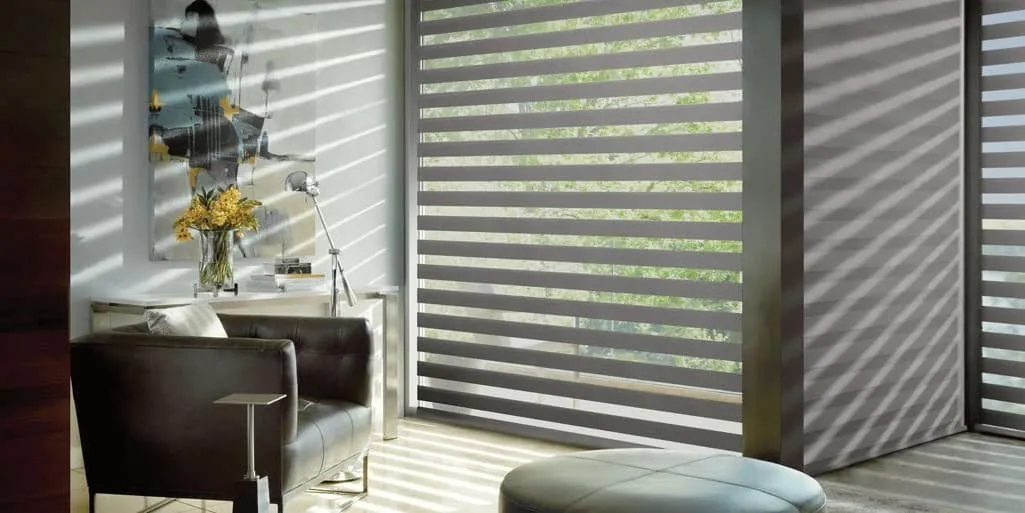
Light that changes from one shore to the other
Because the town spans the Cape, two houses with the same floor plan can need quite different shades. On the bay side, the best views face north over the water. Those rooms rarely take direct sun on the view windows, but the bright water and sky can still be glaring, especially in the morning and evening when the sun sits low to the east or west.
On the south side, toward the Sound, the view windows often face straight into the midday sun. Glare is stronger and the heat on the glass is greater, so a solar screen with a tighter weave or a darker color usually earns its place there.
Inland, in the villages between the two shores, exposure depends more on trees and orientation than on water. A house in a wooded lot may need little more than light filtering fabric for privacy, while the same house on an open lot needs screens on the west side.
That is why we look at each room’s orientation before we talk about fabric at all. The compass tells us more than the floor plan.
Larger newer houses on the bay side
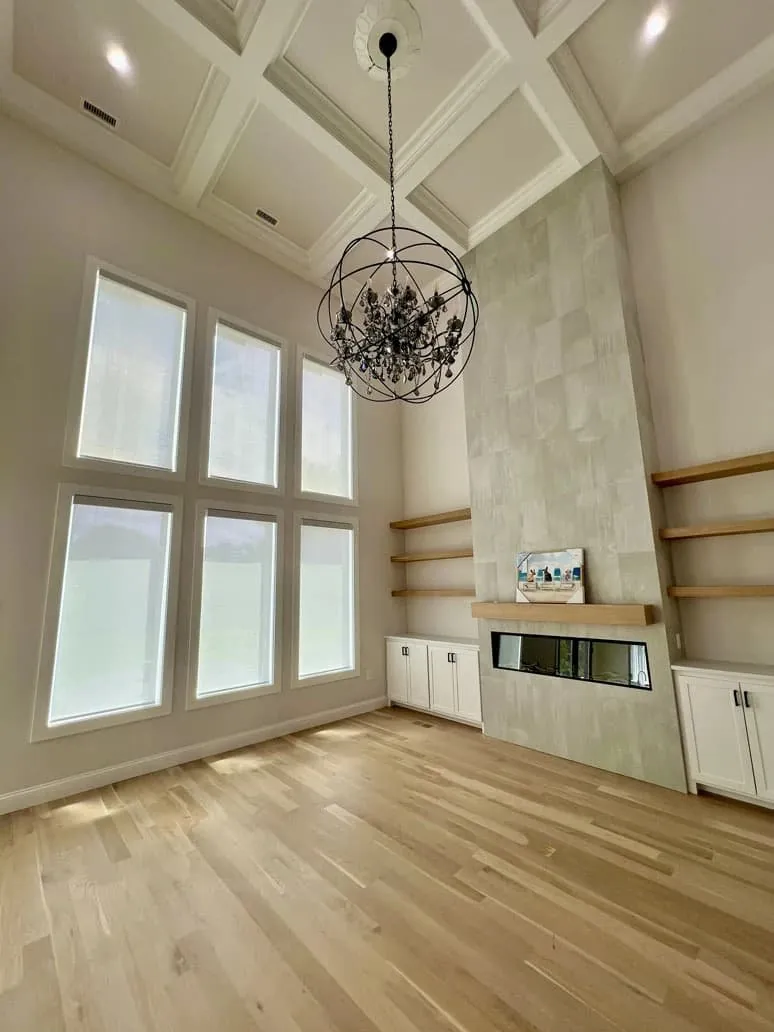
The newer houses on the bay side are built for the view. Great rooms with tall windows, walls of sliders opening onto decks and patios, corner windows and transoms above are common, and some rooms rise two stories. These are some of the most satisfying rooms to fit with rollers, because the shade can be made very wide and very tall and still roll up into a neat line at the top.
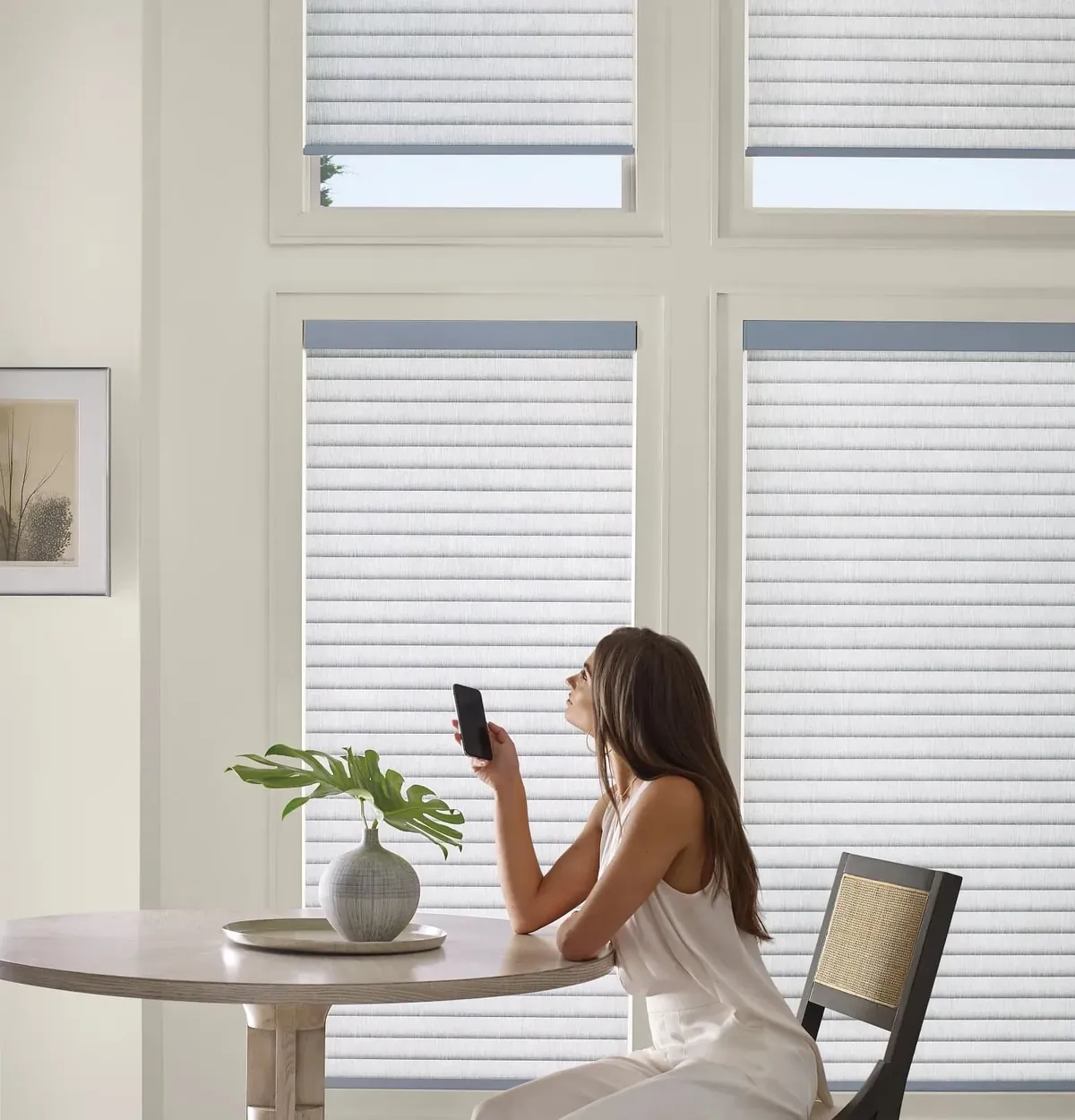
Many of these windows are out of reach, and that is where PowerView motorization comes in. Shades move from your phone, a remote or a wall switch, and can be grouped so a whole wall moves together with every hem level. Schedules take care of the routine: screens down when the low sun comes across the water, blackouts down in the bedrooms at night, everything up at sunrise. We plan how each motor is powered during the visit.
For a long run of glass broken by mullions, several shades on one connected system look like a single treatment when they move. A fascia or cassette across the top hides the rolled fabric and gives the run a crisp finish.
When we come out to the house
Nearly every Barnstable project begins at home. The light in an antique parlor and the light in a bay-side great room are nothing alike, and the only way to choose well is to look at real fabric in the real room. Our vans carry the samples, so we bring the showroom to you.
- Book a time through Request a Consultation or with the call button.
- We arrive with the full roller range: light filtering, blackout, screen and banded fabrics, plus lift and motor options.
- We go room by room with you and note the orientation, the window type and how each room is used.
- You try samples against your own windows and trim, and look out through the screens.
- We take careful measurements and check the depth and squareness of each frame.
- You receive a free estimate for the shades you are considering, to weigh up in your own time.
If the house needs more than shades, ask about our interior design consultations, which look at color, fabric and the whole room. There is more detail on what happens at an in-home consultation.
Reading a screen fabric: openness in plain terms
Screen fabrics are sold by openness, which simply describes how much open space the weave leaves between its threads. It is the setting that decides what you see through the shade. A more open weave keeps the outlook crisp, so the bay, the marsh or the garden stays in focus, while the brightest edge of the light is taken off. A closer weave holds back more glare and makes it harder to see in during the day, but the outlook behind it turns hazy.
Color changes the result as much as the weave does. A charcoal or bronze screen is usually easier to see through than a white one, because a dark fabric does not light up in the sun. A pale screen reflects more and looks bright and airy from inside, though the view is softer.
The trade-off is personal. Some people want every detail of the water; others are happy with a softer view if the room stays comfortable. Choosing roller shades in Barnstable for a view room is mostly a matter of standing at the window with two or three screens and seeing which balance feels right to you.
Sonnette and Alustra for the formal rooms
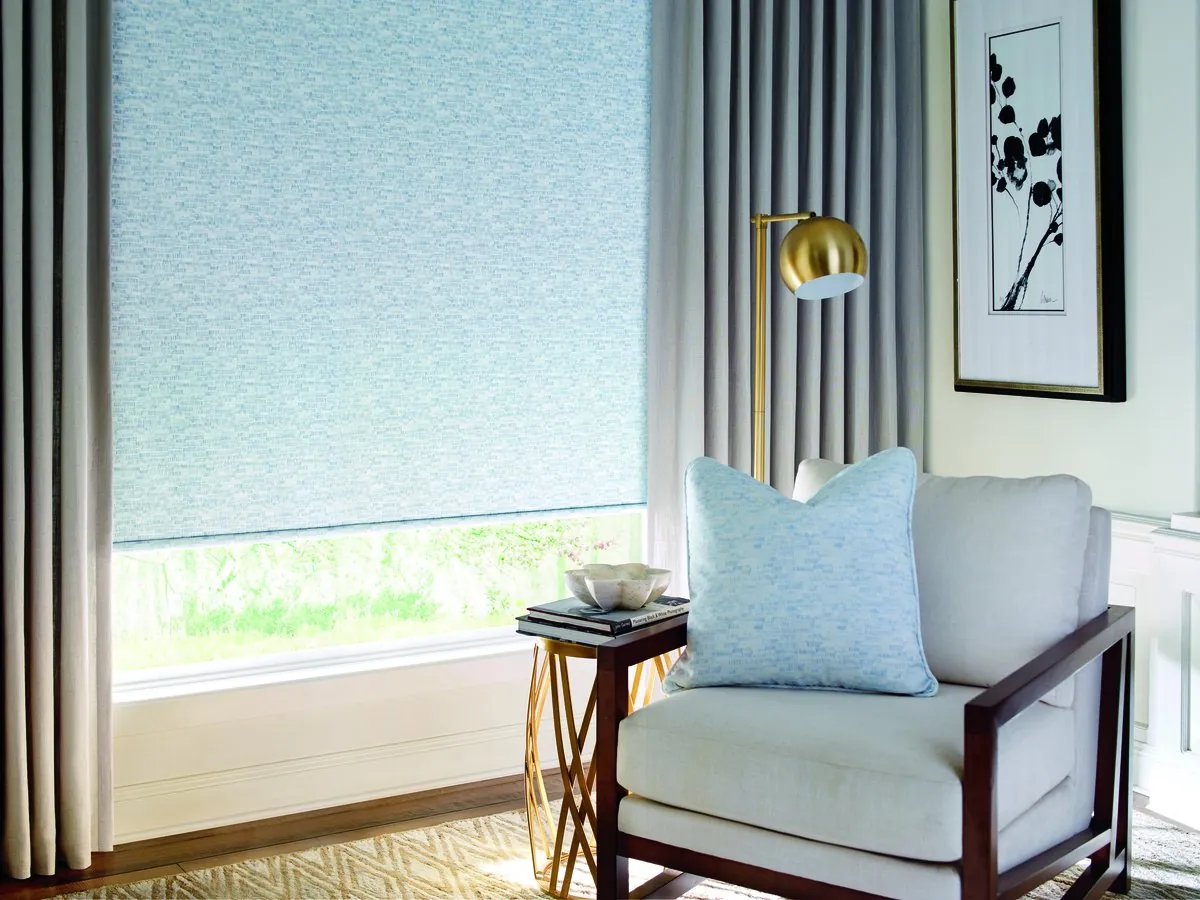
Not every room wants a plain flat roller. In a Federal dining room or a front parlor with fine trim, a shade with a little more presence can suit the room better. Sonnette has a softly curved, cellular face that looks more tailored than a flat fabric, and the Alustra collection offers Hunter Douglas’s most refined roller fabrics and finishes. Both still roll up out of the way, so the window and its woodwork remain the focus. You can see more on the Sonnette and Alustra Architectural pages.
Old houses with new additions
A great many antique houses in the village have been extended over the years. The original cape or Federal block keeps its small sash, while a kitchen wing, family room or sunroom at the back has modern windows, sliders and sometimes skylights. Inside one house you can step from a room with tiny panes into one with a wall of glass.
Roller shades help tie those spaces together. Using the same fabric family, or at least the same outward color, across old and new parts of the house gives continuity even where the windows themselves could hardly be more different. In the old rooms the shade sits back in the deep reveal; in the addition it spans the wide openings and perhaps runs on a motor.
The sunroom is often the room that needs the most attention. With glass on several sides it heats up quickly and can be too bright to use at midday. Solar screens on each window take the glare down and keep the garden in view.
Kitchens, bathrooms and the rooms in between
Practical rooms deserve good shades too. A kitchen window over the sink is awkward to reach, so a cordless or motorized roller saves stretching across the counter. In a bathroom, privacy comes first, and a light filtering or blackout fabric that wipes clean suits a room with steam and splashes.
Hallways, stair landings and mudrooms often have a single window that is easy to forget. A plain roller in the house’s common fabric finishes those spaces without fuss and keeps the outside of the house consistent.
For roller shades in Barnstable houses where children sleep or play, we recommend cordless or motorized lifts throughout, so there is never a loop of cord within reach.
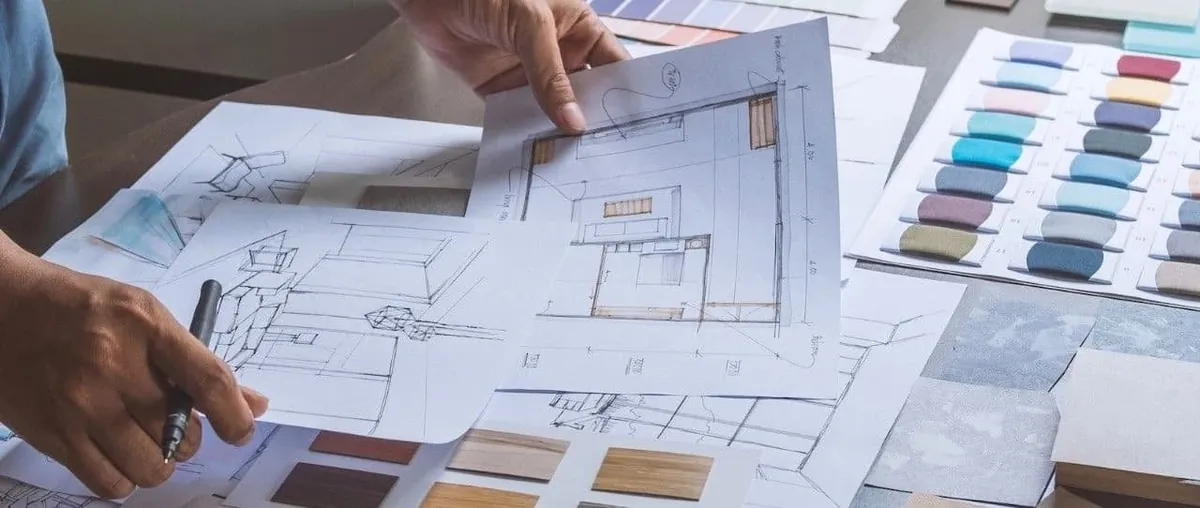
Measuring a window that has stood for a long time
On an antique house, measuring is where the job is won or lost. We measure the width at the top, middle and bottom of each opening and the height at both sides and the center. We check the depth of the reveal at several points, since it often changes across the head of the frame. We note any sash hardware, interior shutter or old latch that might be in the shade’s way.
If an inside mount would bind or leave an uneven gap, we will tell you and suggest mounting on the face of the casing instead. It is better to choose the right mount at the start than to live with a shade that drags every time you lower it.
When the shades are made, our certified Hunter Douglas installers fit them, fix each bracket into solid wood, level the headrail, roll each shade fully up and down to confirm it tracks true, and show you how the controls work.

A Hunter Douglas Gallery dealer for every era of house
Blinds & Designs is a Hunter Douglas Gallery dealer. Hunter Douglas reserves that title for dealers who meet its standards, and for you it means the whole roller collection under one roof: Designer Roller, Designer Screen, Designer Banded, Sonnette and the Alustra fabrics, with every openness, lift and PowerView option.
Our installers carry Hunter Douglas certification. We also take on blind and shade repairs on coverings you already own, and we carry cellular, roman and sheer shades, blinds, shutters and drapery for the rest of the house. See our cellular shades in Barnstable, Hunter Douglas dealer in Barnstable page and everything else on our Barnstable page, or browse the full roller shades collection.
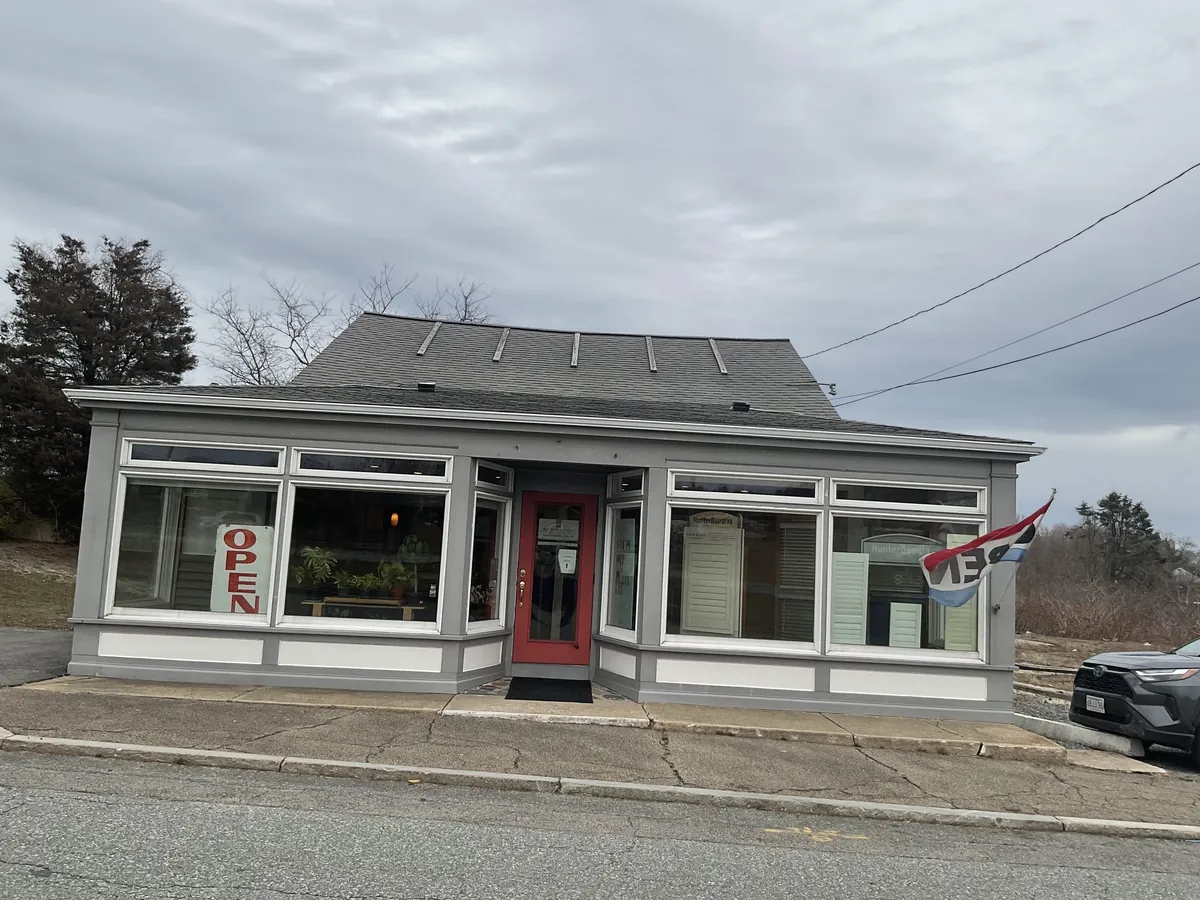
Sagamore, the showroom nearest Barnstable
Our nearest showroom is in Sagamore, at the Cape end of the bridge. It is the place to ask about a project before we come out.
That said, a sample held up in an antique parlor or against a bay-side wall of glass tells you far more than anything you can see elsewhere, so most Barnstable customers simply book a home visit.
Questions from Barnstable
Will a roller fit inside my antique window frame?
Often it fits beautifully, because the deep-set sash in older houses leaves room in the head of the frame. The question is whether the frame is square enough for the shade to roll freely. We check the depth and shape of each opening before recommending an inside mount.
What should my shades look like from the street in the historic district?
A light, neutral outward color on every street-facing window keeps the front of the house even and calm. If you are unsure of your district’s expectations, check before ordering. We can hang samples so you see the view from the road.
Which fabric suits the south-facing rooms near the Sound?
Usually a solar screen with a tighter weave or a darker color, to control the stronger midday glare while keeping the view. We bring several to compare at the window.
Can roller shades work in both the old house and the new addition?
Yes. Using the same fabric family or outward color across both ties the house together, even where the windows are very different.
Is there a charge for the estimate?
None. After measuring, we give you a free estimate for the shades you have chosen to consider, with no obligation.
Book your consultation
Whether your windows are small antique sash or a wall of bay-side glass, the best way to choose roller shades in Barnstable, MA, is with real samples in your own rooms. Request a consultation and we will bring the full range, measure carefully and give you a free estimate. You can also use the call button, or visit the Sagamore showroom.