
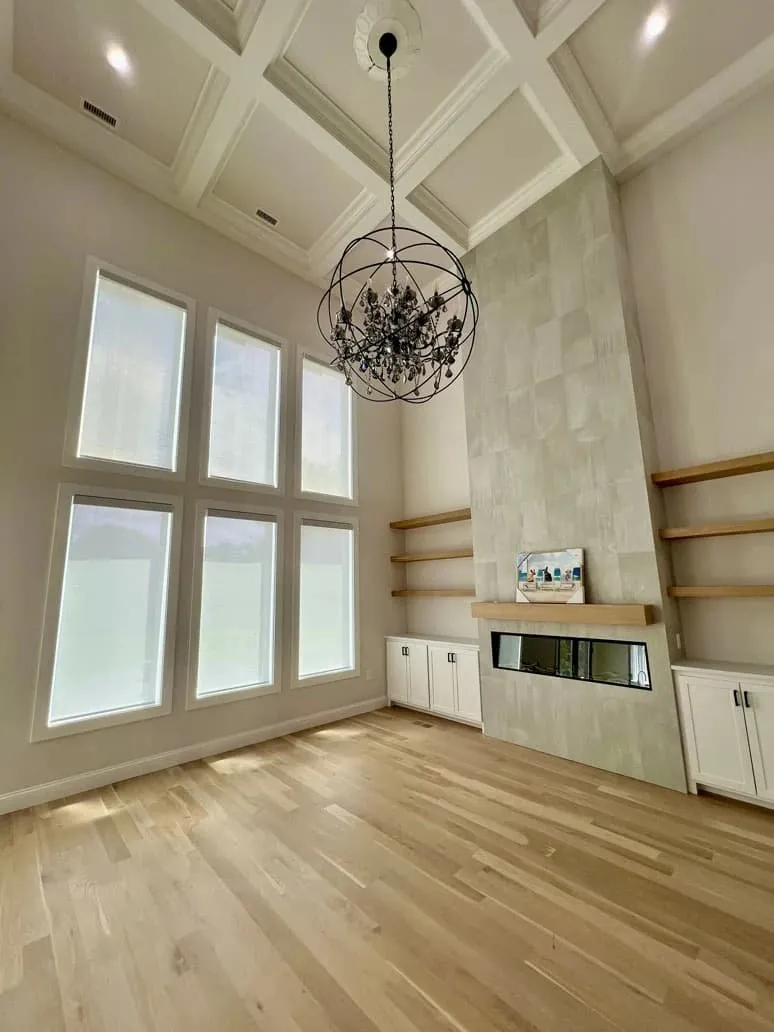
Tiny windows and big additions on the same street
Walk a single street in Centerville and you can see three or four eras of building. The older village houses along Main Street keep their original sash. Down toward the water, Craigville’s beach cottages crowd together on small lots, many with windows not much bigger than a cabinet door. Inland, post-war ranches fill the lots with long, low rooms and picture windows. And almost everywhere, somebody has added a family room, a kitchen wing or a primary suite with modern sliders and big glass.
That mix is what makes roller shades in Centerville, MA, such a practical choice. In one house you might need a shade for a tiny original cottage opening and another for a wide slider in the addition next door. A roller handles both: it can be made very small or very large, it uses the same fabric at any size, and it rolls up into a slim line that leaves the window clear.
What changes from window to window is the fabric, how open or opaque it is, and how it is mounted. Getting those right for every window, so the house still feels like one house, is the real work.
Roller shades in Centerville, MA: six options we bring
All six travel in the van as real samples, so you can test them at both the smallest and the largest windows in the house.
Light filtering Designer Roller
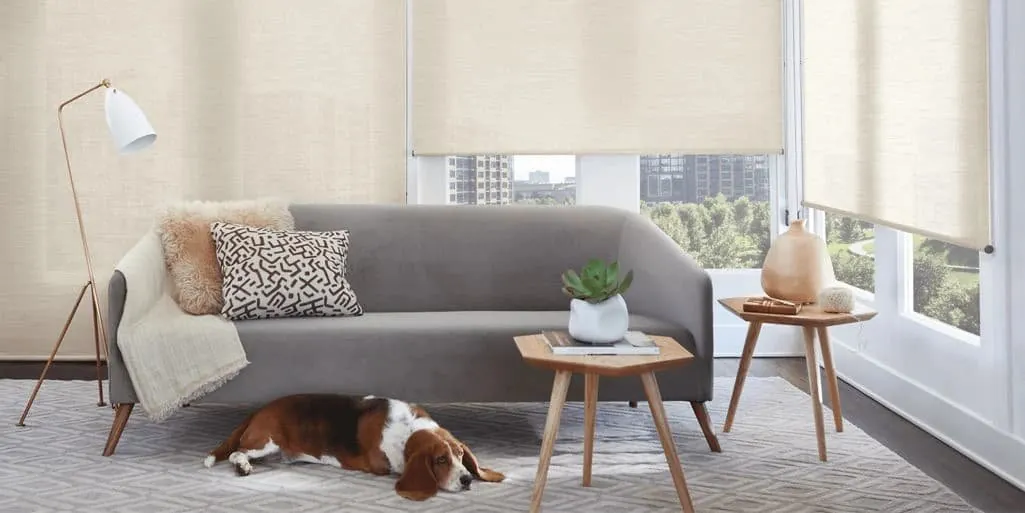
Daylight in, the view from outside blurred. The fabric most cottages and village houses start with.
Designer Screen
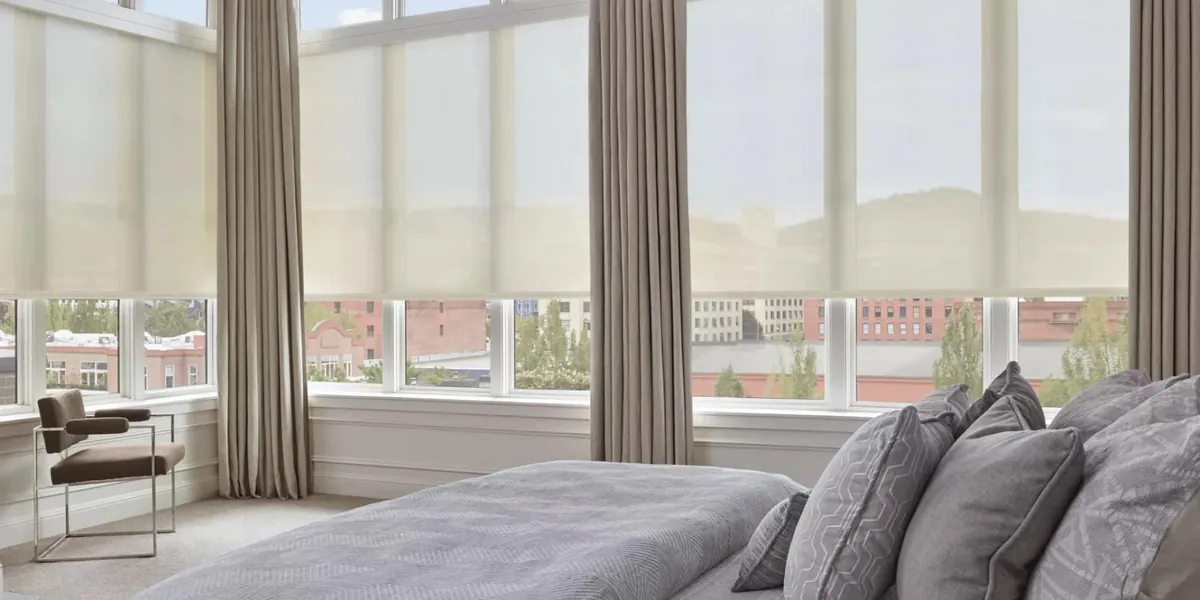
A see-through weave that controls glare on a west-facing addition or a sunroom.
Blackout fabrics
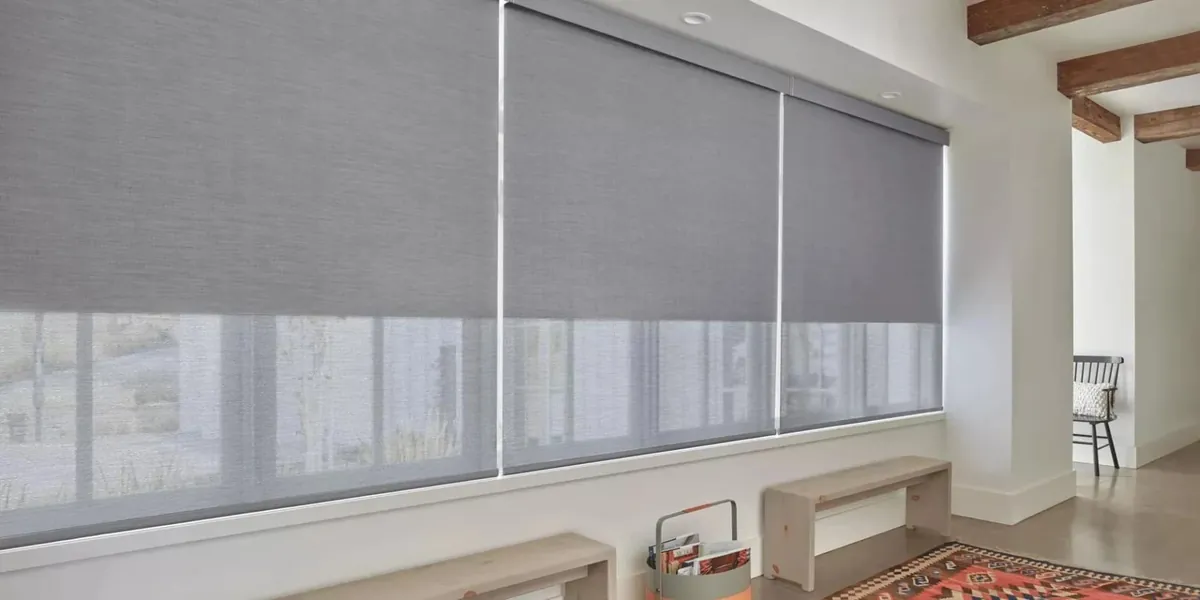
For bedrooms in a ranch, a cottage loft or any room where someone sleeps past sunrise.
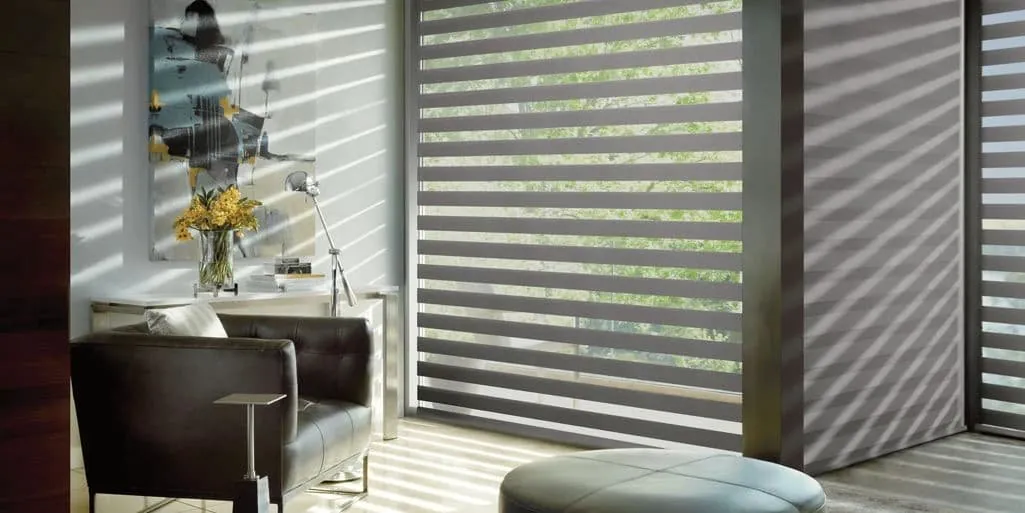
Designer Banded
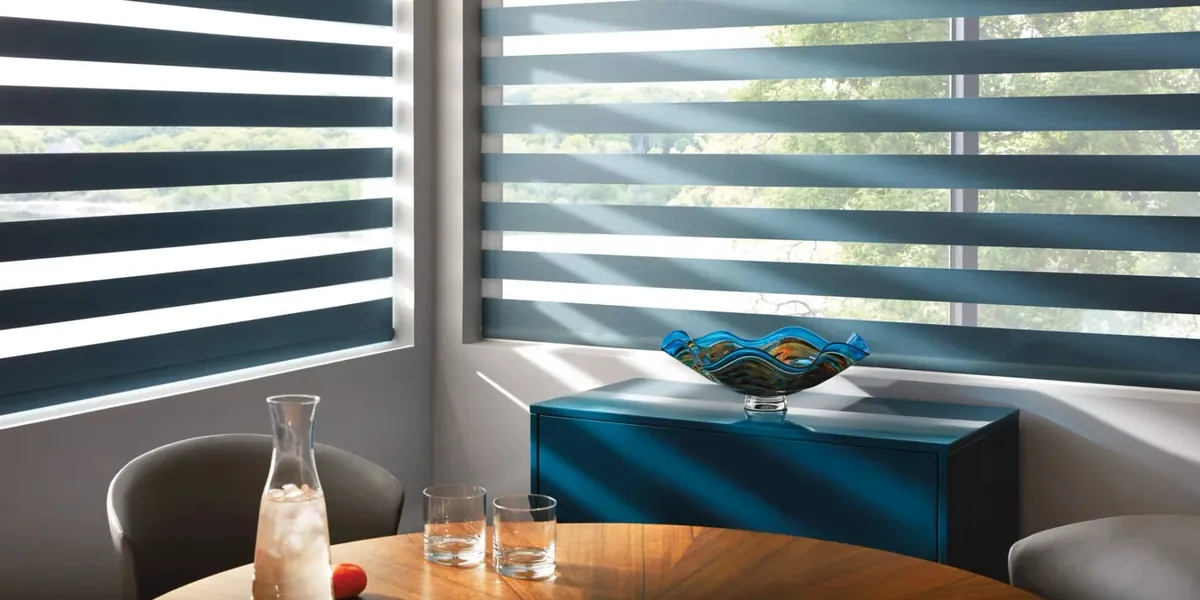
Stripes of sheer and solid fabric, for a cottage window that faces a neighbor but still deserves the view.
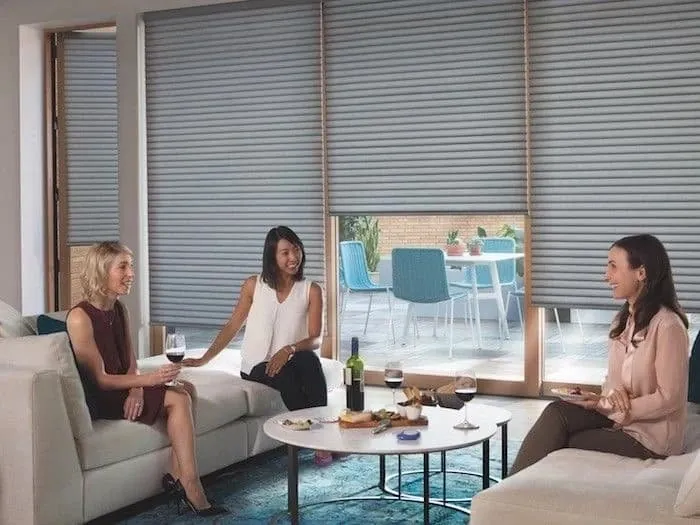
Sonnette cellular roller
A gently curved, cellular face that looks softer than a flat roller, good on sliders in an addition.
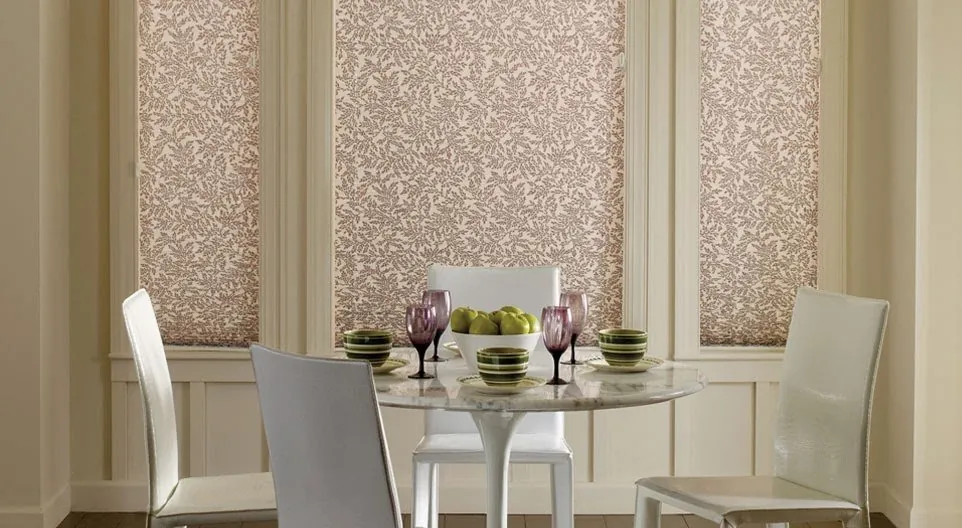
Printed and patterned rollers
A pattern on a plain roller brings color to a dining room or a child’s room without the bulk of a fabric shade.
The smallest original cottage openings
Some of the original cottage windows in Centerville are very small: a little square over a sink, a narrow window in a bathroom, a pair of tiny casements in a loft. They were built when a cottage was a simple summer place and windows were kept modest. Many are still there, often in rooms that have been updated around them.
Small windows are easy to overlook and hard to fit. A heavy treatment swamps them, and a cheap off-the-shelf shade rarely fits a non-standard size. A made-to-measure roller is one of the best answers, because it can be built to the exact width of even a very small opening, and its slim roll hides very little of the glass when raised. In a room that relies on one little window for its daylight, that matters.
These frames are often shallow, so we check the depth before we promise an inside mount. Where there is not enough room for the roll inside the frame, a neat mount on the face of the trim works well and can make a small window look a little larger.
Craigville’s close-set beach cottages
Down near the beach, Craigville’s cottages sit close together, often only a few steps apart. Windows face windows across narrow paths, porches face porches, and sand and salt are part of daily life in summer. Many cottages are used seasonally, opened for the warm months and closed through the winter.
In a cottage like that, a window covering has to be simple, tough and private. A light filtering roller gives you privacy from the cottage next door without making the room dark. Banded shades are a good alternative where a window looks toward a neighbor on one side and toward the water on the other: a small move lines up the sheer stripes for a view or the solid stripes for privacy.
Simplicity matters in a beach cottage. A cordless roller has nothing hanging at the side to tangle or collect sand, and the mechanism sits up at the head of the window, away from the sill. Roller fabrics are also easy to dust and many can be wiped, which helps in a house where sandy feet and damp swimsuits come and go all day.
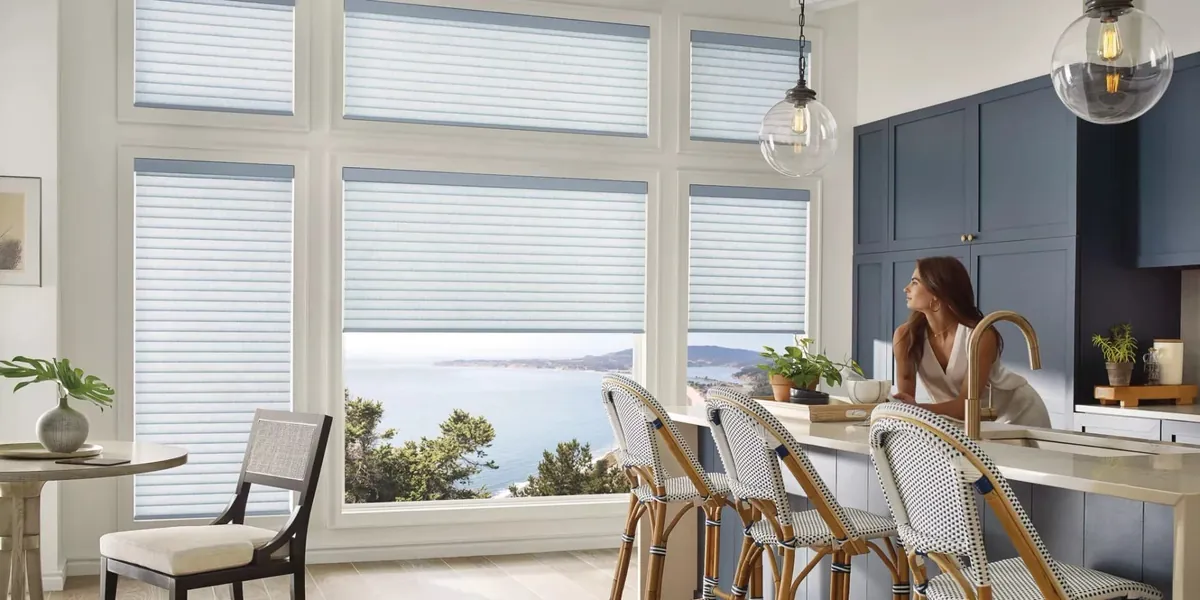
Cottage lofts and sleeping porches
Many of the older cottages have a sleeping loft tucked under the roof or a porch that was closed in years ago to make an extra bedroom. Those spaces are full of odd windows: a little gable window at each end of the loft, a band of old porch windows running around three sides, sometimes a skylight-lit corner where the ceiling slopes down to the floor.
Light is the problem in both. A loft under a roof heats up and brightens early, and an enclosed porch has glass almost all the way round. For anyone sleeping there, a blackout roller on each window is the most effective fix. Because rollers can be made in small and unusual widths, a whole run of porch windows can take matching shades, each sized to its own opening, so the room looks tidy and every window closes at once.
For a porch that is used as a sitting room by day and a bedroom by night, a dual roller works well: a light filtering or screen shade at the front for daytime, and a blackout behind for sleep. When roller shades in Centerville cottages are planned this way, an awkward room becomes one of the most comfortable in the house.
Rooms where children sleep and play
Families fill many Centerville houses in summer, and children’s rooms deserve particular care. A corded window covering leaves a loop hanging at the side of the window, which is a hazard in any room where a child sleeps or plays. A cordless roller, lifted by the bottom rail, or a motorized roller controlled by a remote or the app removes the cord altogether.
Children’s bedrooms also tend to need darkness for naps and early summer nights, so blackout fabric is the usual choice. A patterned or brightly colored roller can make the room feel like theirs without adding anything bulky to the window.
Additions with modern glass
Almost every neighborhood in town has houses that have been extended. A family room off the back, a kitchen opened up toward the yard, a primary suite over the garage: these additions are usually where the largest windows in the house are, with sliders, corner windows and sometimes a wall of glass toward a deck or garden.
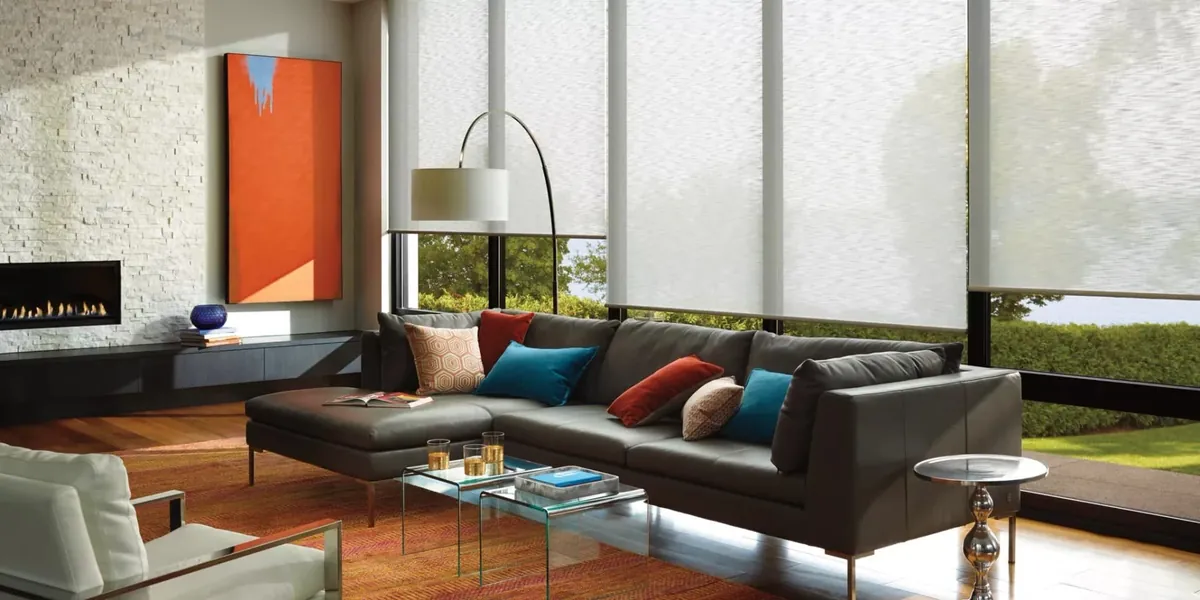
Those rooms take the strongest light, especially if they face west or south. A solar screen roller suits them, cutting the glare while keeping the yard in view. A Sonnette roller is another good choice on a slider, softer to look at than a flat roller and easy to raise over the door you walk through.
The challenge is making the addition feel part of the house. If the original rooms have light filtering rollers in a warm white, the addition can take a screen or a Sonnette in a fabric with a similar outward color, so the back of the house looks consistent from the yard. Inside, the transition from cottage room to addition feels deliberate rather than patched together.
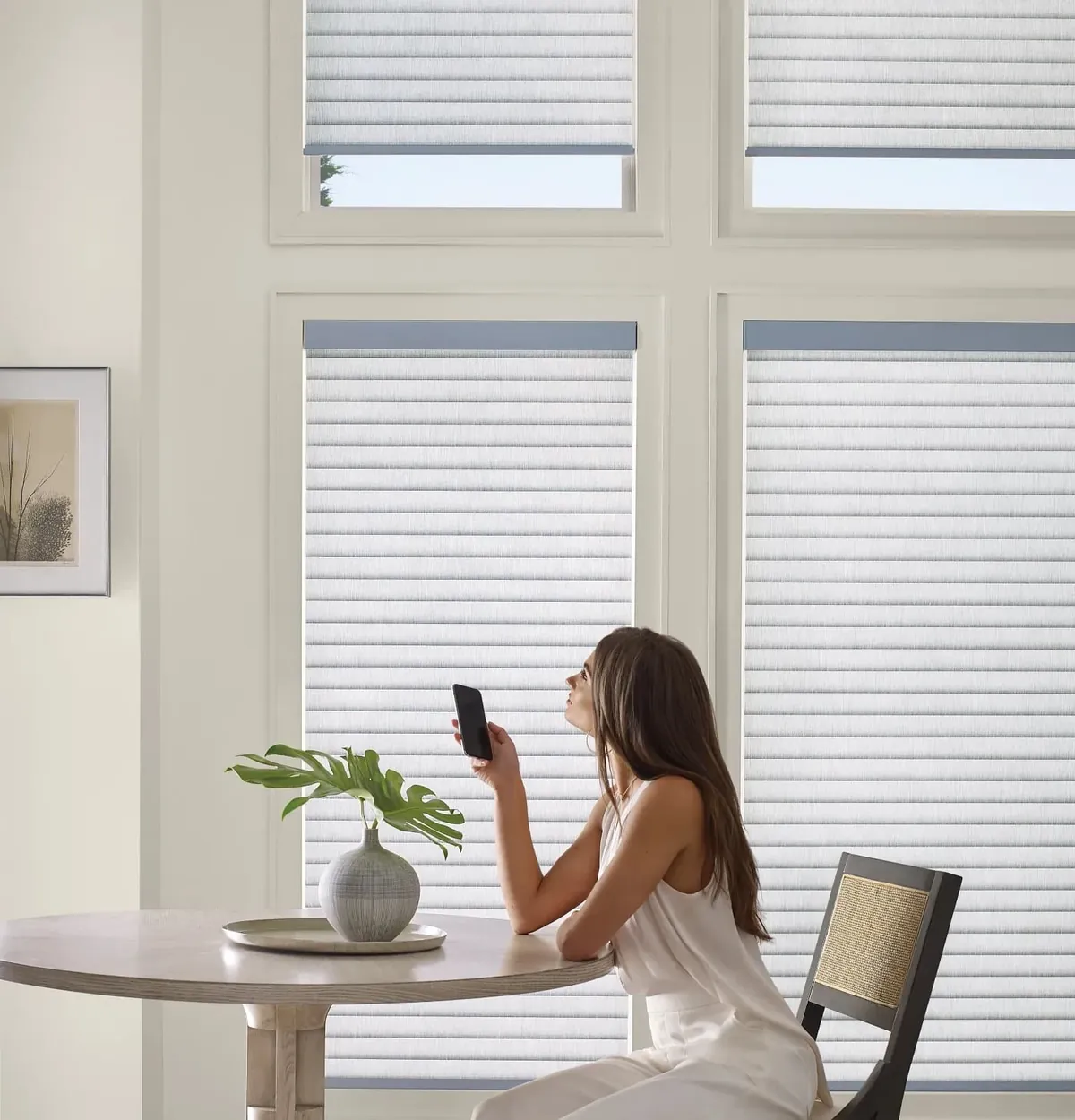
For tall windows or transoms in an addition, PowerView motorization lets you raise and lower the shades from your phone, a remote or a wall switch, and group them so they move together. We plan how each motor is powered at the visit.
The older village houses along Main Street
The village houses along Main Street are the most traditional in town, with proper sash windows, wood trim and front rooms that face the street. These houses suit a quiet, inside-mounted roller that leaves the casing on show and nearly disappears when raised.
From the street, consistency is everything. We usually suggest the same light, neutral outward color on every front window, so the house looks calm and even from the sidewalk, while the room side of each shade can be whatever suits the room. In a front parlor, a roller can also sit behind drapery panels, with the panels for softness and the roller for privacy and light.
Older frames on Main Street have often settled, so we measure carefully and tell you honestly if a mount on the trim would serve you better than one inside the frame.
Post-war ranches on the inland lots
Away from the water and the village, much of Centerville’s inland housing is post-war ranches. They are long and low, with a living room picture window at the front, wide horizontal windows in the bedrooms and often a slider out to the back yard. Eaves are low, ceilings are modest, and the windows sit close to the ceiling line.
Rollers suit ranches very well. A compact roll fits the shallow space above a window that sits near the ceiling, and a cassette version tidies the roll away in a neat box. For a wide picture window, we may split the opening into two or three shades on one headrail so they move together, or let them move separately if you want light at one end and privacy at the other.
Ranch bedrooms are on the ground floor, often facing the street or the neighbors. A blackout or room darkening roller gives privacy at night and a dark room in the morning. For the living room, a light filtering fabric keeps the picture window bright. If the back of the house faces west, a screen on the slider takes the edge off the late sun.
A visit to the house
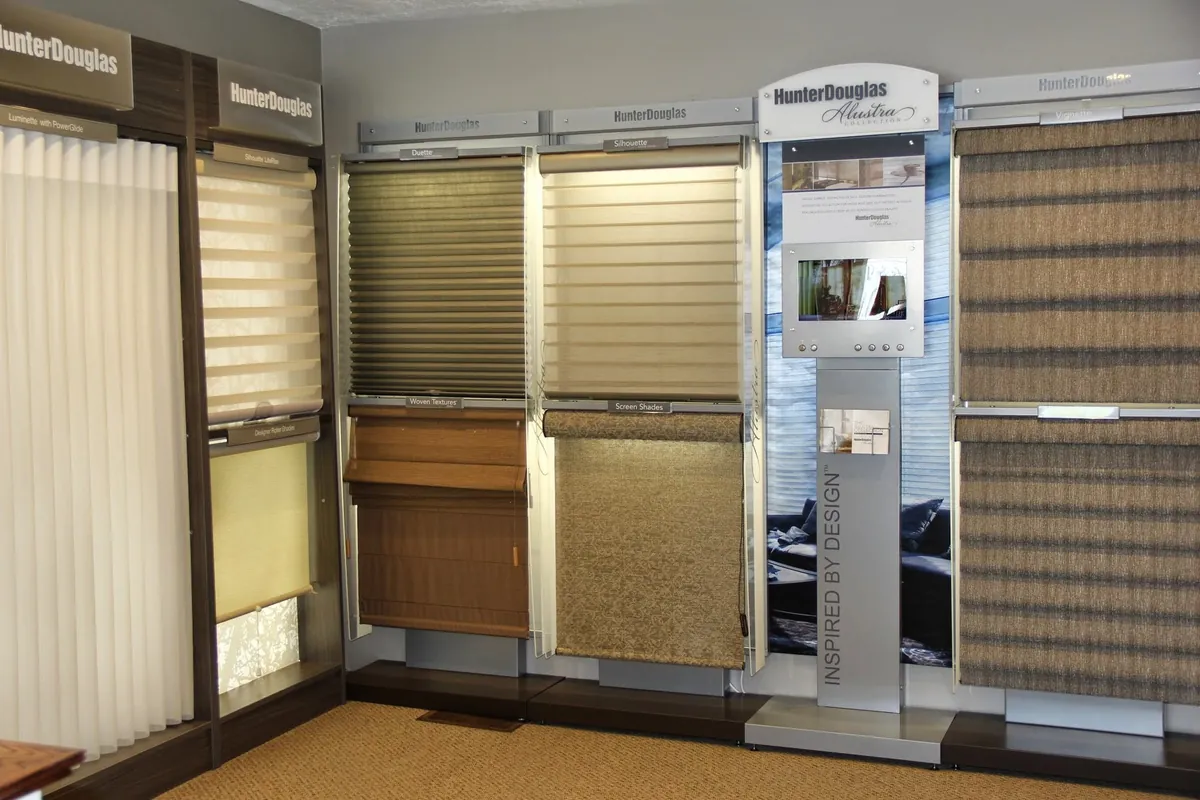
In a town with this much variety, the only reliable way to plan is in the house itself. We bring the showroom to you: our vans carry the samples.
- Pick a time through Request a Consultation, or use the call button.
- We bring light filtering, screen, banded, blackout and patterned roller samples, and the lift and motor options.
- We go through the house with you, from the smallest original window to the largest glass in the addition.
- You test the fabrics at each window and see how they look side by side across old and new rooms.
- We measure every opening and check its depth and squareness.
- A free estimate arrives for the shades you want to consider, with no pressure to commit.
If you would like help with color and fabric for the whole house, ask about our interior design consultations. Our page on what happens at an in-home consultation explains more.
One look across mismatched windows
A house that mixes tiny original openings, standard sash and big modern glass can look busy from outside, with every window a different size and shape. Window treatments can either add to that or calm it down.
Rollers calm it down. The same fabric, or at least the same outward color, on every window makes the house read as one. Raised, each shade becomes a thin line at the top of its window. Lowered, they become a family of matching panels in different sizes. That simple consistency is one of the main reasons we suggest roller shades in Centerville for houses that have grown in stages.
Inside, you can still vary the fabric by room: blackout in the bedrooms, screen in the addition, light filtering in the kitchen and living room.
How open should a screen be
For the brighter rooms, usually the additions and sunrooms, the choice of screen fabric comes down to openness, the amount of space in the weave. A more open weave keeps the view sharp and lets more light in; a tighter weave holds back more glare and gives more daytime privacy, with the view softened. Color matters too: darker screens are usually easier to see through.
The best way to choose is to hold two or three screens up at the window when the sun is at its strongest. We bring a range so you can compare.
Measuring the smallest and the largest
Measuring a house with this much variety takes care at both ends. Small cottage windows are often shallow and out of square, so we measure the width at the top, middle and bottom and check the depth before choosing a mount. Large additions bring the opposite questions: fabric width, how to split a wide opening, and where solid framing sits above the window for the brackets.
When the shades arrive, our certified Hunter Douglas installers fit each one, fix the brackets into solid wood, level the headrail and roll each shade through its full travel to make sure it runs true. They show you how everything works before they leave, and on motorized shades they set up the app and any groups with you.

A Hunter Douglas Gallery dealer for every kind of house
Blinds & Designs is a Hunter Douglas Gallery dealer, the designation Hunter Douglas gives to dealers who meet its standards. That means the whole roller family in one place: Designer Roller, Designer Screen, Designer Banded, Sonnette and Alustra, with every fabric, openness and PowerView option.
Our installers hold Hunter Douglas certification. We also take on blind and shade repairs for coverings you already have, and we carry cellular, roman and sheer shades, blinds, shutters and drapery. See our cellular shades in Centerville, roman shades in Centerville and the rest on our Centerville page, or browse all roller shades.
Sagamore is our nearest showroom
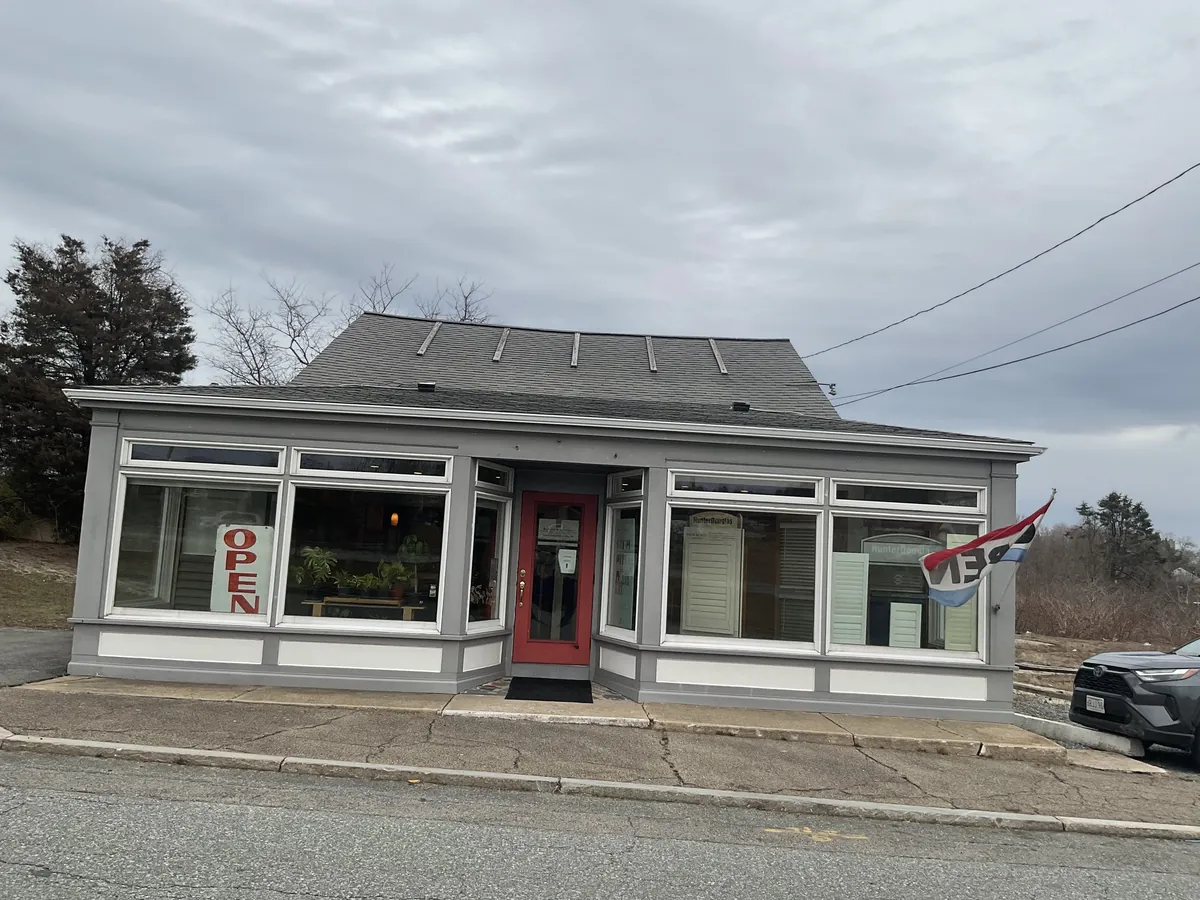
For Centerville, our nearest showroom is in Sagamore, by the canal. Get in touch with Sagamore if you would like to talk through a project before a visit.
Most customers here start at home, though, where the samples can go up against the tiny cottage windows and the big addition glass on the same afternoon.
Centerville questions
Can you make a roller for a very small cottage window?
Yes. Roller shades are made to measure, so they can be built for very small openings. We check the frame depth first and suggest a mount on the trim where the frame is too shallow.
How do I make old windows and a new addition look like they belong together?
Use the same fabric family, or the same outward color, across both. The house then reads as one from outside, while each room inside can have the fabric that suits it.
What works for a beach cottage that is close to its neighbors?
A light filtering roller gives daytime privacy without darkening the room. Banded shades let you switch between view and privacy without raising the shade. A cordless lift keeps things simple.
Will a roller fit above a ranch window that sits close to the ceiling?
Usually. A roller’s compact roll needs little space, and a cassette version tidies it away neatly.
Is the estimate free?
Yes. After we measure, you receive a free estimate for the shades you are considering, with no obligation.
Your next step
Whatever mix of windows your house has, the easiest way to choose roller shades in Centerville, MA, is to try the samples in your own rooms. Request a consultation and we will bring the full range, measure every window and give you a free estimate. You can also use the call button, or visit the Sagamore showroom.