
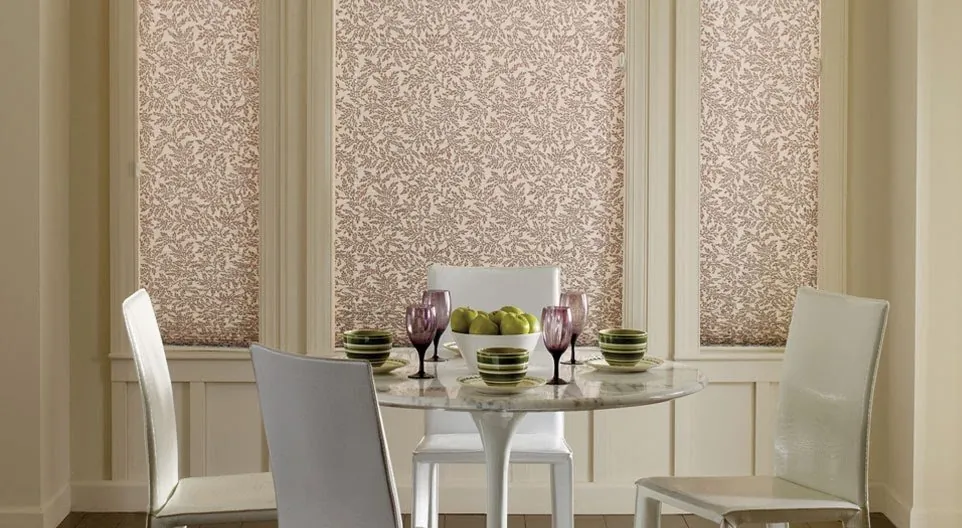
Small sash, deep reveals and long empty months
Drive the length of 6A through Brewster and the houses come one at a time, set back on deep wooded lots: antique capes close to the ground, and Federal houses standing a little taller with their even rows of windows. Inside, the sash is small and original, and the walls are thick enough that each window sits at the back of a deep reveal. Toward the bay flats the houses are newer, bigger in the glass and plainer in the frame. Roller shades in Brewster, MA, have to suit both, and they have to cope with something else that is common here: a house that is closed up for months at a time.
That last point shapes a lot of our advice. A second home needs window coverings that protect the rooms while nobody is there, that work smoothly when the house is opened in spring, and that ask for no attention in between. A simple roller is one of the best fits for that brief, provided the fabric and the mount are chosen well for each window.
Our usual roller choices for Brewster houses
Across the town’s old and new houses, the same three Hunter Douglas options come up again and again when we plan roller shades in Brewster, MA. We carry samples of each.
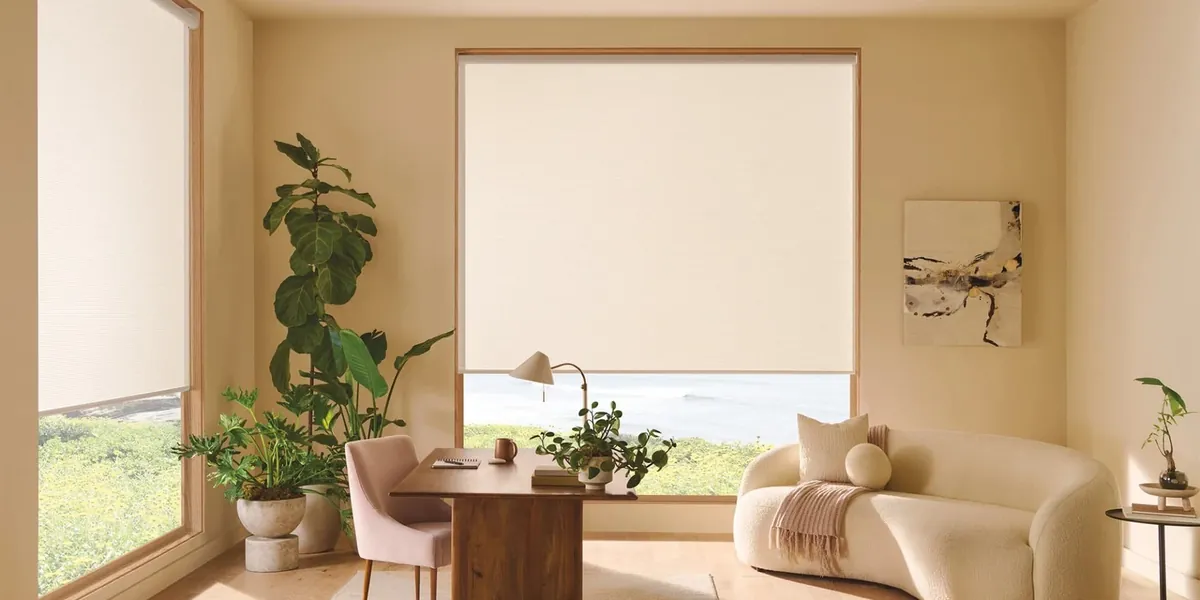
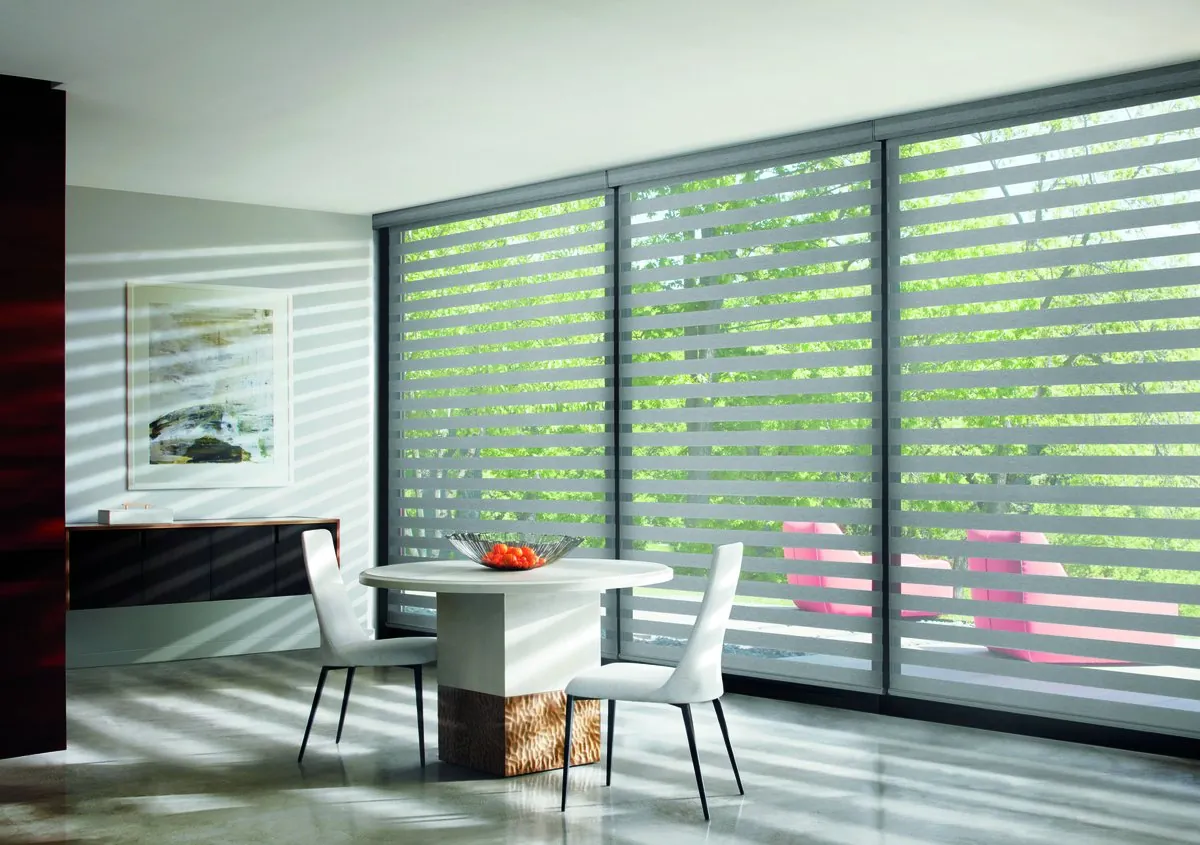
Designer Roller for the deep reveal
A flat light filtering or room-darkening fabric that sits neatly at the back of a deep window opening and rolls up almost out of sight.
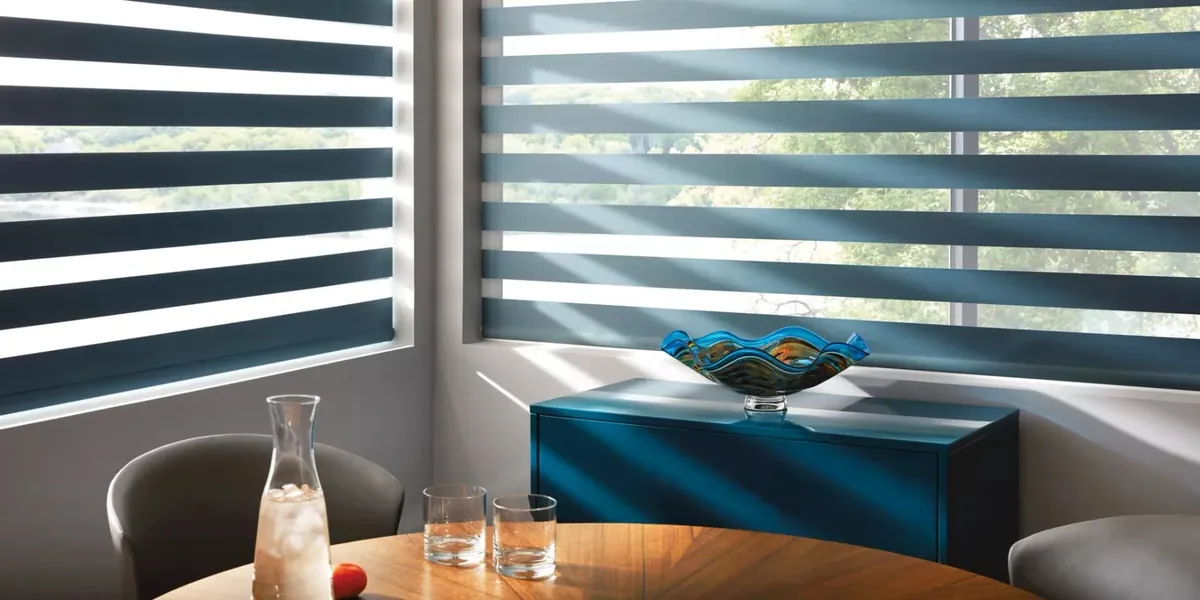
Designer Banded for a changing room
Sheer and solid stripes on one loop of fabric, so you tune the light and privacy with a small pull. Good in a kitchen or breakfast nook.
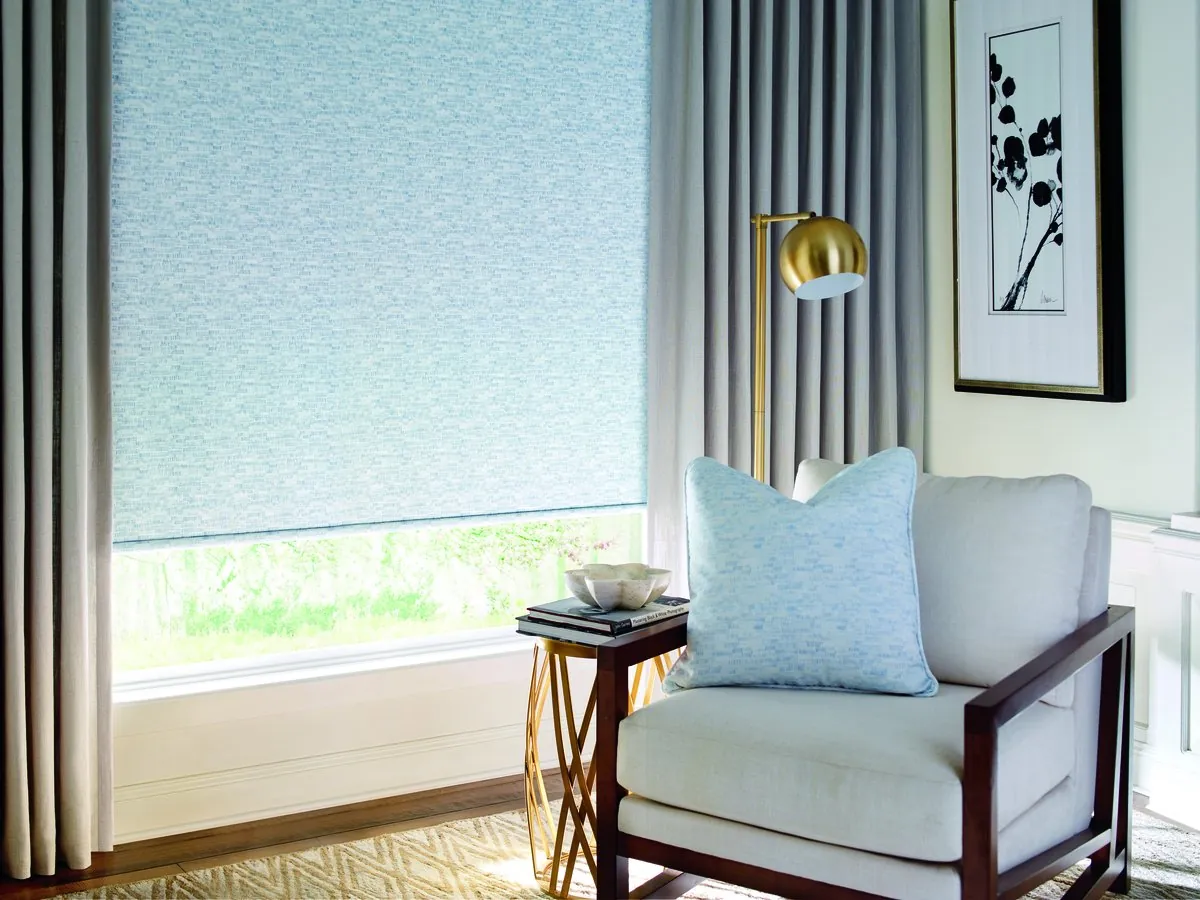
Alustra for the front rooms
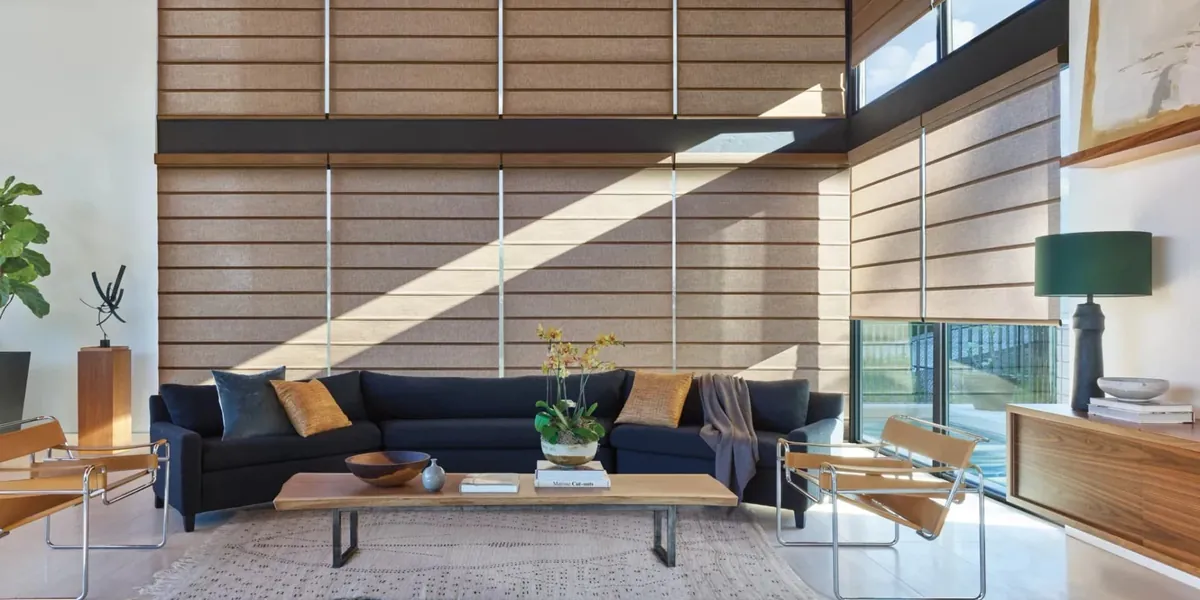
Richer fabrics and a more tailored finish for a Federal parlor or a cape’s best room, where the shade sits beside fine old trim.
What a deep reveal means for a shade
In an old Brewster house, the window is often set well back from the face of the interior wall. The reveal, the flat surface between the casing and the glass, may be panelled or plain, and on a sunny day it frames the light like a picture. That depth is a gift when it comes to a roller. A shade mounted inside the opening has room to sit fully within the reveal, so nothing projects into the room and the trim stays complete.
The other side of that coin is the sash itself. Original windows here are small, and the frames have moved over the years. An opening that was square when the house was built may now be narrower at the top than at the bottom, or slightly racked to one side. A roller has to roll true inside that space without rubbing on either jamb.
So we measure carefully. Width is taken at the top, the middle and the bottom; height at both sides and the center; depth along the head where the bracket will fix. The shade is made to the tightest dimension, and if one window is badly out of square we will show you how an outside mount on the casing would look instead. In most Brewster capes and Federal houses, though, the inside mount is the one that makes the shade disappear into the house.
Closing the house for the winter
A Brewster house that stands empty from autumn to spring still gets plenty of sun, especially on the south and west sides. Months of light on unprotected furniture and floors adds up, and the first thing many returning households notice in May is a faded rug or a pale streak across a table.
A roller is the simplest way to guard against that. Before you close the house, you lower the shades and the rooms rest in soft, filtered light, or in near darkness if you choose a blackout fabric. Because a roller is a single sheet of fabric on a tube, there is little to sag, tangle or go wrong while it hangs untouched for months.
A few practical points we talk through when a house will stand empty:
- Fabric weight. A light filtering fabric still lets a fair amount of daylight through. For the sunniest rooms, a room-darkening fabric gives more protection while you are away.
- Lift choice. A cordless lift or a continuous loop with a tensioner keeps the window tidy, and both start working again the moment you open the house.
- Automation. With PowerView, shades can rise and fall on a schedule, so the house does not look shut up from the road, and you can check or change them from your phone. We plan how each motor is powered when we see the windows.
Our guide on how motorized shades are controlled explains the options in more detail.
Wooded lots and dim rooms
Many of the old houses along 6A sit in the shade of mature trees. That changes the job a window covering does. In a room where the light is already dappled and soft for much of the day, the last thing you want is a heavy fabric that makes it dimmer still.
For those rooms we usually steer toward a pale, light filtering roller. Lowered, it gives privacy from the road without taking much light from the room, and the fabric glows gently rather than looking like a dark panel. Raised, a roller tucks away into a slim roll at the head of the reveal, so on a gray day you get every bit of light the small sash can give.
The trees also mean that some windows only get sun for an hour or two, while others, facing a clearing or the lawn, take the full afternoon. It is common to use two or three different fabrics in one Brewster house: light filtering where the trees do the shading, screen or room-darkening where the sun gets through.
The newer houses toward the bay flats
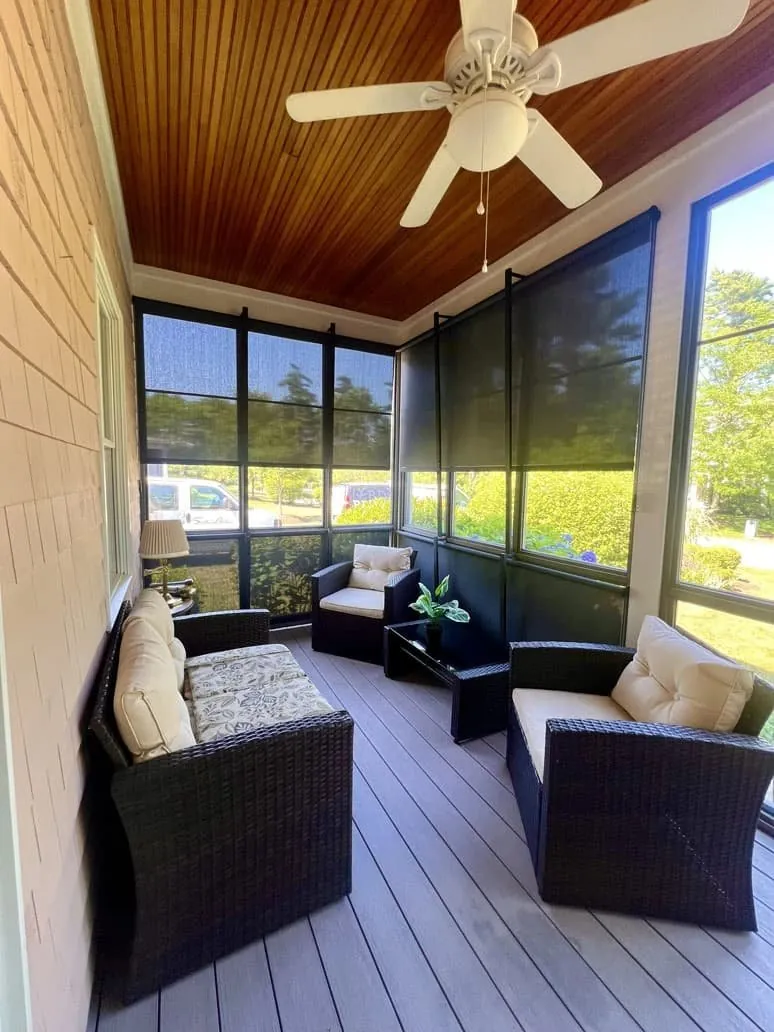
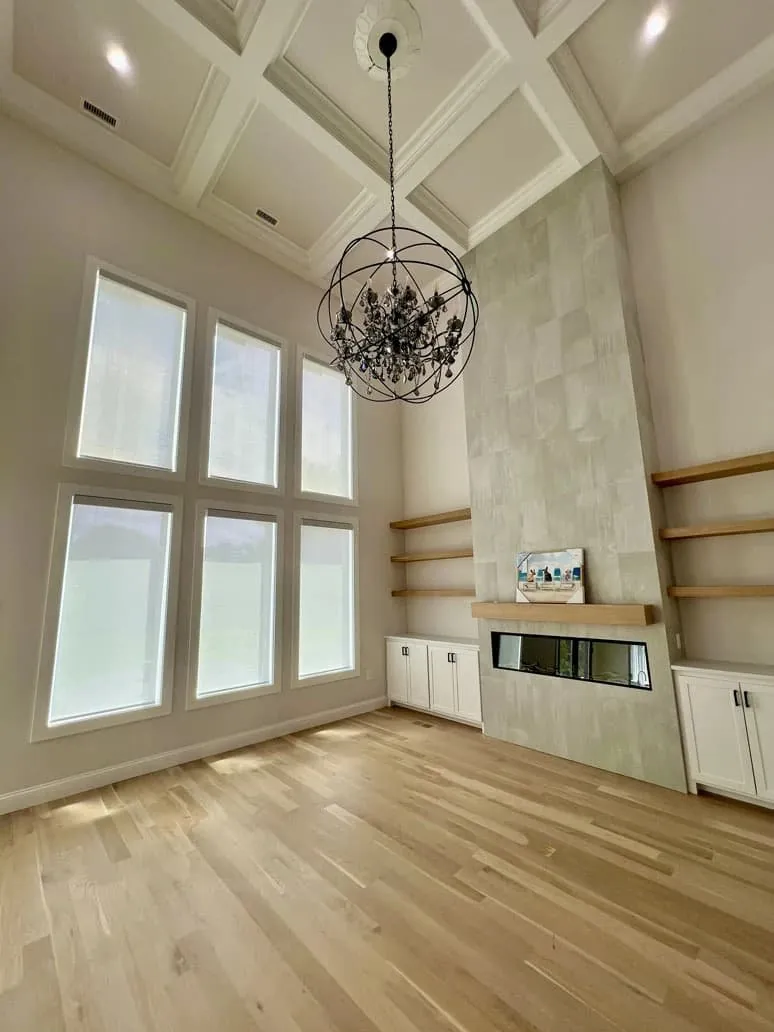
Closer to the bay the land opens out and the houses are more recent. Rooms are larger and the glass is bigger: picture windows facing the flats, sliders onto a deck, sometimes a wall of windows in a great room under a vaulted ceiling. On a clear afternoon the light coming off the flats and the water beyond is bright and wide.
Here the solar screen roller comes into its own. A screen fabric cuts the glare and holds back some of the heat while keeping the view of the flats, which is often the reason the house was built where it is. The openness of the weave decides the balance. A tighter weave blocks more light and softens the view; a looser one keeps the outlook clear and lets more light in. A darker color is easier to see through than a light one, because it reflects less of the glare back into your eyes.
Big panes can be handled in several ways: one wide shade, two or three narrower shades sharing one bracket so their hems line up, or separate shades you raise one at a time. For a high window in a vaulted room, PowerView saves a lot of stretching. See Designer Screen for more on screen fabrics, and our guide to the best shades for sun and glare if you are weighing roller shades against other choices.
Antique capes room by room
A cape packs a lot into a small footprint, and each room asks something different of a shade.
The front rooms. The windows face the road, so privacy matters, but these are also the rooms with the best trim. A light filtering roller in an inside mount, with a light, neutral side facing out, keeps the house looking calm from the street.
The kitchen. Often at the back of the house, sometimes added on later, with a window over the sink. A wipeable fabric and a cordless lift keep it simple; a banded shade lets you adjust light while you cook.
Upstairs under the roof. Bedrooms tucked under the eaves, with small gable windows or dormers. A room-darkening roller here makes summer mornings easier, and a compact headrail suits the low ceilings.
The bathroom. A small window close to a neighbor’s view on some lots. A moisture-tolerant light filtering fabric gives privacy without darkening a room that may only have one window.
How the house reads from 6A
The old houses along 6A are seen by everyone who drives past, and the windows are a big part of their face. A patchwork of different blinds and curtains, each a different color from the road, can make a fine house look untidy. Roller shades in Brewster, MA, help here because so many fabrics come with a neutral back. The side facing the glass can be the same soft white or ivory on every window, while the side facing each room carries its own color or pattern.
The hem matters too. With every shade lowered to the same height, a Federal front with its even rows of windows looks orderly and calm. We can set the hems to line up across a row when the shades are made, and with PowerView a whole front can be lowered together at the touch of a button.
If you are unsure what suits the house from the road, we are glad to step outside with a sample held at the glass, so you can see for yourself before anything is ordered. It takes a minute and settles the question better than any sample book on a table.
Corner rooms that take light from two sides
Many capes and Federal houses have corner rooms with windows on two walls: a front parlor that looks onto the road and the side lawn, or a back bedroom with a gable window and a side window. Light comes in from two directions at different times of day, and one fabric rarely suits both.
A common answer is to use the same fabric color on both walls but different openness or weight: a light filtering roller on the shaded wall, a room-darkening roller where the afternoon sun lands. From inside the room they look like a set, and each window does its own job. Because the hems and rolls match, the room still feels finished rather than pieced together. For a room that needs dark in the morning and bright in the evening, a dual roller pairs a screen with a blackout fabric on one bracket.
Federal houses and their formal rooms
Brewster’s Federal houses are a step up in scale from the capes: higher ceilings, taller windows evenly spaced across the front, and interior trim that is often the finest in the house. Some still have original interior shutters that fold back into the jamb.
When a house has working shutters, a roller makes a good partner. It sits at the head of the opening, behind the shutter leaves, and handles light and privacy when the shutters are folded away. We measure to make sure the shade clears the shutters at every point, so neither gets in the way of the other.
For the parlor and dining room, an Alustra fabric with a subtle texture often feels more at home beside old paint and mahogany than a plain modern weave. In the back rooms and upstairs, Designer fabrics do the job well.
Your visit, step by step
The best place to choose a roller is at the window itself, in the light the room actually gets. Our vans carry the range, so the showroom comes to your door.
- You ask for a visit online or with the call button, and we settle on a day that works, including around the dates you are in town.
- We walk the house with you and talk about each room: the sun, the trees, the view and how you use the space.
- You hold fabrics up in the reveals and see each one in place, light filtering, screen and blackout.
- We measure every opening at several points and check the depth for an inside mount.
- We suggest a mount and a lift for each window and answer any questions about automation.
- You get a free estimate to take away and think over.
More on that is in what happens at an in-home consultation.
Two collections, one visit
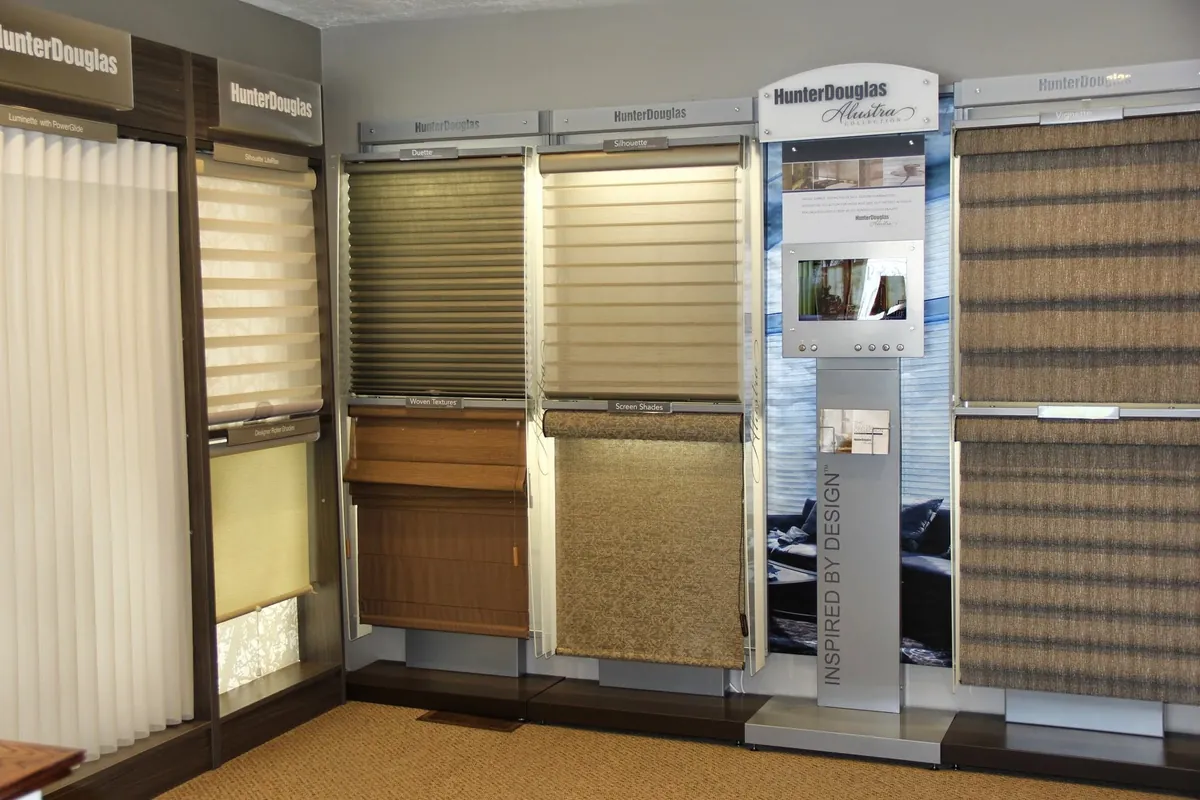
Hunter Douglas groups its rollers into two families. Designer is the wide one, with plain, textured and patterned fabrics in every opacity and every lift system. Alustra is the narrower, more tailored family, with richer materials and a finer finish at the hem and the head.
A set of roller shades in Brewster, MA, often uses both. Alustra goes where it will be seen beside good woodwork, Designer everywhere else. Sonnette, a roller with a gently curved, cellular face, is another option for a cape bedroom where a softer look suits the room. When we plan roller shades in Brewster, MA, we bring them all, and the main roller shades page shows the full family.
Hunter Douglas, start to finish
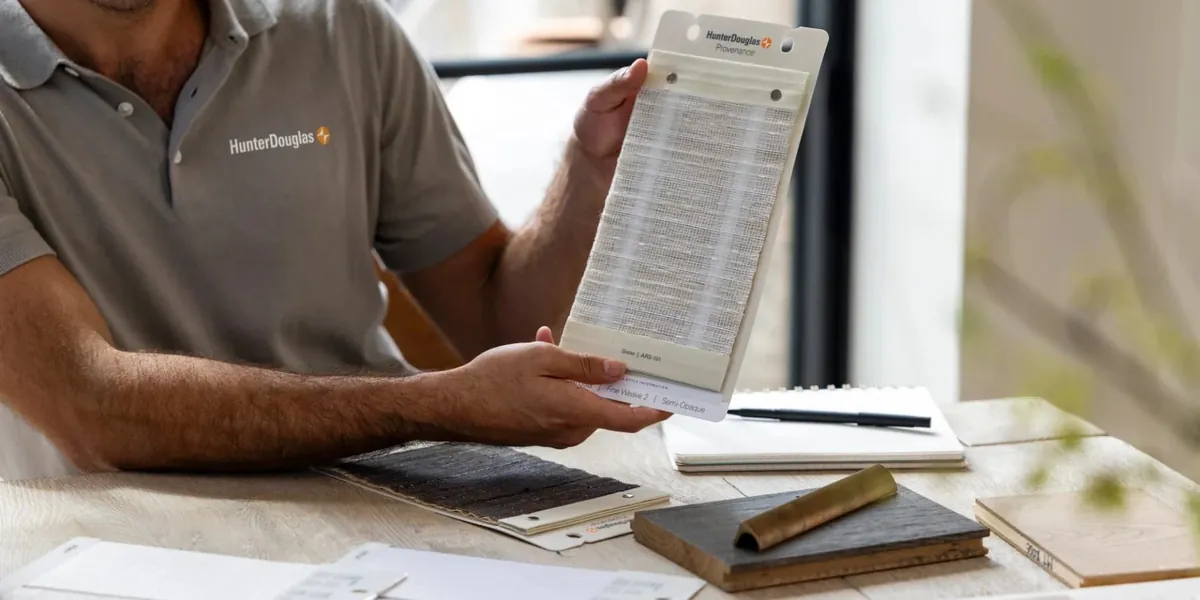
Blinds & Designs is a Hunter Douglas Gallery dealer, a designation the maker gives dealers who meet its standards. For you it means the whole roller range, both collections, the banded and Sonnette shades and PowerView, at a single consultation.
Our installers are Hunter Douglas certified. In an old house that matters: brackets go into sound wood, each shade is levelled on a frame that may not be square, and every lift is tested before we leave. We also repair blinds and shades you already own, and we offer interior design consultations if you want help across a whole room.
For other windows, see cellular shades in Brewster for the draughtiest sash, plantation shutters in Brewster for a front room, or everything we offer in town on the Brewster page.
Questions from Brewster
My windows sit deep in the wall. Is that a problem for a roller?
It is usually an advantage. A deep reveal gives the shade room to sit fully inside the opening, so nothing projects into the room. We measure at several points to make sure the shade rolls true in an older frame.
What should I do with the shades when I close the house for the winter?
Lower them. A room-darkening or light filtering roller left down protects floors and furniture from months of sun. With PowerView, the shades can also follow a schedule while you are away.
My rooms are shaded by trees. Which fabric keeps them bright?
A pale light filtering fabric gives privacy without taking much light, and the roller rolls up small so the window is almost fully open when it is raised.
Can a roller sit behind my original interior shutters?
Yes, in most cases. We mount it at the head of the opening and measure so the shutter leaves fold freely in front of it.
Is there a charge for the estimate?
No, the estimate is free. We measure at your home and give you an estimate for the shades you are considering.
Book your visit
Small sash and deep reveals are best judged with the fabric in hand. Request a consultation and we will bring the samples, measure each window and leave you with a free estimate, timed around when you are at the house. The Sagamore showroom is our nearest to Brewster if you would like to see working shades first, or use the call button to ask us anything.