
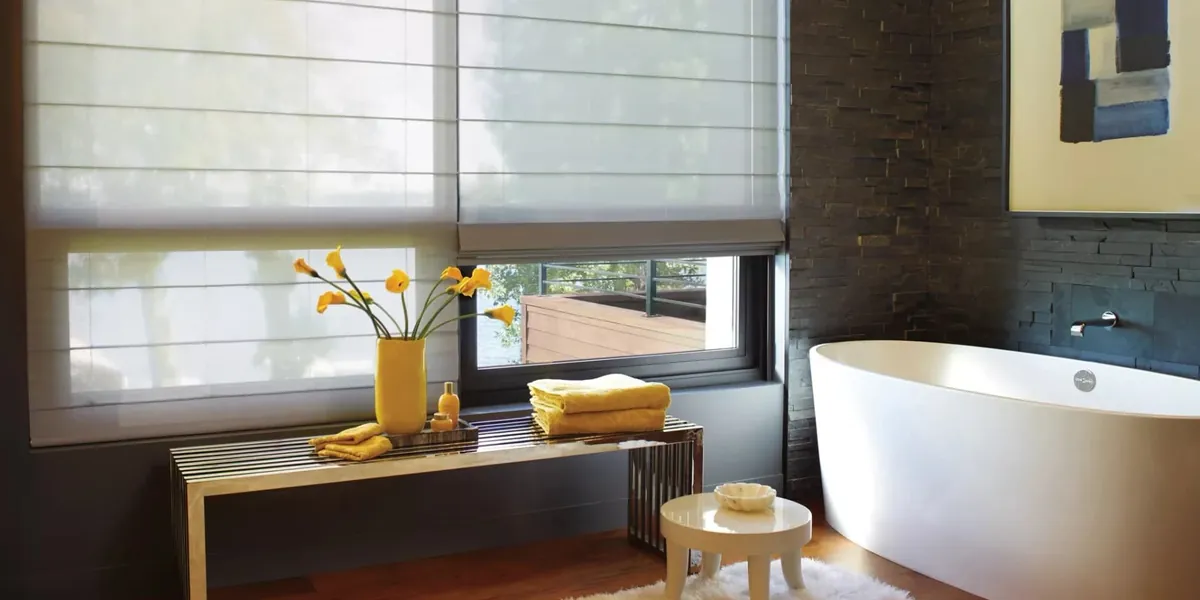
Very small sash in the oldest houses
Around the center of Medfield stand antique colonials whose windows were sized for another age. The original sash in the oldest of them is very small: modest openings, often with many little panes, set into walls that are thicker than anything built today. They give these houses their character, and they are among the trickiest windows we dress.
A very small window is easily overwhelmed. Drapery swallows it, a stock blind rarely fits it, and anything bulky hides the old glass and the trim that frames it. A slim fabric shade made to the exact size of the opening keeps the window in proportion, and that is the reason so many antique houses here suit roman shades in Medfield, MA. The shade sits neatly within the frame, softens the glass, and leaves the woodwork showing.
Further out, off North Street and along Route 27, the picture is completely different: large newer houses on wooded lots, set well back from the road, with generous rooms and plenty of glass. We cover those further down the page.
Three ways to dress a Medfield window
Every option here is made to order. We carry samples of each in the van, so you can hold them up at your own windows.
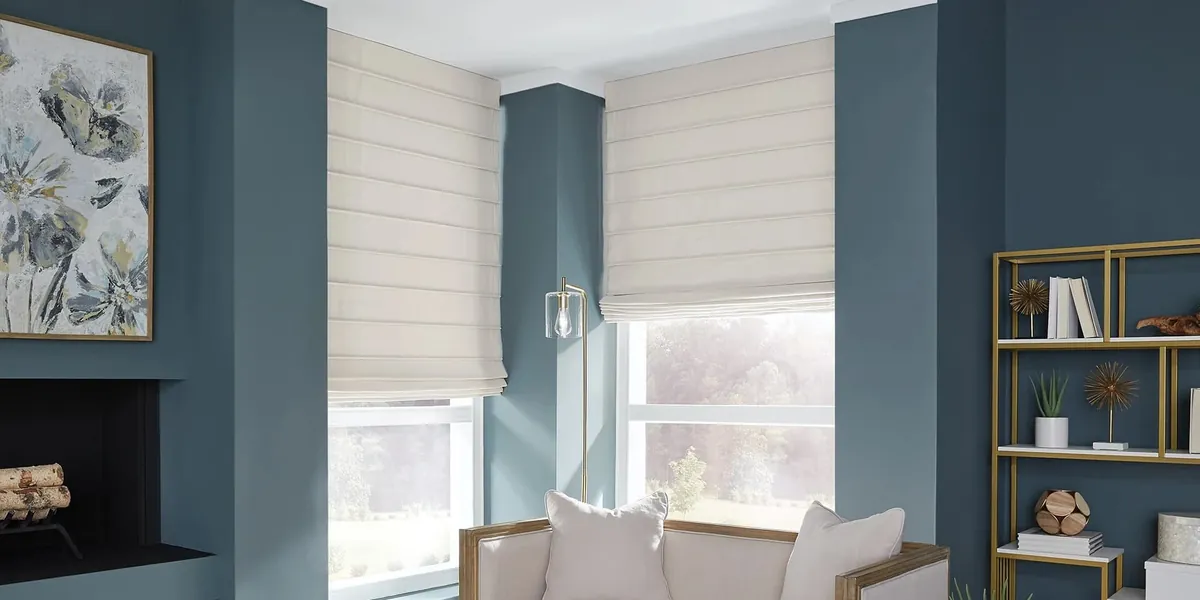
Carole Fabrics Roman Shades
Tailored fabric shades in a flat or folded style, sewn to the size of each opening. A natural match for an antique colonial’s front rooms.
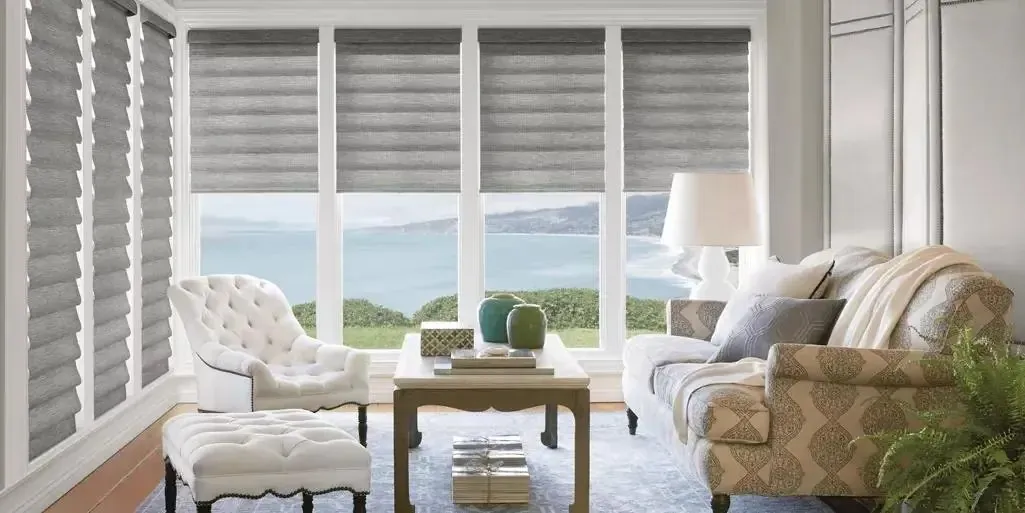
Vignette Modern Roman Shades
A cleaner, contemporary roman shade that sits comfortably in the great rooms and kitchens of the newer houses.
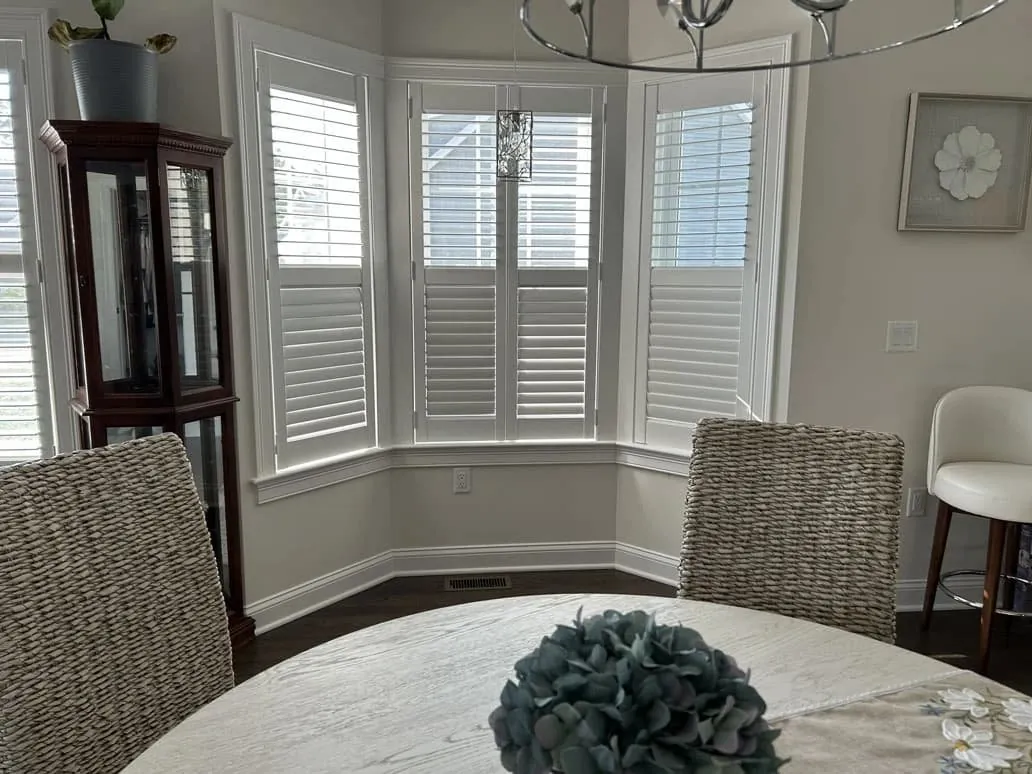
Plantation Shutters in Medfield
Some antique rooms suit shutters better than fabric. We bring both so you can compare them at the window.
Original sash: small panes and old frames
The sash in Medfield’s oldest houses has usually been in place a very long time. Frames have moved with the house, paint has built up layer on layer, and the opening that looks square from across the room may be a little out of true when the tape comes out. Some windows have storm panels on the outside; some have interior storms; a few have neither.
That history matters when we measure. We take the width of each opening at the top, the middle and the bottom, and the height at both sides, and we work from the tightest figures so the shade never binds as it moves. We check the depth of the frame at more than one point, because old sills and heads are not always parallel. And we look for anything in the way: a sash lock, a pulley, a latch on an interior storm, or a curtain rod bracket left behind from years gone by.
With small windows there is very little room for error. On a big modern window a small gap at the side is barely noticed; on a little antique sash the same gap is obvious. That is why every shade for these houses is made to its own opening rather than to a size that is close enough.
Inside the frame or on the casing
Where an old frame has the depth, an inside mount is usually the best choice for a small antique window. The headrail tucks up under the head of the frame, the fabric hangs within the opening, and every bit of the trim stays visible. In a room with original woodwork, that is often exactly what you want.
Not every frame offers that. Some antique windows are set nearly flush with the wall inside, or the frame is too uneven for the shade to hang cleanly. In those cases the shade goes on the face of the casing, made a little wider than the opening so it covers the edges evenly. Mounted that way, a shade can also sit slightly above the window, which makes a small sash look taller and lets the raised fabric rest over the wall instead of covering the glass. For a very small window, that extra glass can make a real difference to the light in the room.
We will tell you honestly which approach suits each window, and we often end up using both in the same house. Our guide to window measuring terms explains inside and outside mounts if you would like the background.
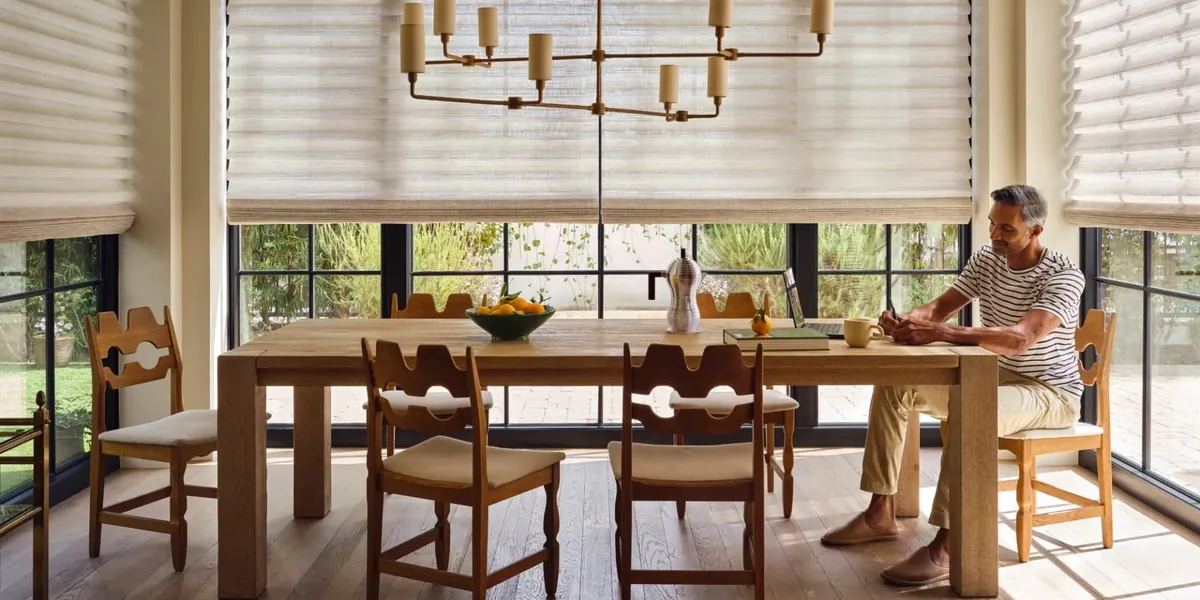
Wooded lots off North Street and Route 27
The newer houses off North Street and along Route 27 sit on big lots, often well back from the road behind a screen of trees. They are large houses with large windows, and their rooms are arranged very differently from an antique colonial: a great room or family room at the back with a wall of glass, an open kitchen, a dining room and a study at the front, and generous bedrooms upstairs.
On a deep, wooded lot, privacy from the road is rarely the main concern in daytime. The trees and the setback take care of that. What the shades need to manage is light, and on a wooded lot light behaves in its own way. Rooms can be shaded and soft for much of the day, then catch a shaft of low sun through a gap in the trees in the late afternoon. A great room that faces a clearing may get far more sun than one facing into the woods.
That makes flexibility valuable. A roman shade can sit fully raised for most of the day, leaving the view of the trees open, and come part of the way down when the sun breaks through. On a wide wall of glass we split the run into several shades, so you lower only the ones the sun is reaching.
Evenings are the other time to think about. A house deep in the trees is very dark outside after sunset, and a brightly lit great room with bare glass becomes a lantern that can be seen a long way through the woods. Roman shades in Medfield, MA, on these lots are often lowered more at night than at any point in the day, and the fabric you choose decides how much of the lit room still glows through. We hold samples to the glass so you can judge that for yourself.
The study or home office at the front of many of these houses is a smaller room with a different job. It is used through the working day, often with a screen on a desk facing or beside the window. Here a shade that can sit partway down without darkening the room helps keep glare off the screen, and a tailored flat style looks smart both from the desk and from the drive.
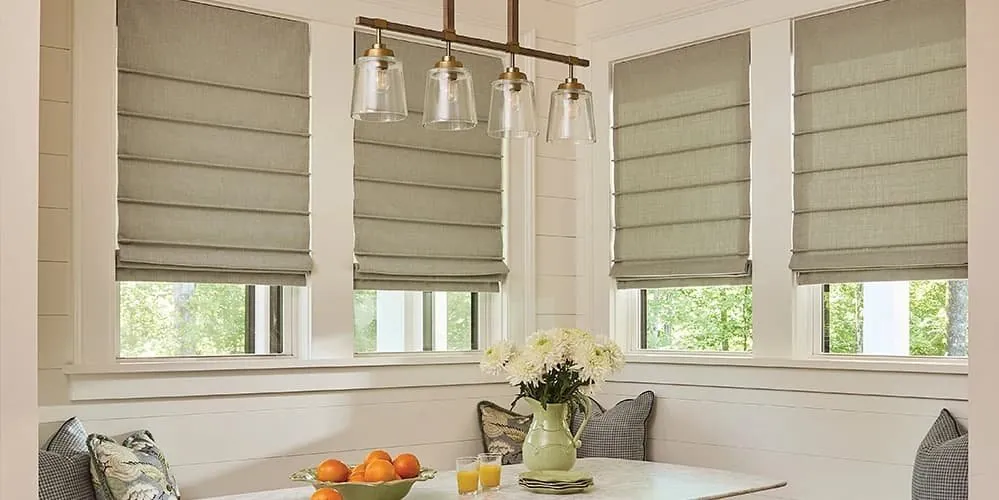
The newer houses: big rooms, big glass
The great rooms in these houses are where most of the glass is, and they suit a calm, consistent treatment. The kitchen beside the great room usually shares its view of the yard and the trees, often with a breakfast table set into a bay or a run of windows, so it makes sense to plan the two rooms together. One fabric across every window in the room, all at the same height, keeps the space feeling tidy. Vignette suits these rooms well because its neat folds look at home with modern finishes, while a Carole Fabrics flat style in a quiet pattern can give a front dining room or study a more traditional feel.
Some of these houses have very high windows in the great room or above the entry, out of reach from the floor. PowerView motorization makes shades on those windows practical, raising and lowering them from a remote, the app or a schedule. We plan how each motor gets its power during the visit. For how the controls work in everyday use, see how motorized shades are controlled.
In the bedrooms upstairs, the trees outside often frame the windows beautifully, and many people want shades that disappear when raised. A roman shade gathers at the top of the window and leaves the view clear, then gives the room cover at night. Choosing roman shades for Medfield’s newer houses is often about how little of the shade you see during the day as much as how it looks lowered.
When the leaves come down
A wooded lot changes with the seasons, and the shades have to cope with all of them. In summer the canopy filters the light and rooms can feel dim even at midday. Once the leaves fall, the same rooms are suddenly bright, and low winter sun can reach deep into a room that never saw direct light in July.
That is worth thinking about when you choose fabric. A shade that looks right in the soft green light of summer may seem heavy in winter, or the reverse. We like to hold samples up at the actual glass and talk through how the room changes across the year. In a room facing into the woods, a lighter fabric keeps every bit of daylight in summer; in a room facing a clearing or the road, a fabric that tames winter sun may matter more.
The antique houses near the center feel the seasons too. Their small windows let in less light to begin with, so a dark fabric there can make a room gloomy for much of the year. Light, warm colors tend to suit them, especially in rooms with dark beams or stained trim.
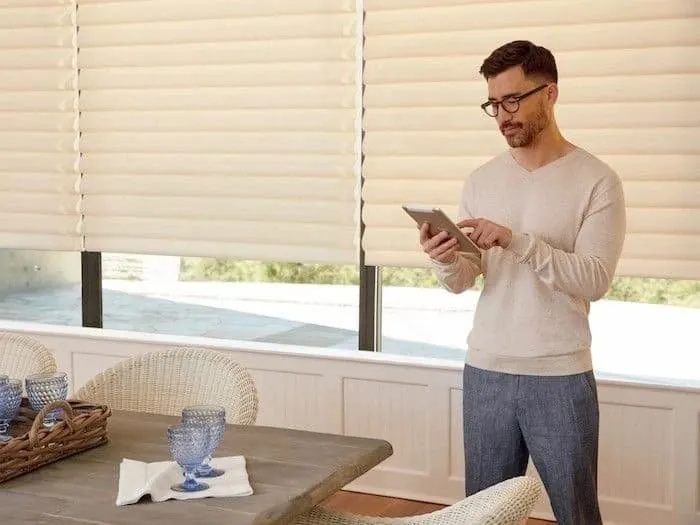
Style choices for an antique colonial
Both Hunter Douglas lines we bring come in two looks. The flat style hangs smooth when lowered and draws up into crisp pleats. It shows a pattern from edge to edge and gives a small window a neat, tailored face. The folded style keeps soft loops of fabric visible even when down, giving a plain fabric more texture and a gentler line.
On the very small sash of an antique colonial, the flat style is usually the cleaner choice. Its simple face does not crowd a little window, and a small check, stripe or print reads clearly on it. The folded style can work beautifully in a larger room with bigger windows, or upstairs in a bedroom where a softer look suits.
Many antique houses have some windows that are larger than others, often a later addition at the back or a kitchen that was enlarged. We keep the fabric consistent through the house so the old rooms and the newer ones still belong together, even if the style changes. We make roman shades in Medfield, MA, for both kinds of room in the same house all the time, and the variety is part of what makes an older house interesting to work on.
Picking fabric for low light and bright light
Light decides more about fabric choice than almost anything else, and Medfield houses offer both extremes: small antique windows that let in little, and newer rooms with walls of glass that let in a lot.
- Small antique sash: lighter colors keep the room bright; a fine pattern suits the scale.
- Rooms under trees: a light, open fabric holds on to every bit of summer daylight.
- Rooms facing a clearing: a fabric with more body tames low winter sun.
- Great rooms: one calm fabric across the whole wall keeps a large room restful.
Our guide to choosing fabric for a sunny room goes further. If you would like a hand with color and pattern for the whole house, ask for an interior design consultation alongside your visit.

Our visit, step by step
Small antique sash and big wooded-lot rooms are both easier to judge in person, so we come to the house. The vans are loaded with samples: we can bring the showroom to you.
- Ask for a time through Request a Consultation, or press the call button.
- We walk the house and note which rooms are dim, which catch strong sun and which windows are hard to reach.
- You hold Vignette and Carole Fabrics samples, flat and folded, against your trim and walls.
- Each small sash is measured at several points; frame depth is checked for an inside mount.
- High windows in a great room or entry get a PowerView plan.
- You are left with a free estimate and no pressure to decide on the spot.
What happens at an in-home consultation explains the visit in more detail.
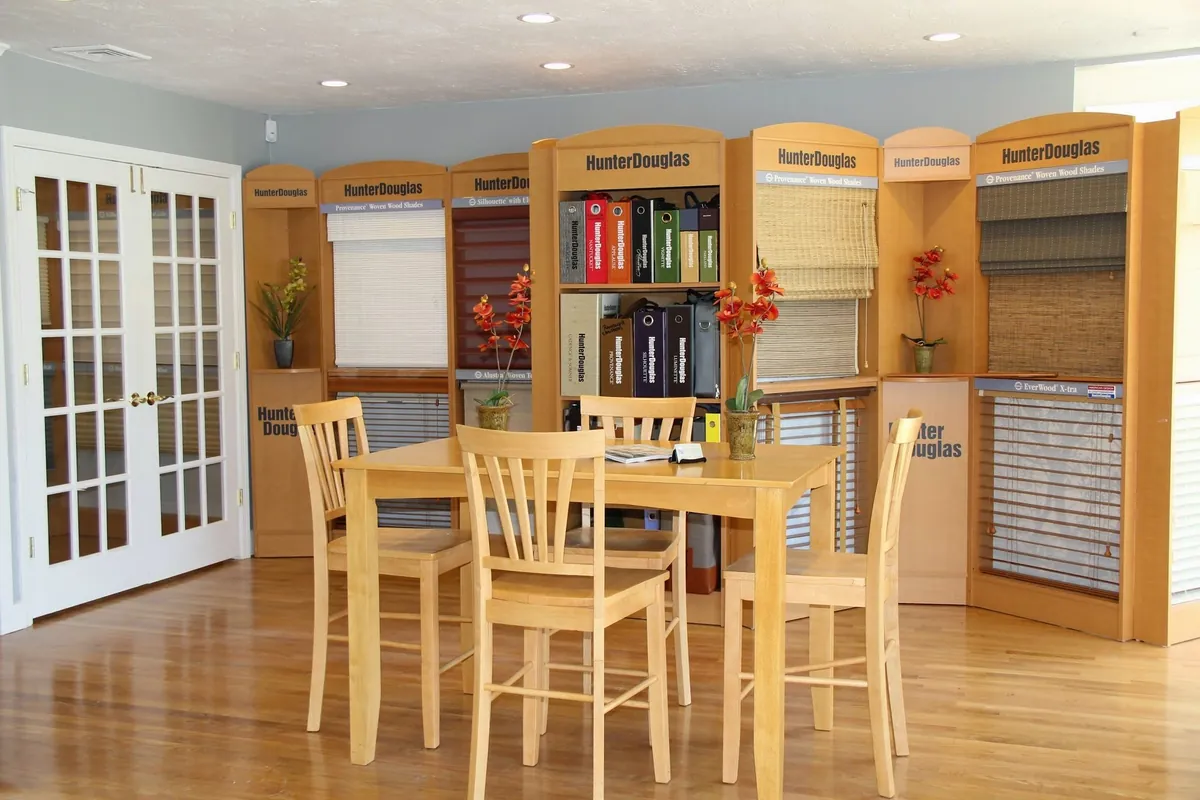
Why a Gallery dealer suits an older house
Blinds & Designs holds Hunter Douglas Gallery dealer status. For a Medfield house that mixes tiny antique sash with modern rooms, it means a full choice from one source: roman shades for the front parlor, shutters for a small dining room window if they suit it better, and motorized shades for the high glass in a great room.
Our installers carry Hunter Douglas certification, so each shade is fitted the way it was designed to be, with the care that old frames and original trim deserve.
See our Medfield page for everything we offer in town, or the full collection of roman shades.
Franklin is our nearest showroom
From Medfield, our Franklin showroom is the closest one. Feel free to call in during opening hours for a chat before booking a visit. Antique sash and big wooded-lot windows still need measuring in place, so the final planning happens at your house.
After the order
When your shades are ready, a certified Hunter Douglas installer returns to fit them. In an antique colonial, that means working gently around original woodwork, levelling each headrail even where the frame is not, and checking that every shade moves freely within its opening. In a newer house it means lining up a run of shades across a great room and setting up any motorized controls. You can read what happens on installation day ahead of time. If a shade ever needs attention later, our blind and shade repair service is there for it.
What Medfield customers ask
The windows in our antique colonial are tiny. Can roman shades really fit them?
Yes. Each shade is made to its own opening, so size is not a problem. We measure every small sash at several points and check whether the frame is deep enough for the shade to sit inside it.
Our frames are uneven. What happens then?
Where an inside mount would not hang cleanly, we mount the shade on the face of the casing and make it a little wider than the opening so the edges are covered evenly.
Our house is surrounded by trees. Do we need shades at all?
For privacy in daytime, perhaps not much. They earn their place when low sun breaks through the trees, in winter when the leaves are down, and at night when a lit room shows outside.
How are the high windows in a great room handled?
With PowerView motorization, so the shades can be raised and lowered from a remote, the app or a schedule.
Does the estimate cost anything?
No. Measuring happens during the visit and the estimate is free.
Ready when you are
Whether it is a row of tiny antique sash or a wall of glass facing the woods, the best way to choose roman shades in Medfield, MA, is in the room with the samples. Request a consultation and we will come to you, measure every window and give you a free estimate. If you have a question first, use the call button, or stop by the Franklin showroom.