
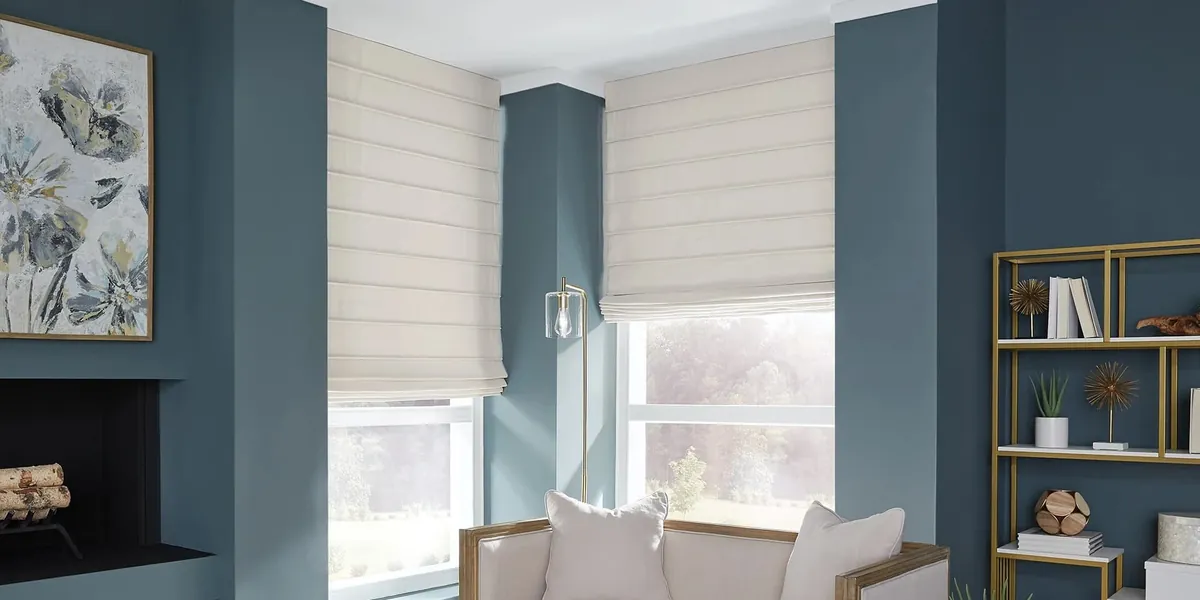
Deep reveals around the historic center
The antique colonials and Victorians around Holliston’s center were built with thick walls, and their windows sit deep within them. Stand inside one of these rooms and you see it at once: a generous reveal of plaster or panelled wood on all four sides of the glass, sometimes deep enough to set a plant or a lamp on the sill. Combine that depth with tall, narrow sash and you have windows with real presence.
Deep reveals are good news for a fabric shade. There is room for the headrail to sit well inside the opening, so the shade hangs within the window rather than in front of it, and the reveal and the trim stay fully visible. That is why so many of the older houses suit roman shades in Holliston, MA: the shade softens the glass without hiding the depth that makes these windows special.
The newer colonials on the wooded lots off Washington Street are a different matter, with standard modern window sizes, shallower frames and larger rooms. We cover those houses further down.
Roman shade options for Holliston
Each shade is made to order to the measurements of its window. Our vans bring samples of every line here to your door.
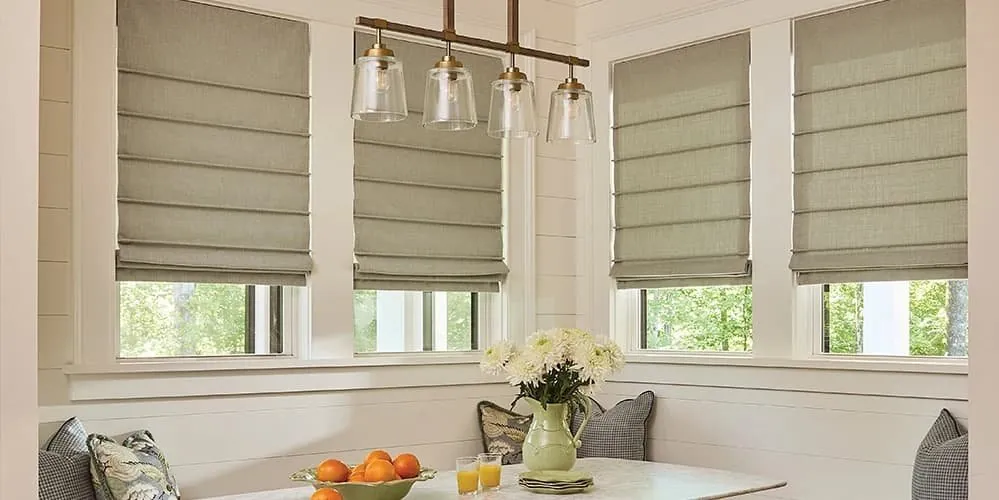
Carole Fabrics Roman Shades
Sewn to the size of each opening from a broad range of decorator fabrics, flat or folded. A fine match for a deep-set antique window.
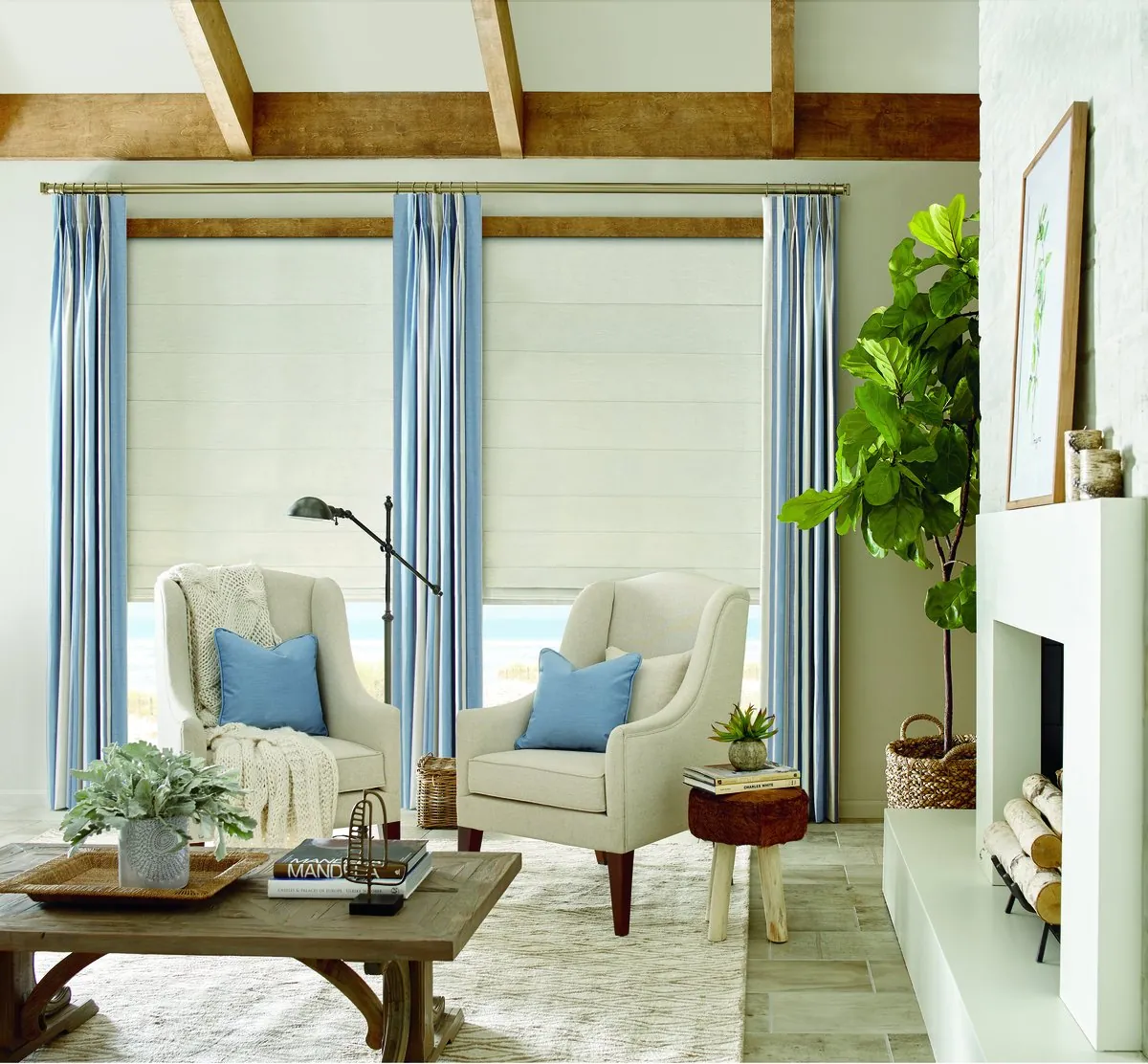
Vignette Modern Roman Shades
A crisp, modern roman shade that suits the open family rooms and kitchens in the newer colonials off Washington Street.
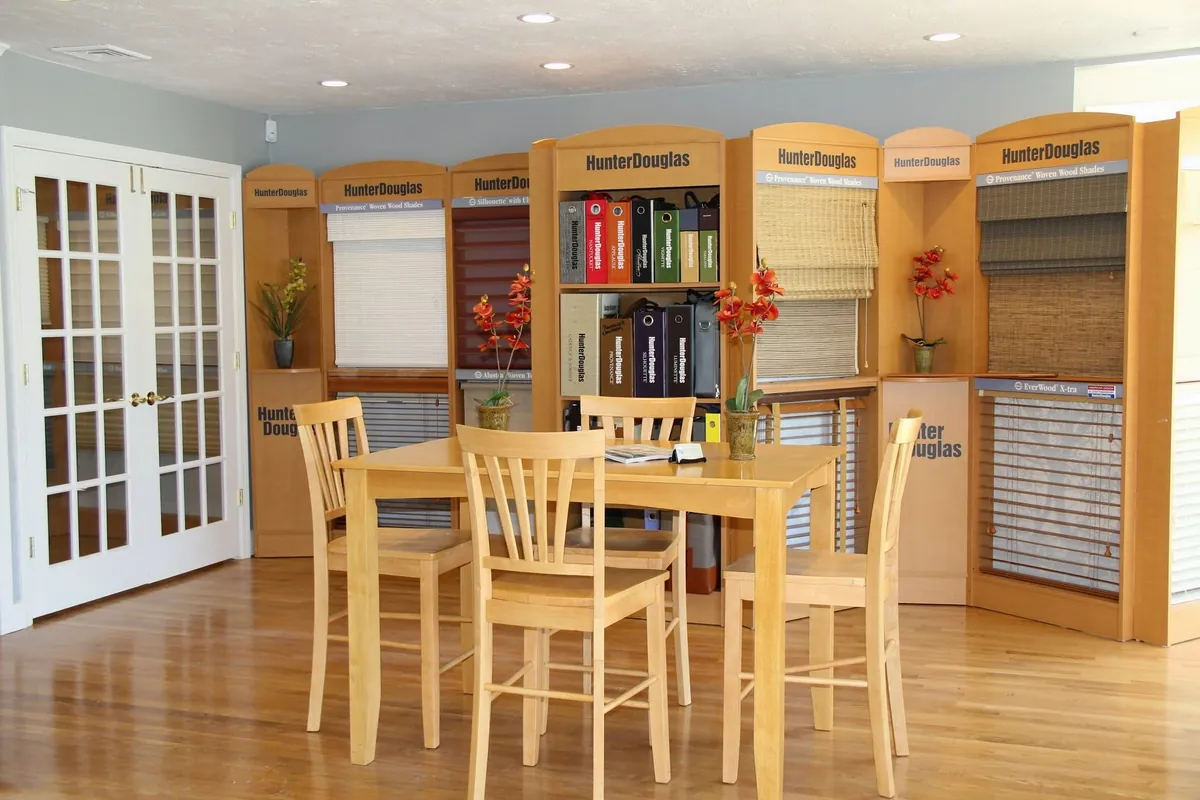
Hunter Douglas Dealer in Holliston
Roman shades are one part of the Hunter Douglas range we supply in town. See what else we bring.
Where the shade sits in a deep reveal
A deep reveal gives us choices that a shallow modern frame does not. The most common is to mount the headrail at the top of the opening, close to the glass, so the shade hangs just in front of the sash and the reveal stays open in front of it. From inside the room, the window then reads as a deep, framed opening with soft fabric at the back of it, which looks especially handsome with old panelled woodwork.
Sometimes the shade is better set further forward in the reveal. If the window has interior storm panels, or if a sash lock or the stile of the window would catch the fabric, mounting the headrail nearer the room side of the opening keeps the shade clear of them. Some people also prefer the look of a shade nearer the room, filling the opening flush with the wall when lowered.
Before we decide, we check the depth at both sides and in the middle, look at how square the opening is, and note anything in the reveal that a shade would have to clear. Old houses settle, and a reveal that looks regular may be a little deeper at one side than the other. Every shade is ordered to the measurements of its own opening, and where the depth or squareness rules out an inside mount, we fix the shade to the face of the casing instead.
A deep sill is another thing to think about. If you use the sill for plants, a lamp or books, the shade needs to stop above them when lowered, or be mounted so it clears them. We talk through how each sill is used so the shade does not end up fighting the room. Words like reveal, head and casing are defined on our measuring terms page.
Planning roman shades in Holliston, MA, for a house with reveals this deep is one of the more satisfying jobs we do, because a well-placed shade makes the depth of the wall part of the look.
Tall, narrow sash in the antique colonials and Victorians
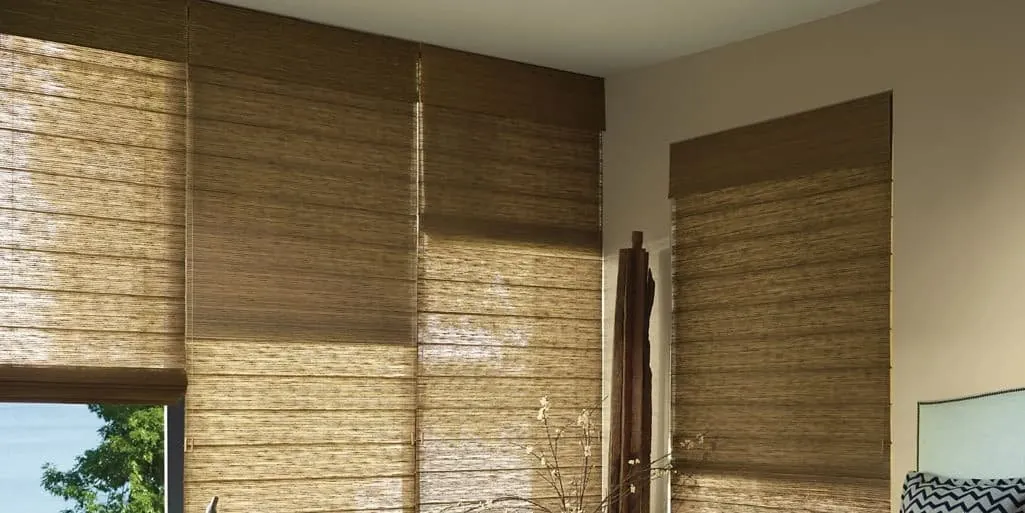
Many windows around the center are tall and narrow as well as deep. A roman shade suits that shape well. Lowered, it is a single slim panel the width of the glass. Raised, it gathers neatly at the head of the opening.
On a tall window there is more fabric to gather, so the raised shade forms a slightly deeper stack. In a deep reveal that stack is partly hidden within the opening, which is one reason these windows suit roman shades so well. If you want every pane clear when the shade is up, the headrail can sit a little higher, though in a reveal there is only so much room above the glass, and we will tell you what each window allows.
Where two or three tall sash share a wall, we make their shades as a matched set, with one fabric, one height and one fold spacing. When they are half raised together, the pleats line up across the wall, which matters in a formal room where the windows are the main feature.
The antique colonials and the Victorians differ in feel, too. An antique colonial’s rooms are often lower and simpler, with plain wide trim, and suit a calm fabric in a flat style. A Victorian’s rooms are taller and more decorated, and can take more pattern and color. In both, the shade should suit the woodwork, because in a historic house the trim is often the best thing in the room.
Front halls in the antique houses deserve a mention. They are often narrow, with a tall window beside or above the door and a stair rising close by. A slim flat shade in the hall window gives privacy from the street without crowding a tight space, and where the window sits over the stair, motorization saves an awkward stretch. Upstairs landings in the Victorians are similar: a single tall window, deep in its wall, lighting the stair. Both are small windows that are seen every day, and a well-made shade in each finishes the house.
Light in an old house
Thick walls and deep reveals have a side effect: they cut down the amount of light that reaches the room, especially early and late in the day when the sun strikes the window at an angle. Many antique rooms in Holliston feel dimmer than their window count suggests.
That affects fabric choice. In a room that already feels dim, a dark or heavy fabric can make it gloomy, so a lighter color, or a fabric that lets a soft glow through when lowered, often suits better. In a south-facing parlor that does get strong sun, there is more freedom, and a richer color can look wonderful against old wood.
Bedrooms are the exception. Upstairs, people often want the room dimmer in the morning, and a fabric with more body helps with that. We hold samples up to the actual glass during the visit, so you can see how each one behaves in that window’s light. Sun and color get a fuller treatment in choosing fabric for a sunny room.
For roman shades in Holliston’s historic houses, the right fabric is often the one that makes the most of the light the thick walls let through.
Newer colonials off Washington Street
Out on the wooded lots off Washington Street, the newer colonials are built to a different pattern. Walls are thinner, frames are shallower, and the windows come in standard modern sizes. The rooms are bigger and more open: a formal front room and dining room, an open kitchen and family room at the back, and a stair hall with a window on the landing.
Standard sizes make fitting simple, and roman shades for Holliston subdivisions like these can usually share one plan from room to room. Inside mounts work easily in most openings, and a whole floor can share one headrail height, which keeps the house looking tidy from the drive. The interest lies in the style. Vignette suits the open kitchen and family room, where its clean folds sit well with modern finishes. A Carole Fabrics flat style in a quiet pattern gives the dining room a traditional touch. A folded style softens the bedrooms upstairs.
Because the frames are shallower, the raised shade sits more in view than it does in a deep antique reveal. That is rarely a problem, but it is one reason some people choose to mount the headrail just above the frame in these houses, so the gathered fabric sits over the wall and the window looks taller.
Wooded lots and the rooms at the back
The trees around these lots soften the light for much of the year, and the family room at the back usually looks straight into them. July turns that room into a green, shady space; January, with bare branches, can flood it with low sun. The best shades for it disappear at the top of the glass most of the time and drop part of the way only on the bright days.
The bigger family rooms often have a run of windows across the back wall, sometimes with a slider to a deck. A long row like that is best handled as several separate shades, letting you cover the windows the sun reaches and leave the others open. A roman shade is designed for windows, so the slider may suit another Hunter Douglas product, chosen to sit well beside the shades on the windows.
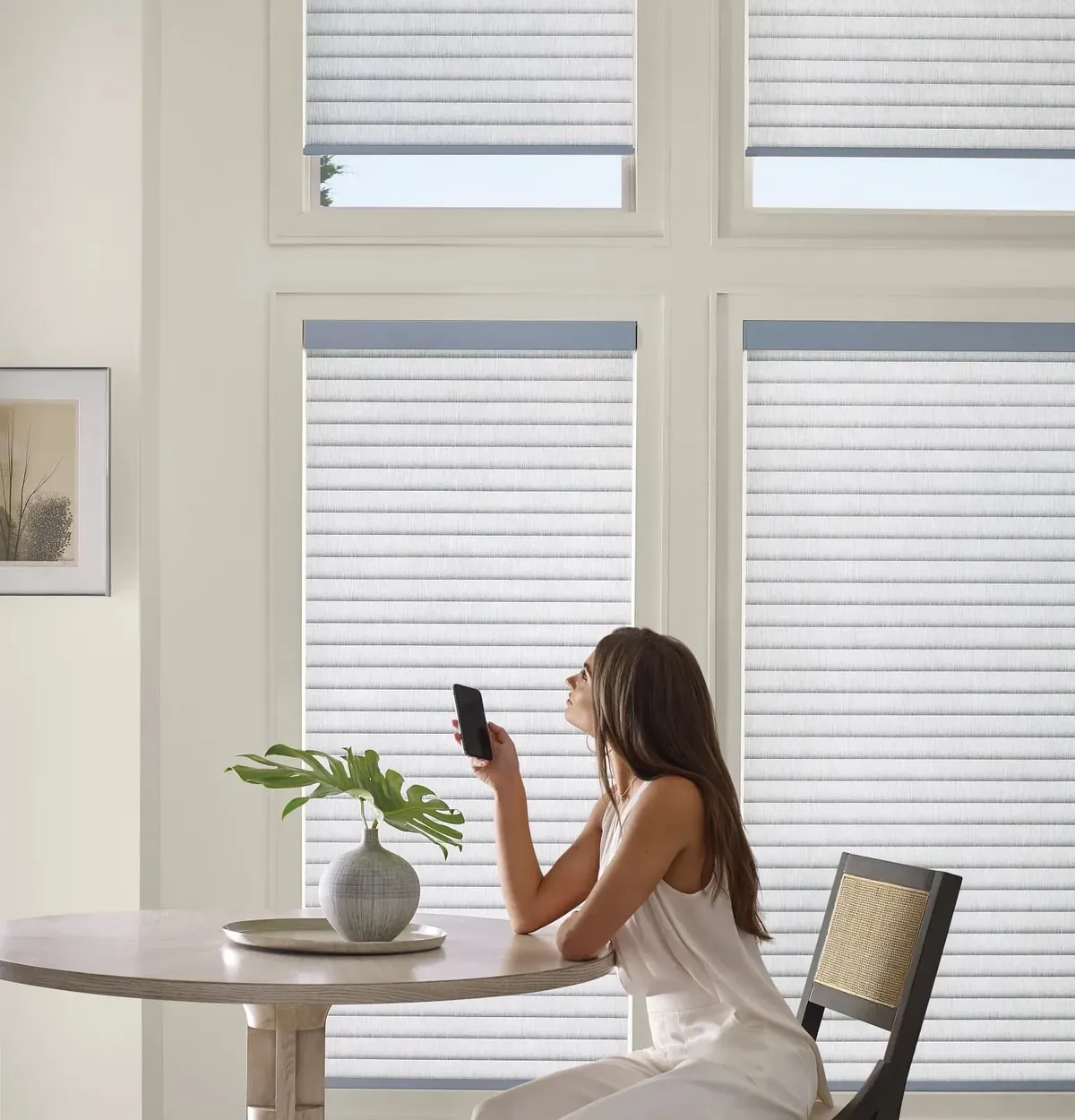
High windows are common too: a landing window over the stairs, or a tall window in a two-story family room. PowerView motorization lets shades on windows like that be raised and lowered from a remote, the app or a schedule, so nobody needs a ladder. Power for each motor is settled during the visit, window by window. Our page on how motorized shades are controlled explains the everyday side.
Smooth face or soft loops
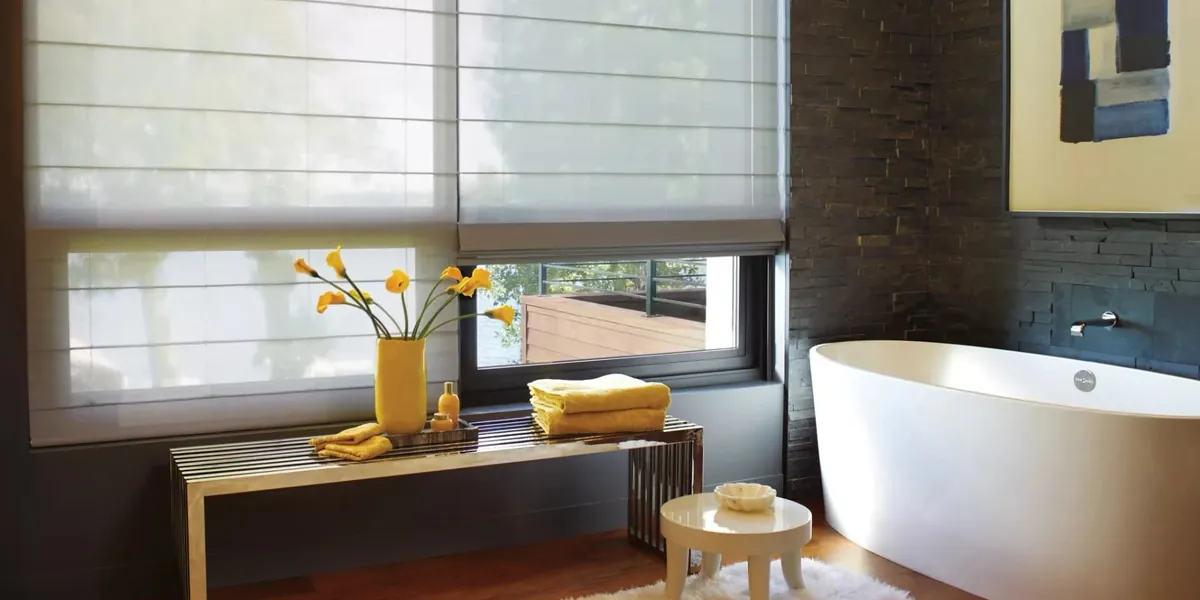
Vignette and Carole Fabrics each give you a choice of face. A flat shade is a plain sheet of fabric when down and lifts into tidy horizontal tiers; prints show clearly on it and it brings a sense of order to a tall, slim window. A folded shade keeps its gentle swags of fabric even at full drop, which reads as easier and more casual and adds depth to a solid color.
In the antique colonials around the center, the flat style is a natural fit for most rooms: it keeps a deep-set window looking clean and does not compete with old woodwork. The folded style can bring warmth to a bedroom. In the newer colonials, many people use the folded style in the family room to soften a big space, and the flat style in the dining room or study.
Mixing the two in one house is perfectly normal. Samples of each travel with us, so you can stand at the window and decide.
Additions are common on older Holliston houses, often a kitchen or family room built on at the back with modern windows. Those rooms can take the folded style or Vignette while the original front rooms keep a flat style, and one shared fabric color ties the old part of the house to the new.
Fabric notes for Holliston houses
- Old panelled reveals: a plain or softly textured fabric lets the woodwork lead.
- Victorian parlors: a stripe or small print in a flat style suits the taller, more decorated rooms.
- Dim antique rooms: lighter colors keep the room from feeling closed in.
- Family rooms facing the trees: a calm color that works in both summer green and winter brightness.
- Upstairs bedrooms: a fabric with more body for darker mornings.
If you would like help pulling colors together across the house, an interior design consultation can be part of the same visit.
Planning the visit
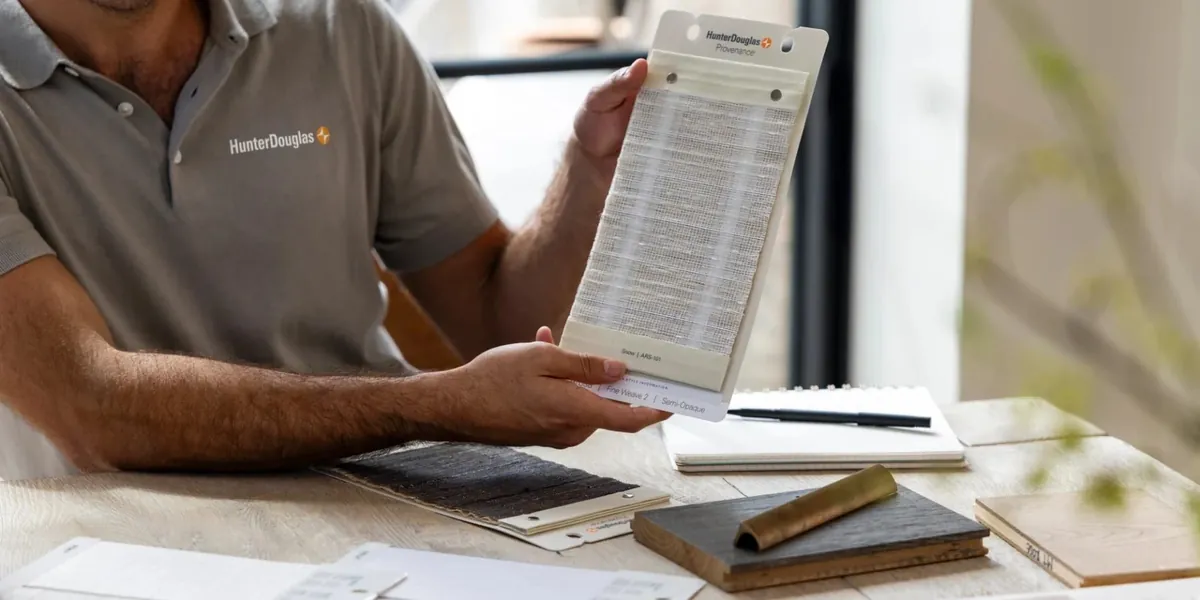
A reveal’s depth is hard to judge from a photo, so Holliston projects nearly always begin with us in the house. Every van is stocked with samples, so we bring the showroom to you.
- Send the Request a Consultation form, or press the call button, to choose a day.
- We go straight to the trickiest openings: the deepest reveals, the tallest sash, the landing window.
- Swatches go up against your panelling and paint so you see them in context.
- Depth is measured at both sides and the center, and anything a shade has to pass is noted.
- Together we fix where each headrail sits in its reveal, and which windows want PowerView.
- A free estimate comes next; there is no rush to say yes.
The visit is described step by step in what happens at an in-home consultation.
A Gallery dealer for historic and new houses alike
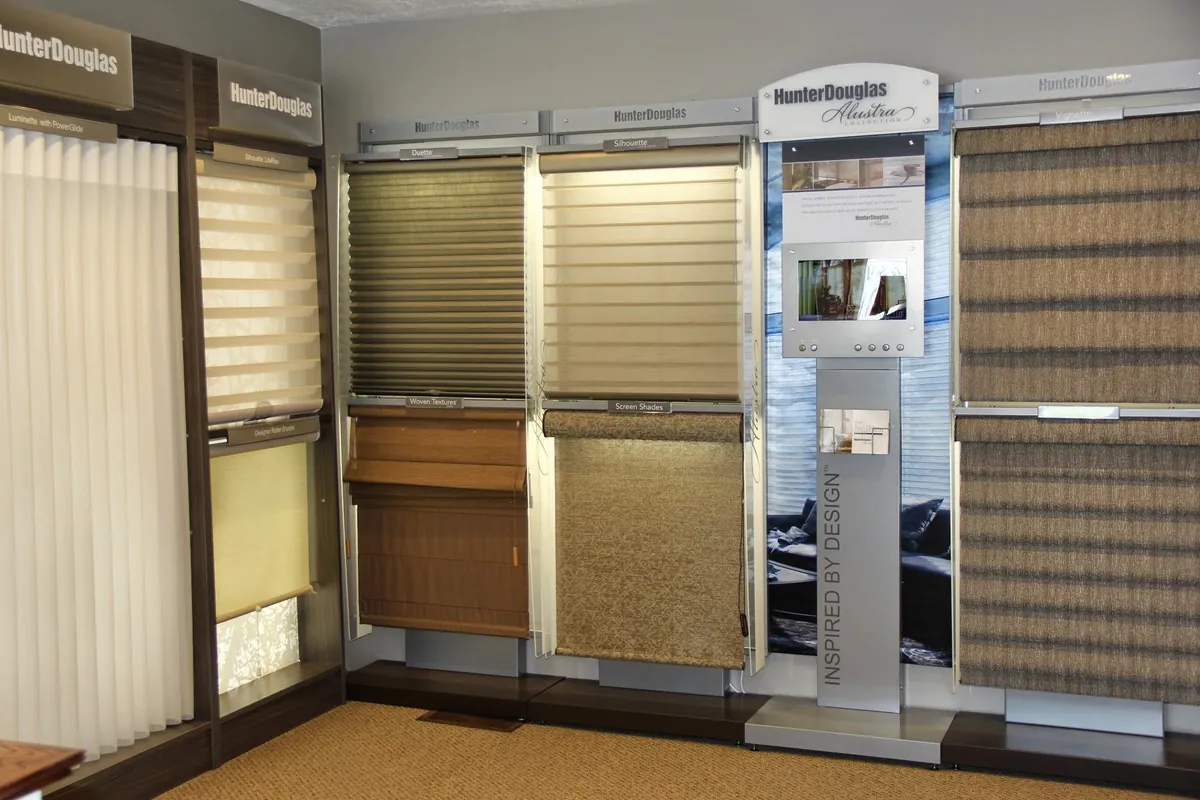
We are a Hunter Douglas Gallery dealer. Antique colonial or new build off Washington Street, that status puts the complete Hunter Douglas line within one conversation and one order.
Our fitters are Hunter Douglas certified, and they treat old reveals and original panelling with the respect they need.
Our Holliston page lists every service we offer in town; the roman shades collection page compares the lines.
Our nearest showroom: Franklin
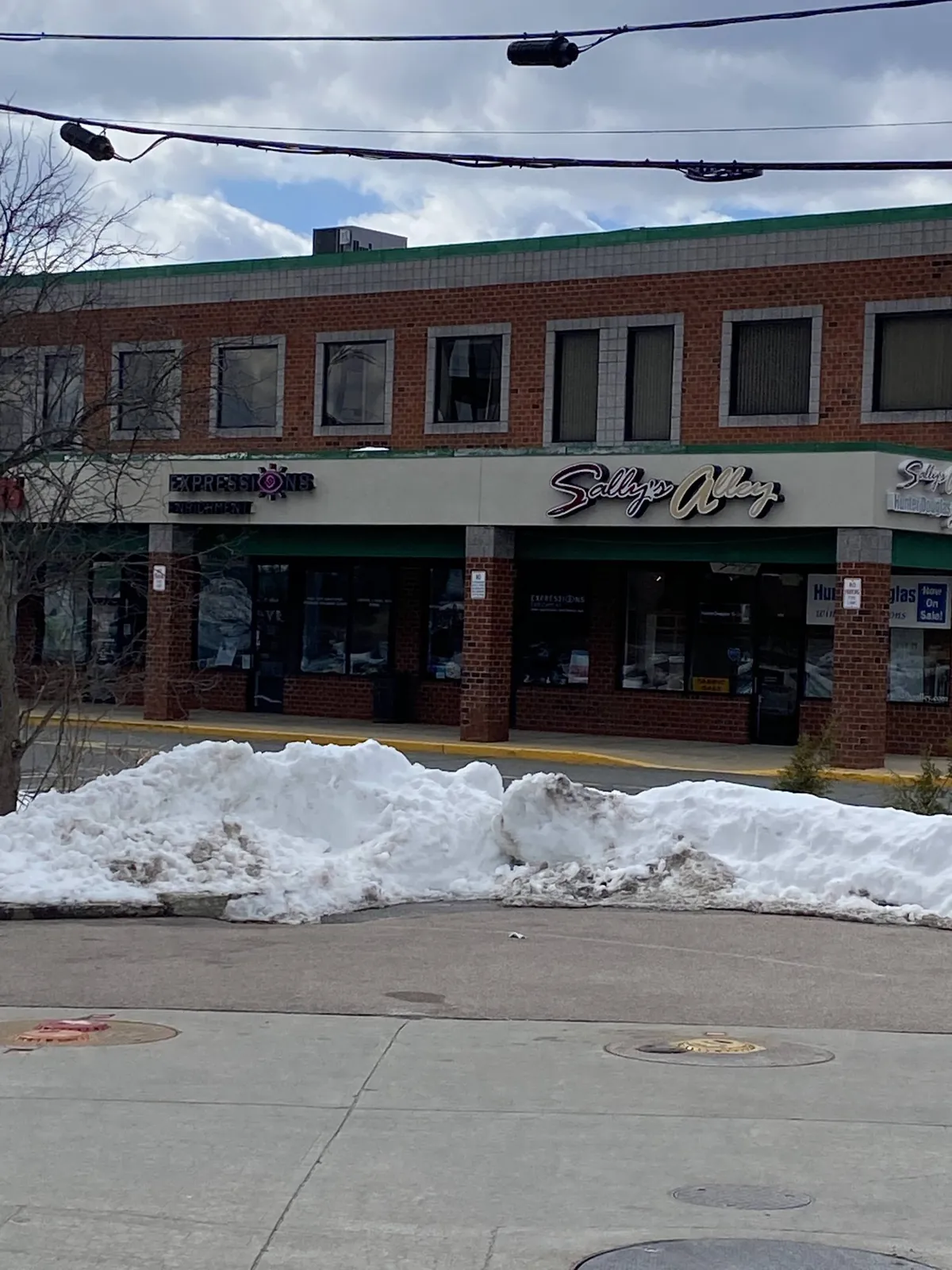
Franklin is the closest of our showrooms to Holliston. You can stop by while it is open for a first conversation. A deep reveal can only be measured where it is, though, so the final plan is always made at your house.
When the installers arrive
Once the order is in, a Hunter Douglas certified fitter returns to hang it. In the historic center, that means mounting each headrail at the agreed depth within its reveal, levelling it even where the opening is not, and making sure the shade moves freely past any storm panel or lock. In a newer colonial the work is mostly about even rows and programming any PowerView shades. Before leaving, the fitter works every shade with you. Installation day is explained in advance, and our blind and shade repair service looks after anything that needs fixing in future.
Questions from Holliston
Our antique windows sit in very deep reveals. Where does the shade go?
Usually at the top of the opening, close to the glass, so the reveal stays open in front of it. If a storm panel or lock is in the way, we set it further forward in the reveal.
Will a roman shade block the deep sill we use for plants?
It does not have to. We plan where each shade stops when lowered, or how it is mounted, so it clears whatever you keep on the sill.
Our rooms feel dim. What fabric would you suggest?
Often a lighter color, or a fabric that lets a soft glow through when lowered. We hold samples at your windows so you can see the effect, at the time of day you use the room most.
Do the newer colonials off Washington Street need anything different?
The fitting is simpler because the windows are standard sizes and the frames are regular. The main choices are style and fabric for each room.
Do we pay anything for the estimate?
Nothing. Measurements are taken while we are there, and the estimate is free.
Book a consultation
From a deep-set antique sash to a family room full of glass, roman shades in Holliston, MA, are best chosen at the window itself. Use Request a Consultation and the samples travel to you, the openings are measured and a free estimate follows. For a quick question, the call button works, or head to the Franklin showroom.