
Main Street, the harbor and the woods inland
Hingham’s housing tells a long story, and the windows tell it too. Along Main Street and around the harbor stand antique colonials and Federal houses, with small, deep-set sash, many panes of old glass and trim that has been painted and repainted over the long life of each house. Inland, on wooded lots, larger newer houses bring big windows, tall rooms and a very different set of problems.
Working with a Hunter Douglas dealer in Hingham, MA, means respecting both. On the older streets there are real expectations about how a historic house should look, from inside and from the sidewalk, and a covering that fights the character of the sash will stand out. Around the harbor, many rooms were laid out for the view, and the last thing anyone wants is a window treatment that steals it.
The newer houses inland ask for something else again: control over tall glass, soft light under the trees and coverings that look at home in a large, open room. We look at each house on its own terms, bringing samples from the van to your windows so every decision is made in your own light.
Hunter Douglas in Hingham, product by product
Pick a card to read our Hingham page for that product. Between them, these cover the historic houses, the harbor rooms and the newer houses inland.
Custom blinds
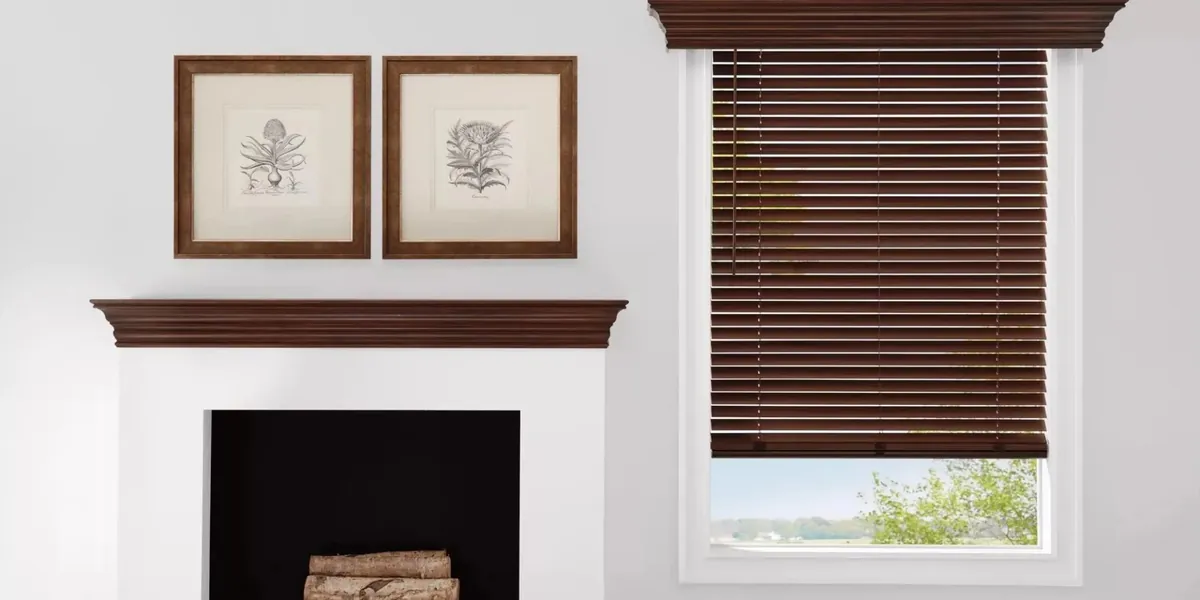
Wood blinds with real weight for period rooms, plus faux wood, metal and verticals.
Cellular shades
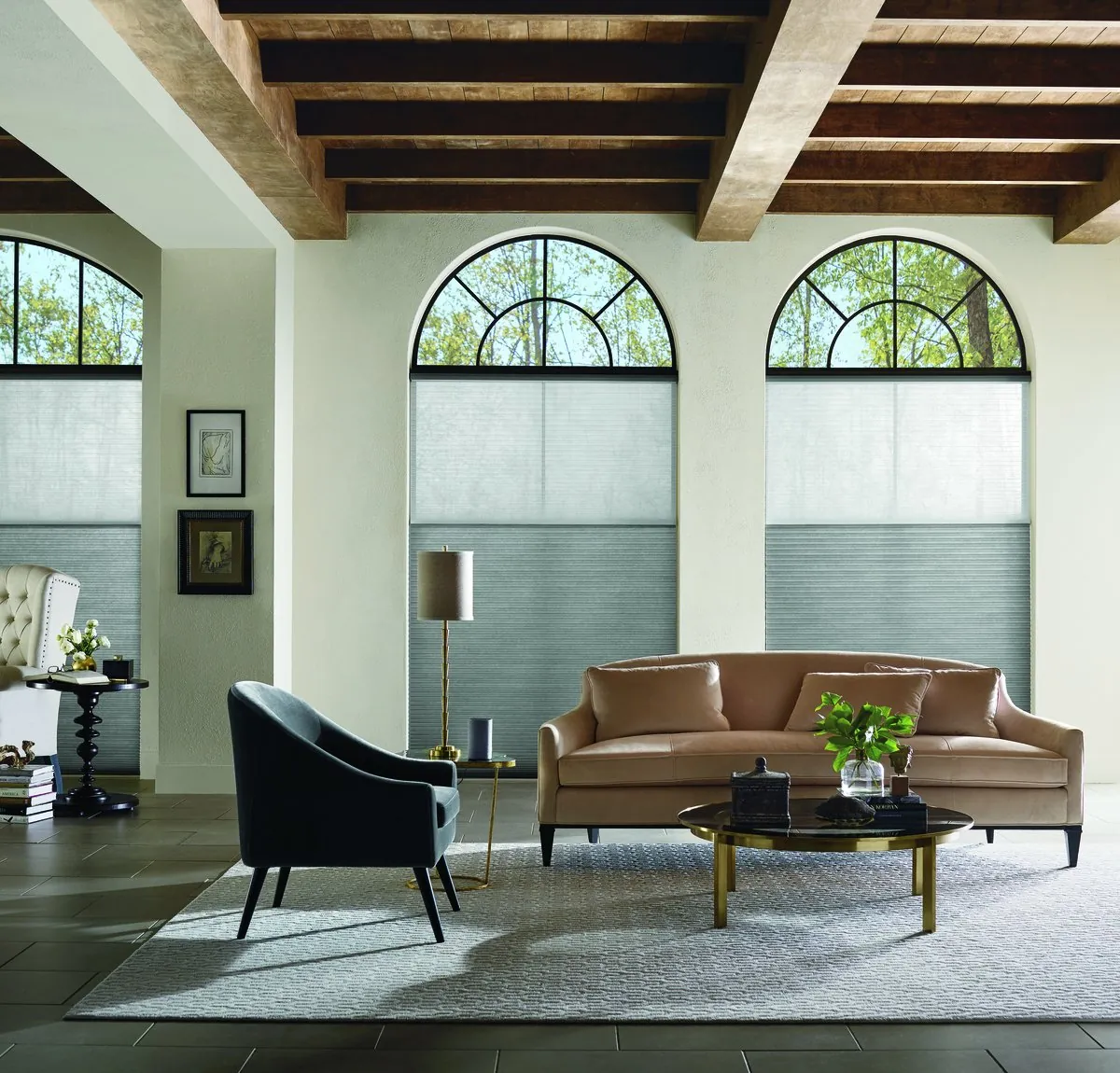
Duette and Applause honeycomb, for compact antique sash and tall new glass alike.
Roller shades
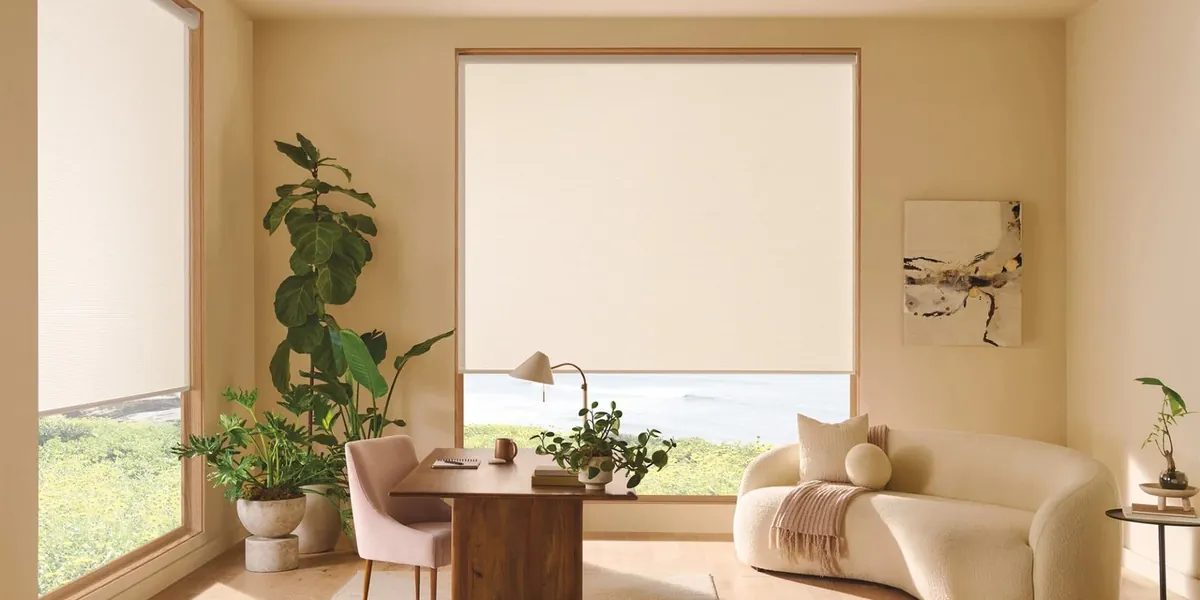
Designer screens and Alustra, a quiet way to temper harbor glare.
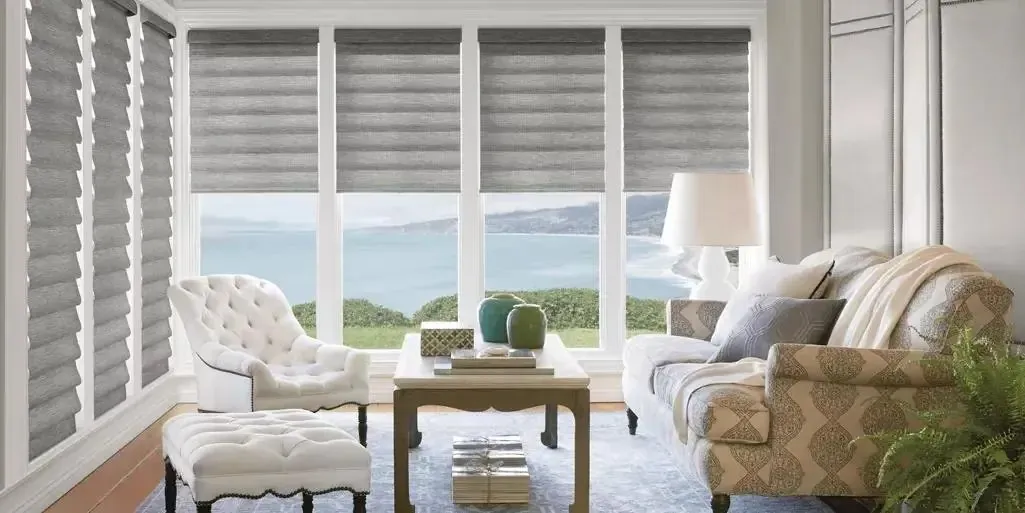
Roman shades
Vignette and Carole Fabrics, the soft fabric look for a Federal parlor.
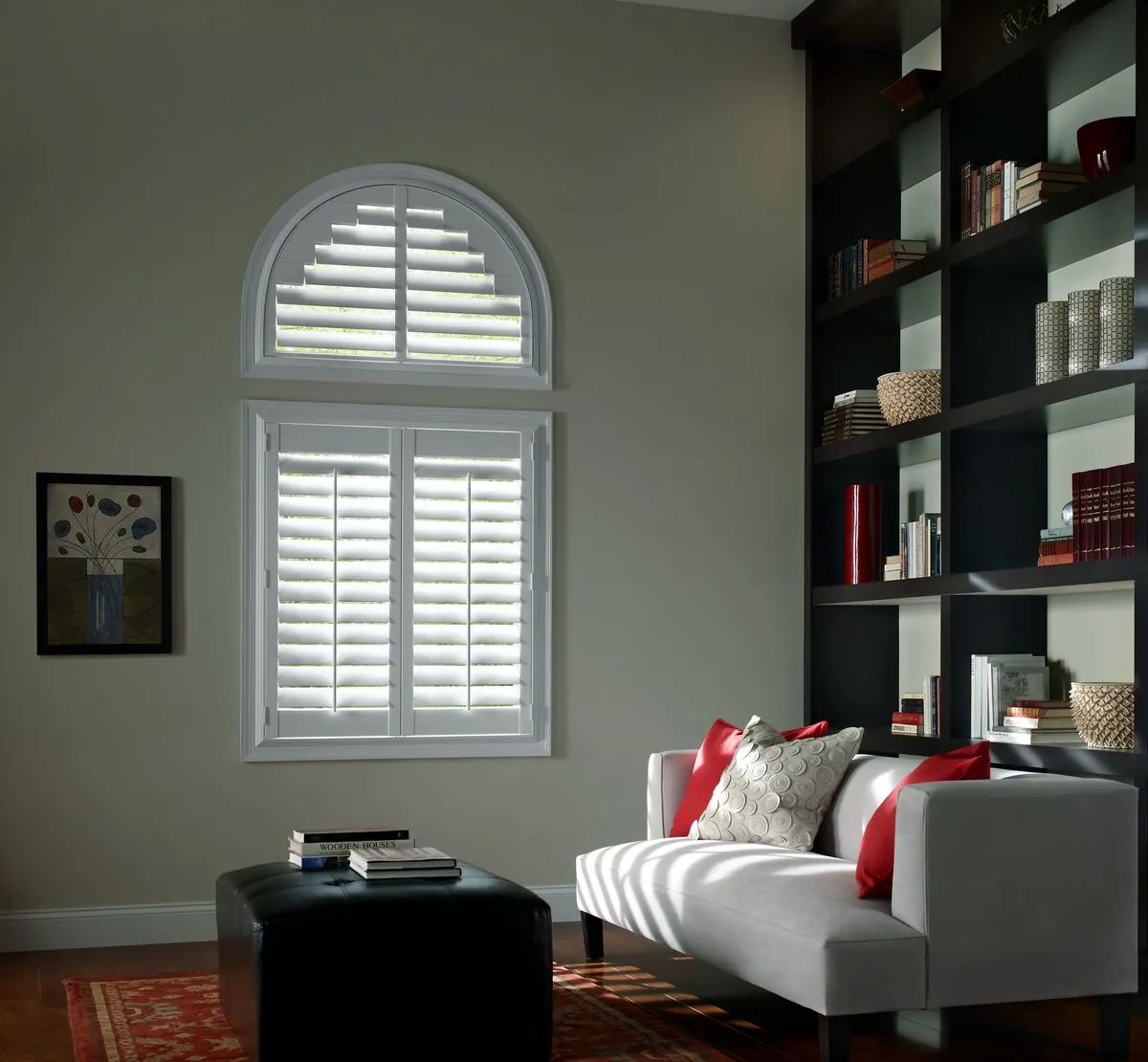
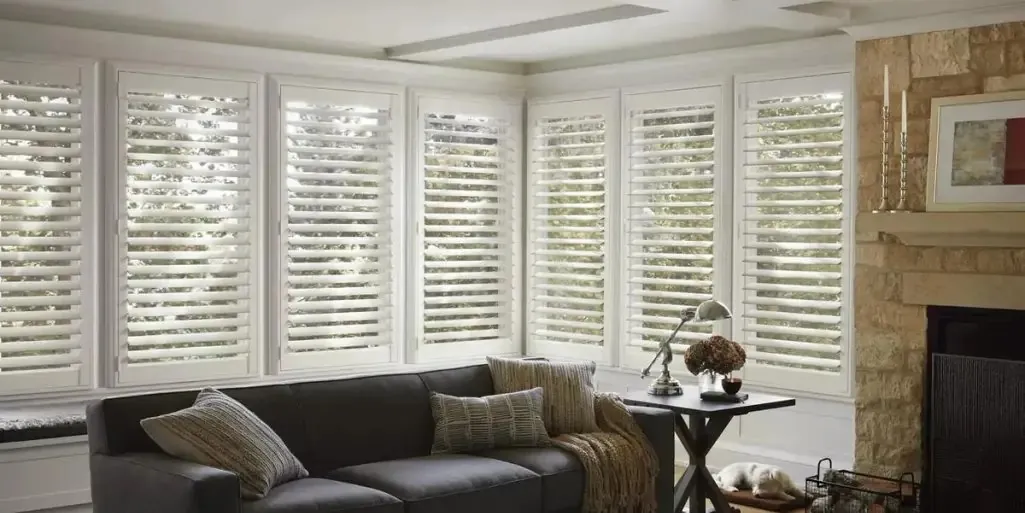
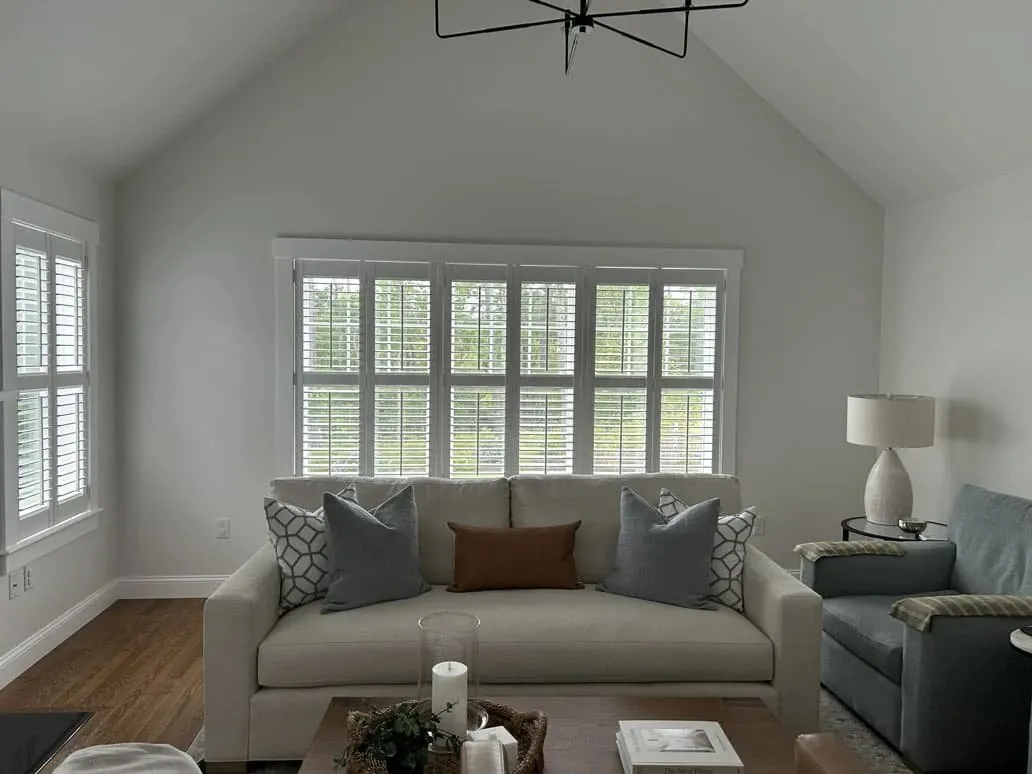
Plantation shutters
Palm Beach, NewStyle and Heritance, including shaped panels for arched tops.
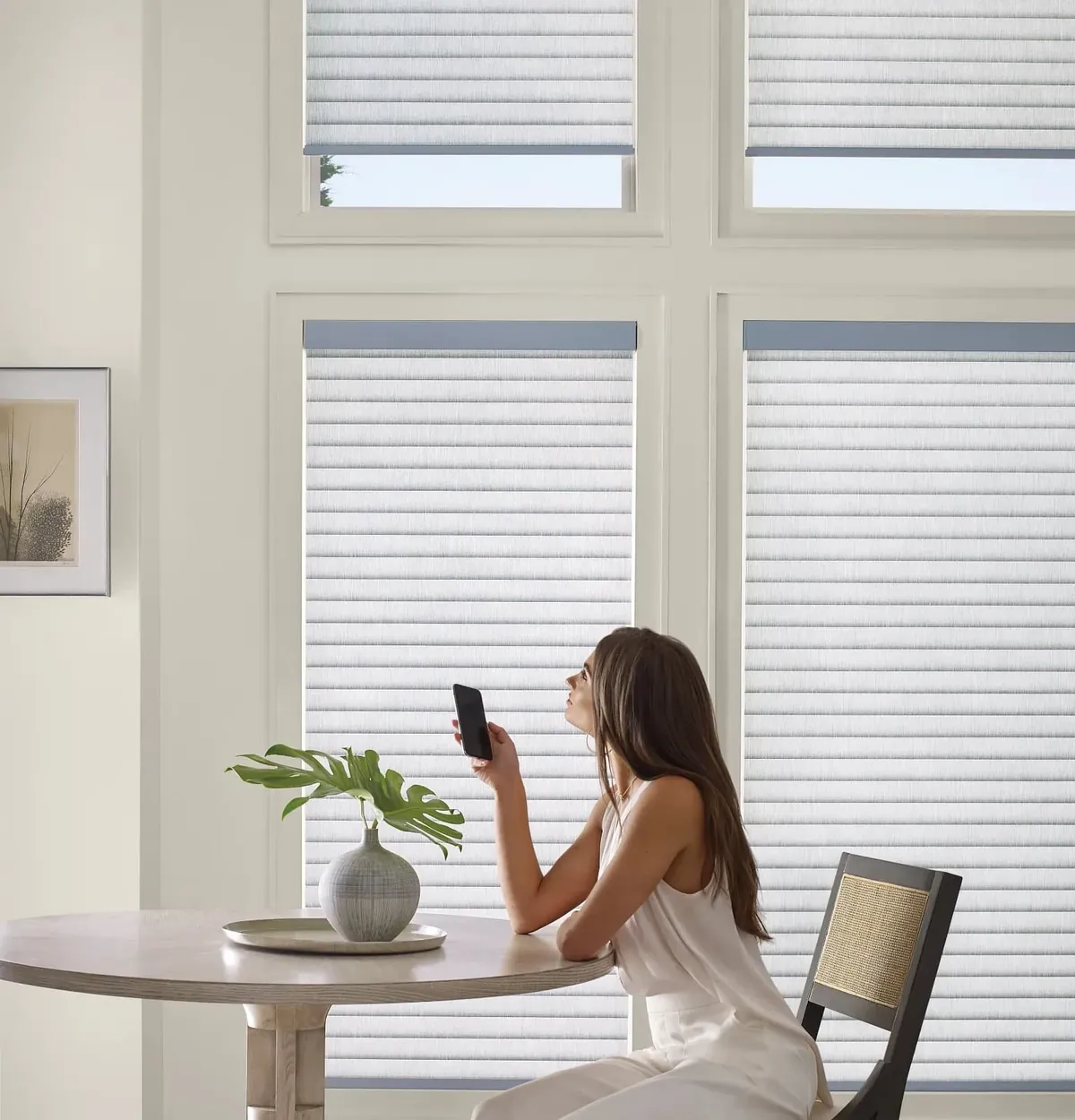
Motorized blinds
PowerView control for high transoms and two-story glass you cannot reach.
What a historic street expects
A Main Street colonial or a Federal house near the harbor is seen by a lot of people. Its front windows are part of the streetscape, and the way they look from the sidewalk matters to the house as much as the clapboards and the door. A bright color, a modern headrail or a covering that crowds the glass can make an antique house look oddly dressed.
That is why we usually start an older Hingham house from the outside in. From the street, the front windows tend to look best with a quiet, consistent face: a white, cream or soft neutral on every street-facing sash, so the old glass and the muntins remain the feature. Inside, behind that calm front, each room can have its own fabric, texture and color.
If your house sits in an area with its own guidance on exterior appearance, bring whatever you have to the consultation and we will work within it. Even where nothing is written down, we find most owners of antique houses want the same thing: coverings that look as though they belong to the house rather than to the decade they were bought.
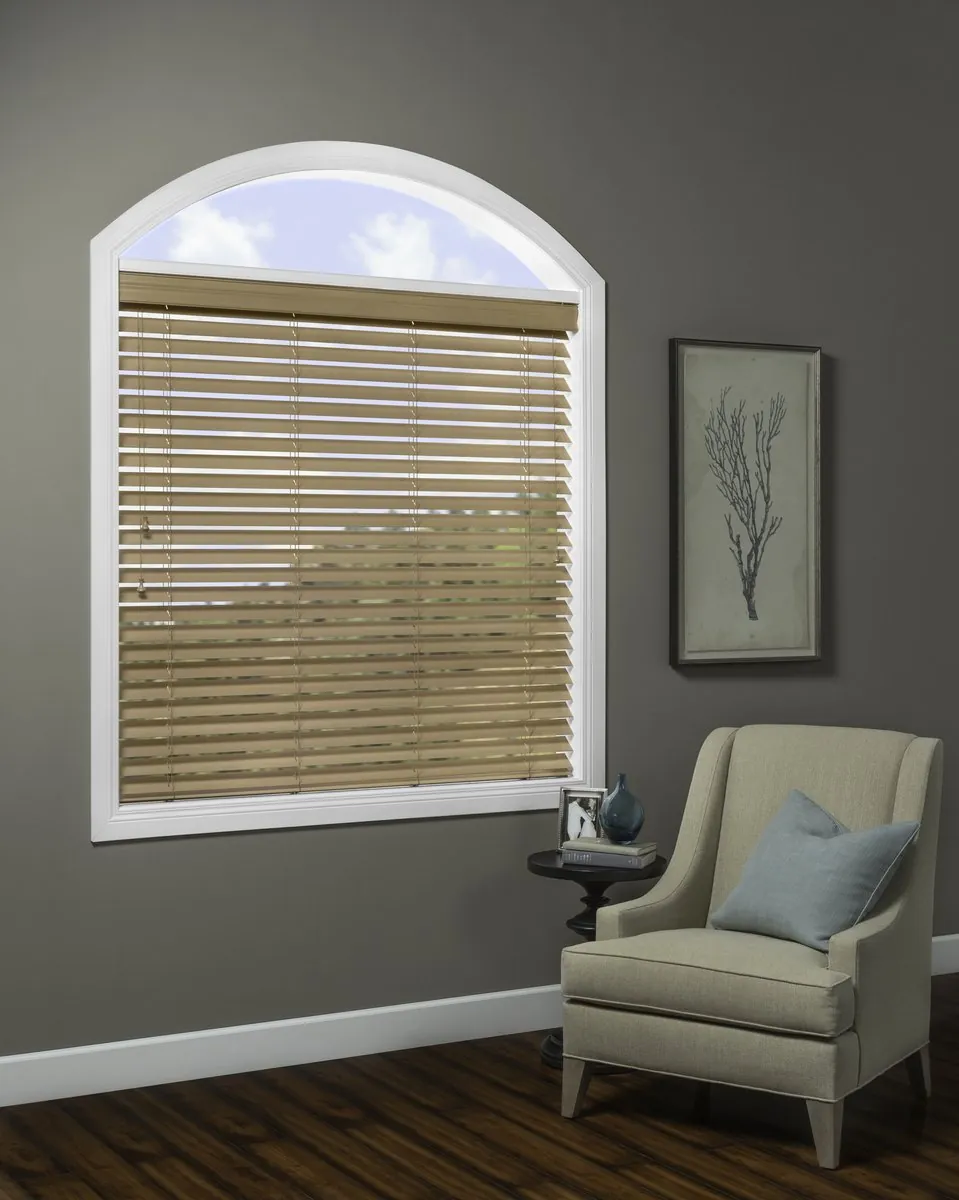
Federal and colonial sash, up close
The windows in Hingham’s antique houses were made to be small and to sit deep. Walls are thick, the sash is set well back, and each window is divided into many small panes. Trim is often wide and handsome, sometimes with paneled reveals on either side of the opening.
Choosing the mount
With that kind of depth, a covering can usually sit inside the opening, close to the glass, leaving the casing, the reveals and the sill uncovered. On an antique house that is often the right call, because the woodwork is as much a part of the room as the furniture. Where an opening has moved over the years and is no longer square, we look closely at whether an inside mount will still sit neatly, and measure every window separately.
Clearing the panes
A many-paned sash has a rhythm that a bulky stack at the top will interrupt. Honeycomb shades fold up compactly, wood blinds stack tighter than most people expect, and shutters swing fully clear of the window. We raise each sample at your window so you can see how much of the old glass shows when the covering is up.
Matching the weight of the room
Federal rooms are elegant and fairly formal; earlier colonial rooms can be plainer and more rustic. Shutters with a slimmer louver suit a refined parlor. Wood blinds in a warm wood tone look at home against old floorboards. Roman shades in a quiet fabric soften a bedroom without looking out of period. The right answer depends on the room as much as the house.
Kitchens and later wings on antique houses
Few antique houses in Hingham still have only their original rooms. A kitchen wing, a family room or a mudroom has often been added at the back, with larger, newer windows than the sash at the front. Those rooms are usually where the household spends most of the day, and they tend to face the garden or the yard rather than the street.
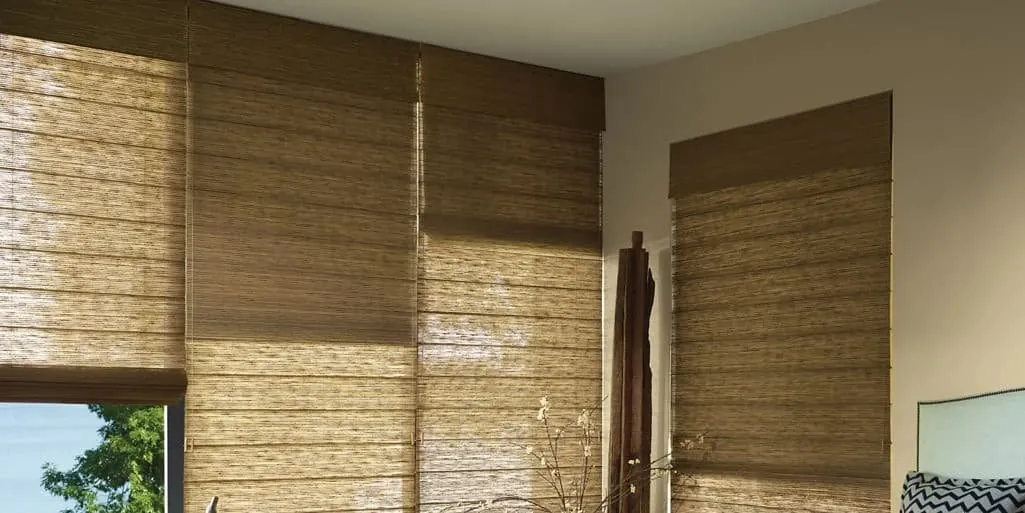
The windows there can take more modern coverings without looking out of place, since they are not part of the historic front. A roller shade or a honeycomb shade in a light-filtering fabric suits a busy kitchen. A woven wood shade brings warmth to a family room and ties it back to the older wood in the main house. Faux wood blinds handle a mudroom or a back entry well. We keep a thread of color between the old front rooms and the newer back rooms, so moving through the house still feels like one place.
Harbor rooms built around the view
Around the harbor, many Hingham houses were arranged so the best rooms face the water. A living room, a dining room or a bedroom may have its largest windows aimed straight at the harbor, and the view is the reason the room works. The goal is to keep it.
Water also throws light. On bright days, the surface of the harbor reflects sun back toward the house, and a room facing it can be dazzling in the morning or late afternoon. That calls for coverings that cut glare without hiding the outlook:
- Solar screen roller shades use woven fabrics that soften brightness while keeping the harbor in sight. A more open weave keeps more of the view; a tighter one cuts more glare.
- Sheer shades such as Silhouette diffuse strong light and blur the outlook just enough to make a bright room comfortable.
- Roman shades in a light fabric can be lowered partway to shade the top of the window while the water stays in view below.
- Honeycomb shades in a darker fabric give a harbor-facing bedroom a proper rest when the morning light off the water is strong.
When raised, these all leave the window nearly clear, so the view is untouched for most of the day.
A harbor house has a second public face as well. From the water, from the town pier or from across the cove, the back of the house can be as visible as the front is from the street. Lit windows at night show clearly across the harbor. We often suggest that the water side carries the same quiet color as the street side, so the house looks composed from every angle, and that bedrooms facing the water have a covering that closes fully in the evening. As a Hunter Douglas dealer in Hingham, we plan both faces of a harbor house together, because both are seen. Our guide to the best shades for sun and glare has more on the choices.
Newer houses on wooded lots inland
Away from the harbor and Main Street, Hingham’s newer houses sit on larger wooded lots. They tend to be bigger, with open plans, high ceilings and a lot of glass: a two-story family room, a wall of windows at the back, transoms over doors and windows, perhaps an arched window over the stair.
Light under the trees
The woods change the light. Many of these rooms get dappled sun through the canopy rather than direct glare, and the trees give a measure of privacy that the harbor houses do not have. In summer the leaves shade the windows; once they drop, more sun reaches in. Light-filtering fabrics and sheers keep a room bright and even through both, while a solar screen handles any window that catches open sky.
Tall glass and great rooms
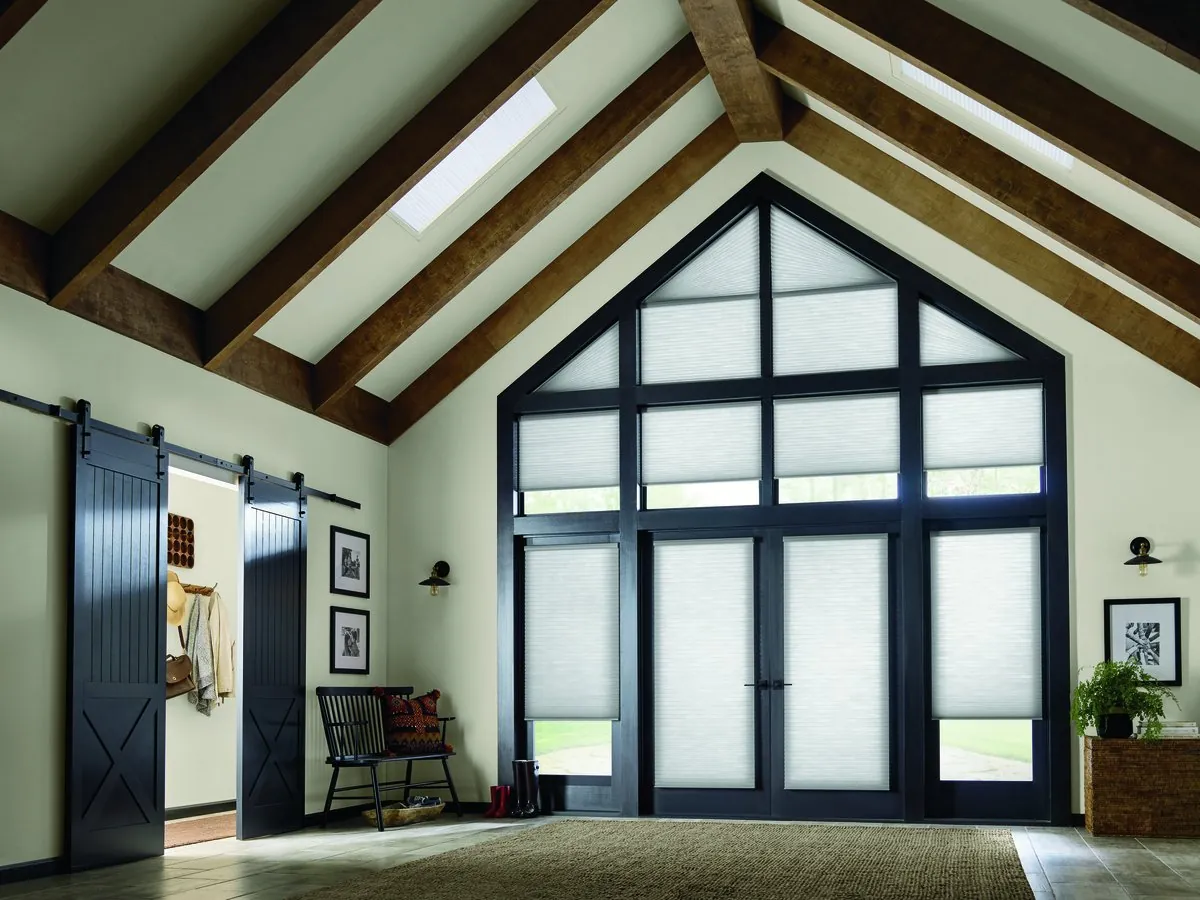
A two-story room with stacked windows needs coverings that look good together at a large scale and can be worked from the floor. Matching shades on the lower and upper rows keep the wall calm. Roller and honeycomb shades are frequent choices here because they look clean across a big expanse.
Arches and transoms
Many newer houses have arched or shaped windows. Shutters can be made in shaped panels to follow an arch, and some coverings can be fitted to leave the arch open to the sky while the rectangular part below is covered. Whether a transom over a door is covered at all depends on how much light the room needs, and we talk that through window by window.
PowerView for windows out of reach
In an antique house, most windows are within easy reach. In a newer Hingham house with a two-story family room, the upper windows can be well above anyone’s head. PowerView solves that. Motorized shades move from a remote, the app or a schedule, so the high row of windows can be opened or closed as easily as the low one.
It also helps around the harbor. A group of water-facing shades can be lowered together when the glare peaks and raised again later, without walking from window to window. Because PowerView runs across many Hunter Douglas families, the solar screens in the living room and the honeycomb shades in the bedrooms can be grouped and run as one system. We plan how each motor is powered at the visit, and our guide to how motorized shades are controlled explains the remote, app and schedule options.
Old and new under one plan
Some Hingham projects span both worlds: an antique house with a modern kitchen addition, a newer house with a reclaimed-wood study, or a family with one house near the harbor and another inland. Choosing a Hunter Douglas dealer in Hingham who carries every product family means the same people can plan for small Federal sash and two-story glass in the same consultation.
We coordinate where it helps. An addition behind an antique house can carry the same street-side color as the original front, so the house reads as one. A modern great room can echo the wood tones of blinds elsewhere. And because we are not tied to one product, we can be candid about where a simpler covering will serve just as well as a more elaborate one.
Inside your house, room by room
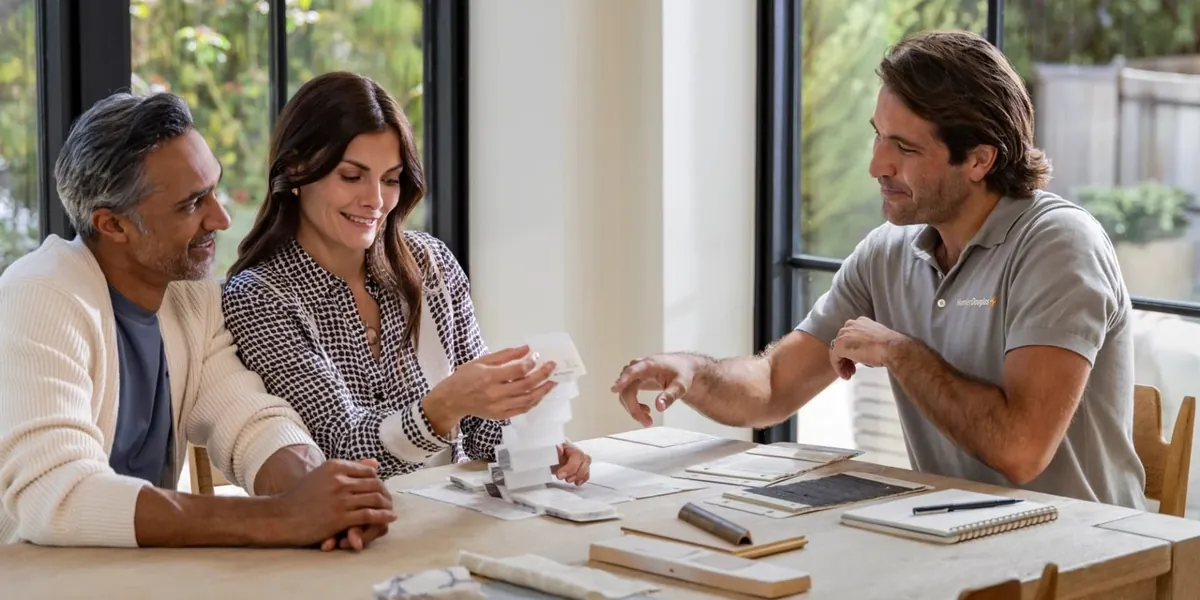
Hingham is served from the shop-at-home territory we run from Canton, so the consultation takes place at your house. Our Canton shop-at-home page has the background. A visit generally goes like this:
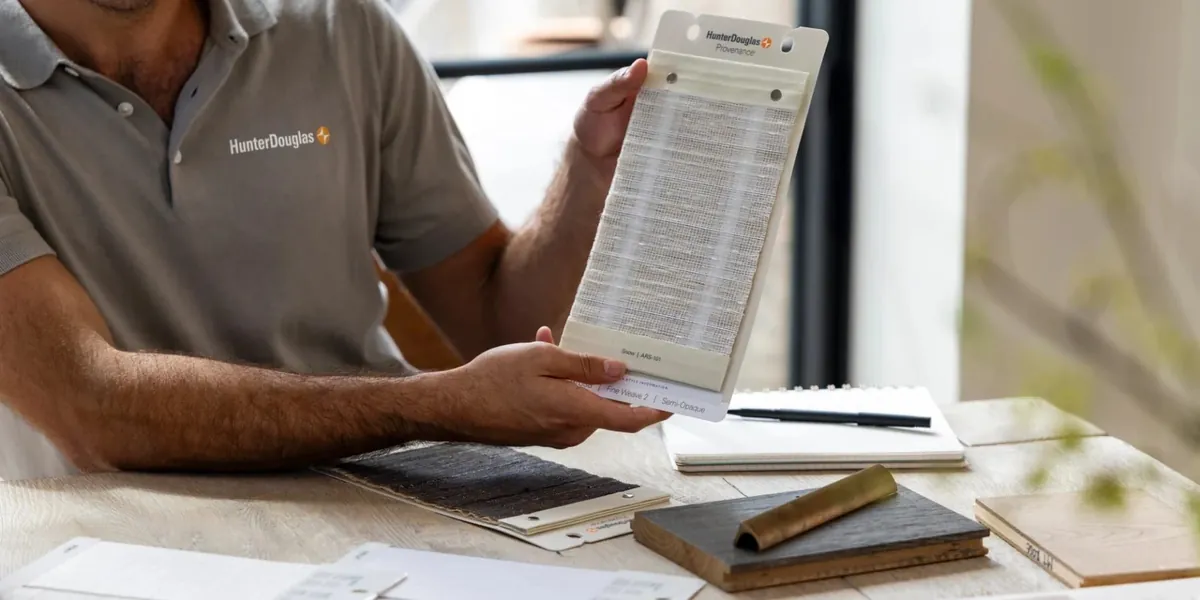
- We arrive with the van and carry in samples of fabrics, screens, slats, louvers and wood tones.
- We start with the rooms you care most about, whether that is a harbor-facing living room, a Federal parlor or a two-story family room.
- At each window we hold up the options, looking at them from inside and, for street-facing sash, thinking about how they will look from outside.
- We talk through mounting, depth, operation and where PowerView would help.
- We measure carefully, taking extra time on old frames that may not be square.
- A free estimate for products and certified installation follows, for you to consider at your own pace.
More detail is on our page about what happens at an in-home consultation. If you are reworking a room and want guidance on color and fabric, ask about our interior design consultations.
Repairs on coverings already in the house
Hingham houses often come with Hunter Douglas shades or blinds already fitted. If one has stopped working properly, show us while we are there. We welcome blind and shade repair on coverings you already own, and we will give you an honest view on whether a repair or a new covering is the better choice for that window.
Fitting day
Once Hunter Douglas has built your coverings to our measurements, our certified installers return to put them up. In an antique house they work with particular care: brackets are set level inside deep openings even where the frame has shifted, and nothing is forced into a recess that has moved. In a newer house, tall and wide shades are aligned so stacked rows look even. Every covering is run through its full travel, PowerView motors are paired and grouped as planned, and the installers show you how everything operates before tidying up. Our page on what happens on installation day explains more, and the guide to shutters for older windows covers shutters in antique frames.
A Gallery dealer for historic and new houses alike
Blinds & Designs is a Hunter Douglas Gallery dealer, and Hunter Douglas certifies our installers. Those two facts shape everything we do in Hingham.
They mean the full Hunter Douglas range is open to you in one consultation, from wood blinds and shutters for a Federal parlor to solar screens for a harbor room and PowerView for a two-story family room. They also mean careful, trained installation, which matters in an old house where no two frames are quite alike. A Hunter Douglas dealer in Hingham with certified installers can take a project from the first sample to the last bracket. Browse lines and colors in the Hunter Douglas catalog, or read more on our Hunter Douglas page.
If you would like to visit a showroom
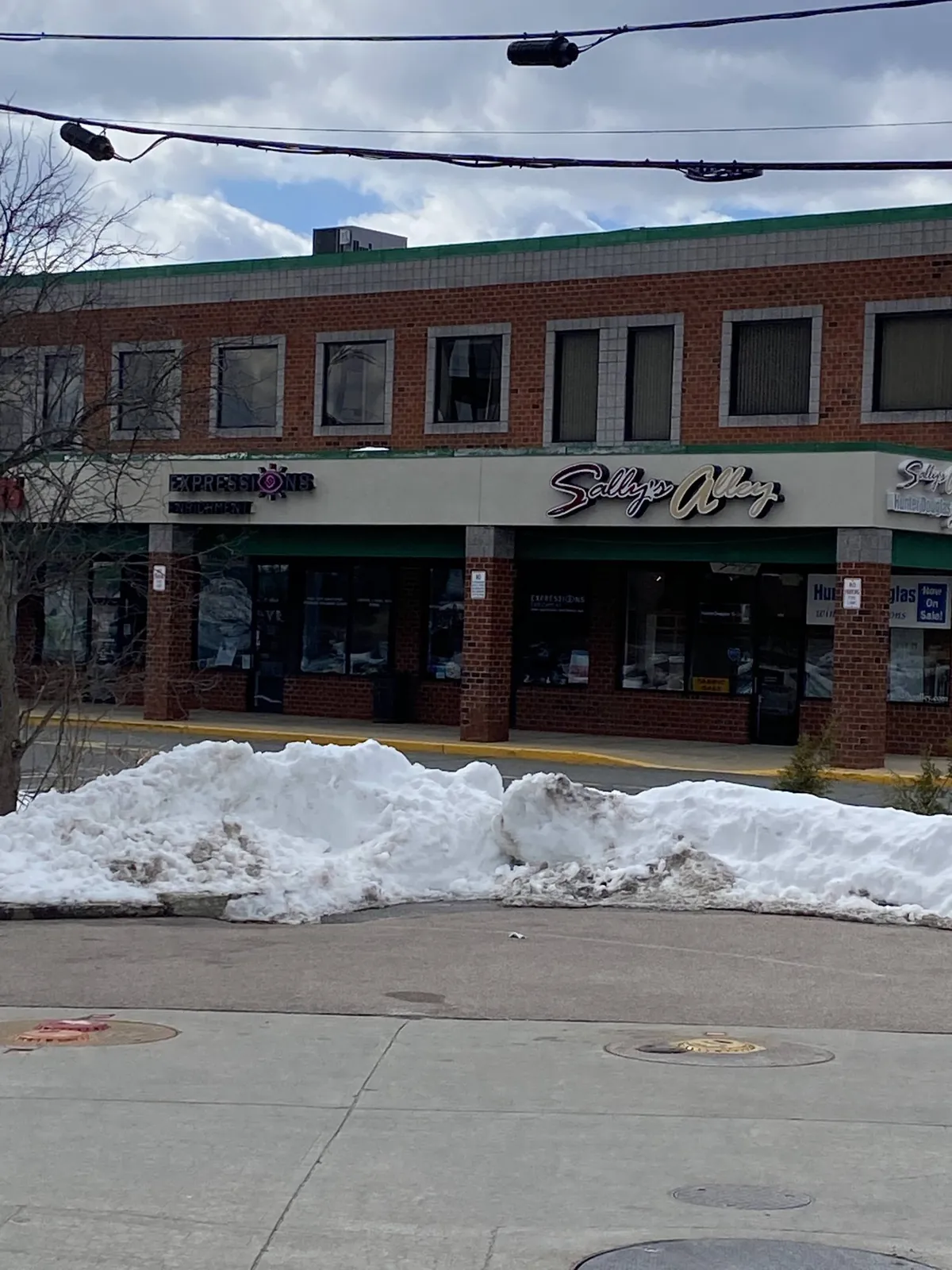
Most Hingham projects begin at home, with the samples brought to your windows. If you would also like to see Hunter Douglas products in a showroom, our nearest location is Franklin. The Franklin showroom page has its details.
Every service we offer in town is listed on our Hingham page.
Questions from Hingham
Our Federal house has small, deep-set sash. Will a modern covering look out of place?
Not if it is chosen with the house in mind. Mounted inside the deep opening, in a quiet color, a honeycomb shade, wood blind or shutter can leave the trim and the panes as the main feature.
How do we keep the front of an antique house consistent from the street?
We use one quiet color on every street-facing window, so the house looks settled from outside. The rooms behind can still have their own fabrics and colors.
Our living room faces the harbor. How do we cut glare without losing the view?
Solar screen roller shades and sheers are made for this. We bring several weaves and fabrics so you can compare them at your window.
What works on two-story windows in a newer house?
Matching shades on the upper and lower rows keep the wall calm, and PowerView lets you work the high windows from a remote, the app or a schedule.
Is the estimate free?
Yes. The estimate for products and certified installation costs nothing, whether it covers a single window or an entire house.
The first step
A many-paned sash on Main Street, a harbor-facing living room or a two-story family room under the trees: whichever describes your house, the place to begin with a Hunter Douglas dealer in Hingham is a consultation. Request one and we will bring the samples to Hingham, look at your windows from inside and out and leave you a free estimate. To ask something first, the call button at the top of the page reaches our Canton team.