
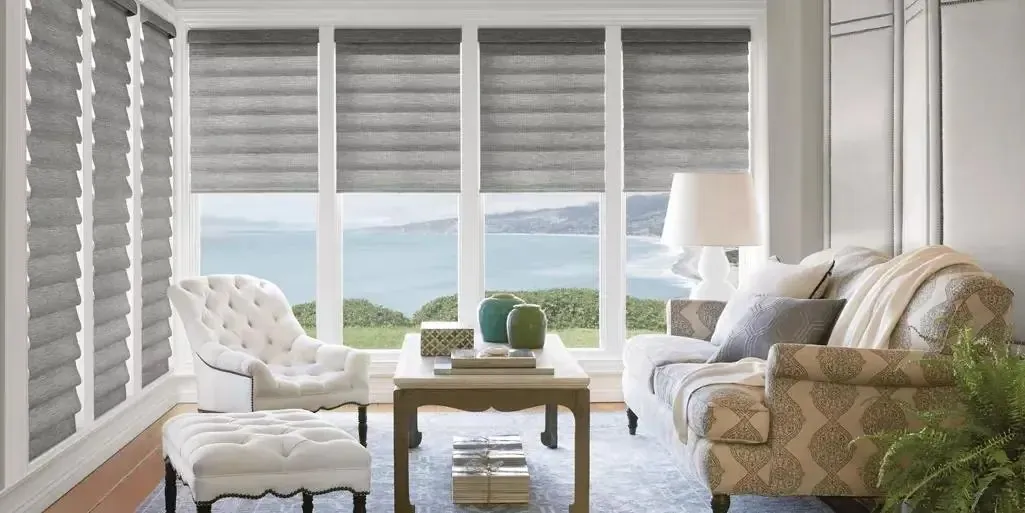
Glass that looks straight out to sea
Few towns on this stretch of coast put their windows so close to open water. Out along Jerusalem Road the larger properties face the ocean with nothing between the glass and the horizon, and the light that comes off the water is bright, low and moving. Planning roman shades in Cohasset, MA, begins with that exposure: a room that faces the sea needs fabric that can soften the glare without closing the view for good.
Back from the shore, the picture changes. Shingled houses gather around the village and the harbor, with smaller rooms, painted trim and windows set close to the lane. Then there are the formal village houses, where a front parlor or dining room has always been dressed with drapery and a bare window would look unfinished.
Fabric shades sit comfortably in all three. A roman shade brings the softness of drapery to the window itself, folds away neatly when you want the view, and comes down as a calm panel of fabric when the sun or the evening asks for it. We cover Cohasset with Hunter Douglas Vignette and Carole Fabrics roman shades in flat and folded styles, and every sample travels to your house on our van.
Flat and folded styles for the harbor, the village and the shore
Picking roman shades in Cohasset, MA, usually comes down to three questions: how formal the room is, how much sea light it takes, and whether drapery will hang beside the shade. These are the styles we bring most often.
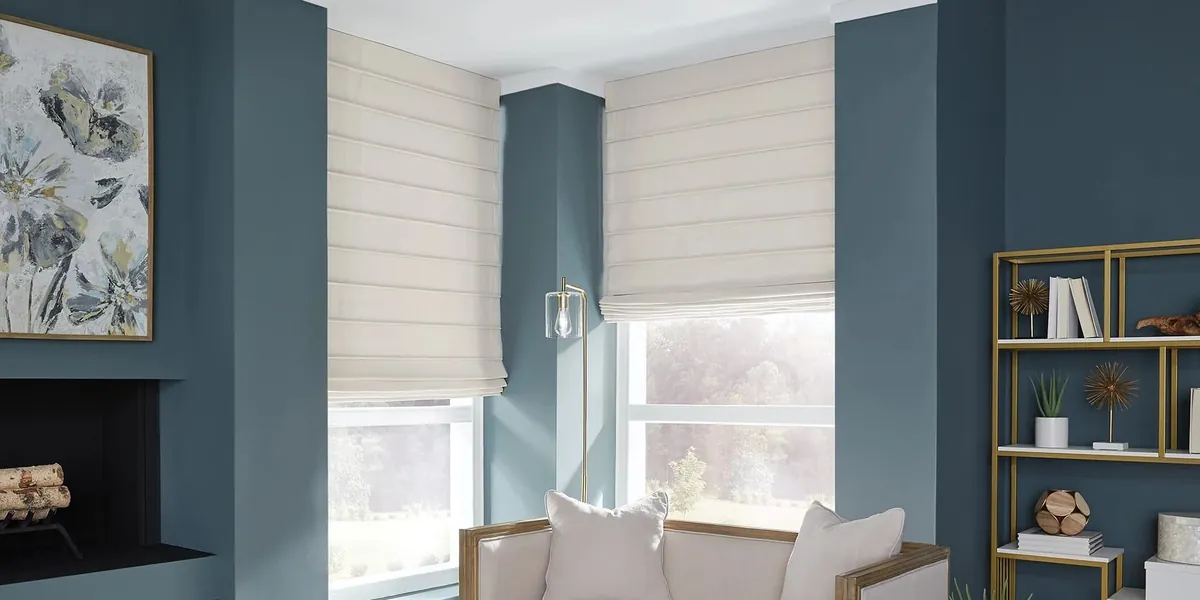
Carole Fabrics in a smooth, flat panel
A tailored, uncluttered look for a formal village room, and the style that lets a printed fabric read straight across the window.
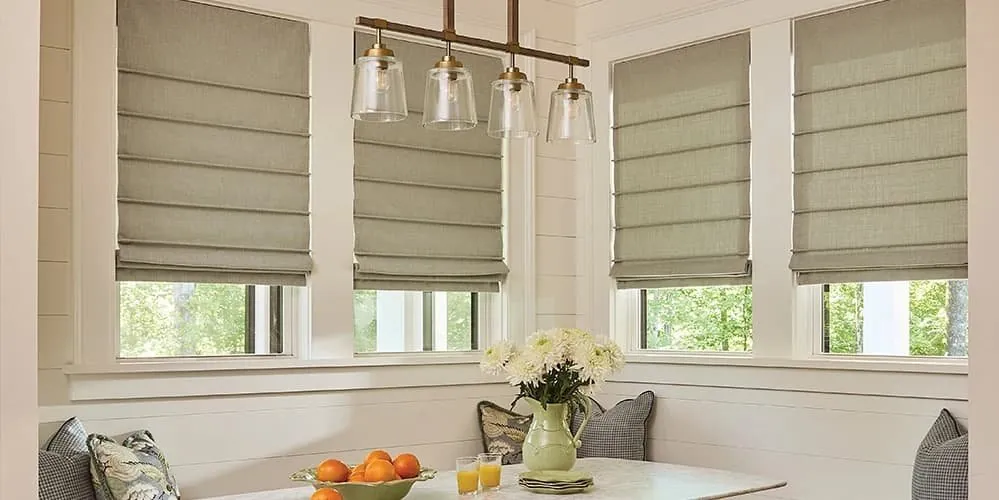
Vignette with tidy, even folds
Neat and modern, a good match for the kitchens, back rooms and smaller windows of a shingled harbor house.
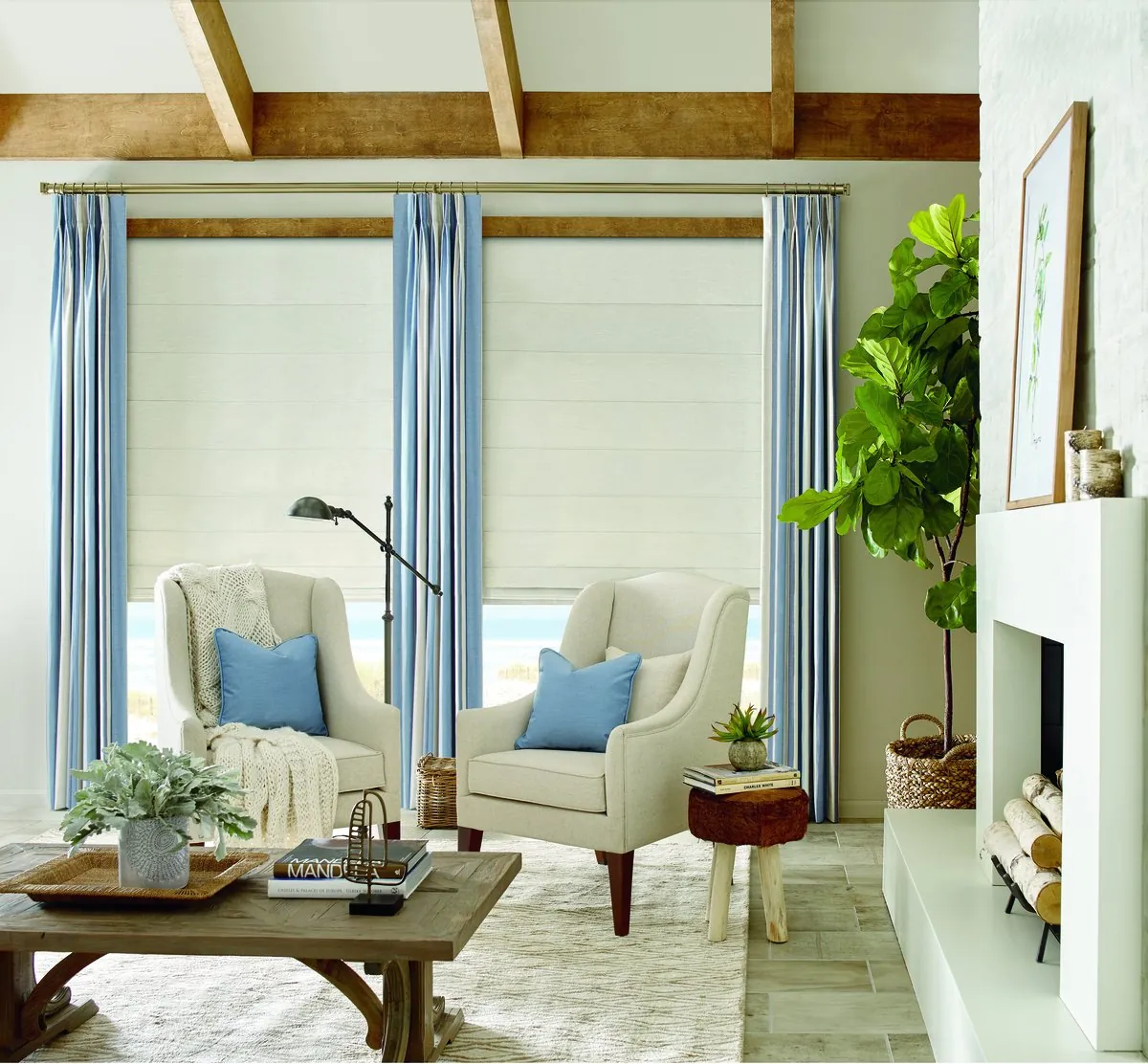
Roman shades beneath drapery panels
The shade handles light and privacy inside the frame while panels outside it dress the room. The usual answer in a formal parlor.
The shingled houses around the harbor
The shingled houses near the harbor and the village center tend to be close together, with windows that look onto the lane, a neighbor’s porch or the boats. Rooms are often modest in size, and windows come in a mix of widths because many houses have been added to over time. A kitchen window over the sink, a pair of sash in the front room and a small window tucked into a stair landing can all sit within a few steps of one another.
That variety suits fabric shades well. One fabric can run through the whole house, made up in Vignette for the busy rooms at the back and in a flat Carole style for the front, so the windows feel related even when no two openings match. Because these houses sit close to the lane, privacy matters in the evening, and a shade that lowers fully to the sill gives a front room real cover once the lamps are on.
In the daytime it is the reverse. A harbor house wants its light, and a roman shade raised to the top of the frame takes up only a small band of glass. On a narrow window, we look at where the folded stack will sit so it does not cut across the view you most want to keep.
Big windows facing the ocean on Jerusalem Road
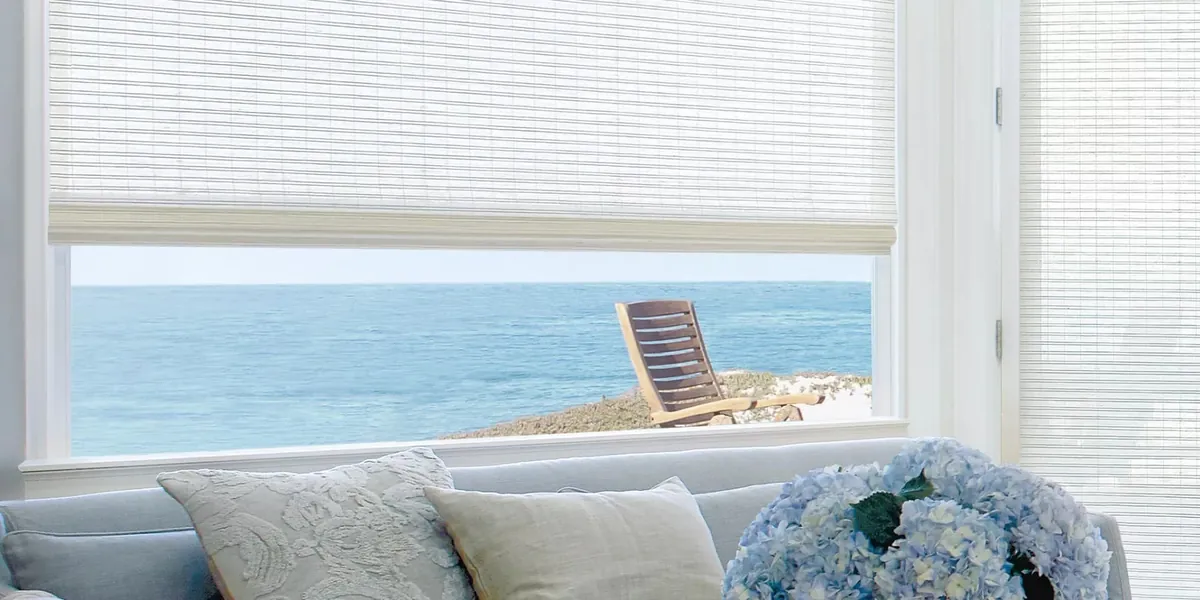
The larger properties along Jerusalem Road are a different kind of job. Their main rooms face the open ocean, often with long runs of windows, wide openings and glass that takes the full force of the morning light coming off the water. A sunroom or a living room on that side of the house can be dazzling at certain hours and perfectly pleasant at others.
Roman shades handle that well because they can stop at any height. Lowered partway, a fabric shade cuts the brightest band of light at the top of the glass and leaves the lower half open to the sea. Raised fully, it disappears into a soft stack and the room is all view again. On a wide opening we talk through whether one shade or a set of shades across the wall makes more sense, both for how the room looks and for how easily each shade lifts.
Fabric choice matters more on this side of the house than anywhere else. A lighter, more open fabric lets the room stay bright with the shades down; a denser one is better for a bedroom that faces east over the water. Our guide to the best shades for sun and glare explains the trade-off in plain terms.
Salt air and the working parts
Constant salt air is a fact of life on the Cohasset shore, and it reaches the hardware on every window, not just the ones facing the water. Headrails, brackets and the parts that lift the fabric all sit in that air every day. When we plan shades for a house close to the ocean, we look at each window’s exposure and where the shade will mount, and we talk with you about it honestly at the visit rather than leaving it as an afterthought.
The same exposure is one reason the fitting itself matters. Certified Hunter Douglas installation means the shades are set up the way Hunter Douglas intends, on brackets placed with care, by an installer trained on the product. On a house that takes the weather head on, that is worth having. For roman shades in Cohasset, MA, on the shore side, we would rather raise the question of salt air early than have you wonder about it later.
Formal village houses where drapery is expected
In the formal houses of the village, the front rooms were built to be dressed. A parlor with tall sash, a dining room with a fireplace on the end wall, a hall window over the stair: these are rooms where drapery is expected, and a bare window or a plain blind can look out of place.
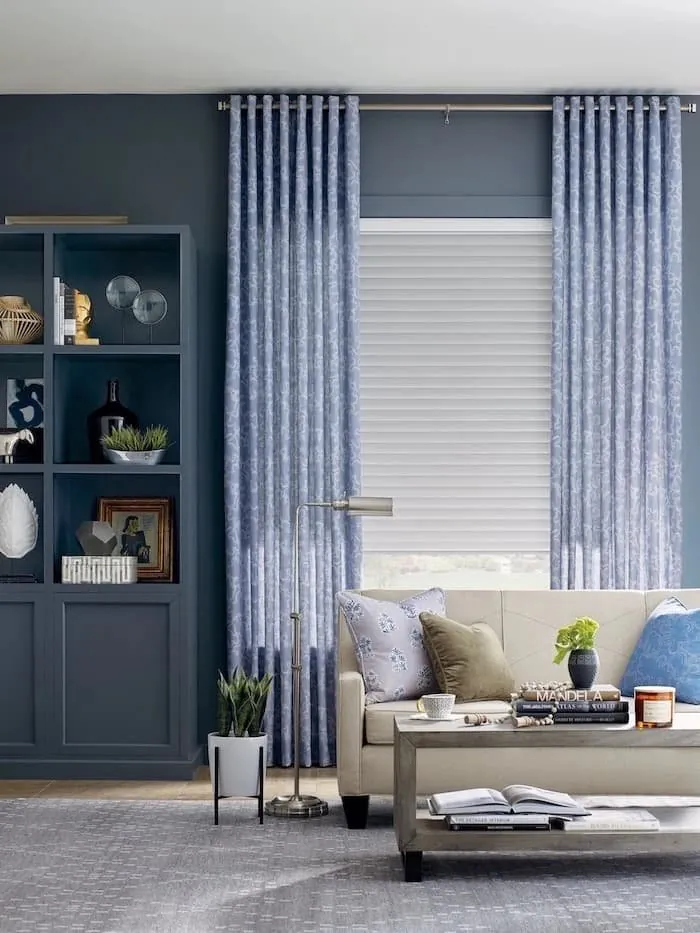
A roman shade fits this setting better than most window coverings, because it is made of fabric and it looks finished on its own. It also pairs naturally with drapery. The shade sits inside the frame and does the daily work of light and privacy, while the panels hang outside the frame, rarely drawn, to frame the window and give the room height. Hunter Douglas drapery is part of what we bring, so the shade fabric and the panel fabric can be held up together at the window.
When the two are chosen as a pair, one usually carries the pattern and the other stays quiet. A striped panel looks well beside a plain shade, and a printed shade looks well beside a plain panel. We also check that the raised shade clears the drapery hardware above it, which is easy to plan at the start and awkward to fix later.
Flat or folded: which style for which room
Both Vignette and Carole Fabrics roman shades come in flat and folded styles, and the difference is easy to see once both are at the window.
- A flat style lies smooth when lowered and stacks in crisp, level pleats when raised. It suits a formal room, a strong pattern and a window where you want a tailored line.
- A folded style keeps soft loops of fabric down its face even when lowered. It reads as more relaxed, which suits a shingled cottage, a bedroom or a room facing the water where a softer look is welcome.
Many houses use both. A flat style in the dining room and a folded style in the sunroom can share the same fabric family, so the two rooms feel connected without looking identical. We bring both on the van so you can compare them on your own windows rather than in a picture.
Choosing fabric for light off the water
Light near the ocean behaves differently. It bounces off the water and the sand, it changes through the day, and it reaches deep into a room on the shore side. A fabric that looks soft and warm on a swatch can look thin on a bright seaward window, while one that seems heavy indoors may be exactly right where the glare is strongest.
Color plays its part too. Pale fabrics keep a seaside room light and airy and let a glow through when lowered; deeper colors give more control in a bedroom or a media room. Pattern scale matters on the larger windows of the shore houses, where a small print can blur from across the room and a bolder one reads clearly. Our guide to choosing fabric for a sunny room covers the questions to ask.
Shopping from home on the South Shore
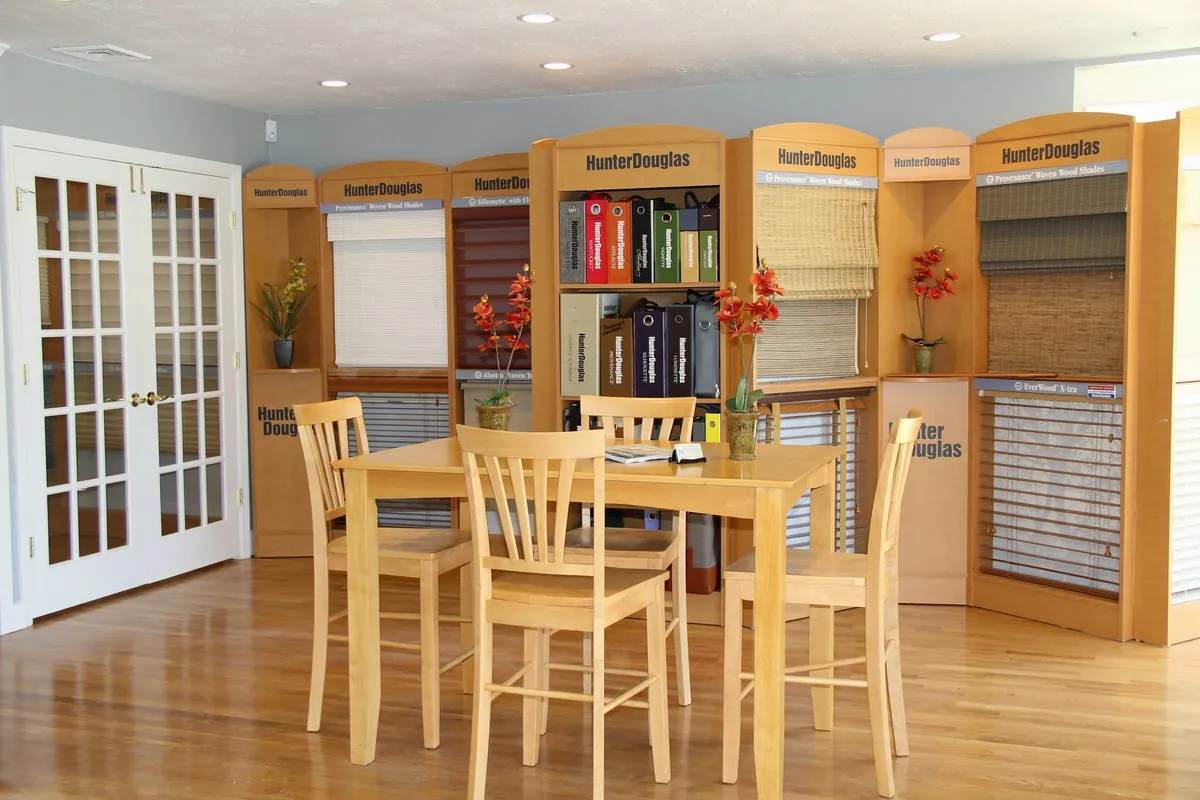
Cohasset is part of our shop-at-home territory run from Canton, so the usual way to start is with a visit to your house. That suits fabric shades especially well: a fabric only shows its true color and weight at the window it will hang in, in the light that window gets.
- Request a consultation through the form or use the call button.
- We arrange a time and you tell us which rooms are on the list, whether it is a single seaward room or the whole house.
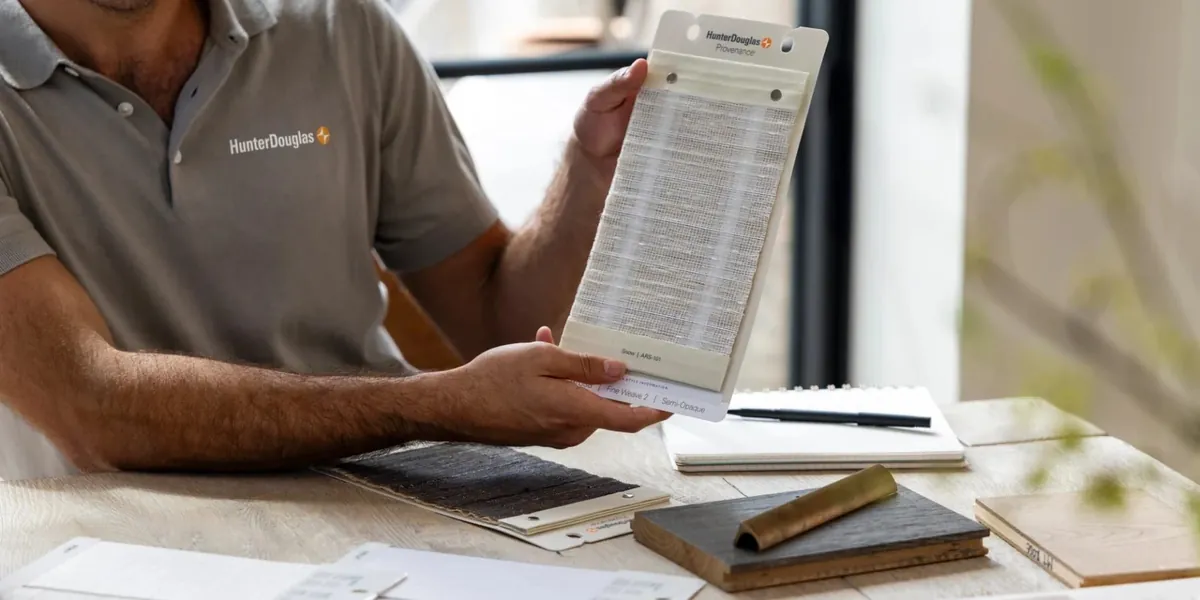
- A consultant brings Vignette, Carole Fabrics and Hunter Douglas drapery samples to the house.
- In each room you compare flat and folded styles at the window and narrow down the fabric.
- Each window is measured, including the trim and any drapery hardware nearby.
- You receive a free estimate, room by room.
Our guide to what happens at an in-home consultation covers the visit in more detail, and the in-home consultations page explains how the sample van works.

Bedrooms under the roofline
Upstairs in a shingled house, rooms often sit under the slope of the roof, with a dormer window or two and windows that are smaller than the ones downstairs. These rooms catch the early light, and on the ocean side they can be bright long before anyone wants to be up.
A roman shade in a denser fabric suits a bedroom like this, and a folded style keeps the room feeling soft and restful. In a dormer, the window often sits in a shallow recess, so we look carefully at whether the shade fits inside the frame or mounts on the trim above it. In a child’s room or a guest room, Vignette gives a tidy look with less fabric at the window. Roman shades in Cohasset, MA, upstairs can share a fabric family with the rooms below, so climbing the stair feels like moving through one house rather than several.
Wide seaward walls and PowerView
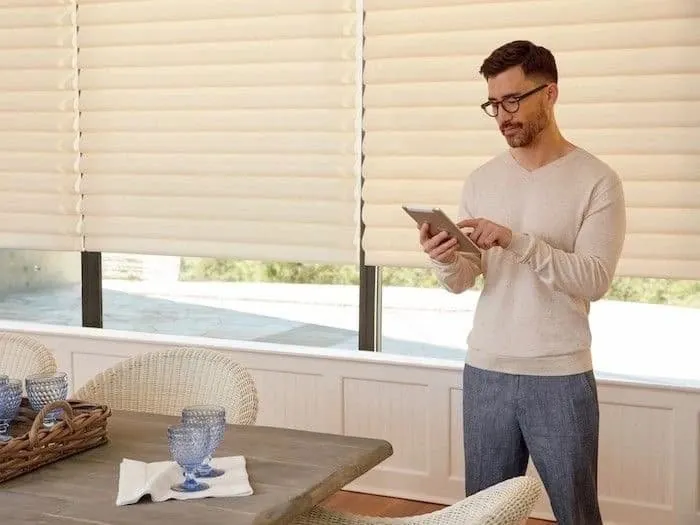
On the larger shore houses, a living room might have a long run of windows along the ocean side, and lowering each shade by hand twice a day becomes a chore. PowerView motorization lets those shades move as a group. You can lower a whole wall from a handheld remote or from the PowerView app on your phone, or set a schedule so the shades come down when the brightest light reaches that side of the house. We plan how each motor is powered at the visit.
Our page on motorized blinds in Cohasset covers automating the rest of the house, and the guide to how motorized shades are controlled explains remotes, the app and schedules.
Fitting fabric shades to older frames
Village houses with some age to them rarely have perfectly square windows. Frames settle, casings vary from room to room, and a window that looks the same as its neighbor can differ when the tape comes out. That is why each opening is measured on its own, and why we talk through inside or outside mounting window by window rather than applying one rule to the house.
When the casing is deep and handsome, mounting the shade inside the frame keeps the woodwork in view. When the frame is shallow or crowded by old hardware, the shade can mount above the opening so the raised fabric clears the glass. Either way, the fitting is done with certified Hunter Douglas installation. Our guide to what happens on installation day explains the visit.
Other rooms, other choices
Fabric shades are not right for every room in a coastal house. A bathroom may suit plantation shutters in Cohasset, and a bedroom that needs another kind of shade might suit cellular shades in Cohasset. Our Cohasset page lists every service we offer in town, so the whole house can be planned at one visit.
One Gallery dealer for a house on the water
Blinds & Designs is a Hunter Douglas Gallery dealer. For a house with shingled cottage rooms at the back, formal rooms at the front and wide glass facing the ocean, that means one source for the whole job: Vignette and Carole Fabrics roman shades, Hunter Douglas drapery for the formal rooms, and the rest of the Hunter Douglas range for the windows that suit something else.
What comes with it is plain and practical. In-home consultations with samples on the van. Free estimates. Interior design consultations when a room needs a fuller plan. Certified Hunter Douglas installation. And if a shade you already own needs attention, our blind and shade repair service will take a look.
Most Cohasset projects begin at home. For anyone who would also like to see a showroom, our nearest is in Franklin.
Questions from Cohasset
Will roman shades work in a room that faces the open ocean?
Yes. A fabric shade can stop at any height, so you can lower it just far enough to cut the glare off the water and keep the lower glass open to the view. Fabric choice matters most on that side, and we bring samples to try at the window.
Should a formal village room have drapery as well as roman shades?
It often looks best that way. The shade sits inside the frame for light and privacy, and drapery panels outside it frame the window. We plan both together so the fabrics work as a pair and the hardware clears.
Does the salt air near the shore change anything?
It is something we look at for every window close to the water. We talk through each window’s exposure and mounting at the consultation, and the shades are fitted with certified Hunter Douglas installation.
Can I see the samples without leaving the house?
Yes. Cohasset is part of our shop-at-home area, so a consultant brings Vignette, Carole Fabrics and drapery samples to you. If you would like to visit a showroom as well, Franklin is our nearest.
Is the estimate free?
Yes. After the consultation you receive a free estimate set out room by room.
Start with the room that faces the water
If one room in the house gives you trouble, it is usually the one looking straight out to sea, bright at breakfast and glaring by late afternoon. That is a good place to begin. Ask for a consultation and a consultant will bring Vignette and Carole Fabrics samples to that room, along with drapery for the formal parlor if it is on your list, and you can hold each fabric up against the actual glare you live with. We measure while we are there and leave you with a free estimate. Roman shades in Cohasset, MA, chosen this way suit the harbor house, the village parlor and the shore room alike. For a quick question first, the call button reaches us.