
Old sash, open fields and the wind off the Sakonnet
Along the Commons and out toward Sakonnet Point, Little Compton’s antique capes and shingled farmhouses sit on very large lots, many of them with fields or stone walls between the house and the water. The houses are old, and their windows show it: small original sash with many panes, set in frames that have weathered a long time on an exposed coast.
That exposure is constant. Wind and salt come in off the ocean and the Sakonnet River, the sun across open land and water is bright and low, and a house on a rise can take weather from three sides. On top of that, a good share of the houses here are lived in for part of the year, then closed up for the rest. Every one of those things changes which window covering makes sense.
Roller shades in Little Compton, RI, answer most of them with very little fuss. They fit small old openings neatly, have few exposed parts for the salt to find, and roll up out of sight when you want the view.
Roller shades in Little Compton, RI, for antique houses on the coast
Each of these comes from the Hunter Douglas Designer or Alustra range. Expect to see real samples of all six on the day we visit.
Screens for the seaward rooms
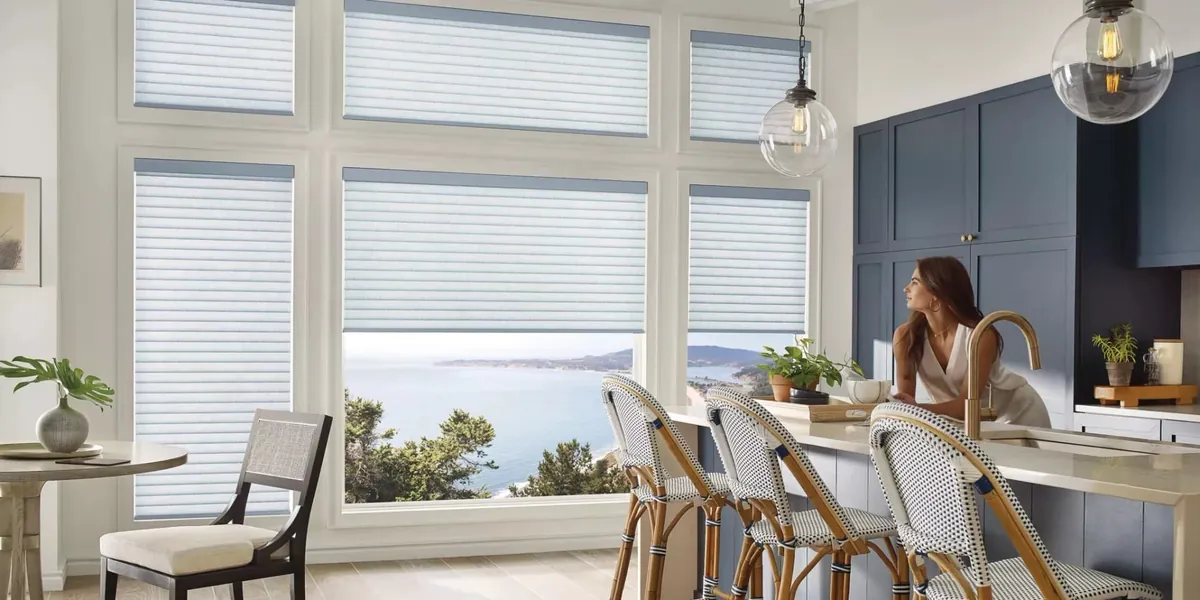
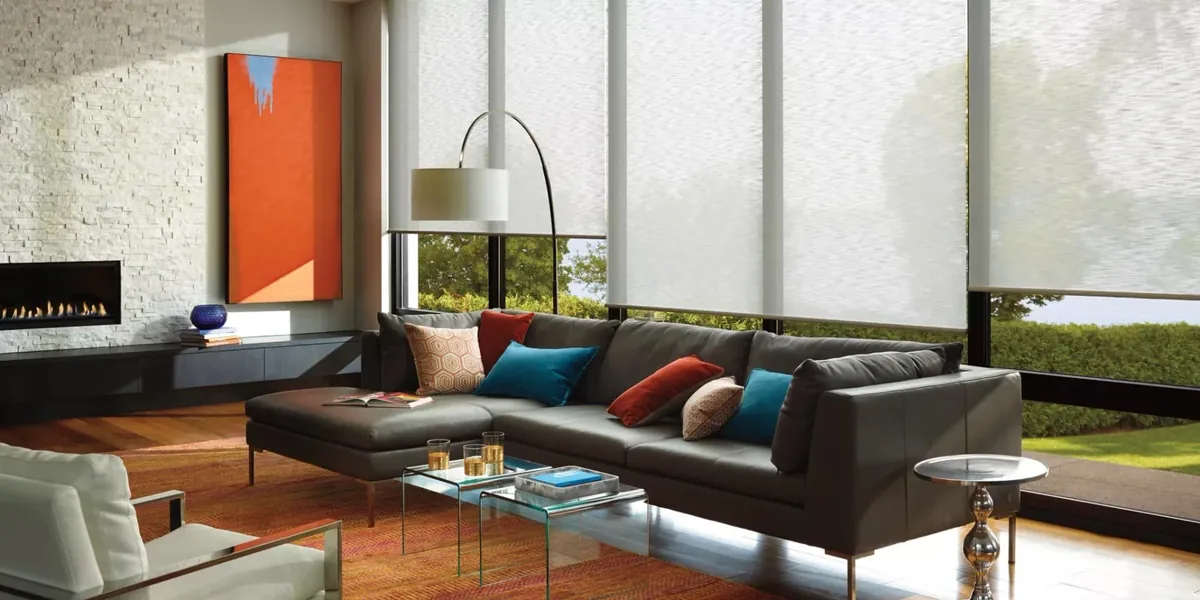
Designer Screen and Alustra screen fabrics tone down the bright light off the water while the view toward the point stays in sight.
Textured fabrics for antique rooms
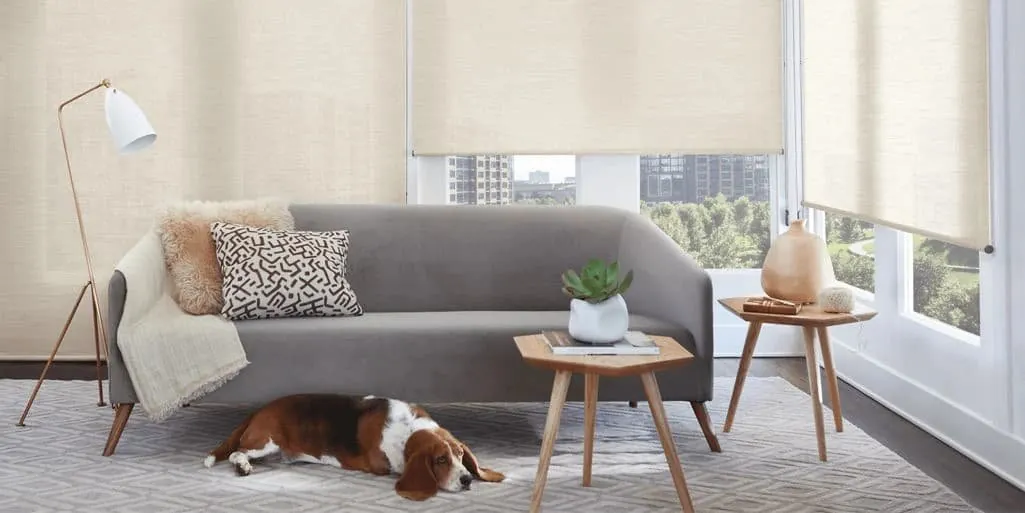
Linen-look and woven Designer Roller fabrics that sit comfortably against wide pine boards, plaster walls and painted trim.
Sonnette for the shoulder seasons
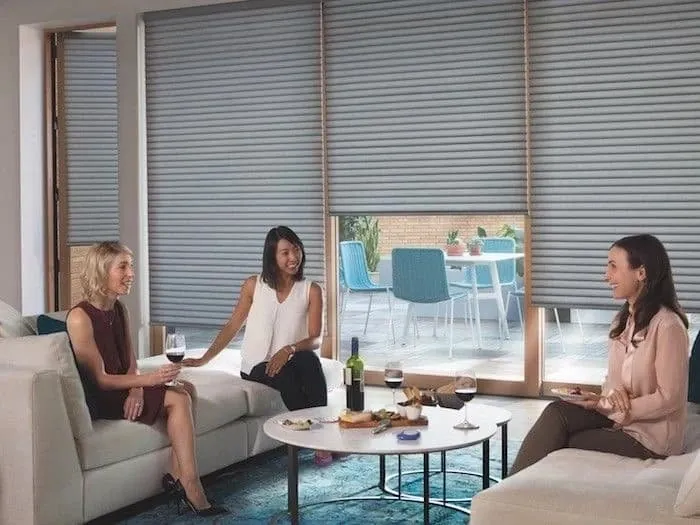
Curved cells woven into a rolling shade, for a house opened in April or kept on into October that feels cold at the panes.
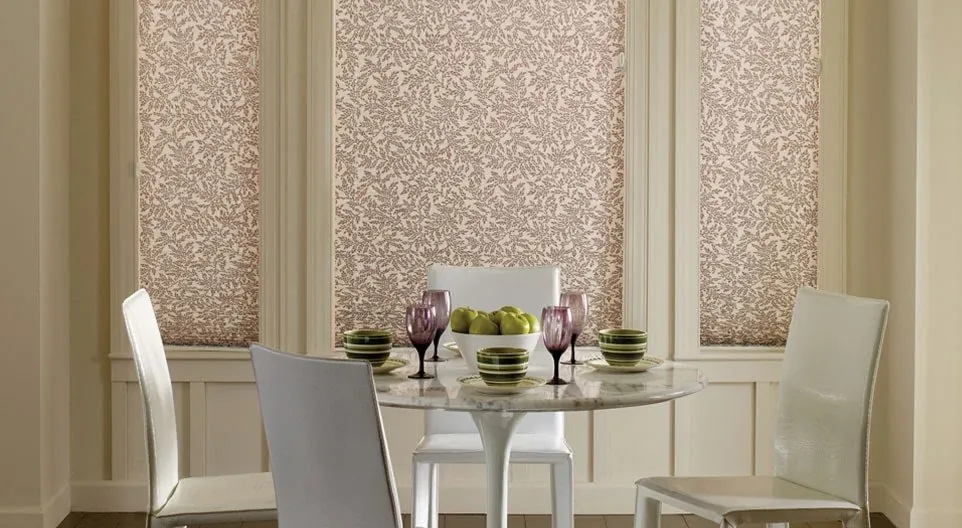
Printed and patterned shades
A quiet pattern on a roller can give a farmhouse dining room or a small cape parlor a little character.
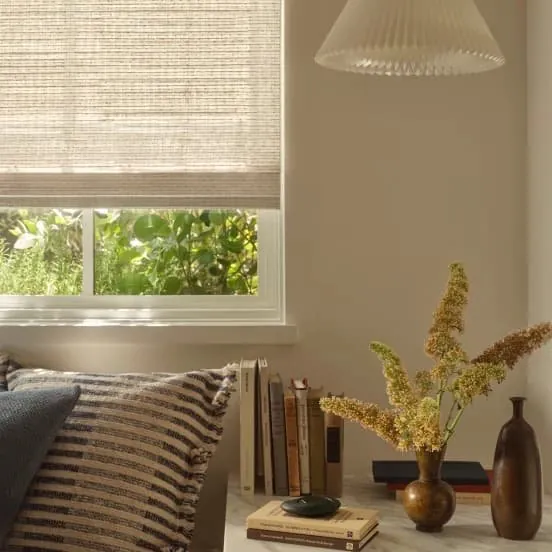
Woven textures
Alustra Woven Textures brings a natural woven look to a simple roller, at home on a small garden-side window.
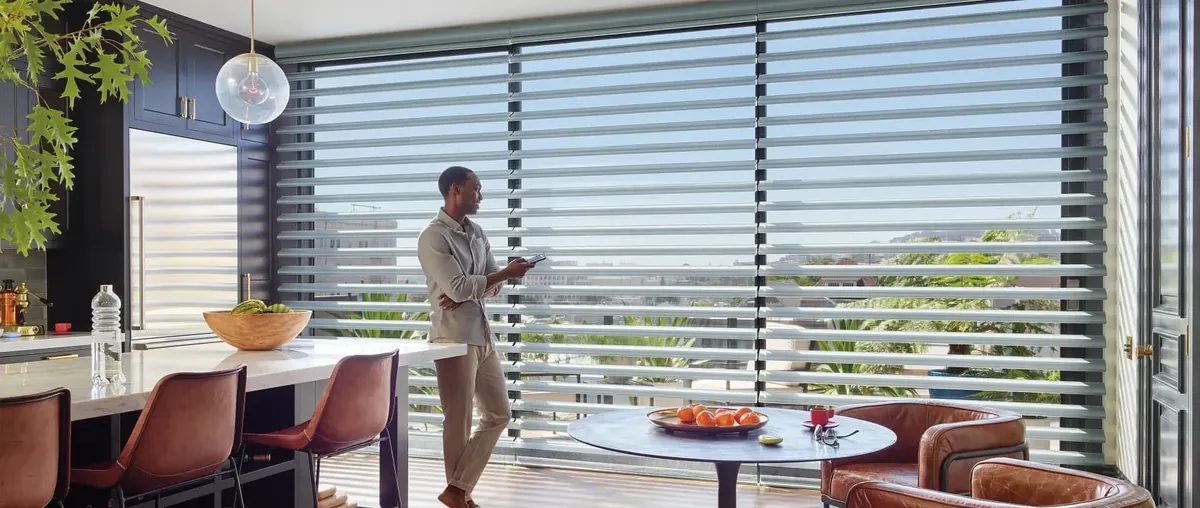
PowerView while you are away
Raise and lower shades from your phone wherever you are, or set schedules that keep the sun off the furniture through the months the house is empty.
Small original sash and what fits it
Antique houses were built with small windows for good reason: glass was costly and heat was hard to come by. The sash in a Little Compton cape or farmhouse is often narrow, divided into many panes, and set in a frame that was made by hand and has moved since. Next to each other, two openings that look identical may differ by enough to matter.
That is why every shade we fit here is made to measure. Each frame gets three width readings, high, center and low, plus a height on either side and down the middle, and a check of how deep the bracket can go. The fabric is cut to the tightest of those readings, so it travels without brushing the old paint. On a frame that has moved badly, we will tell you whether an inside mount will still look right or whether a slim mount over the casing is better.
A roller is one of the best coverings for small old windows because it takes so little room. It needs only a shallow bracket, it does not stack at the top of the window, and when raised it leaves almost the whole pane clear. On a window that is already small, that matters.
Coastal exposure, fabric and hardware
A house near open water lives with salt, wind and sun all year. Salt settles on anything metal near a window left open in summer. Wind pushes the shade on an open sash. And bright light reflected off the water fades fabric over time, especially on the seaward side.
A roller is well suited to all three. Its moving parts sit at the end of the tube or inside it, and with a cordless lift there is no cord or cord lock at the side of the window. A cassette across the top covers the rolled fabric and the brackets. When a window is open on a breezy day, a roller can be raised fully out of the way, so the fabric is not flapping against the sash.
For fabric, neutral and mid-tone colors tend to hold their look longest on a window that takes daily sun off the water. Screens, being partly open, handle heat well and keep a sunny room cooler. We point out which fabrics suit a seaward window when you are choosing, and our guide to choosing fabric for a sunny room covers it further.
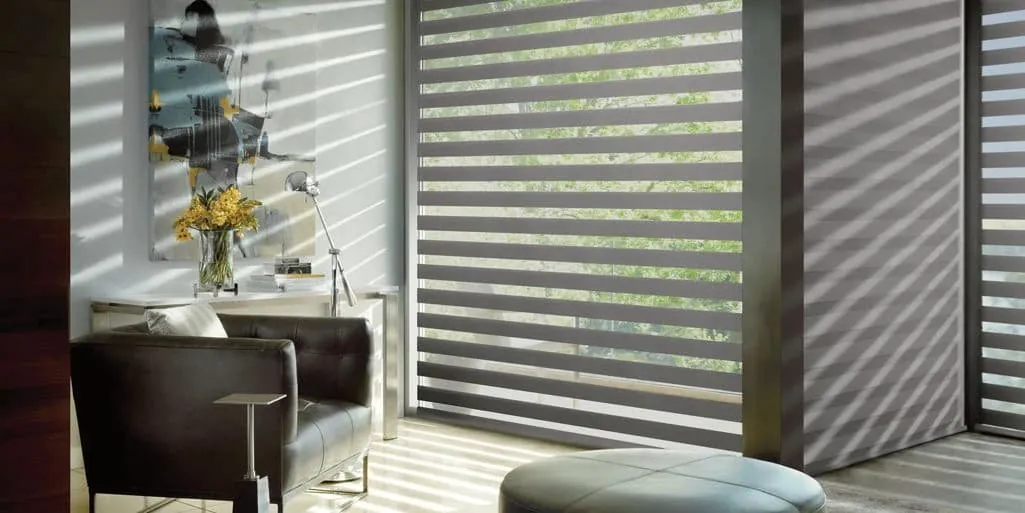
Seasonal houses: closing up and opening again
Many houses here are used for part of the year, perhaps from late spring to early autumn, and then sit closed while their owners are elsewhere. A closed house still takes the sun. Through a long quiet stretch, light coming through bare windows can fade floors, rugs and upholstery, and some rooms heat up on a bright day with nobody there to open a window.
Shades help in a simple way: lowered, they keep the strongest light off the furnishings. A screen lowered on the sunny side cuts much of the glare and heat, and a light filtering or room-darkening roller blocks more. Before you leave for the season, lowering the shades on the south and west sides is an easy habit that protects the rooms.
With PowerView, you do not even need to be there. Motorized rollers can run on a schedule that lowers the sunny-side shades during the brightest hours and raises them again later, and you can adjust them from your phone wherever you are. When you come back in spring, the shades are where you left them, and the rooms have been spared a season of direct sun. Our page on motorized blinds in Little Compton explains the options, and so does our guide to how motorized shades are controlled.
Light across open land and water
With so much open ground around the houses, sunlight reaches the windows from a long way off and at a low angle, morning and evening. On the water side, the sea and the river add a second, reflected light that bounces up off the surface and into the room.
The fabric made for that is solar screen, a weave with tiny, evenly spaced openings. Hunter Douglas rates each screen by openness, meaning how much of its surface is open weave rather than thread. Go more open and you see the Sakonnet sharply, with more brightness let in. Go tighter and the glare drops away while the water turns into a gentle blur beyond the fabric. Color plays its part as well: charcoal and bronze screens disappear against the view and absorb glare, while white and pale gray screens send heat back out but brighten in the sun and veil what is behind them.
During the visit, we drape a few screens across a seaward window and let you step back and compare. A sample book cannot show you how a weave behaves against moving water, and your own window can. There is a fuller comparison in our guide to the best shades for sun and glare.
Capes along the Commons
The older capes near the Commons are compact, with low ceilings, a central chimney, and small windows spaced evenly along the front. Upstairs, rooms under the roof have knee walls and windows tucked into the gables or dormers.
For these houses the shade should all but disappear. An inside-mounted roller in a soft white or a natural linen color keeps the old trim on show and leaves the window nearly bare when it is up. In the bedrooms under the roof, a room-darkening roller handles early summer mornings, and because the windows are small, very little light escapes at the edges. Dormers leave little space around the window, so we check the clearance above and to the sides before choosing a bracket.
A front room facing the road is often close to it, so daytime privacy matters there. A light filtering roller gives it while keeping the room bright. At night, with the lamps on, light filtering fabric lets a silhouette show, so if that bothers you we suggest a heavier fabric or a dual roller for those windows.
Shingled farmhouses toward Sakonnet Point
The farmhouses further out are larger, often added to over many years, and the windows reflect that. An original front section may have small sash, a later wing larger double-hungs, and a newer kitchen or family room at the back a wide window or a glass door facing the water.
We plan these houses as a whole. One or two related fabrics across the house keep it consistent, even when the windows are all different. Where windows of different heights sit next to each other, we line up the bottoms of the shades so the wall looks orderly. On the seaward side, a screen handles the light off the water; in the older rooms, a textured light filtering fabric suits the plaster and wood.
A glass door to the yard or a porch gets a roller mounted above the frame, so the fabric rolls clear when you walk out. On a very wide window in a newer addition, several rollers share a bracket and move together. Choosing roller shades in Little Compton farmhouses often comes down to finding the one fabric that looks right in both the oldest room and the newest.
Porches, sunrooms and a summer kitchen
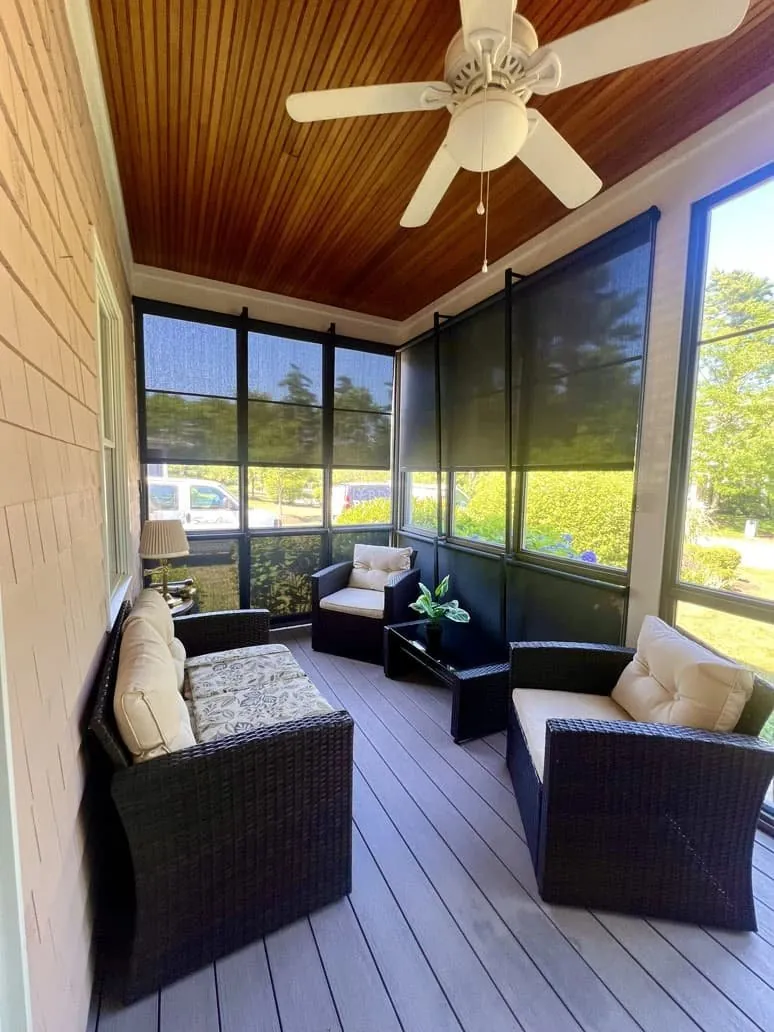
Plenty of houses here have a glassed-in porch or a sunroom added on the water side, and in July it is where everyone ends up. Glass on three walls makes it bright, and on a still afternoon it can get very warm. Each window takes its own roller, so the shades are small and light to handle, and a group of them can be lowered together when the sun swings round. A dark screen keeps the porch pleasant without hiding the view.
Older farmhouses sometimes have a summer kitchen or a back entry with a single small window that catches the late sun. These are easy to forget and often the first place a floor starts to fade. A light filtering roller there takes nothing away from the daylight and spares the boards. Thinking about roller shades in Little Compton houses room by room like this, including the small back rooms, is what makes a seasonal house easier to close up and open again each year.
Bedrooms facing the morning
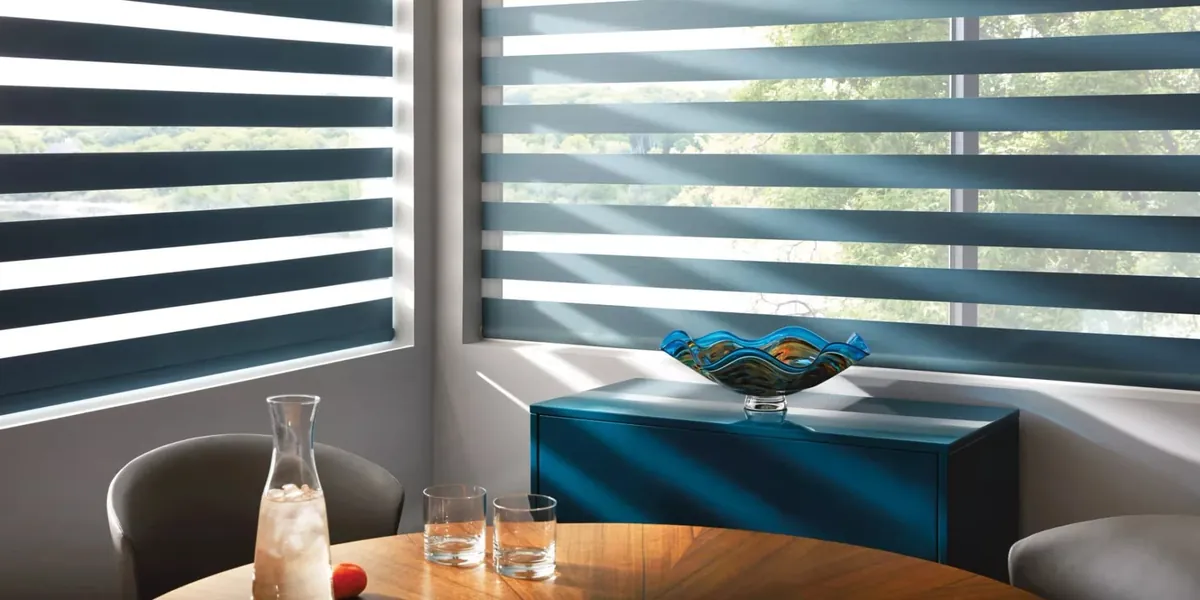
Bedrooms that face east across open land or water take the sun very early in summer, when a seasonal house is busiest. A blackout roller keeps them dark until you raise it. Inside the frame, it leaves a thin line of light at each side; mounted over the trim with a small overlap, it closes most of that gap.
Guest rooms in a summer house earn a blackout roller too, since visitors often sleep later than the sun rises. If a bedroom has a view you want by day, a dual roller pairs a screen in front with a blackout behind, both on one slim bracket.
What happens at your consultation
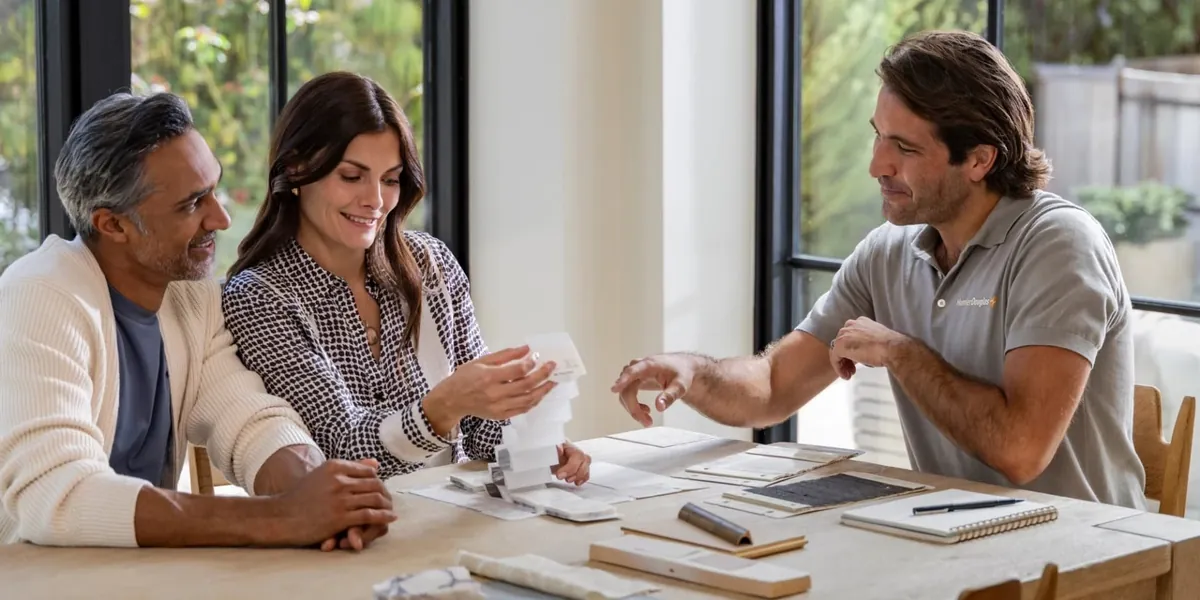
The only fair test of a fabric is the light in your own rooms, so we come to the house. Because the vans are loaded with samples, the showroom effectively travels down the shore road to you.
- Book a visit through Request a Consultation or the call button for a day you will be in town. Seasonal houses are easy to plan around: tell us when you open up.
- Together we go room by room, beginning on the seaward side and with whichever windows give you the most trouble.
- Screen, light filtering, room-darkening and blackout fabrics go up against your own panes for a side-by-side look.
- Every opening is measured, old frame depths and tight dormer corners included.
- You receive a free estimate for the shades on your list, and there is no deadline for deciding.
Bigger questions of color and fabric across a whole house are what our interior design consultations are for, and they can share the visit.

The roller collections
Several Hunter Douglas families share the roller format, and all of them are open to you. Designer Roller is the everyday line with the deepest choice of shade, weave and opacity. Designer Screen covers the solar screens. Designer Banded stacks alternating sheer and solid bands for privacy you can dial up or down. Alustra is the more architectural set, its fabrics and fittings made for a crisp finish, and Alustra Woven Textures belongs to it. Sonnette rolls up like the others, yet its fabric holds a row of cells.
In an antique cape, Designer Roller in a textured weave and Sonnette in the coolest bedroom often cover the whole house. Read about each on our Designer Screen, Sonnette and Designer Roller shades pages, or browse every collection from the roller shades hub.
Gallery dealer care for an old coastal house
Hunter Douglas awards Gallery dealer status to a select circle of retailers, and Blinds & Designs is among them. On a Little Compton job that opens up every roller line, every fabric and PowerView, ordered from one place.
The people fitting your shades hold Hunter Douglas certification. An antique frame on a windy coast needs brackets anchored in sound wood, and that is where they put them. Each shade is rolled top to bottom and back before they leave, and you are walked through the controls. Repairs to blinds and shades are part of our work as well.
Other rooms may suit other Hunter Douglas products, such as plantation shutters in Little Compton for a parlor or cellular shades in Little Compton for a drafty bedroom. Our Little Compton page gathers everything we do in town.
Questions from Little Compton
Will rollers fit the small windows in my antique house?
Yes. Every roller is made to measure, and rollers need very little depth, so they suit small, deep or slightly out-of-square frames. We measure each window at several points.
Can shades protect my furniture while the house is closed?
Lowered shades keep the strongest sun off floors and upholstery. With PowerView, they can follow a schedule and be adjusted from your phone while you are away.
How do rollers hold up on an exposed coast?
Well, because there are so few exposed parts. A cordless lift removes the side cord, and a cassette covers the rolled fabric and brackets. Neutral fabrics hold their look longest in strong sun.
Which shade keeps the view toward the water?
A solar screen roller. It cuts glare while you see through it, and darker colors are clearest. When raised, it rolls up out of sight.
Does the estimate cost anything?
No. We measure at the consultation and the estimate is free.
When you are ready
There is no better test for roller shades in Little Compton, RI, than your own window, with the light coming off the water. Ask for a visit with Request a Consultation, and the Designer and Alustra samples come to your door, every window gets measured and a free estimate is left with you. If you are passing, the North Dartmouth showroom is our closest, and the call button is there for any question before you book.