
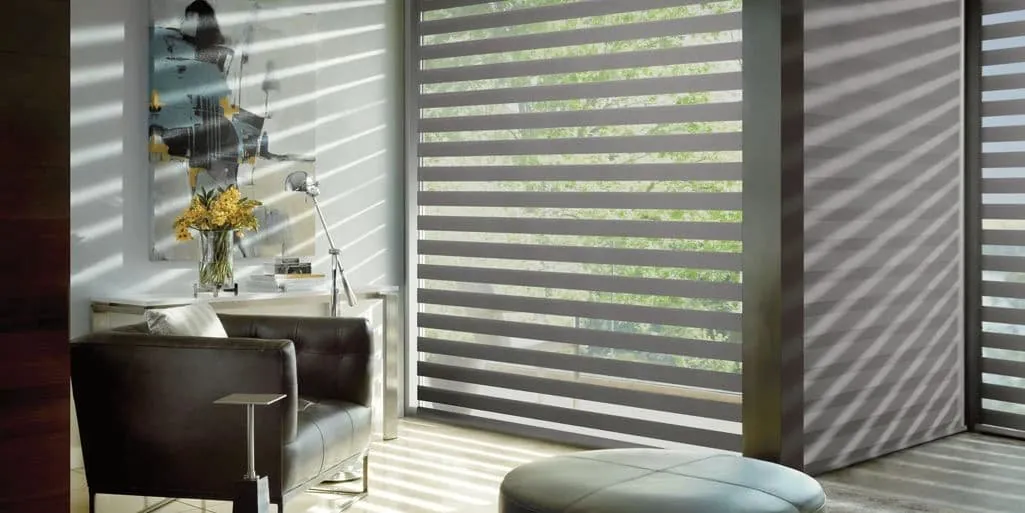
Morning glare by the bay, tidy windows inland
Kingston’s houses fall into two clear groups. Near the village and along the bay are the antique colonials: solid, symmetrical houses with tall sash, thick frames and plenty of original woodwork, many of them oriented toward Kingston Bay. Inland, off Route 3, the town fills with post-war ranches and newer subdivisions, where the windows are standard in size and the hardware is modern. Roller shades in Kingston, MA, are planned quite differently for each.
On the bay side, the issue is the morning. The bay lies to the east of much of the older housing, so the sun rises over the water and comes straight into the front rooms and bedrooms at a low angle, bouncing off the bay as it climbs. Breakfast rooms, kitchens and east-facing bedrooms can be almost impossible to use comfortably for the first part of the day. Inland, the challenge is simpler: a house full of regular, square windows that need a consistent, practical treatment, with the right weight of fabric in each room.
Our main roller choices in Kingston
Most roller shades in Kingston, MA, are drawn from these three Hunter Douglas options. We bring samples of every one.
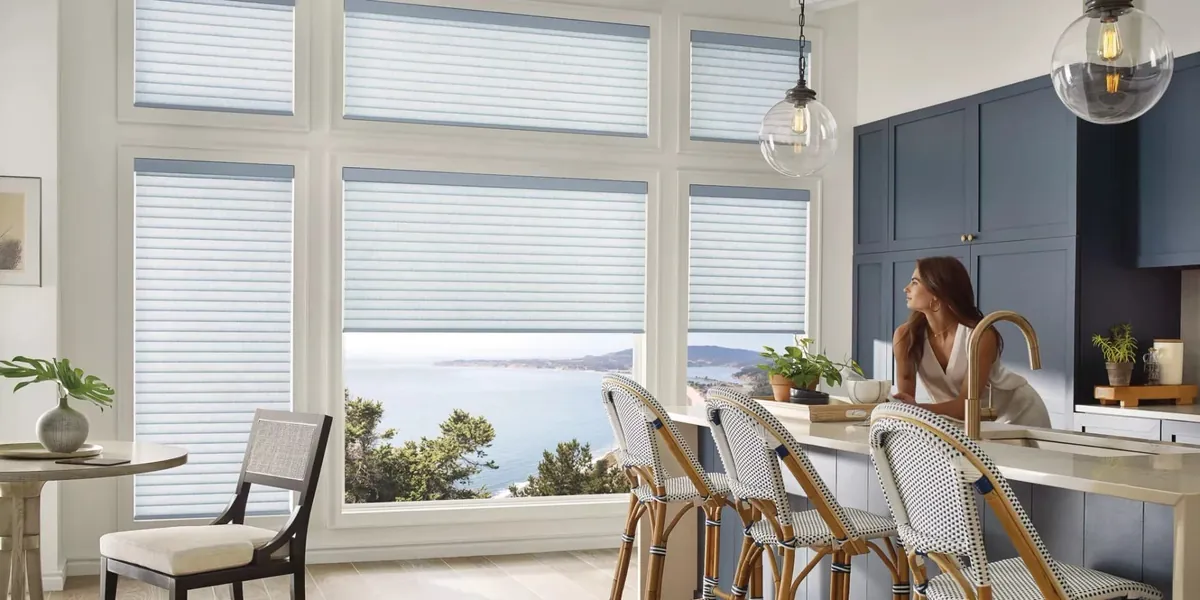
Screens for the east windows
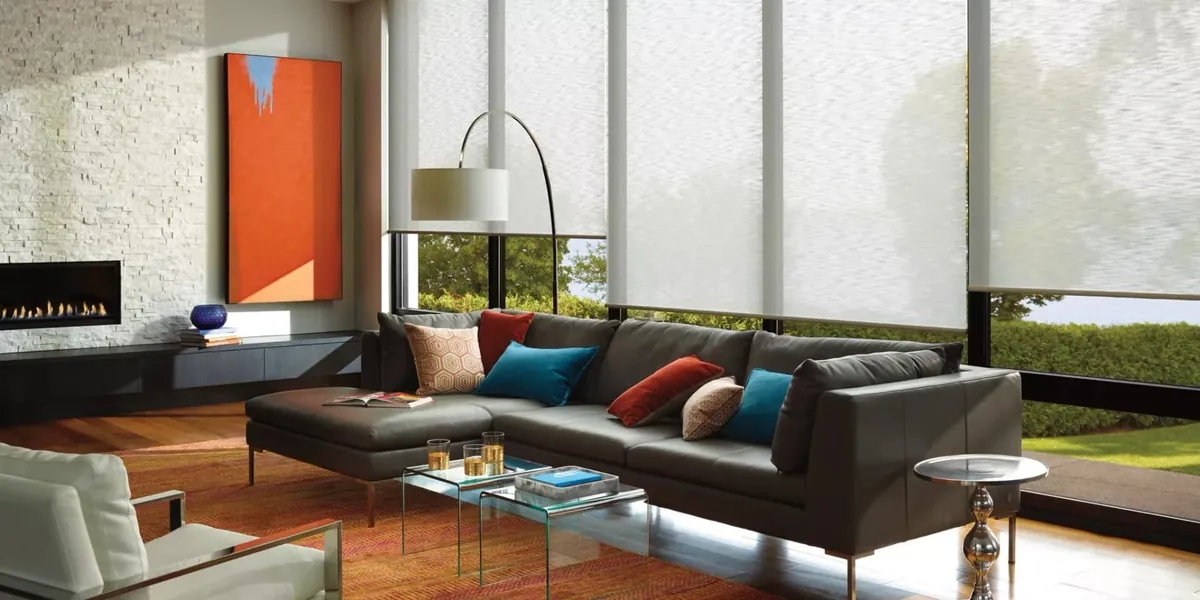
A Designer Screen fabric takes the edge off the low sun over the bay while you keep watching the water from the breakfast table.
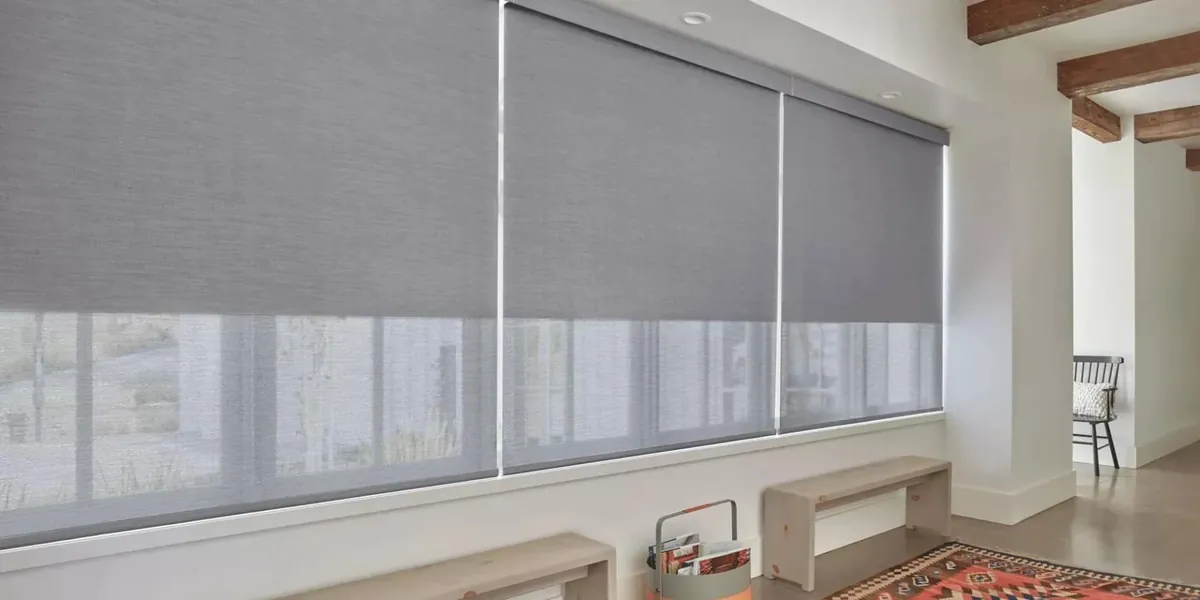
Light filtering for a subdivision house
A Designer Roller fabric used across every standard window gives a ranch or newer colonial a neat look inside and from the street.
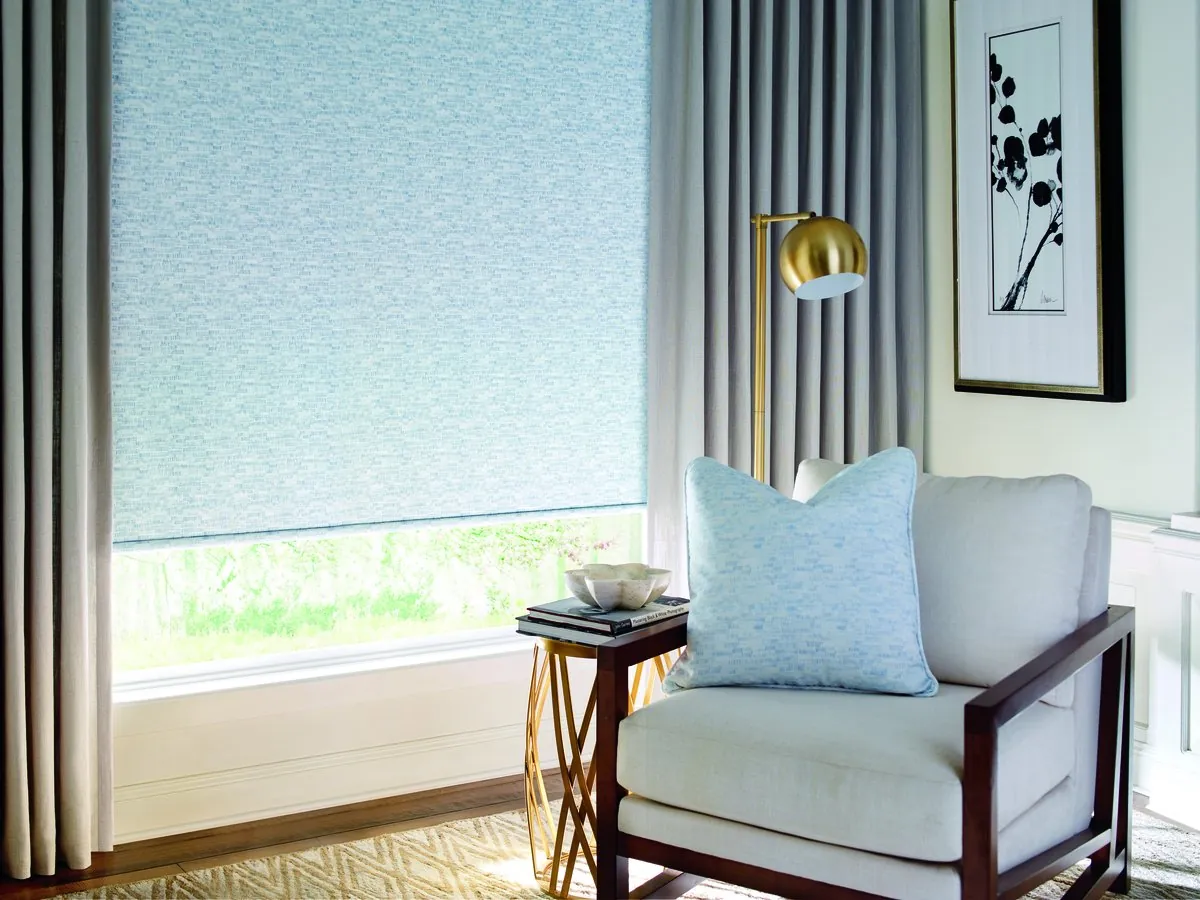
Alustra beside old trim
A more tailored fabric and finish for the parlor of an antique colonial, where the shade sits next to fine woodwork.
Living with the sunrise over the bay
There is a lot to love about a room that faces Kingston Bay, and the sunrise is part of it. The trouble is what happens next. For the first few hours of the day, the sun sits low in the east and pours across the water into the house. It reaches deep into the room, it reflects off the bay so that light comes from below as well as above, and it lands in your eyes wherever you sit.
East-facing kitchens and breakfast rooms bear the brunt. So do bedrooms, which can be flooded with light well before anyone wants to be up in midsummer. By midday the sun has moved round and the same rooms are perfectly comfortable, which is why a fixed solution like heavy curtains often feels wrong: it blocks a problem that only lasts part of the day.
A roller shade is ideal for this pattern because it is so easy to raise and lower. In the morning, you drop a screen or a light filtering fabric as far as you need. By late morning it goes back up into its slim roll, and the room is open to the view again. PowerView can do this on a schedule, lowering the east shades before sunrise and raising them as the sun moves on.
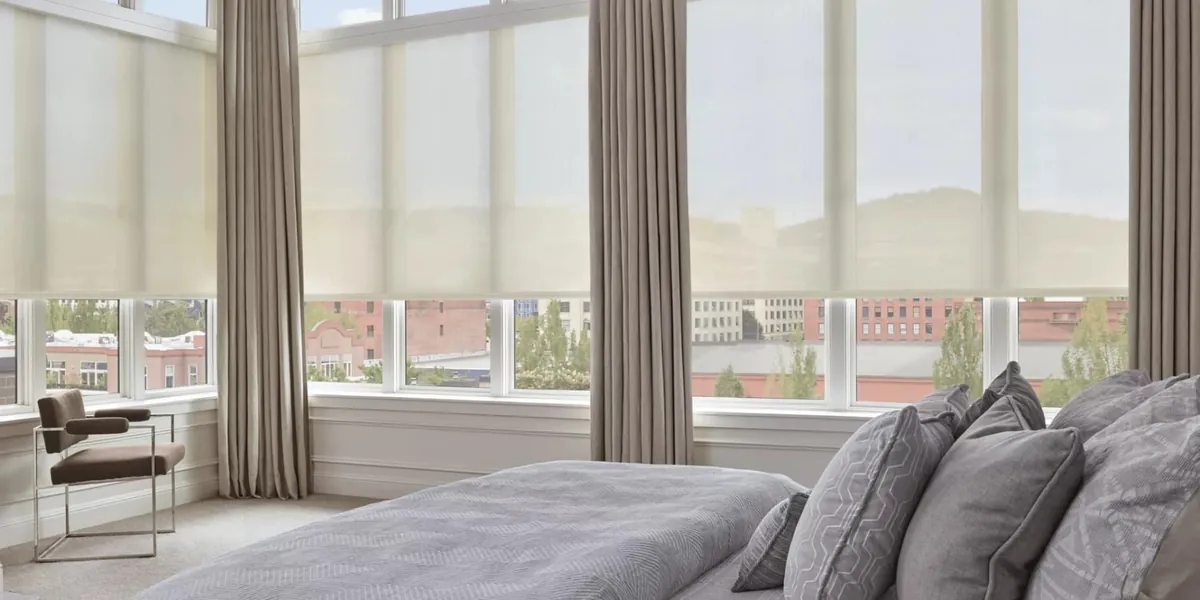
Choosing a screen for low morning light
Low sun is the hardest light to control, because it comes in nearly level and goes straight past most window coverings. A solar screen handles it well. The fabric is woven with small, regular openings, so you see the bay through it while the glare drops away.
Two things decide how a screen behaves at your window. The first is the openness of the weave. A more open screen keeps the view clearer and lets in more light; a closer weave cuts the glare harder and softens the view. The second is color. Dark screens, in charcoal, bronze or deep gray, are easier to see through because they do not light up in front of your eyes. Pale screens brighten the room but give a hazier view.
For an east-facing breakfast room on the bay, we often start with a dark screen in a moderately close weave, which tames the worst of the sunrise without losing the water. Then we compare a couple of alternatives at the glass, ideally early in the day. The guide to the best shades for sun and glare goes into the options in more depth.
Antique colonials near the village
The antique colonials near the village and the bay are some of the most handsome houses in town. They have tall, evenly spaced sash windows across the front, wide casings, and often deep panelled reveals or window seats inside. Frames may have moved a little over the years, and some windows still have their original glass.
For these houses, the goal is to protect the room without hiding the woodwork. An inside-mounted roller is usually right: the shade sits inside the frame, and when raised it all but disappears. Because older frames are rarely perfectly square, we measure each one in several places and order the shade to the tightest dimension so it rolls smoothly. If a frame is too shallow or uneven, a slim mount on the face of the casing is the fallback, and it still looks tidy.
Fabric choice matters in a period room. An Alustra fabric with a subtle texture sits more naturally beside old paint and mahogany than a slick modern weave, and a light, neutral outward color on every front window keeps the house looking orderly from the street. In the kitchen and back rooms, a Designer fabric does the job well.
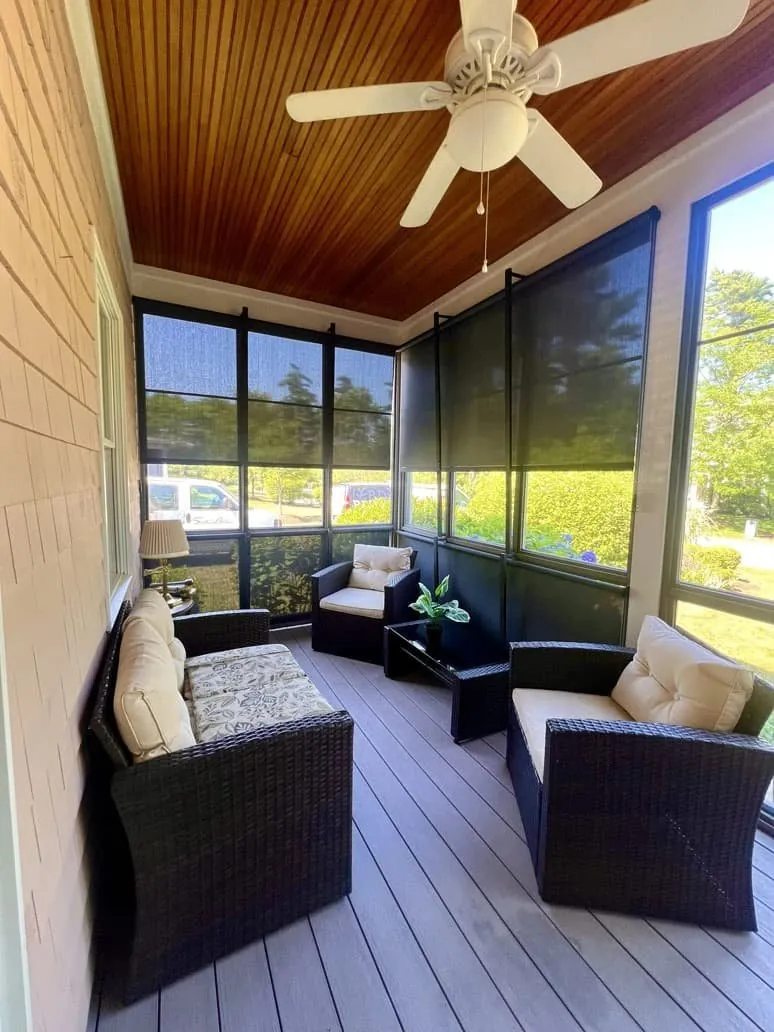
Bedrooms that face the water
In an antique colonial, the main bedrooms are often at the front of the house on the upper floor, looking east over the bay. That is a lovely outlook and an early wake-up call.
A room-darkening or blackout roller is the answer for those rooms. Any shade mounted inside the frame leaves a thin line of light at each edge, and with the sun rising straight in front of the window, that line can be bright. For a bedroom that needs to stay really dark, we usually suggest mounting the shade on the face of the trim, a little wider than the opening, so it overlaps the frame and blocks the gaps.
If you also like to see the bay in the morning once you are up, a dual roller puts a screen and a blackout fabric on one bracket. Lower the blackout at night, swap to the screen when you rise, and raise both when the sun has moved round.
Window seats and deep reveals
Some of the antique colonials near the village have window seats built into the front rooms, or reveals deep enough to sit in. They are among the nicest features of an old house, and they change how a shade should be planned.
With a window seat, the shade has to stop at the right height and clear any cushions, and the fabric needs to look good from close up, since you will be sitting right beside it. An inside mount at the head of the window keeps the seat and its panelling fully open. For a seat facing the bay, a screen fabric lets you sit with a book in the morning without the sun in your eyes, and a light filtering fabric makes it a private nook in the evening.
When we fit roller shades in Kingston, MA, to an old house like this, we look at every built-in piece around the window and make sure the shade works with it rather than against it.
Small bedrooms off one hallway
The ranches and subdivision houses off Route 3 usually have their bedrooms in a row along one hallway, each with a single standard window. Where one of those rooms is a nursery or a child’s room, it needs darkness for naps and early summer bedtimes, and a window covering that is simple and safe to live with.
A cordless roller fits that brief well: there is no loose cord at the side, and the shade is raised or lowered by the bottom rail. A blackout fabric mounted over the trim makes the room dim enough for an afternoon nap in July. For a high window or a room where you would rather nobody touched the shade at all, PowerView lets you work it from the doorway or on a timer. Matching these rooms to the rest of the house is easy too, since many roller shades in Kingston, MA, share one outward color from front to back.
Post-war ranches off Route 3
Inland, the post-war ranches off Route 3 follow a pattern many people know well: a single floor, a living room picture window at the front, a kitchen window over the sink, a slider to the back yard, and bedrooms with wider, shorter windows. The windows are standard in size and the frames are square, which makes fitting straightforward.
A ranch looks best with a consistent plan. The same fabric and outward-facing color on every window keeps the house calm from the road, and matching hems help the rooms flow together on one level. A light filtering roller is the usual choice for the living room and kitchen, a room-darkening fabric for the bedrooms. The slider gets a roller mounted on the wall above the frame so it clears the handle when raised.
If the picture window faces west or south, it may need more than a light filtering fabric in the afternoon. A screen on that one window, in a color that matches the rest of the house, keeps the living room comfortable without breaking the look.
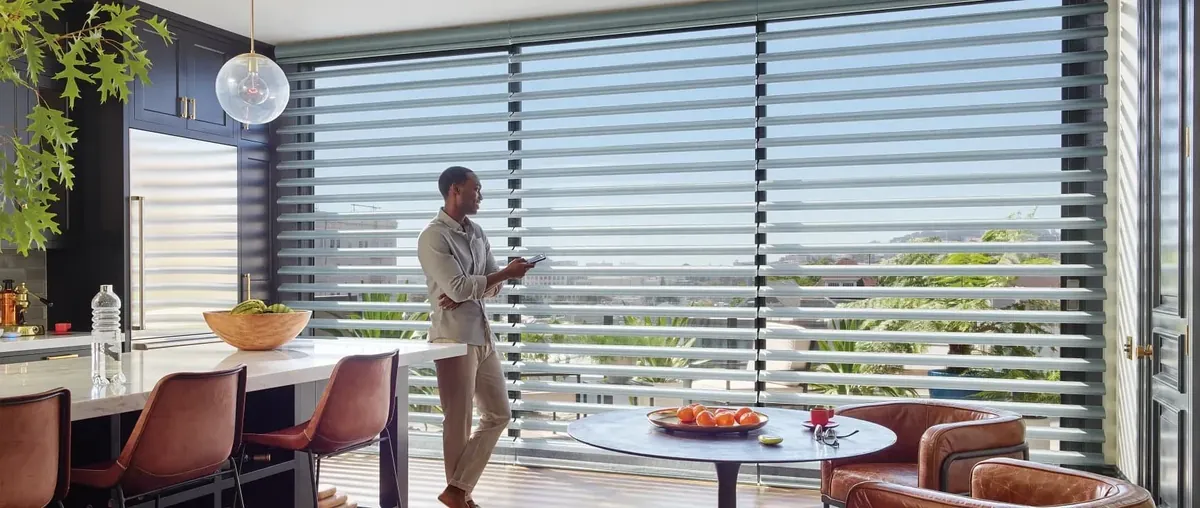
Newer subdivisions and modern hardware
The newer subdivisions inland have the windows of modern building: vinyl or clad frames, tilt-in sash, casements in kitchens and bathrooms, and often large picture windows or a set of three in the family room. Many also have a tall window on the stair or a two-story entry with high glass.
Newer hardware brings a few practical points. Tilt-in sash needs a shade that does not get in the way of the tilt latches, so we check the frame depth and the latch positions before choosing an inside mount. Casement windows with cranks need a shade that clears the crank handle when lowered, which can mean a slightly deeper mount or an outside mount. In a family room with three windows side by side, three rollers on one bracket move together or separately and keep their hems in line.
For high glass, PowerView is the practical choice. Shades are raised and lowered from a remote, your phone or a schedule, and the same system can run every shade in the house. Read more in how motorized shades are controlled. We plan how each motor is powered when we see the windows.
Light filtering, screen or blackout
Choosing a fabric is easier once you know the three broad types.
- Screen fabrics keep a view through the weave. They suit the bay-facing rooms and any window where the outlook matters, but they do not give privacy after dark.
- Light filtering fabrics block the view in and let light through softly. The everyday choice for living rooms, kitchens and dining rooms, both near the bay and inland.
- Room-darkening and blackout fabrics stop most or nearly all light. For bedrooms, nurseries and media rooms.
Plenty of Kingston houses use all three: screens on the east side by the bay, light filtering in the living spaces, and blackout upstairs. Choosing one outward color for the lot keeps the house consistent from outside.
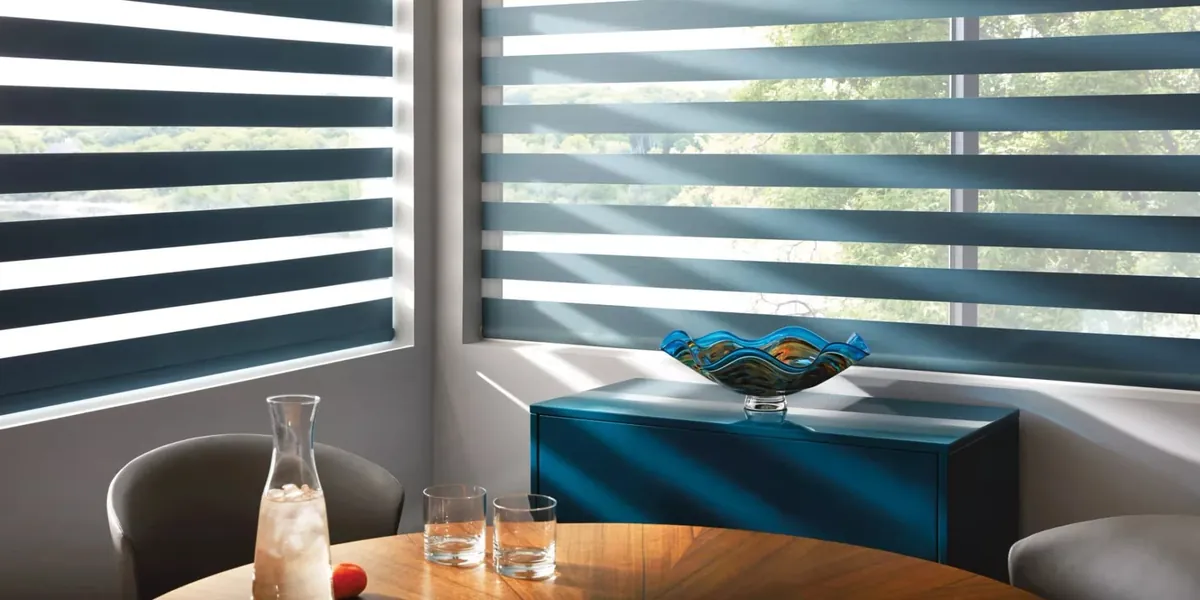
Striped and curved: two more rollers
Not every room wants a plain flat fabric. Designer Banded shades carry stripes of sheer and solid fabric on a single continuous loop, and a gentle tug slides one set of stripes over the other. With the sheers aligned, a soft striped light and a glimpse of the yard come through. Shift them, and the solids close the window. In a Kingston kitchen that catches the sunrise, that lets you take a little off the glare at seven and open it right up by nine, all without rolling the shade up.
Sonnette is different again: a roller whose fabric bows outward in a soft curve, holding air behind its face. Rolled up it is as compact as any roller; lowered it has a fuller, quieter look. In the upstairs rooms of an antique colonial, with their painted woodwork and older furniture, it can feel more at home than a perfectly flat panel.
More on each at Designer Banded and Sonnette cellular.
Your visit, start to finish
You cannot judge sunrise glare in a showroom at noon, which is why our sample vans come to the house instead.
- Pick a day with Request a Consultation or the call button. For a bay-side room, an early appointment lets us see the glare at its worst.
- Room by room, we look at the windows together and talk about when each one gives you trouble.
- Screens, light filtering, banded and blackout fabrics go up against your glass so you see each in your own light.
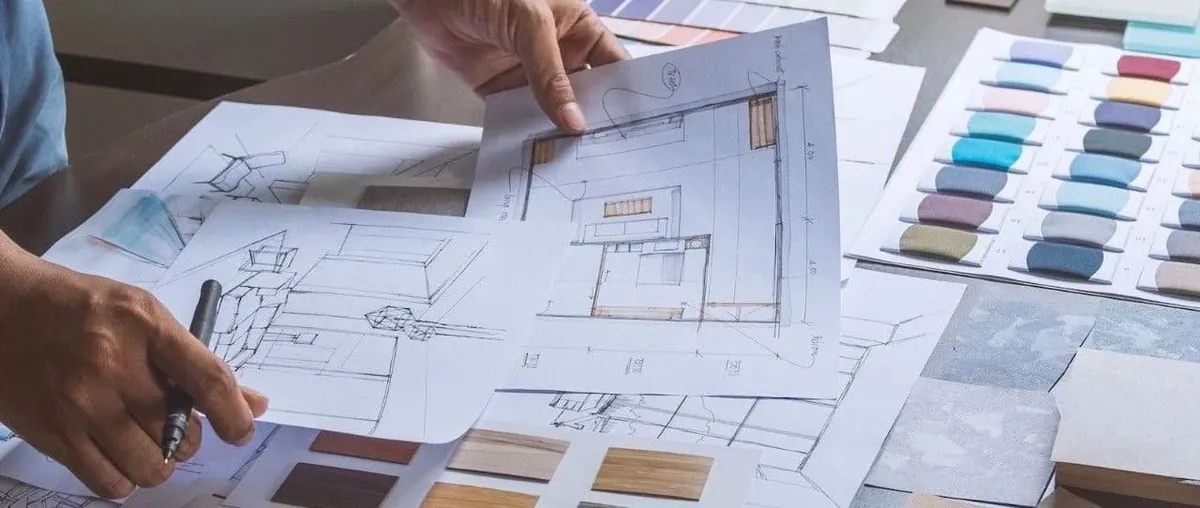
- Every opening is measured, and we note frame depth, tilt latches and casement cranks as we go.
- For each window you hear our suggested fabric, mount and lift, and where PowerView would save effort.
- A free estimate follows, and the decision stays with you, in your own time.
What happens at an in-home consultation has more detail.
Designer and Alustra in Kingston
Hunter Douglas sells its rollers under two names. Designer is the deep catalog: the largest spread of colors and textures, every opacity, the complete screen range and every lift. Alustra is shorter and dressier, with finer materials and more tailored finishing touches at the hem and the roll.
Near the bay, an antique colonial might carry Alustra in its parlor and dining room and Designer in the kitchen and bedrooms. Inland, the ranches and subdivision houses are usually Designer from end to end. Any visit to plan roller shades in Kingston, MA, brings both collections, and the main roller shades page lays out the whole family.
A Hunter Douglas Gallery dealer for Kingston
Hunter Douglas reserves its Gallery title for dealers who meet its standards, and Blinds & Designs is one. That gives a Kingston house the complete roller line at a single visit: Designer and Alustra fabrics, every screen, banded and Sonnette shades, and PowerView.
Every shade is hung by installers Hunter Douglas has certified. In an antique colonial they find sound wood for each bracket and square each roll to a frame that has shifted over time; in a newer house they make sure the shade clears every tilt latch and crank. Interior design consultations are on offer too, as are repairs to blinds and shades you already own.
Planning other rooms? Try cellular shades in Kingston for older sash or plantation shutters in Kingston for a colonial front room. The Kingston page lists all we do in town.
Questions from Kingston
What helps most with morning glare off the bay?
A solar screen roller, usually in a darker color and a moderately close weave. It cuts the low sun while you keep the view. With PowerView, the shade can lower before sunrise and rise later in the morning.
Can my east bedroom be properly dark at dawn?
Yes. A blackout roller mounted on the trim, a little wider than the opening, closes the gaps at the edges. A dual roller adds a screen for the daytime view.
Will rollers work with the tilt-in windows in a newer house?
Usually. We check frame depth and the latch positions so the shade does not get in the way of tilting the sash. Casements with cranks may need a slightly different mount.
Do antique colonial windows take an inside mount?
Often, yes, but older frames are rarely square, so we measure each one in several places. A slim mount on the face of the casing is the fallback.
Do I pay for the estimate?
No. Once every window is measured, the estimate for your chosen shades is free.
Start with a visit
Hold a screen up at your east window over breakfast and most of the questions answer themselves. Book a consultation; the samples arrive with us, each window is measured, and a free estimate is yours to keep. Sagamore is our closest showroom to Kingston for anyone who wants to try working shades first, and the call button reaches us any time you have a question.