
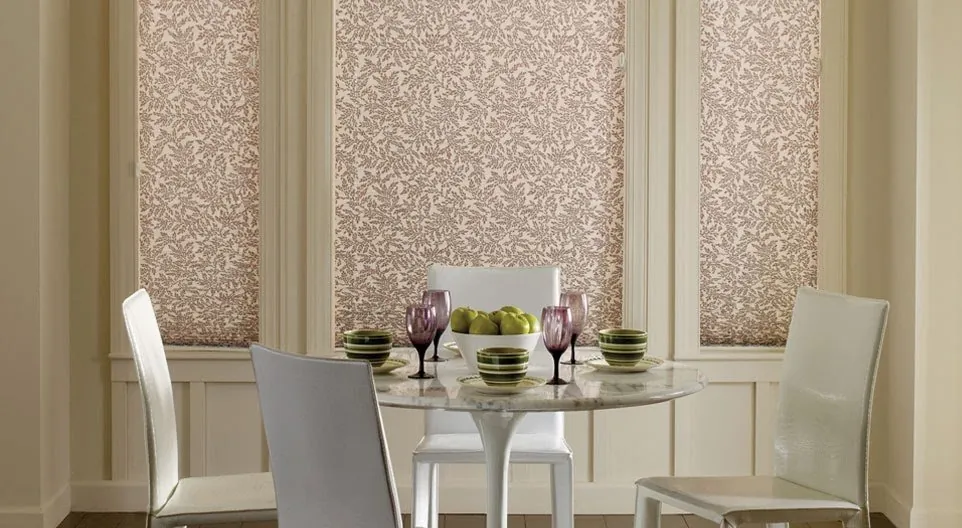
Tiny old openings, long setbacks
The oldest houses in Upton were built with very small windows. An antique colonial or farmhouse on a large lot might have openings little bigger than a pair of hands spread wide, set into walls that were meant to keep the weather out first and let the light in second. Those rooms do not get a lot of daylight to begin with, especially in winter when the sun stays low and the walls are thick, and that changes what we look for when we fit roller shades in Upton, MA. A shade in one of these windows must not steal light it does not need to.
The houses also sit well back from the road, with deep setbacks and plenty of space between neighbors. In a dense village the first question is privacy. Here, with a long stretch of lawn or field between the window and the road, light and sun usually lead and privacy comes second.
Off Route 140 the newer colonials bring the opposite problem: larger glass, rooms that fill with sun, and home offices where glare on a screen is the daily complaint. A roller suits both ends of that range, because the same slim shade can carry a pale daylight cloth, an open screen or full blackout.
What roller shades in Upton, MA, are asked to do
The jobs vary more than the windows do. When we bring roller shades in Upton to a consultation, these six come up most, and we carry Designer and Alustra fabrics for each.
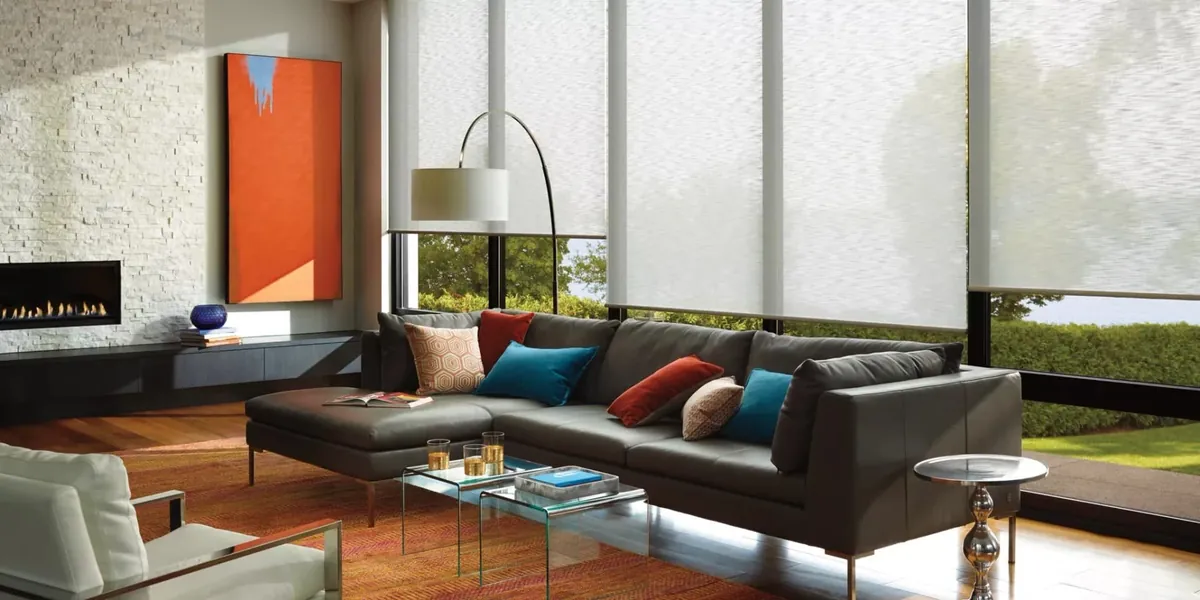
Keep every bit of daylight
A pale, light filtering cloth for the small antique windows, raised clear of the glass when you want the full light.
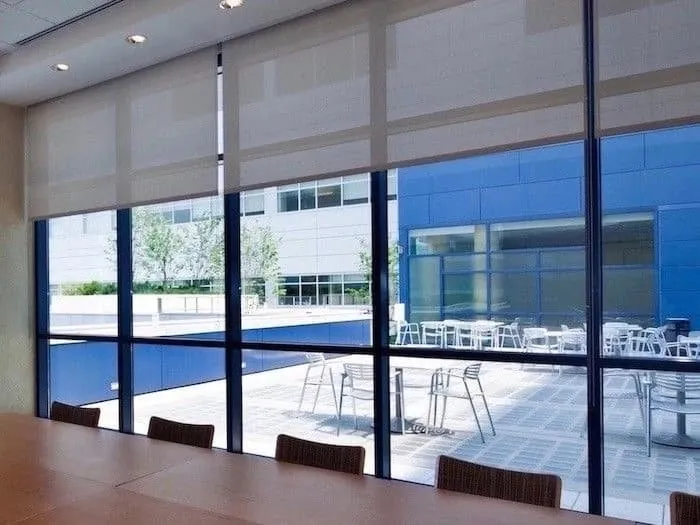
Stop glare on the desk
A solar screen in the home office of a newer colonial, so the monitor stays readable and the room stays bright.
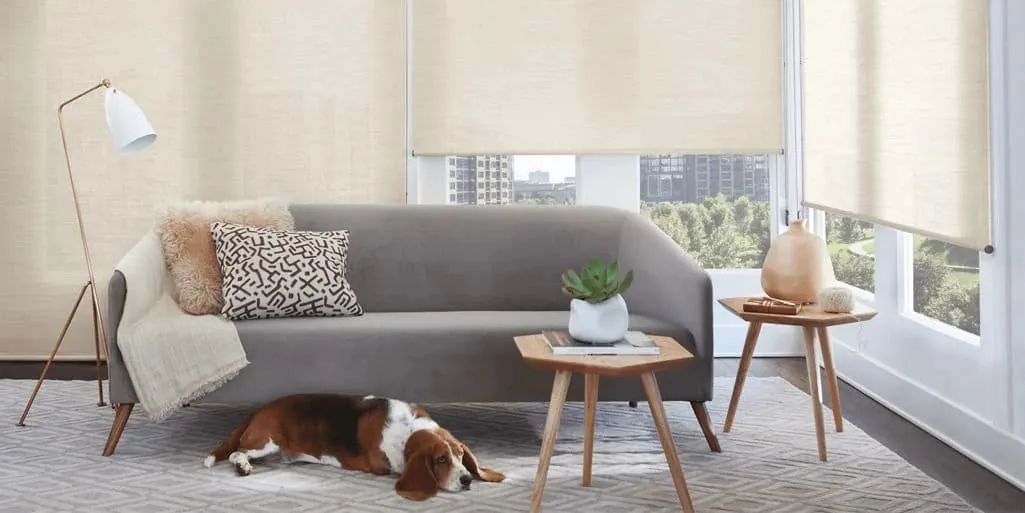
Darken a bedroom
Room darkening or blackout cloth for bedrooms that face the sunrise across open ground.
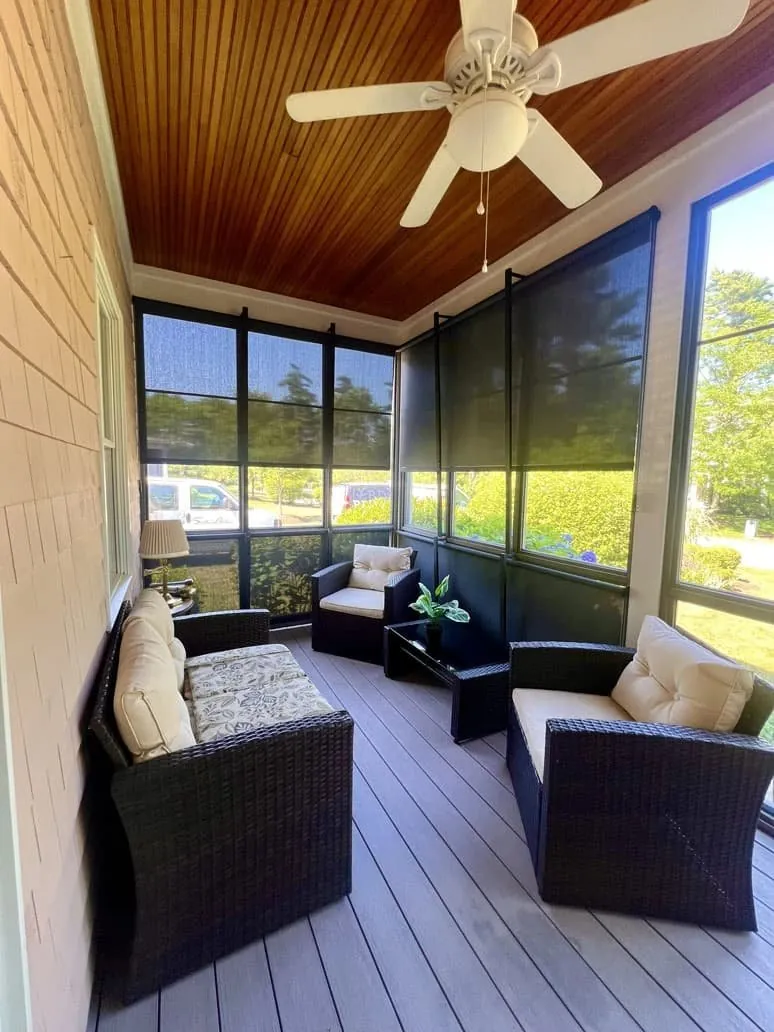
Protect floors from the sun
Screens lowered through the brightest hours help shield wide pine boards, rugs and upholstery from strong sun.
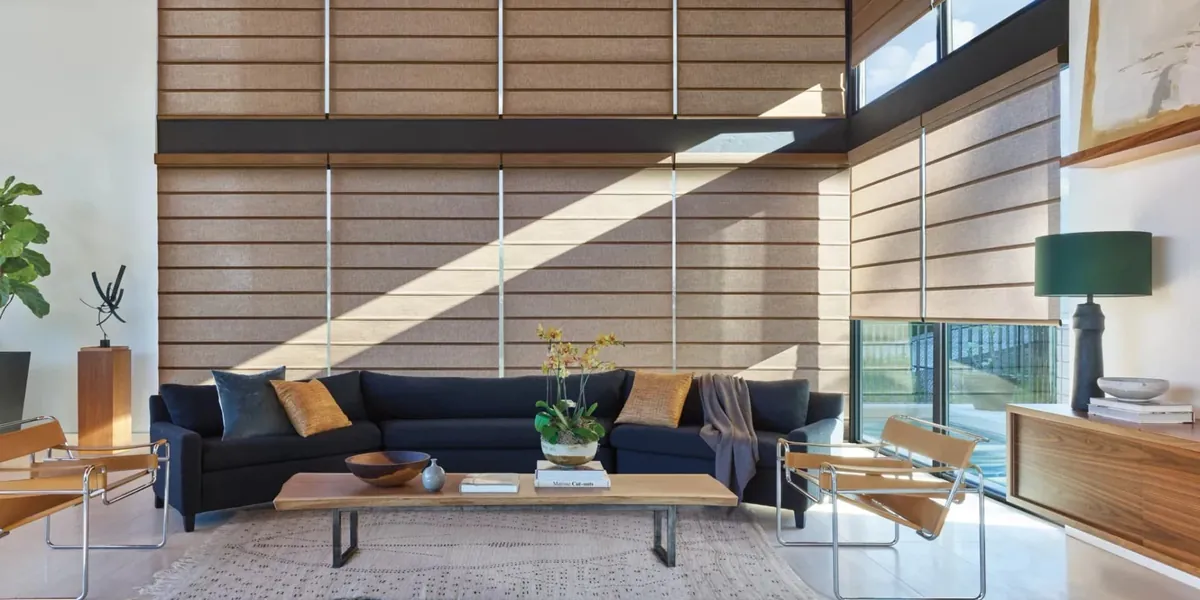
Match old and new rooms
One color family across a tiny antique sash and a wide modern window, so the whole house reads as one.
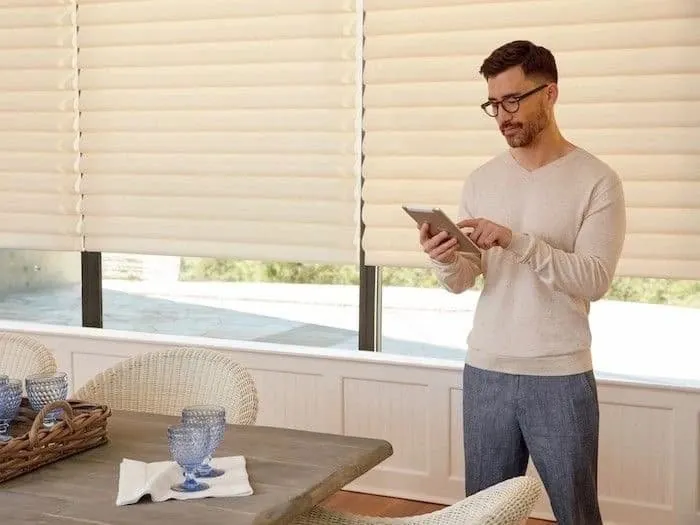
Move shades on a schedule
PowerView lowers the sunny side in the afternoon and opens the house in the morning, from an app, a remote or a timer.
A shade that gets out of the way
In a room with very small windows, the worst thing a window covering can do is sit in front of the glass when you want light. Bulky treatments that stack over the top of a small opening can block a real share of it even when raised. A roller avoids that. Fully raised, it winds into a slim roll tucked at the very head of the frame and leaves almost the whole pane clear.
Fabric choice matters as much as the hardware. A pale light filtering cloth spreads what daylight there is evenly across the room when the shade is lowered for privacy or to soften the sun. A heavy, dark cloth would turn a small-windowed room gloomy. Pale cloth also reads well from outside: seen from the road across a deep lawn, a row of small windows with warm white shades looks tidy and lived in, while dark shades can make the same windows look like blank holes in the wall. We usually suggest the lightest fabric that does the job in these rooms and save the denser cloths for bedrooms.
Color inside the room counts too. Antique houses often have painted trim and plaster walls in warm, soft colors. A warm white or a gentle neutral sits better against those than a stark bright white, and it looks right from the road as well.
Measuring the smallest openings
Very small windows leave very little room for error. A shade that is a fraction too wide will rub; one that is too narrow leaves a visible strip of light at each side, and on a small pane that strip is a large share of the glass.
Antique frames are also seldom square. We measure each opening across in three places and down in three places, and check how deep the frame is where the bracket will go. Old sash locks, built-up paint on the stops and the odd interior storm panel all get noted. The shade is then made to the tightest width, so it rolls freely the full height.
An inside mount is usually the right look in these houses, because it keeps the old casing on view. If a particular opening is too shallow or too far out of true, a mount on the face of the casing is the alternative, and it closes off the side strips at the same time. We go through those choices window by window with you, and confirm that each size can be made before anything is ordered.
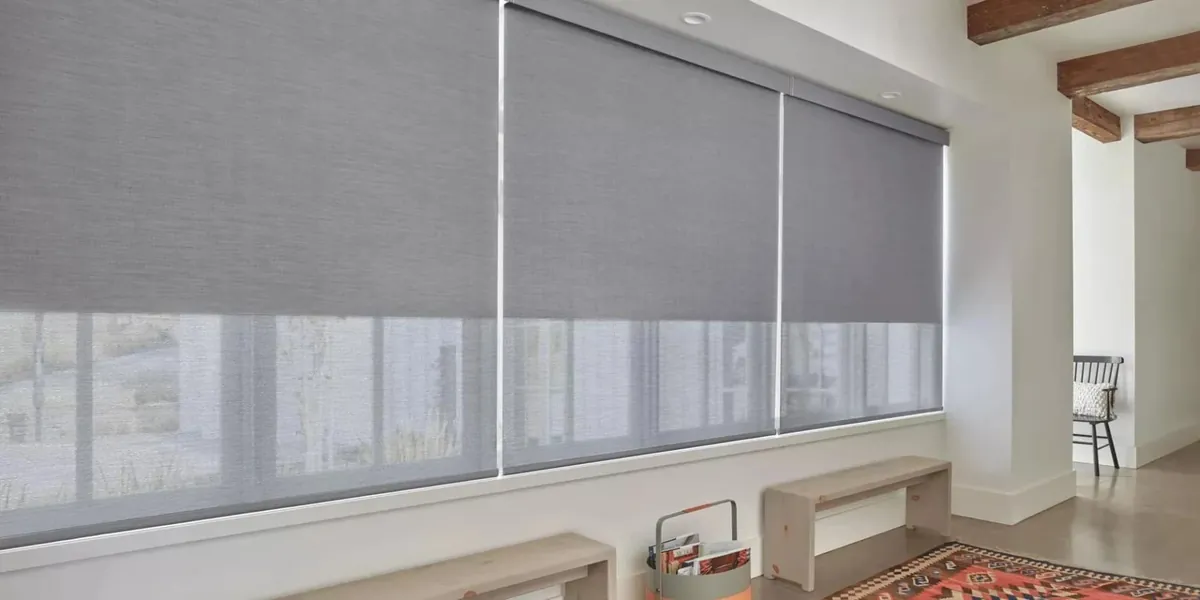
Antique bedrooms with one small window
Upstairs in the oldest houses, a bedroom may have just one or two tiny windows, often tucked under the eaves or set low in the wall. That makes the room easy to darken in one sense, because there is so little glass, and tricky in another, because what light does get in arrives right where you sleep.
A blackout roller inside the frame does most of the work. On a tiny opening, though, the slim strip of light at each side of an inside-mounted shade shows up more than it would on a big window, and at sunrise that strip can land on the pillow. Mounting the roller on the face of the casing instead laps over the edges and closes those strips, at the cost of covering some of the old trim. In a main bedroom most people take that trade. In a guest room used now and then, a light filtering cloth inside the frame, with the trim left on show, is often the nicer look.
When privacy comes second
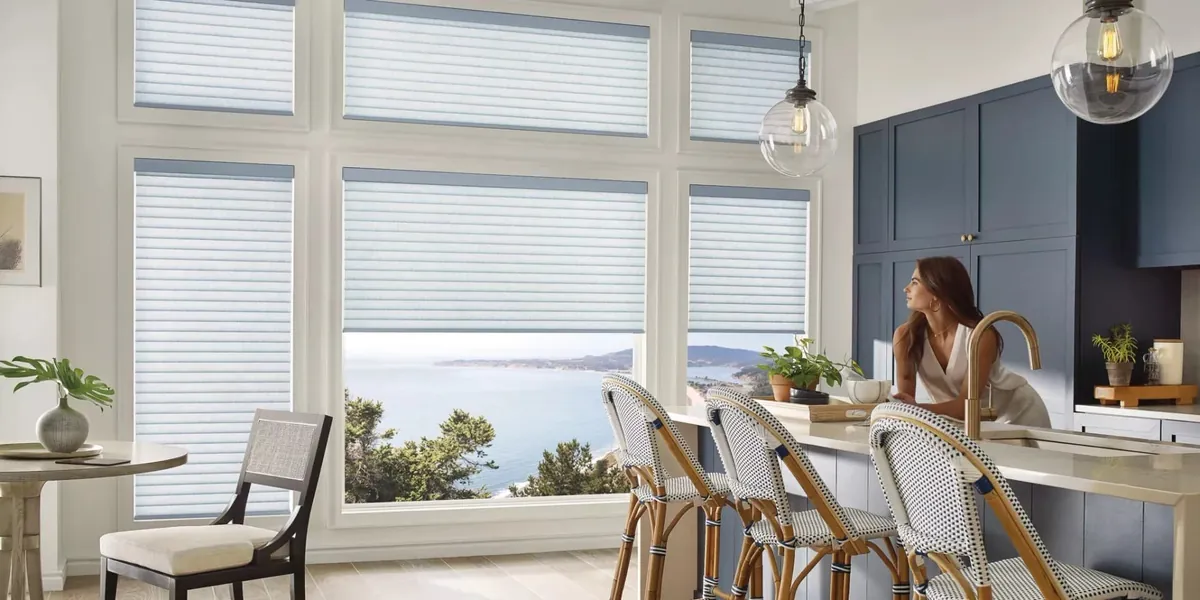
With a deep setback and few houses nearby, the street is a long way from most windows. That frees you to choose fabrics for light and sun first. A living room facing the road across a wide lawn may need nothing more than a light filtering roller, lowered when the sun is low and raised the rest of the time.
There are still a few windows where privacy matters. Bathrooms, obviously. Bedrooms at night, when a lit window on a large dark lot is visible from a long way off. And any window that faces the driveway, where a car turning in throws its headlights across the glass. For those, a room darkening cloth stays opaque with the lights on, and Designer Banded shades let you switch between open stripes by day and solid ones at night.
The newer colonials off Route 140
The colonials built off Route 140 are a different kind of house. Openings are standard sizes, square and consistent. Rooms are bigger and so is the glass: a family room with a wide window over the yard, a slider to the deck, a dedicated home office, bedrooms with two windows each.
Fitting them is simple, and an order for the whole house stays uniform. Sun is where the thought goes. A west family room turns uncomfortable towards evening, and a deck slider soaks up every afternoon hour. Screens on that glass ease the heat and glare and leave the back yard visible. A broad window divided between a few narrower shades lets you pull down just the section in the sun.
Glare in the home office
A room set up for work needs light without glare, and those two pull against each other. A plain light filtering cloth softens the light but hides the view. A solar screen is the better tool. Its openness sets the trade between view and glare: a more open screen keeps the outlook clear and lets more light in; a tighter one cuts more glare and softens the view.
Color has an effect as well. Darker screens are generally easier to see through from your desk, while lighter ones reflect more sun and keep the room brighter. Where the desk faces the window, a slightly tighter screen keeps the monitor readable. Where the window is beside you, a more open one often works. We test screens at your desk at the time of day the glare is worst, which you cannot do with a swatch book. Our guide to the best shades for sun and glare explains more.
Your consultation, from first call to estimate
Small antique windows and large modern ones behave so differently that the only fair test of a fabric is in your own rooms. Our vans carry samples, so we can bring the showroom to you.
- Ask for a time on the Request a Consultation page, or use the call button.
- We come with Designer and Alustra cloths in every opacity, and screens in a range of openings.
- We start in the rooms that bother you most, whether that is a dim antique parlor or a glaring office.
- You hold each sample against your own glass and see what it does to the light.
- We measure every frame and talk through inside or casing mounts for each one.
- You receive a free estimate for the shades you are thinking about, and take as long as you need.
A preview is in what happens at an in-home consultation. Color and fabric for the wider room can be covered too, through our interior design consultations.

Strong sun and what it does to a room
Where a big lot has no shade trees near the house, south and west glass can take sun from late morning until evening. Old pine boards go pale, a favorite rug loses its color in a stripe, and a sofa arm by the window fades first. Pulling a screen down for the fiercest part of the day slows all of that, and you keep the room and the view.
The shade cloth lives with that sun too. Soft, light neutrals age most gently on a bright window, while deep or saturated colors can change sooner. As you choose, we flag which cloths cope with a bright exposure. The choosing fabric for a sunny room guide has more.
Back windows that face nothing but land
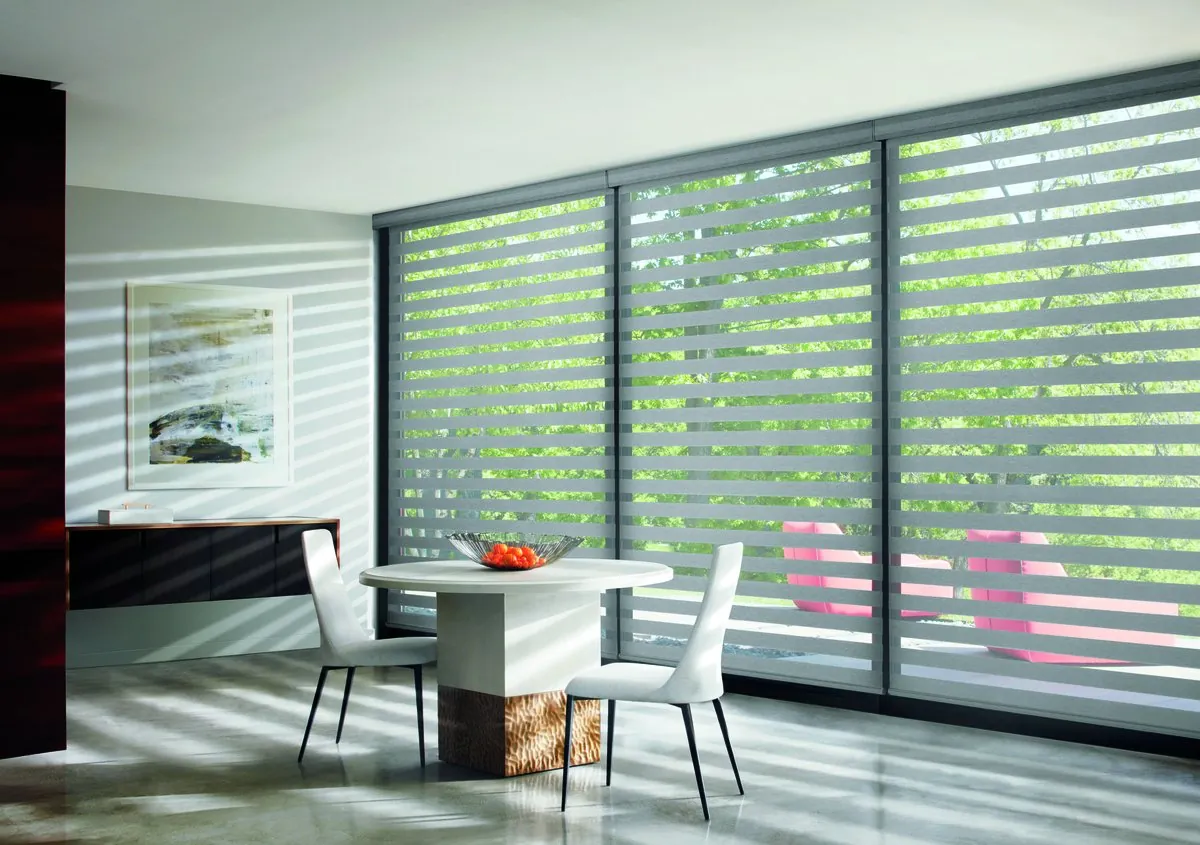
On a deep lot, the windows at the back and sides of the house often look out over fields, woods or a long lawn, with no road and no neighbor in sight. Those are the easiest windows in the house to dress, and the ones where it pays most to resist over-covering. Nobody is looking in, so the only questions are sun, glare and, in a bedroom, darkness.
For a back sitting room, a light filtering roller that stays raised most of the day and comes down only when the sun swings round is plenty. For a kitchen looking over the garden, a pale screen keeps the view of the beds while it trims the afternoon glare on the counter. Keeping roller shades in Upton, MA, on these rear windows simple and light lets the small antique openings do what little they can to brighten the room, and keeps the newer houses’ bigger glass feeling open to the land.
Letting a timer mind the windows
A colonial off Route 140 can easily have a great many windows spread over two floors, and walking round to adjust each one twice a day gets old fast. PowerView puts them on a routine instead. Picture the west family room dimming itself as the afternoon heats up, the bedrooms closing as it gets dark, and the kitchen opening as you come down in the morning. Groups and scenes come from an app or a handheld remote, and the routine keeps running on days nobody is home to protect the floors. The power arrangement for each motor is worked out with you at the visit.
Few people motorize every window on day one. The sun-struck rooms and the stair landing usually go first. The guide to how motorized shades are controlled walks through the app, the remote and the timers.
Fitted by certified installers
Behind antique plaster there may be oak, or there may be crumbling lath and air. Hunter Douglas certified installers probe for real timber before each bracket goes up, shim the tube true where the frame head dips, and cycle every shade through its whole drop. A quick lesson on the controls, PowerView included, ends the visit. The what happens on installation day guide explains the day.
Other treatments for the house
A drafty north room may be happier with cellular shades in Upton, a formal dining room with roman shades in Upton, and an antique parlor with plantation shutters in Upton. Custom blinds in Upton are another option. All of it sits on the Upton page, and each roller line is described on the roller shades page.
Many customers begin with roller shades in Upton, MA, in the sunniest rooms of a newer colonial or the dimmest rooms of an antique, then carry the same look through the rest of the house.
The nearest showroom: Franklin
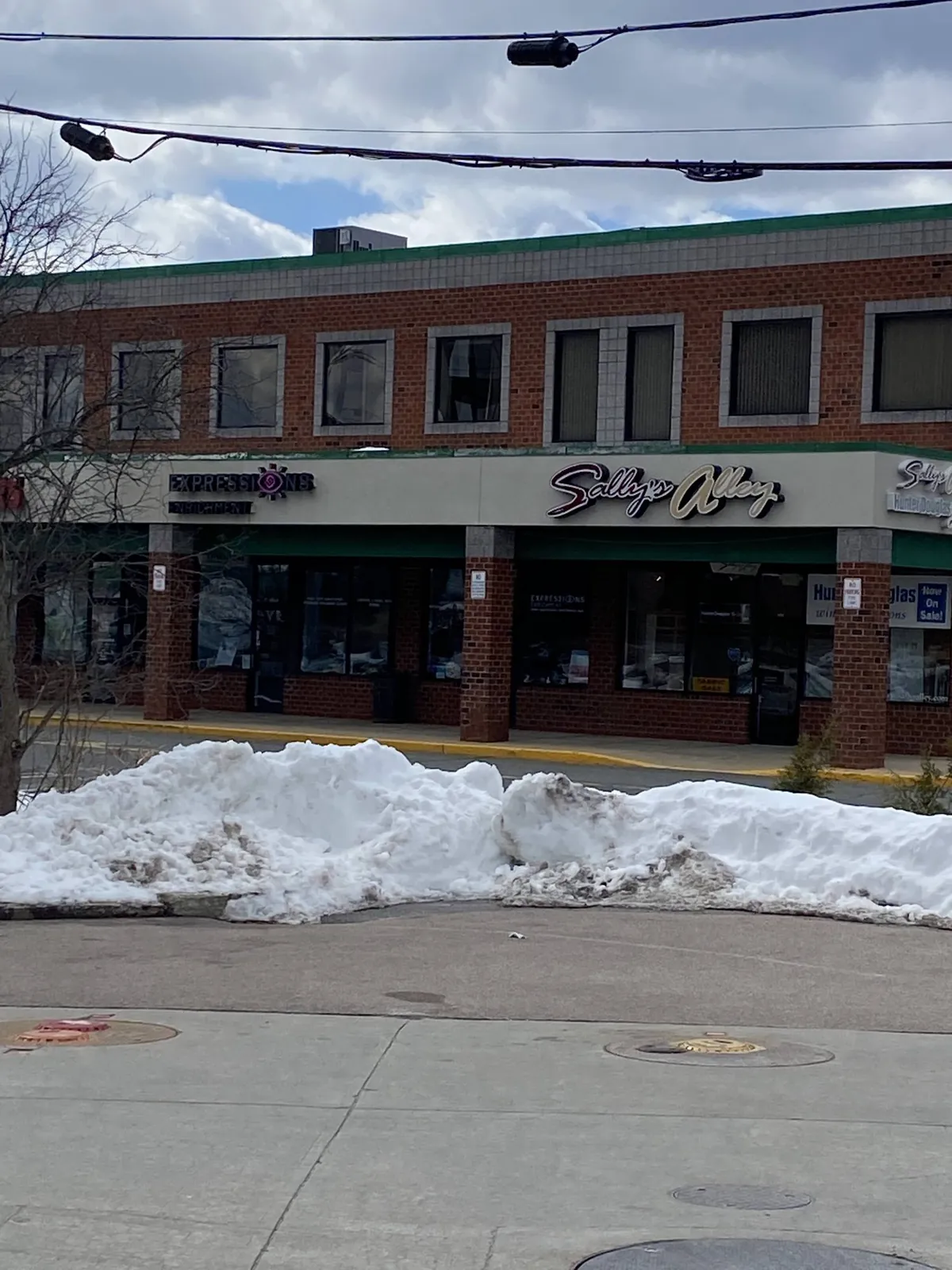
Franklin is the showroom nearest Upton, and a good place to put your hands on roller cloth ahead of a home visit.
Even so, small antique panes and wide modern glass each change a fabric, so the deciding is done at your house.

A Gallery dealer at your door
As a Hunter Douglas Gallery dealer, Blinds & Designs can lay the entire roller range in front of you at once, Designer and Alustra alike, with PowerView alongside.
Shades go up with certified Hunter Douglas installers, and older shades you own can come to us for blind and shade repairs. See our page as a Hunter Douglas dealer in Upton.
Questions from Upton
My antique house has tiny windows. Will a roller make the rooms darker?
Not when it is raised. It winds into a slim roll at the head of the frame and leaves nearly all the glass clear. When lowered, a pale light filtering cloth keeps the room as bright as possible.
Can you make a shade for a very small opening?
We measure each one and confirm the size can be made before ordering. Most small antique openings take an inside mount; a casing mount is the fallback where the frame is too shallow.
My house sits far back from the road. Do I need privacy fabrics at all?
In most living rooms, a light filtering roller is enough. Bathrooms, bedrooms at night and windows facing the driveway are where a denser cloth or a banded shade earns its place.
What stops the glare on my home office screen?
A solar screen chosen by openness. A tighter weave cuts more glare; a more open one keeps more view. We test them at your desk.
Does the estimate cost anything?
No. We measure during the consultation and give you a free estimate.
Ready to start
Tiny antique openings or wide modern glass, a roller is best judged in the light it will live in. Request a consultation and the samples come to you, every frame gets measured and a free estimate is left behind. The call button works too, as does a trip to the Franklin showroom.