
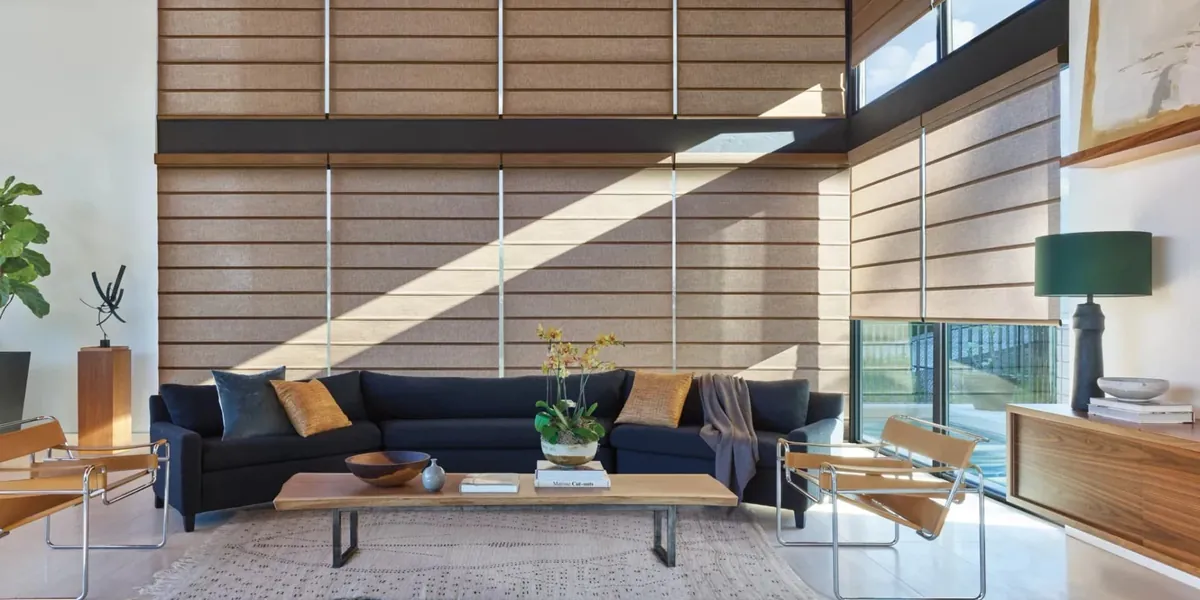
Whitinsville’s tall sash, close to the sidewalk
Walk through the mill village in Whitinsville and the company houses line up close to the street and close to one another, each with its own row of tall, narrow sash. Those windows were made to pull daylight deep into small rooms, and they still do it well. They also put a front room on show to the sidewalk only a few steps away, and they face the next house across a gap you could almost reach over. Those two facts, height and closeness, guide almost every choice we make with roller shades in Northbridge, MA.
On the outskirts the houses change. Newer colonials sit on larger lots with standard modern openings, more space around them and more sun to deal with than neighbors.
A roller works for both. It is one flat piece of fabric on a slim tube, it fits a narrow frame without crowding the trim, and on a tall window it lets you choose exactly how far down to bring the cover, which matters more on these windows than you might think.
Up, halfway or all the way down
The most useful way to think about roller shades in Northbridge is by where the shade sits most of the day. Each position calls for a different Hunter Douglas Designer or Alustra fabric.
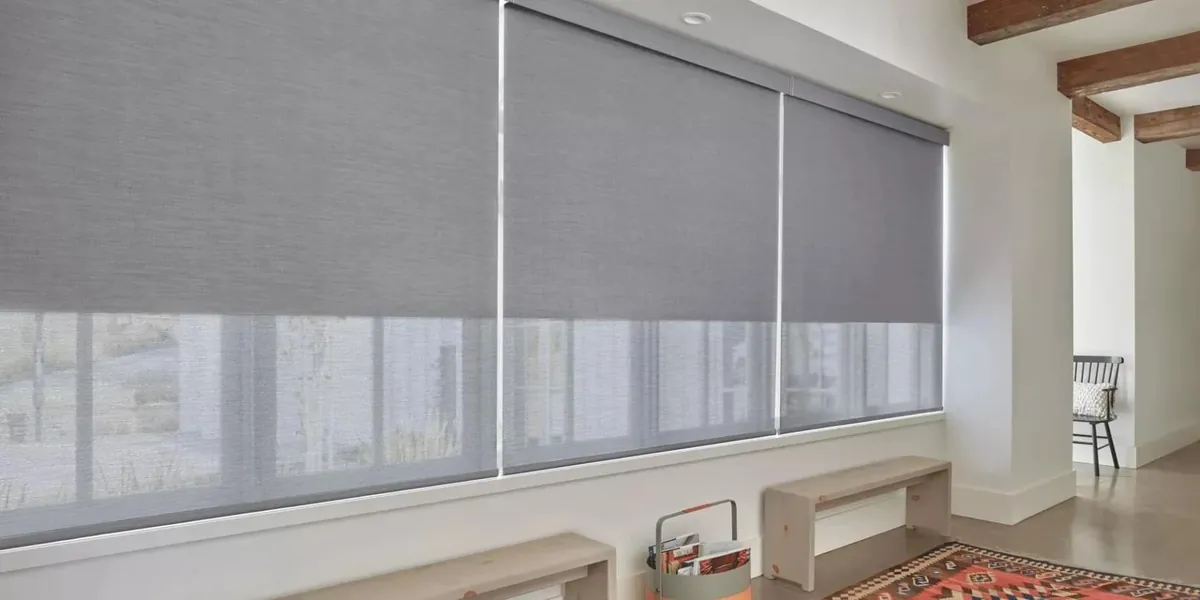
Up and out of sight
Rooms at the back that face the yard. A light filtering roller that stays raised most of the day and comes down for the low sun.
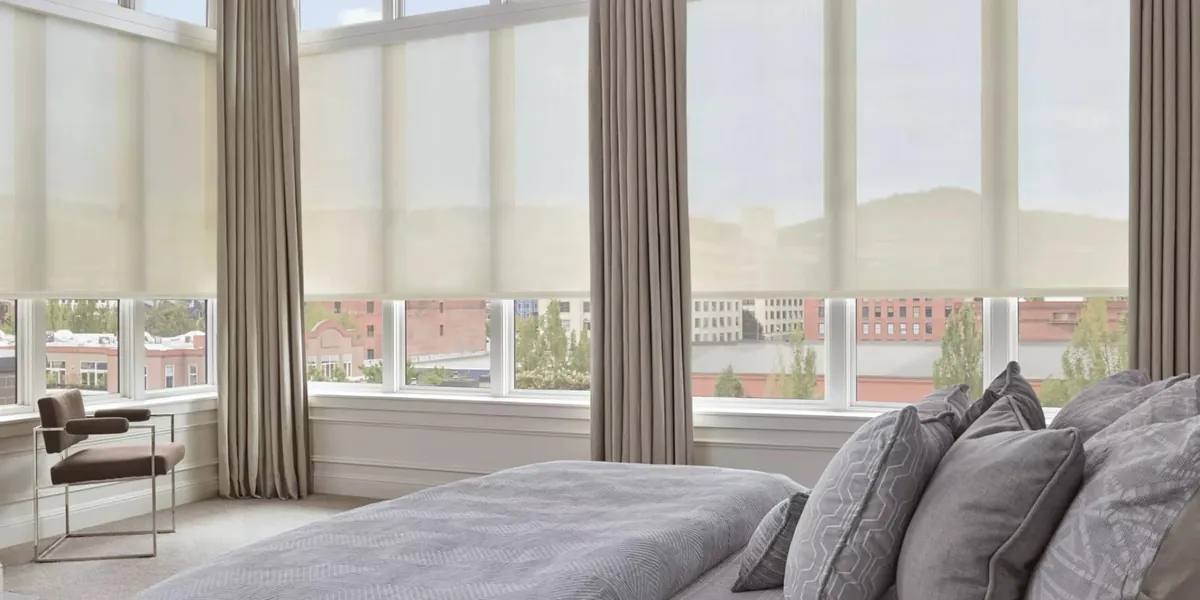
Down to the meeting rail
Front rooms by day. The shade covers the upper sash and stops at the middle bar, or drops further to screen the sidewalk.
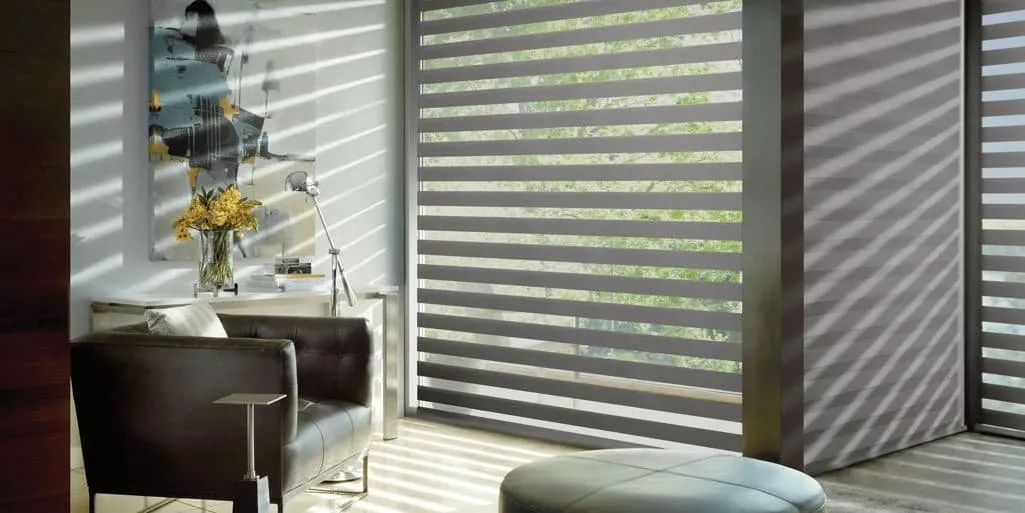
All the way down
Side windows facing next door, and any room used after dark. A denser cloth or a banded shade that closes fully.
Why tall sash changes the plan
A tall, narrow double-hung window has two sashes, one above the other, meeting at a horizontal rail roughly halfway up. From the sidewalk, the upper sash is mostly sky and treetops for someone inside, and mostly ceiling for someone outside looking in. The lower sash is where the eyes meet. That split is the key to a tall window.
A roller unrolls from the top. Lowered to the meeting rail, it softens the glare from the upper glass and leaves the lower sash clear for the view. Lowered further, it starts to cover the part of the window that people on the street can see through. Because the shade can stop anywhere, you can set it to suit the hour: high in the morning when the street is quiet, lower in the afternoon when the sun drops behind the houses opposite, and fully down at night.
Tall windows also send light a long way into the room, which is a gift in a narrow company house and a nuisance when the sun is low. The glare reaches across the floor and onto the sofa. A screen fabric lowered over the upper sash takes the sting out of it while the room stays bright.
There is a practical side as well. The top of a tall sash can be well above easy reach, especially when the window sits behind a radiator or a piece of furniture. We look at each window to see whether hand lifting will be comfortable, and point out the ones where a motor makes daily life easier.
Fitting a slim old frame
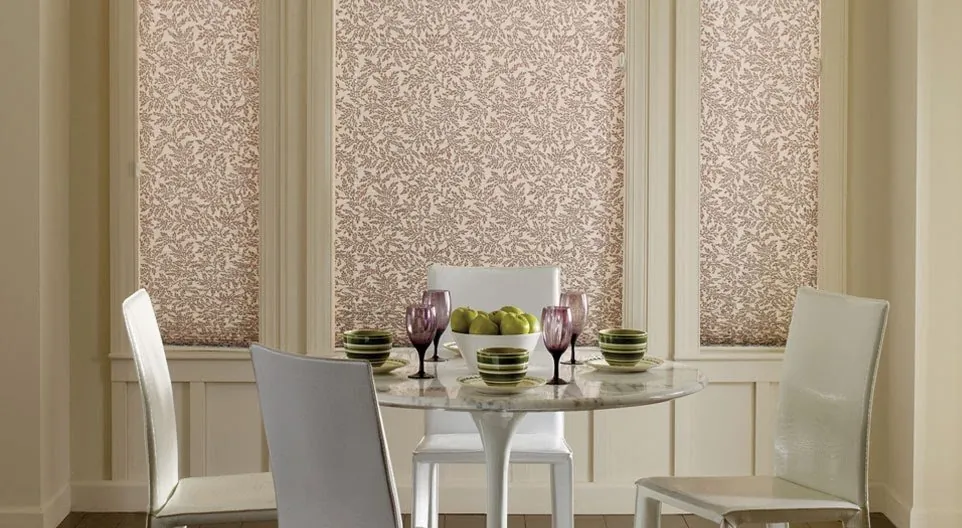
The sash in the company houses has been working for a very long time, and the frames show it. Paint builds up on the stops, the sides can lean in, and the head is not always level. On a tall window those small differences add up, because the shade has a long way to travel and any rub against the frame shows.
We take widths near the head, at the meeting rail and near the sill, and make the shade to the narrowest of the three so it travels cleanly. Heights go down the left, the center and the right. Then we look at the depth at the head of the frame, where the bracket will sit, and note any sash locks, pulley wheels or old storm tracks in the way.
Most of these windows take an inside mount, which keeps the slim original casing in full view. When a frame is too shallow or too far out of square, the shade goes on the face of the casing instead. That has a side benefit on a narrow window: it covers the slim strip of light a roller leaves at each edge, which on a tall slender opening is a bigger share of the glass than on a wide one. In a bedroom facing the next house, that can be the difference between dark and nearly dark.
Living near the sidewalk
The village stock sits close to the street, so a front parlor in Whitinsville can be only a short stride from people walking by. Daytime is the easy part. Outdoors is far brighter than the room, so a light filtering roller glows and hides the room, while from inside you see the street as a soft blur.
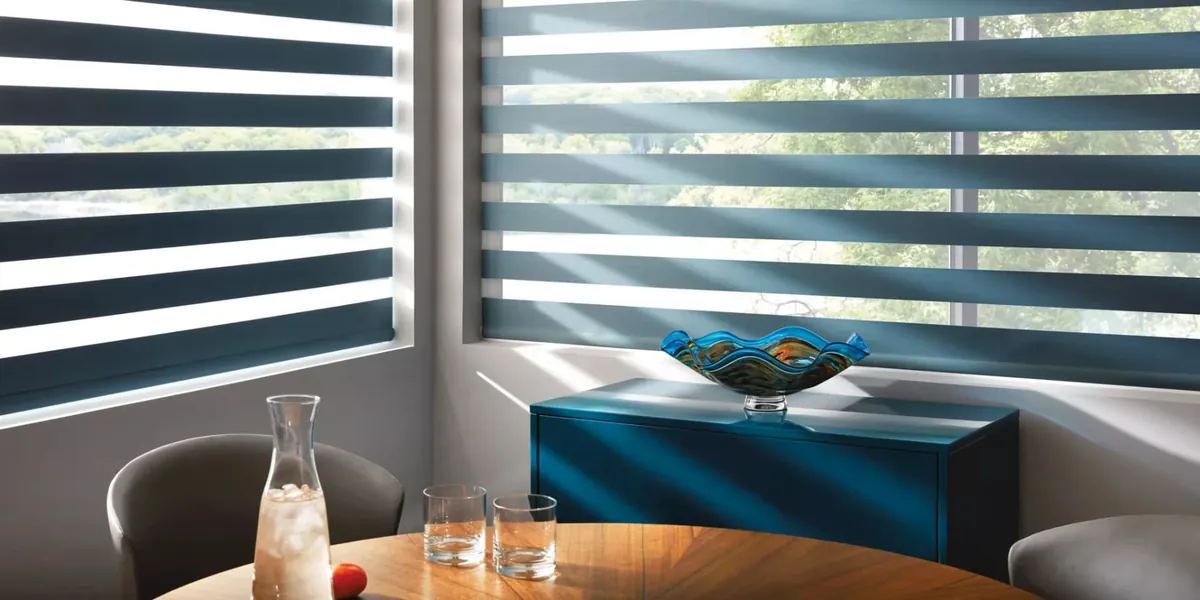
Evening is the hard part. With the lamps lit, the room becomes the bright side, and a thin cloth lets shapes show through to the sidewalk. A front room you sit in at night needs either a fabric that stays opaque with the lights on, or a second layer that takes over after dark. Designer Banded shades do both in one, with sheer stripes lined up for daylight and solid stripes closed for the evening.
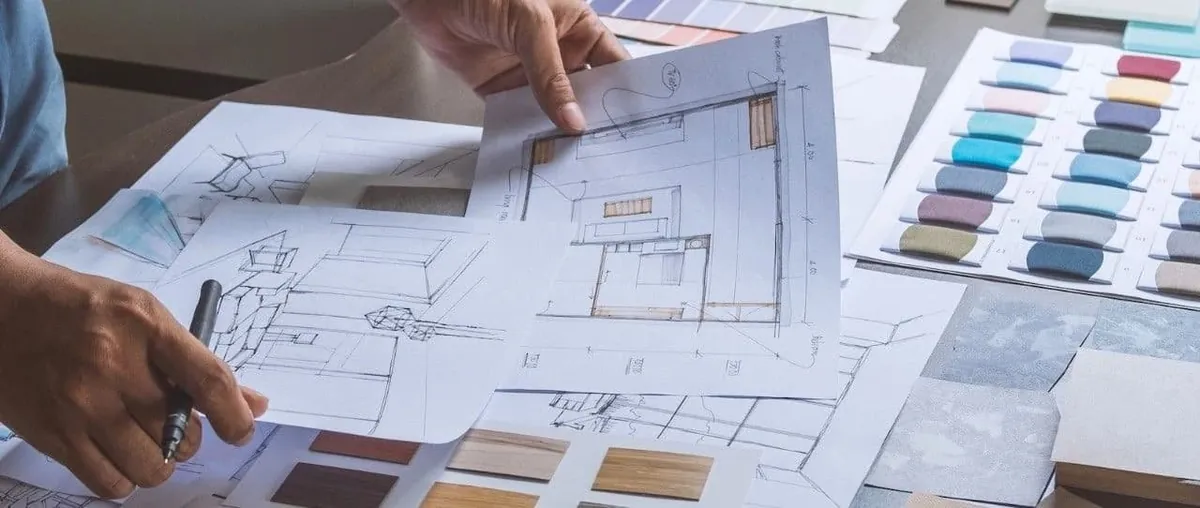
The street view matters as well. Company houses were built as a matching run, so a façade with shades parked at odd heights in assorted colors stands out from the houses beside it. Picking a single shade color for everything that faces the road, and dropping each shade to a common line, gives the front an orderly look. When we plan roller shades in Northbridge, MA, for a village house, we sketch that street view with you before choosing.
The house next door, close enough to touch
Side windows in the village look straight across at the neighbors’ side windows, often with only a driveway or a narrow path between. These windows need privacy all day, not just at night, because the line of sight runs level from one room into the other.
A room darkening roller is the simplest answer for a side bedroom. For a kitchen or a dining room where you want light, a banded shade gives you a choice between daylight with a blurred view and full cover. Some people lower a light filtering roller most of the way and leave a band of glass open at the top, which brings in sky without lining up with the neighbor’s window. We check the sight lines from where you actually sit before suggesting one.
The newer colonials on the edge of town
Out on the outskirts, the colonials are a different job. Openings are standard sizes, square and consistent, so the fit is straightforward and a whole order matches easily. With more space between houses, privacy is less pressing and sun becomes the main concern.
A family room with a wide window over the yard, a slider to the deck and a west-facing kitchen will all take strong afternoon light. A solar screen on those windows cuts the glare and heat while the yard stays in view. Bedrooms facing east take a room darkening cloth for the early sun. A home office set up in a spare bedroom does better with a screen, which cuts the glare on a monitor while the room stays bright enough to work. Breaking a broad window into several narrower shades means only the stretch of glass in the sun needs to come down.
Openness on a screen, in plain words
A solar screen is woven with tiny gaps, and the size of those gaps is its openness. It is the setting that decides how much view you keep and how much glare you lose. A more open screen shows more of the outdoors and lets more light through. A tighter screen holds back more glare and softens the view more.
Color makes a difference you can see. Dark screens are usually easier to look through from inside, because the eye focuses past them. Light screens reflect more sun and make the room brighter, but the view through them is a little hazier. On a tall Whitinsville window facing the street, a light screen also gives a little more daytime privacy. Our guide to the best shades for sun and glare has more if you want to read ahead.
A visit, start to finish
Height, light and closeness all have to be judged at the window itself, so we come to you. Our vans carry samples, so we can bring the showroom to you.
- Book through Request a Consultation, or reach us with the call button.
- We bring Designer and Alustra swatches, light filtering through blackout, and screens of several openings.
- Standing at each window with you, we work out where the shade will sit most of the day: up, at the meeting rail or fully down.
- Swatches go up against your tall sash, and we check the front rooms with the lamps on as well.
- Each frame is measured at three heights and three widths, with the depth at the head noted.
- A free estimate follows for the shades you like, and there is no pressure to decide that day.
The guide to what happens at an in-home consultation fills in the detail. Unsure how the shade color will sit with your walls and furniture? Ask for an interior design consultation at the same appointment.
Rooms that change through the day
A narrow company house often has its main rooms one behind the other, front to back, so the light changes as you walk through. The front parlor faces the street and gets the morning or the afternoon depending on which side of the road it is on. The middle room may have only a side window facing next door. The kitchen at the back looks onto the yard.
That front-to-back layout usually leads to three fabrics in one color: a light filtering or banded shade at the front, a denser cloth on the side windows, and a light filtering or screen roller at the back. Keeping them in one color means that, with the doors open, the rooms read as one run of space. Our guide to choosing fabric for a sunny room explains how fabric and color handle light.
Stairs, landings and the top of the sash
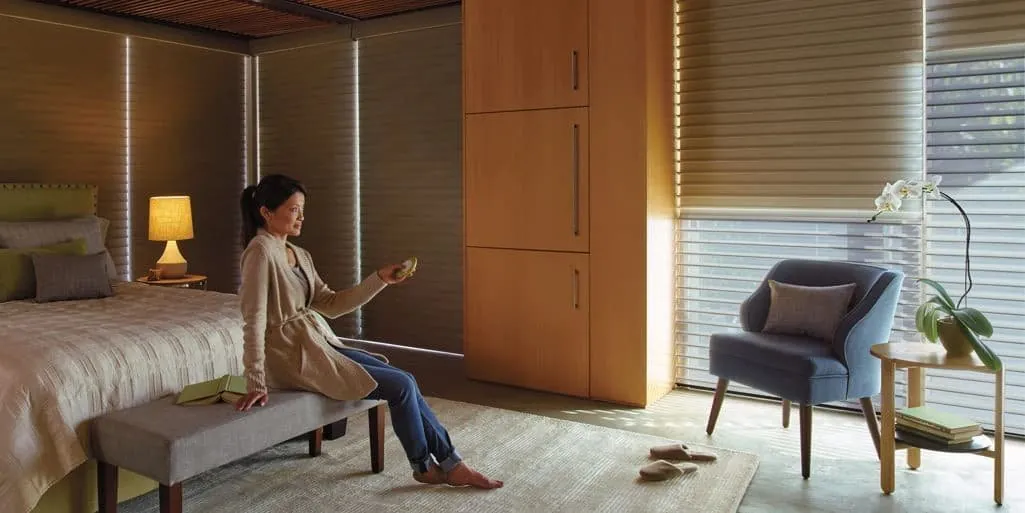
Company houses usually have a steep, narrow stair with a tall window on the landing, and a tall sash in a bedroom can be hard to reach once a dresser is in front of it. PowerView sorts out both. Shades answer to an app on your phone or a small remote, a room’s worth can move as one, and timers can draw the front of the house closed as evening falls and let the bedrooms brighten at breakfast. How each motor gets its power is settled with you at the visit.
It is usual to motorize two or three awkward windows and keep the others by hand. See how motorized shades are controlled, or our page on motorized blinds in Northbridge.
Certified installation on old walls
Behind the plaster of a company house there may be solid timber or tired lath. Hunter Douglas certifies the people who fit our shades, and on a company house they earn it: probing for sound wood before each bracket, packing a roller true where the frame head has sunk, sending every shade down its full length and up again, and matching the stopping height of neighboring windows. A short run-through of the controls closes the job. See what happens on installation day.
Road dust and a flat panel of cloth
Front windows a few steps from the pavement collect fine grit, and a tall sash collects more of it simply by being bigger. Flat fabric is forgiving here. A light pass with a duster or the upholstery tool on low suction lifts most of it, a barely damp sponge deals with a smudge, and lowering the shade all the way once in a while lets the cloth relax flat. Fuller cleaning advice for roller shades in Northbridge, MA, and everywhere else is in caring for fabric shades. A roll that starts drifting to one side is a repair job we take on.
Other windows in the house
Tall sash suits more than one treatment. For a chilly back bedroom, look at cellular shades in Northbridge; for a dining room, roman shades in Northbridge; for a formal front parlor, plantation shutters in Northbridge; and for a den or office, custom blinds in Northbridge. The Northbridge page collects the full list, and the roller shades overview takes each line in turn.
Many owners of village houses start with roller shades in Northbridge, MA, on the street-facing sash and the side windows, then add to the back rooms later.
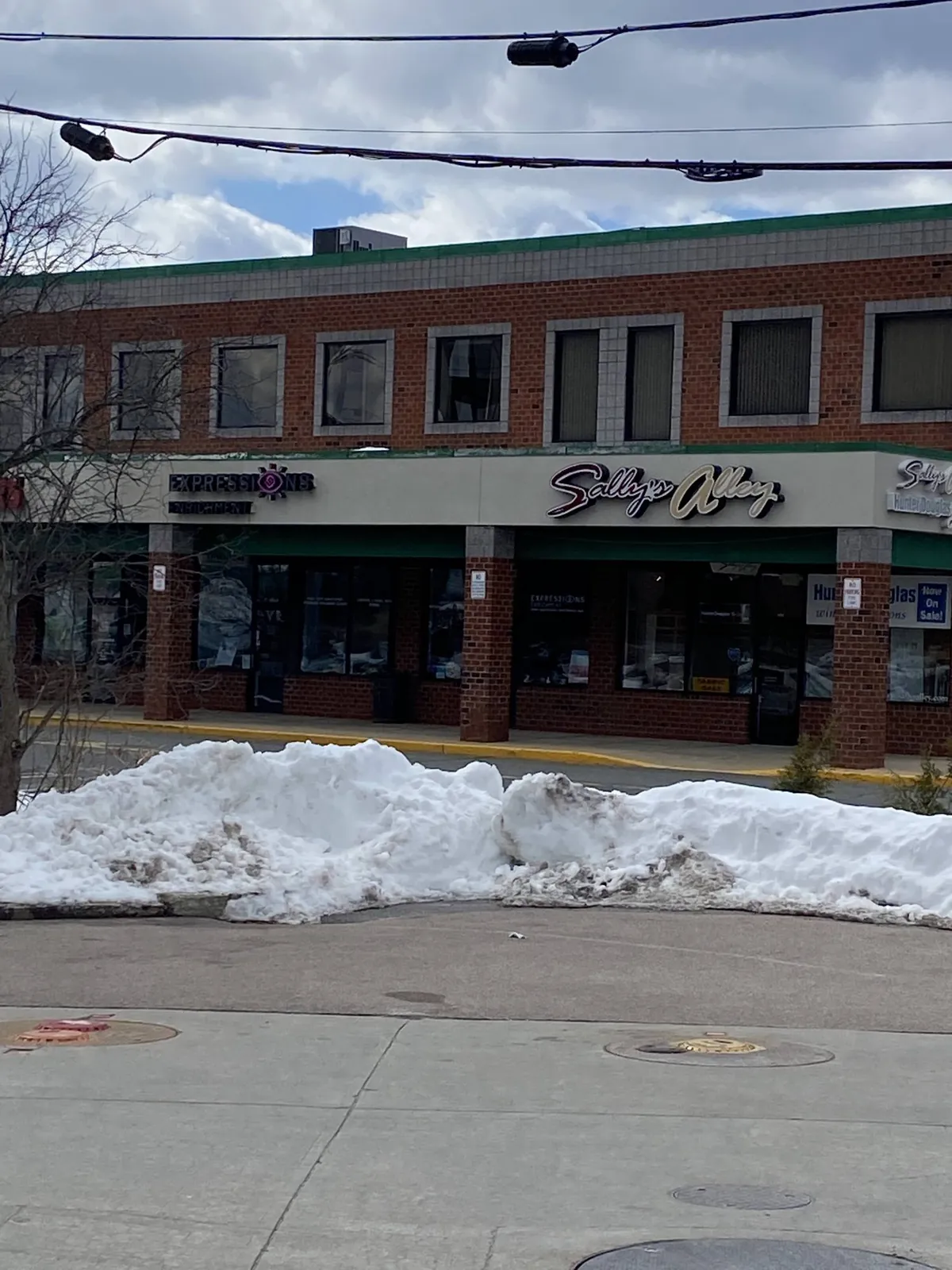
Franklin is our closest showroom
The Franklin showroom is the nearest to Northbridge. It is worth a stop if you would like to handle roller fabrics before a home visit.
The real test, though, is your own tall sash with the street outside it, which is why most decisions happen at home.
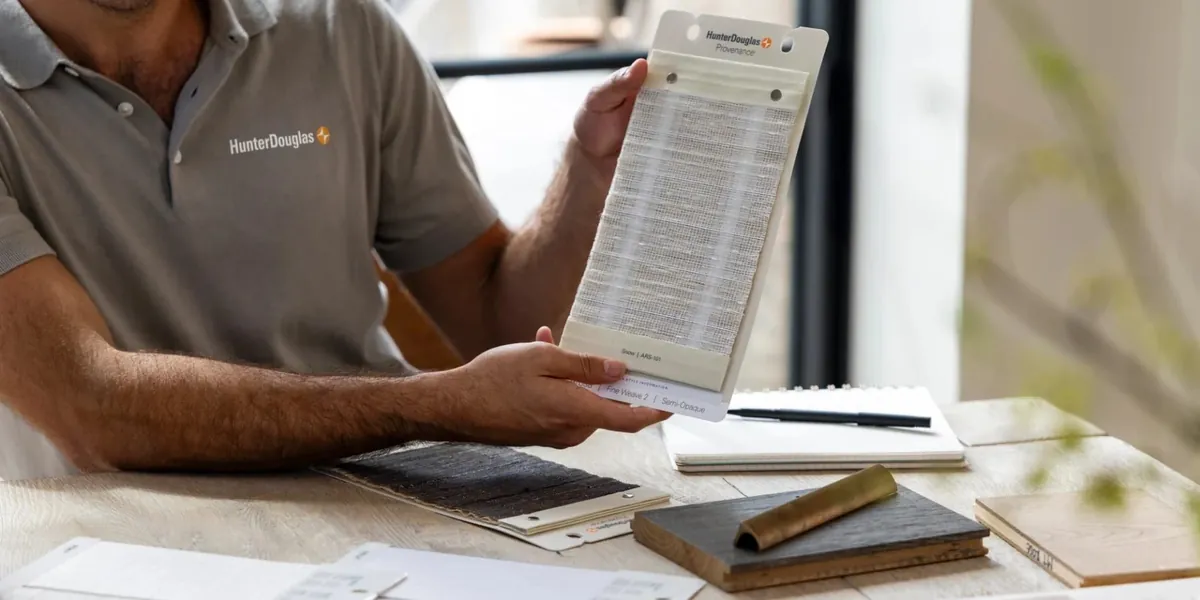
Working with a Gallery dealer
Hunter Douglas reserves its Gallery title for selected dealers, and Blinds & Designs carries it. In a Whitinsville front room that translates to every Designer cloth and screen, the Alustra range and PowerView, all on hand from a single appointment.
Certified Hunter Douglas installers do the fitting. Tired shades already on your windows are welcome too, through our blind and shade repairs. Our Hunter Douglas dealer in Northbridge page has the rest.
Questions from Northbridge
My company house has tall, narrow sash. How far should the shade come down?
It depends on the hour. Lowered to the meeting rail, a roller cuts glare from the upper glass and keeps the view. Lowered further, it screens the sidewalk. At night, fully down.
Can a roller fit the slim original frames?
Usually inside the frame, with the casing left on view. We measure at three heights because old frames move, and use a casing mount where the frame is too shallow.
The house next door faces my side windows. What gives privacy all day?
A room darkening roller, or a banded shade that closes fully. A light filtering roller lowered most of the way is another option, with a band of sky left at the top.
How do I reach the top of a tall window over a dresser?
PowerView motorization. You work the shade from an app or a remote, and we plan how each motor is powered at the visit.
Is there a cost for the estimate?
No. The estimate is free and follows the measuring at your consultation.
Book a visit
The right roller for a tall Whitinsville sash or a sunny colonial family room is easiest to pick with the fabric at the glass. Request a consultation and we will bring the samples, measure each frame and leave a free estimate. You can also use the call button, or visit the Franklin showroom.