
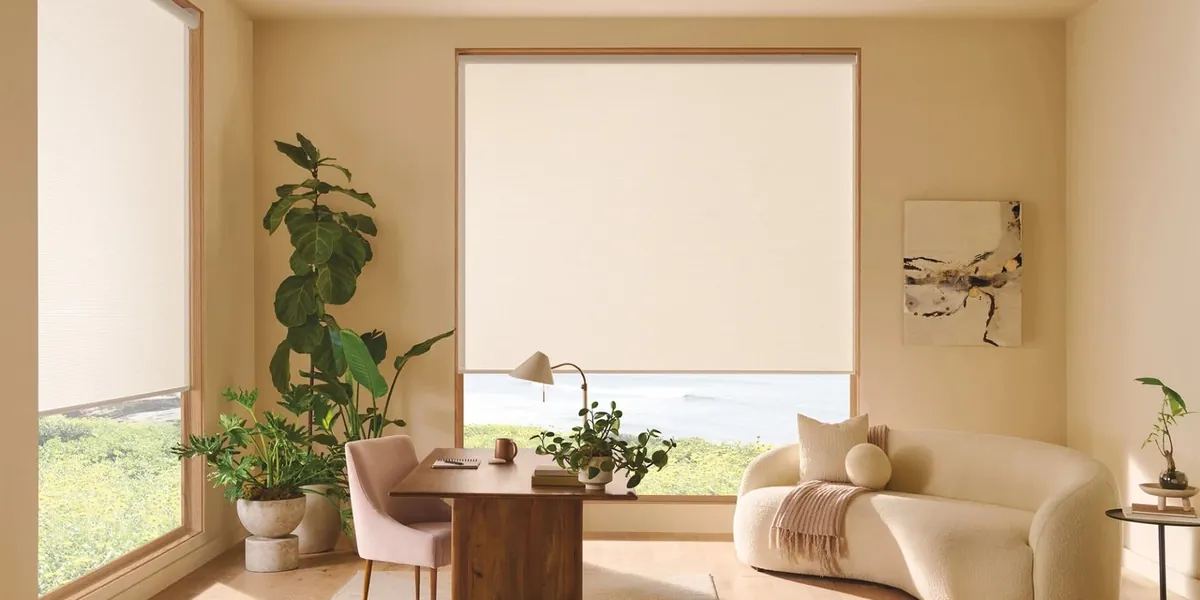
Three eras of house in one town
Few towns pack as much variety into their housing as this one. Along the Blackstone River stand the mill-era houses, built close together with their original narrow openings. Out on the farm roads are antique farmhouses, older still, with small old sash looking over open land. And off Route 16 there are newer colonials with big modern windows, family rooms and home offices. Planning roller shades in Uxbridge, MA, means knowing which of the three you live in, because each one asks a different question of a shade.
In the river houses it is fit and privacy: a slim frame and a neighbor across the way. In the farmhouses it is light and view: small windows that cannot spare much daylight, facing fields with nothing to block the sun. In the colonials it is glare and heat: wide glass, sliders and screens to read.
A roller is the rare window covering that serves all three well. It is one flat panel of cloth on a slim tube, it suits a narrow frame or a wide one, and its fabric runs from open solar screen to full blackout.
Every Designer and Alustra line, brought to your door
When we plan roller shades in Uxbridge, MA, we carry the whole Hunter Douglas family, light filtering through blackout, so each era gets what suits it. These are the six options we show most.
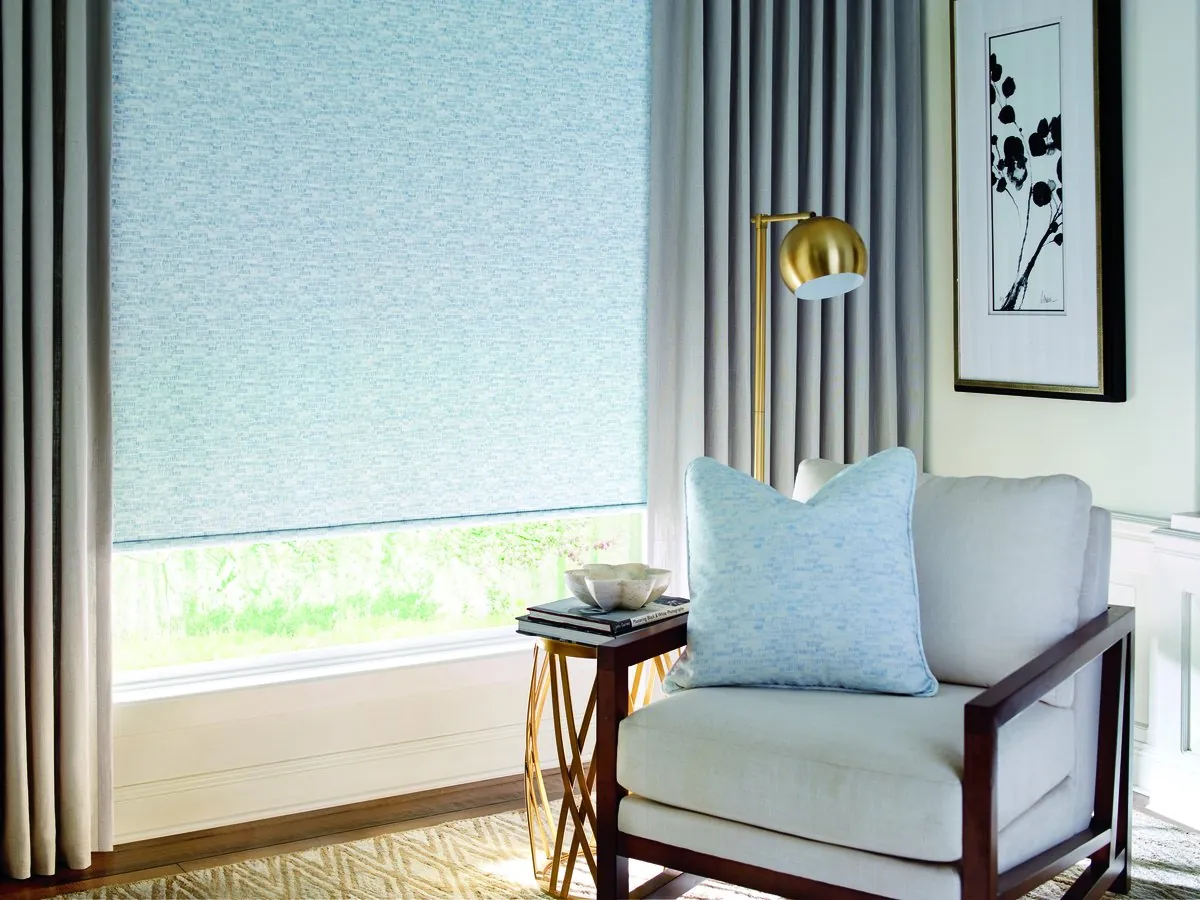
Designer Roller
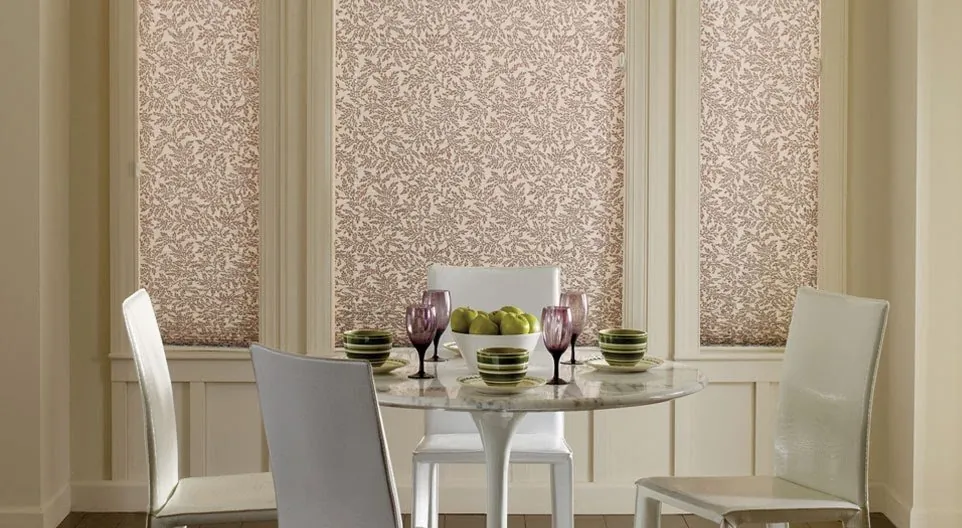
Smooth and textured cloths in every opacity. The workhorse for bedrooms, kitchens and the small rooms of a mill house.
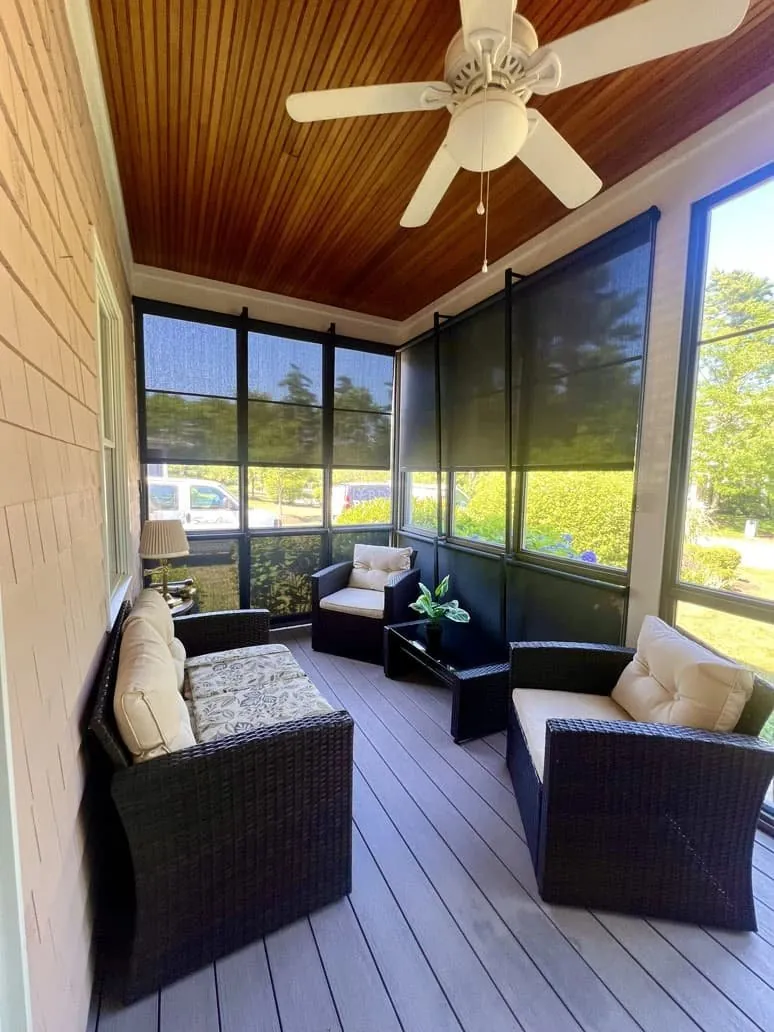
Designer Screen
Solar screen for the sunny side of a farmhouse or a colonial family room. Pick the openness to suit the view.
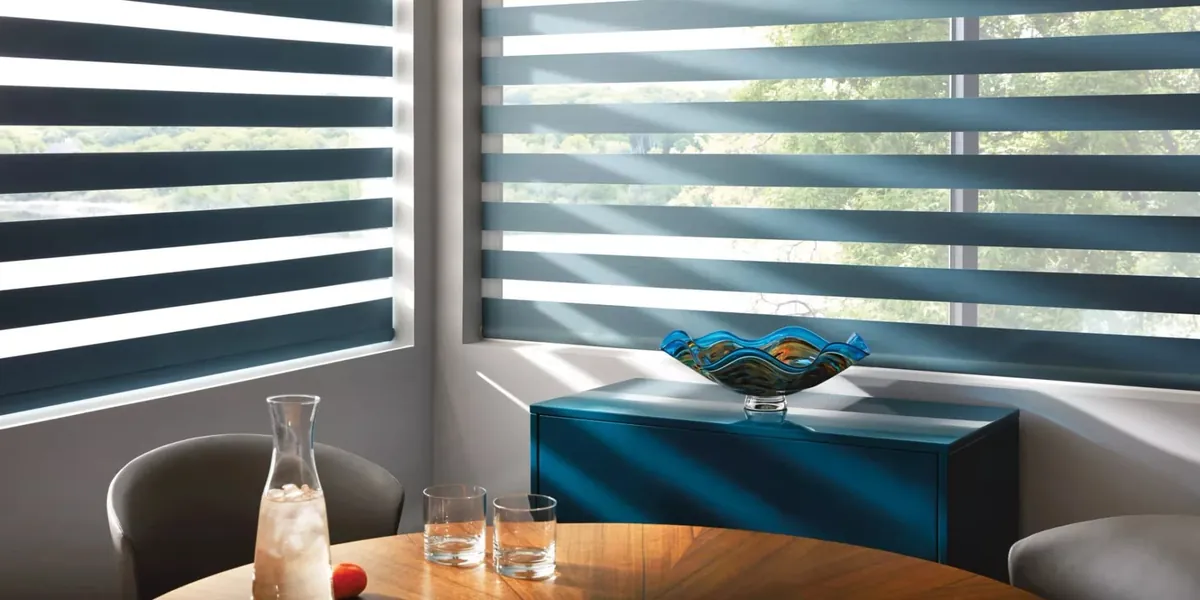
Designer Banded
Sheer and solid stripes on two layers, for river-house windows that face a neighbor and need daylight too.
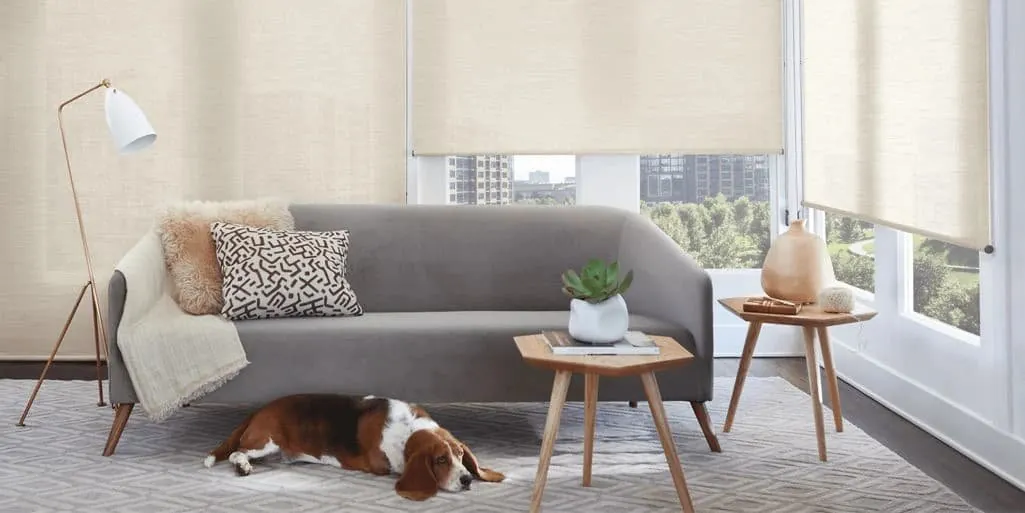
Alustra Architectural
The Alustra collection’s roller and screen fabrics, often chosen for the main rooms where the shade is part of the room’s design.
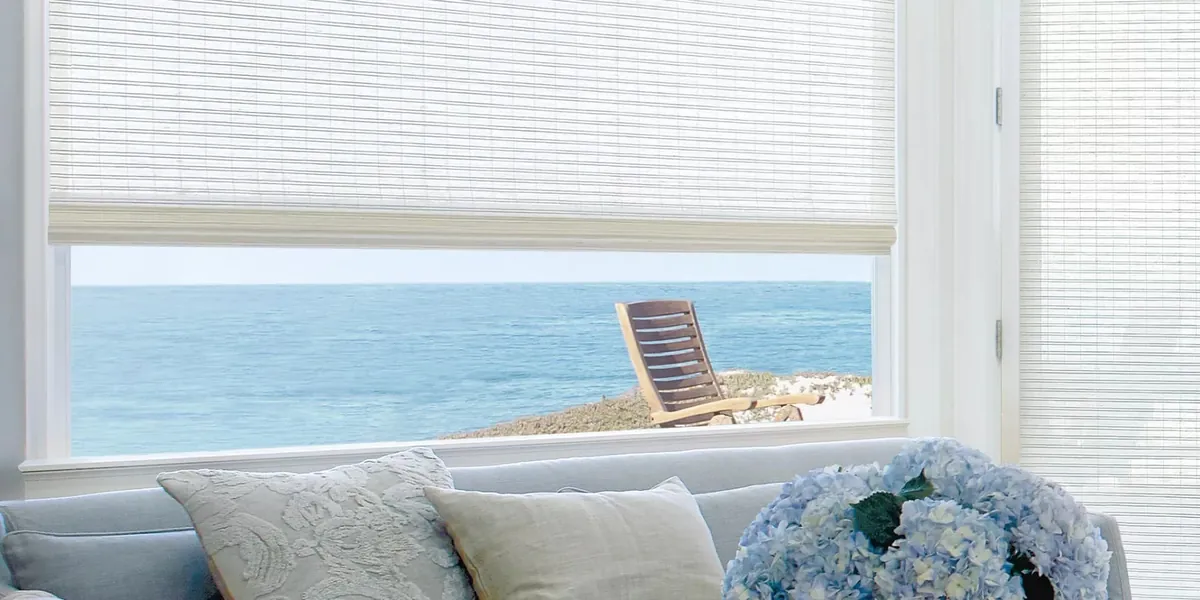
Alustra Woven Textures
Roller fabrics with a woven look, a natural fit for the plain painted rooms of an antique farmhouse.
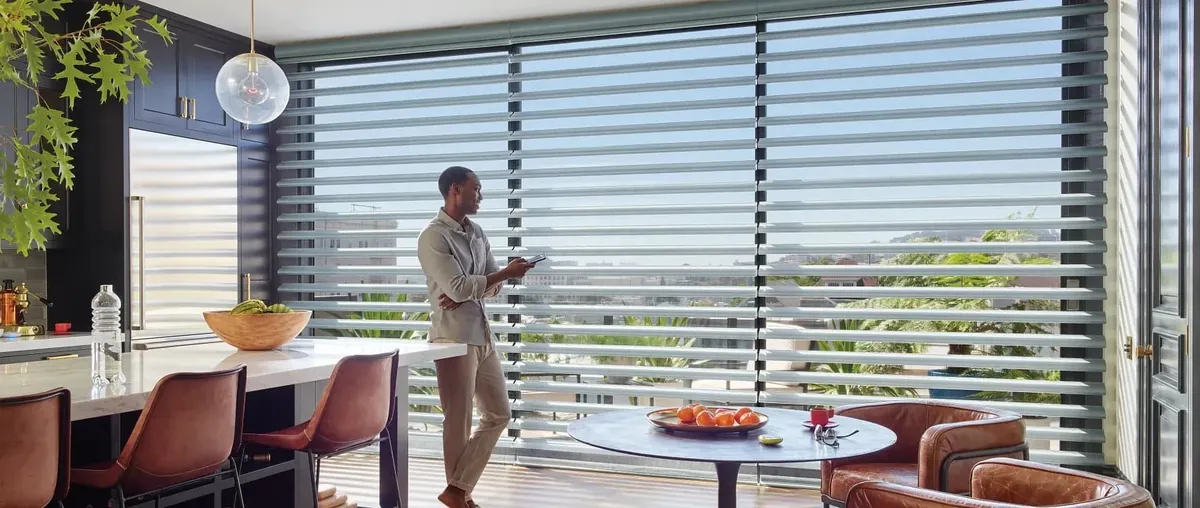
PowerView motorization
App, remote and schedule control for a wall of colonial glass or a hard-to-reach farmhouse window.
Along the Blackstone: narrow openings, close neighbors
The mill-era houses by the river were built tight together, and their windows are narrow openings in plain frames. A roller fits them better than most coverings because it needs so little room: no stack at the top worth speaking of, nothing at the sides, nothing jutting into a small room.
The frames themselves need a careful eye. Years of opening and closing, paint and settling leave few of them truly square. We take three widths, near the top, in the middle and near the sill, plus three heights, and use the tightest figures so the shade rolls without catching. The depth at the head decides whether the shade can sit inside the frame, where it leaves the slim old casing on show, or should go on the face of the casing.
On a narrow window that choice also affects light. Every roller leaves a sliver of glass uncovered at each side, and on a narrow opening the slivers are a noticeable share. A casing mount covers them. For a bedroom you want properly dark, or a bathroom facing next door, that is often worth the small loss of visible trim.
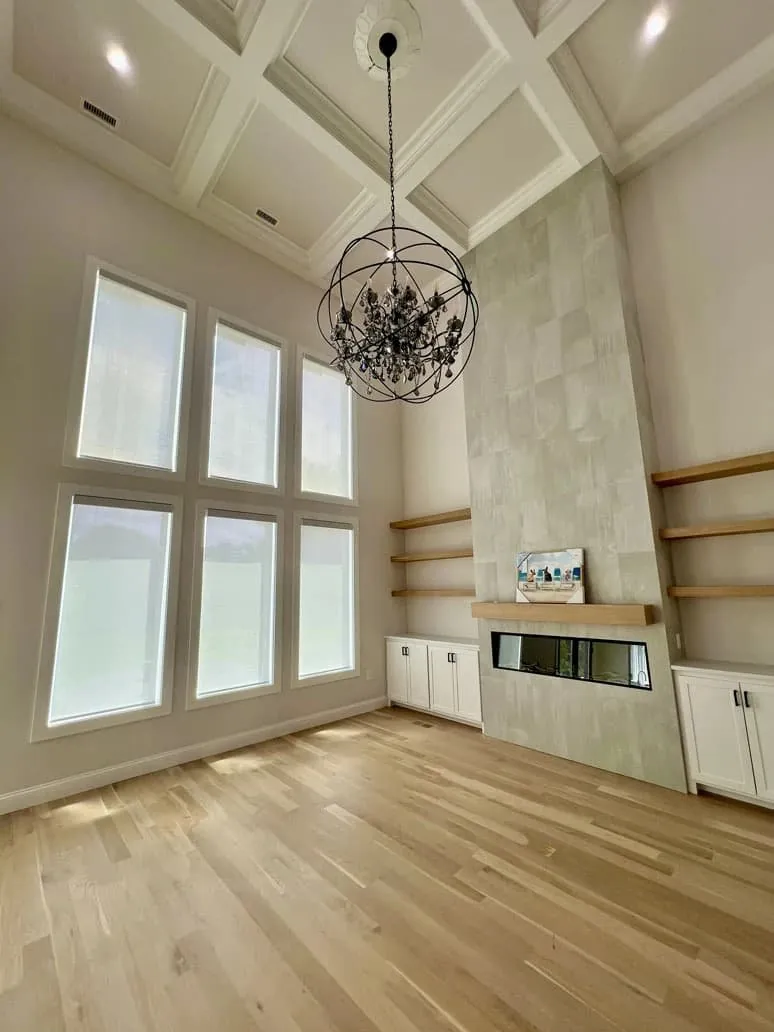
Night privacy in the river houses
In a close-set row by the river, side windows tend to look into side windows. By day, a light filtering roller handles that easily: the sunny outdoors outshines your room, so the cloth glows and gives little away, and from inside you still see a soft view.
The trouble starts after dark. Once your lights are on, the room is the bright side, and a sheer cloth or an open screen lets the neighbors see movement. Rooms used in the evening need something more:
- A room darkening cloth that stays solid with the lamps on.
- Designer Banded, which shifts from see-through stripes to solid ones as you adjust it.
- A daytime screen with drapery, or a second, denser roller, for night.
We hold each up at your side window with the room lit and then dark, so you can see the difference from where you sit.
Out on the farm roads: small sash and open fields
The antique farmhouses on the outer roads are a world away from the river rows. They sit alone on open land, often with fields on two or three sides and few trees close to the house. Their windows are small, the old sash set into thick walls, and the rooms behind them were never bright to begin with.
That makes two demands that seem to pull against each other. The small windows need to give every bit of daylight they can, so a shade must clear the glass completely when raised and use a pale cloth when lowered. Yet with open fields around, the sun reaches those windows for hours, and on the south and west sides a bare pane can throw glare across the room and fade old floorboards.
A roller resolves it. Raised, it rolls into a slim cylinder at the head of the reveal and leaves the old glass clear. Lowered, a light solar screen trims the sun while you still see the fields. For a farmhouse kitchen looking out over the land, that combination of light and view is usually what people want most from roller shades in Uxbridge, MA.
Off Route 16: the newer colonials
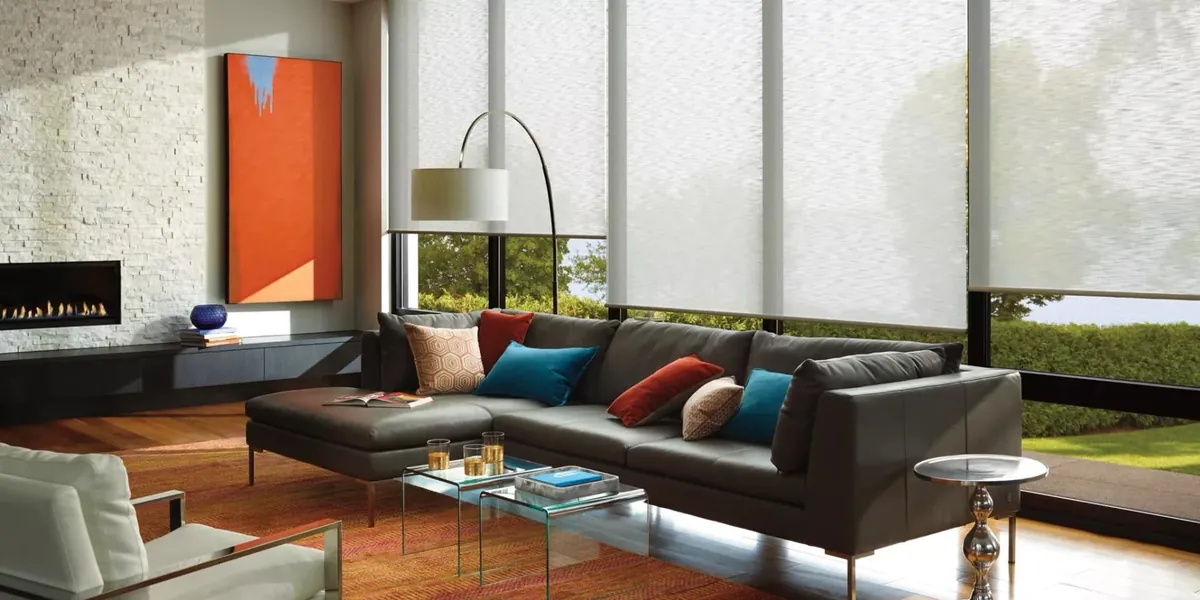
The colonials built off Route 16 have standard modern openings, square and consistent, so they are simple to fit and easy to make uniform across a whole house. The questions here are about size and sun. A family room may have a wide window over the yard and a slider to the deck. A home office may face the afternoon. Bedrooms usually have two windows each.
A solar screen on the family room and the slider cuts heat and glare while keeping the yard in view. For a wide window, two or three shades side by side give you control: lower just the panel in the sun. The home office takes a screen chosen to keep the monitor readable. Bedrooms take room darkening or blackout, especially on the east side.
Because the sizes repeat, a colonial is often the place where people do the whole house at once, in one color family with the opacity changing room by room.
Bedrooms, era by era
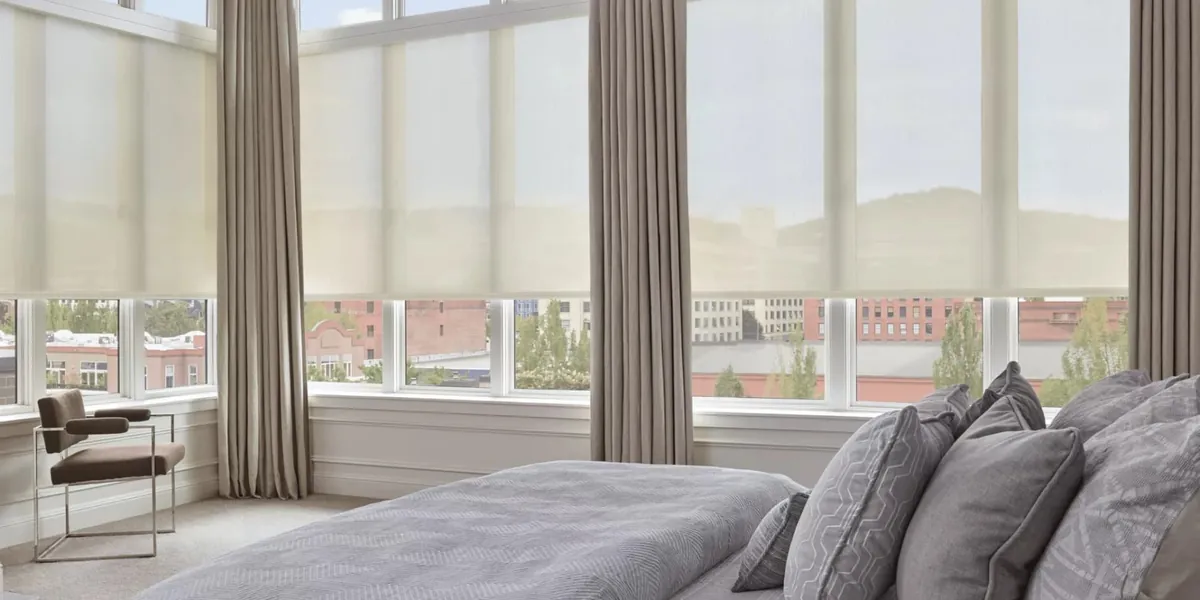
Every house needs dark bedrooms, but each era gets there differently. In a river house, the bedroom window is narrow and often faces the neighbor, so a blackout roller in a casing mount does two jobs at once: it darkens the room and closes the slivers at the sides. In a farmhouse, the bedroom may be tucked under the roof with one or two small windows; the deep old reveal helps block stray light, so a blackout roller inside the frame usually works well. In a colonial off Route 16, two standard windows per bedroom make for a simple, matching pair, and an east-facing room takes the darkest cloth.
If you prefer to wake to some daylight, a room darkening cloth sits between the two, dimming the room without sealing it. It is a good middle ground for a guest room or a child’s room where a little morning light is welcome.
How the house looks from outside
Shades are seen from outside as much as from in. A river row reads as a set, so matching colors and drop heights on the street side keep a house from looking out of step with its neighbors. A farmhouse is seen across open fields, often from a long way off, and warm, pale shades look calm behind its small panes where dark ones can make the windows look empty. A colonial is seen from its own street and driveway, and one color across the front gives it a finished look. Thinking about roller shades in Uxbridge, MA, from the road as well as the room is a small step that makes a real difference.
Choosing by the job, not just the house
Whatever era your house is from, each window has a main job. Matching the fabric to that job is the heart of the visit:
- Keep the light: pale light filtering, raised most of the day. Farmhouse rooms with small sash.
- Cut glare, keep the view: solar screen. Farmhouse windows facing fields, colonial family rooms and offices.
- Privacy after dark: room darkening or banded. River-house side windows and front rooms.
- Sleep: blackout. Bedrooms in all three eras, especially facing east.
- Wipe clean: a washable cloth over a kitchen sink or in a bathroom.
Most houses end up with two or three fabrics. Keeping them in one color holds the house together. The guide to choosing fabric for a sunny room goes deeper into color and light.
What happens when we visit
You can only judge how a fabric handles the sun on a farmhouse sill or the lamplight in a river-house front room by seeing it there. Our vans carry samples, so we can bring the showroom to you.
- Pick a slot through Request a Consultation, or ring us with the call button.
- A van arrives loaded with Designer and Alustra fabrics and screens in a spread of openings.
- We tour the house together and agree each window’s main job: light, view, privacy or sleep.
- You see the swatches in place, at the hour that matters, and in the evening rooms with lamps lit.
- Each frame is measured at several points and its mount agreed with you.
- You are left with a free estimate for the shades you like, and nobody asks you to sign that day.
There is more in what happens at an in-home consultation. If you are reworking a whole room, an interior design consultation can be added to the visit.

How a solar screen balances view and glare
Screen fabric is woven with small, even gaps. How open that weave is decides the balance. A loose weave lets you see the field, the yard or the street clearly and lets plenty of light through. A tight weave cuts more of the glare and some of the view with it, leaving the outdoors a little softer.
The color of the screen counts as much as the weave. A dark screen tends to disappear when you look through it from inside, so the view stays crisp. A pale screen reflects more sun outward and brightens the room, but the view through it is hazier. On a farmhouse with old painted trim, a pale or warm screen often sits better with the room; on a colonial family room with a big view, a darker one may suit. We bring both and test them on your glass. The guide to the best shades for sun and glare explains more.
Motors where they make sense
Some windows are hard to reach in every era: a stair window in a river house, a farmhouse window behind a deep sill full of plants, the far end of a wide colonial window over a sofa. PowerView solves those. Each shade answers to an app or a remote, groups move together, and schedules can lower the sunny side in the afternoon and close the bedrooms at dusk. We plan how each motor is powered at the visit.
You need not motorize everything. Many people start with the hardest-to-reach windows and the sunniest room. Read how motorized shades are controlled for the details.
Installed by certified hands
Each era hides something different behind the wall: tired lath in a river house, hard old timber in a farmhouse, drywall over studs in a colonial. Our installers are certified by Hunter Douglas and adjust to each. They find a solid fixing for every bracket, set each roller level even where the frame is not, and run each shade through its full travel. In a colonial they line up a row of windows to stop at one height. Before leaving they show you every control. See what happens on installation day.
Care through the seasons
Rollers are among the easiest coverings to keep clean. Dust settles on a flat cloth rather than collecting between slats, so a soft duster or the brush tool of a vacuum every few weeks does the job, and a lightly damp cloth takes care of most marks. Let each shade roll fully down now and then so the fabric stays flat. The caring for fabric shades guide covers more, and if a shade starts to roll unevenly later, we repair it.
More for the same house
Rollers mix well with other treatments. Honeycomb cellular shades in Uxbridge suit a draughty farmhouse bedroom, roman shades in Uxbridge soften a colonial dining room, and plantation shutters in Uxbridge suit a river-house front room. We also fit custom blinds in Uxbridge. The Uxbridge page lists them all, and our roller shades page compares every line.
Plenty of customers start with roller shades in Uxbridge, MA, in the room that bothers them most, whether a glaring family room or a river-house side window, and carry the same look through the house later.
The nearest showroom is in Franklin
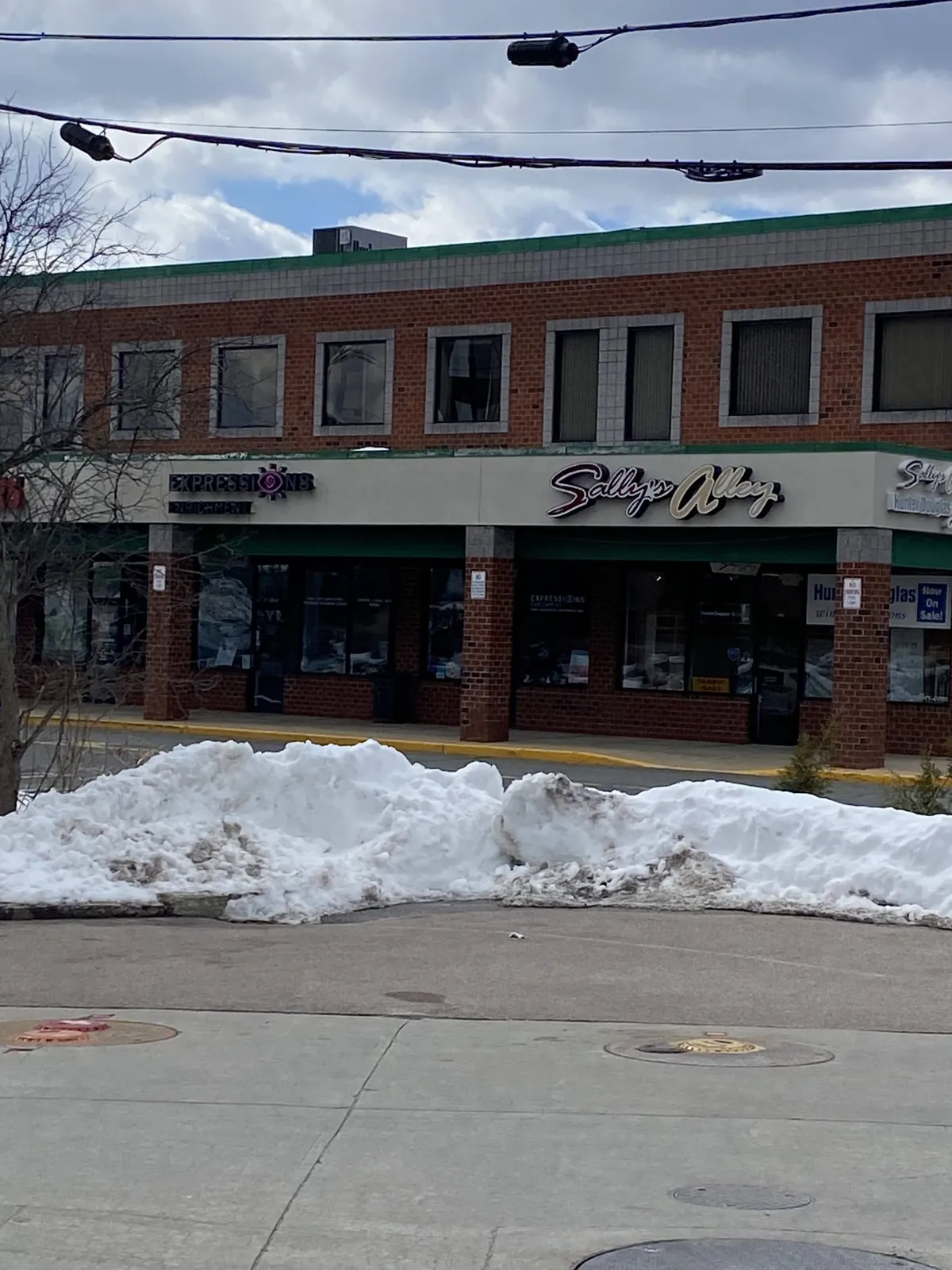
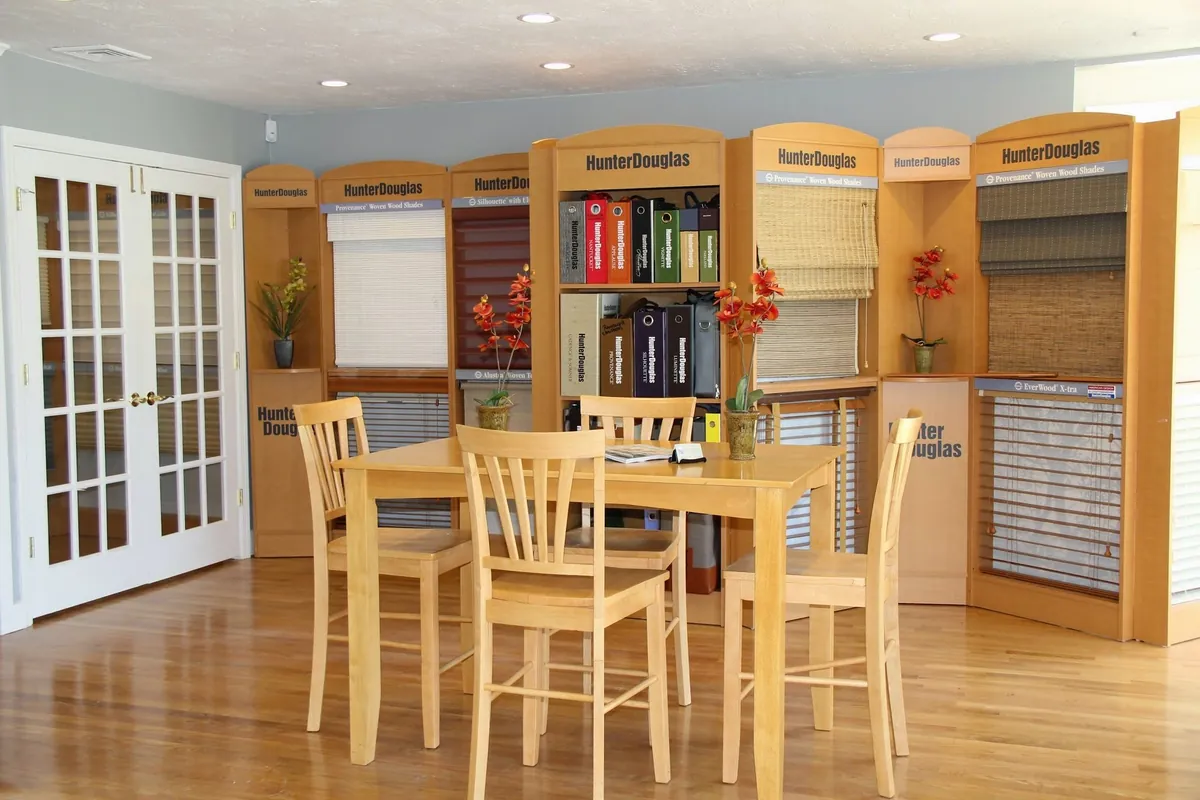
Our Franklin showroom is the closest to Uxbridge. Call in if you would like to see roller fabrics before a home visit.
Whichever era your house is from, the deciding works best at your own windows.
Gallery dealer, certified installers
Blinds & Designs is a Hunter Douglas Gallery dealer. Whatever the age of your house, that means the full range is on the table at one visit: the Designer rollers, screens and banded shades, the Alustra collection and PowerView.
Certified Hunter Douglas installers fit each shade. We also repair window coverings, including ones you already own, through our blind and shade repairs. More about us as a Hunter Douglas dealer in Uxbridge.
Questions from Uxbridge
My house is one of the old mill-era homes by the river. Will a roller fit its narrow frames?
Usually inside the frame, keeping the casing visible. Because old frames move, we measure at several points. Where depth is short, a casing mount is the answer, and it covers the side slivers too.
My farmhouse windows are small. Won’t a shade make the rooms darker?
Raised, a roller rolls up into the head of the reveal and leaves the glass clear. Lowered, a pale screen or light filtering cloth keeps as much daylight as possible.
What handles the afternoon sun in a colonial family room?
A solar screen. Choose its openness for the balance you want: looser for view, tighter for glare.
Can I have different fabrics but one look?
Yes. Rollers come in many opacities within one color, so bedrooms, living rooms and the sunny side can each have the right cloth while the house still matches.
Do I pay for the estimate?
No. We measure at the consultation and leave you a free estimate.
Your next move
River house, farmhouse or colonial, the right roller shows itself once the fabric is at your window. Request a consultation and we will bring the samples, measure each frame and leave a free estimate. The call button works too, or visit the Franklin showroom.