
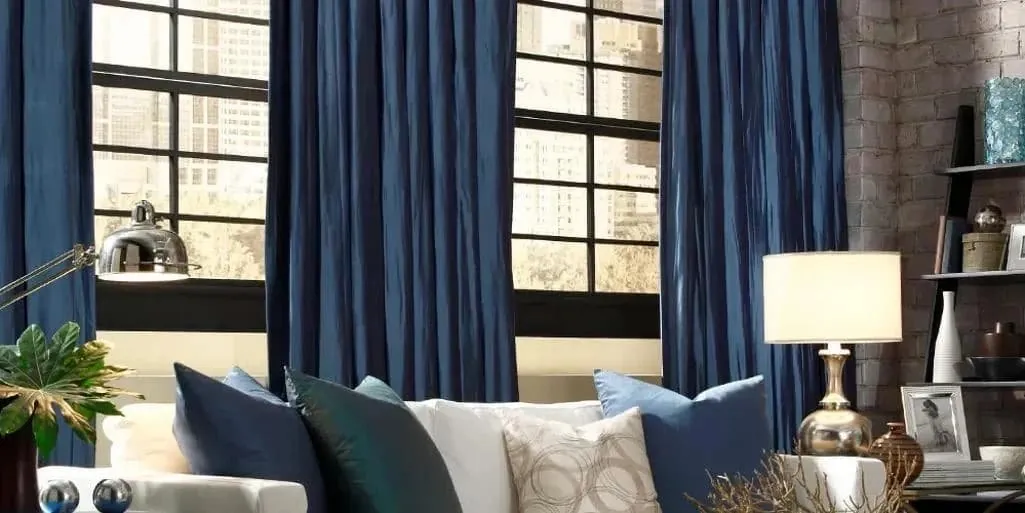
Brick town houses and towers of glass
The city asks two very different things of a fabric shade. In the Back Bay, on Beacon Hill and through the South End, brownstones and row houses keep their tall, narrow sash set into thick masonry walls, with reveals deep enough to sit a shade well inside the opening. A few blocks away, new high-rise condominiums are glazed from floor to ceiling, with no reveal at all and a view that runs to the harbor. Planning roman shades in Boston, MA, means answering both.
They are two extremes of the same market, and they share more than it first seems. Both want a window covering that looks finished, because a brownstone parlor and a glass-walled living room are both rooms people look into as well as out of. Both need privacy at some hours and open glass at others. And both reward fabric, which softens hard surfaces, whether that surface is old brick or new glass.
We cover the city with Hunter Douglas Vignette and Carole Fabrics roman shades in flat and folded styles. Our consultants carry the samples to your door, whether that door is a stoop on a narrow street or a lobby with a concierge.
Vignette and Carole Fabrics for parlor floors and high floors
The right roman shades in Boston, MA, depend first on which kind of home you have. These three come up most, from the oldest town houses to the newest towers.
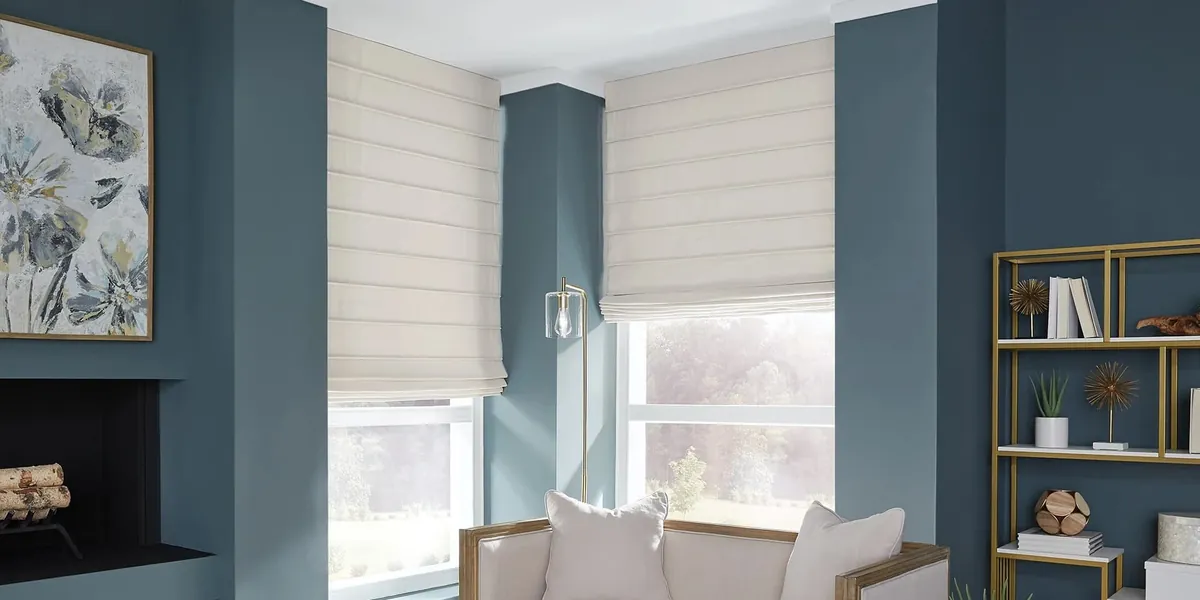
Carole Fabrics on a bow front
A smooth flat panel on each window of a curved bow, so the sweep of the front reads as one tailored line.
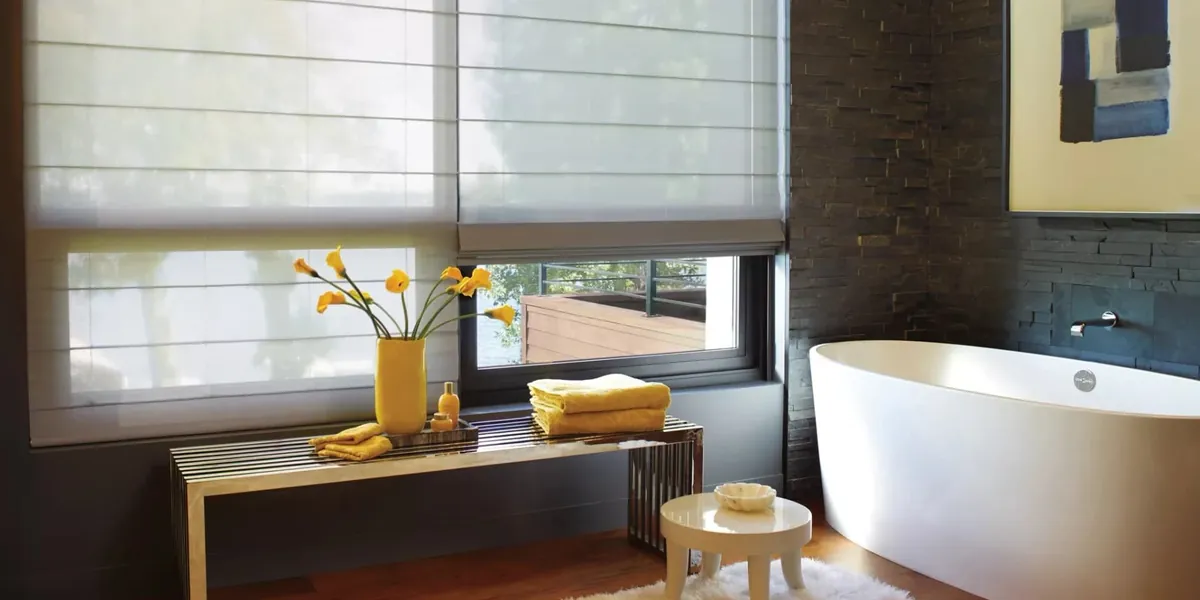
Vignette for baths and back rooms
Even, modern folds for a bathroom, a galley kitchen or a bedroom at the back of a row house, where privacy counts most.
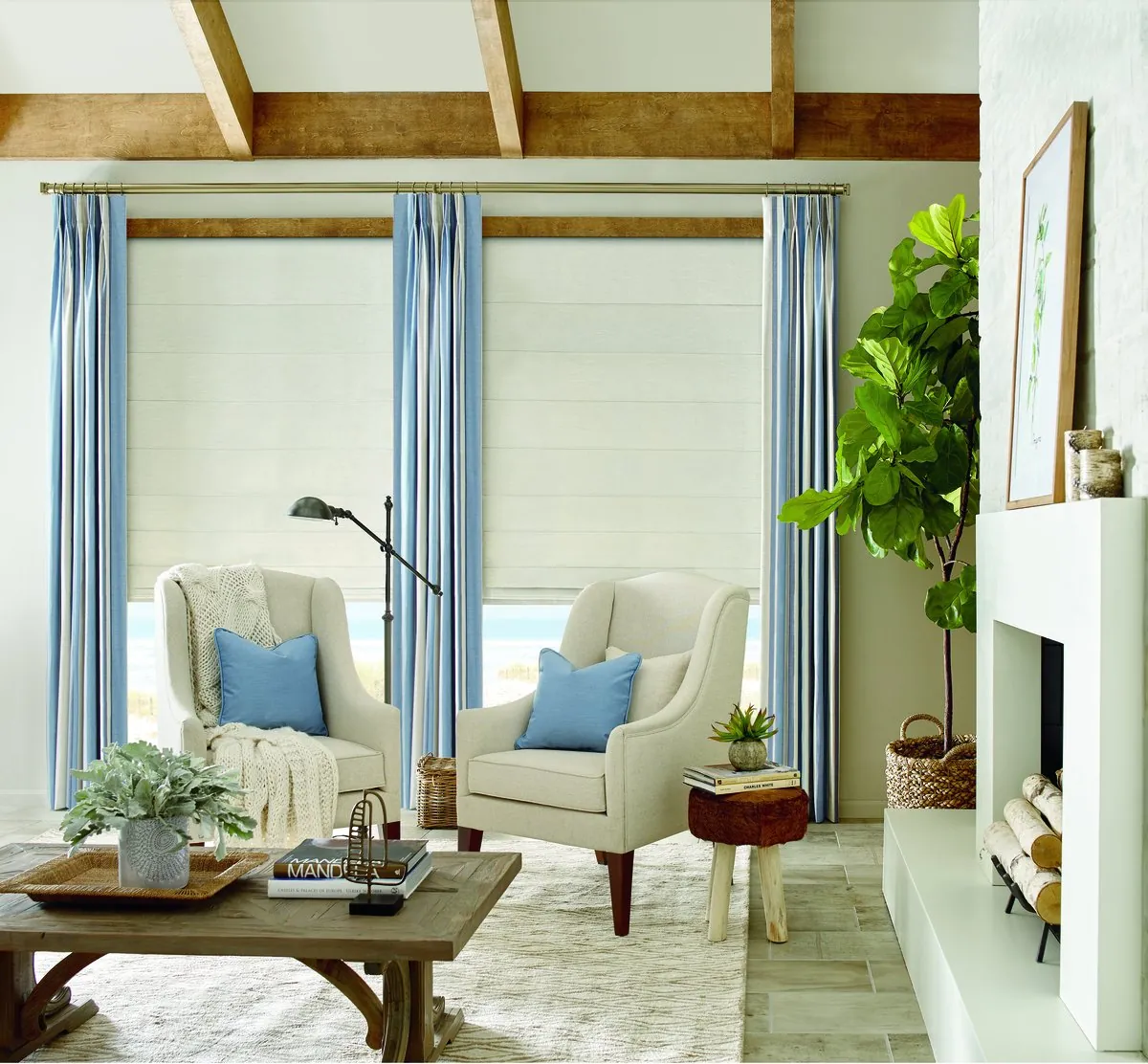
A fabric shade with drapery beside it
On a high-ceilinged parlor floor, a shade inside the reveal and panels outside it make the most of the room’s height.
Tall, narrow sash in old brick
The sash windows of a Back Bay brownstone or a Beacon Hill row house are tall and slim, often far taller than they are wide, and they are usually set in pairs or threes across the front of the house. A roman shade suits that shape. On a long drop the folds can be spaced generously, so the lowered shade looks calm rather than busy, and the raised stack takes up only a modest band at the top of a very tall window.
The proportion still needs care. A shade that is too heavy on a narrow window looks bulky, and a pattern that looks fine on a wide window can feel cramped on a slim one. On these houses we usually suggest a plain or softly textured fabric, or a narrow stripe that runs with the height of the window, so the shade emphasizes how tall the sash is rather than fighting it.
Where a parlor floor has three tall windows side by side, matching matters. Each shade should sit at the same height and stack the same way when raised, so the row looks like one design from inside and from the sidewalk.
Deep reveals, and why they help
The thick masonry walls of a Boston town house leave a deep reveal around each window, and that is good news for a fabric shade. A deep reveal usually lets the shade mount inside the opening, tucked back from the room, with the casing and the plaster returns left fully on view. In a house where the woodwork is part of the character, that matters.
Not every reveal is the same, though. Old sash hardware, shutters folded into the jambs and window locks can all get in the way of a headrail, and two windows in the same room may have slightly different depths. We measure each opening on its own and tell you where an inside mount will work and where the shade should sit on the face of the trim instead.
The street side and historic district review
Much of the Back Bay, Beacon Hill and the South End sits within historic districts, where what shows on the street side of a building can be subject to review. Rules differ from district to district and building to building, so it is worth checking what applies to yours before you settle on anything that shows from the street.
What we can do is help the street face look composed. Shades in the same fabric, or at least the same color on the outward side, across every front window keep a facade calm. A neutral fabric is a safe choice for the front of a house that sits in a row of similar fronts, and more color or pattern can live in the rooms at the back, where it shows only from inside.
South End bow fronts
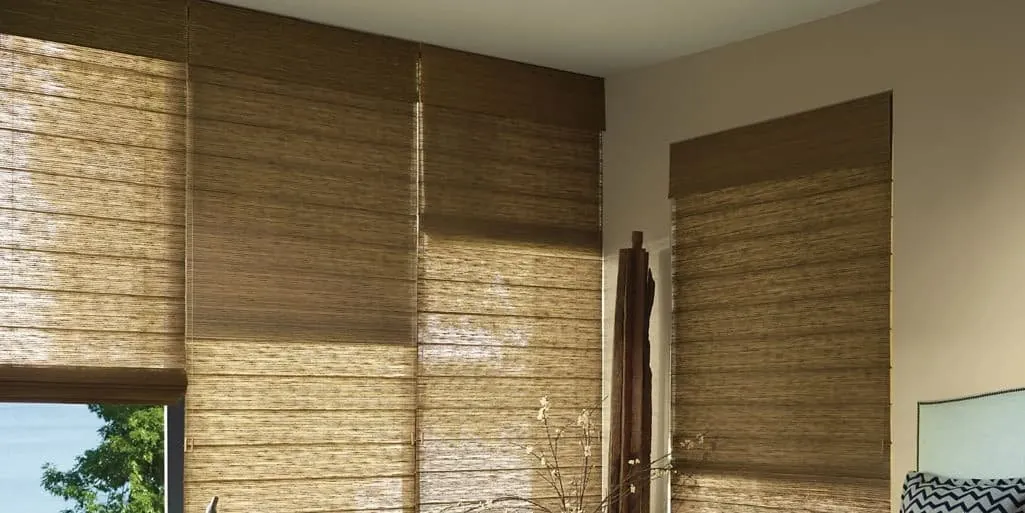
The bow fronts of the South End bring a curve to the front room, with several windows set around the bend of the wall. Each window in the bow gets its own shade. Flat Carole styles work particularly well here, because the smooth panels follow the curve neatly and read as a single band when all the shades sit at the same height.
The windows in a bow are not always identical. The center windows may be wider than the side ones, and the angles between them can limit how much room a headrail has. We look closely at each corner of the bow so the shades clear one another when raised and lowered, and so the folds line up across the whole curve.
Flat or folded, in town
Both Vignette and Carole Fabrics come in flat and folded styles. A flat style gives a crisp, architectural line, which suits the formal front rooms of a brownstone and the clean lines of a modern condominium alike. A folded style keeps soft loops of fabric down its face, which brings warmth to a bedroom or softens a room where brick and plaster dominate.
There is no rule that a whole home must use one style. A flat style on the parlor floor and a folded style in the bedrooms upstairs can share a fabric family and still give each floor its own mood. We bring both styles on the van so you can compare them on your own windows.
High-rise glass from floor to ceiling
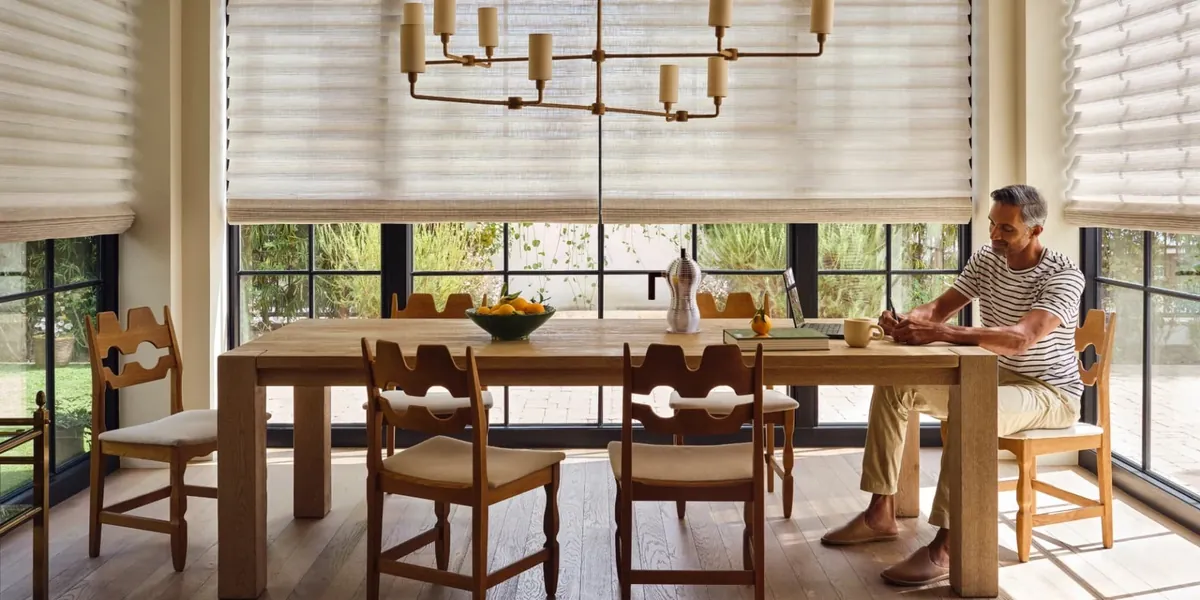
The new condominium towers present the opposite problem. Instead of slim sash in deep reveals, there are walls of glass running from floor to ceiling, often with no reveal at all, and a view that may take in the harbor, the river or the skyline. The light is strong, especially on the upper floors, and on some exposures it lasts most of the day.
Roman shades on glass like this are usually mounted on the ceiling or the wall above the window, and wide walls are typically divided into several shades rather than one, so each panel stays a sensible size to raise and lower. Setting each shade’s edges against the mullions in the glass helps the wall read as one design. Flat styles are popular here because they echo the clean lines of a modern building, but a folded style can bring welcome softness to a room of glass, steel and stone. On a glass wall, roman shades in Boston, MA, become part of the architecture as much as the decoration, so we talk through where each shade begins and ends with you at the visit.
Privacy works differently at height. A high-floor apartment may face only sky, while one lower down may face the windows of the next building across a narrow street. Fabric choice follows from that. A lighter fabric keeps the view and softens the glare where nobody can see in; a denser fabric suits a bedroom or a room that faces neighbors. Our guide to the best shades for sun and glare explains how to weigh it up.
A consultation in a town house or a tower
Boston falls within our shop-at-home territory run from Canton. In a city home that is the natural way to choose fabric shades, because the samples come to the window and you see each fabric in the light it will live with, whether that is a north-facing row house or a sunny corner high above the street.
- Book through the Request a Consultation form, or press the call button.
- We set a time and note anything we should know, such as building access, parking or the floor you live on.
- A consultant brings Vignette, Carole Fabrics and Hunter Douglas drapery samples to your home.
- Flat and folded styles go up against the glass so you can judge them in place.
- Each opening is measured, including the depth of every reveal or the ceiling height on a glass wall.
- Before we leave, you know what comes next: a free estimate covering every window we measured.
If you like to know what to expect, read what happens at an in-home consultation; our window measuring terms explained guide decodes words like reveal, inside mount and outside mount.

Bedrooms facing the street or the next building
Bedrooms in a row house often face the street at the front or a tight rear yard at the back, with neighbors close on both sides. In a tower, a bedroom might face open sky or the building across the way. Either way, the bedroom is where privacy and darkness matter most. A denser fabric in a folded style suits a primary bedroom well, and Vignette works neatly in a guest room or a small home office.
City light also arrives at night, and roman shades in Boston, MA, have to deal with it in a way a country bedroom never does. Streetlights, signs and the windows of other buildings can brighten a room long after dark, so a bedroom shade that lowers fully and sits well within the frame is worth planning carefully. A shade in a city bedroom is chosen with the evening in mind as much as the morning, and a folded style in a closely woven fabric is often where that conversation ends.
Brick, plaster and color
Inside a brownstone, exposed brick, painted plaster and dark woodwork shape the room, and fabric shades can either blend in or add a quiet contrast. Warm neutrals sit well against brick; a crisp white or pale gray brightens a dim row house room; and a richer color can give a library or dining room a finished feel.
In a condominium, the palette is often lighter and cooler, with pale floors and white walls. A textured fabric adds interest without competing with the view. Pattern needs a light touch on a glass wall, where a large expanse of print can overwhelm the room. Our guide to choosing fabric for a sunny room is worth reading for the bright exposures.
PowerView on a wall of glass
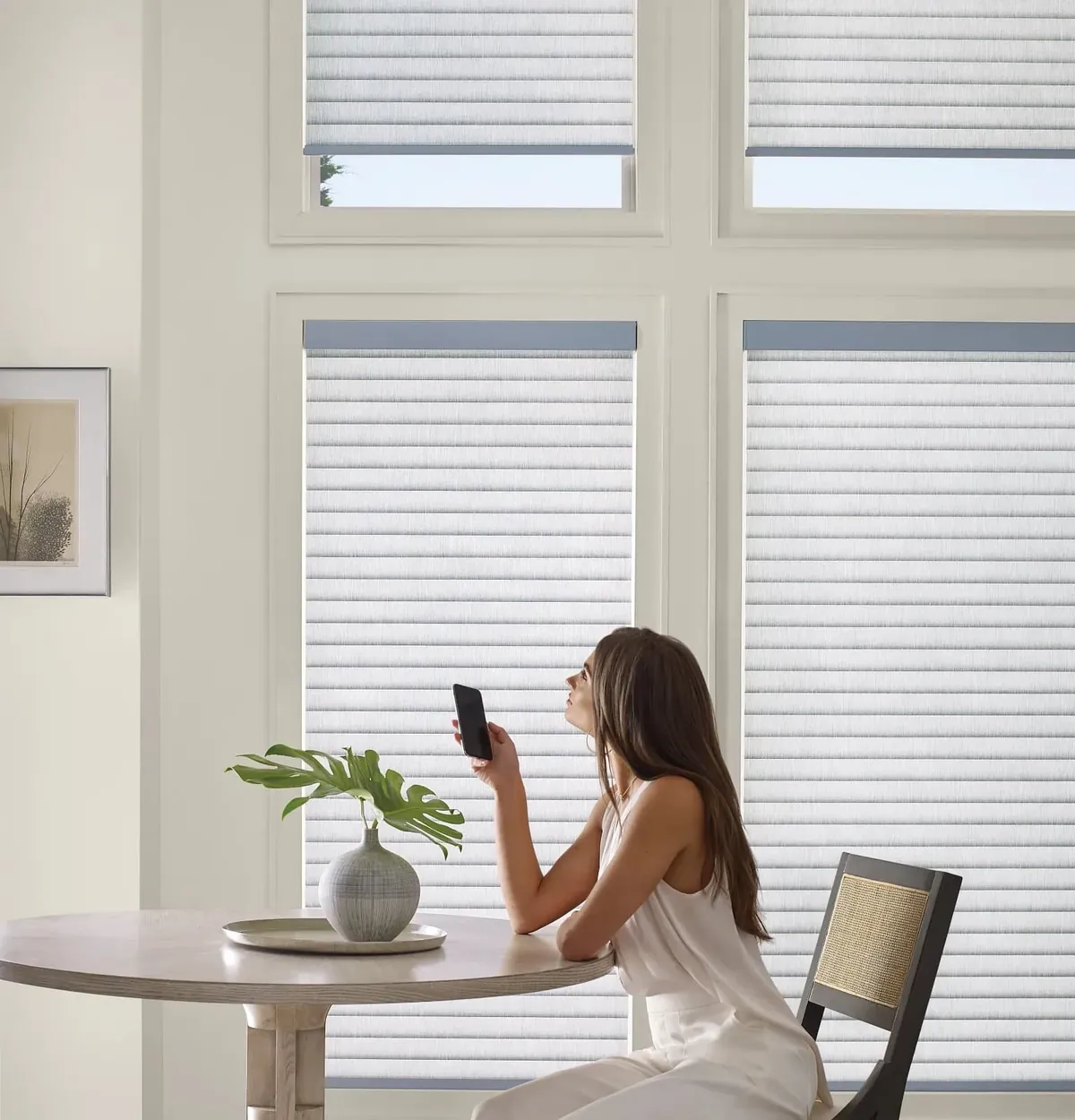
A condominium living room with a whole wall of shades, or a parlor floor with three tall windows at the front, is a good candidate for PowerView motorization. Shades can be grouped so a wall moves together, controlled from a handheld remote or the PowerView app on your phone, or set to a schedule that lowers them when the afternoon sun reaches that side of the building. On tall sash, where the top of the shade is far above reach, motorization makes everyday use simpler. We plan how each motor is powered at the visit.
Our page on motorized blinds in Boston covers automating the rest of your home, and the guide to how motorized shades are controlled explains the remote, app and schedule options.
Certified fitting in masonry and on glass walls
Fitting a shade into a deep brick reveal and fitting one above a modern glass wall are different jobs, and both are done with certified Hunter Douglas installation. In an old town house, the openings are rarely perfectly square, so the shades are set to look level in the room. In a tower, a long row of shades must line up across the glass. Our guide to what happens on installation day explains what to expect.
The rest of a city home
Not every window suits a fabric shade. A bathroom in a row house may suit plantation shutters in Boston, and a bedroom where you want another kind of shade may suit cellular shades in Boston. The Boston page gathers our city services in one place, so a town house or a condominium can be planned from top to bottom in a single appointment.

A Gallery dealer for old brick and new glass
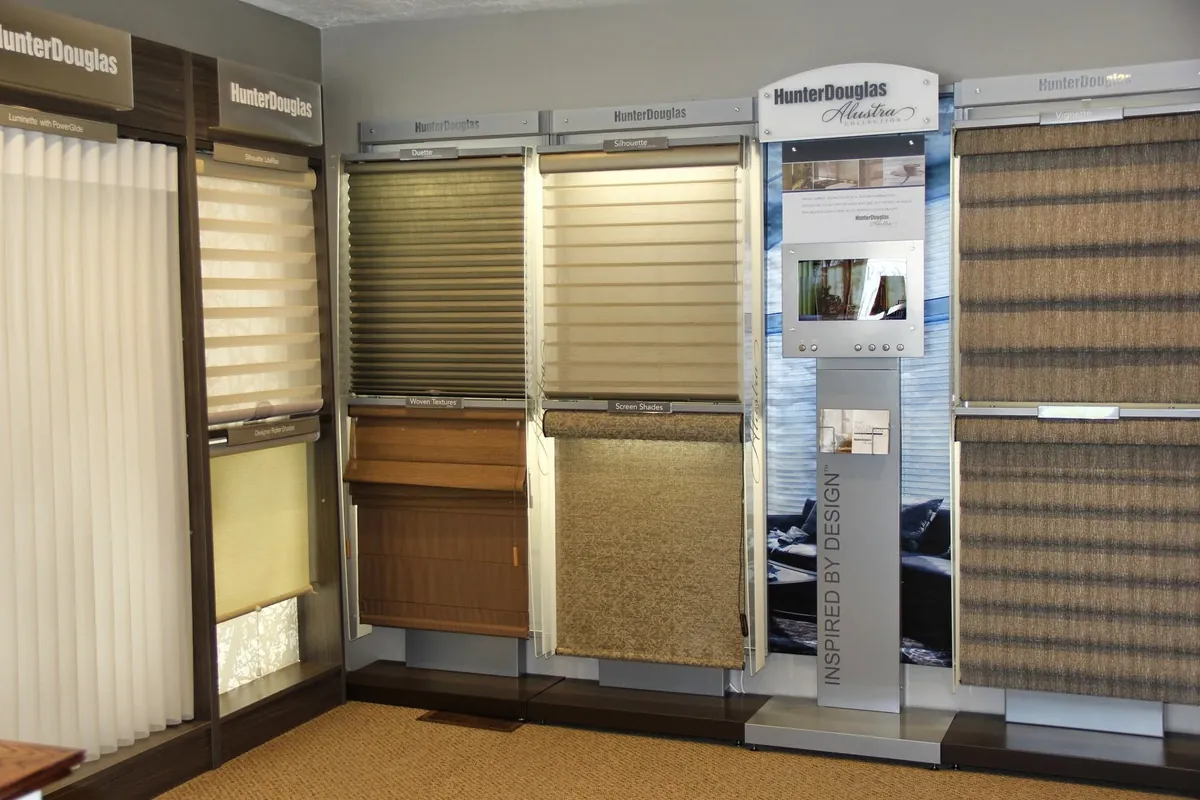
Blinds & Designs is a Hunter Douglas Gallery dealer, which means one source for a city home that mixes historic and modern windows: Vignette and Carole Fabrics roman shades for the parlor floor and the high floors, Hunter Douglas drapery for rooms that want it, and the rest of the Hunter Douglas range for windows that suit something else.
When a room needs more than shades, our interior design consultations help bring the windows, the walls and the furnishings into one plan. Every estimate costs you nothing. The fitting is certified Hunter Douglas installation. And our blind and shade repair service will look at a shade you already own.
Most Boston projects start at home. If you would like to see a showroom too, Franklin is our nearest.
Questions from Boston
Will roman shades fit inside the deep reveals of a brownstone?
Usually, yes. Deep masonry reveals often allow an inside mount, which keeps the casing and plaster returns in view. We measure each opening, because old hardware or shutters in the jambs can change the answer.
How do roman shades work on floor-to-ceiling condominium glass?
A wide glass wall is usually divided into several shades mounted on the ceiling or wall above, with their edges set against the mullions so the wall reads as one design. PowerView can move them together.
Does a historic district affect what I can put in my windows?
It can affect what shows from the street, and the rules vary by district and building, so check what applies to yours. We can help keep the street side calm and consistent with matching fabrics across the front windows.
Can you come to a condominium building?
Yes. Boston is part of our shop-at-home area, and a consultant brings the samples to your home. Tell us about access and parking when you book. Franklin is our nearest showroom if you would also like to visit one.
What does the estimate cost?
Nothing. You get a free written estimate after the consultation, broken down window by window for each room, so you can do the parlor floor now and the bedrooms later if that suits you.
See the fabric in your own light
A row house parlor facing north and a corner unit high above the harbor see completely different light, and a fabric that looks perfect in one can look wrong in the other. The only reliable test is at your own window. Request a consultation and a consultant will bring Vignette, Carole Fabrics and drapery samples to your home, whether it is a stoop on Beacon Hill or a lobby in a new tower, measure every reveal or glass wall, and leave you with a free estimate. That is how roman shades in Boston, MA, end up looking as if they were always meant to be there. If you have a question first, use the call button.