
What hours of sun do to a room
A sunny room is a gift most of the year, but strong light day after day takes a toll. Rugs and upholstery lose their color on the side nearest the window. Wood floors change tone where the sun lands. The room warms up through the afternoon. And whatever fabric hangs at the glass faces all of it head on.
Choosing fabric for a sunny room means thinking about three things at once: how the fabric itself looks after years in that light, how it protects the room behind it, and how the room feels when the shade is down on a bright afternoon. Get those three right and the room stays pleasant through every season.
Color: what sun does to it
Color is the first decision and the one sunlight affects most.
Deep, saturated colors, rich blues, reds and bold patterns, show any change in tone more readily, simply because there is more color there to shift. Soft neutrals, whites, creams, warm grays and natural tones, tend to keep their look in a strong-sun window more gracefully, and they also stay calmer when the light is shining straight through them.
That does not mean a sunny room has to be beige. It means color is worth choosing with the light in mind. A pattern you love might suit a north-facing study better than a west-facing sunroom, while a textured neutral could give the sunroom interest without the risk.
The other thing to know is that every fabric looks different with the sun behind it. A cream can glow warm gold; a gray can turn cool and almost blue. That is why we judge fabric for a sunny room against the actual glass, at the time of day the sun is strongest, rather than in the hand.
Weave and texture
How a fabric is made changes how it behaves in strong light.
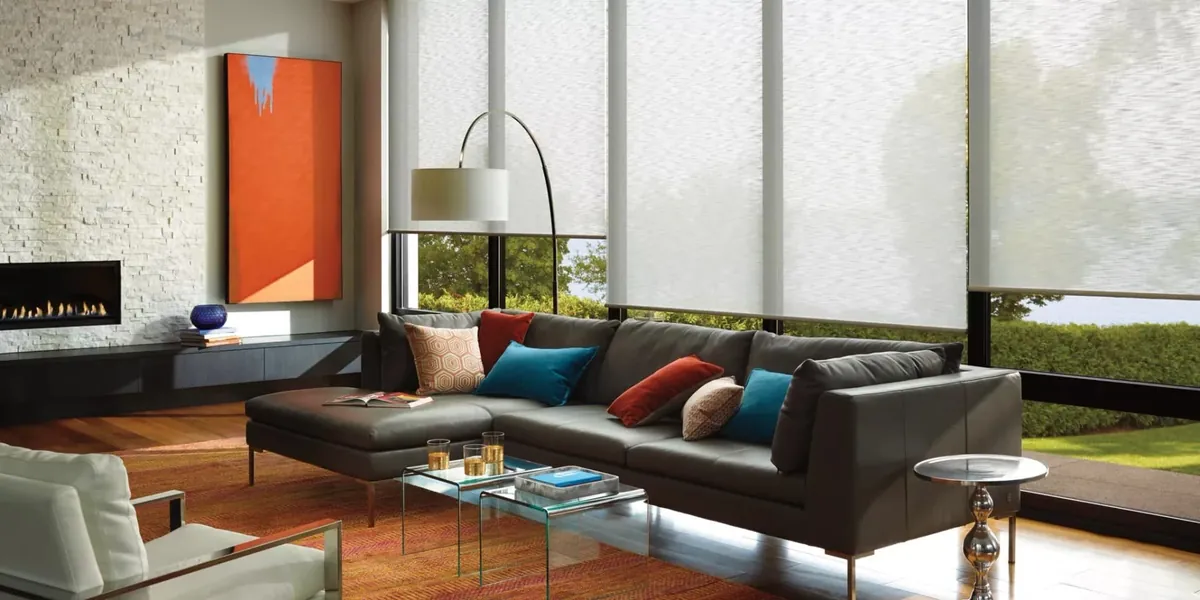
- Screen fabrics are woven with tiny openings. They cut glare and keep the view, and a lowered screen keeps direct sun off floors and furniture while the room stays bright. Openness is the key choice: more open keeps more view, tighter cuts more brightness.
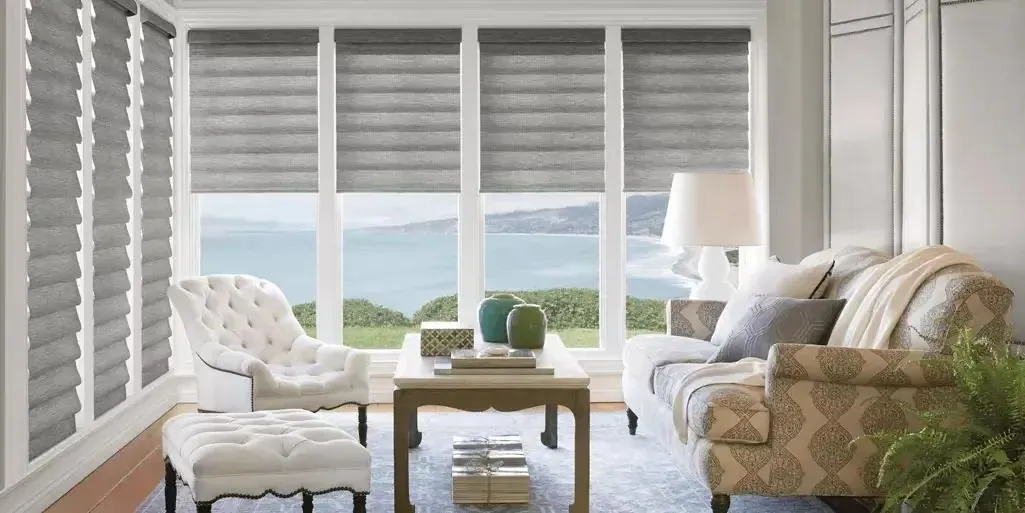
- Sheer fabrics soften and diffuse light, giving a glowing, even look. Shades with tilting fabric vanes let you adjust the brightness without raising the shade.
- Honeycomb fabrics come in light-filtering and room-darkening versions, and the cells sit between the room and a hot window.
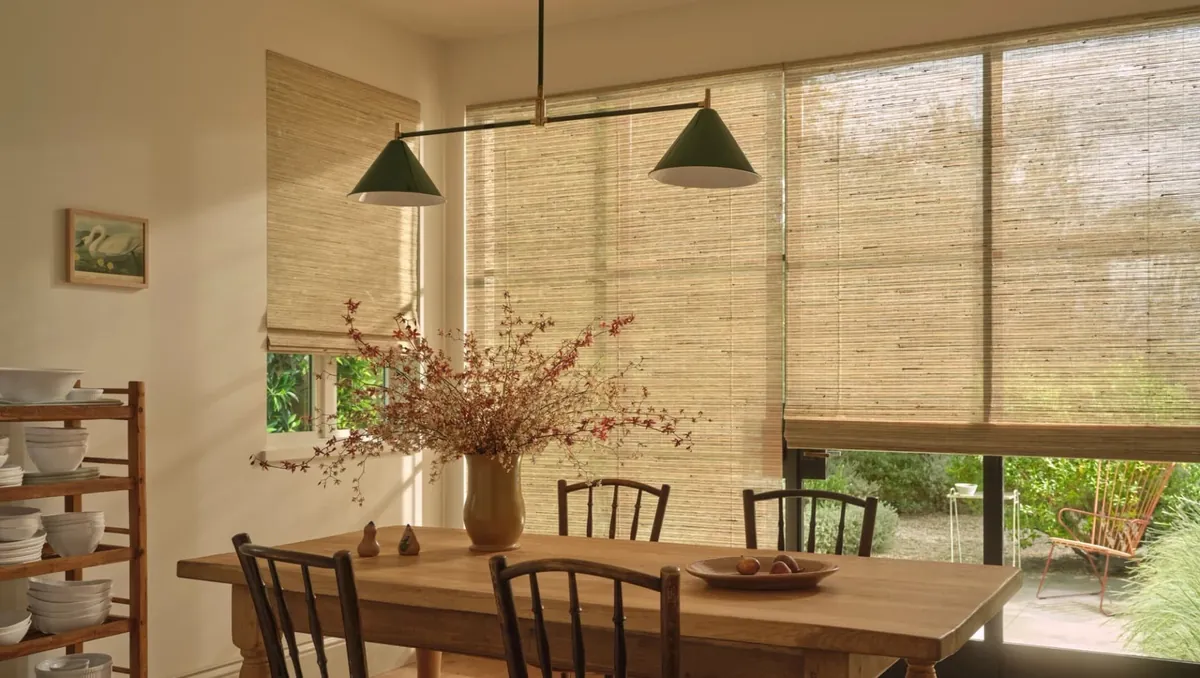
- Woven and natural textures bring warmth and character and filter light through their weave, which suits sunrooms and dining rooms that want a relaxed look.
- Room-darkening fabrics block light almost entirely, for a sunny bedroom or media room.
Light level: how bright do you want it?
Strong sun tempts people to choose the heaviest fabric they can find. Often that is a mistake, because the room then feels dark all day. In most sunny living spaces, a light-filtering or screen fabric is the better balance: brightness stays, the harsh edge goes.
Bedrooms are the exception. A west-facing bedroom that bakes in late afternoon may want room-darkening fabric, or a shade that can be closed fully while another layer stays open during the day.
Sunny rooms in local houses
Choosing fabric for a sunny room plays out differently depending on the house.
Water-facing rooms
In Osterville, Chatham and Marion, the brightest rooms tend to face the water, and the reflection off it doubles what comes through the glass. Owners there usually want to keep looking at the view, so the fabric has to be something you see through. Soft whites and sandy neutrals hold up best to that much light and sit quietly against the seascape outside.
Foyers and great rooms
Larger colonials in Franklin, Medway and Needham often have a stairwell or great room lit by tall upper glass. The sun tracks across the treads and the floorboards for much of the day, so a fabric that can stay down for hours without making the space gloomy is the goal. Because those panes are out of reach, the fabric decision usually comes paired with motorization.
Top-floor triple-decker rooms
A top-floor apartment in a New Bedford, Fall River or Woonsocket triple-decker can catch the full afternoon through a row of tall, narrow windows. There the question is often color: a fabric that keeps the rooms feeling airy, in a tone that suits the painted woodwork.
Capes with low winter sun
Along Route 6A and in Sandwich and Hingham, the small, deep-set windows of antique capes seldom overheat a room in July. Their sunny season is winter, when the low sun slants in across the floor. A pale, light-filtering fabric is the usual pick, since it softens the slant without dimming a room that is short on daylight to begin with.
Living with the fabric for years
A shade is something you look at every day for a long time, so it is worth choosing fabric for a sunny room with the rest of the room in mind. Look at what stays: the floor, the trim, the largest upholstered piece. A fabric that sits comfortably with those will still feel right after the cushions and the art have changed.
It also helps to think about the view from outside. Shades on the sunny side of a house are often the ones the street sees, so many owners keep those windows consistent and save bolder choices for rooms at the back.
Fabrics to compare
Roller and screen shades
Flat fabrics and screens, with openness chosen for view and glare.
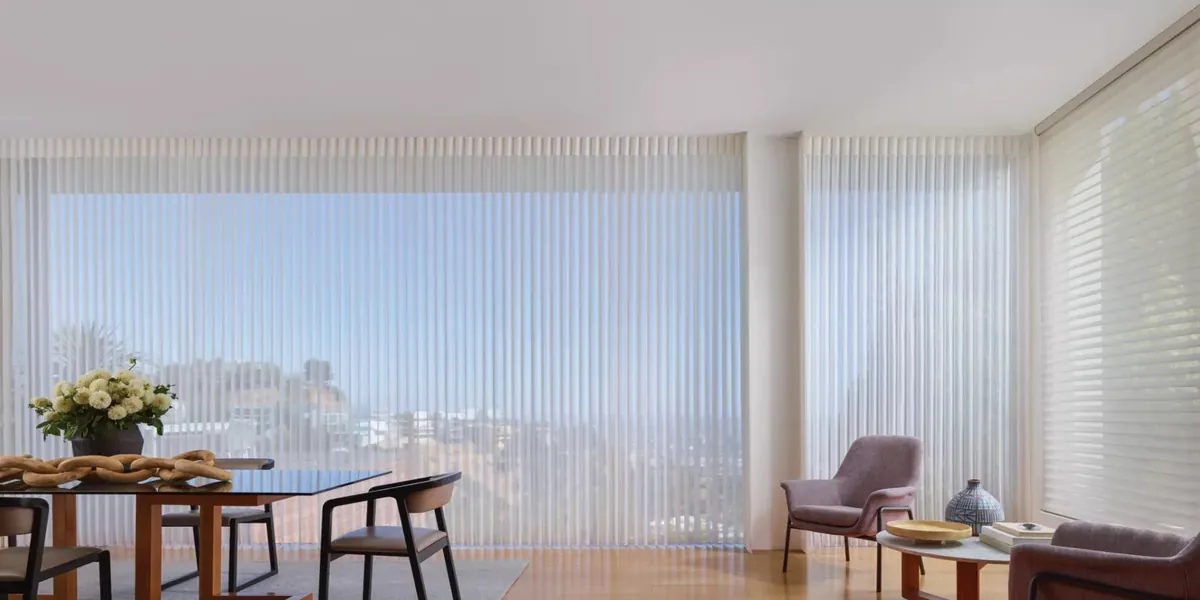
Sheer shades
Soft, diffused light with vanes you can tilt.
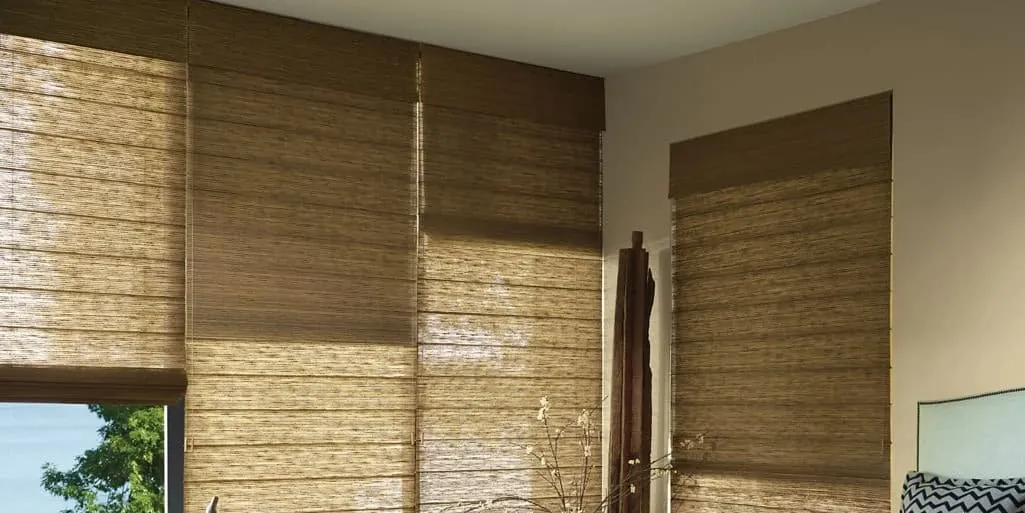
Woven shades
Natural textures that filter light through their weave.
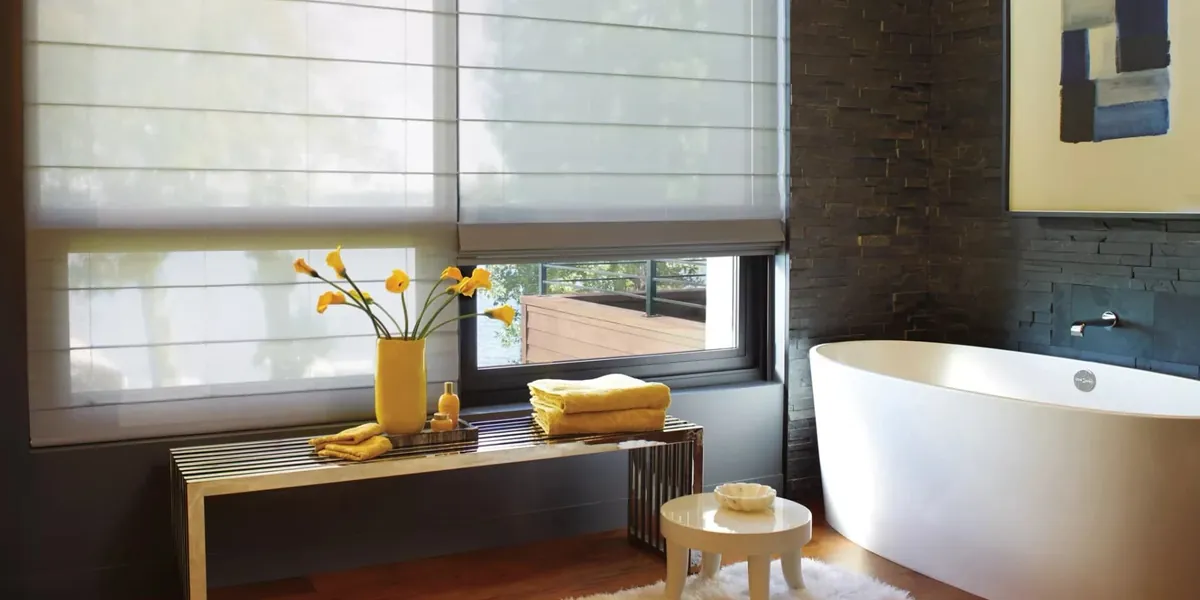
Roman shades
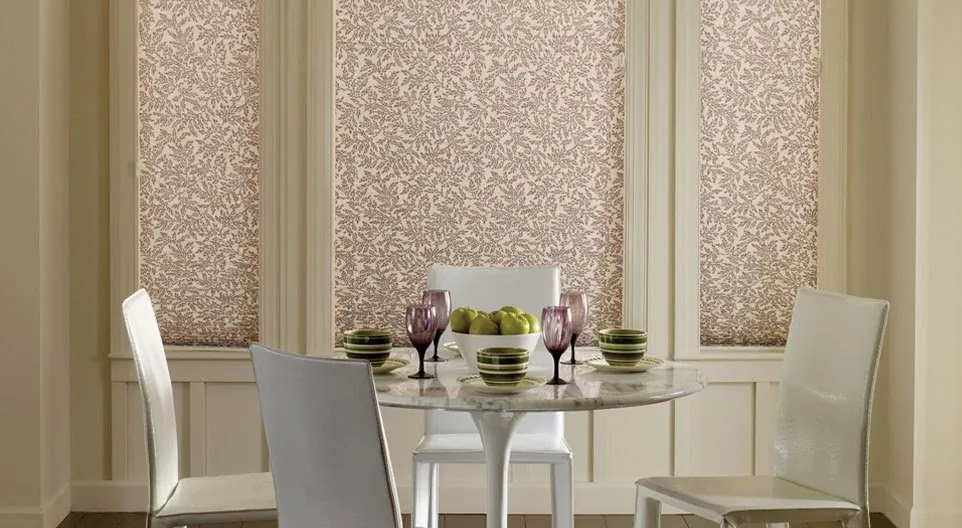
Flat and folded styles in a wide range of fabrics.

Seeing fabric in your own sun
The only reliable way to choose fabric for a sunny room is to see it there. Our in-home consultations come with sample vans, so we can bring the showroom to you and hold fabrics up to your brightest window at the hour it matters.
As a Hunter Douglas Gallery dealer, we can show you screen, sheer, honeycomb, woven and Roman fabrics side by side. Estimates cost nothing, and certified Hunter Douglas installation fits the finished order. For help pulling colors together across several rooms, ask about our interior design consultations.
Sunny room questions
Will a light color look washed out in a bright room?
Usually it looks calm rather than washed out, especially with sun behind it. If you want more character, texture often works better than strong color in a very sunny window.
Do I need a dark fabric to keep a sunny room cool?
Not necessarily. Honeycomb cells and screen fabrics help with heat and glare while keeping the room bright. Dark fabric mainly changes how much light gets through.
Can a shade protect my furniture and floors?
A lowered shade keeps direct sun off whatever is behind it, which is why many homeowners lower shades during the sunniest hours. Motorized schedules make that easy.
What about glare on screens and TVs?
That is more about openness and fabric weight than color. See our guide to shades for sun and glare.
Is fabric choice different for a sunroom?
Often, yes. Sunrooms tend to suit screen, sheer or woven fabrics that keep the outlook. We look at the room with you and compare samples.
Bring the samples to your sunniest room
Request a consultation and tell us which room gets the most sun, and when. We will bring fabrics to compare in that light and give you a free estimate. You can also visit the North Dartmouth showroom, or use the call button at the top of the page.