
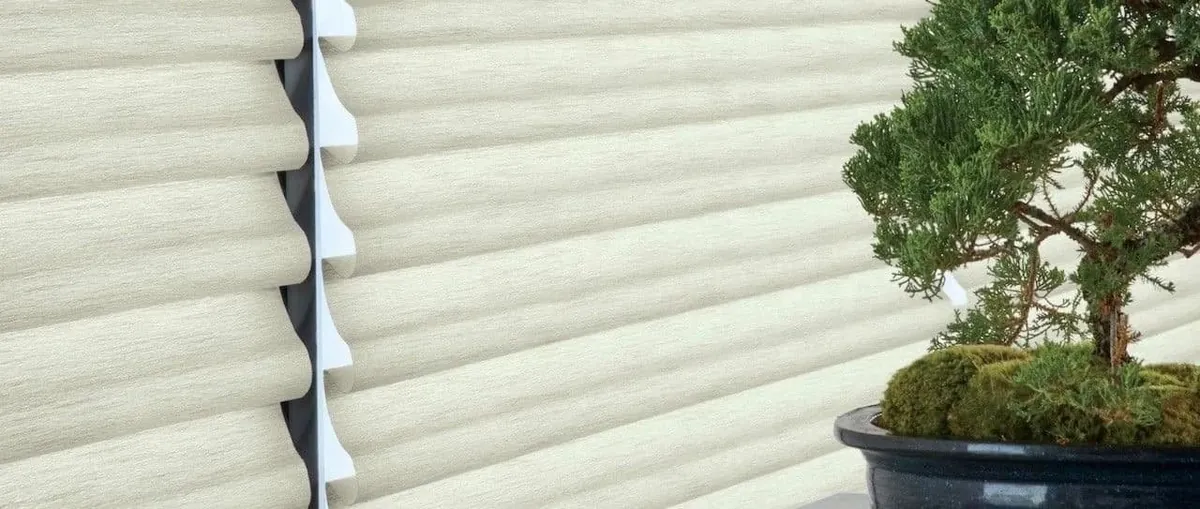
Why there is no one-size answer
Search online for advice on caring for fabric shades and you will find plenty of confident tips. The trouble is that fabric shades are not one thing. A honeycomb shade, a sheer shade with soft vanes, a Roman shade, a roller screen and a woven wood shade are made in completely different ways, from different materials, and what suits one can mark or distort another.
That is why we do not publish a general cleaning routine. The right care depends on which Hunter Douglas line you have and which fabric it is made in, and Hunter Douglas gives guidance for its own products. If you tell us what you have, we will point you to the guidance for your shade.
What we can help with here is the part that matters most: knowing what you have, recognizing when something is wrong, and knowing when to stop and ask.
Start by knowing what you have
The most useful thing you can know about any fabric shade is its name. Hunter Douglas lines behave differently, and the name tells us straight away what we are dealing with.
- Honeycomb shades such as Duette and Applause have cells formed by layers of fabric.
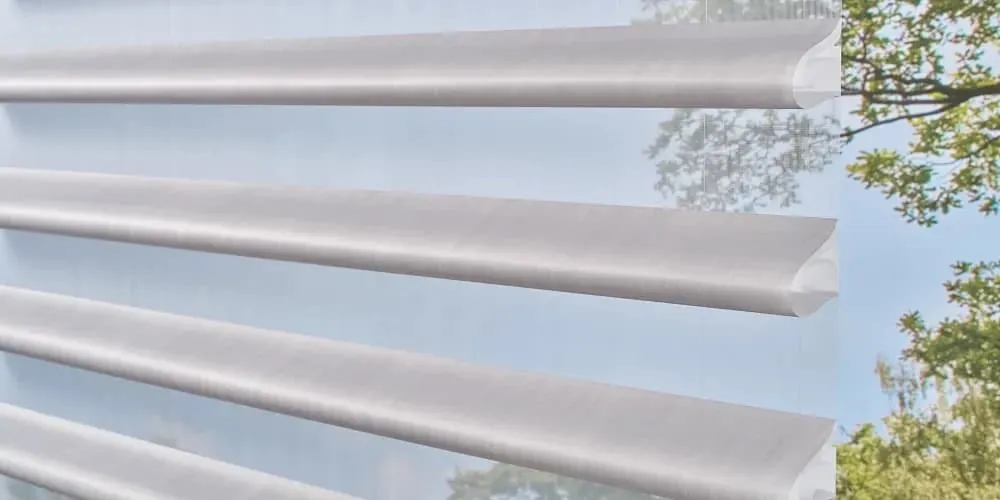
- Sheer shades such as Silhouette and Pirouette have soft fabric vanes held between sheer layers; Luminette hangs vertically.
- Roman shades such as Vignette fold or stack as they rise.
- Roller and screen shades such as Designer roller and screen shades roll onto a tube at the top.
- Woven shades such as Provenance have a textured, woven face.
If you bought your shades from us, we can usually help you work out which line and fabric you have. If you moved into a house that already had them, describe them to us, or look at what they look like from the side, and we can usually tell you what they are.
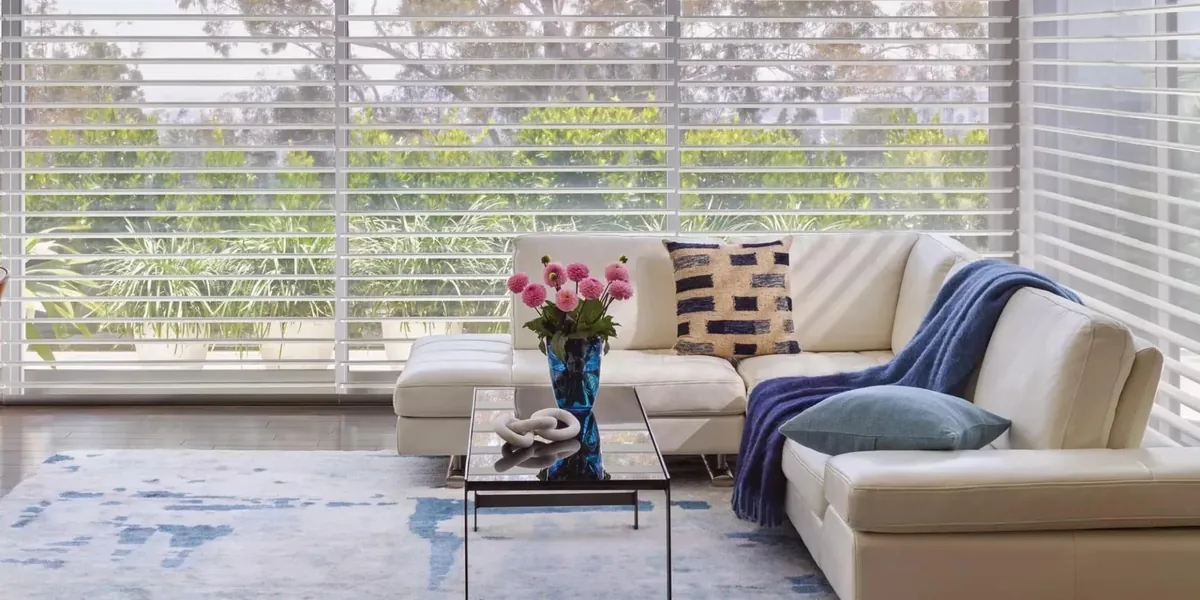
When to stop and ask
Caring for fabric shades is often less about doing something and more about knowing when not to. These are the signs that it is time to stop and talk to us rather than try a fix yourself:
- The shade will not raise or lower evenly, or hangs crooked when it used to sit straight.
- The fabric has a crease, dent or kink that was not there before, or the cells or vanes have lost their shape.
- There is a tear, a fray or a loose edge, however small.
- A cord or mechanism feels stiff, slips or sticks. Do not force it.
- A motorized shade stops answering its remote, wall control or app, or moves only part of the way.
- There is a mark you are not sure about, especially on sheer or light-colored fabric, where guessing can make it worse.
- Water has reached the shade from a leak, condensation or a plant on the sill.
In every one of those cases, the safest thing is to leave the shade as it is and ask. A small problem is much easier to sort out before anyone has had a go at it.
Repairs on shades you already own
We welcome repair work on window coverings you already have. A shade that has stopped working properly is not necessarily a shade that needs replacing, and we would rather look at it with you before you decide. Our blind and shade repair page explains more.
When you get in touch, it helps to tell us:
- Which room the shade is in and roughly how big the window is.
- What kind of shade it is, or the line name if you know it.
- What has gone wrong, and when you first noticed.
- Whether it is motorized, and how it is controlled.
That gives us a head start on whether it can be put right and what it will need.
Fewer problems start at the consultation
The best time to think about caring for fabric shades is before they are made. At an in-home consultation, tell us how each room is used: a busy kitchen, a bathroom, a child’s bedroom, a room with a dog that likes the window seat. Those details shape which fabrics and which lines we suggest, and some are simply better matched to a hard-working room than others.
Sun matters too. A fabric that faces hours of afternoon light needs choosing with that in mind; our guide to choosing fabric for a sunny room covers it.
What local houses ask of a shade
The houses across our territories each put fabric shades to work in their own way.
Water-facing rooms
In Osterville, Chatham and Marion, rooms facing the water take strong light most of the day and often have big windows that open onto decks. Shades there work hard, so fabric choice at the start matters, and any sign of trouble on a large shade is worth raising early.
Triple-decker windows over radiators
In the mill-era triple-deckers of New Bedford, Fall River and Woonsocket, tall, narrow windows often sit above old radiators. We note them when we plan a room, because what sits under a shade is part of choosing it.
Antique capes with deep sills
Along Route 6A and in Sandwich and Hingham, the deep sills of antique capes are natural homes for plants and ornaments. Mention them at the consultation, because what lives on the sill affects where a shade should stop and how it should be mounted. Planning for it at the start is a quiet part of caring for fabric shades that most homeowners never think about.
Foyer glass out of reach
In the newer colonials of Franklin, Medway and Needham, shades on tall foyer glass are out of reach for any hands-on attention. If one of those shades develops a problem, call us rather than climbing a ladder to investigate.
Shades to know
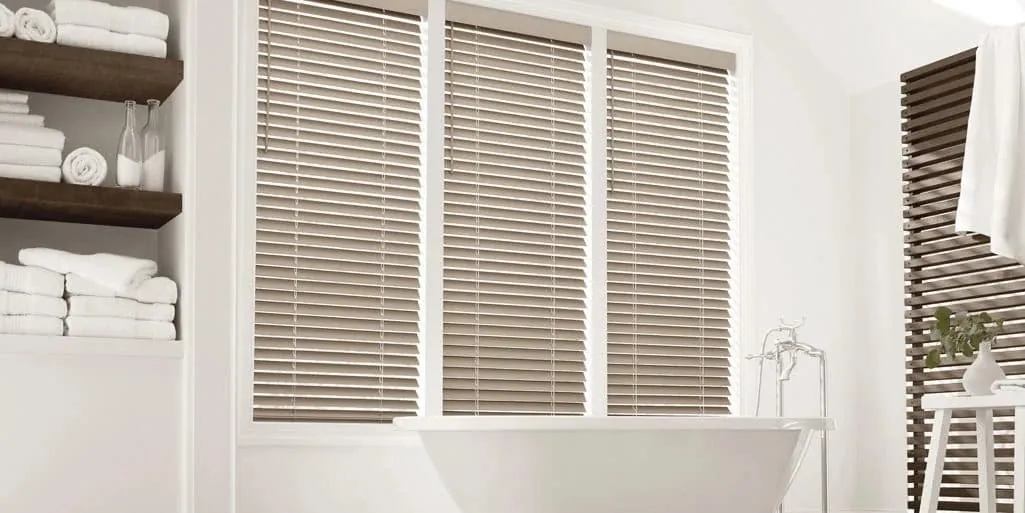
Blind and shade repair
Repairs on the window coverings you already own.
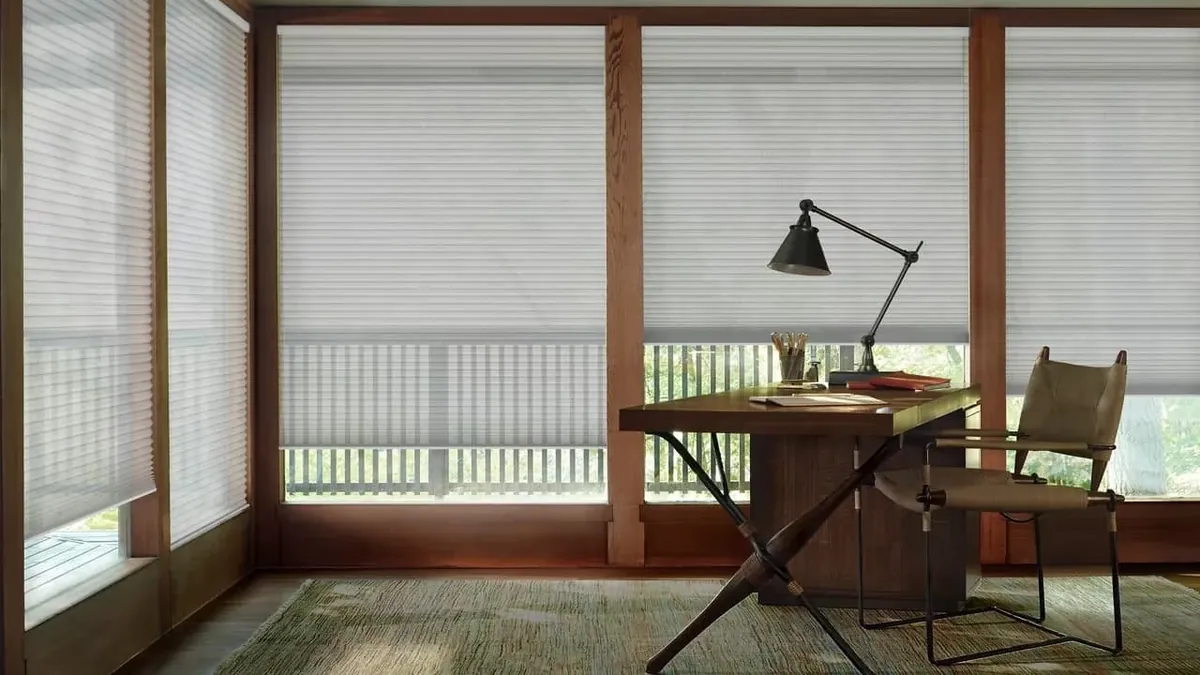
Cellular shades
Duette and Applause honeycomb shades.
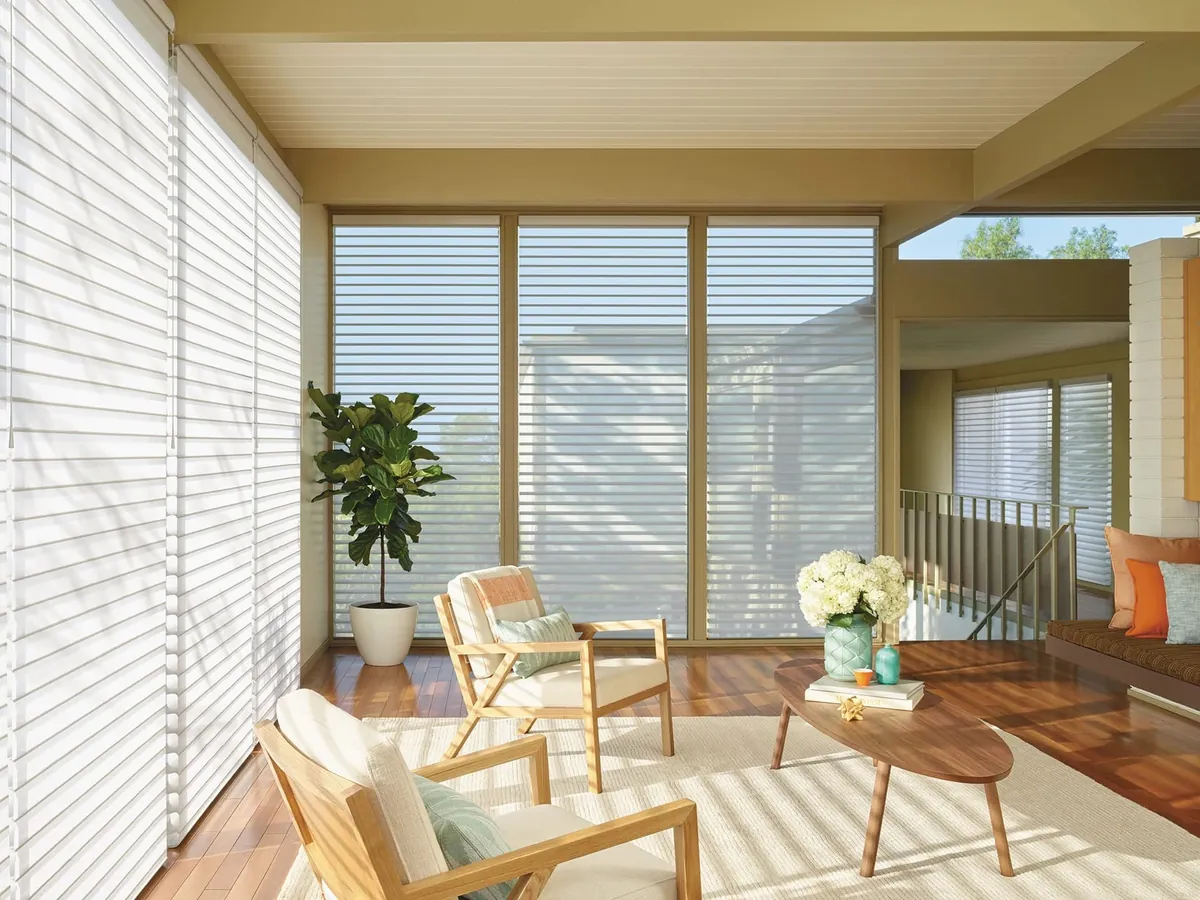
Sheer shades
Silhouette, Pirouette, Luminette and Nantucket.
Fabric shade questions
Can you tell me how to clean my shade?
Tell us which line and fabric you have, and we will point you to the Hunter Douglas guidance for it. We do not give one general method, because what suits one fabric can harm another.
My shade has a crease. Will it come out?
It depends on the shade and the cause. Leave it alone rather than trying to press or pull it flat, and ask us to take a look.
Do you repair shades you did not sell?
Ask us. Tell us what the shade is and what has gone wrong, and we will tell you whether it is something we can help with.
My motorized shade has stopped moving. What should I do?
Do not pull it by hand. Let us know which controls you use and what it is doing, and we will help work out what is wrong.
Is it better to repair or replace?
That depends on the shade and the damage. We would rather look first. If replacement makes more sense, we can bring samples and give you a free estimate. See what happens at an in-home consultation.
Ask before you guess
Caring for fabric shades starts with a conversation. If you have a question about your shades, or one has stopped working as it should, request a consultation or use the call button at the top of the page to reach the North Dartmouth showroom. As a Hunter Douglas Gallery dealer, we work with these products every day, and every new order we supply goes up through certified Hunter Douglas installation.