
Old sash in the historic village
The streets around the Grist Mill hold some of the oldest houses in town: antique capes hunkered low under their roofs, and Federal houses with tall, even rows of windows and fine interior trim. The sash in the oldest of them is tiny by modern standards, divided into many small panes, set in thin walls and often a little out of true after so long. Anything fitted to those windows has to be modest, reversible and respectful of what is there. Roller shades in Sandwich, MA, meet that test better than most treatments. A roller is a single flat piece of fabric that rolls away to a narrow cylinder at the head of the frame, so the window and its trim stay the main event.
The historic district adds its own expectations about how a house looks from the street, and the depth of those old frames limits how a shade can be mounted. Further out, along Route 6A and toward Forestdale, the houses change completely: post-war ranches with picture windows and newer colonials with standard openings.
That range is why we never bring one answer to a Sandwich house. We look at the window, the room and the street.
Roller shades in Sandwich, MA: three starting points
Most Sandwich orders draw on one or more of these Hunter Douglas options. We bring samples of all three.
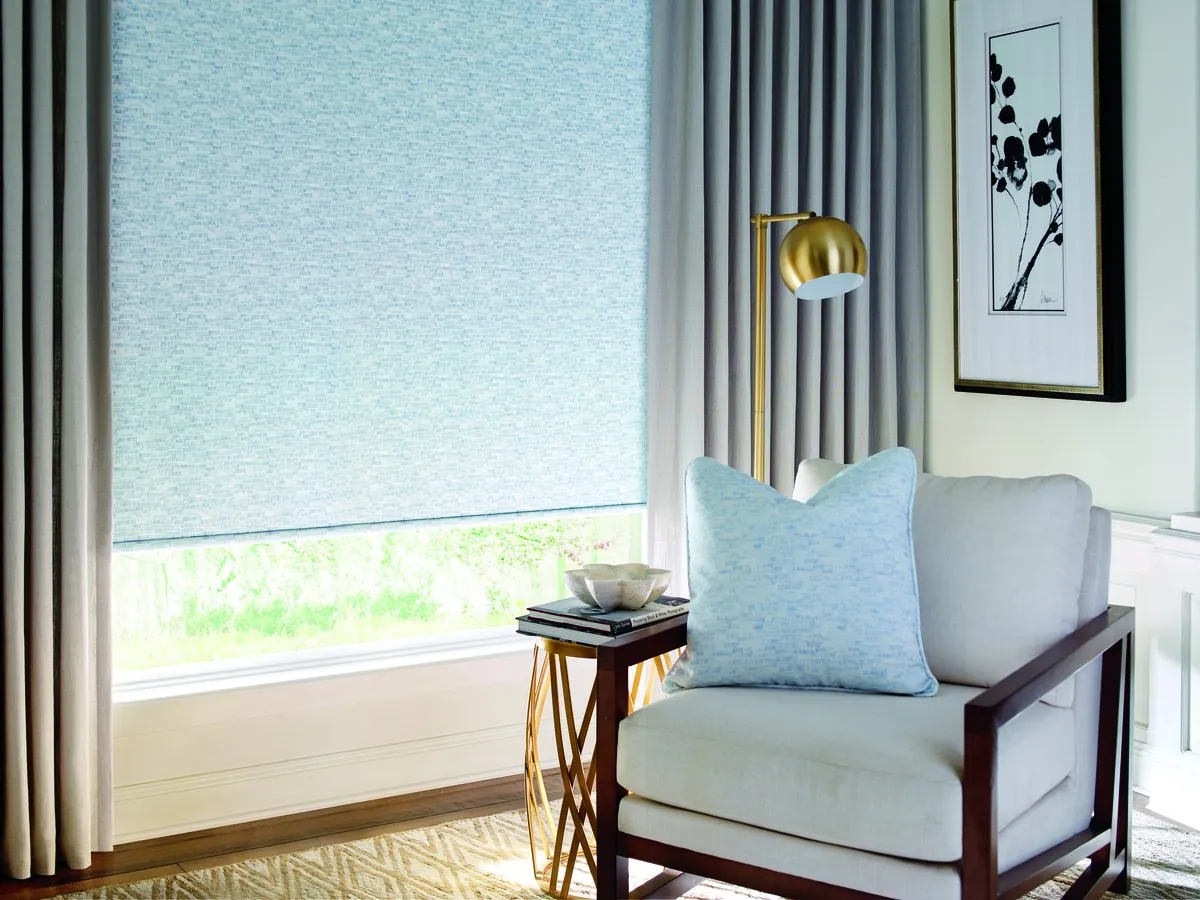
Light filtering Designer Roller
A soft fabric that keeps rooms bright while blocking the view in. Our usual starting point for the small rooms of an antique cape.
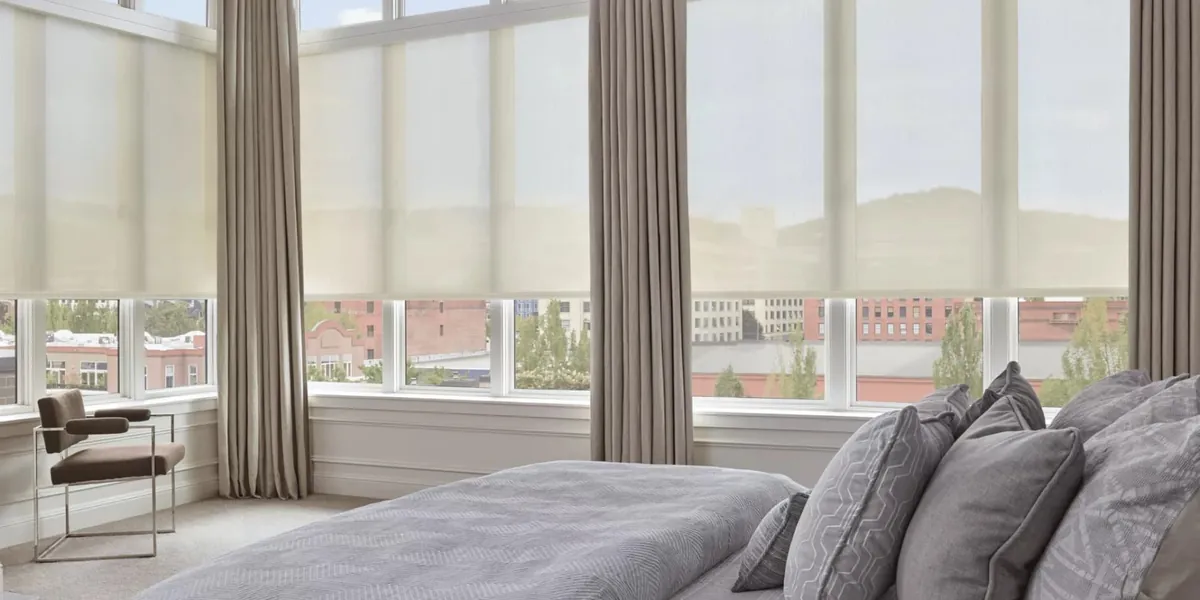
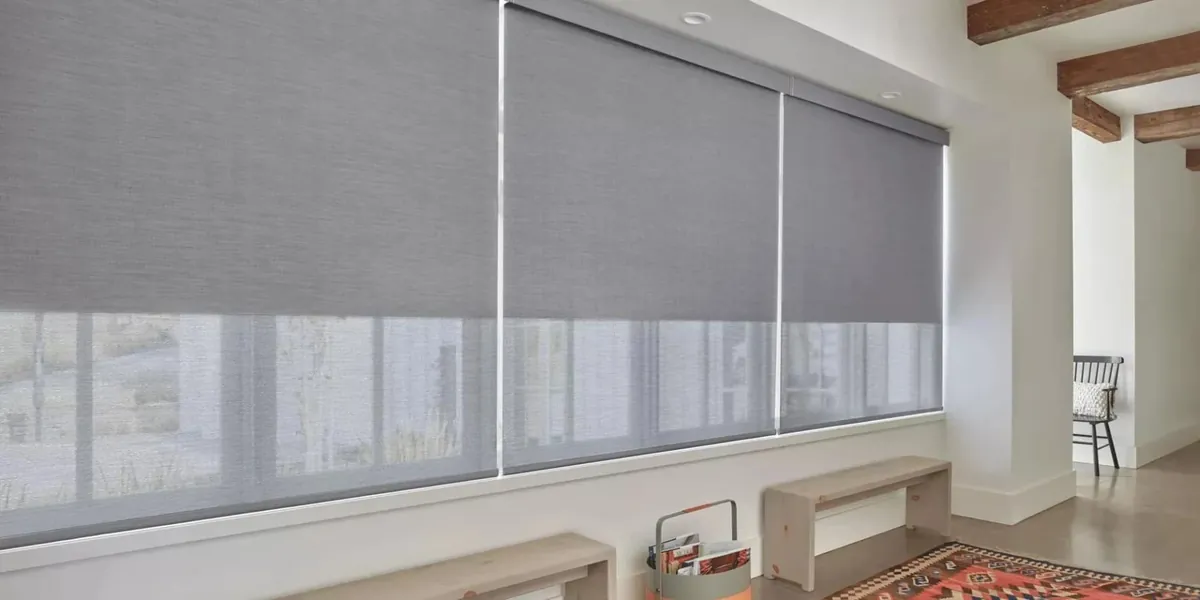
Designer Screen for sunny ranches
A screen weave that takes the glare off a big west window and keeps the garden in view.
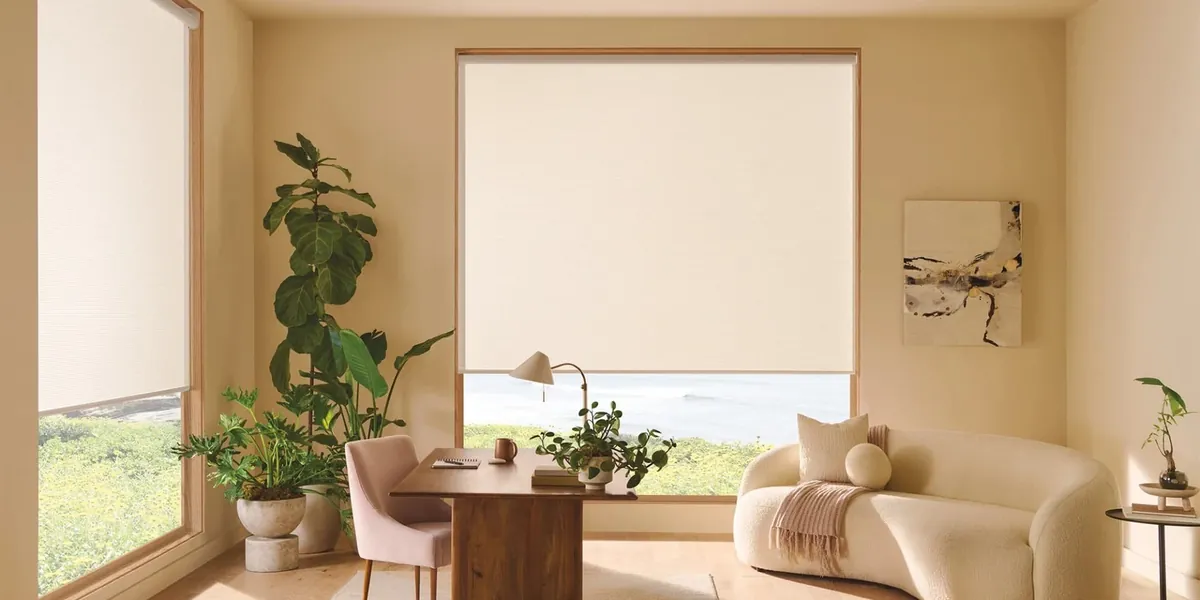
Alustra for a Federal front room
Finer fabrics and finishes for a parlor or dining room where the shade sits beside good trim and old furniture.
The smallest windows in the oldest houses
The very oldest capes in the village were built when glass was costly, so the windows are small and the panes smaller still. A typical opening might be barely wider than your shoulders, divided by thin wooden muntins into a grid of little lights. The wall around it is thin, and the frame may have settled so that the top and bottom are no longer quite the same width.
A roller shade is one of very few treatments that suits a window like that. It needs only a shallow space at the head of the frame, so it can often sit within the opening even when the frame is thin. It rolls up compactly, so when it is raised it hides very little of the glass, which matters in a small room that depends on one small window. And it is a plain, flat surface that does not compete with the grid of the panes or with the trim.
Measuring is where the care comes in. We measure each opening at the top, middle and bottom and on both sides, and check the depth at several points along the head. The shade is made to the narrowest measurement so it rolls without rubbing. Where the frame is simply too shallow, a slim mount on the face of the trim is the better answer, and we will say so.
What the street sees in the historic district
In a historic village, how a house looks from the road matters to everyone who passes it. A window treatment is inside the glass, but it is still part of what passers-by see, especially at dusk when lamps are lit.
A roller is about as discreet as a treatment can be. Raised, it all but disappears. Lowered, it shows the street a single flat panel, and the color of that panel is what counts. We generally suggest a light, neutral outward color for the street-facing windows of an antique house, so the windows read as soft and even rather than as a patchwork of colors. Inside, each room can still have a face fabric chosen for its own light and decor.
If you are unsure what your district expects to see from outside, it is sensible to check before ordering. We are glad to hold samples at the glass and step outside with you, so you can judge the look from the sidewalk.
Federal houses and their tall rooms
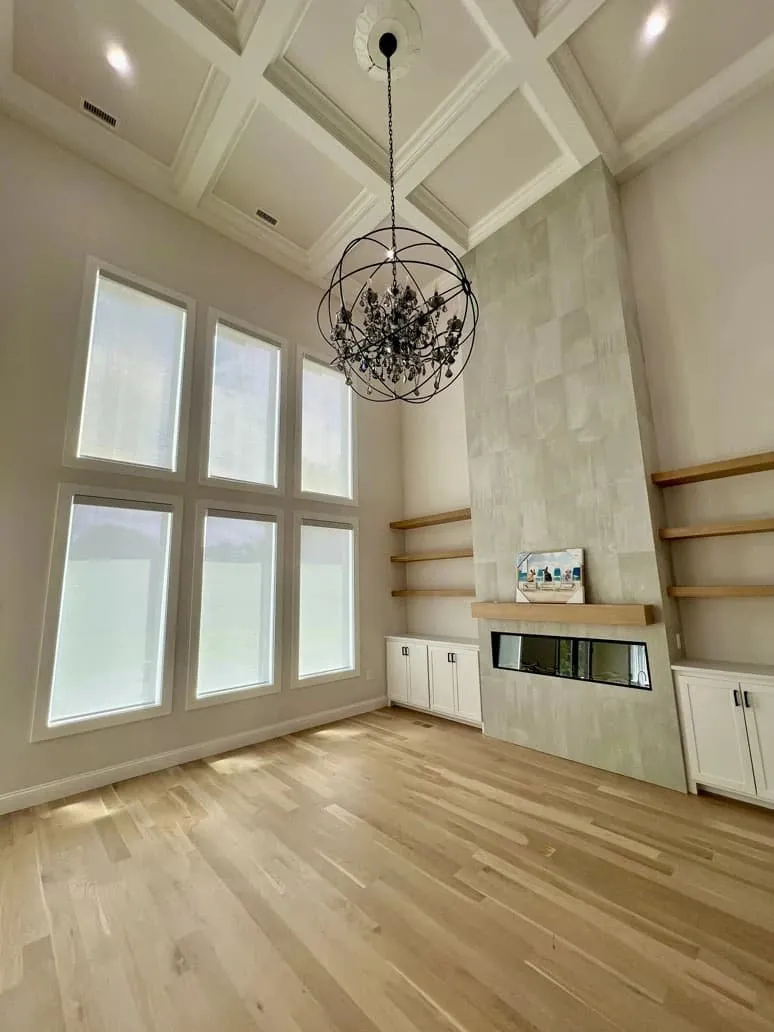
The Federal houses in the village are a step up in scale from the capes. Ceilings are higher, windows are taller and more evenly spaced, and the interior trim is often the finest part of the house: reeded casings, panelled reveals, sometimes original shutters folding into the window jamb.
For these rooms the aim is to protect the trim and the proportions. An inside mount keeps the casings fully visible, and in a Federal house the reveals are often deep enough to take one. Where interior shutters fold into the jamb, we check that a shade at the head of the frame leaves them free to open and close. If the shutters are kept in use, a roller can be the layer behind them that handles privacy and light when the shutters are folded back.
The front door of a Federal house often has narrow sidelights beside it, and sometimes a fanlight above. Rollers can be made narrow enough for sidelights, mounted top and bottom so the fabric stays put when the door opens. An arched fanlight is a shape a roller cannot follow, and in most houses it is best left open.
Antique capes and low ceilings
An antique cape is a low house. Upstairs rooms sit under the roof with knee walls and sloping ceilings, and the windows sit in the gable ends or in dormers. Downstairs the ceilings are low and the window heads sit close to the ceiling.
That limited headroom is a good reason to choose a roller. The headrail is compact, and a cassette version encloses the rolled fabric in a neat box that fits where a bulkier shade would crowd the ceiling. In a dormer, where the window is set back in a little alcove, the shade can sit inside the alcove at the head of the window or on the face of the dormer opening, depending on the depth.
Bedrooms under the eaves often take the morning sun on one side and need to be dark. A blackout roller is the answer, and because the gaps at the edges of an inside mount let a little light through, we sometimes suggest an outside mount on the trim for those rooms.
Post-war ranches along Route 6A
Out along Route 6A and toward Forestdale, the housing changes to post-war ranches. They are single-level, with a living room picture window, a kitchen with a window over the sink and a slider to the back yard, and bedrooms with wider, shorter windows. The glass is larger and the sun reaches further into the room, especially on the west side in late afternoon.
Here the roller shade earns its place by handling sun and glare. A solar screen on the picture window cuts the brightness and some of the heat while keeping the view of the yard. The weave you choose sets the balance: tighter blocks more sun with a softer view, looser keeps the outlook clear with more light. Color matters too, since dark screens are easier to see through and light ones reflect more heat. Our article on the best shades for sun and glare compares the options.
A slider gets a roller mounted above the door frame so it clears the handle when raised. In the bedrooms, a blackout or room-darkening roller is the usual choice. Matching the hems and headrails across a single-level house keeps it looking calm from room to room.
Newer colonials toward Forestdale
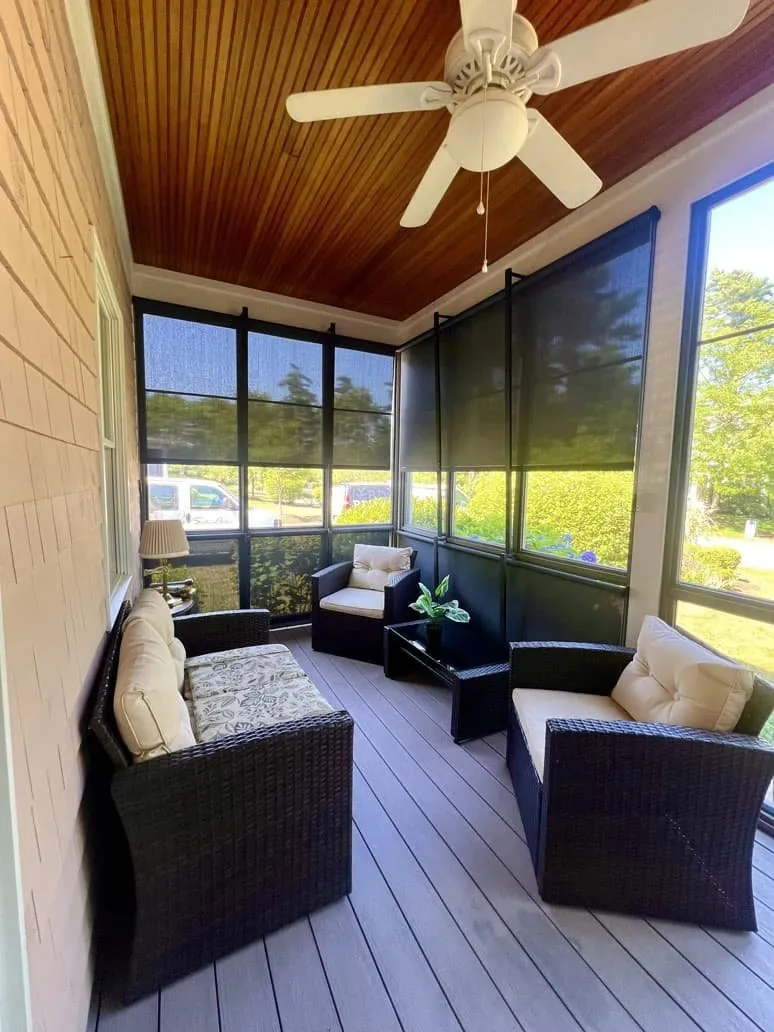
The newer colonials in the Forestdale direction have square, regular windows with enough depth for an inside mount, often in large numbers: a row across the front on both floors, a family room with a wide window, a kitchen with a bay. With consistent openings, a house like this can carry one fabric and color across the whole front for a neat look from the street.
Larger windows in a family room may suit a wide roller, or two or three shades sharing one bracket. A kitchen bay can take a shade on each panel, so you lower the sunny side and leave the others open. A light filtering fabric is the usual choice in living spaces, with room-darkening fabric upstairs.
When you order roller shades in Sandwich, MA, for a newer house like this, PowerView is worth considering for the tall stair window or the high glass in a two-story entry. You can read about how motorized shades are controlled.
Sonnette and banded shades in older rooms
Two other members of the roller family are worth a look in a village house. Sonnette is a cellular roller: its face curves gently, with a pocket of air behind the fabric, so it rolls up like any roller but has a softer, fuller look at the window. In a cape bedroom with low ceilings and painted beams, that softness can suit the room better than a perfectly flat fabric, and the air pocket adds a little more body against cold old glass.
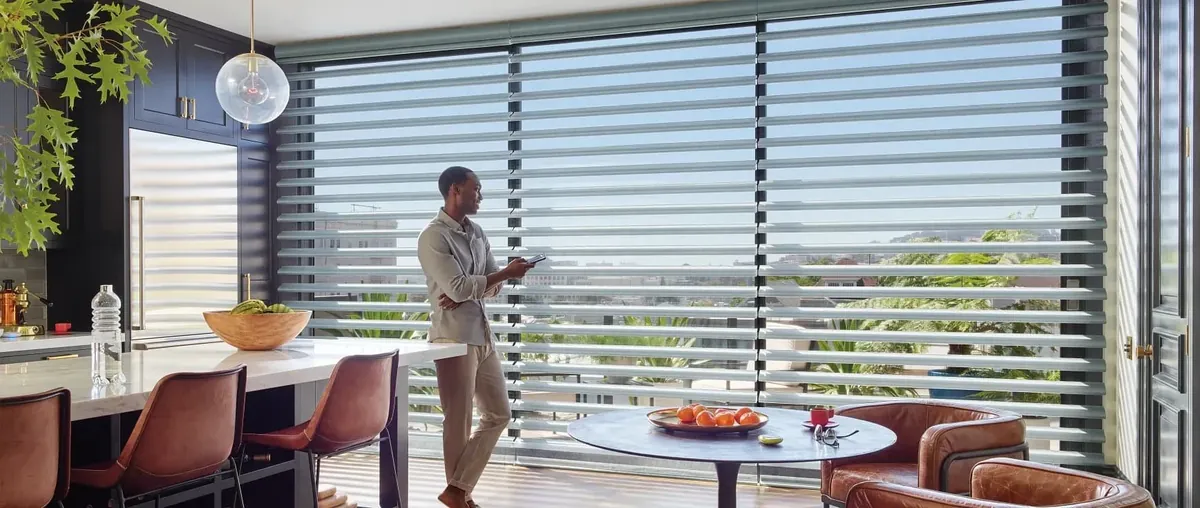
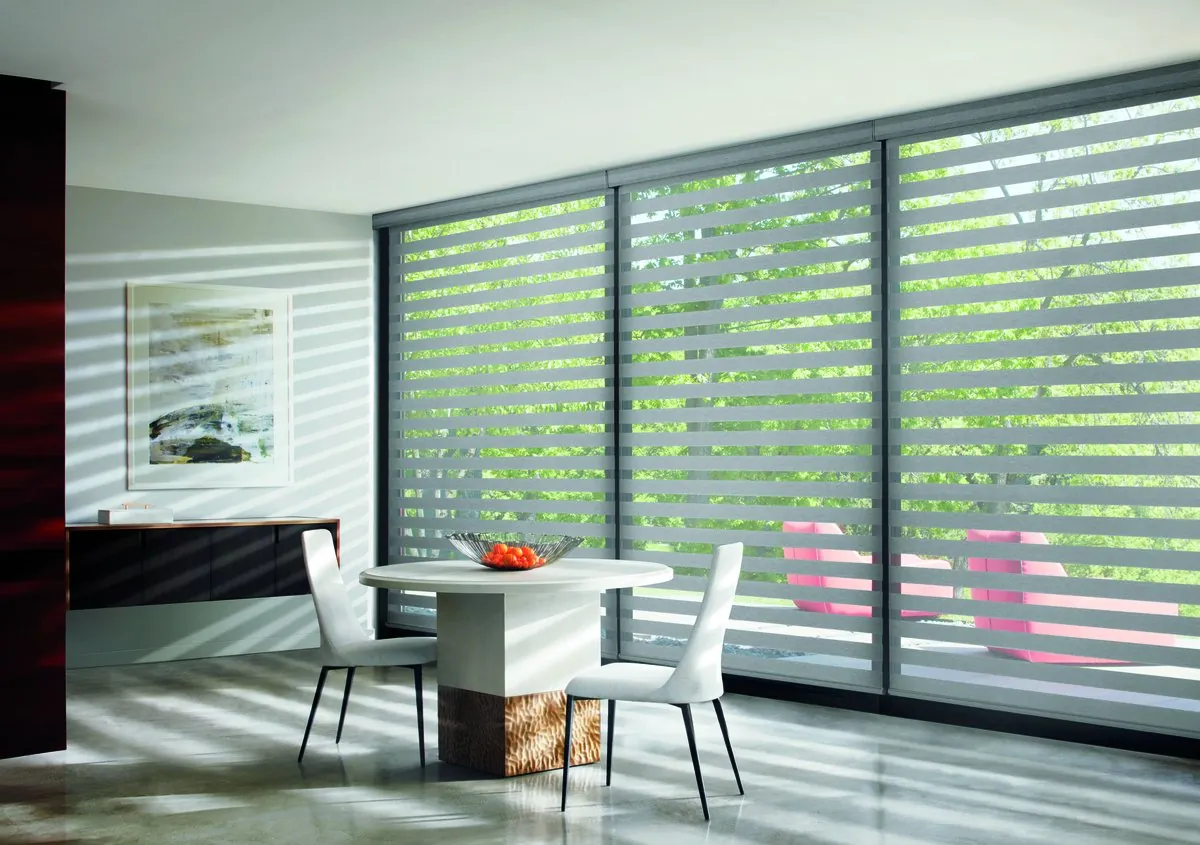
Designer Banded shades alternate sheer and solid stripes on one continuous loop of fabric. With a small movement the stripes line up to let light and a view through, or overlap to close the room. They suit a ranch dining room or a home office where you want to adjust the light without raising the shade at all.
Neither is right for every window, which is why we bring both when we visit. Many roller shades in Sandwich, MA, end up as a mix: plain rollers for most rooms, a Sonnette in a bedroom, a banded shade where the light needs fine tuning. See Sonnette cellular and Designer Banded for more.
Choosing how the shade lifts
There are three main ways to raise and lower a roller, and each suits different windows.
- Cordless. You lift or lower the bottom bar by hand. Clean, with nothing at the side, and ideal on the small windows of an antique house.
- Continuous cord loop. A loop at one side turns the tube, held taut by a tensioner. Easier on a tall Federal window or a large ranch picture window.
- PowerView motorization. A motor in the tube, controlled by remote, app or schedule. Good for high or hard-to-reach glass.
On a historic window, the cordless option is often preferred because it keeps the frame clear of any cord or tensioner. Where a loop is the better choice, we put it on the side that is least visible from the room and the street.
Light, fabric and old interiors
Antique rooms are often furnished with old pieces, painted woodwork and wide-board floors, and the light in them is precious because the windows are small. Fabric choice can make or break the room.
A pale, warm light filtering fabric keeps a small room bright and makes the window glow softly when the shade is down. A fabric with a subtle weave or texture tends to look more at home beside old wood than a smooth modern finish. In a Federal parlor, an Alustra fabric with a little more character can sit beside fine trim without looking out of place. We bring sample books so you can hold fabrics against your own woodwork and walls.
Old houses also need care with sun. Direct light fades old furniture and floors, and a roller lowered through the brightest part of the day slows that fading. For cleaning and care, see caring for fabric shades.
Your in-home consultation
Small old windows and dim rooms make fabric hard to judge anywhere but in place. That is why the samples come to you: a van loaded with the roller range pulls up at your door.
- Ask for a visit through the website or the call button, and pick a day.
- Together we tour the rooms and talk about light, privacy and how each room is used.
- You hold fabrics at the windows, and if the street view matters, we step outside together to see how they look from the road.
- We measure every opening at several points, check the depth and note trim, interior shutters and any hardware.
- We explain the lift choices and suggest a mount for each window.
- You get a free estimate and decide in your own time.
Read more about what happens at an in-home consultation.
Designer or Alustra
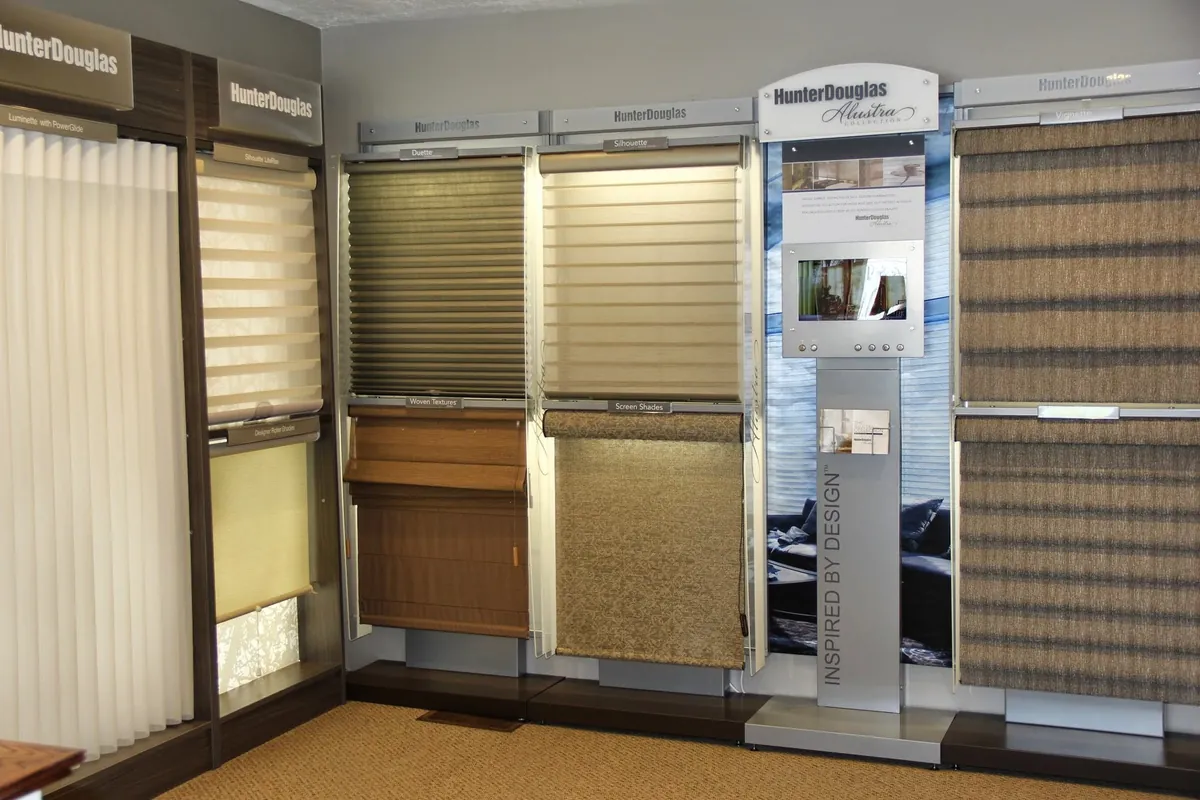
Hunter Douglas splits its rollers into two collections, and each covers the full span from sheer-looking screens to blackout. Designer is where most windows land: a deep library of plain, textured and patterned fabrics, plus every lift system. Alustra is the smaller, dressier collection, with richer materials and a more tailored hem and headrail, the sort of detail you notice in a room furnished with antiques.
Plenty of orders for roller shades in Sandwich, MA, split the difference, with Alustra reserved for the Federal parlor or the best front room and Designer doing the work in kitchens, baths and upstairs rooms. The main roller shades page covers the whole family.

A Gallery dealer for old and new houses
Hunter Douglas names only dealers who meet its standards as Gallery dealers, and Blinds & Designs is one. For a Sandwich house that puts every roller, screen, banded and Sonnette fabric, along with PowerView, on the table at a single visit.
Installation is by Hunter Douglas certified installers, and in an old house that means fixing every bracket into sound wood and levelling each shade on a frame that may not be square. We also repair blinds and shades you already own.
For other rooms, look at plantation shutters in Sandwich for a Federal front room or cellular shades in Sandwich for the draughtier sash, and everything we do in town on the Sandwich page. Our Sagamore showroom is the nearest to you.
Questions from Sandwich
Will a roller shade fit the tiny windows in my antique cape?
Usually. A roller needs only a shallow space at the head of the frame, and it can be made narrow. Where the frame is too thin, a slim mount on the face of the trim works instead.
What color should face the street in the historic district?
We usually suggest a light, neutral outward color so the windows look even from the road. If you are unsure what your district expects, check before you order.
Can a roller work with interior shutters?
Yes. We check that the shade at the head of the frame leaves the shutters free to fold, and the roller can handle privacy and light when the shutters are open.
What suits a big west-facing picture window in a ranch?
A solar screen roller cuts the glare and some of the heat while keeping the view. A darker screen in a medium weave is a good starting point.
Is the estimate free?
Yes. After we measure at your home, you get a free estimate for the shades you are considering.
Book a visit
The right fabric for an old window or a sunny ranch is easiest to choose at the window itself. Book a consultation; samples arrive with us, every opening gets measured, and a free estimate is yours to keep. If you would like to see working shades before we visit, our Sagamore showroom is close by.