
Open land, long sightlines, light from every side
Carver is open country by South Shore standards. Capes and ranches sit on large lots among the cranberry bogs, with fields, water and low growth stretching away from the house, and the newer colonials off Tremont Street have generous yards of their own. With so few neighbors close by and so little to block the view, rooms here take light from several sides at once, and nothing outside softens it. Roller shades in Carver, MA, are mostly about managing that light.
In a town of tight village streets, privacy drives most window decisions. Here it is different. The long sightlines across the bogs are something people want to keep, and a house set well back from the road is rarely overlooked during the day. What the house does lack is shade. There are no buildings or big trees across the street to break up the morning sun on the east side or the long, hot afternoon on the west. A roller can be chosen to keep the view open, cut the glare, protect the floors and furniture, and still give you a dark bedroom or a private room after dark.
What we bring for roller shades in Carver, MA
Three parts of the Hunter Douglas roller family cover most of what Carver houses need, and every one of them comes with us in the van.
Screens for long views
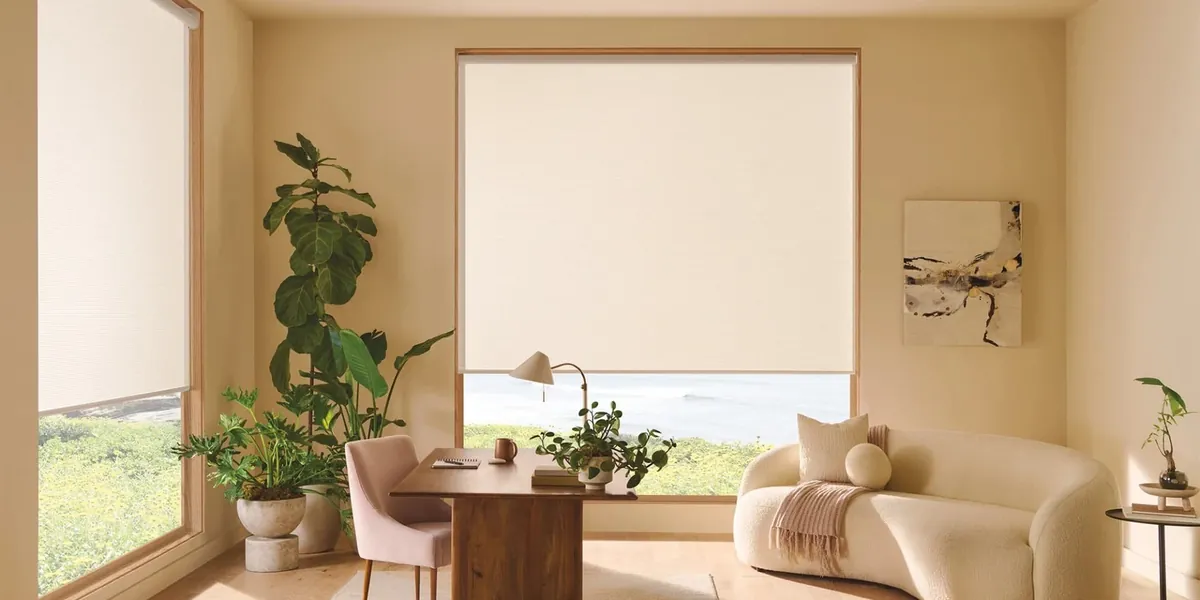
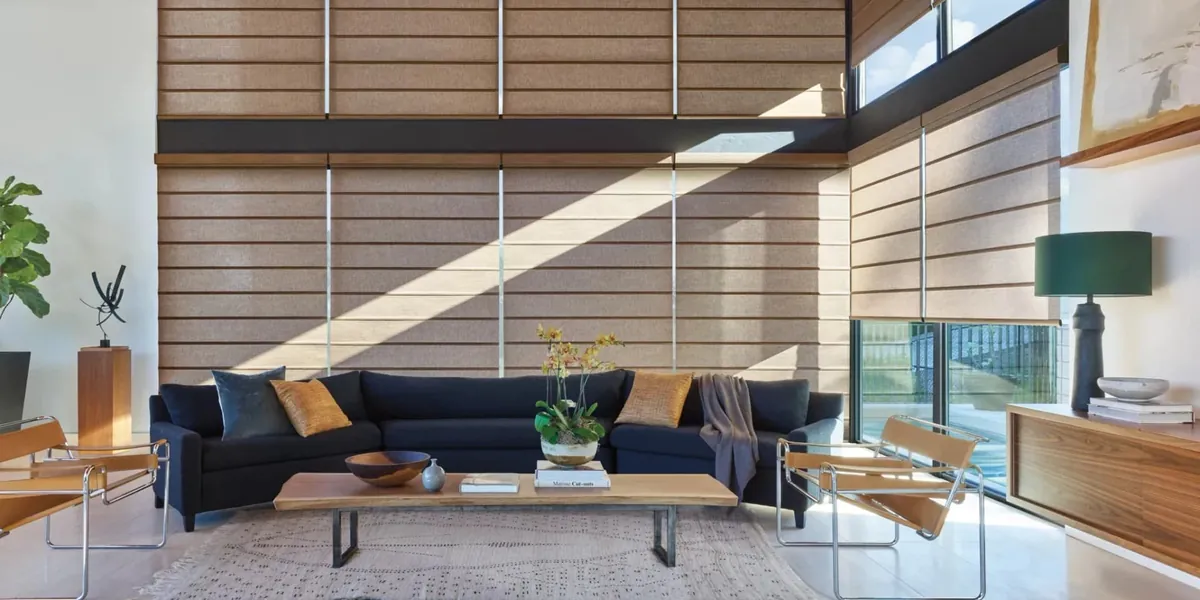
A Designer Screen weave tames the glare coming across open ground and keeps the bogs or the yard in sight.
Banded shades for all-day rooms
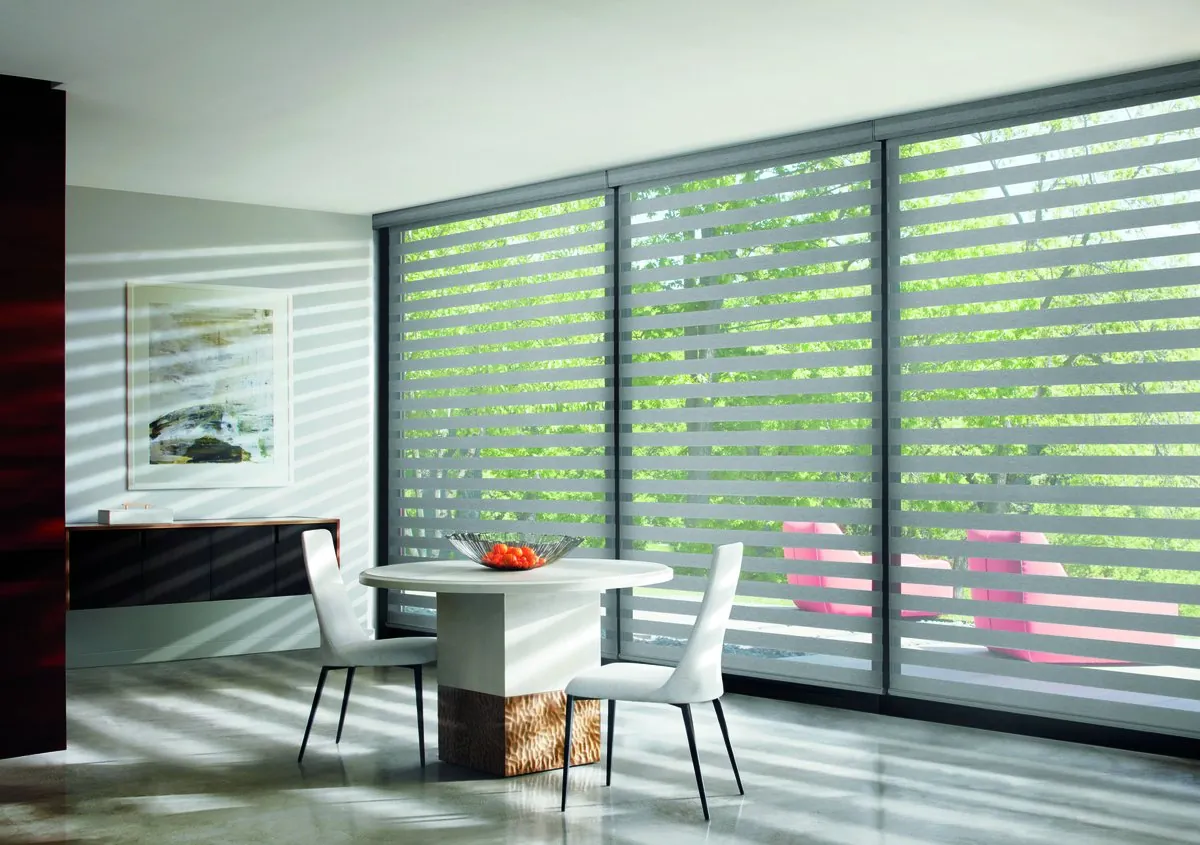
Sheer and solid stripes you can line up or offset, for a kitchen or family room that faces the sun at one hour and the road at another.
Sonnette for a softer look
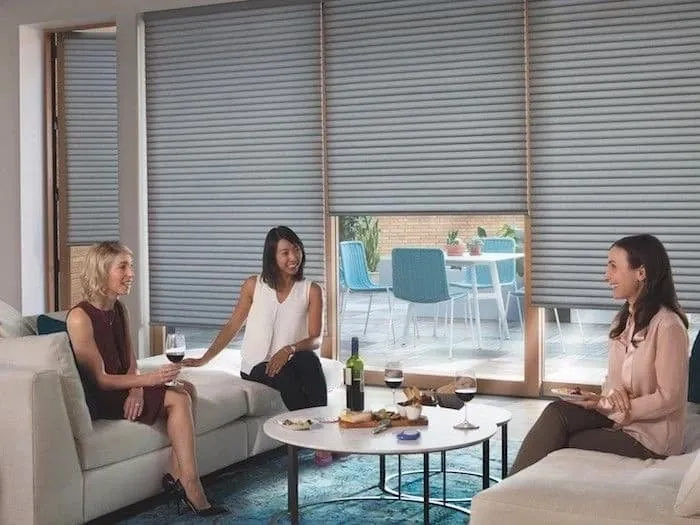
A roller with a gently curved face and an air pocket behind it, at home in a cape bedroom or a ranch living room.
When a room has windows on three walls
Many Carver houses, especially the ranches, have living rooms and family rooms with windows on more than one wall: a picture window to the front, a pair of windows on the side, and a slider at the back. On a big open lot, every one of those walls gets direct sun at some point in the day.
That makes it tempting to pick one fabric and put it everywhere. In practice, a room lit from three sides usually works best with one color and two or three weights. The wall that takes the afternoon sun gets a tighter screen or a light filtering fabric. The wall that faces the view and gets only gentle light takes a more open screen. The side facing the road, if privacy matters in the evening, gets a solid light filtering fabric. Seen from inside, the shades match; each one simply does a slightly different job.
We plan this standing in the room with you, ideally late in the day when the low sun is at its strongest. It is the best way to see which windows really cause trouble and which can be left with something lighter.
Glare across open ground
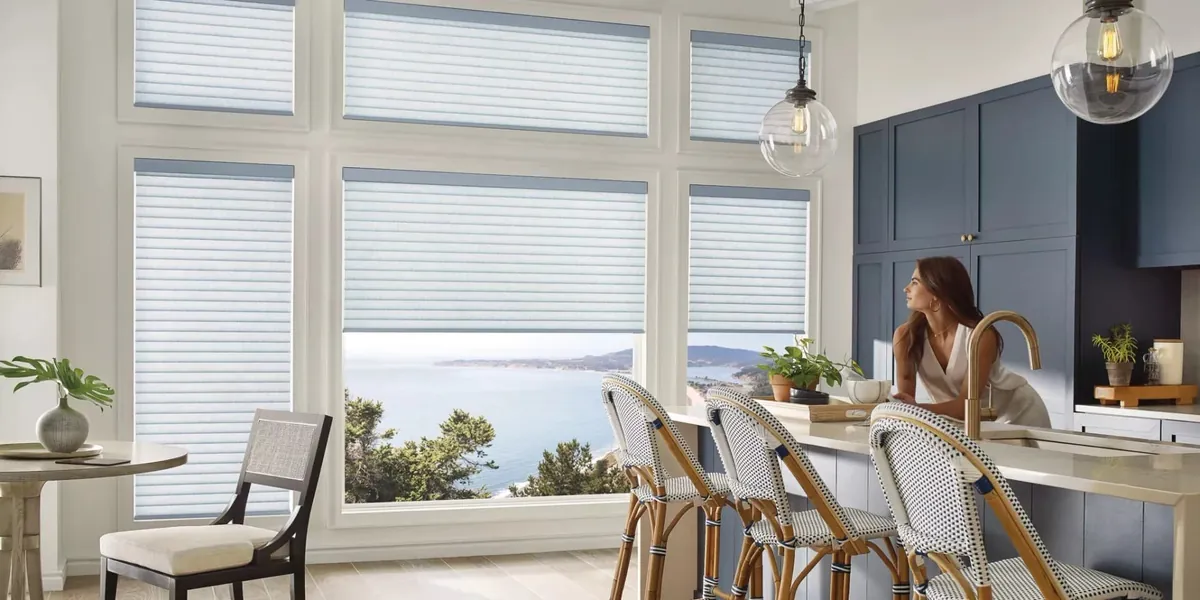
Open ground with no trees lets low sun reach straight into the house without a break. In the late afternoon on a west wall, it can light up the whole room and land in your eyes at the kitchen table or the sofa.
A solar screen roller is the most useful tool for that. Its fine, open weave keeps the view while it cuts the brightness. The percentage of open space in the weave, which Hunter Douglas calls the openness factor, decides the trade-off: more openness keeps the outlook crisper, less openness blocks more light. The screen color matters as much. Dark gray or charcoal screens are easy to look through because they do not catch the light; white and pale screens reflect more heat and look brighter in the room, but the view through them is softer.
For a west-facing ranch living room with a view across the bogs, a dark screen in a medium openness is a sensible starting point. We hold several up at the glass so you can decide with your own eyes. The guide to the best shades for sun and glare explains the options further.
Capes on big lots
The older capes in town sit low under their roofs, with modest windows on the ground floor and small gable or dormer windows upstairs. On a large lot, a cape often has windows on all four sides, and even its small upstairs rooms can get sun twice a day.
Downstairs, a light filtering roller in a pale fabric suits a cape front room well. It keeps the room bright, gives privacy in the evening, and rolls up into a slim roll that hides very little of the glass. Cape frames are usually deep enough for the shade to sit inside the opening, which keeps the trim in full view.
Upstairs, the bedrooms under the roof are where a room-darkening roller makes the biggest difference. With nothing outside to block the sunrise, a gable window facing east can light a room very early in summer. A room-darkening fabric mounted on the trim, overlapping the opening a little, keeps the room dim. In a dormer, the shade can sit at the head of the window inside the alcove, or on the face of the dormer opening, depending on the space.
Ranches and their picture windows
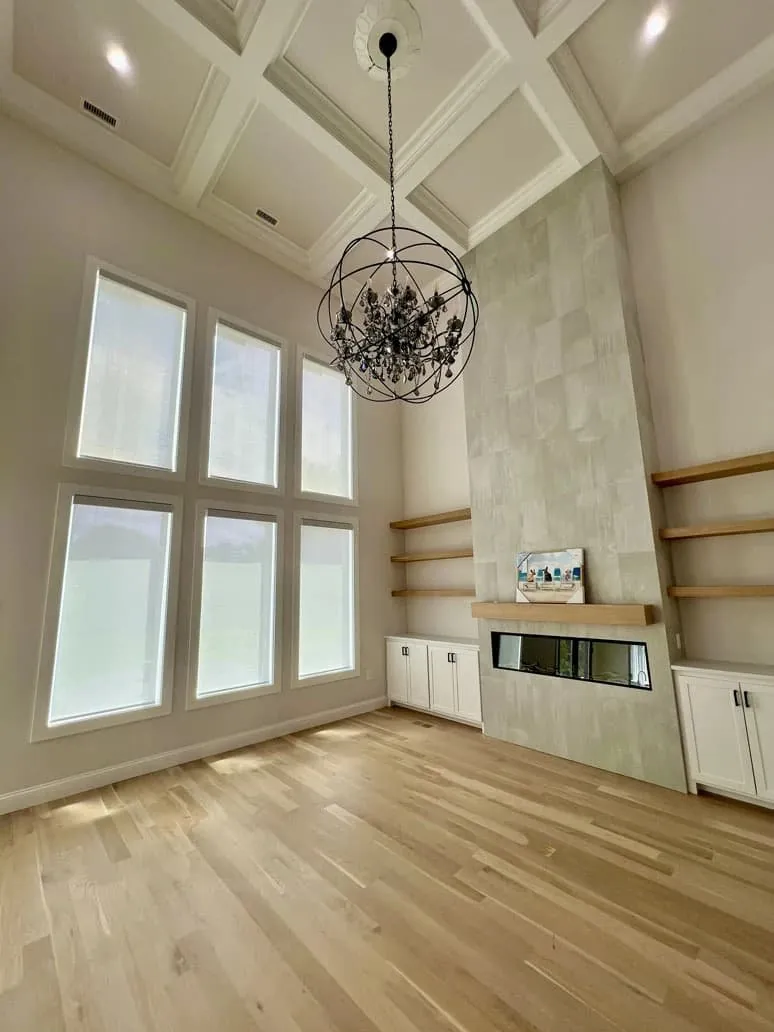
The ranches among the bogs follow a familiar plan: one level, a living room with a large picture window, a kitchen window over the sink, a slider to the back, and bedrooms with wider, shorter windows. On a large, open lot, that picture window often frames a long view, and it can also take the brunt of the afternoon sun.
For the picture window, the choice is usually between a solar screen, which keeps the view, and a light filtering fabric, which gives more privacy and a softer light. Many ranches use both: a screen on the picture window and the slider, where the view counts, and light filtering in the bedrooms and the front of the house. A dual roller can carry both fabrics on one bracket for a room that needs a view in the day and privacy at night.
A wide picture window can take one broad shade or two or three narrower ones sharing a single bracket. Separate shades let you lower only the part of the window the sun is hitting, which is often the best answer in a room that gets light from several directions.
Kitchens that look out over the land
In many Carver houses the kitchen is where the view is best. A window over the sink or a run of windows beside the table looks out across the yard to the bogs or the fields beyond, and nobody wants to give that up. The same windows often take the morning sun on the east side, low and bright while you are making breakfast.
A kitchen roller has a few jobs. It should cut the glare at the times it bothers you, keep the outlook the rest of the day, and stand up to steam and the occasional splash. A screen fabric with a smooth face does all three, and it wipes clean. Over a sink, where reaching the window is awkward, a cordless roller you push up by the bottom rail is easy, and PowerView is easier still.
Planning roller shades in Carver, MA, for a kitchen and family room together makes sense, because so many houses here open one into the other. Matching fabrics across both rooms keeps the space calm.
Sliders to the back yard
Almost every ranch and colonial in town has a slider or French doors onto a deck or patio, and on a big lot that door often looks straight across open ground into the setting sun. A roller mounted on the wall above the frame, a bit wider than the glass, clears the handle when raised and covers the door edge to edge when lowered. On a pair of French doors, each door can carry its own shade, held at the foot so it does not swing. Plenty of roller shades in Carver, MA, start with that one bright door.
Newer colonials off Tremont Street
The newer colonials off Tremont Street have the regular, generous windows of modern building: tall double-hungs across the front, a family room with a big window or a set of three, a kitchen with a slider or French doors, and often a tall window on the stair. Frames are square and deep, so inside mounts are usually straightforward.
A colonial benefits from a consistent plan. The same outward-facing color on every front window keeps the house tidy from the street, and the hems can be set to line up when shades are lowered. Downstairs, light filtering or screen fabrics suit living spaces; upstairs, room-darkening fabrics suit bedrooms. A family room with three windows side by side can take three shades on one bracket that move together.
Tall stair windows and two-story foyers are common in these houses and are almost impossible to reach by hand. PowerView motorization solves that, letting you raise and lower those shades by remote, app or schedule. Read more in how motorized shades are controlled. We plan how each motor is powered when we see the windows.
Sun on floors and furniture
With nothing outside to filter it, the sun in a Carver house reaches the floor and the furniture directly, often from more than one window. Over a few years that light dries out wood finishes and bleaches fabrics, leaving a pale patch where the sun lands most.
Rollers help in a simple way. A screen lowered through the brightest hours cuts the fading light while you keep the view. A light filtering fabric does more. In a room you use only in the evening, such as a formal living room or a dining room, a room-darkening fabric lowered during the day protects everything in it.
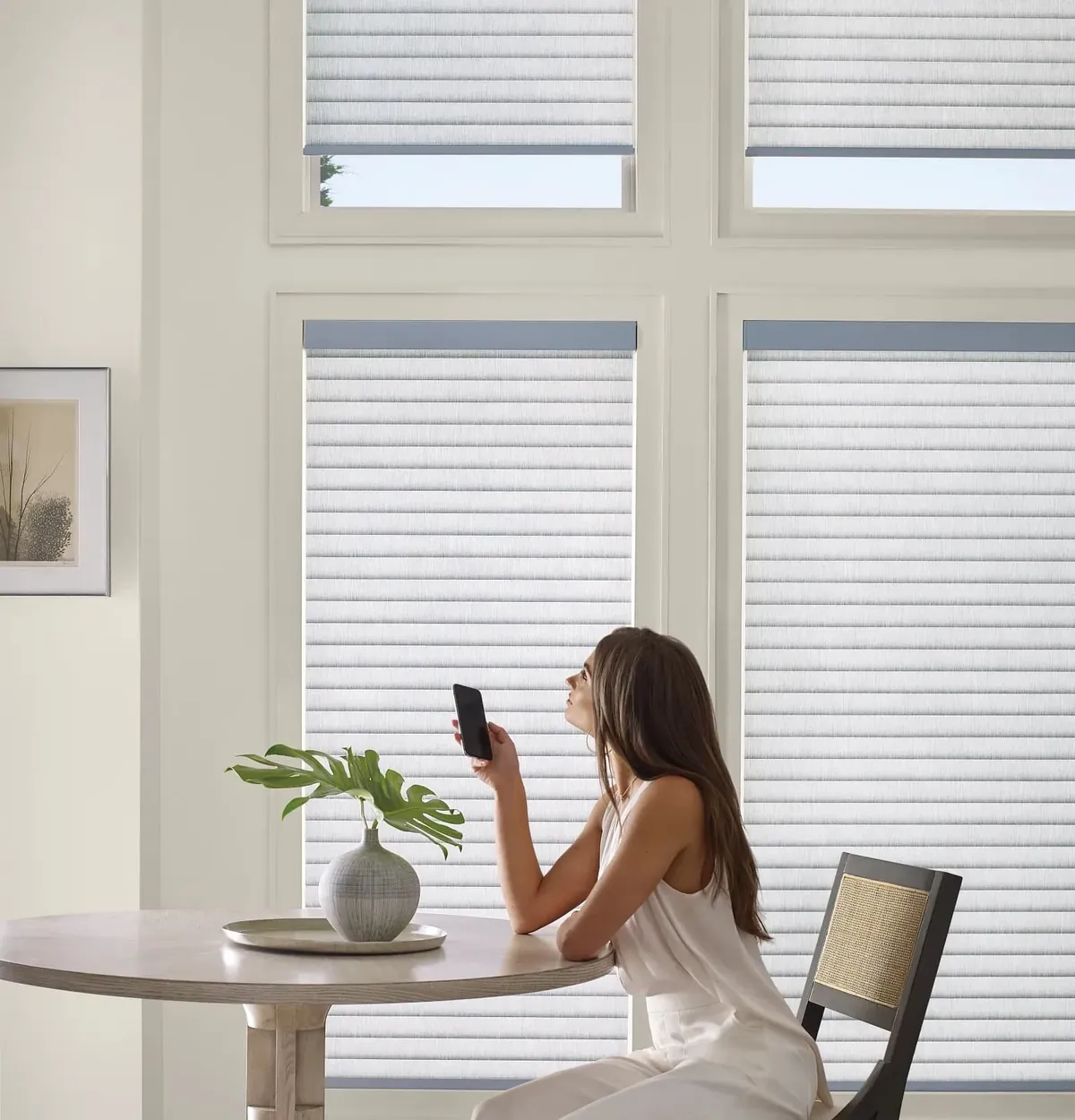
PowerView makes that easy to keep up. Shades on a sunny wall can lower on a schedule as the sun comes round and rise again later, so the room is protected even when you are out at work. Our guide to choosing fabric for a sunny room has more on how different fabrics stand up to strong sun.
Privacy after dark
Long sightlines are a pleasure in daylight. After dark, with lamps on inside and black fields outside, the picture changes: a lit room with bare windows is visible from a long way off. Even on a large lot set back from the road, most people want some privacy in the evening.
A screen fabric does not give night-time privacy, because the lit room shows through the weave. That is why so many Carver rooms end up with a solid fabric somewhere in the plan: a light filtering roller on the street side, a dual roller with a screen and a solid fabric on the view side, or a banded shade that can be closed fully. Designer Banded shades are especially handy here, since you can open the stripes for the view in the day and close them in the evening with one pull. See Designer Banded for more.
Measuring for a made-to-measure fit
Every roller we supply is made for its own window, which is how it ends up looking built in.
- We measure each opening across the top, middle and bottom, and take the smallest figure for an inside mount.
- We measure the height on the left, in the center and on the right.
- We check the depth of the frame where the roll will sit, and note anything in the way, such as window cranks or locks.
- For sliders and French doors, we measure the wall above and beside the frame for a mount that clears the handle.
- We confirm each fabric, mount and lift with you before anything is ordered.
Once the shades arrive, our certified Hunter Douglas installers fit them, level each one and show you how they work. You can read about what happens on installation day.
Your consultation at home
Light from three sides is impossible to judge from a sample book. Our vans carry the full roller range, so we can bring the showroom to you.
- Book a time with Request a Consultation or the call button.
- We walk through the house with you and note which walls take the morning and afternoon sun.
- You hold screen, light filtering, banded and room-darkening samples at each window, looking out at your own view.
- We measure every window and suggest a fabric, a mount and a lift for each.
- You get a free estimate, with no need to decide on the spot.
More on what to expect is in what happens at an in-home consultation.
Designer and Alustra
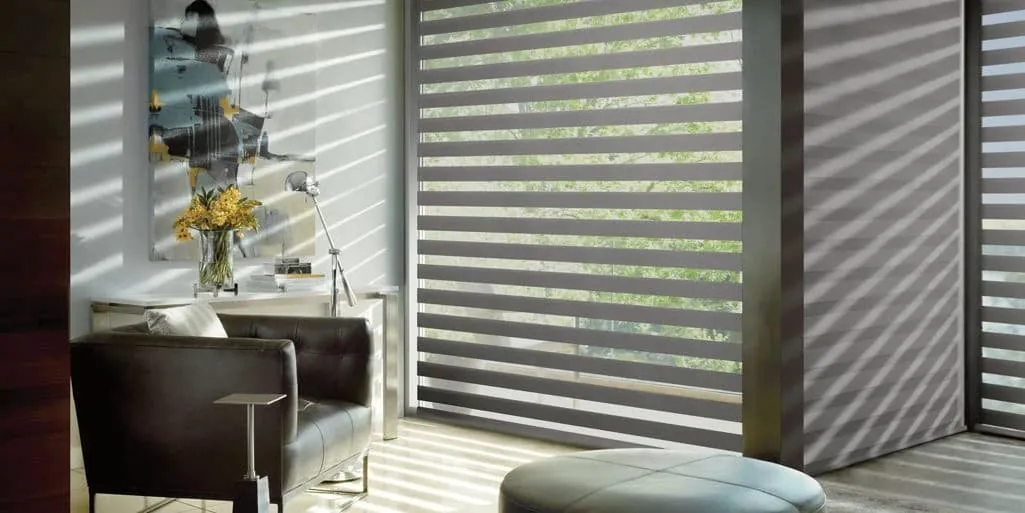
Hunter Douglas groups its rollers in two collections. Designer is the larger one: plain, textured and patterned fabrics in every opacity, the full screen range and every lift option. Alustra is smaller and more tailored, with richer materials and refined finishes.
Most Carver houses run on Designer, with screens on the sunny view windows and light filtering or room-darkening fabrics elsewhere. Alustra is a nice choice for a colonial’s formal living or dining room. When we plan roller shades in Carver, MA, we bring both. The main roller shades page covers the whole range.
Gallery dealer and certified installation
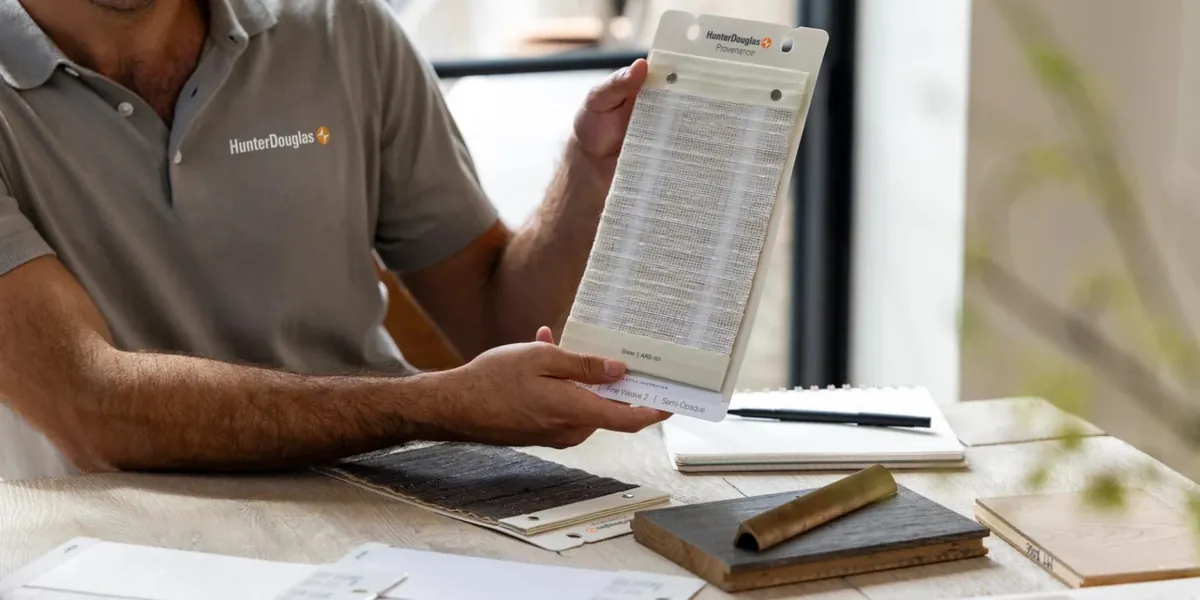
Blinds & Designs is a Hunter Douglas Gallery dealer. That means every roller fabric, screen and banded shade, the Sonnette cellular roller and PowerView automation are available at one visit to your house.
Our installers are certified by Hunter Douglas, so the shades go up the way the maker intends. We also offer interior design consultations, and we repair blinds and shades you already own.
For other rooms, see cellular shades in Carver, plantation shutters in Carver, or everything we do in town on the Carver page.
Questions from Carver
My living room has windows on three sides. Should every shade be the same?
Usually the same color, but not always the same weight. A tighter screen or light filtering fabric on the sunniest wall and a more open screen where the view matters keeps the room comfortable and still looks like one set.
Which screen keeps the view across the bogs?
A darker screen in a medium or more open weave is easiest to see through. We bring several so you can compare them at your own glass.
Will a screen give me privacy at night?
No. With lamps on inside, a lit room shows through the weave. A dual roller adds a solid fabric behind the screen, or a banded shade can be closed fully.
Can the shades lower themselves when the sun comes round?
Yes, with PowerView. Shades can follow a schedule, and you can also control them from your phone or a remote.
Is there a charge for the estimate?
No. The estimate is free. We measure at your home and give you an estimate for the shades you are considering.
Plan your shades with us
Seeing how a fabric handles the light from each side of your house is the quickest way to decide. Request a consultation and we will bring the roller range to Carver, measure every window and leave you with a free estimate. The Sagamore showroom is the nearest to Carver if you would like to see working shades, or use the call button to ask a question.