
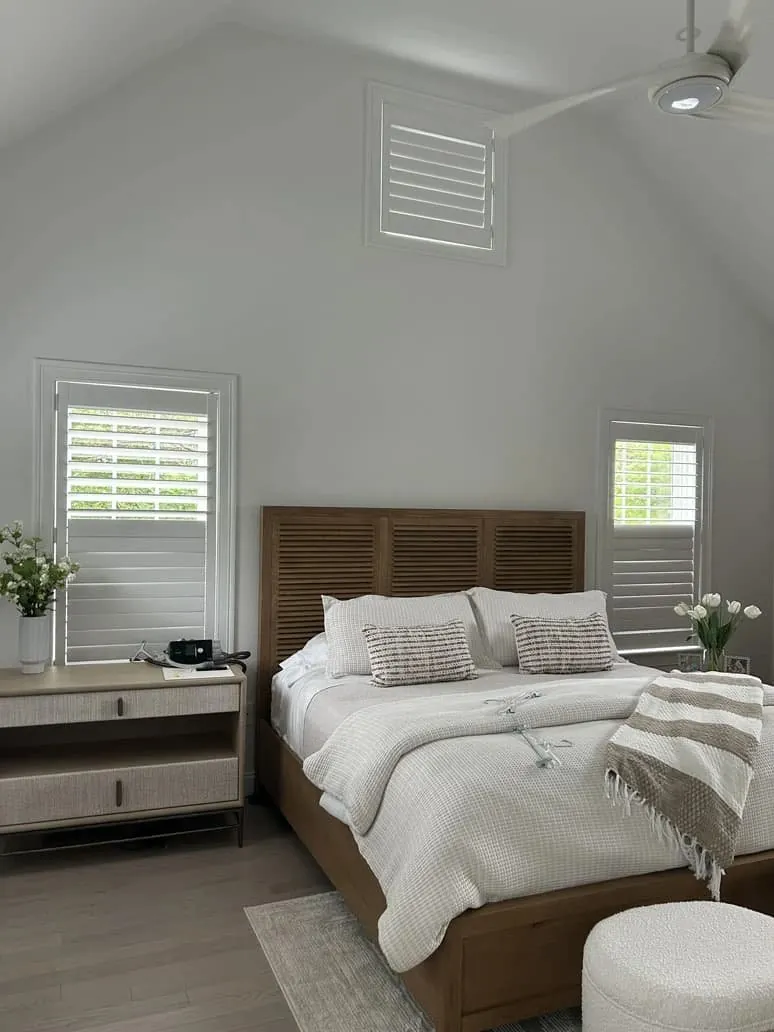
Why old windows are a special case
Homeowners with antique houses often assume shutters are off the table. The openings lean, the sills slope, the casings are deeper at one corner than the other, and nothing off a shelf will sit flat. That worry is exactly why shutters for older windows have to be made to measure.
A plantation shutter is a rigid panel in a frame. Unlike fabric, it cannot sag or stretch to hide a crooked opening, so it has to be built to suit the opening it goes into. When it is, the result looks as if it has always been there. When it is not, every gap shows.
The good news is that Hunter Douglas shutters, Palm Beach, NewStyle and Heritance, are built to the measurements taken at your window. That is what lets them work in houses where nothing is quite square.
What makes an older opening tricky
Before talking products, it helps to know what we are looking for when we stand at an older window.
- Out of square. The opening is not a perfect rectangle. One side may be taller, or the top may run downhill. Houses settle, and two centuries of settling shows.
- Deep reveals. Thick walls leave a deep recess between the face of the trim and the glass. That depth is often a gift, because it gives a shutter room to sit inside the opening.
- Uneven sills and stools. The ledge at the bottom of the window may slope, be worn in the middle or stick out further than the trim.
- Hardware in the way. Old sash locks, lifts and cranks stick out into the space where louvers need to tilt.
- Trim worth keeping. Original casings are often the best woodwork in the room, and covering them would be a shame.
Each of those is something the shutter’s size, frame and mounting have to answer.
How a made-to-measure shutter solves it
Frame style
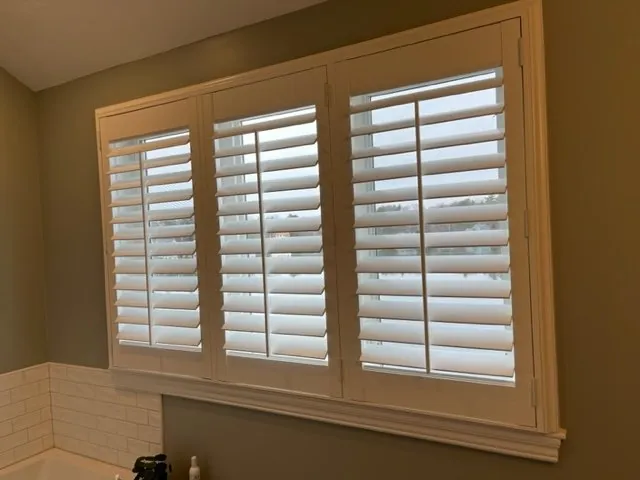
The frame is the part that meets the window, and choosing it well is how shutters for older windows absorb an imperfect opening. A frame can sit inside the casing, letting the trim show around it, or mount onto the face of the trim when the opening is too shallow or too uneven for an inside fit. Frame style is one of the main decisions at an older house, and we look at it window by window rather than picking one for the whole house.
Louver size
Louver size changes the look of the shutter and how much it blocks the view when open. On a small window in a low-ceilinged room, a smaller louver usually looks more in proportion. On tall windows, a larger louver opens up more of the view when tilted. In older houses we also check that the louvers will clear any lock or lift on the sash when they tilt.
Measured for the actual opening
An older window has to be measured in more than one place, because the width at the top is not always the width at the bottom. Those measurements go into the order, so the shutter is built for the opening you really have.
Shutters in the houses we see most
Antique capes with deep-set sash
Along Route 6A and in Sandwich and Hingham, antique capes have small sash set into thick walls. The deep reveal often leaves enough room for a frame to sit right inside it, keeping the original trim fully on view. Rooms tend to be low, so smaller louvers usually suit. Because the windows are small, the panels themselves are narrow and light to swing.
Mill-era triple-deckers
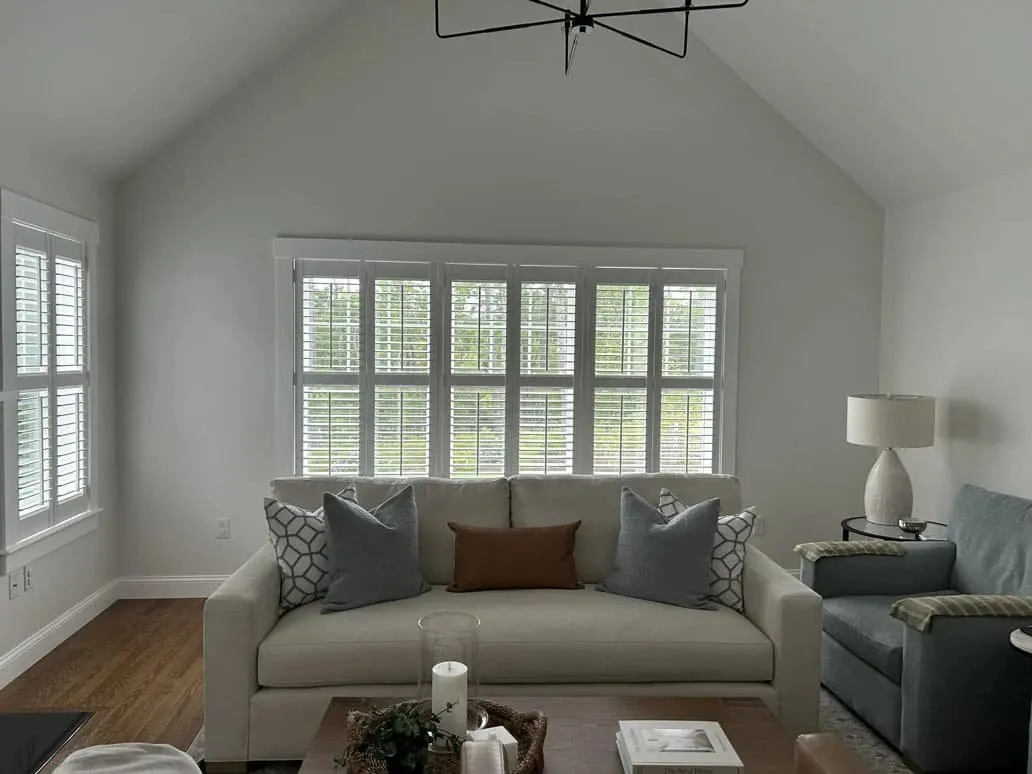
The triple-deckers of New Bedford, Fall River and Woonsocket have tall, narrow windows, frequently above old radiators and close to the next house. Shutters suit them well: tilted louvers give privacy from the neighbor’s window while letting daylight in. The radiator below matters, because the panels need room to swing open, and that can affect how the shutter is divided.
Older homes near the water
Some of the older houses in Osterville, Chatham and Marion have generous water-facing windows framed in original woodwork. Shutters give a clean, architectural look there and let you tilt the light away from the floor while keeping the view when the panels are open.
Mixing old and new
Many newer colonials in Franklin, Medway and Needham are built in a traditional style, with square openings and wide trim. Shutters for older windows and shutters for newer ones use the same Hunter Douglas lines; the difference is how much the frame has to do. In a new house it barely works at all. In an antique cape it does most of the job.
Light, privacy and the view
Part of the appeal of shutters for older windows is how simply they work. With the panels closed and the louvers tilted, daylight comes in at an angle and the street sees very little. Tilt the louvers flat and the room brightens while the panels stay put. Swing the panels open and the whole window is clear again, with the old glass and muntins on show, which on a well-kept antique sash is half the point.
That flexibility matters in rooms that change use through the day. A front parlor that faces the road wants privacy in the evening and full daylight on a winter morning. A bedroom under the eaves wants the morning light kept off the bed. A kitchen at the back may need nothing more than the lower half covered. One set of panels handles all of it, with nothing to raise or lower.
The three Hunter Douglas shutter lines
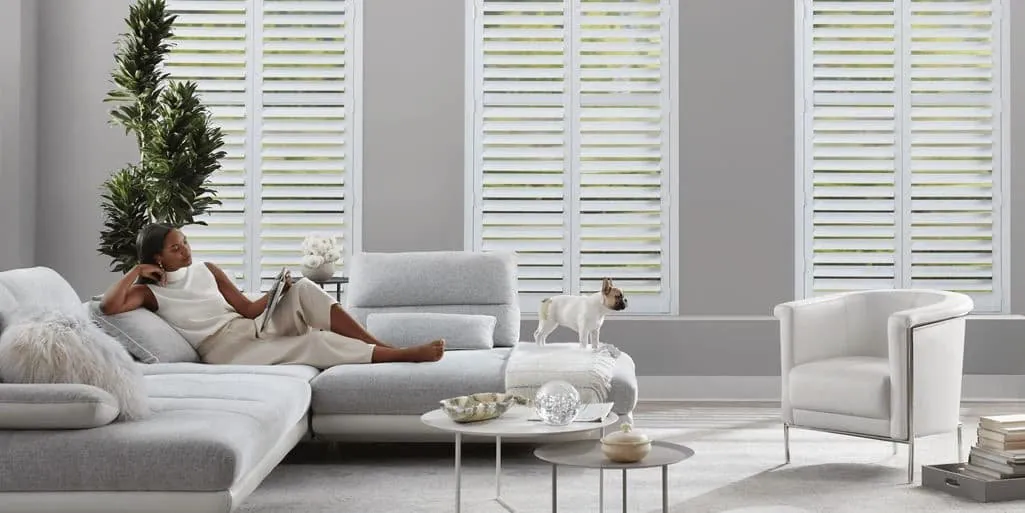
Palm Beach
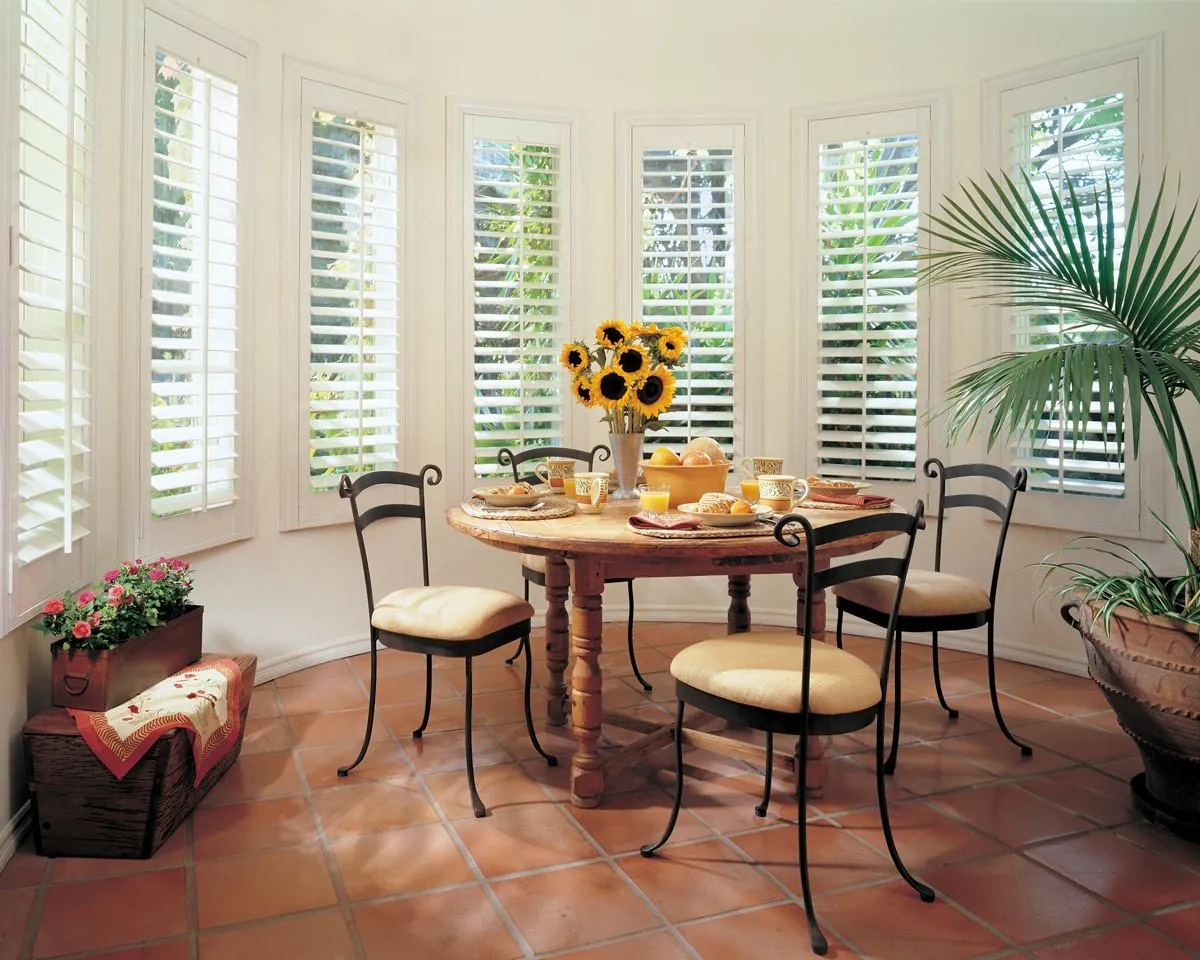
One of the three Hunter Douglas shutter lines, made to your opening.
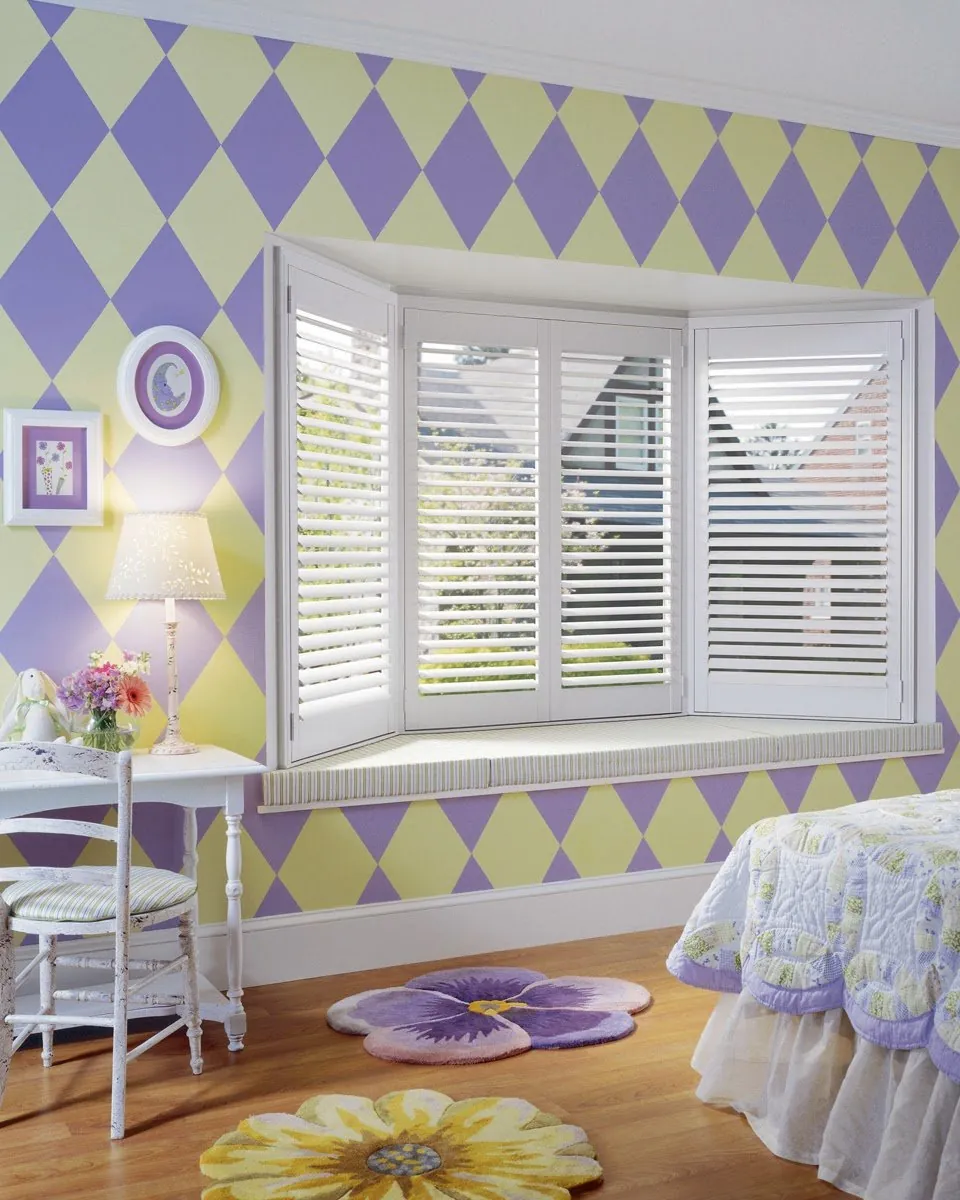
NewStyle
Another made-to-measure option, worth comparing at the window.
Heritance
The third line, chosen with you to suit the room and the trim.
We will show you all three side by side and talk through which suits each room. For the full picture, see our plantation shutters page.

Why the measuring visit matters most
With a fabric shade, a small error can often be lived with. With a shutter in an out-of-square opening, it shows. That is why an in-home consultation comes first: we look at each opening, check how deep and how true it is, and measure for the frame style you choose.
As a Hunter Douglas Gallery dealer, we can show you every Hunter Douglas shutter line from our sample vans, so the choice is made at your window. Estimates are free, and the order goes up through certified Hunter Douglas installation.
Questions about older windows
My windows are not square. Can I still have shutters?
Yes. That is the main reason shutters are made to measure. The frame style and the measurements taken at your window are how the shutter is fitted to an opening that is not a perfect rectangle.
Will shutters hide my original trim?
Not necessarily. Where the reveal is deep enough, the frame can sit inside the opening and leave the trim on view. Where it is not, the frame mounts to the trim instead. We show you both at the window.
Do shutters work on very small windows?
Yes. Small sash in old capes often suit shutters well, usually with a smaller louver to keep things in proportion.
What about a window above a radiator?
We check how far the panels need to swing and plan the shutter around it. It is a common question with shutters for older windows in triple-deckers.
Are shutters better than shades on an old house?
Neither is always better. Shutters give an architectural look and tilt control; shades give softness and, with honeycomb shades, warmth. See shades or blinds and our guide to window measuring terms.
Have your windows looked at
Request a consultation and tell us about the oldest windows in your house. We will bring shutter samples, look at each opening and give you a free estimate. You can also visit the North Dartmouth showroom first, or reach it with the call button at the top of the page.