
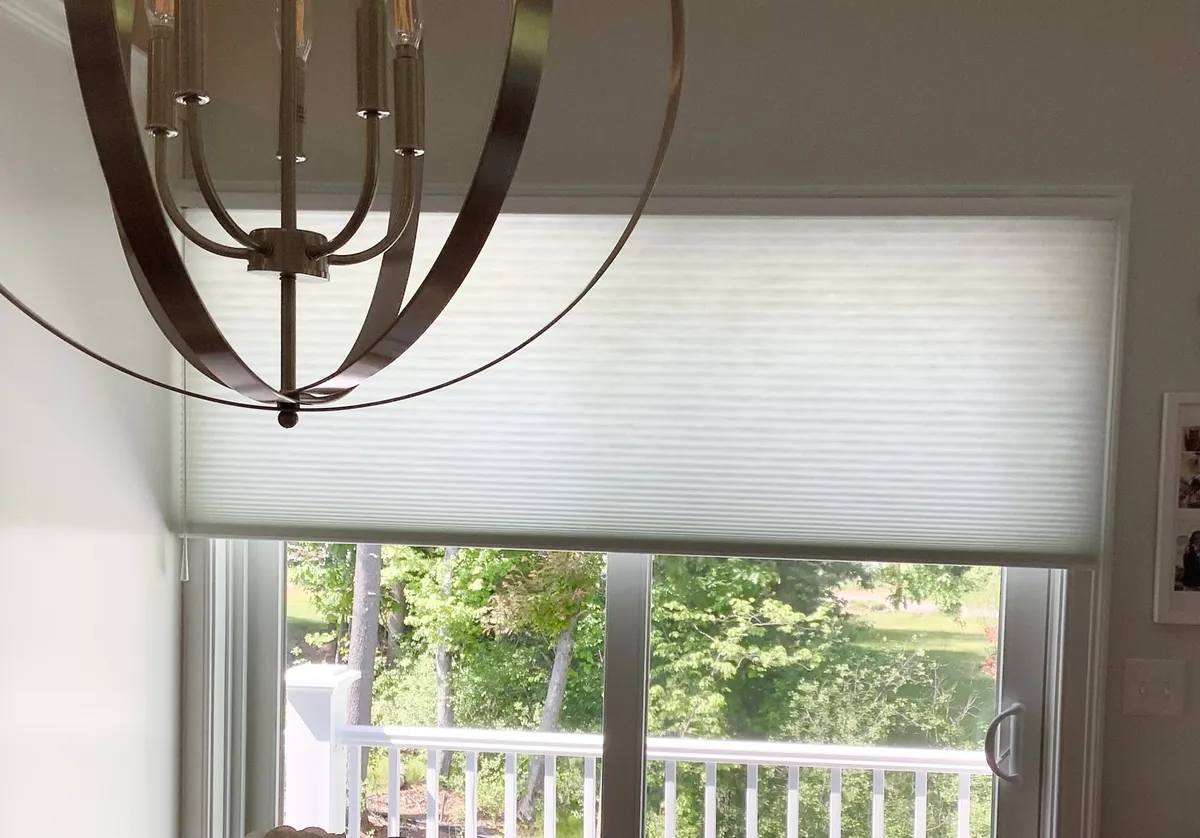
The cold spot by the window
Sit near a big window on a January evening and you feel it: a chill coming off the glass, even with the heat on. Windows are where a warm room meets the cold outside, and they are usually the first place a room loses its comfort. That is the starting point for any conversation about cellular shades and winter heat.
A cellular shade, also called a honeycomb shade, does not heat anything. What it does is put a layer of still, trapped air between the room and the cold glass. That pocket of air is what slows the warmth leaving the room, which is why a room with honeycomb shades holds its heat better through the evening.
We do not quote figures for it. The difference depends on the window, the fabric and the way the room faces. But it is the kind of difference homeowners notice in a drafty bedroom long before they think about why.
How the honeycomb works
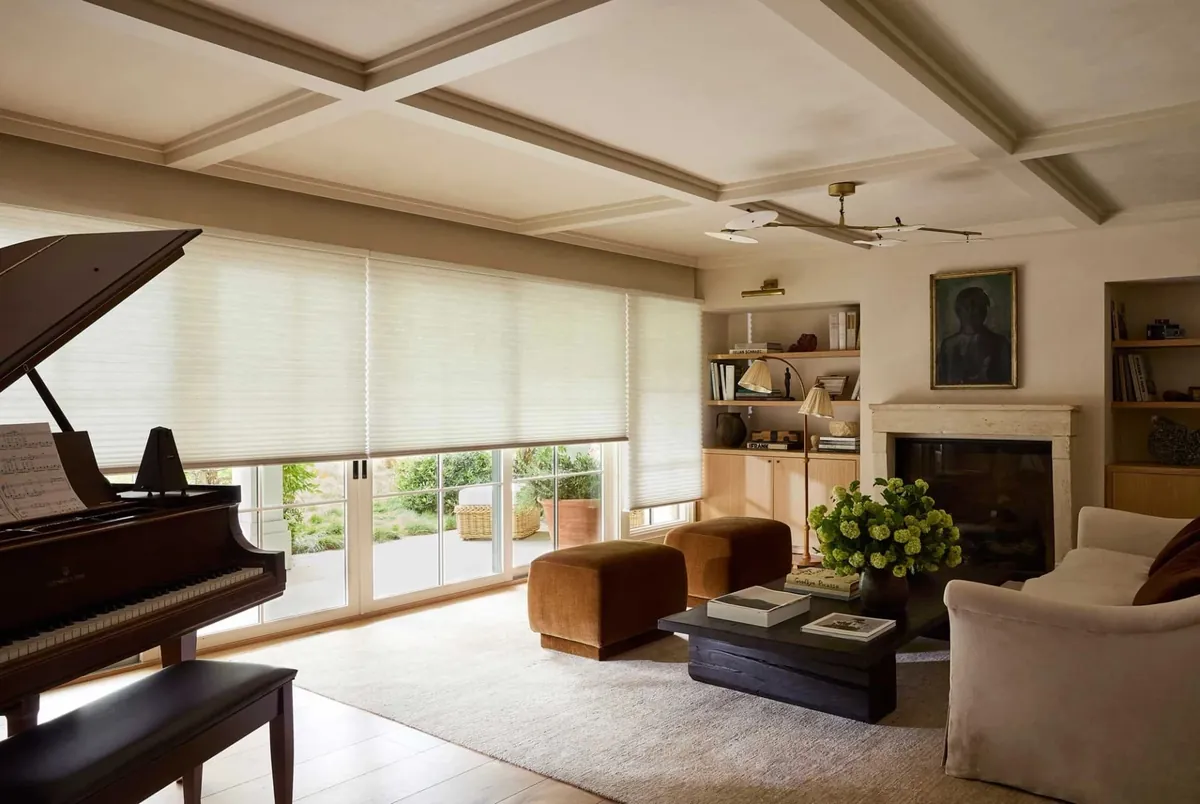
Look at a cellular shade from the side and you see a row of cells, like a honeycomb cut in half. Each cell is a closed pocket formed by two layers of fabric. When the shade is down, those pockets hold air still against the window.
Still air is what matters. Moving air carries warmth away quickly; trapped air slows it down. It is the same reason a puffy winter coat keeps you warmer than a single thin layer. The cells in a Hunter Douglas Duette or Applause shade act like that coat for the window.
Because the cells run the full width of the shade, the whole window gets that layer, not just the middle. And because the fabric is soft, the shade still looks like a window treatment rather than a piece of insulation, in whatever color suits the room.
Which rooms feel the difference
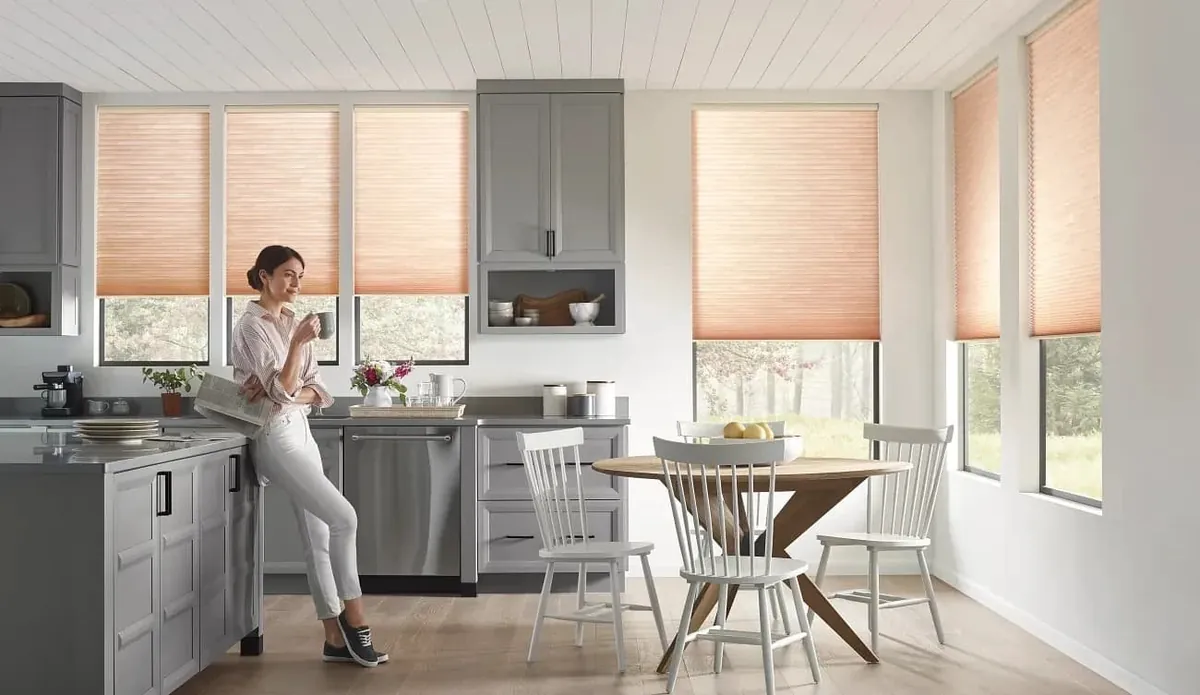
Every room gains something from the cells, but some notice it far more than others. Here are the rooms where cellular shades and winter heat come up most at our consultations.
Rooms with a lot of glass
In Osterville, Chatham and Marion, water-facing rooms can be mostly glass. They are glorious in summer and can feel chilly on a winter evening, because so much of the wall is window. A honeycomb shade lowered at dusk turns that wall of glass into a softer, warmer surface.
Tall foyer and great-room windows
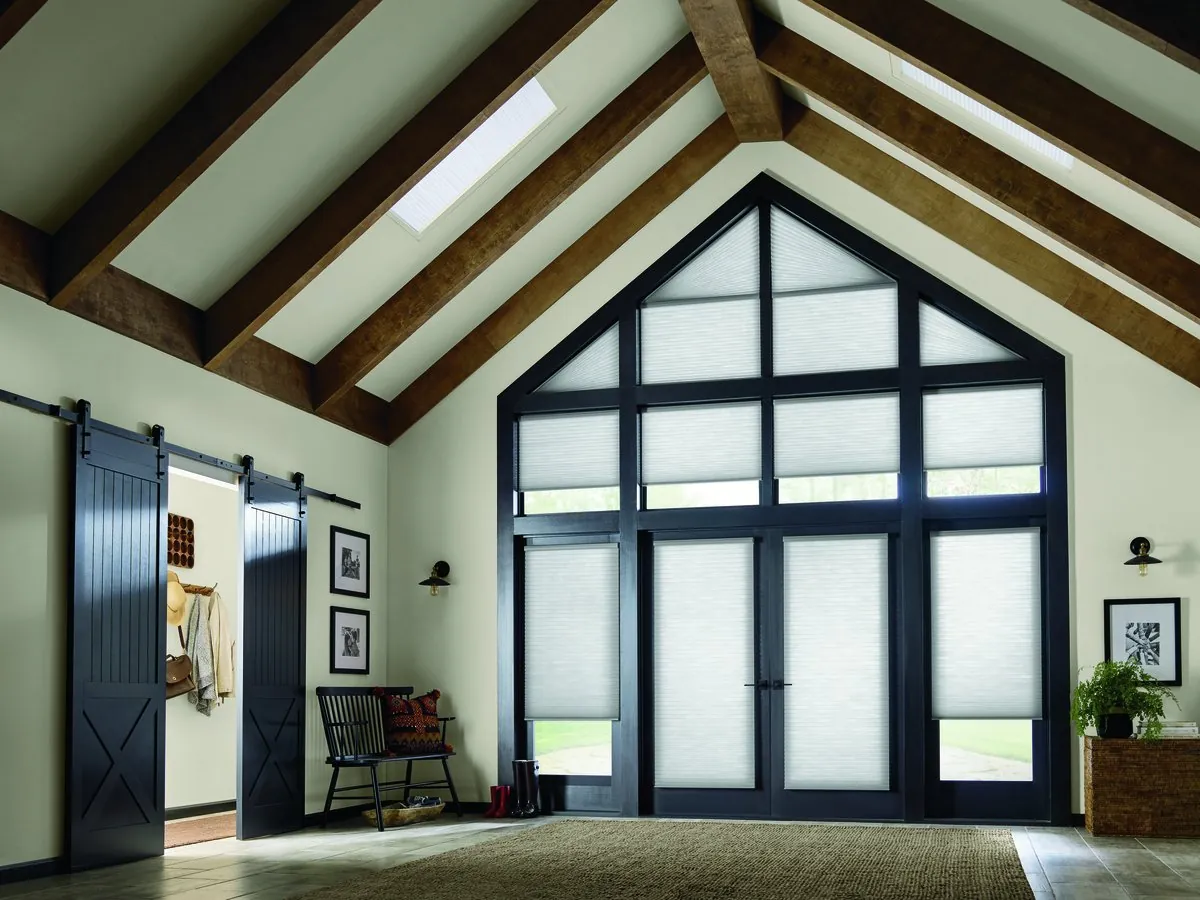
The two-story foyers and great rooms in the larger newer colonials of Franklin, Medway and Needham have tall upper windows that are hard to reach and easy to forget. Honeycomb shades on those upper windows, motorized so they can actually be lowered, are where many owners notice the change on the stairs and landing.
Bedrooms in older houses
The antique capes along Route 6A and in Sandwich and Hingham have small sash in deep reveals, often in bedrooms under the roof. A honeycomb shade mounted inside the casing sits close to the glass and keeps the original trim on show.
Triple-decker apartments
The mill-era triple-deckers of New Bedford, Fall River and Woonsocket have rows of tall, narrow windows, often on the colder side of the building. Honeycomb shades on each one give every room in the row the same layer of trapped air.
Getting the most from them in winter
How you use the shades matters as much as which ones you choose.
- Open sunny windows by day. On a bright winter day, low sun coming through a south-facing window warms the room. Let it in.
- Lower them at dusk. As the sun goes down, lower the shades so the cells trap air against the cooling glass for the evening.
- Keep them down overnight in bedrooms and rooms you are not using.
- Think about schedules. With PowerView motorization, shades can lower at the same time every evening on their own, which helps on windows you would otherwise forget.
Mounting matters too. An inside mount sits snugly in the frame and keeps the trim on view. An outside mount overlaps the opening and covers more of the glass edge. Which is better depends on the window, and we look at it with you. Our guide to window measuring terms explains both.
Choices that change how a room feels
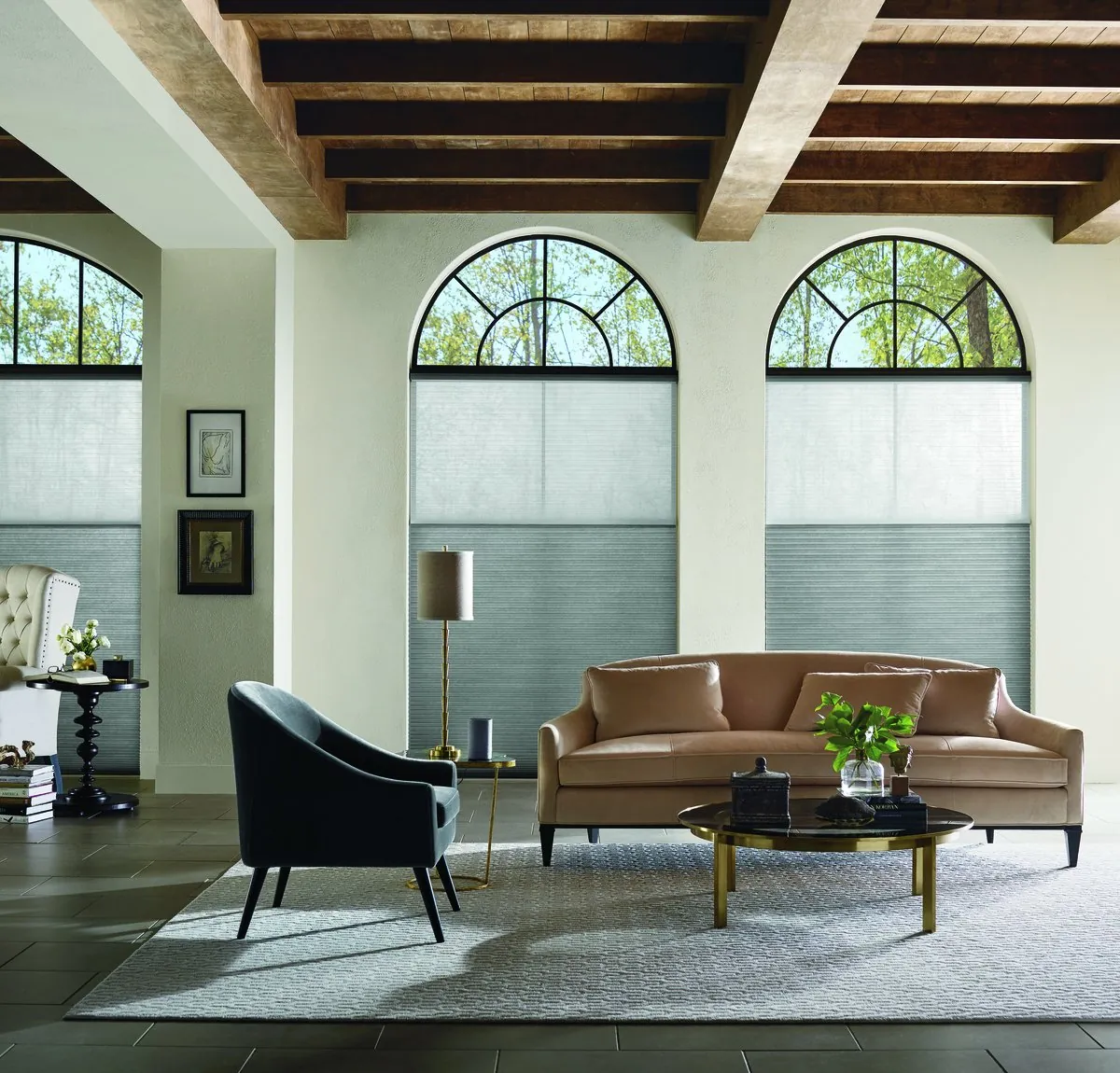
Once you know which rooms are cold, a few choices shape how the shades look and live with you through the winter.
- Opening style. A top-down, bottom-up shade lets you lower the top to catch the low winter sun while the bottom stays covered for privacy, useful on a street-facing triple-decker or a ground-floor cape.
- Light level. Light-filtering fabric keeps a room bright on gray days. Room-darkening fabric suits bedrooms, where the long winter nights start early and mornings start late.
- Color. Warm tones can make a cold north room feel more inviting; cooler tones suit a room that already gets plenty of sun. Color is best judged against your own walls.
- Reach. Windows above a stair, behind a deep sill or high in a great room are the ones that get left open on a cold night. Those are the ones worth motorizing.
None of these change the basic link between cellular shades and winter heat; every honeycomb shade has the cells. They change how well the shades suit the room and how often you will actually lower them, which in practice matters just as much.
Honeycomb shades to look at
Duette
The Hunter Douglas honeycomb shade most people picture, in many fabrics and colors.
Applause
A second Hunter Douglas honeycomb line, worth comparing side by side.

Sonnette cellular roller
A cellular shade that rolls rather than folds, for a cleaner look.
Summer, too
The same trapped air works the other way in summer. Lowered against a hot west-facing window, the cells sit between the room and the sunbaked glass. On the South Coast and the Cape, that is welcome in the long afternoons, especially in glassy rooms that face the water. Honeycomb shades are a year-round choice, and the light-filtering fabrics keep rooms bright while they work.
For more on handling strong sun, see our guide to shades for sun and glare.
Choosing yours at the window
The fabric, color, mount and opening style of a honeycomb shade are best chosen at your own window, in your own light. That is what our in-home consultations are for: our vans carry Hunter Douglas samples, so we can bring the showroom to you and look at your coldest rooms together.
As a Hunter Douglas Gallery dealer, we can show you Duette, Applause and the other honeycomb options side by side. Estimates cost nothing, and certified Hunter Douglas installation fits the finished shades. See all our cellular shades.
Winter questions
Do cellular shades heat a room?
No. They do not add heat. They slow the loss of the heat you already have, by trapping still air against the glass.
How much difference will I notice?
We do not quote figures, because it depends on the window, the fabric and the room. Homeowners most often notice it in rooms with lots of glass and in cold bedrooms.
Do I have to keep them closed all winter?
No. Open them on sunny days to let the low sun warm the room, and lower them at dusk. A schedule can do it for you with PowerView.
Do they work on sliding doors?
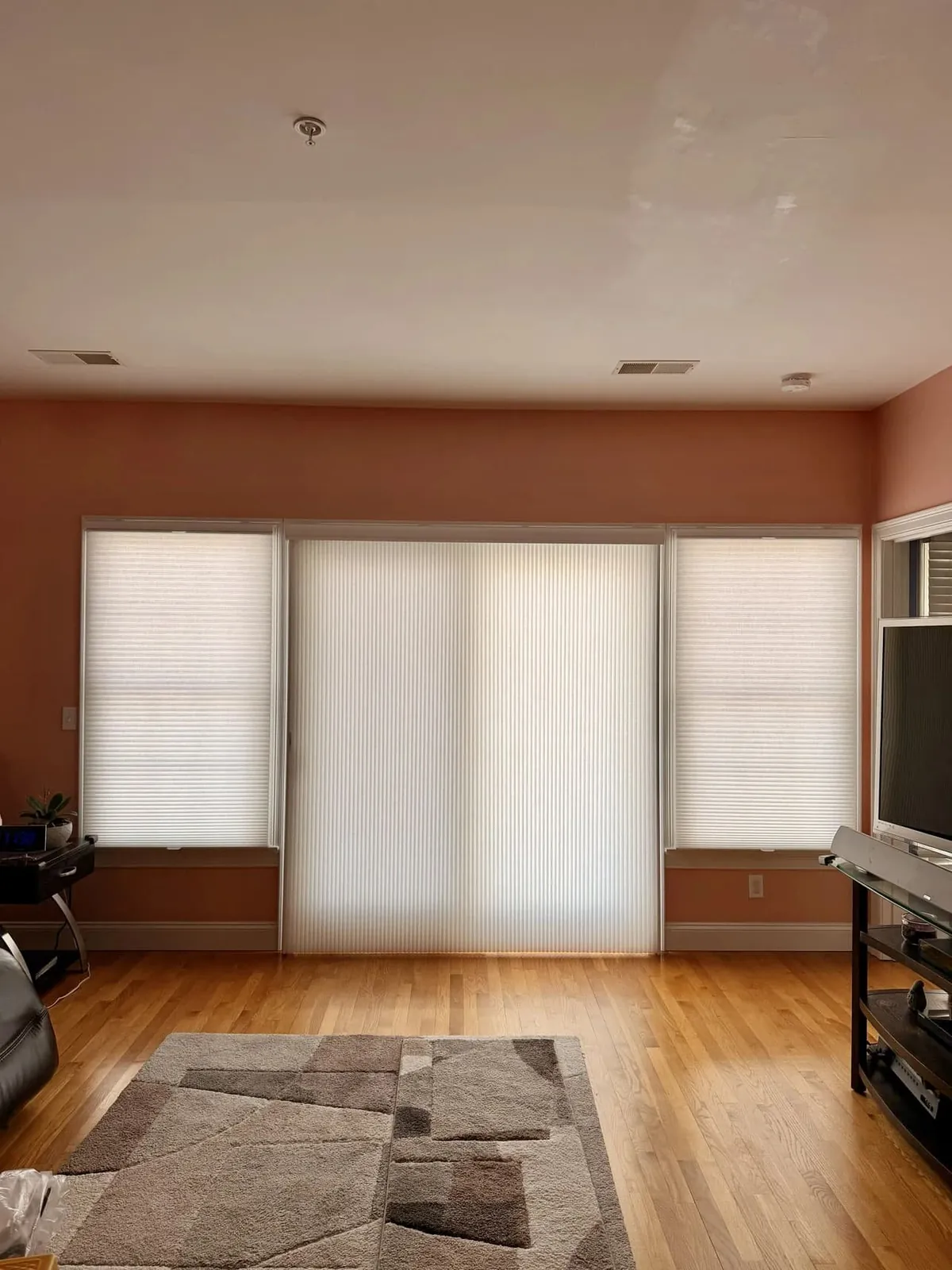
Yes. A vertical honeycomb shade travels sideways across a slider, so the door can still be used. The link between cellular shades and winter heat applies there too, since a slider is a lot of glass.
Are they a good choice for an old house?
Often, yes. Cellular shades and winter heat are a natural pairing in older homes, and an inside mount keeps original trim visible. See also shades or blinds.
Warm up your coldest room
Request a consultation and tell us which rooms feel coldest in winter. We will bring honeycomb samples, look at each window with you and give you a free estimate. You can also visit the North Dartmouth showroom, or reach it with the call button at the top of the page.